Aug
6
Hockey Development Coaching Program Re-Released!
Filed Under Hockey Player Development, Must-Have Resources | Leave a Comment
I have some exciting news to share with you, but before I do, I want to remind you about one of my favorite newsletters. Personal Development expert Brian Tracy offers about a dozen different newsletters through his site, all of which are great. Depending on your business/interests, you may not be interested in all of them, but I think you’ll love the “Quote of the Day” newsletter he sends out. I saved a few recent ones that I really like:
“Don’t say you don’t have enough time. You have exactly the same number of hours per day that were given to Helen Keller, Louis Pasteur, Michelangelo, Leonardo da Vinci, Thomas Jefferson and Albert Einstein.” – Jackson Brown Jr., writer
“We can learn from past failures and mistakes, but we shouldn’t get stuck there. We can keep future goals in mind, but we shouldn’t get stuck there, either. The only way to reach our potential is to focus on what we must do now – this moment, this day – to perform effectively and win.” – Joe Torre
“Men are anxious to improve their circumstances, but are unwilling to improve themselves; they therefore remain bound.” – James Allen
“It is literally true that you can succeed best and quickest by helping others to succeed.” – Napolean Hill, author
“A winner is someone who recognizes his God-given talents, works his tail off to develop them into skills and uses these skills to accomplish his goals.” – Larry Bird, basketball player
I can’t get enough of these. If you want to sign-up for his newsletter you can here.
The Move
Emily and I found a great place in Philadelphia (randomly, since we found the place because a woman randomly approached us on a street corner after overhearing us talk about places) so the move is official. We’re both really excited. We’ll be Philadelphia residents by the end of the month. If you’re ever in the area, let me know and I’d be happy to show you around Endeavor.
Ultimate Hockey Development Coaching Program
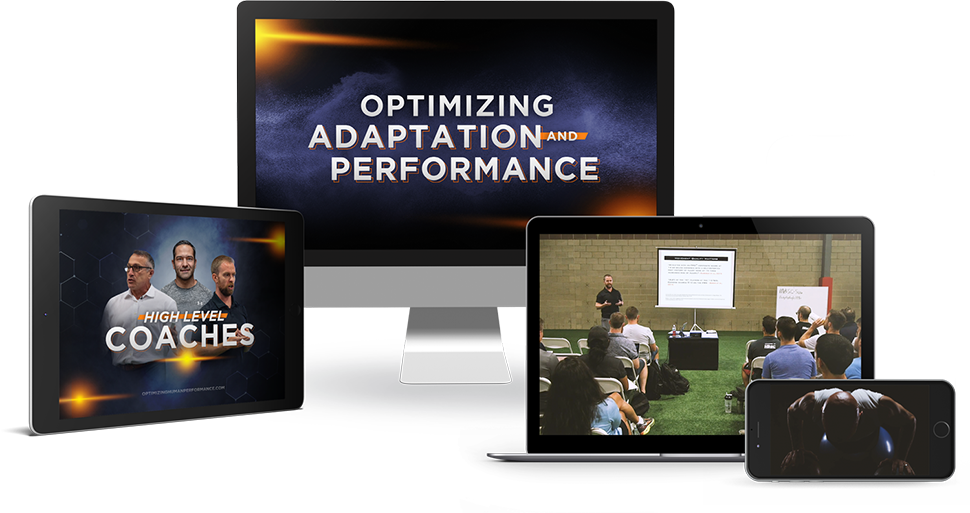
I got such great feedback from the first go-around with my Ultimate Hockey Development Coaching Program that I’ve decided to re-release it. If you didn’t know, since the first launch, Bill Hartman and Mike Potenza hopped on board as contributors, both of which KILLED their Coaching Calls. Go to the link below for more information!
=> Ultimate Hockey Development Coaching Program <=
To your continued success,
Kevin Neeld
Jul
5
The Single-Leg Solution Review
Filed Under Must-Have Resources | Leave a Comment
I hope you enjoyed a relaxing 4th of July weekend…and/or recovered fully from your celebrating. Emily and I took off at the end of last week for Denver to go spend the weekend with her brother. I love it out there. If the Avalanche ever gave me a call I’d make the move out there in a heartbeat!
A couple weeks ago, I picked up a copy of Mike Robertson’s new DVD and manual set: The Single-Leg Solution
As you know, I’m a huge supporter of single-leg exercises for building lower body strength. I think hockey training programs should be based around single-leg lifts. In fact, I think training programs for all athletes should be based around single-leg lifts. With my hockey players, I followed what I think of as an inverted exercise model, whereby the traditionally thought of main lifts (which are all double leg squat and deadlift variations) are performed secondarily, if at all, following the traditionally thought of accessory lifts (single-leg lifts).
With that said, it’s easy to see why I’d be interested in the first ever product created to detail everything about the benefits (or lack thereof) of single-leg training, how to perform the lifts, and where they should fit in your program.
Single-Leg Solution Pros
The first thing I noticed about the product was that the cover is absolutely sick. I don’t know how Mike has doing his graphics, but I’m jealous.
After reading through the 96-page manual and watching the hour long DVD, I was really impressed with the comprehensive descriptions of the exercises. As I watched, I was thinking about how much I’d like every athlete I work with to have access to the DVD so they came to me knowing EXACTLY how I wanted them to perform the lift. For that matter, I wish every intern/job applicant also came equipped with that knowledge.
Mike’s DVD brilliant breaks down exactly how to perform the single-leg lifts (and their variations), common undesired movements, and how to coach athletes out of undesired movement into correct alignment, using both cues and reactive neuromuscular training. He also shows a few great ways to “unload” people that may not be able to hop right in to the more advanced variations (due to weakness, injury, etc.).
Other “pros” of The Single-Leg Solution were Mike’s unbiased breakdown of the benefits of single-leg training and where he fits the lifts into his program. Nowadays, it seems like the majority of people pitching the benefits of single-leg training or preaching about how they’re unnecessary and we should all stick with the “main lifts” are either regurgitating arguments they’ve heard from other people (not always a terrible thing) or just flat-out uneducated. It was refreshing to see Mike take an unbiased approach.
Single-Leg Solution Cons
First off, I want to make my position on these “cons” very clear. Mike is a brilliant guy, and (through emails and his products) has been an invaluable resource for me. “Cons” of the product aren’t so much “cons” as much as a couple things that I wanted more information on. After reading through the manual, two things really stood out to me regarding how double-leg lifts may still be superior to single-leg lifts in certain areas:
Point 1: A study presented in the 2005 NSCA National Conference by Chiu et al. found that “The magnitude and direction of forces in a SLS were significantly different when compared to running to cut, backpedal and cutting to the left for both the hip and the ankle. In fact a bilateral squat was much closer to these movements than a SLS.Joint contact forces during athletic movements may be more similar.”
I’ve looked everywhere and can’t find the publication of this information. I’d really like to know more about why they chose a single-leg squat (opposed to any other single-leg exercise like reverse lunges or back leg raised split squats) and if there was NO sigificant difference between the athletic movements and double leg squats or if the double leg squats were just less dis-similar (which essentially means nothing). I wouldn’t necessarily expect the magnitude of forces to be similar between athletic movements and a stationary squatting movement so I’m somewhat unclear on the strength of this argument IF it’s used as anti-single-leg (again-Mike doesn’t present it as one way or another, just presents the evidence).

Point 2: The implication was made that double-leg movements can be loaded more heavily and therefore provide a greater stimulus to the muscle. From a scientific standpoint, it’s hard to quantify exact muscular contributions during movements. To spare the semester-long discussion on why that is, I’ll move on to point out that many of our hockey players at Endeavor are doing back leg raised split squats and reverse lunges with very similar loads as they front squat (in some cases more). Coach Boyle has said the same thing about his hockey players. With that observation, I’m curious if I’m misunderstanding something about the loading argument, because it seems like you can load the involved muscles to a greater extent with single-leg lifts.
Overall, I think this is one of those products that should be in the library of every strength coach or trainer. Depending on your background, you may be familiar with some of the exercises, but the cuing/coaching, progressions, and programming are worth the investment.
Click the link or image below to check out more information about The Single-Leg Solution:
=> The Single-Leg Solution <=
To your success,
Kevin Neeld
Jun
18
As you may know, I’ve been writing for my friend Shawn Thistle’s Fitness Research Review site for about a year now.
He and I had spoke before the site went live about the direction he wanted the site to go. We both agreed that most fitness professionals are extremely busy and rarely make time to stay current on research, despite recognizing the importance.
As one of those busy professionals, it can be a bit overwhelming to train athletes all day and still make time to spend a couple hours reading research. I’d say about 7/10 times I sit down to read a text book or research article I glaze over within seconds and realize I’m never going to retain anything. That’s what makes Fitness Research Review Service such a brilliant idea. I usually pop over to the site and read through a review or two in about 15 minutes, and spend a couple minutes digesting the information and figuring out how I’m going to apply it in my programs. Then I can go home to eat dinner and do something that doesn’t involve strength and conditioning (get a little balance in my life! …not my specialty).
I just read a review from Patrick Ward outlining a simple neural strategy that everyone could use during just about every exercise to help improve their force output (read: strength). It doesn’t get much more applicable than that!
Shawn wanted me to share this info with you:
Research Review Service FITNESS, now in its second year, is an online service designed to help busy fitness professionals incorporate current scientific literature into their client interactions.
How RRS-Fitness works:
Every week, RRS posts 1-2 new reviews which analyze, contextualize, and put into practice the findings of a recently published scientific article from industry-leading peer-reviewed journals. Each review takes 5-10 minutes to read and focuses on the practical application of results and functional knowledge of research methodology. The reviews are all contained in a database that subscribers have full access to (it now contains > 175 reviews!). Topical content is varied and comprehensive, ranging from exercise sciences to sports injuries and rehabilitation.
The overall goal of RRS-Fitness is to increase knowledge translation from the scientific literature to those in contact with clients in all types of exercise and training environments.
Top 5 Reasons to Subscribe to RRS-Fitness:
1) Weekly reviews of the latest research.
2) Quickly read and applicable information in the comfort of your home or office.
3) Affordable subscription rates compared to attending conferences.
4) Large database of existing reviews.
5) Save your time, stay current, and improve your results!
RRS-FITNESS Mission Statement: RRS FITNESS will strive to enhance evidence-based knowledge translation and practical application in the exercise and fitness industry by providing contemporary, relevant and applicable scientific literature to subscribers in a consistent, unbiased, easily understood format. Our overarching goal is to disseminate exercise sciences research to training professionals, students and institutions worldwide. RRS FITNESS will operate in a financially and environmentally responsible manner, and maintain a strong commitment to prompt customer service.
If you have any questions about the site, please do not hesitate to contact me!
To your continued success,
Kevin Neeld
Jun
16
Building The Efficient Athlete
Filed Under Athletic Development, Must-Have Resources | Leave a Comment
Interdisciplinary learning is a hot topic in the human performance industry right now. Many strength and conditioning coaches will argue that we don’t need to study physical therapy or athletic training. Others swear by it.
Frankly, I find it hard to imagine doing my job without knowing a bit about physical therapy and athletic training. I understand it’s not my job to diagnose injuries or do initial rehab. I also understand that athletes with persistent pain need to get it looked at by the appropriate professional.
With that said, I rarely see a completely pain-free athlete without injury complications. Take a look at one of the elite level hockey training groups we had last Summer at Endeavor:
- Posterior shoulder dislocation
- Chronic groin pain
- Thumb surgery and knee “giving way” at angles >90°
- Sports hernia
- 2 players with shoulder labral repair
6 high level players; 5 significant problems. Unfortunately, groups like this are becoming the norm. With the increased emphasis on year-round hockey, it’s becoming almost inevitable for older players to have some sort of hip dysfunction. With the horrible rounded over posture that most hockey players carry themselves with, it’s becoming almost inevitable for older players to have some sort of shoulder dysfunction.
Not every strength coach or “trainer” needs to be a licensed PT or AT, but we should have, at a minimum, a profound understanding of functional anatomy. There are dozens of great resources out there, but many are pretty hard to digest.
The one resource that I couldn’t live without (and reference on a pretty regular basis) is Building the Efficient Athlete with Mike Robertson and Eric Cressey.
This DVD set is truely timeless. I liken it to taking a functional anatomy course in college, with one major exception. I paid over $3,000 out-of-pocket to take a 4-credit functional anatomy class as part of a Doctorate of Physical Therapy program at a reputable university. I can honestly say I learned less implementable information from that course than I did from watching and re-watching Building the Efficient Athlete (and it’s a hell of a lot cheaper!).
Recognizing dysfunction and abnormal movement patterns can prevent injuries, but you can’t do that if you don’t know what you’re looking for.
Step 1: Watch Building the Efficient Athlete
Step 2: Repeat Step 1
Step 3: Recognize dysfunction in your athletes and help them prevent future injuries
-Kevin Neeld
May
26
Hockey Development Coaching Program Sneak Peak
Filed Under Hockey Player Development, Must-Have Resources | Leave a Comment
I always like free stuff, and research has shown that I’m not alone in that area. In fact, the word free is the single-most powerful word in all of marketing today. Ever go into the grocery store needing 1 of something and fall victim to the buy 3 get 1 free offer? “I don’t even know what I’ll do with 4 12-packs of toilet paper…but it was FREE!”
…Maybe that one’s just me, but I still think you’ll appreciate a few free samples of the Coaching Calls from my new Ultimate Hockey Development Coaching Program:
Eric Cressey (Cressey Performance)
Jim Snider (University of Wisconsin)
Joe Heiler (Sports Rehab Expert)
Kim McCullough (Total Female Hockey)
Jared Beach (Endeavor Hockey)
Brian St. Pierre
These are just small pieces of what this program has to offer, and you can access all the calls for FREE. Click the link below to register for the program now; you’re running out of time!
=> Ultimate Hockey Development Coaching Program <=
To your success,
Kevin Neeld