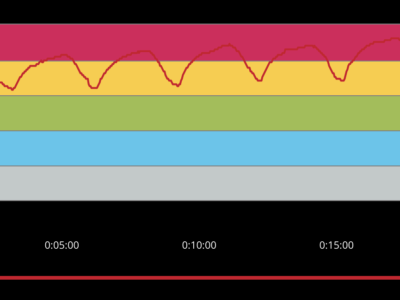
A while back I wrote about about some unique hockey conditioning tools I’ve started using at Endeavor. If you missed the article, you can check it out here: A New Look at Hockey Conditioning.

The idea is that SOME aspect of your hockey training needs to incorporate periods of static holds to build up localized fatigue resistance in the deep hip and knee bends required for effective skating. Because the game of hockey alternates periods of static positions and explosive movements, it’d be ideal to incorporate this in your training. I originally got this idea of alternating static holds with explosive movements from Brijesh Patel (currently at Quinnipiac University). He had some of his athletes holding a squat position and alternating vertical jumps. I thought it was brilliant. A little more specific to hockey, if you have a slideboard, you can do this by alternating periods of either a squat hold or a split squat hold with slideboarding. Check out the video below.

In this video, the hockey players are doing a 10s split squat hold on one side, then 5 slideboards, then a 10s split squat hold on the other side, then 5 slideboards, three times through. You’ll probably notice that the slideboarding itself becomes increasingly less explosive as they go on. I expect that as they fatigue, which they did quickly since this was the first time they’ve done this. The goal is to increasingly emphasize quickness as they adapt to this type of training. This type of “conditioning’ will go a long way toward improving your performance on common tests like the Wingate Test. Plus…look how much fun they’re having in the video.

To your continued success,

Kevin Neeld

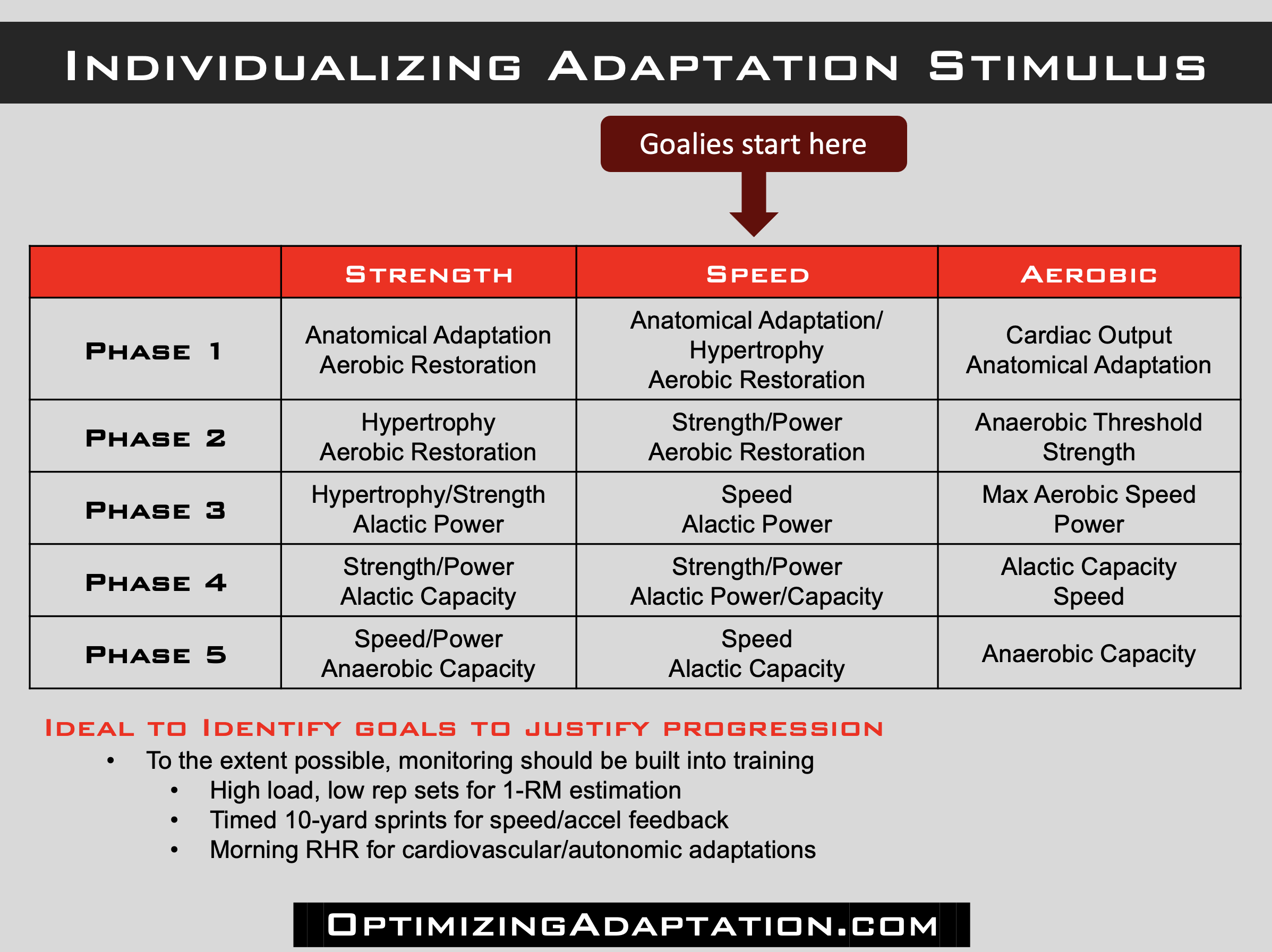
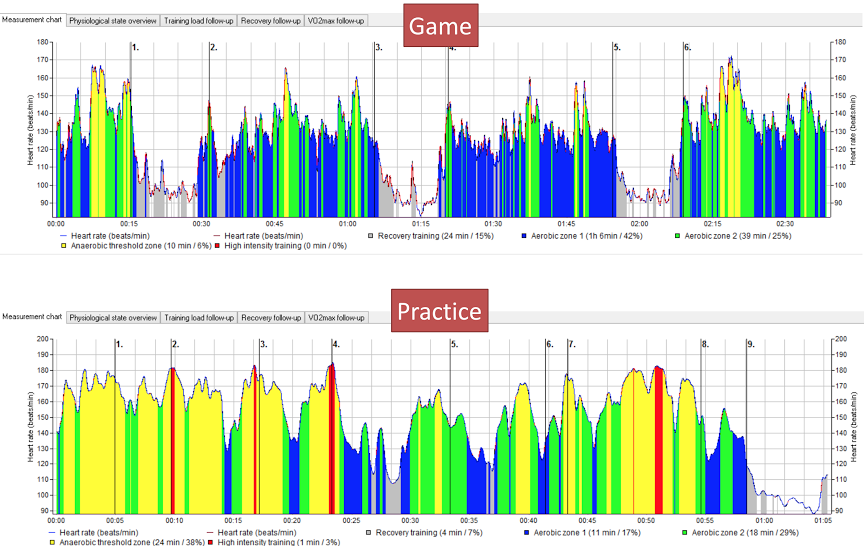
Hockey conditioning is all about training your body to work at a high intensity for extended periods of time and then recover rapidly. Basically, conditioning in any sport comes down to delaying or minimizing fatigue.

Fatigue is truly an amazing thing. Few people realize how complex fatigue can be. To really wrap your mind around what causes fatigue, it’s important to understand that fatigue is movement specific (direction, involved musculature, type of contraction, intensity, etc.) and involves every major body system: nervous, muscular, endocrine, and cardiorespiratory.

Over the weekend I spent some time reading Neuromechanics of Human Movement by Roger Enoka.

Static Contraction Fatigue

One of the things that stuck out in my mind is how different the cause of fatigue can be between isometric and dynamic contractions. For instance, during isometric contractions fatigue can result from occlusion of blood flow to the working muscle, that results from an activity-induced increase in intramuscular pressure. This both impedes nutrient delivery, and activates Group III-IV afferents (muscle receptors) which can decrease motor neuron excitability (think less force production).

Dynamic Contraction Fatigue

This differs from dynamic contractions, which do not result in the same amount of occlusion of blood flow as isometric contractions.  Compared to isometric contractions, dynamic contractions result in a more significant depletion of energy substrates such as Phosphocreatine and ATP, lower blood pH to a greater degree and produce more blood lactate.

Hockey Conditioning

If you’re not interested in the underlying science, stay with me. The take home message here is that fatigue mechanisms are different for static (isometric) and dynamic (concenctric/eccentric) contractions. Hockey involves both. Even when players aren’t actively skating, many times they’re gliding with their knees and hips flexed. Goalies can sometimes spend minutes in a “crouched” position. While nothing in hockey is as cut and dry as the strictly dynamic or strictly static contractions that are used in neuroscience labs, we can still learn from the light those studies have shed on our understanding of fatigue mechanisms.

In order to improve your capacity, you need to create an overload. Regarding “dynamic conditioning”, hockey players should use a mix of shuttle runs, slideboards, and sled drag variations. What many programs lack is an integration of “static conditioning”. This can be done in the form of squat, split squat, or back leg raised split squat iso-holds, progressing both in time and with weight.  As your training progresses, you can begin to combine the two forms of conditioning by alternating static holds with explosive actions.

For example, a goalie could stand by the edge of a slideboard and hold a squat for 15 seconds. Maintaining a good squat position, they would then explode back and forth on the slideboard 10 times, then return immediately to the static hold positions for another 15 seconds. Cycling through this 3 times (15s hold, 10 rep slideboard, 15s hold, 10 rep slideboard, 15s hold, 10 rep slideboard), would constitute one repetition. As your off-season progresses, start to add static contraction conditioning to your ice hockey training program. You’ll be thankful you did when the season starts!

To your success,

Kevin Neeld

Before reading this post, check out the two preceding posts on hockey conditioning:

Hockey Conditioning: To Bike or Not to Bike!

Hockey Conditioning: Shuttle Runs and Slideboards

As you may have noticed, I’m not a huge supporter of hockey players riding exercise bikes, but I am a huge supporter of slideboarding.

My opinion changes slightly when hockey players are in-season.

When players are on the ice for hours a week, they probably don’t need as much work in lateral and diagonal movement patterns because they get enough of that on the ice. To this extent, slideboarding consistently throughout the season could over-stress (or not allow for sufficient recovery) the hip adductors (“groin”) and lead to overuse (or under-recovery) injuries.

If Not Slideboards, Then What?

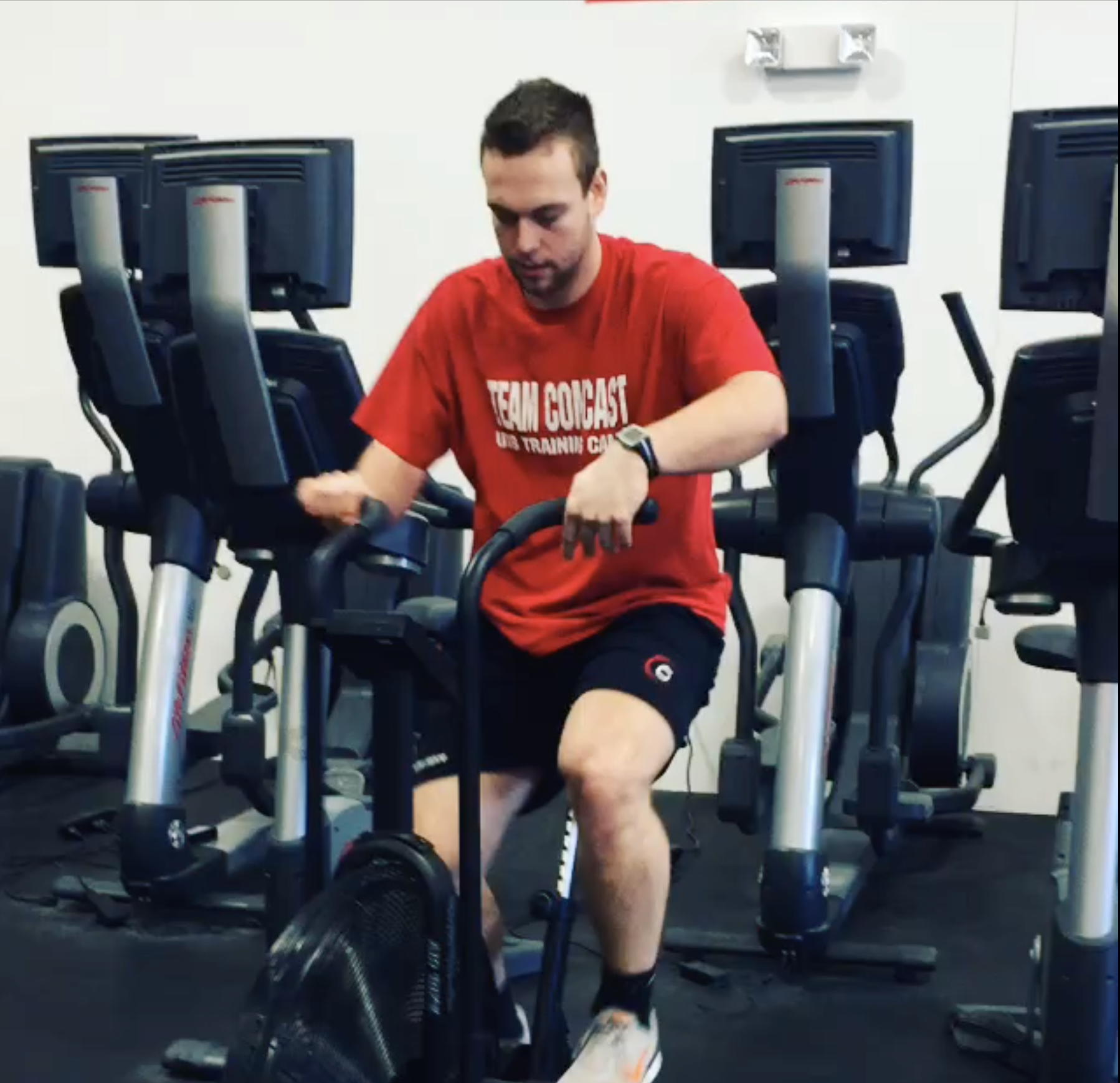
I generally think shuttle runs are a better alternative than exercise bikes if players NEED to condition (read below). With that said, one of the Hockey Strength and Conditioning Coaches I’ve learned the most from is Michael Boyle. He has his players ride exercise bikes in-season to decrease the risk of hip overuse injuries, as described above. However, he uses Schwinn Airdyne Exercise Bikes, which allow upper body movement and a more upright posture. These bike design changes remove many of the downsides of using exercise bikes for conditioning hockey players.


Do Hockey Players Need to Condition In-Season At All?

The amount of in-season conditioning players need depends on the amount of ice time they get and the composition of that ice time. There is nothing more hockey-specific than skating intervals. If coaches build conditioning-type drills into their practice or go through familiar drills at a high tempo, it’s likely that many players won’t need ANY off-ice conditioning.

Train Hard. Train Smart.

Kevin Neeld

P.S. If you want to use a PROVEN ice hockey training system this off-season to guarantee you enter tryouts and next season at your best, check out my Off-Ice Training course.

A couple days ago, I wrote a post on why hockey players shouldn’t use exercise bikes to condition.

If you missed it, check it out here: Hockey Conditioning: To Bike or Not to Bike!

So if you aren’t going to bike, what should you do?

The main two conditioning modalities that I recommend are:

Shuttle Runs

Pros:
This full body high intensity movement requires similar energy system characteristics as skating.

Shuttle runs require direction changes, which are inevitable on the ice.

Hockey players will produce force into the ground in a free movement pattern in order to accelerate, decelerate, and change direction.

Sprinting involves full hip extension and core control of this extended posture, which helps reverse the hunched over posture that hockey players spend too much time in.

Sprinting necessitates single-leg stability, just like skating.

Cons:
Shuttle runs minimally stress lateral movement patterns and the involved hip musculature that is used in skating.

Slideboards

Pros:
Slideboarding is a high intensity movement that requires similar energy system characteristics as skating.

Slideboarding involves constant lateral loading and direction changes, which reinforces the direction changes hockey players perform on the ice and strengthens the muscles on the lateral and medial (outside and inside) aspects of the hip. This helps decrease skating-related injuries (hip flexor and groin strains), while improving single-leg stability.

Slideboarding can easily be progressed to wearing a weight vest without interfering with the pattern, which mimics the loading and thermoregulatory changes that upper body equipment places on hockey players.

On-ice stride patterns can be improved off the ice using a slideboard. Specifically, hockey players can groove a proper skating posture and recovery mechanics on a slideboard. I’ve helped many players alleviate back pain from skating due to excessive rotation at the lower back simply by bringing it to their attention while they are on a slideboard.

Slideboards are awesome.

Cons:
Slideboards can be expensive and aren’t available at common gyms. If you’re lucky enough to be around Endeavor Fitness, we have slideboards AND a skating treadmill. If you’re not, you can build a slideboard for less than $50. Actually, I built two when I was younger for less than $50. It took about 2 hours and was a great father-son bonding experience. Nothing says family togetherness time like building high intensity hockey training equipment!

Reread the above paragraph. There are no cons.

Check back in the next couple days to learn how these rules change based on whether you’re in-season or out of season.

To your continued success,

Kevin Neeld

P.S. If you want to use a PROVEN ice hockey training system this off-season to guarantee you enter tryouts and next season at your best, check out my Off-Ice Training course.

In an interview I did with Maria Mountain, I told her that I never have my hockey players ride bikes.

If you missed the interview, you can listen here: Hockey Training Interview with Maria Mountain

Given traditional hockey training practices, this comes as a pretty big surprise to most players and coaches.

Let’s take a second to compare three commonly used hockey conditioning tools. Quick side note: All three of these modalities would be used in an interval training fashion only. I don’t think traditional steady-state aerobic training has any merit for hockey players at all. This includes “recovery rides”, which may have a mental benefit for hockey players, but probably lack any physiological benefit in light of the long known fact that nearly ALL lactic acid is processed within about an hour of ceasing activity (1,2,3). I realize this may offend some of my European Hockey Friends. I apologize in advance.

Exercise Bike

Pros:
Leads to similar “burning” feeling of the legs as a long shift. Improves local muscular endurance of thigh musculature.

Cons:
Biking involves MORE time in an unwanted hunched over posture (same as sitting in a desk or in a car). One of the main goals of our training programs is to REVERSE this terrible posture as it leads to range of motion limitations, undesired compensations, decreased performance and increased injury risk.

The upper body is relatively still while biking. Aside from the obvious fact that your arms move while playing hockey, because biking only uses your lower body it is more difficult to get your heart rate up to the near-max levels characteristic of a high intensity shift. Interval failure is more likely to result from localized muscular fatigue in the legs than from a more global energy delivery failure.

When players get tired on a bike, they begin to pull up on the foot straps, which puts more stress on their hip flexors. Sitting on a bike and pulling repetitively with your hip flexors reinforces the hip flexor tightness that too many hockey players already suffer from.

Biking involves putting force downward into floating pedals with a pre-determined range of motion. Skating involves putting force into the ice in a free range of motion. The force production and joint stabilization characteristics of biking and skating are completely different.

Should hockey players bike? I don’t think so. If you need a good leg burn, do split squat iso-holds. If you want good conditioning, use the modalities I’ll explain in my next post. Check back soon!

To your success,

Kevin Neeld

P.S. If you want to use a PROVEN ice hockey training system this off-season to guarantee you enter tryouts and next season at your best, check out my Off-Ice Training course.

References:

1) Gollnick PD, Bayly WM, & Hodgson DR. (1986). Exercise intensity, training, diet, and lactate concentration in muscle and blood. Med Sci Sports Exerc, 18(3): 334-40

2) Hermansen L, & Stensvold I. (1972). Production and removal of lactate during exercise in man. Acta Physiol Scand,86(2): 191-201

3) Freund H, & Gendry P. (1978). Lactate kinetics after short strenuous exercise in man. Eur J Appl Physiol Occup Physiol, 39(2): 123-35