I hope your new year is off to a great start. I’ve been extremely busy over the last two weeks balancing the Flyers junior team, all of our regular training clients, manual therapy clients, and working on a new project. We also had two new lacrosse organizations start with us, and Matt Siniscalchi and I have been testing all of the teams in a local soccer organization on top of everything else! It’s been a lot of fun, but I haven’t had nearly as much time to write as I’d like.

2014 kicked off by wrapping up the best of 2013. If you missed this series, you can check out the best articles, videos, and resources of 2013 at the links below:

  1. Best of 2013: KevinNeeld.com Articles
  2. Best of 2013: KevinNeeld.com Exercise Videos
  3. Best of 2013: KevinNeeld.com Products Resources

Today I wanted to present a new body position I’ve been programming for a variety of exercises that helps isolate the core. As a quick aside, I don’t believe you can (or should try for that matter) really truly isolate a given muscle group in most cases. With almost every exercise, there is a lot of “behind the scenes” muscle activity and motor programming that occurs that some are only acutely aware of. For example, while this is common knowledge among powerlifting crowds (and bench press enthusiasts in general), many in the athletic world don’t realize that a significant proportion of the load you’re able to move in a bench press comes from having a proper leg drive. Even doing an exercise like a biceps curl, as I demonstrated in Ultimate Hockey Training, requires a coordinated pattern of stabilization activity to keep the scapulae (shoulder blades) from migrating forward as the weight is lifted. This, naturally, is in addition to all of the muscles that are working at a low level to maintain alignment throughout the rest of the body.

That said, “isolate” in this context is used more in terms of the movement availability than suggesting that only the core is working. If you’ve read Ultimate Hockey Training, you know I program a lot of core work (e.g. chop and lift patterns, and belly press variations) based on the position progression of: Half-Kneeling -> Tall Kneeling -> Standing.

The videos below may take a second to load, so please be patient.

[quicktime]http://kevinneeld.com/videos/Half-Kneeling%20Cable%20Lift.mp4[/quicktime]
Half-Kneeling Cable Lift

[quicktime]http://kevinneeld.com/videos/Tall%20Kneeling%20Cable%20Chop.mp4[/quicktime]
Tall Kneeling Cable Chop

[quicktime]http://kevinneeld.com/videos/Standing%20Belly%20Press%20Lateral%20Walk.mp4[/quicktime]
Standing Belly Press Lateral Walk

These positions progress the stabilization requirements at and below the pelvis. In a half-kneeling position, the primary pelvic stabilization need is in the sagittal plane (front to back movement). Simply, having one leg forward and the other leg back serves to almost “lock” the pelvis into place, and a simple cue of “stay tall” takes care of most of the rest. In a tall kneeling position, the activity necessary to keep the pelvis from rotating, laterally shifting, or flexing/overextending is greater than the half-kneeling position, but the feet/lower legs are taken out of the pattern altogether. In a standing position, all hands are on deck to help control optimal positioning.

Over this past season, we’ve had two players end up in a boot: one with a broken fibula and one with a high ankle sprain. In these situations, my thought process is “one area needs to heal; the rest of your body is trainable.” There are very few injuries I don’t feel comfortable training around, and lower leg injuries leave the overwhelming majority of the body that can and should be trained during the recovery process. There is a much different return to play timeline for a player that sits on the couch for 12 weeks while his leg heals and one that trains whatever he/she can throughout that duration, as they are drastically less deconditioned when their injury heals if they’re proactive about training. As I tell our players, there is a huge difference between “not hurt” and “ready to play”. Confusing these two as synonymous is one reason why players have prolonged recovery times and/or constant recurrences.

Referring back to the positions above, need to stay off of the one leg with a boot rules out the half-kneeling and standing positions. As a result, in addition to tall kneeling exercises, I’ve programmed several “long-seated” variations.

[quicktime]http://kevinneeld.com/videos/Long-Seated%20Belly%20Press.mp4[/quicktime]
Long-Seated Belly Press

[quicktime]http://kevinneeld.com/videos/Long-Seated%20Cable%20Lift.mp4[/quicktime]
Long-Seated Cable Lift

[quicktime]http://kevinneeld.com/videos/Long-Seated%20Alternate%20Kettlebell%20Overhead%20Press.mp4[/quicktime]
Long-Seated Alternate Kettlebell Overhead Press

These positions require a significant degree of core “stabilization” to create a solid base of support to allow for controlled upper body movement, as the hips are completely taken out of it. I also think there is value here in teaching people how to “center” properly above their hips. As with all of these variations, I don’t think one is better or worse than another, they each just have different emphases and may be more of less appropriate for any given individual than the others. In this case, the long-seated position offers another position to train a variety of exercise patterns while placing a greater emphasis on centering over the hips and using the core to create a stable base of support. If you’re looking for a little variety in your programs, give these a shot. You might be surprised how difficult they are!

The videos above are 3 of the 10 long-seated exercise variations and of the 30 new exercise videos we just filmed and will add to the already 800+ exercise video database available to Ultimate Hockey Training Insiders this week. Get access to quality hockey training programs and the largest hockey training exercise database available today for less than the cost of a skate sharpening and roll of tape here: Ultimate Hockey Training Insider
Ultimate Hockey Training-Membership Card Insider Small

To your success,

Kevin Neeld
OptimizingMovement.com
UltimateHockeyTraining.com

Please enter your first name and email below to sign up for my FREE Athletic Development and Hockey Training Newsletter!

Get Ultimate Hockey Training Now!

“…an extremely rare comprehensive look at the present state of ice hockey training.”
“…a must-have for coaches and strength professionals at all levels of hockey.”
Ultimate Hockey Training

Tuesday kicked off the “Best of 2013” series with the top hockey training, strength and conditioning, and rehabilitation articles of 2013. If you missed that post, you can check it out here: Best of 2013: KevinNeeld.com Articles

Today we’ll follow up with the top exercise videos or video-based articles from 2013. If there were other videos you enjoyed from the past year, please feel free to them in the comments section below!

Top Videos of 2013
These are the Top 5 exercise videos or video-based articles from the past year.

  1. Hip and Thoracic Mobilization
  2. Teaching Proper Push-Up Form
  3. The Best Core Exercise Ever
  4. A 3-Step Approach to Improving Stride Length
  5. Developing Explosive Power (Most Popular!)

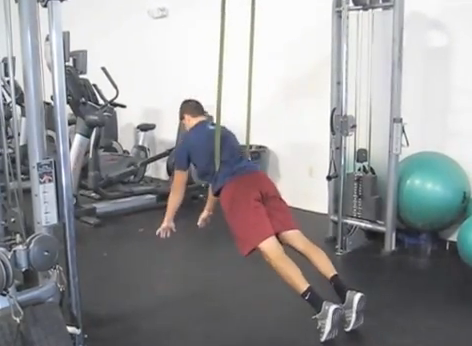
Unloaded Explosive Push-Up

Notable Videos from Previous Years
The first video here was an extremely popular video displaying a series of basic mobility exercises and dynamic movements strung together to form a fairly comprehensive recovery circuit. This is a great option for in-season training sessions the day after a tough/long weekend, and if nothing else, will give you some ideas on new exercises to mix into your programs.

The second video is an old presentation Mike Boyle gave at a USA Hockey American Development Model conference. This is a MUST-WATCH video for all hockey players, parents, coaches, and supporting staff. Even though this video is a few years old at this point, it’s as relevant now as ever.

  1. Mobility Circuit for Hockey Players
  2. Developing Elite Hockey Players from Michael Boyle

To your success,

Kevin Neeld
OptimizingMovement.com
UltimateHockeyTraining.com

Please enter your first name and email below to sign up for my FREE Athletic Development and Hockey Training Newsletter!

Get Ultimate Hockey Training Now!

“…an extremely rare comprehensive look at the present state of ice hockey training.”
“…a must-have for coaches and strength professionals at all levels of hockey.”
Ultimate Hockey Training

With the new year upon us, I thought it would be a great time to highlight some of the top content from this past year. These are the articles, videos, and resources that have garnered the most views and interest in 2013. Enjoy and please feel free to post any additional articles you really enjoyed in the comments section below!

Top Articles of 2013
These are the Top 10 most popular posts from 2013.

  1. Breakaway Hockey Speed Q&A
  2. Post-Activation Potentiation
  3. Youth Hockey Training: The Truth About Resistance Training
  4. 5 Ways Breathing Affects Sport Performance
  5. Selecting the Right Slideboard for Hockey Training
  6. 3 Powerful Recovery Strategies for Athletes
  7. Understanding the Bilateral Deficit
  8. 5 In-Season Hockey Training Considerations
  9. Groundbreaking Research on Hockey Hip Injuries
  10. Off-Season Hockey Training Programs (Most Popular!)

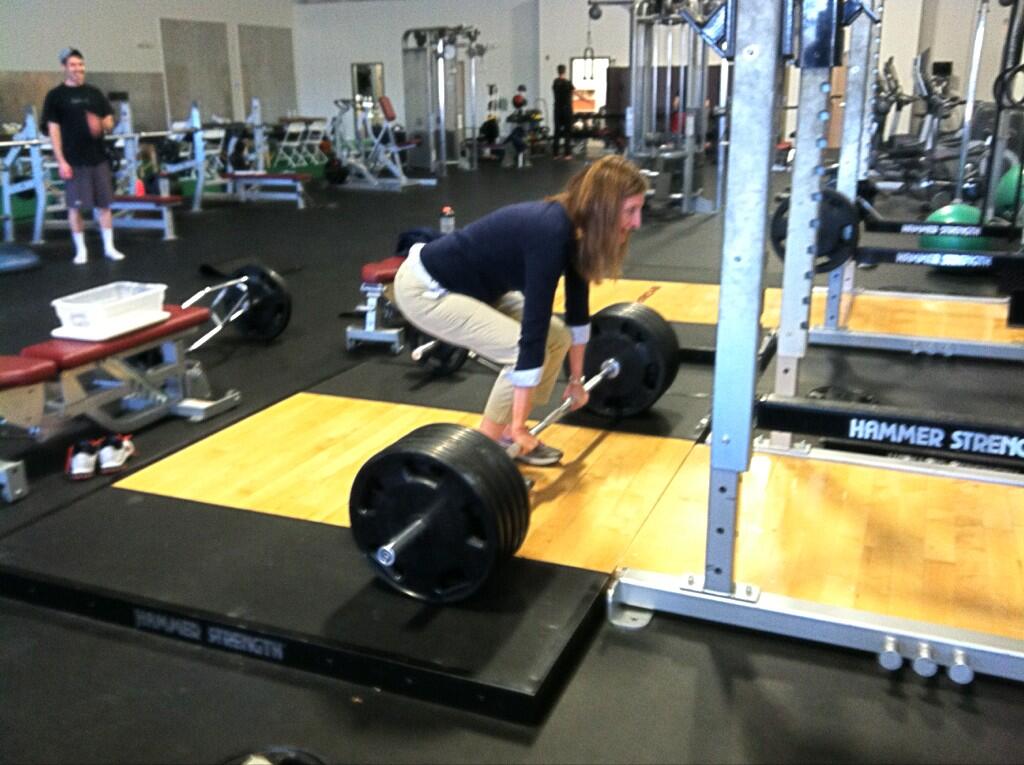
Jen Poulin Deadlifting

Notable Guest Posts/Articles
These are two articles that were extremely well-received, but not ones that I wrote personally.

  1. The Path to the NHL from Jason Gregor
  2. Dispelling the Stretching Myths from Andreo Spina

Functional Anatomy Seminars

Notable Post from Previous Years
This article, despite being two years old, continues to be the most popular one on my site. More articles on how specific pain/discomfort in individual lifts can be troubleshooted by modifying technique are on the docket for 2014.

  1. Shoulder Pain with Pressing Exercises

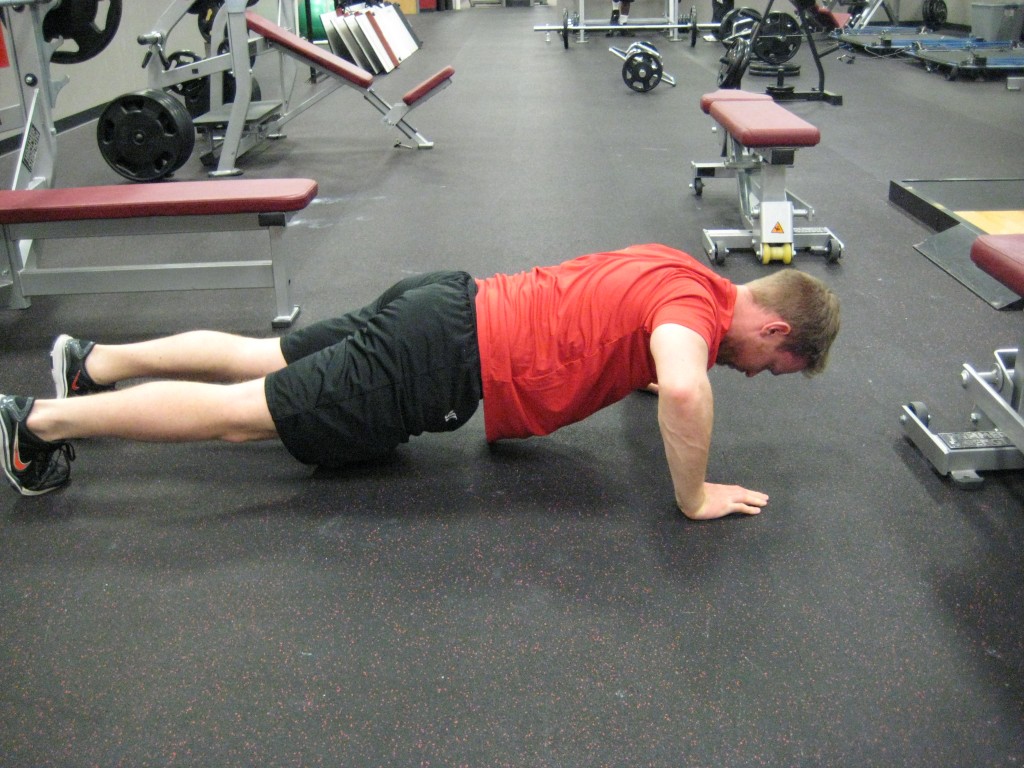
Terrible Push-Up

To your success,

Kevin Neeld
OptimizingMovement.com
UltimateHockeyTraining.com

Please enter your first name and email below to sign up for my FREE Athletic Development and Hockey Training Newsletter!

Get Ultimate Hockey Training Now!

“…an extremely rare comprehensive look at the present state of ice hockey training.”
“…a must-have for coaches and strength professionals at all levels of hockey.”

Ultimate Hockey Training

I spent the weekend in Phoenix, AZ at a PRI Vision course and spending some time with Neil Rampe, Charlie Weingroff, Doug(las) Kechijian, and a couple guys from the Diamondbacks staff. I still have a lot to digest and will spend some time studying the course materials over the next few weeks to see what I can do to improve my programs. As is always the case when I get together with these guys, I learned just as much outside the course as I did inside. A lot of great conversations!

I got back late last night, so I’m brain-fried right now and pretty far behind on a bunch of work (just found out I’m presenting in Philadelphia, twice, in two weeks…with no presentation started!). Fortunately, I was able to jump on a call with my friend Maria Mountain before I left and she just posted the recording of our call. In it, she asked me about:

  1. U.S. vs. Canada Olympic hockey (this wasn’t a questioning as much as trash talking!)
  2. How I use Postural Restoration Institute techniques with my athletes
  3. How breathing can influence performance and recovery
  4. The key qualities shared by exceptional athletes

The call isn’t overly long, but we cover a lot of good stuff, so make sure you check it out! Also, I don’t know all the details, but I know Maria is going to offer an AWESOME deal on all of our goalie training products, so if you’re a goalie and looking for great training opportunities, make sure you check out her site over the next few days: Hockey Training Pro

Listen here >> Hockey Training Interrogation with Kevin Neeld

In a couple days, I’ll be releasing the first part of a 3-article “Optimal Movement” series that dives into why recognizing structural and functional limitations is so important, what you need to know about corrective exercise, and how to individual programs in a group setting. Lots of great stuff coming in the next week. In the meantime, you can grab a copy of my 2-DVD set Optimizing Movement today for $20 off as part of an “Extended Black Friday” sale! Click the link below for more information!

Have a happy Thanksgiving and check back in a couple days for Part 1!

Get Optimizing Movement Now!

“…one of the best DVDs I’ve ever watched”
“A must for anyone interested in coaching and performance!”

Optimizing Movement DVD Package

Click here for more information >> Optimizing Movement

To your success,

Kevin Neeld
OptimizingMovement.com
UltimateHockeyTraining.com

Please enter your first name and email below to sign up for my FREE Athletic Development and Hockey Training Newsletter!

Over the last 5 years I’ve written over 650 articles for this site. It’s a little crazy to think about!

Because of the sheer volume of content, I find myself answering a lot of emails these days by searching for old articles I’ve written that answer the person’s question and just firing them back over. The reality is that I may be the only person among us that has read every one. In short, there is probably some good stuff that you guys are missing out on!

It’s for this reason that I’m starting a new “Throwback Thursday” series that will highlight an article from the past that still contains information that is relevant today. This will be a great way to reignite some conversation and discuss what (if any) changes in philosophy/training methods have resulted since these were first written. Today we’ll kick things off with an article that covers what I still feel is a fairly controversial topic (extremists on both ends). Enjoy!

Rethinking Bilateral Training

Bilateral training frequents athletic development programs everywhere.  By bilateral I mean both legs or arms working simultaneously to produce force/motion in the same direction.  Exercises such as front squats, deadlifts, standing shoulder press, and bent over row are just a few examples.  While bilateral training and the associated exercises are deeply rooted in the history of strength training, it may be time to reconsider their use.  Heresy you say?

I’m certainly not the first to make this suggestion.  Michael Boyle has been making the case for single-leg training for years now.  After reading one of his articles on the topic, I began thinking more about the lack of respect single-leg training receives.  As the article mentions, people are probably reluctant to use single-leg training because they require less external load.  This raises a few more questions.  Is external load completely indicative of internal stress to the muscle?  If so, is neglecting the movement pattern and maximizing the external load really the goal of training athletes?  The article also mentions the “functional” inclusion of the medial and lateral musculature of the hips that is present in single-leg training and not bilateral training, functional being defined as “training the muscles that we’re using in the way that we use them.”

I want to preface the rest of this article by stating that I’m not yet calling for a complete abandonment of bilateral training.  Instead I simply want to present some of the research supporting the empirical evidence that Coach Boyle presented in his T-nation article.  In light of the available research on the nervous system, a working knowledge of functional anatomy, and injuries associated with heavy spinal loading, I think it is time to reconsider the efficacy of predominantly bilateral training programs.

Neural Hinderance?

A look into the literature on the nervous system’s role in force production revealed an interesting occurrence known as the bilateral deficit.  For those of you that aren’t familiar, the bilateral deficit simply describes the fact that the sum of individual extremity force production is greater than bilateral force production (1-5).  In other words, if you performed a one-legged knee extension with your left leg only, then your right leg only, and added these two forces together, they would be greater than if you performed a knee extension with both legs together.  Bilateral Deficit: Leg A + Leg B > Both Legs
In fact, the bilateral deficit is said to be as large as 20% (6,7) during slow contractions and as high as 45% (7,8) during rapid contractions!  Luckily, researchers were quick to monitor the changes in this relationship following a bilateral resistance training program and found that the deficit decreased.  In some instances the relationship even reversed so that both legs produced more force than the sum of individual leg efforts (9,10).  Phew!  Disaster averted.

Neural scientists refer to the bilateral deficit as a phenomenon.  I would question whether it is a phenomenal occurrence or a long-term adaptation to repeated movements.  As many of you already know, performing a movement repeatedly strengthens the associated neural circuitry resulting in improved force production.  In the words of my old neurobiology professor, “Neurons that fire together, wire together.”  This is the primary explanation for why novice lifters can experience rapid gains in strength in the first eight weeks of training.

Is it possible that the bilateral deficit is simply a life-long adaptation to producing force on one-leg?  I realize that no one grows up performing one-legged squats off their kitchen stools on a daily basis, but think about the movements we perform regularly, notably walking and running.  While one leg is producing a triple-extension force, the other is usually producing a triple-flexion force.  Let’s come back to the knee-extension example.  In consideration of the “neurons that fire together, wire together” statement, it would make sense that as one leg is extending the neural circuitry is telling the other to flex.  This pattern predominates in most human movements: walking, skipping, running, and even crawling!

The neural circuitry to explain this pattern is well-established.  Some of you may have been introduced to it through the flexor crossed-extensor reflex.  In this example, if someone steps on a sharp object or other painful stimulus, they will withdrawal that leg by flexing the hip and knee.  At the same time, they will extend the hip and knee on the other leg.  This is a stabilization mechanism.  If both hips and knees flexed, you’d like end up sitting on the painful stimulus you’re trying to avoid.  Basically, as the flexor group on one limb is excited, the contralateral flexor group is inhibited, and the contralateral extensor group is excited.

What does this have to do with athletes?

We are wired to effectively produce unilateral movements.  Athletics involve unilateral movements.  Most strength and conditioning programs revolve around bilateral movements.  Why?  I understand the benefits of including single-leg training is being increasingly recognized and that more unilateral training is being prescribed.  However, it still seems that we’re adding some single-leg training to a double-leg program, instead of the other way around.  What happens if we abandon double-leg training altogether?  Compared to double-leg training, single-leg training:

1. Requires greater force production from more muscles. Picking up one leg immediately requires greater force production from the hip abductors and adductors (among others) to stabilize the pelvis.  Some of the affected muscles would include: pectineus, adductor brevis, adductor longus, adductor magnus, gracilis, obturator internus, obturator externus, gluteus maximus, gluteus minimus, gluteus medius, psoas major, iliacus, sartorius, gemelli inferior, gemelli superior, piriformis, and tensor fascia latae.

2. Increases the proprioceptive and sensory demand. Decreasing stability by narrowing the base of support will absolutely necessitate greater proprioceptive and sensory feedback to maintain balance.

3. Decreases spinal loading. I’ve heard a saying a few times that goes something like “Live your life the wrong way, you’ll end up in a cardiologist office.  Live your life the right way, you’ll end up in an orthopedic office.”  This has come to be accepted as an inevitable truth.  Research supports the idea that repetitive heavy spinal loading, as is common in long-term weightlifting, results in a myriad of spinal issues including an increased incidence of spondylosis (11), decrease in intervertebral disc height (12), lumbar spine degeneration (13).  But does it need to be this way?  If we can maintain or even improve the quality of the stimulus to the muscle and cut the external load in half, could some of these injuries be prevented?

4. Reinforces the neural circuitry common to most athletic movements. The majority of athletic movements occur from one-leg or a staggered stance.  Could this more similar training approach help to decrease the incidence of injury?  I’m thinking specifically of hamstring strains and ankle sprains.  Hamstring strength absolutely plays a role in preventing hamstring strains.  But how do we explain the athletes with monstrous hamstrings that suffer an injury?  Bad running form?  Maybe.  Is it possible that these strains are occurring due to a neural mishap associated with hamstring momentarily attempting to contract concentrically bilaterally when one side should be lengthening?  The causative factors associated with ankle sprains remain relatively allusive, but there does seem to be some evidence that decreased proprioception and increased peroneal stretch reflex latency may be related to ankle injury.  As a global factor, fatigue seems to be related to injury, with more injuries occurring as fatigue increases.  Of interest is that muscle fatigue is training-specific, meaning that if double-leg training predominates, the athletes will resist fatigue more efficiently in double-leg movements than single-leg movements.9  Naturally, the opposite is also true.  Both of those factors are neural in nature, and may be positively affected by the increased demand on the sensory system provided by single-leg training.  Prior history seems to be the greatest predictor of future injury.  Therefore, if we can prevent an injury from ever happening, we significantly decrease the risk of future occurrences.

Admittedly, some of the proposed benefits of single-leg training on injury prevention are speculative.  There is a clear list of benefits to single-leg training, however, that shouldn’t be overlooked.  While I believe that largely moving away from double-leg training is premature (and somewhat scary), I think it is worth considering.  Albert Einstein once said, “The significant problems we face cannot be solved at the same level of thinking we were at when we created them.”  Weigh the pros and cons associated with eliminating double-leg training.  Is it time for a change?

StrengthCoach.com

This article was originally published on StrengthCoach.com, an athletic development website where some of the world’s experts in strength and conditioning print their articles and discuss current issues.

To your success,

Kevin Neeld
OptimizingMovement.com
UltimateHockeyTraining.com

Please enter your first name and email below to sign up for my FREE Athletic Development and Hockey Training Newsletter!

Get Optimizing Movement Now!

“…one of the best DVDs I’ve ever watched”
“A must for anyone interested in coaching and performance!”

Optimizing Movement DVD Package

Click here for more information >> Optimizing Movement

References

1.    Obtsuki, T. (1983). Decrease in human voluntary isometric arm strength induced by simultaneous bilateral exertion. Behavioural Brain Research, 7, 165-178.
2.    Schantz, P., Moritani, T., Karlson, E., Johansson, E., & Lundh, A. (1989). Maximal voluntary force of bilateral and unilateral leg extension. Acta Physiologica Scandinavica, 136, 185-192.
3.    Secher, N., Rorsgaard, S., & Secher, O. (1978). Contralateral influence on recruitment of curarized muscle fibres during maximal voluntary extension of the legs. Acta Physiologica Scandinavica, 103, 456-462.
4.    Secher, N., Rube, N., & Ellers, J. (1988). Strength of two- and one-leg extension in man. Acta Physiologica Scandinavica, 134, 333-339.
5.    Taniguchi, Y. (1998). Relationship between the modifications of bilateral deficit in upper and lower limbs by resistance training in humans. European Journal of Applied Physiology and Occupational Physiology, 78, 226-230.
6.    Howard, J., & Enoka, R. (1991). Maximum bilateral contractions are modified by neurally mediated interlimb effects. Journal of Applied Physiology, 70, 306-316.
7.    Koh, T., Grabiner, M., & Clough, C. (1993). Bilateral deficit is larger for step than for ram isometric contractions. Journal of Applied Physiology, 74, 1200-1205.
8.    Vandervoort, A., Sale, D., & Moroz, J. (1984). Comparison of motor unit activation during unilateral and bilateral leg extension. Journal of Applied Physiology, 56, 46-51.
9.    Rube, N., & Secher, N. (1990). Effect of training on central factors in fatigue following two- and one-leg static exercise in man. Acta Physiologica Scandinavica, 141, 87-95.
10.     Enoka, R. (1997). Neural adaptations with chronic physical activity. Journal of Biomechanics, 30, 447-455.
11.     Aggrawal, N., Kaur, R., Kumar, S., & Mathur, D. (1979). A study of changes in the spine in weight lifters and other athletes. British Journal of Sports Medicine, 13, 58-61.
12.    Granhed, H., & Morelli, B. (1988). Low back pain among retired wrestlers and heavyweight lifters. American Journal of Sports Medicine, 16, 530-533.
13.     Videman, T., Sarna, S., Battie, M., Koskinen, S., Gill, K., Paananen, H., & Gibbons, L. (1995). The long-term effects of physical loading and exercise lifestyles on back-related symptoms, disability, and spinal pathology among men. Spine, 20, 699-709.

Use CODE: "Neeld15" to save 15%