More than ever, today’s game of hockey is dominated by “explosive” players. At every level it’s the fastest skaters who win races to loose pucks, and create the time and space necessary to create (or prevent) high-quality scoring opportunities. For these reasons, hockey players should seize every opportunity they can to improve their speed.
Speed can be boiled down to one simple
equation:
Speed = Stride Length × Stride Frequency
In the equation above, stride length describes the total distance you travel/glide from a single push before taking your next one.
Stride frequency is the number of pushes you take in a given period of time. Improving speed can be as straightforward as increasing both stride length and stride frequency.
Below are my top six strategies for doing just that.
1. Stay low
Ask most hockey coaches, and they’ll tell you the same thing: most players stand up too tall when they skate.
What these players don’t realize is that adopting a deeper skating stance will automatically increase their stride length.
Dropping your hips into a lower position directly translates into longer stride lengths, which increases contact time with the ice and generates more propulsive force.
Players generally don’t adopt a lower skating position for one of three reasons:
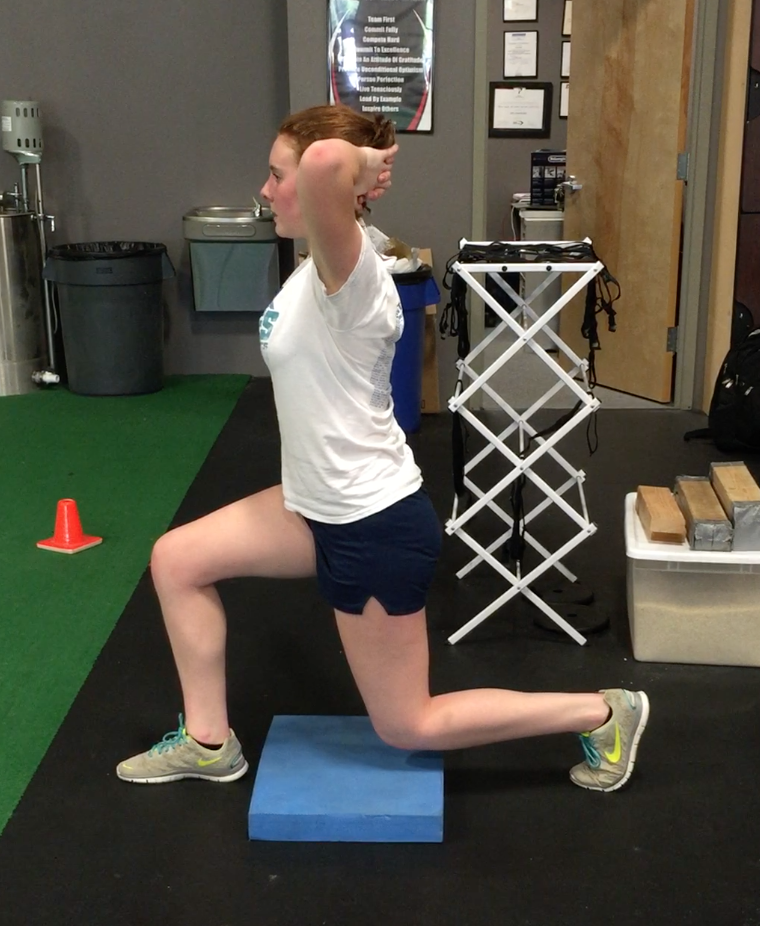
Lack of range of motion, typically because of stiffness in the ankles or hips
Insufficient strength to support a deeper position
Poor muscular endurance to maintain this position consistently
There are specific
tests to help identify each of these limitations, which can be easily addressed
with a quality off-ice training program.
2. Push through your toes at the end of every stride
Almost everyone can stand on one leg and push up onto their toes. While this seems like a basic movement, it really highlights the strength of your calves (e.g. for a 160lb player, pushing up on their toes is like a 160lb calf raise).
In fact, most players can generate enough power through this movement that they can jump off the ground with almost no knee bend.
In contrast, try jumping without pointing your toes as you lift off the floor? Without finishing the jump by “pushing through the toes” (a cue I use frequently when coaching jumping patterns), you’re leave a significant amount of power on the table.
This is exactly what’s happening on the ice if you don’t push through your toes at the end of each skating stride.
Pogo Hop – A basic exercise to emphasize pushing through the toes
Anatomically speaking, this joint action is known to as plantar flexion, and it’s a crucial component of triple extension, or the coordinated pattern by which the hips, knees, and ankles straighten to produce power.
Whether skating in a straight line or using a crossover pattern, hockey players should concentrate on pushing off through their toes on every stride.
This is also a pattern that should be emphasized in off-ice training programs, particularly with exercises that involve jumping or pushing/dragging sleds. The more players reinforce “finishing through the toes,” the more naturally it will come on the ice.
3. Fully recover your stride leg
Another big mistake players make is recovering their stride leg too wide. There are a couple different reasons why this is a problem.
First, when the stride leg isn’t recovered fully, it decreases stride length. Simply, because the skate is starting out wider, there’s less total distance for the hips and legs to move through to generate power.
An incomplete recovery can also cause issues with single-leg stability, and how the skate is loading through the ice, particularly when skating forward.
When the skate is too far outside the base of support, players will generally have their foot and knee collapse inward which creates a less stable single-leg position and causes the skate to load more through the inside edge. Riding the inside edge increases the friction and drag on the ice, which is like skating with a light brake on.
These are subtle changes, but they can have a significant impact on skating efficiency. And while this is clearly a skating technique issue, there are a few strategies players can use to start to address this off the ice.
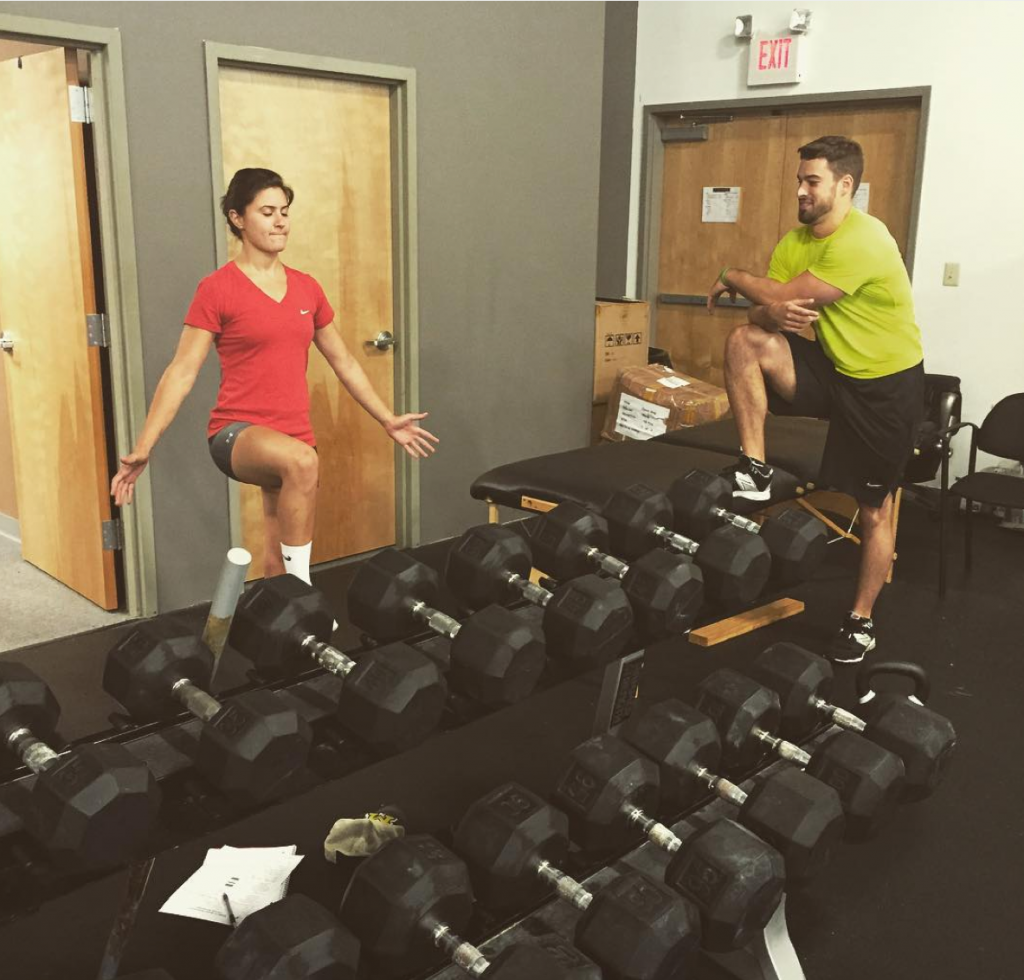
For example, players can focus on maintaining hip-knee-toe alignment during single-leg exercises like the “2-Way Skater” (see below), and on recovering the stride leg back under the body while using a slideboard.
Using single-leg jumps that require a “stick and pause” also helps encourage players absorbing force in a stable single-leg position, with their weight appropriately centered over their foot.
An old video I recorded on “Dissecting the 2-Way Skater”
Wrap Up
These three strategies require small shifts in focus while on the ice, but can collectively have a major impact on skating speed.
Further, there are specific off-ice training exercises and methods that can help develop these qualities to maximize transfer to on-ice speed.
As always, feel free to post any questions you have in the comments section below.
On Friday, I’ll share how a few of the most common conditioning myths in hockey may be limiting your speed potential.
Enter your first name and email below to sign up for my FREE Athletic Development and Hockey Training Newsletter!
Skating Speed & Rotational Power Development
It’s been almost 10 months since I last sent out a newsletter. At the end of last Summer, I was fortunate to be offered a new position as the Head Performance Coach with the Boston Bruins.
Between moving our family across the country and getting acclimated to a new position/organization, I haven’t had as much time as I’d like for, well, just about anything else!
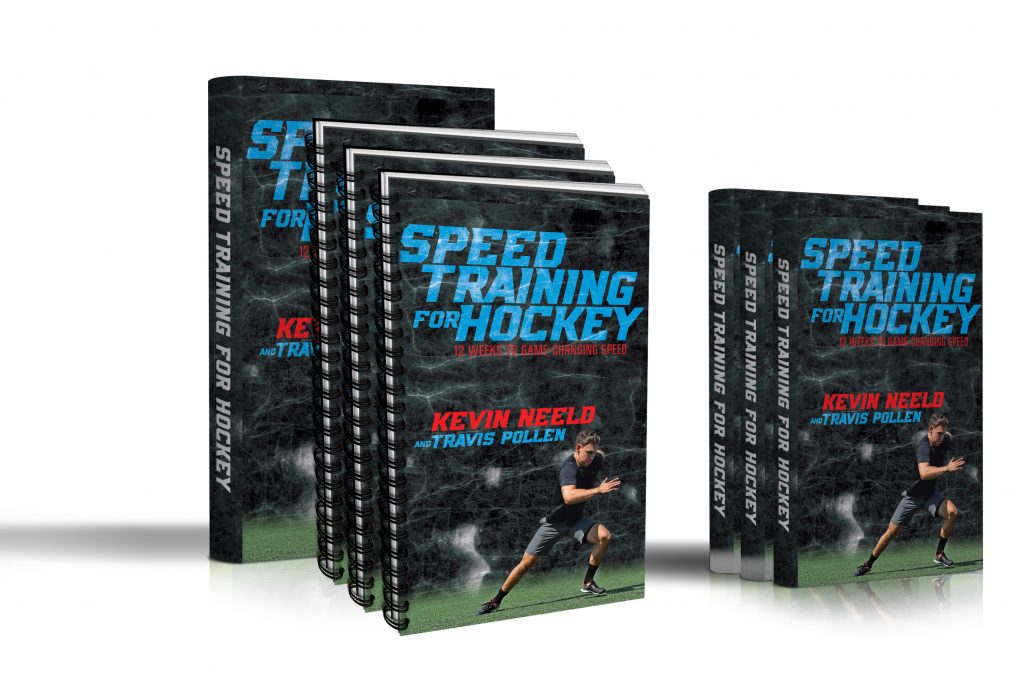
That said, after several years of work (and thanks to the tireless efforts of my co-author Travis Pollen), I’m extremely excited to announce that I’ll be releasing a new book “Speed Training for Hockey” at the end of this week.
I’ll have more details about the book, including a special announcement for newsletter subscribers, on Saturday.
In anticipation of the release, I’ll be
sharing a few articles highlighting important elements of effective speed
training programs throughout the week.
To kick things off, I want to share an interview I did with SimpliFaster a few months back. In the interview, we discussed:
Key
strength and functional qualities that make players fast on the ice
Differences
between off- and on-ice speed
How
to approach “specificity” of skating patterns through off-ice training
The
greatest training need of ice hockey players
How
movement screens should REALLY be used to impact performance
Enter your first name and email below to sign up for my FREE Athletic Development and Hockey Training Newsletter!
Hockey Training Interviews
A couple weekends ago I was in Colorado Springs to present at the NSCA’s Training for Hockey Clinic. In advance of the conference, I did a quick interview with Brian Sipotz for the Hockey Strength Podcast that covered a few elements of my presentation “Performance Profiling.”
In the interview, we cover:
the purpose of the screening process
the value of communication and feedback for the players
common issues we see in hockey players
how working in the private sector helps Kevin coach in the team setting
While at NSCA headquarters, I had an opportunity to shoot a quick video for USA Hockey with recent gold medal winners Brianna Decker and Kacey Bellamy from the US Women’s Olympic Ice Hockey team. With so many misconceptions about how youth hockey players should be spending their off-season, the goal of this video was to share some insight about how players can best facilitate their long-term development. The video is short, but offers a nice blend of perspectives from the S&C world and from players that have reached the highest level of sport (They’ve combined to win 12 Gold Medals in World Championships and 2 in the most recent Olympics).
Lastly, we’re less than 30 days out from our seminar Optimizing Adaptation & Performance, which takes place on July 14th at MBSC in Woburn, MA. The seminar will dive deep into a wide range of topics, including:
Using blood markers and physiological goals to drive different nutrition and supplementation interventions to enhance adaptation, maximize performance, or facilitate recovery
Efficient ways to use assessment and monitoring data to improve individualization of training and recovery methods within a team environment
Effective program design strategies used to retain performance qualities and allow for recovery during times of increased competitive demand and stress
This is NOT just a seminar about hockey training, but instead is designed for strength and conditioning coaches, sports scientists, and rehab professionals working with athletes in any sport.
The goal is to provide you with a comprehensive model of athlete performance, including the assessment and analysis tools, as well as programming, recovery, nutrition and supplementation strategies to best serve the individual needs of today’s athlete.
Special Discounts for Performance Staffs
I firmly believe that staffs benefit from doing continuing education together, even if, or maybe especially if individuals have different responsibilities. When I ran a private sports training facility for 7 years, our staff hosted several seminars every year, and frequently traveled to other events together.
It gave us an opportunity to discuss the information together, learn from each other’s perspectives, and really explore every possible avenue for implementing the information into our setting.
To help facilitate this type of communication and benefit with other staffs, and because the seminar content will cover such a wide array of topics, we’re offering a special discount to accommodate organizations who want to register multiple staff members. Simply, the first staff member needs to register normally, and each subsequent member can register under the “Student” section, which offers a nearly 50% discount.
If you have any questions about the seminar, feel free to post them in the comments section below. I look forward to seeing some of you in Woburn in a few weeks.
“Kevin Neeld is one of the top 5-6 strength and conditioning coaches in the ice hockey world.” – Mike Boyle, Head S&C Coach, US Women’s Olympic Team
“…if you want to be the best, Kevin is the one you have to train with” – Brijesh Patel, Head S&C Coach, Quinnipiac University
29 Lessons on Hockey Development
Last week I had an opportunity to speak at a youth hockey camp in Toms River, NJ that Jack Walchessen was running.
Jack has been a long-time training client who, after a successful OHL career (Captain of the Peterborough Petes and recipient of the Dan Snyder Memorial Trophy for Humanitarian of the Year), decided to transition his training from preparing for another hockey season to preparing for PSTs and BUDs in pursuit of becoming a Navy Seal, which was an interesting challenge for both of us.
When Jack first asked me to come speak, I agreed immediately. Then he dropped this on me (I’m paraphrasing): “I’d like you to cover training, nutrition, and recovery…I’ll have players under 10 up through the U-18 level, and their parents. You’ll have one hour.”
Pretty straight forward, right?
As usual, I got fired up on Starbucks and talked fast, so we were able to cover a lot. With that in mind, I wanted to share 29 of the messages that I discussed in the presentation with you. This a quick read, but should leave you with a few tips on areas you can improve upon.
29 Lessons on Hockey Development
1) Being an athlete is a 24-hour/day commitment. The older you get, the more important it is to view everything you do away from the rink as part of your preparation. You can’t just show up and expect to be great.
2) Physical preparation, nutrition, and recovery will ALL have a significant effect on your performance. If you’re doing really well in one or two of these areas, focus your energy on making improvements in the other(s).
3) Training allows players to execute their skill sets at the highest level, and can often make up for mediocre abilities. It doesn’t matter if you have the best shot in the world if you don’t have the speed/quickness (and hockey sense) to create the time and space you need to release it.
4) Eating real food, consistently, will not only make sure you’re properly fueled for games, you’ll also be able to train harder, recover faster, and generally adapt better, so EVERYTHING you do will lead to you making faster progress.
5) Sleep is arguably the most important part of recovery that every player at every age and level can make significant improvements on. Mild sleep deprivation (e.g. think 6 hours per night), consistently, can have the same detrimental effect on performance as not sleeping at all for an entire night. Think about that.
6) Simply, you can’t develop as a player if you’re hurt. Improving your durability should be a goal of every hockey training program.
7) The injury risk associated with the training process should be as close to zero as possible. Any training method, or coach, that has a reputation for injuring people should be avoided at all costs.
8) Weightlifting has a lower incidence of injury than playing soccer. As adults, we need to stop perpetuating this myth that lifting weights is not safe for kids. No parent in their right mind would not allow their kid to play youth soccer because of fear of injury.
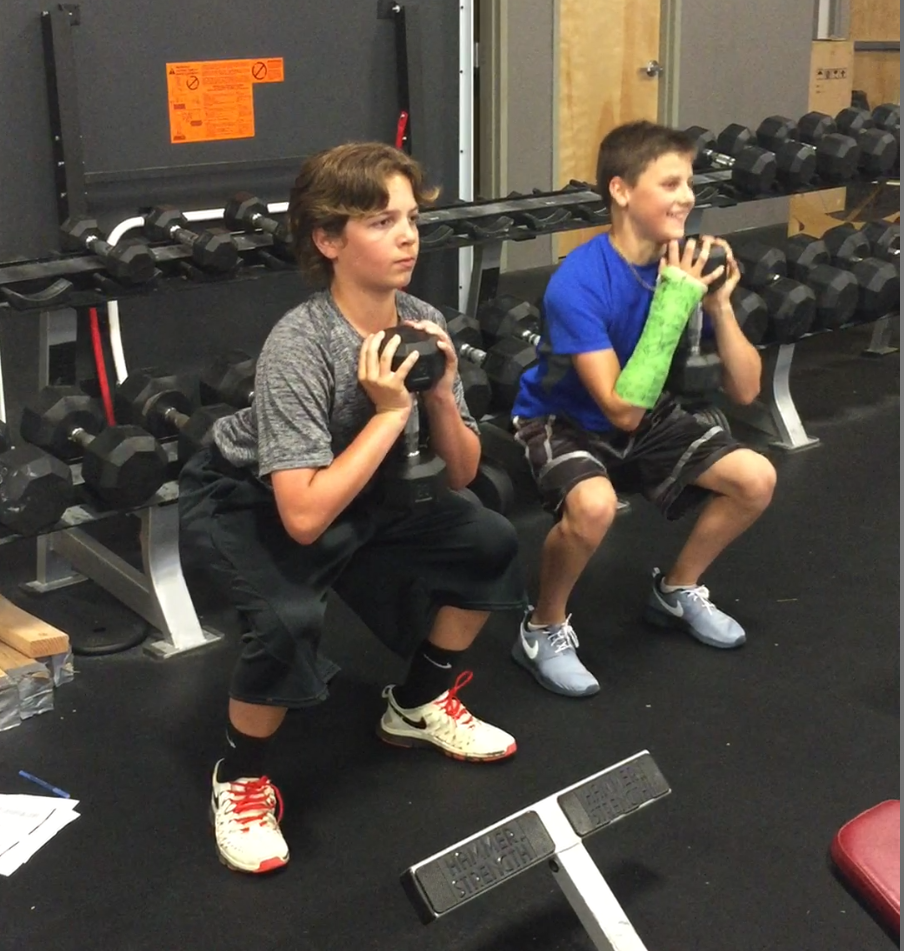
Tempo Goblet Squats are a great way to teach kids proper technique, while also improving lower body strength and low position endurance. And…they’re incredibly safe.
9) I’ve said this a million times…maybe not a million…but at least 12, quick feet training is NOT speed training.
Just a few more seconds…THEN you’ll be faster
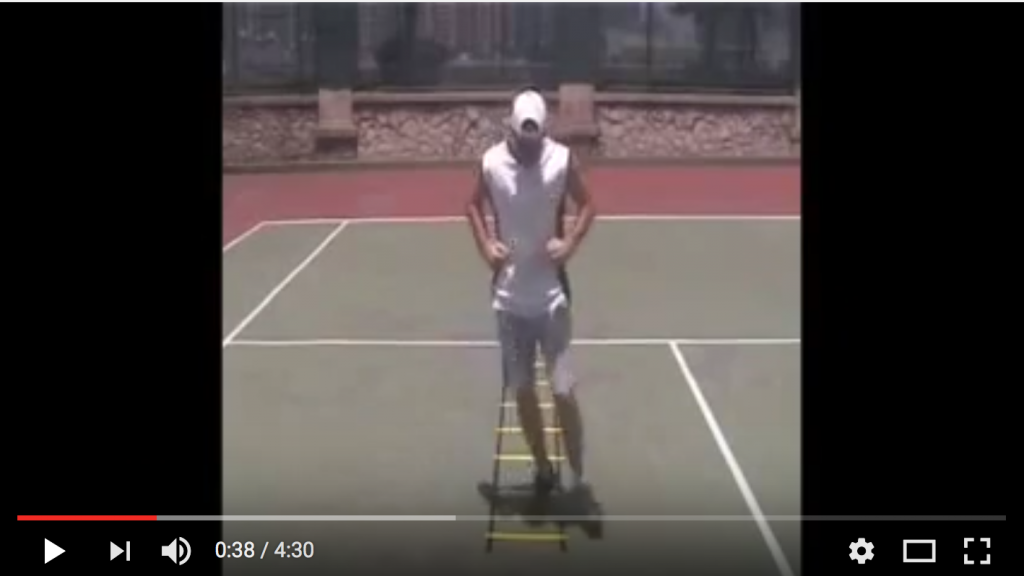
10) Ladder drills are more specific to tap dancing than they are to skating.
Step 1: Watch this. And when you finish laughing at the Knight Rider, Elevator Music and Missy Elliot mash-up they decided was most appropriate for this video, look at his body position (he goes no where), hand movement (short choppy arcs coming only from moving at the elbow, not the shoulder), and eye position (buried into the ground).
Step 2: Watch this. Enjoy the impressive rhythmicity as you note the similarities in speed of foot movement, but completely absence of the body going anywhere.
Step 3: Watch this, read the next section below, and then consider which two of these videos look the most similar?
11) Look at the cadence of his foot turnover during the starts, turns and when he opens up in the straight away. Even when his feet are moving fast, it’s still a much slower cadence than “quick feet drills”. This is a crucial distinction between speed training drills that transfer to skating and those that transfer to running. The longer the skate blade is in contact with the ice, the larger the propulsive force that can be produced with each stride.
12) Even tap dancers can keep their eyes straight ahead while they move their feet. Among the many negatives of using ladders for speed development, the athletes bury their eyes into the ground to make sure they don’t step on the ladder. There is no ladder on the ice. The ladder doesn’t matter.
Note the eye position.
13) Speed training doesn’t need to look like speed training to improve speed. In other words, just running more sprints is rarely the best solution. Most kids can’t go faster because of strength and technique limitations. Overlooking these is like optimizing the fuel injection into a 2-cylinder engine with crooked alignment. In other words, it’s like my car. Don’t be like my car.
For most youth players, THIS is speed training.
14) This is one of my favorite videos from my 7 years at Endeavor. A lot of lessons to be learned here. A cast over his wrist didn’t cause him to miss a single week of training. “Big legs” and “strong legs” aren’t always the same thing. Most hockey players I hear say “I don’t lift lower body because my legs are big enough” are really saying “my legs are fat, and I’m lazy.” Despite being considered small, Kyle’s incredibly strong. There’s a reason he was the first two-time Captain at Harvard since 1923. World-class work ethic.
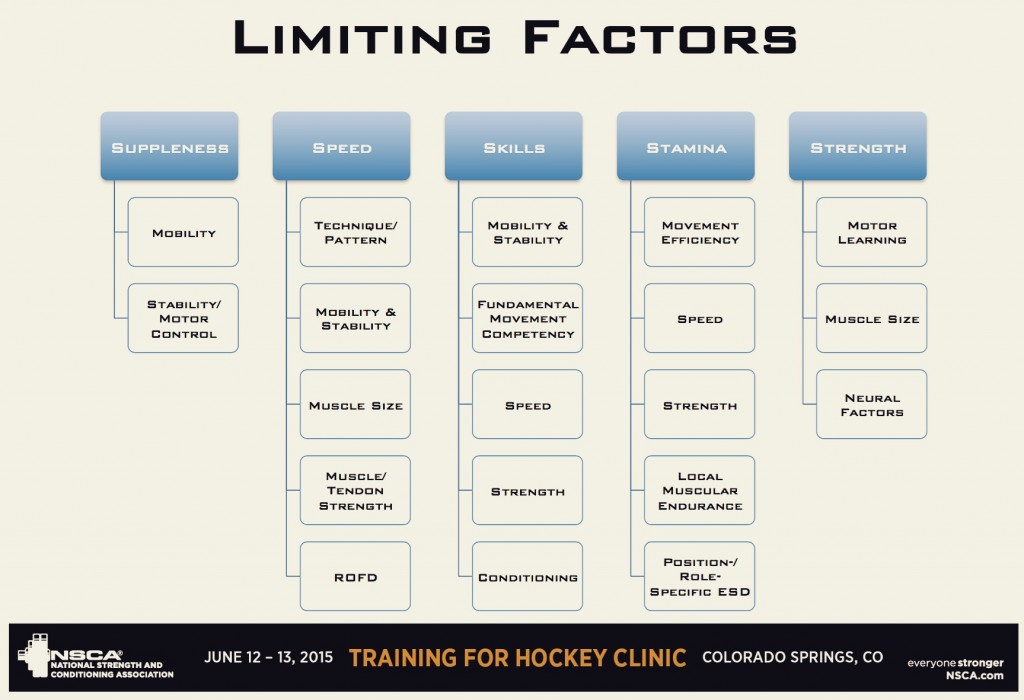
15) Understanding what is limiting you from achieving your goal is arguably the most important part of the development process. Most people skip the “diagnostic” step, and just throw a bunch of training at someone and hope it works. Would you be comfortable doing this with your car? “Yea, we uh, went ahead and changed your oil, put in new windshield wipers, and rotated your tires.” “Is that what was wrong with my AC?” “We didn’t check, but most cars need those things so we just did that. Good luck.”
16) We drastically over-complicate nutrition. Eat REAL food as often as you can. If you do this, most other problems take care of themselves. There are a few real food rules I recommend using as guidelines: 1) Real food can be hunted or grown; 2) Real food was real food 10,000 years ago; 3) Real food has one ingredient. I asked a young girl at the talk to list all of the ingredients in broccoli. She covered her face with her hands, got super red, peeked out from behind her hands, and said, broccoli? NAILED IT! You don’t need to be a dietician to get this part right.
17) When you eat real food, food shopping is a breeze. Work the perimeter of the store (produce, meat, eggs), duck into an aisle to pick up some spices, and if you’re eating beans with every meal like I’ve been for the last 3 weeks…toilet paper, and you’re done.
Real Food: Eggs, black beans, spinach, cherry tomatoes, onions and roasted garlic.
18) If you’ve struggled to master reading food labels, I have a solution: If it has a food label, don’t buy it. Problem solved.
Real Pop Tart Label. Don’t you just love how the sodium acid pyrophosphate compliments the thiamin hydrochloride?
19) Most kids skip breakfast or eat cereal, eat a sandwich and chips for lunch, and eat whatever their parents make them for dinner. This means for the overwhelming majority of the day, they don’t consume any actual REAL nutrition.
20) It doesn’t matter how old you are, if you are capable of picking something up, putting it in a bag, and then putting that bag into another bag, you have all of the requisite skill sets to pack your own lunch. Don’t rely on your parents to do this for you; take responsibility for your own eating.
21) Mild dehydration can significantly impair mental and physical performance. Don’t worry about counting how much water you drink every day. Your pee should be clear ALL day long. If it’s not, you’re not drinking enough water.
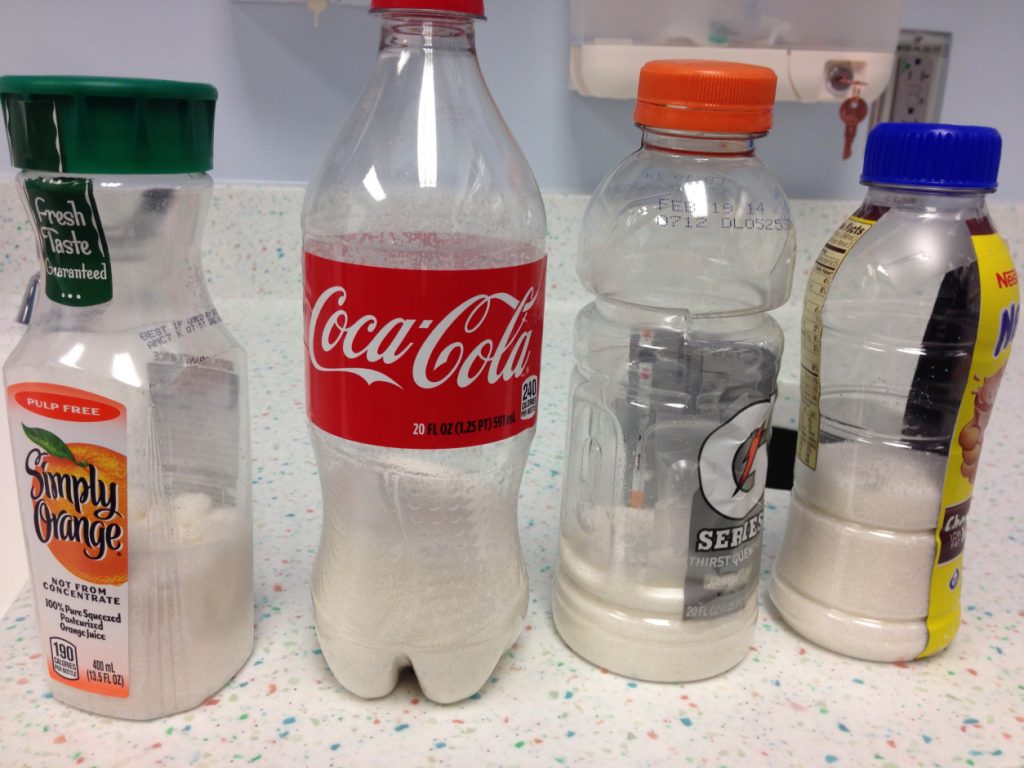
22) Juice is not good for you. We need to stop hiding behind the “vitamin” content in juice as a justification for it being good. EVERYONE reading this knows someone affected by Type II Diabetes and/or obesity. NO ONE reading this knows a single person affected by scurvy. We have a bigger problem with sugar intake than we do with vitamin C deficiency.
Sugar content in common drinks (Image from: littlebitsweet.wordpress.com)
23) “Sitting is the new smoking.” The body adapts to the positions it spends the most time in. We need to make a conscious effort to get up regularly to interrupt the body literally molding itself to better fit in your couch.
24) One of the primary strategies your body uses to stabilize itself is vision. This is why you can stand on one leg so much easier with your eyes open than with your eyes closed. Components of vision are trainable. If you stare at a cell phone for hours each day, you’re training your vision to fixate on something a few inches in front of your face. This impairs your ability to use your vision more dynamically (e.g. to absorb and process all of the movement around you while you’re on the ice) and teaches your body to over-rely on visually fixating on a single point for stability. Usually these people stare at the floor while they walk to feel “grounded” and fall apart on a single-leg stance test when they close their eyes.
25) Being “ready” to perform is a balancing act between stress and recovery resources. If you aren’t making the progress you want or feel like you’re constantly worn down, try to tease out if it’s because you’re doing too much (e.g. playing on 2 teams, practicing 5 times per week than playing 4+ games on weekends) or not providing enough recovery resources (e.g. CONSISTENT real food, hydration, quality sleep, etc.).
26) One of the most powerful ways to improve sleep is to keep your room cold, dark, and quiet. Make sure your cell phone is on “do not disturb” mode and face down, as this will allow all of your messages/calls to come in, but the sound and light from the phone won’t impair your sleep.
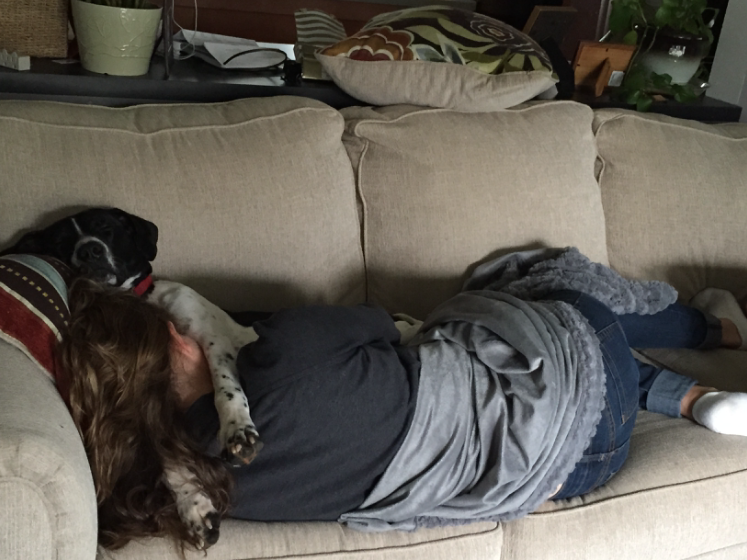
When all else fails, take a cue from my wife and sneak a quick nap in during the day. If you nap for a full 90 minutes, you’ll actually get some “deep sleep” in, which is the type characterized by hormone release associated with tissue growth and repair, and such a deep state of unconsciousness that you won’t notice if your dog climbs on top of you and wedges into the awkward spoon position.
27) Three things every player can start doing TODAY to improve their development are to: 1) Find a quality hockey training program; 2) Start eating a vegetable with every meal; and 3) Carry a water bottle with you all day long.
28) Commit to excellence in everything you do. Be the best athlete you can. Be the best student you can. Be the best friend you can. Be the best son/daughter/brother/sister you can. Take pride in who you are as a person.
29) Everyone that told Johnny Gaudreau he was too small to succeed at the Midget, Junior, College, and Pro levels was right. He was. He is. But he succeeds anyway. Don’t let other people tell you what you can and can’t achieve. No one knows what you’re capable of.
“Kevin Neeld is one of the top 5-6 strength and conditioning coaches in the ice hockey world.” – Mike Boyle, Head S&C Coach, US Women’s Olympic Team
“…if you want to be the best, Kevin is the one you have to train with” – Brijesh Patel, Head S&C Coach, Quinnipiac University
Hockey Power Testing: Where do you rank?
A couple weeks ago I was at the Catapult Hockey Workshop in Denver with a few dozen strength and conditioning coaches from the NHL and NCAA. While there, someone asked me about the Lateral Bound test, one of many “hockey power tests” I really like.
I’ve written about the Lateral Bound Test in the past, but if you missed those articles, you can check them out here:
In short, I think the Lateral Bound Test is more hockey-specific, and provides different (if not better) information than a Vertical Jump.
One of the biggest problems with testing is that most people don’t actually do anything with the information. This is likely the result of people not knowing what a “good” score is for many tests, and the difficulty in assessing one’s true genetic ceiling (e.g. if I’m better than everyone else, is that still as good as I can get?).
With these things in mind, I wanted to share some normative data from the hundreds of hockey players I’ve tested over the last few years. Hopefully this provides a basic target for you to measure your own status, as well as your progress moving forward.
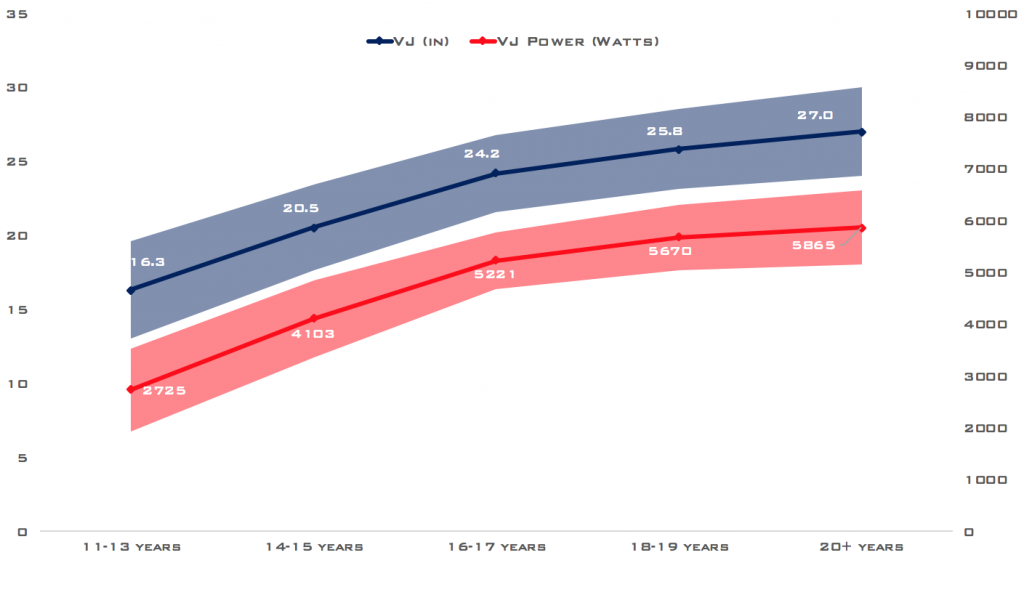
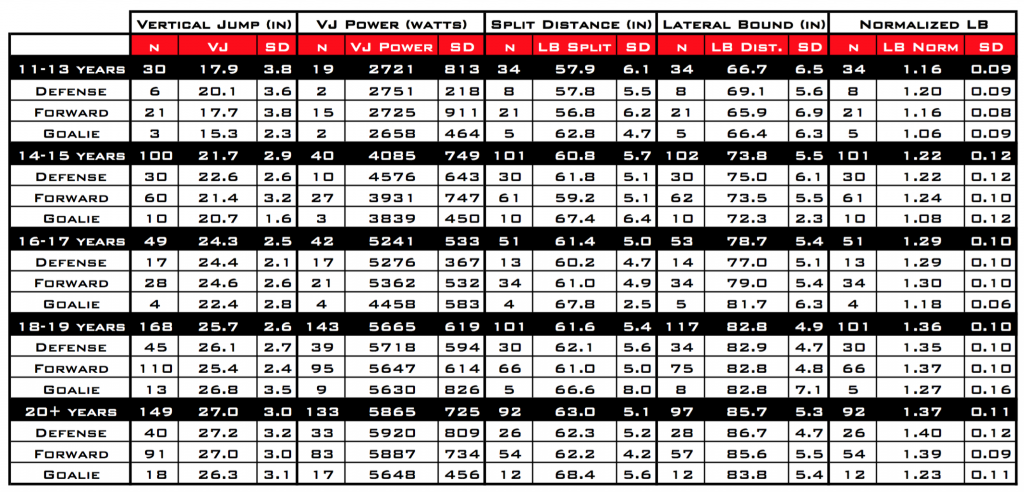
The above table shows the average and standard deviations for different age groups for Vertical Jump, Vertical Jump Power (using Sayer’s Formula to estimate the power based on vertical jump height and body weight), Split Distance, Lateral Bound Distance, and Normalized Lateral Bound Distance (Lateral Bound/Split Distance).
As a quick reminder, the split distance (discussed more in the Testing Power in Team Sport Athletes article) provides different information than simply a leg length test. In the 95 athletes I have leg length AND split distance data for, the two variables shared a correlation of only .163. That number should seem low, but to put it in perspective, leg length had a .103 correlation with percentage body fat.
The table also shows the number of athletes in each age group for each cluster of tests. I actually have A LOT more VJ and Lateral Bound data than this, but I included included VJ data where I also had VJ Power (we haven’t always assessed body weight in certain circumstances) and lateral bound data where I had split distance (this wasn’t part of the early testing procedures).
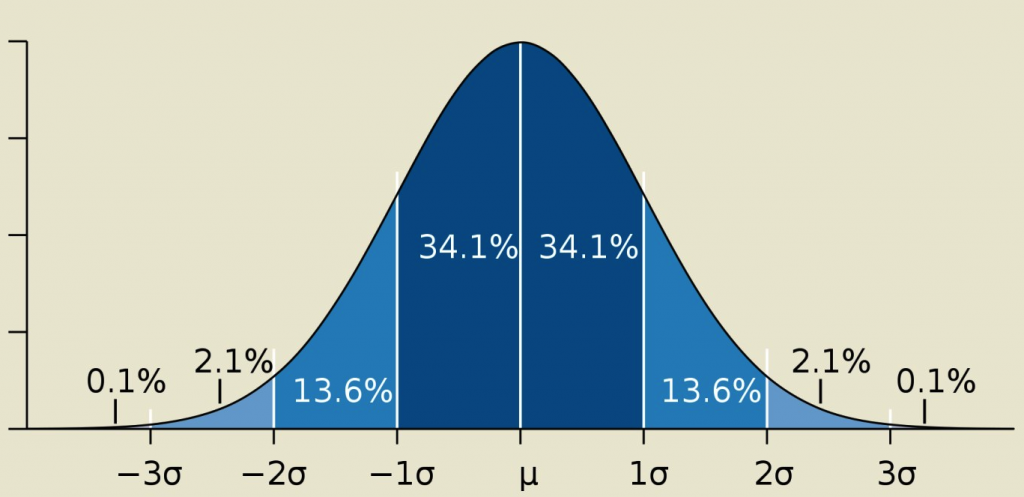
As a quick refresher, the standard deviation gives a general idea of the distribution of test scores. In a normalized distribution (as these scores were), ~68% of the population will fall within one standard deviation around the average, 95% will fall within 2 standard deviations (i.e. 34.1+34.1+13.6+13.6=95.4), and 99% will fall within 3 standard deviations (i.e. 95.4+2.1+2.1=99.6).
This same data can be used to estimate what percentile you fall in relative to the population. For example, if you’re 18 years old and your average lateral bound distance is 88 inches, you can use the standard deviations to write out these percentages:
50% = 83.6
~84% = 88.6
~97.5% = 93.6
~99.9% = 98.6
So your score of 88 inches would fall roughly in the 84th percentile.
Vertical Jump (left axis) and Vertical Jump Power (right axis) normative data (presented as average +/- 1 standard deviation)
Lateral Bound (left axis) and Normalized Lateral Bound (right axis) normative data (presented as average +/- 1 standard deviation)
As I mentioned in a previous article, one of the benefits of using the lateral bound test is that it provides insight into side to side discrepancies that are otherwise hidden by a vertical jump (in the absence of a dual force plate). While you may think the differences between legs are relatively negligible, of the 446 lateral bound tests I have data on, 88 (19.7%) show a side-to-side discrepancy of 4 or more inches.
This is important because it could be indicative of a power and/or range of motion deficit on one side that may increase injury risk. At the very least, there’s no reason to believe this discrepancy is “optimal” and therefore it may warrant taking steps to normalize balance.
The last thing I wanted to look at is how these tests vary by position. For those of you that like to look at raw numbers, I’ve included the sample sizes, averages, and standard deviations in the table below.
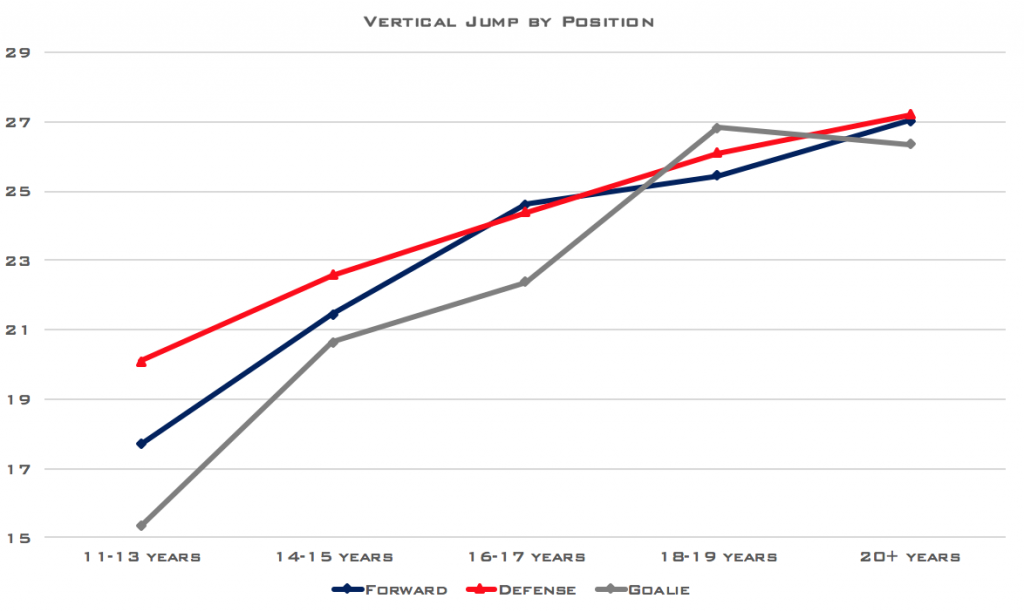
For the rest of you, let’s just take a look at a few line graphs that simplify the message.
Vertical Jump by position. Note that goalies lag behind forwards and defensemen until ~18 years old.
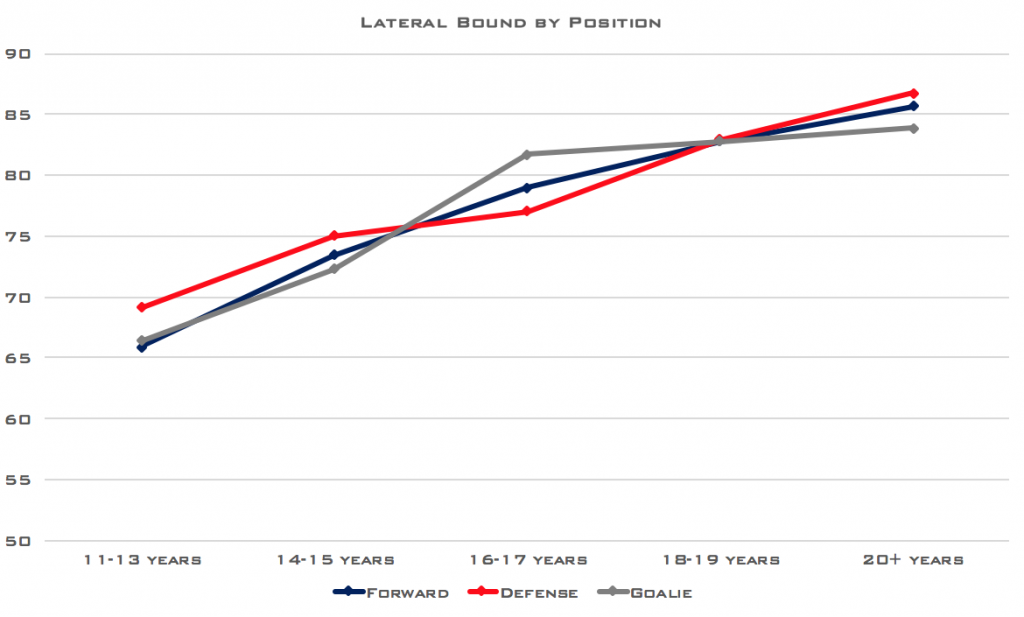
Lateral Bound by position. No notable differences between positions at any age group.
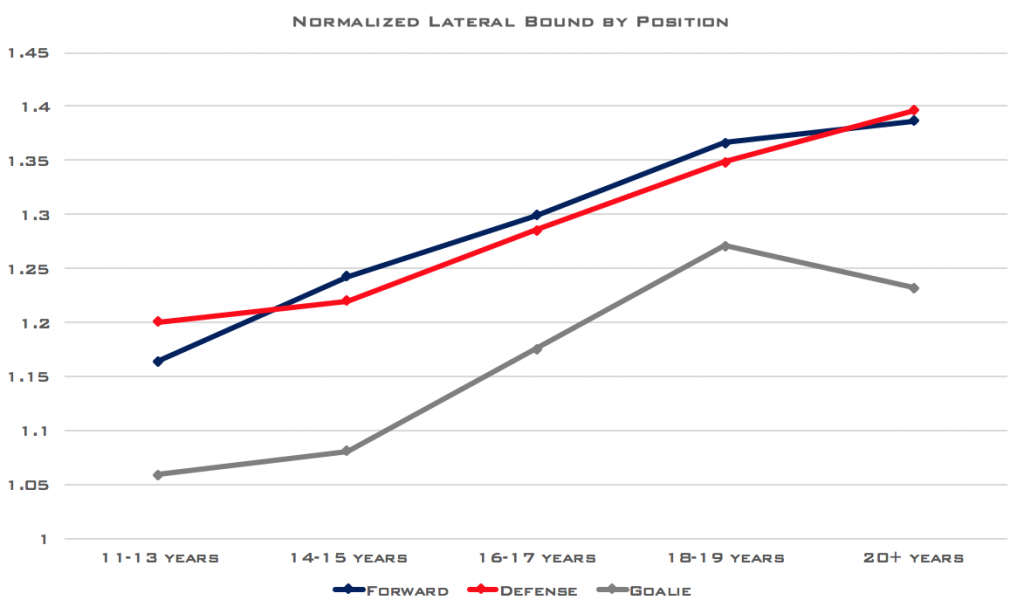
Lateral Bound Distance normalized to Split Distance. Once again, goalies are considerably lower than position players, but now it’s consistent across all ages.
There are several different ways to look at this position-specific data. Starting with Vertical Jump, it appears that goalies lag behind everyone else until Juniors/College. From personal experience, I think there are two major reasons for this: A) Goalies tend to over-emphasize flexibility training and under-emphasize…well, any other form of training, and B) At younger ages, it’s pretty common for the fattest and/or least athletic kid to get throw in net. I think most goalies would do better to put a great emphasis on training for speed, power, and strength IN ADDITION to their flexibility work at younger ages.
When we look at Lateral Bound distance, the raw numbers are difficult to interpret because we don’t know if differences are the result of leg length (unlikely), hip structure (possible), and/or flexibility (likely) differences between positions, or true power output differences. This is clarified by the normalized lateral bound graph. Here, the goalies are again significantly behind the other positions. In fact, at younger ages, their normalized values are barely over 1.0, which is the “I can jump as far as I can fall” threshold.
Again, I would argue that most goalies would benefit from improving the focus on their speed/power training in conjunction with their flexibility training. However, I also think it’s important to appreciate the nature of the position, and recognize that the goal isn’t necessarily to make all of the positions identical. The optimal ratio for most goalies is likely still below position players; however, goalies may feel more reactive on the ice if this gap is narrowed.
Wrap Up
The most important part of testing is to provide yourself with a baseline measure so you can track progress over time. Simply, if you beat your last test, you’re headed in the right direction. However, many players are interested in how they compare to others in their age group, and understandably so. After all, if you improve from worst to slightly better than worst (I call this “less bad”), it’s not nearly as meaningful as climbing into the “above average” category. With this in mind, the above normative values can be used as a guide to assess where you rank in terms of power production. Hopefully you can use this information as motivation to not just train harder, but also train smarter.







 Vertical Jump (left axis) and Vertical Jump Power (right axis) normative data (presented as average +/- 1 standard deviation)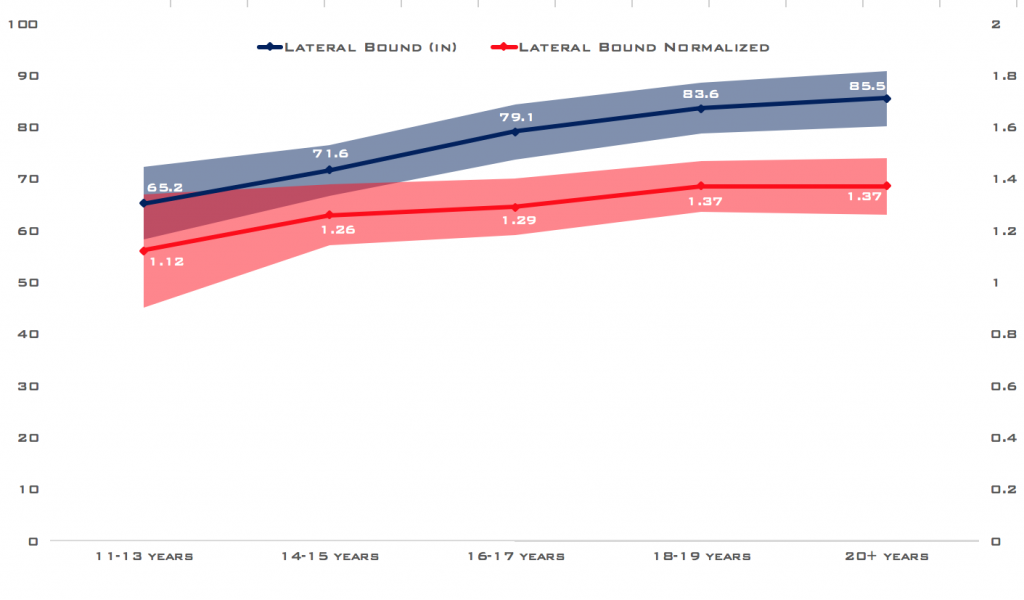
 Use CODE: "Neeld15" to save 15%