
Let’s face it, every youth hockey team has a few (or…more than a few) knuckleheads that have their own agenda. Some just don’t buy into off-ice (yet); some don’t respect authority; some may suspect blood sugar fluctuations due to their even more suspect food choices; and some may have just had a bad day/week.
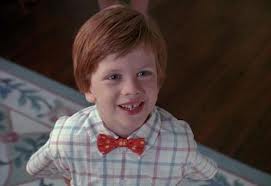
Problem Child

What do you mean you don’t want to do a spiderman lunge?

In the years that I’ve been around hockey, I’ve seen these cases handled in a variety of ways. In most cases, the coach will either verbally coerce the player into submission, attempt to ignore the player, or simply kick him/her out. While I think all of these methods may have some merit depending on the player and the situation, I’ve had pretty good success over the years taking a different approach, especially with “chronic offenders”.

A few years ago I made the realization that many coaches, including myself at the time (despite my unconditional optimism), spend more time reprimanding negatives than acknowledging or rewarding positives. In a youth team off-ice setting, this can be disruptive to the overall success of the team, and, frankly, gets old very quick. It makes coaching exhausting! I realized that some of the kids that are chronically misbehaving aren’t necessarily “bad kids”, they just thrive on the attention. They may have a tough home life, one parent, abusive sibling, or generally be under-confidant. Regardless, the key here is that they just want attention. In these cases, I’ll often pull the kid aside before or after off-ice (depending on what’s most appropriate for that given day) and let them know that I view them as a natural leader, and acknowledge that for better or worse, teammates follow his/her actions. The next off-ice, I’ll pull them from the back of the line and put them up front to lead the dynamic warm-up. I’ll also use them to demo exercises and commend them in front of everyone when they do something well. This has had a SIGNIFICANT impact on curtailing undesirable behavior, and can ultimately change the player’s course.

All of this comes back to an idea I read…in a book.

Give them a reputation to live up to.

In other words, if you want to influence behavior, sometimes it’s ideal to commend the individual for the behaviors you WANT to see, even if it doesn’t exactly fit their current profile. In this case, describing the player as a “leader” instead of a misfit may change the player’s view of themselves and the role they play on the team. This isn’t lying; it’s outlining expectations in a different manner. In my opinion, if we keep reminding kids of how bad they are, they’ll keep reminding us of how right we are!

Next time you have a problem child in your group, give this strategy a shot!

To your success,

Kevin Neeld
UltimateHockeyTraining.com

Please enter your first name and email below to sign up for my FREE Athletic Development and Hockey Training Newsletter!
This morning, Part II of the interview I did with Jeff Angus went live. If you missed Part 1, you can check it out here: An Interview with Hockey Trainer Kevin Neeld

Part II digs into off-season programming for elite hockey players, what to expect in the future from performance enhancement specialists,  differences between front and back squats, and my stance on the unilateral vs. bilateral training debate. Lots of interesting stuff in this one. Check it out here: An Interview with Hockey Trainer Kevin Neeld Part II

To your success,

Kevin Neeld

P.S. If you want to maximize the transfer of your off-ice training to on-ice performance, you’ll want to follow a specific hockey training system designed to do just that.


Please enter your first name and email below to sign up for my FREE Athletic Development and Hockey Training Newsletter!

I hope you enjoyed the weekend. I’m still getting caught up after a 5-day stint in San Diego for ART Spine, 4 days of being hurricaned in, 5 days of working at the USA Women’s National Hockey Team’s Pre-4-Nations Camp (they won the championship in Finland this past weekend with a 3-0 victory over Canada!), and most recently, hosting a 2-day PRI Seminar at Endeavor this past weekend.

PRI was a lot of fun, and if you’re in the training or rehabilitation industries and haven’t taken a course yet, I’d strongly encourage you to look into it. Sarah Cahill (who is an AWESOME S&C Coach at Northeastern, as well as with the US Women’s National Hockey Team) and a significant chunk of Mike Boyle’s Staff at MBSC (Kevin Carr, Brendon Rearick, Ana Tocco, Jill Zeller, and Tim Morrill) all crashed at my place in Philly (standing room only). It was great to catch up with all of them and bounce ideas back and forth over the weekend. We also had several current and former Cressey Performance interns/coaches make their way down, and essentially my entire local referral network attended. I’m really looking forward to hosting their Pelvis Restoration Course April 6-7 next year.

Needless to say, I haven’t had as much time to sit down and write as usual. A couple weeks ago, however, I had an opportunity to do an interview for a freelance writer named Jeff Angus, who runs a website titled “Angus Certified”. He posted the first part of the interview this morning, which you can access here: An Interview with Hockey Trainer Kevin Neeld

The second part of the interview will be up later in the week. In the meantime, check this out and let know if you have any comments/questions by posting them below!

To your success,

Kevin Neeld

P.S. If you want to maximize the transfer of your off-ice training to on-ice performance, you’ll want to follow a specific hockey training system designed to do just that.


Please enter your first name and email below to sign up for my FREE Athletic Development and Hockey Training Newsletter!
Over the last couple weeks, there have been a lot of great discussions in my LinkedIn Group “Hockey Training“. A few days back, Dr. Chad Moreau, who has experience working with a wide range of hockey players (including the Edmonton Oilers of the NHL and Long Beach Ice Dogs of the ECHL), posed the question “Does Working Out in the Gym Improve Performance on the Ice?”

While I think many of you would consider this a no-brainer, the number of high level players that find success despite a lacking or downright terrible training program and the number of players that are physical specimens that still can’t make it to the next step warrants having this discussion. Also, many players seem to look toward off-ice training to improve specific on-ice skills, which always warrants qualifying. Below is a slightly modified version of my response to Dr. Moreau’s question. I think this is a great discussion topic, so please post your thoughts in the comments section below!

Does Off-Ice Training Improve On-Ice Performance?

It seems fairly obvious that off-ice work would lead to on-ice gains, but I think it’s important to qualify the degree of transfer and, as Chad mentioned, there are certainly exceptions. To be overly simplistic, I generally think of “skill” and “physical capacities” as two separate domains. Skill can refer to skating technique, puck handling ability, vision, ability to read the play, etc. Physical capacities refer to measures like speed, power, strength, conditioning, etc. Certainly, there is overlap between some of these categories. For example, if an individual’s skating technique suffers because they don’t possess the strength to maintain an individual-specific state of deep knee and hip flexion, then strength training (or local muscular endurance, depending on the limitation) would likely result in a transfer to their skating ability. Likewise, if an individual is incredibly weak AND hasn’t figured out how to utilize their body weight and the whip of a stick to shoot hard, then doing some off-ice strength training and rotational power work (e.g. med ball throws) would likely cause them to shoot harder.

Check out this post for more information on how off-ice training can help you score more goals: What Muscles Do You Use to Shoot?

There are plenty of examples of guys that experience success at every level because of their superior skill sets. To a degree, I think it’s a matter of where you invest your time, honing your skills or strengthening your capacities. Every player needs a mix of both; some err more toward one side than the other. I think the players that succeed without off-ice training do so largely because they have some “genetic” gifts that put them in the middle or upper part of the pack with regards to size and speed anyway. In other words, the short slow player with awesome hands and a great knack for the game still isn’t NHL-bound. And there are just as many (I suspect more) examples of players that reach a certain level BECAUSE of their dedication to off-ice training that would have never had an opportunity to otherwise. Training is the equalizer.

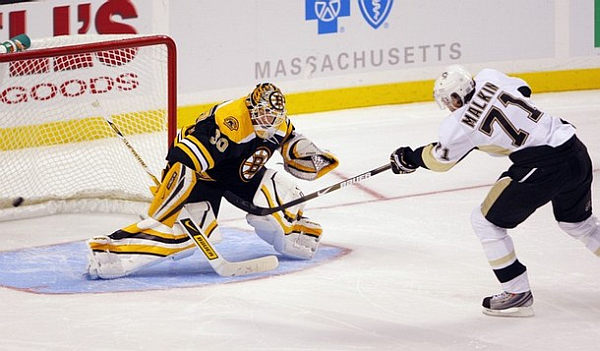
Training may not make or break a player’s career if they’re gifted with the size and speed of a player like Malkin (Disclaimer: This is not to suggest that Malkin doesn’t train hard)

I also think there’s something to be said for the “performance gap” idea, which is simply the difference between performance and potential. Even if training isn’t what allows a player to reach or contribute at any given level (for a lot of players, training does just that), it will certainly help a player close in on his or her full potential and ultimately allow the player to be as successful and durable as possible. Some of the skilled high level achievers are either content with where they are or don’t believe the off-ice work could really take their game to the next level. Similarly, there are some players that take their off-ice training very seriously, and have for years, that would likely benefit more from focused on-ice skill work. In both examples of these extremes, the players may just have a tendency to gravitate toward what their best at and what is most comfortable for them to work on. Ultimately, it’s up to the player to decide what level of sacrifice they’re willing to make to fulfill their potential. The players that are willing to really push the limits of their skill and physical capacities push the boundaries of what’s possible within the game of hockey, and are responsible for making hockey the best game on earth!

To your success,

Kevin Neeld

P.S. If you want to maximize the transfer of your off-ice training to on-ice performance, you’ll want to follow a specific hockey training system designed to do just that.


Please enter your first name and email below to sign up for my FREE Athletic Development and Hockey Training Newsletter!
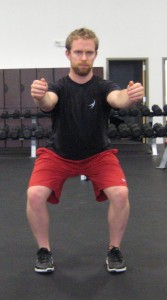
A couple weeks ago I posted a video on HockeyStrengthandConditioning.com with two “Reactive Jumping” (or plyometric) exercises that we’ve used with our hockey players. These are two jumps that you’re likely familiar with (I have picture breakdowns of both in my Off-Ice Performance Training Course), but this execution is relatively novel, at least to most youth hockey audiences.

Where I go to talk shop with the top hockey strength and conditioning coaches in the world!

Plyometric exercises can be used to serve a number of different purposes. For example, performing a vertical jump after pausing for a couple seconds in the bottom of a squat position will help develop position specific rate of force development or “starting strength”. In contrast, performing a vertical jump in the typical fashion by starting tall and dropping down into a squat position and then exploding upward will integrate the stretch reflex and stretch shortening cycles to a great degree. This is just one example of how the same exercise can be manipulated to create a different response.

In addition to using different variations to create different responses, it’s important to recognize that some are more advanced and may not be appropriate for all populations. There are fundamental patterns that athletes need to master before diving in to advanced options, even if they could technically benefit from the intended response of the exercise. With that in mind, here’s a sample progression to teach youth athletes how to perform a vertical jump properly.

  1. Squat Hold
  2. Squat
  3. Squat-Pause-Jump
  4. Vertical Jump
  5. Vertical Jump w/ Rapid Decent
  6. Reactive Drop Squat
  7. Vertical Jump w/ Reactive Drop Start

This is certainly not the only way to go about reaching this end-goal. Regardless of the path taken, the principles should remain relatively synonymous:

  1. Teach the athlete to squat properly (optimal posture/alignment)
  2. Teach athlete to jump and land with proper technique
  3. Progress in velocity/reactiveness

If jump landings look like this, the athlete isn’t ready to progress to more advanced variations or higher volumes.

Green light.

Naturally, athletes shouldn’t progress to the next level until they can demonstrate CONSISTENT proficiency in the previous level. While I think 1&2 can be accomplished in parallel, it’s nonsensical and irresponsible to encourage athletes to jump higher, further, or more if they can’t jump properly.

Log in to HockeySC.com and check out the reactive jumping video, as well as a ton of other exercise videos from Mike Potenza, Sean Skahan, and Darryl Nelson!

To your success,

Kevin Neeld

P.S. If you train youth players without any equipment, check this out: Off-Ice Performance Training Course

Please enter your first name and email below to sign up for my FREE Athletic Development and Hockey Training Newsletter!
Use CODE: "Neeld15" to save 15%