The other day I got a great question from a college intern:

I was helping out with the women’s hockey team several days ago, and they were having them do weighted pushups.  I noticed that most were barely going halfway down on the eccentric portion, and their elbows were flared almost to ninety degrees.  I suggested to their head coach that he drop the weight, as they clearly weren’t able to handle the weight, weren’t getting anything out of it, and were just putting themselves at risk for getting hurt.  He obliged and had them regress to bodyweight, but still a couple of them had trouble with proper form.  I was curious if you could recommend any regressions from BW pushups for younger athletes, inexperienced lifters, or female athletes who just can’t quite handle them.

I really like questions like this because it speaks more to the art of coaching. Also, the question is phrased in a way that demonstrates an understanding that “good” exercises can be performed in ways that make them “bad” exercises. Teaching quality movement is more than just picking good exercises; they need to be performed optimally to really gain the benefit.

Push-ups, because they require no equipment, and therefore are space and large group friendly, tend to be a go-to for youth hockey organizations. I’ve discussed the common flaws in horizontal pushing patterns before, especially as they pertain to shoulder pain. You can check out one article on that topic here: Shoulder Pain with Pressing Exercises

The truth is, most untrained female athletes and almost all youth athletes (especially ~15 and younger) can’t do a good push-up, let alone several sets of them. As a result, we’re constantly regressing the movement in any number of ways dependent upon what the major limitation may be.

The three most notable limitations we see on a regular basis are:

  1. Lack of anti-extension core strength
  2. Lack of scapulothoracic control
  3. Lack of pressing strength

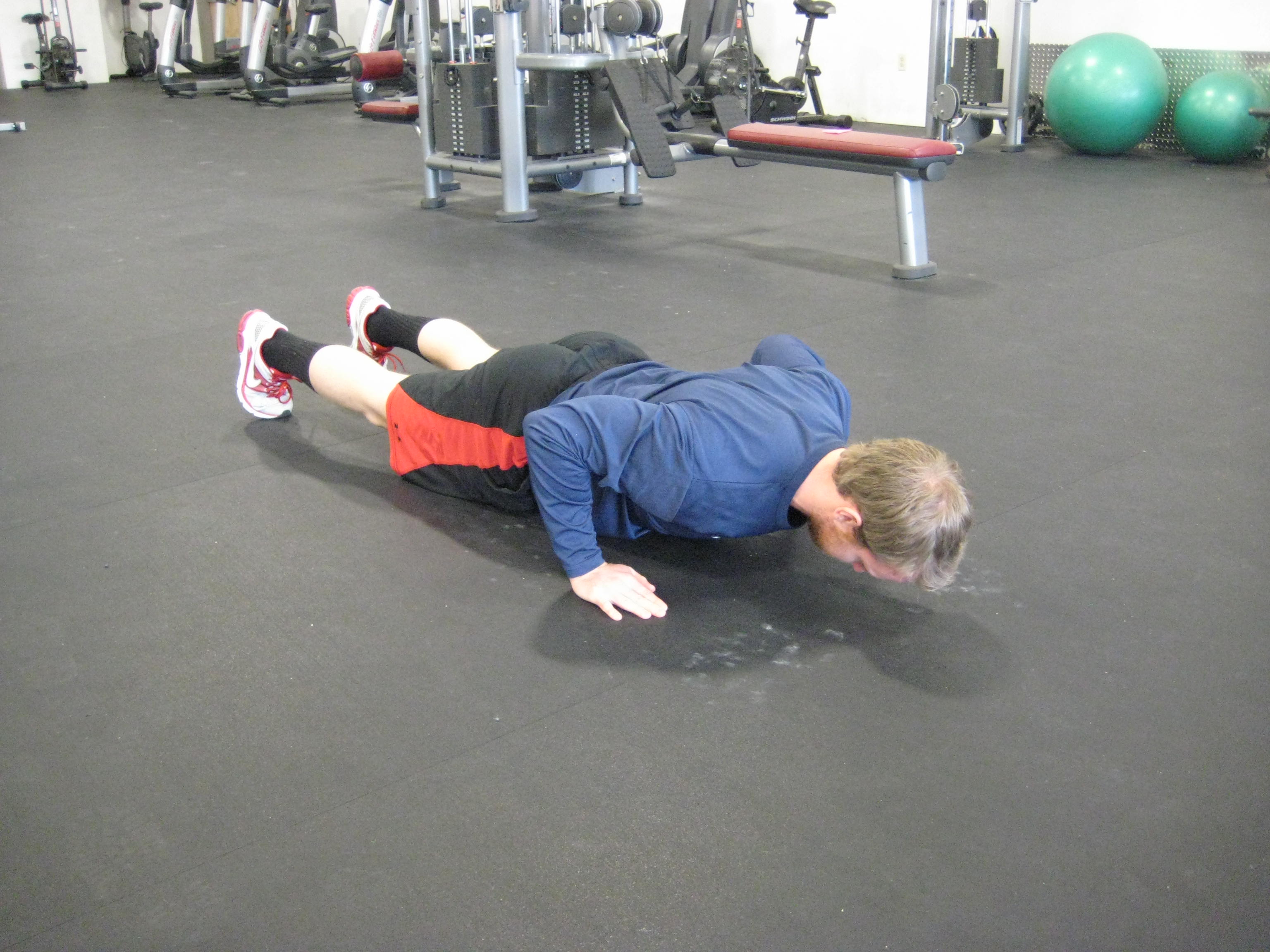
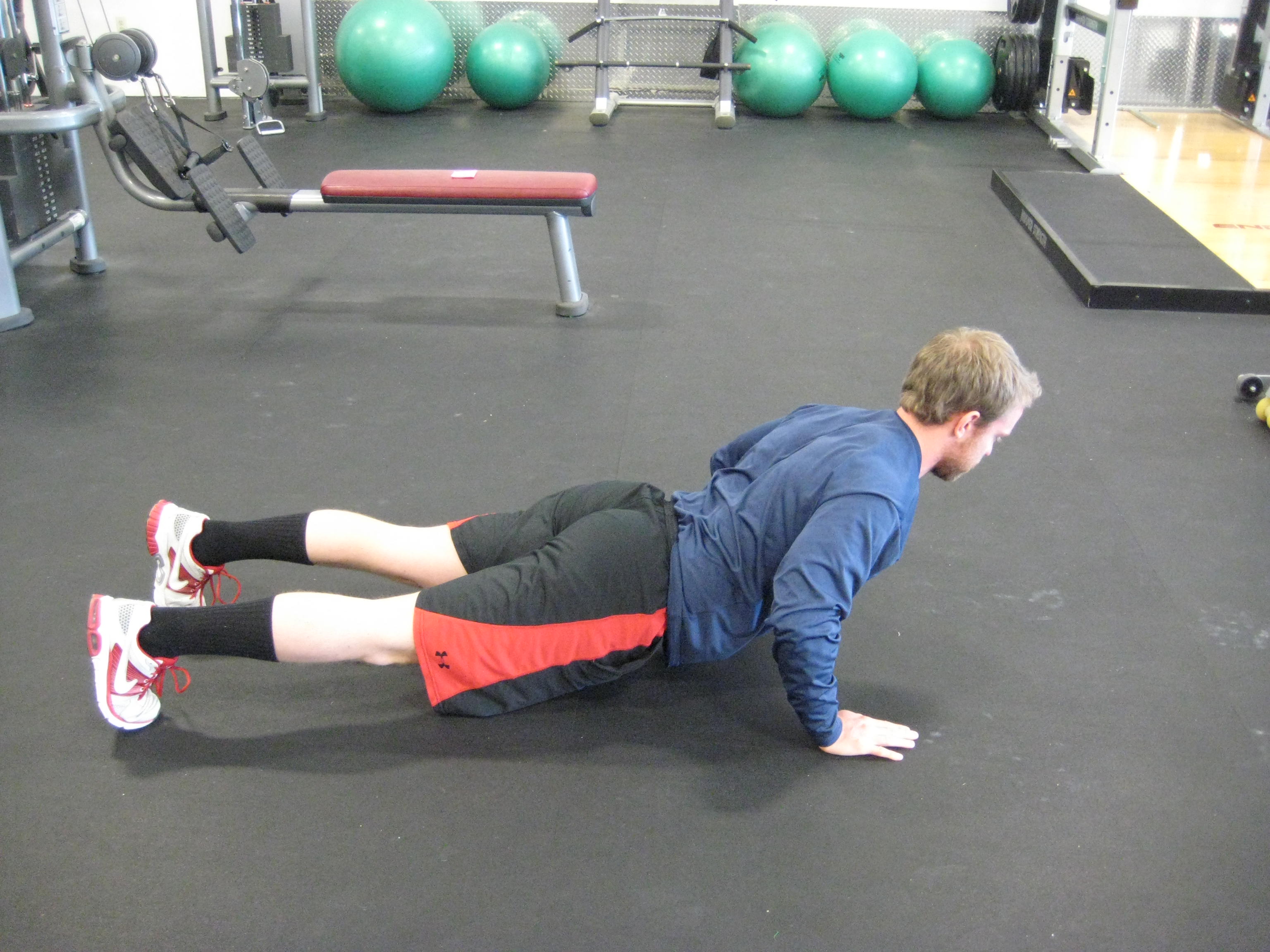
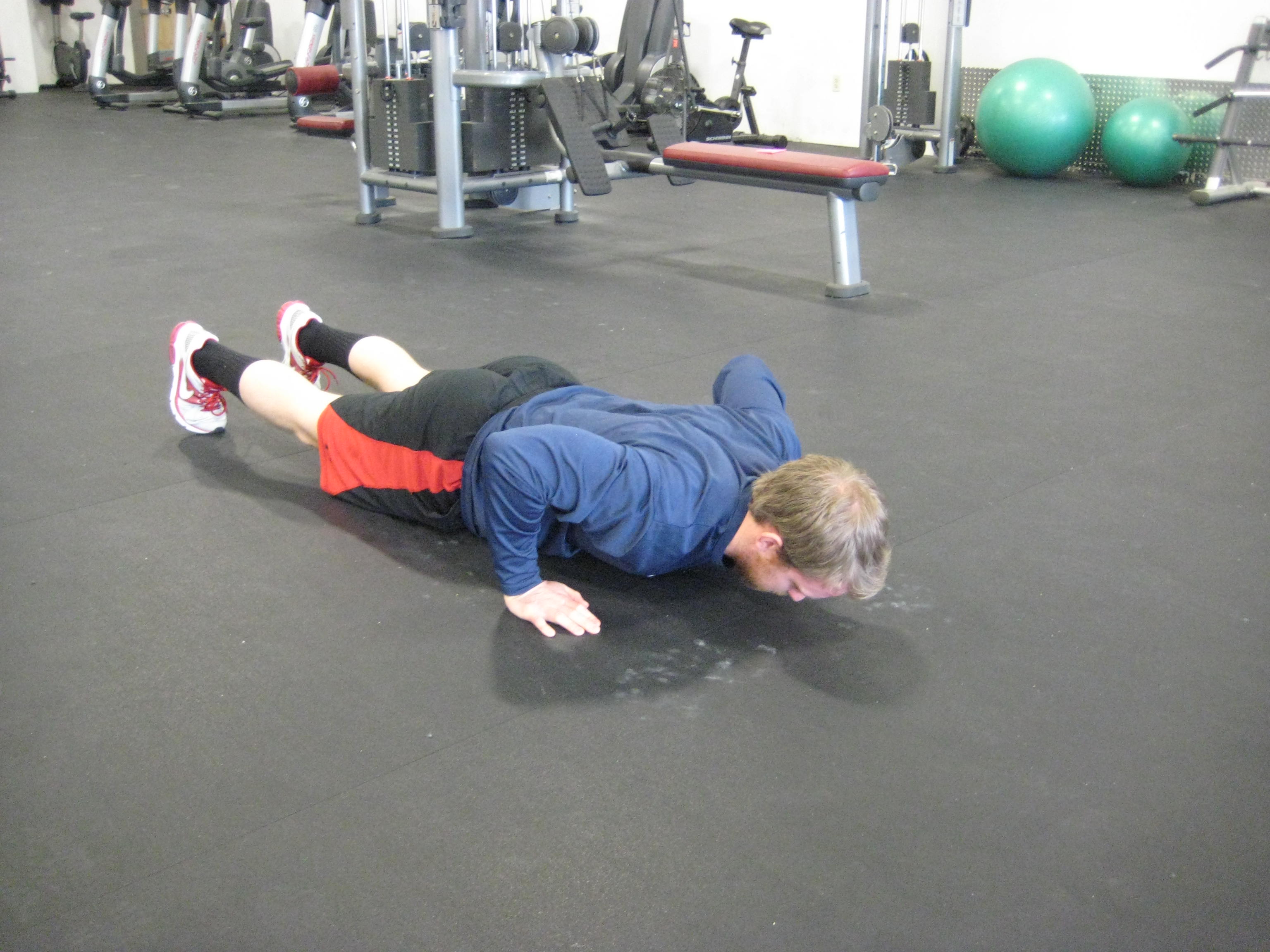
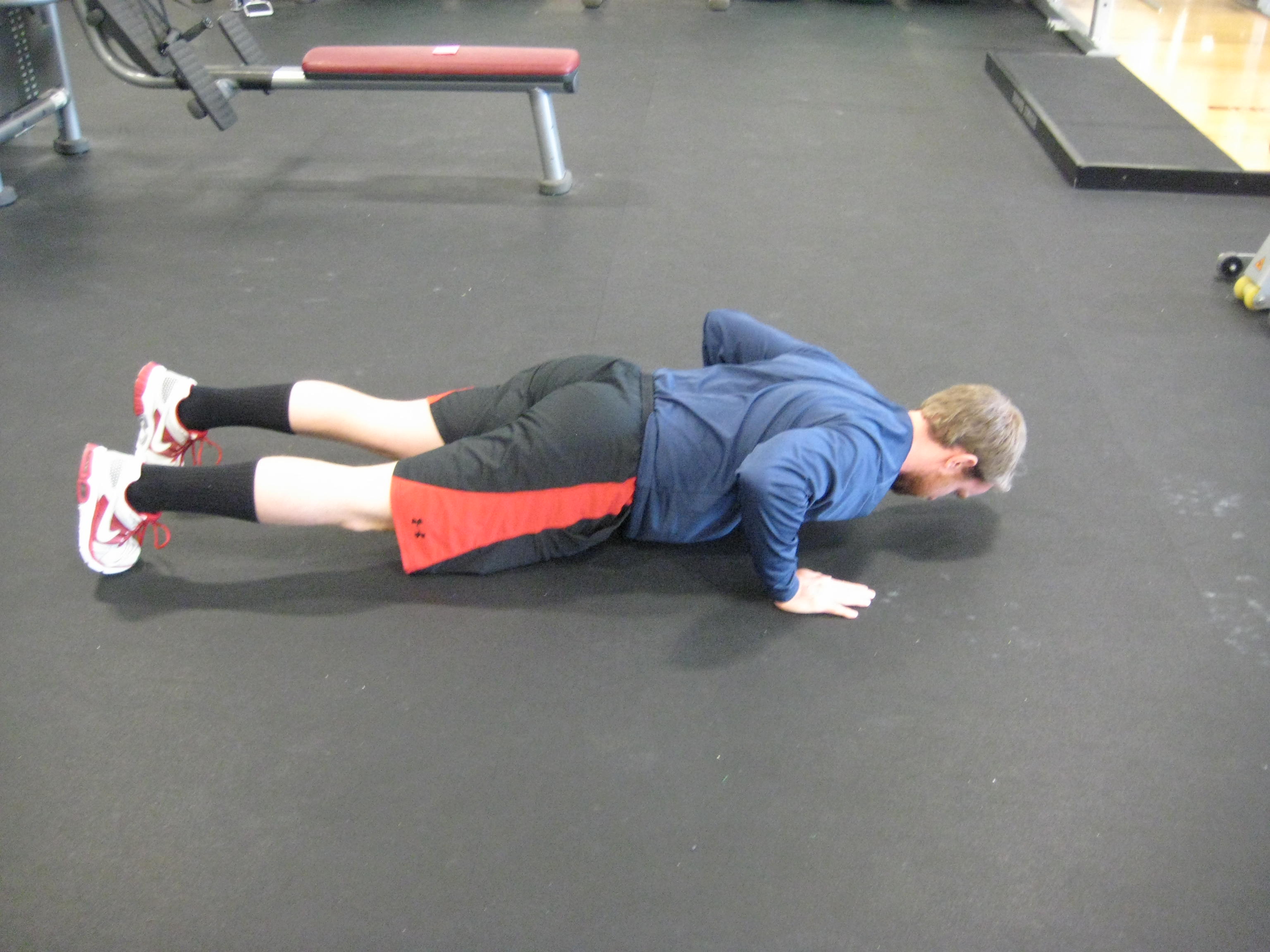
The images below demonstrate what each of these may look like.
Push-Up

Push-Up

Proper push-up position.

Push-Up w/ Excessive Extension

Push-up with excessive extension, common for athletes with poor core strength.
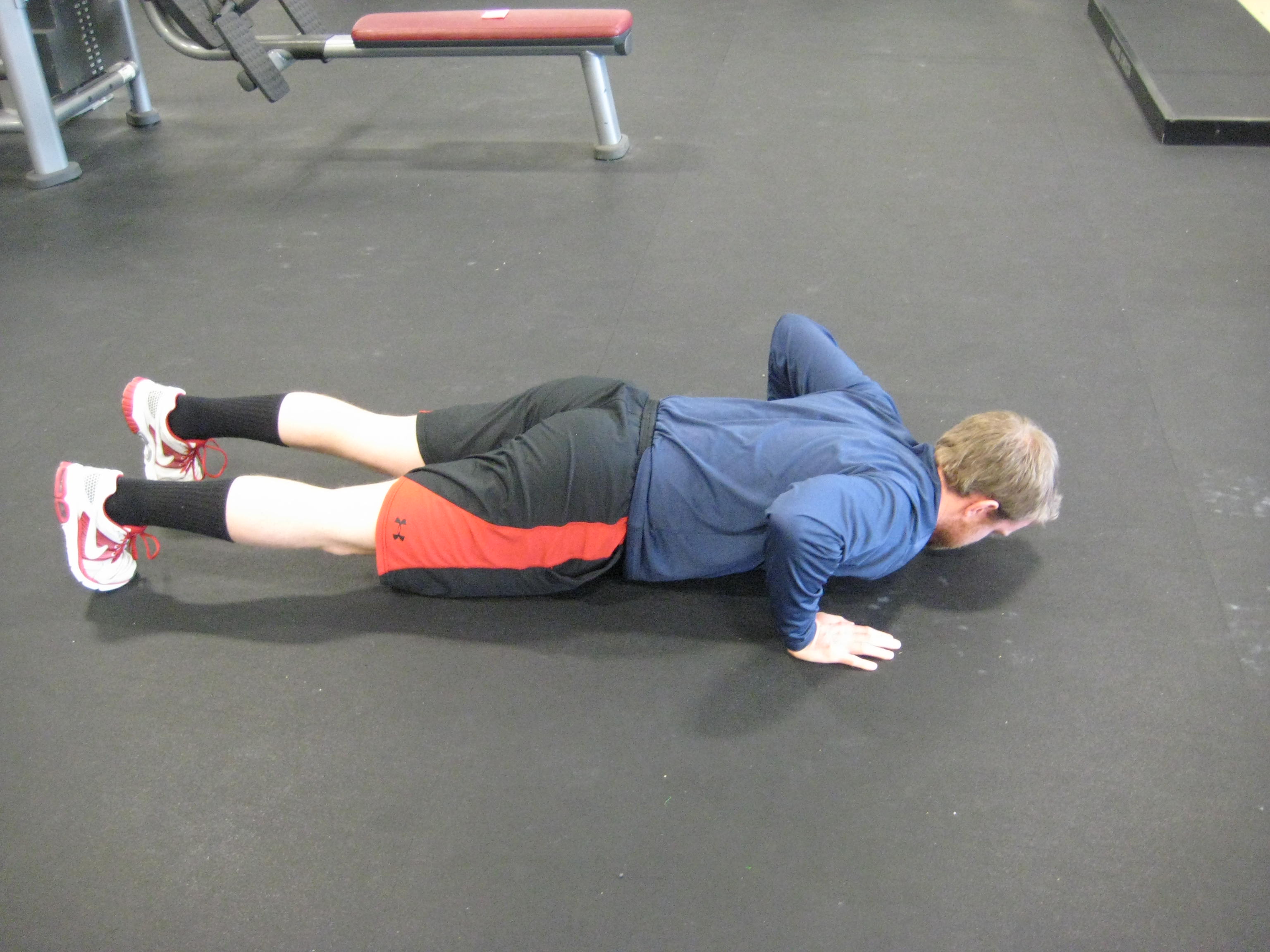
Push-Up with Shrug

Push-Up with Shrug

Push-up with shrug at bottom, a common flaw in athletes with poor scapulothoracic control. Has anyone seen my neck?
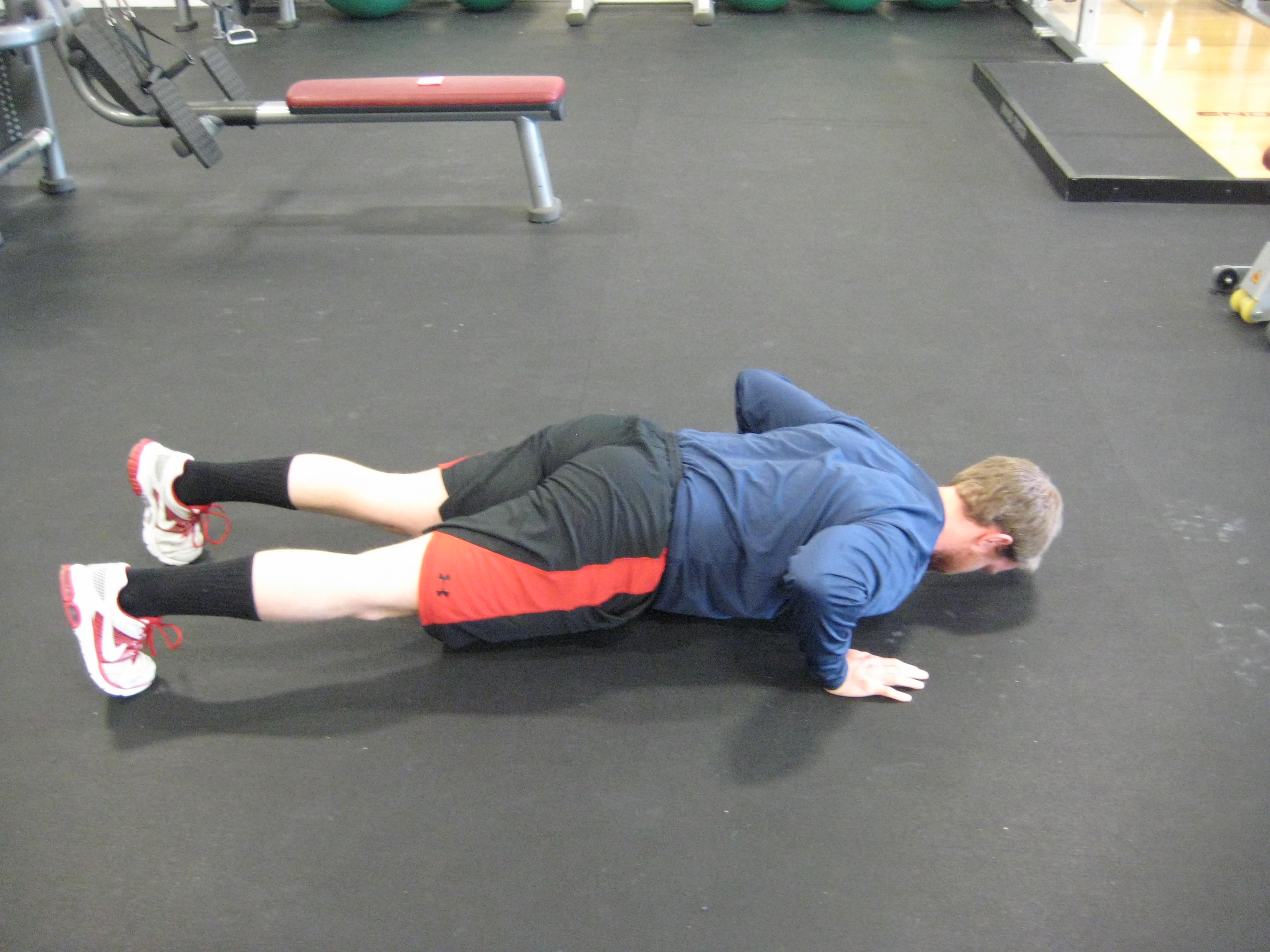
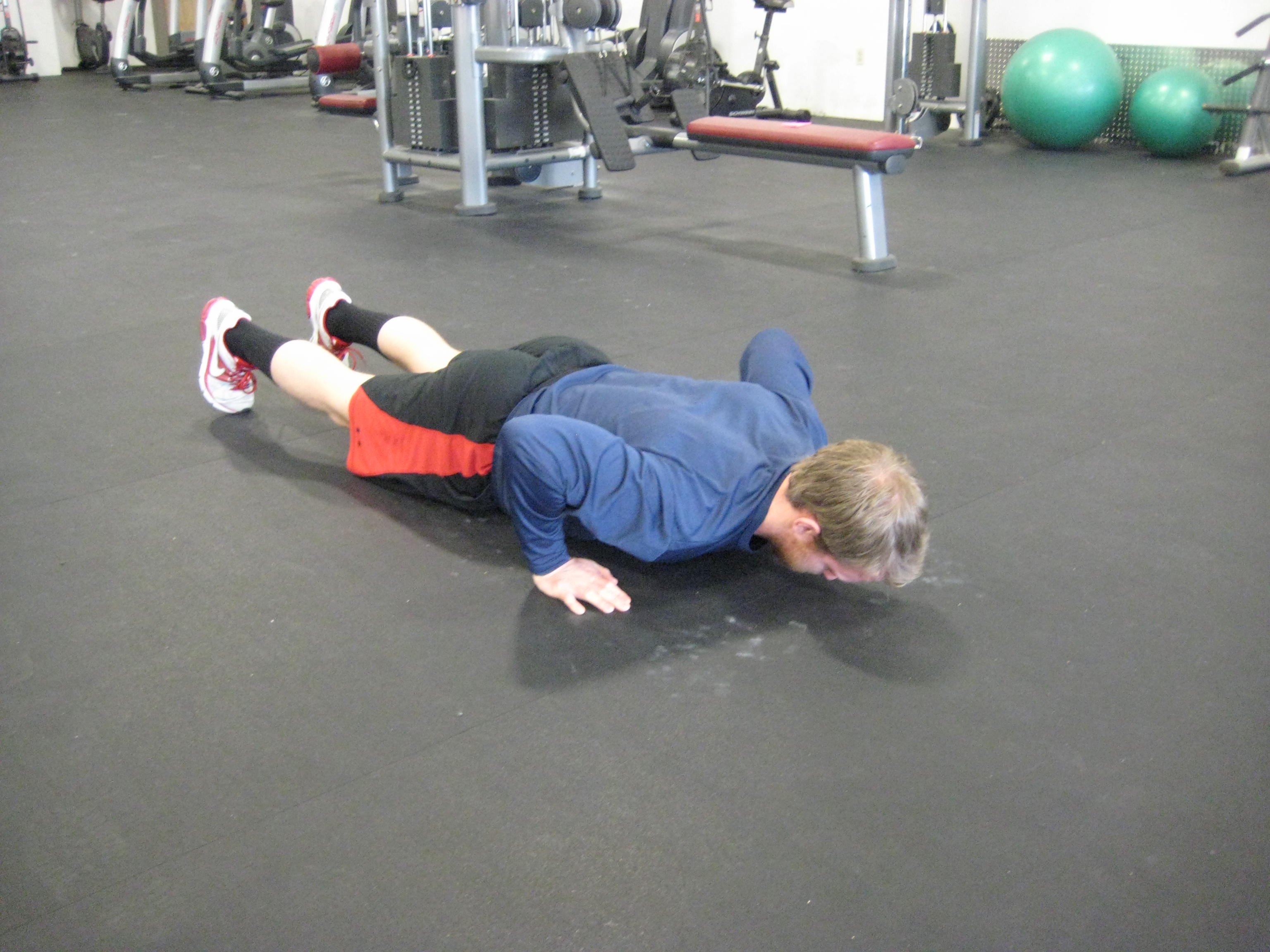
Push-Up with Anterior Scapular Tilt

My best attempt at mimicking a push-up with an anterior scapular tilt at the bottom, a common flaw in athletes with poor scapulothoracic control. Note how the shoulder blades appear to angle forward and down toward the ground, and how close the front of my shoulders are to the ground compared to the first set of pictures.

To address these, there are a few different options.

1) Regress the push-up to a front plank. This will help provide an opportunity for the athlete to learn the body awareness of a “tall” position with a neutral spine, as well as help develop the stabilization/strength necessary to maintain this alignment with more dynamic activities.

2) Regress to a “scap push-up” on forearms. This is a more dynamic progression from a traditional front plank that capitalizes on the same stabilization benefits, but adds a component of scapulothoracic movement and control. This allows the athlete to internalize the feeling of pulling the shoulder blades together as they descend down into the bottom position of a push-up, without over extending through their thoracolumbar junction (in their lower back a few inches up from their pant line).

3) Regress to an incline push-up. This is, by far, the regression we rely on the most at Endeavor. Allowing the athlete to perform the push-up on a raised surface decreases the resistance they need to push, ultimately making the exercise easier. This creates a better environment for us to reinforce how to engage the abdominals and anterior neck to prevent excessive extension, move the scapulae appropriately throughout the movement, or address any other movement dysfunctions they may have throughout the exercise.

This latter regression reminds me of a conversation I had recently with one of our interns. We were discussing all the things that can go wrong with a movement and the potential causes of this “dysfunction”. Rehashing what we’ve discussed here, the push-up pattern can go wrong because of: lack of abdominal strength/control, lack of anterior neck strength/control, strength, stiffness, or control imbalance of the scapulothoracic muscles, insufficient thoracic extension, lax anterior glenohumeral ligaments and therefore compromised joint stability, and lack of horizontal pushing strength, among others. If an athlete descends down into a push-up and the shoulder blades tilt forward, wing off the back, and or shrug (see pictures under the scapulothoracic control category above), I could immediately think:

  1. They have a tight pec minor (forward scapular tilt)
  2. Dominant upper and middle traps (scapular elevation/shrug)
  3. They have poor serratus anterior strength/control (scapular winging)
  4. They have poor lower trap strength/control (scapular winging and inability to pull shoulder blades back and down with descent into the bottom position)

Any one or all of these things could in fact be going on and require some extra attention. That said, in most cases the athlete simply hasn’t internalized what the movement should look and feel like. If regressing the difficulty of the exercise (e.g. putting them on an incline), providing a few simple coaching cues and a little practice time clean up the pattern, then all of the movement dysfunction diagnoses was for nothing. In other words, it’s important to give the athlete a true opportunity to learn the movement before breaking down what may be going wrong with it. A lot of times a lack of body awareness is the underlying problem, and some simple coaching cues are the solution.

Lastly, sometimes athlete will do one good push-up and then fall back into an ugly pattern, which was fairly comprehensively described in the original question (elbows flared out, heads dropping down, lower backs sagging, etc.). In this case, a great strategy is to progress them to a “bottoms-up” push-up. These can still be done on an incline, if necessary, but it allows the athlete to start at the bottom with optimal alignment and engagement, push up, and simply descend back down into the same position. This tends to clean up a lot of bad patterns for folks that have sufficient strength to perform the movement correctly, but may have gotten a little sloppy with their technique. It basically concentrates a lot of quality practice time into a condensed set.

Which regression/progression you choose is largely dependent upon the individual’s limitation and what you feel most comfortable teaching. Hopefully this gives you some ideas on simple ways to regress the push-up,  allowing youth and untrained athletes to develop the proper pattern and progress their strength optimally.

To your success,

Kevin Neeld
UltimateHockeyTraining.com

Please enter your first name and email below to sign up for my FREE Athletic Development and Hockey Training Newsletter!


Today, we’ll dive into the top Hockey Training and Exercise Videos of 2012. If you’ve missed the previous articles in this series, you can check them out at the links below:

  1. Top Hockey Training and Development Posts of 2012
  2. Top Performance Training and Injury Prevention Posts of 2012
  3. Top Hockey Nutrition Posts of 2012

1) Ultimate Hockey Training: Transitional Speed Training for Hockey

2) Ultimate Hockey Training: Hockey Conditioning

3) Ultimate Hockey Training: Comprehensive Off-Ice Training Programs

4) CAM Impingement: Training Implications

5) Hockey Strength and Conditioning: Thoracic Mobility Progression

6) Hockey Training: Mobility/Recovery Circuit

7) Hockey Training: 3-Way Split Squat IsoHold

8) Hockey Training: Sidestanding Med Ball Shotput w/ Cross-Under Step

9) Hockey Training: Split Squat IsoHold to Lateral Bound

10) Hockey Training: Squat Hold to Vertical Jump

Honorable Mention: Hockey Training: Hang Clean w/ Helmet

The “Best of 2012” series wraps up tomorrow with the Top Resources of 2012!

To your success,

Kevin Neeld
UltimateHockeyTraining.com

Please enter your first name and email below to sign up for my FREE Athletic Development and Hockey Training Newsletter!
The “Best of 2012” series continues today with the Top Hockey Nutrition Posts of 2012. Short and sweet today, which should give you a chance to catch up on some of the articles from the previous two days!

Check out what you’ve missed:

  1. Top Hockey Training and Development Posts of 2012
  2. Top Performance Training and Injury Prevention Posts of 2012

On to the Top 3 Hockey Nutrition Posts of 2012! These posts have sparked a lot of questions through email and cover some of the hot topics in the world of hockey nutrition. If you’re interested in learning more, I highly recommend you check out Brian St. Pierre’s Ultimate Hockey Nutrition. It’s PACKED with practical information and is the single-best hockey nutrition resource I’ve ever come across!


Ultimate Hockey Nutrition


  1. A 4-Step Plan for Off-Season Weight Gain
  2. Hockey Nutrition: Grocery Shopping
  3. Pre- and Post-Game Meals for Hockey Players

Tomorrow I’ll be back with the top videos of 2012, so check back then!

To your success,

Kevin Neeld
UltimateHockeyTraining.com

Please enter your first name and email below to sign up for my FREE Athletic Development and Hockey Training Newsletter!

The “Best of 2012” series continues today with the Top Performance Training and Injury Prevention Posts of 2012. These are posts that have a profound affect on athletic development and injury prevention, but aren’t necessarily written JUST for hockey players. As you know, most training and injury prevention concepts are applicable to most sports; this is especially true of the articles below. Enjoy!

  1. Dissecting Muscle Function: Force Production
  2. Dissecting Muscle Function: Influence
  3. Performance Training: Adaptations for Femoroacetabular Impingement
  4. Managing Structural and Functional Asymmetries in Ice Hockey: Part 1
  5. Managing Structural and Functional Asymmetries in Ice Hockey: Part 2
  6. Improving Athletic Performance Beyond Peak Strength: Part 1
  7. Improving Athletic Performance Beyond Peak Strength: Part 2
  8. Reactive Plyometric Progression
  9. What it Means to be a “Boyle Guy”

If you haven’t already, don’t forget to check out the Top Hockey Training and Development Posts of 2012!

To your success,

Kevin Neeld
UltimateHockeyTraining.com

Please enter your first name and email below to sign up for my FREE Athletic Development and Hockey Training Newsletter!

With 2013 officially upon us, I thought it would be a good time to recap some of the highlights of 2012. On a personal note, 2012 has been an incredible year. Some of the highlights, in no particular order:

1) Starting and finishing a massage program at Lourdes Institute of Wholistic Studies
2) Becoming Lower Extremity and Spine ART certified
3) Completing my first full year with the US Women’s National Hockey Team, including working at the IIHF World Championships in Burlington, VT and at the USOC in Colorado Springs
4) Releasing my book Ultimate Hockey Training
5) Writing a chapter for the recently released Men’s Health Big Book of Abs
6) Being featured twice in Men’s Fitness
7) Endeavor Sports Performance moving into our new facility (which I was able to design from scratch) within Total Turf Experience in Pitman, NJ
8) Making the move to Collingswood, NJ so I don’t have to pay that absurd $5 toll to get back to Philly every night!
9) Having an opportunity to speak to both 198 ’98 birth year hockey players through a USA Hockey Festival Camp in Colorado Springs, and to ~200 attendees at the USA Hockey Level 4 Coaching Clinic in New Jersey.
10) Training a few of the Flyers during the lockout
11) Last, but certainly not least, winning my first ever Ugly Christmas Sweater award!

Ugly Christmas Sweater

Special shout out to Emily and her siblings, who apparently bought what could very well be the most ridiculous sweater I’ve ever seen for their mom when they were little kids!

I’ve had a lot of fun over the last year and have been fortunate to have gotten to know and spend some time learning from a lot of new people. This site also experienced an incredible growth over the last year, reaching 304,065 page views, up from 188,160 in 2011. This is ALL thanks to your continued support and help in spreading the word about articles that you’ve found some value in. I truly appreciate your support and can’t thank you enough. I’m hoping to make 2013 the best year yet, so please feel free to speak up if there are specific topics you want me to write about.

With all of that said, let’s move on to some of the top hockey training and hockey development posts of 2012. The series will continue throughout the week with some of the other top features of the year, so stay tuned!

  1. Off-Season Hockey Training Program
  2. A Letter to Parents of Undersized Players (My favorite post of the year!)
  3. Understanding USA Hockey’s American Development Model
  4. What Muscles Do You Use To Shoot?
  5. The Myth of Wrist Strength in Hockey
  6. 3 Keys to Developing Optimal Skating Technique
  7. Unconventional Approaches to First Step Quickness
  8. Improving Shot Power Through Rotational Core Training
  9. Hip Active Isolated Stretching for Hockey Players

To your success,

Kevin Neeld
UltimateHockeyTraining.com

Please enter your first name and email below to sign up for my FREE Athletic Development and Hockey Training Newsletter!

Use CODE: "Neeld15" to save 15%