As you likely know by now, I think the athletic development model that most youth programs follow is entirely backwards. It drives early specialization without even a loose consideration of psychological and physical readiness. It forces commitment, instead of letting a developed love and passion for the game naturally reveal it. Working smart is replaced by working harder, longer, and more frequently. Burnout and “overuse” injuries are at all time highs. It’s not a pretty picture, and I commend the parents, coaches, and organizations that have taken a stand against this ludicrousy.

Coinciding with the emphasis on early specialization is an emphasis on early talent identification. After all, you want the kid to specialize in whatever sport they’re best at, right? Again, as a seasoned reader of this newsletter, you now know that early athletic success has ZERO correlation to later athletic success. There is superfluous evidence for long-term athletic development sitting right in front of us. That Tom Brady guy has done pretty well for a 6th round draft pick. Michael Jordan, a multi-sport athlete (baseball, football, and basketball) was cut from his high school varsity basketball team as a sophomore because he was too short. He turned out pretty well too. The reality is that these cases are the norm more than the exception. In the cases where early identification DOES work, it is largely because these athletes are then put in programs with more practices and better coaching, not because of some inherent gift that the individual has.

There is now research in academic settings that has been extended to military settings regarding what truly predicts future success. If you’re familiar with the character of athletes like Tom Brady and Michael Jordan, the trait identified in this research probably won’t surprise you. Is it ability? No.

The quality found to be most predictive of future success is grit. Grit can also be described as “stickwithitness”, or an ability to not let short-term barriers interfere with long-term goals. As you may be thinking, early talent identification undermines the very quality that produces top performers. Check out the short video below from Dr. Angela Duckworth, who is responsible for plowing the path of the influence of grit on performance. This is a message that needs to be heard by every athlete, parent, coach, and organization head. Help pass this along by forwarding this email to your friends, family, coworkers, and teammates!

Angela Duckworth on Grit

To your success,

Kevin Neeld

P.S. Special thanks to Brijesh Patel for introducing this video to me!

Please enter your first name and email below to sign up for my FREE Athletic Development and Hockey Training Newsletter!

At the end of last week, I did an interview on various hockey training and player development topics with my friend Brian St. Pierre. In the interview, we covered:

  1. My background and how I got involved with training hockey players
  2. Why hockey players are the best athletes to train
  3. Common issues I see in youth and adult hockey players
  4. The integration between performance enhancement and injury prevention
  5. Why youth hockey coaches in the US need to start paying attention to the evidence around us of a failed long-term development system and start taking notes on USA Hockey’s new ADM
  6. What most people don’t know about the Soviet’s “hockey schools”
  7. How I assess a new hockey player
  8. The most common hip limitation I see in all hockey players and how it affects their stride
  9. Why Ultimate Hockey Nutrition is the single best nutrition resource for hockey players ever created

As you can tell, we went through a lot in this interview. Take a few minutes to read through it and if you have any questions, post them below!

Read the interview here >> Ultimate Hockey Training – The Interview

To your success,

Kevin Neeld

Please enter your first name and email below to sign up for my FREE Athletic Development and Hockey Training Newsletter!

Closing out another busy week. With Christmas a week away, I’ll likely spend the majority of the weekend scrambling around the stores with the rest of the procrastinators. I’m hoping to squeeze in a hockey game Saturday night as one of the teams I train is playing at home.

It’s been a good, but quite different week in Hockey Strength and Conditioning. Check out what you’ve been missing!

I posted two new articles on my site this week. In you haven’t already, you can read them at the links below:

  1. Is Repeat Sprinting an Aerobic Activity?
  2. Concussions in the NHL

Because of the big name players that are currently sidelined with concussions or “concussion-like symptoms”, there have been a lot of opinions tossed around recently on what the problem is and what needs to be done. In all honesty, I don’t think there is a correct and immediate fix to the problem, but I do hope that the attention helps shed like on the multi-factorial nature of these injuries. Concussion-like symptoms as a diagnosis doesn’t sit well with me. By definition, concussions are a traumatic brain injury. The associated symptoms can stem from several very different causes, and simply labeling something as “concussion-like symptoms” seems overly convenient and borderline irresponsible. Concussion-like symptoms is the new “patellofemoral pain” or “shoulder impingement” diagnosis.

As with ANY injury, it’s important to understand the CAUSE of the injury to drive a proper rehabilitation process. More proper diagnosis should reflect the underlying cause. I suspect there are more ocular dyskinesis cases than are being recognized. This, and a couple other underlying mechanisms that may drive what is being referred to as concussion-like symptoms were discussed in my article Concussions in the NHL. It’s an important issue, so I’d be interested in hearing your thoughts on it too!

This was a special week at HockeyStrengthandConditioning.com. For starters, we added a bunch of great content, including:

  1. 2-Day In-Season Training Program: Phase 3 from me
  2. 1-Arm Kettlebell Press Progression Videos from Sean Skahan
  3. In-Season Training Program: Rate of Force Development Focus from Mike Potenza
  4. The Joseph Pilates Method: “Contrology” from Eric Renaghan
  5. How Diet Soda Causes Weight Gain Video

The weight gain video was really interesting. It presents food choices in a relatively new light, and explains how this affects health and performance in laymen terms. Maybe most importantly, it also identifies how zero calorie beverages can induce weight gain and compromise other components of health. Good stuff.

The real highlight of this week is the release of the FIRST EVER Hockey Strength Podcast! We’ve talked about this for a while and I’m excited it’s finally underway. The podcast is completely free to listen to and will feature an interview with a different hockey strength and conditioning coach. This podcast features a great interview with Mike Potenza. Head over to the site and give it a listen, and please help spread the word about the podcast!

Listen here >> The Hockey Strength Podcast

That’s a wrap for today. As always, if you aren’t a member yet, I encourage you to try out Hockey Strength and Conditioning for a week. It’ll only cost $1, and if it’s not the best buck you’ve ever spent, I’ll personally refund you!

To your success,

Kevin Neeld

Please enter your first name and email below to sign up for my FREE Athletic Development and Hockey Training Newsletter!

Concussions have been a hot topic over the last two years in the NHL. Not in small part to Sidney Crosby’s concussion, more attention is now being paid awareness, prevention, and more conservative return-to-play guidelines.
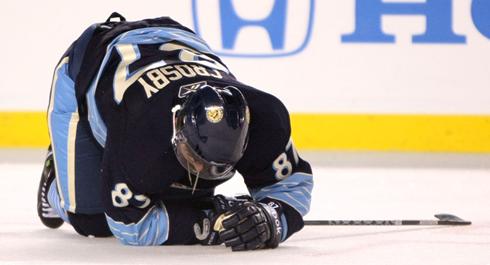
Long-term concussion symptoms are becoming a more prevalent problem

Concussions are far from a simple injury. It’s the underlying complexities in injury mechanism AND predisposition that makes concussions so hard to treat. As I’ve mentioned in the past (see Sidney Crosby’s Concussion), a large component of preventing things from getting worse than they need to is following a complete return-to-play sequence. Given the alarming statistic that 92% of repeat-concussions occur within 10-days of the original incident, it would seem logical that a bare minimum precaution should be to keep players out for 2 weeks following ANY concussion suspicion. I can see the hesitation in adopting this practice as a norm, but the reality is that the amount of development and exposure that can occur within this time frame is negligible, especially when put in the light of the potential short- and long-term consequences of suffering a repeat head injury.

As my friend Maria Mountain recently wrote (see A Rant about Concussions in Hockey), it’s bizarre that the phrase “concussion-like symptoms” seems to frequent hockey media channels now. This is a suspicious description given both the diverse nature of concussion symptoms (which can range from those comparable to tension headaches to those resembling vertigo), and the lack of clarity in diagnosis in general. How does someone suffering concussion-like symptoms differ from someone with a concussion? Is concussion-like symptoms simply being used as an umbrella diagnosis to put a name on something not medically understood? If concussion-like symptoms are being used as a diagnosis for those exhibiting symptoms that don’t present with observable brain trauma and/or have relatively normal ImPACT scores, then it’s important to look at some of the underlying mechanisms that dispose athletes to these symptoms.  There are certainly a lot of questions that remain to be answered regarding concussions, but with the increased attention being paid to the associated consequences of impact and adaptations to the brain itself, I thought it would be beneficial to discuss some of the lesser known underlying causes of “concussion-like symptoms” that may be related to or exacerbated by impact, but aren’t necessarily a brain injury.

Mechanisms of Concussion-Like Symptoms
Below are three mechanisms that can cause concussion-like symptoms, that are not associated with a brain injury:

  1. Poor Visual Tracking
  2. Sub-occipital nerve impingement
  3. Altered sensory input secondary to a loss of neutrality

Poor Visual Tracking
I was first introduced to this idea by Dr. Josh Bloom at Pete Friesen’s Physio-Fitness Summit a couple years ago. Dr. Bloom pointed out that in players with ongoing symptoms, or those that do not seem to be making progress, it is often the case that they have an eye that is not tracking properly. In a sort of ocular constraint-induced movement therapy, the employed strategy involved covering the properly functioning eye and training the eye that did not track optimally. He noted that in some cases, symptoms resolved almost immediately (within a single session) and had no recurrence. Whether ever player has this experience or not, it’s certainly worth looking into. The idea that a player may have ongoing symptoms that they think are related to a concussion may cause inappropriate limitations in their training and practice and a delayed return to play.

Sub-Occipital Nerve Impingement
Over the Summer, my friend Ned Lenny (physical therapist based in Cherry Hill, NJ if you’re local) and I were talking about postural adaptations that we see in both the hockey and general populations, and about how the hockey adaptations were typically in-line with a more extreme version of what we saw in the general population. In other words, the postural changes we see in most people that result from sitting too much and moving too little are significantly worse in hockey players. In general, these adaptations can be described by Janda’s upper and lower crossed syndromes.
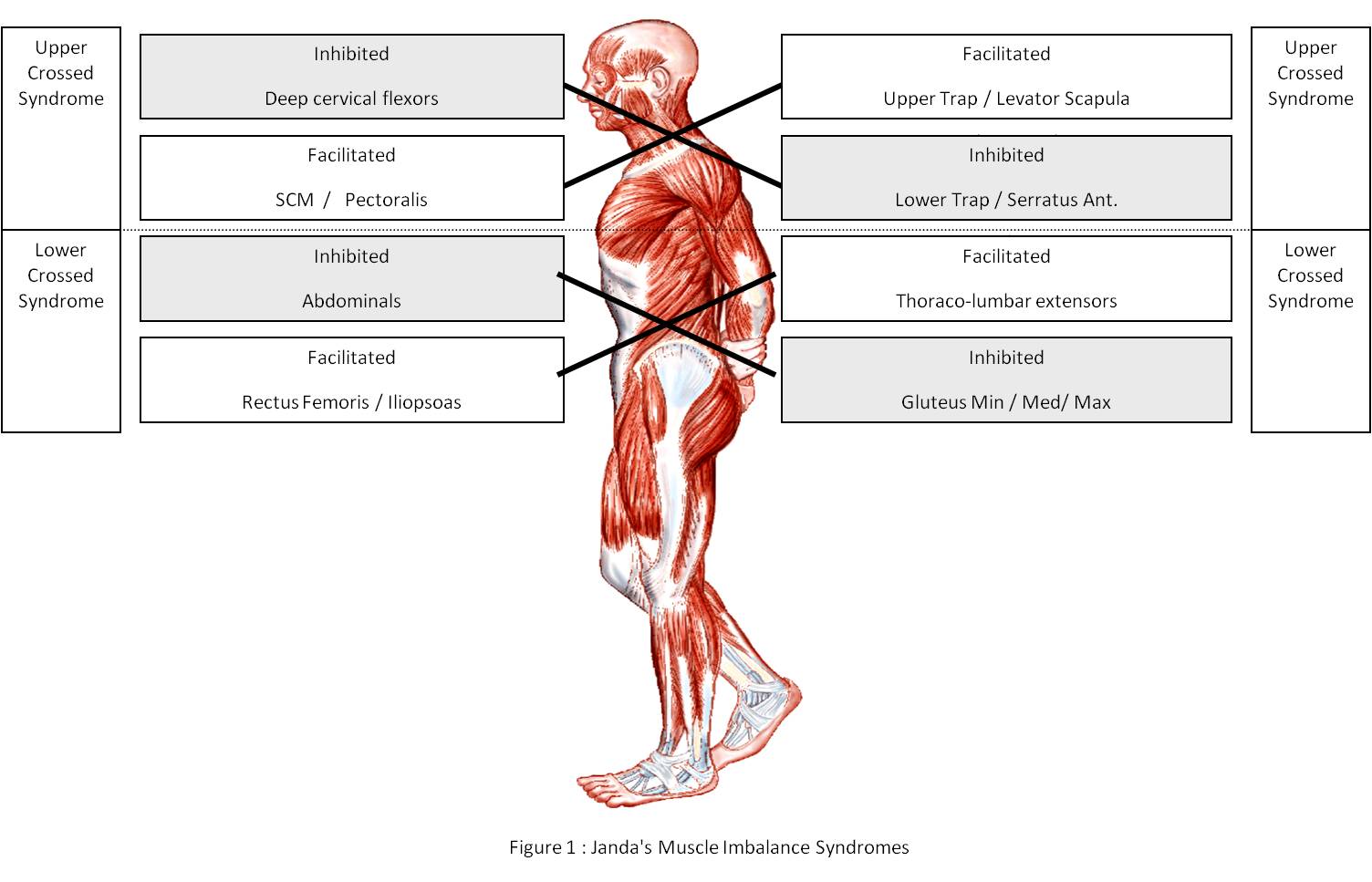
Most relevant to the concussion discussion, the adaptation that most directly influences these symptoms is a forward head posture, or more directly, a posterior rotation of the occiput on the atlas.

Ned pointed out that hockey players spend a substantial amount of time sitting on the bench, in cars/buses/airplanes, playing video games at home, and after many practices and games, they hop on a stationary bike. Going for a post-skating bike ride isn’t inherently harmful; in fact there is some value in restoring a more optimal autonomic nervous system balance. The kicker is that players hop on the bike and immediately look for the TV, which is usually posted above their heads somewhere, forcing them to rotate their head further back. Living in this position of posterior cranial rotation predisposes them to suffering symptoms related to impingement of the local nerves when forced further into posterior rotation, which can result from contact of varying severity. This might be why you see some players with prolonged symptoms after taking what looked like a relatively innocent hit.

The key to minimizing this predisposition is to improve the player’s posture and awareness of cervical position. We spent a lot of time last off-season emphasizing a “packed neck” position with all our hockey players at Endeavor and continue to emphasize this position now with our in-season groups. In reality, this isn’t an injury prevention strategy as much as it’s just the right way to train, but it can feel a bit unnatural for players at first.
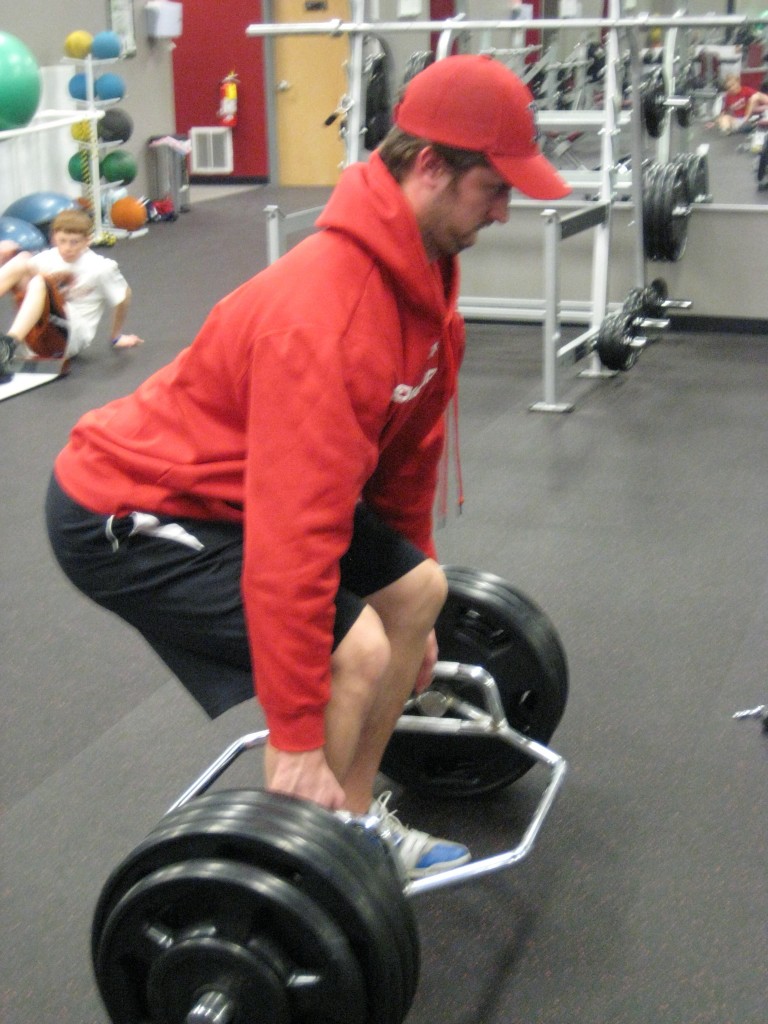
Chicks dig guys with a good neck pack

Altered Sensory Input Secondary to a Loss of Neutrality
This is a very complex way of saying that humans are inherently asymmetrical and have tendencies to drift toward predictable positions of non-neutrality. This concept stems from my ongoing apprenticeship of the Postural Restoration Institute information, and has profound implications for athletes and non-athletes alike. Over the last week at Endeavor, I’ve assessed a dozen people that all had NO adduction on their left side, but had full adduction on their right side. For hockey players, this pattern will compromise their stability and skating power, and it’s likely that a player will feel more comfortable crossing over one way (usually to the right) than the other. Failing to address this pattern can lead to a number of compensations of varying severity. Luckily, neutrality can be restored pretty easily using a number of specific breathing techniques.

Importantly, these human tendencies aren’t limited to the hips, but affect everything from the position of the foot to the position of the temporal bones. Specific to the cranial region, it’s worth noting that the common adaptations in the spine lead to a non-neutral head orientation. Because the body naturally seeks a position where the eyes are horizontal, there are compensations that occur through the spine, bones of the head, and the ocular system, all of which will alter the related sensory input, and can lead to feelings of dizziness or general feelings of spatial instability. I realize this is an abstract concept, but it’s not one to be overlooked. At PRI’s Advanced Integration course a couple weeks back, Ron Hruska discussed what he referred to as “ocular scoliosis” and noted that restoring neutrality can actually change a person’s eye prescription. The eyes are among the body’s most powerful sensory organs. Restoring a more neutral position can lead changes in sensory “symptoms” stemming from multiple sources.

Take Home
The major take home from this discussion is that it’s possible to have symptoms resulting from contact that resemble those of a concussion that have an underlying cause not related to brain impact. Because all of the above mechanisms have relatively quick fixes, they’re certainly worth exploring if you have ongoing symptoms AND should be attended to regularly in the interest of minimizing concussion risk in the first place. With the medical team that Sidney Crosby has put together, you would hope that these, and all other underlying factors, are also being addressed.

That’s a wrap for today. Pass this along to other players, parents, and coaches, or anyone else you think may benefit from learning more about concussion prevention!

To your success,

Kevin Neeld

Please enter your first name and email below to sign up for my FREE Athletic Development and Hockey Training Newsletter!

It’s great to be back in the gym after a relaxing weekend. My mom came to visit Emily and I from Raleigh, NC so it was nice to have some down time to hang out with her. As you can imagine, my schedule keeps my pretty busy, so I don’t get to spend as much time with friends and family as I’d like!

As I mentioned last week, I’ve been reading quite a bit of research on energy systems recently. Understanding where energy for certain activities comes from will help make training more specific and appropriate to the demands of the sport (and the position in some cases). In general, it is traditionally thought that:

  1. The ATP-PCr System contributes to high intensity activities ranging from 0-12 seconds.
  2. The Anaerobic Glycolytic System contributes to moderate-high intensity activities ranging from ~13s-~30-45s
  3. The Aerobic Glycolytic System contributes to moderate intensity activities ranging from ~30s-3 minutes
  4. The Aerobic Beta-Oxidation System contributes to low-moderate intensity activities from 3-minutes on

Naturally, this is a grossly oversimplified view of energy systems training, which is the major reason for this discussion. It’s important to realize that the intensity of movement is equally, if not more important in determining energy system contribution than the duration of the activity. In other words, if you walk for 12 seconds, you won’t be relying on the ATP-PCr System as your primary energy source; it’s a low intensity activity that doesn’t require a huge surge of energy production. As your body performs work, it breaks down ATP. Replenishment of ATP is needed to continue to do work. Naturally, the higher the intensity of the activity, the faster the breakdown of ATP and therefore, the faster the replenishment source needs to be. This is why high intensity activities rely on the ATP-PCr system; it’s the fastest replenishment source. Unfortunately, this supply is limited, so as stores become depleted, the body must rely on other energy systems for the replenishment of ATP. Because these other systems cannot replenish ATP as rapidly, performance decreases. This is an underlying reason why someone can run a 4.3s 40-yard dash (120 feet at 27.9 ft/second), but not a 3:09 mile (5,280 feet at 27.9 ft/second). Simply, the rate at which energy can be resupplied is a limiting factor in maintaining high level performance.

After reading the above paragraph, it’s reasonable to think that the systems are activated in the presented sequence; the next being activated when the former is depleted. In other words, Anaerobic Glycolysis System becomes active when the ATP-PCr System depletes, the Aerobic Glycolysis System becomes active when the Anaerobic Glycolysis System depletes, and so on. In fact, this isn’t too far off of how this is typically presented in undergraduate academic programs. In reality, almost ALL systems are always active to some degree during every activity and preceding activity will play a role in which system predominates.

One illustration of this comes from a 1999 study from Parolin et al. titled “Regulation of skeletal muscle glycogen phosphorylase and PDH during maximal intermittent exercise.” As an aside, I find that I’m a little embarrassed when research of this magnitude is over 10 years old before I come across it!

The study looked at the contribution of ATP regeneration from PCr, glycolysis, and oxidative (aerobic) systems during a repeat high intensity sprint task. More specifically, the subjects were asked to perform 3 30-second maximum effort cycling sprints at 100 RPMs, separated by 4 minutes of rest. The authors compared the first and third cycling effort using the following time periods:

  1. “Rest”: Immediately before the 1st and 3rd trials
  2. 0-6 second time block of the 1st and 3rd trials
  3. 6-15 second time block of the 1st and 3rd trials
  4. 15-30 second time block of the 1st and 3rd trials

What they found was fascinating.

Results:

  1. Total power decreased from 622+/-27 W to 459+/-32W from the 1st to 3rd work bouts respectively.
  2. Total PCr hydrolysis was greater in the 1st trial compared to the 3rd (80.7 vs. 59.9 mmol/kg/dry wt). Before the 3rd trial, PCr availability was 79% of what it was before the 1st trial, indicating incomplete replenishment.
  3. Muscle glycogen utilization was 89.2+/-31.3 mmol/kg dry wt during the 1st trial, but reduced to a negligible 4.2+/-28.5 mmol/kg dry wt during the 3rd trial.
  4. The rate of pyruvate production was highest in the first 15s of the 1st trial, but dropped to <1/3-1/6 in the last 15s of the 1st trial and through throughout the 3rd trial. However, pyruvate oxidation increased for than 3x during the last 15s of the first bout.
  5. During the 1st trial, concentrations of lactate, pyruvate, and H+ increased progressively during the first 15s, and then leveled off across the final 15s. Levels of these metabolic byproducts remained high during the 3rd bout, but DID NOT increase further.
  6. However, the concentration of ATP was UNCHANGED during exercise AND between bouts.

This is just a snapshot of a myriad of results from the authors’ analyses, but taken together this study demonstrates:

  1. After 15s of a single 30s bout, oxidative phosphorylation becomes the primary contributor of ATP replenishment.
  2. Oxidative energy systems provide an increasing proportion of total ATP replenishment with repeated high intensity efforts.

In other words:

  1. The oxidative system provides a significant amount of energy almost immediately, even during high intensity efforts.
  2. Oxidative systems become increasingly important with repeated efforts (think multiple shifts).

Again, there is much more discussion to be had on the methods and results of this study, but it provides reasonable evidence for the importance of developing aerobic systems even in sports that are seemingly anaerobic dominant, such as ice hockey. As I’ve alluded to in the past, there are appropriate times of year and methods to develop this system, but the idea that hockey players ONLY need to do high intensity intervals from 30-45s is just as misguided as the idea that they only need to go for long jogs or bike rides to develop their conditioning.

To your success,

Kevin Neeld

P.S. Special thanks to Joel Jamieson for directing me to this study.

P.S.2. If you want a structured off-ice hockey conditioning system, check this out: Ultimate Hockey Training!

Reference:
Parolin, M., Cheseley, A., Matsos, M., et al. (1999). Regulation of skeletal muscle glycogen phosphorylase and PDH during maximal intermittent exercise. American Journal of Physiology, 277: E890-900

Please enter your first name and email below to sign up for my FREE Athletic Development and Hockey Training Newsletter!

Use CODE: "Neeld15" to save 15%