
Back on track with another update on what’s been going on in the world of hockey strength and conditioning. Since my last update, I’ve added 6 articles to my site. If you missed them, you can check them out at the links below:

  1. Hockey’s Original Recovery Drink
  2. Hip Stabilization Exercises
  3. Current Ice Hockey Research
  4. An Updated Look at Femoral Acetabular Impingement (FAI)
  5. The Most Valuable Lesson I’ve Ever Learned
  6. Energy Systems Training for Hockey

There have also been a lot of great content additions to HockeyStrengthandConditioning.com over the last few weeks. Check out what you’ve been missing!

Hockey Training Articles

  1. Off-Ice Skating Strength Exercises from Mike Potenza
  2. Rotary Power Demands for Hockey Players from Anthony Donskov
  3. My Favorite Set and Repetition Schemes from Darryl Nelson

Hockey Training Programs

  1. 2011 Off-Season Phase 3 Strength Training from Sean Skahan
  2. Christmas Break Training from Darryl Nelson
  3. Clarkson In-Season Phases from Jaime Rodriguez

Training Videos

  1. Skater Crossover Step Lunge from Mike Potenza
  2. Athlete with Bilateral CAM Impingement from me

As you can see, we’ve had a diverse mix of quality content over the last few weeks. Potenza’s videos demonstrate “hockey-specific” exercises that are valuable options for youth programs looking to improve body awareness and skating technique OFF the ice and without equipment. I’m glad Darryl added their holiday break program, as I think it’s timely AND illustrates that the development process is ongoing! This isn’t the time for me to get on my soap box, but we’ve all seen players that work their ass off in the off-season and then pack it in and don’t train at all during the year. In this case, most holiday breaks verge on a month, which is long enough to have a substantial detraining effect if not handled correctly. Darryl’s program also demonstrates the need to make things simple for players when they’re out training on their own, a lesson that also applies to coaches working with an unfavorable coach-to-athlete ratio.

If you haven’t seen the video I posted of the athlete I’ve been working with that has bilateral CAM impingement, I suggest you take the time to do so. Recognizing that EVERY athlete will have a varying degree of hip mobility that is 100% structural and will never be improved through stretching, soft-tissue work, or joint mobilizations, will help prevent a lot of unnecessary damage resulting from trying to force athletes through these ranges of motion. As a profession, we need to appreciate that everyone is built differently, and movement standards need to be adjusted accordingly.

It’s always good to have contributions from guys like Jaime Rodriguez, who recently took over as the Head Strength and Conditioning Coach at Clarkson University (he’ll be getting a few Endeavor players over the next couple of years), and Anthony Donskov, who runs a private facility out in Columbus, OH. These are both guys that I look to for new information and better coaching techniques.

Lastly, check out these threads on the forum:

  1. Youth Hockey Practice Times
  2. Boogaard Article
  3. Nike Vapor Strobes
  4. Grit
  5. Set and Rep Schemes

That’s a wrap for today. As always, if you aren’t a member yet, I encourage you to try out Hockey Strength and Conditioning for a week. It’ll only cost $1, and if it’s not the best buck you’ve ever spent, I’ll personally refund you! Plus, getting a glimpse of Potenza’s mustache in the Skater Crossover Step Lunge video is MORE than worth the price of admission!
To your success,

Kevin Neeld

Please enter your first name and email below to sign up for my FREE Athletic Development and Hockey Training Newsletter!
I mentioned yesterday that I’ve spent a substantial amount of time reading through research pertaining to energy system development, GPS tracking, and heart rate variability. In reality, these topics are more interrelated than separate, as they all pertain to what energy systems athletes are relying on, and how much recovery time may be warranted following any give stress load (or work bout).

As you likely know, I’ve been a huge supporter of interval training for hockey players. In general, mantras such as “train fast to be fast” are applicable to hockey. This message is especially important for the players that ONLY condition by going on long jogs or bike rides. However, I think what might get lost in the “pro interval training” message is the need to use this strategy to train different energy systems, or phrased another way, different fuel replenishment systems. In other words, not EVERY interval of EVERY training session is going to be 20-30s of all out effort. Some will be shorter; some will be longer; some will be all out; some will be lower intensity. The desire to over simplify often leads us astray.

Over the last week I’ve been going back through a few hockey training and periodization resources that I haven’t read in several years. It’s interesting to re-read these things. Naturally, as one’s knowledge evolves, so to will their interpretation of any information.

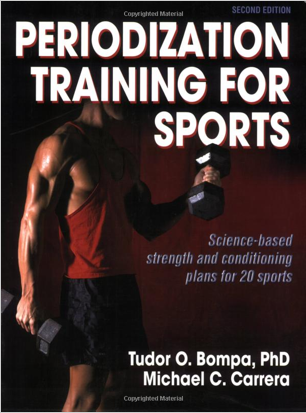
Relevant to energy systems training for hockey, it’s important to recognize that, although hockey is a highly interval-based sport, the contributions of the aerobic system are still quite significant. In fact, in “Periodization Training for Sports” by Tudor Bompa and Michael Carrera, they point out that:

“Acceleration and quick changes of direction are important elements of ice hockey. Training should focus on refining skills and developing power and aerobic and anaerobic endurance.”

They also estimate that energy supply for hockey performance is:

  1. 10% Alactic
  2. 40% Lactic
  3. 50% Aerobic

Periodization Training for Sports

And, as I’ll mention shortly, while I think it’s important to recognize how the game has evolved over the last decade, I still think this information holds a lot of merit. The “aerobic base” that is often cited in periodization literature doesn’t mean that hockey players need to train like marathon runners, but building a strong aerobic system STRATEGICALLY during portions of the early off-season will improve the player’s ability to recover quickly from high intensity bouts AND improve their overall stress capacity.

In order to truly understand the energy contributions of the game, it’s helpful to have an illustration of the intensity and duration dynamics of a typical period and a typical game. One study (from Green et al., 1976) provides information on shift durations and distances covered during a college hockey game and differences in these measures between positions. They found:

  1. Total playing time averaged ~24.5 minutes
  2. ~5,553 meters were covered in the span of the game
  3. An average shift consisted of 39.7 seconds of uninterrupted playing, followed by 27.1 seconds of stoppage, repeated 2.3 times.
  4. Across the three periods, playing time (+17.4%), playing time per shift (+18.7%), playing time between stoppages (+13.3%), and the time taken to resume play after a stoppage (+22.0%) all increased.
  5. The average velocity remained constant over the first two periods and then dropped 5.2% in the 3rd period
  6. The average heart rate was found to be 87-92% of the max value achieved during a VO2 test
  7. Compared to forwards defensemen had more shifts (+26.1%), shorter recovery periods (-37.1%), and played longer (+21.2%).
  8. However, the average defensemen shift was shorter (-7.4%), had less continuous playing time (-10.1%), and took longer to resume play following a stoppage (+12.9%) compared to forwards.
  9. Lastly, on average, defensemens’ heart rates were 10-15 beats/min lower than forwards
  10. Interestingly, the authors also noted that blood lactate increased 457.1% after the first period, but gradually declined over the next two periods!
  11. Goalies showed relatively insignificant changes in blood lactate

Given that this research is now 35 years old, the results should be interpreted with a degree of caution and awareness of the changes in today’s game. That said, research like this is incredibly valuable in understanding the true demands placed on players throughout practices and games. Information in distance traveled and time at specific velocities can be achieved in outdoor sports using GPS systems. Unfortunately, GPS systems aren’t of much use to ice hockey, and other indoor sport. Although, a company called Catapult Sports is pioneering the integration of indoor monitoring systems, and will likely lead the way in providing a technology that governs the future of load and sport-related stress management in hockey. This information is doubly valuable with the addition of monitoring heart rate variability, as this provides information on both the training load AND the individual’s physiological response. If you’re not familiar with heart rate variability, I highly recommend you read David Lasnier’s post Managing Fatigue and Recovery and Joel Jamieson’s free report The End of Group Training.

Joel referenced an interesting study in his energy systems presentation that I had an opportunity to read on my flight back from Lincoln regarding how energy system contribution changes with repeat high intensity interval performance, which I’ll discuss more about next week. The big take home from this discussion is that ALL energy systems contribute to hockey performance and all need to be trained. The balance, progression and periodization of each system is where the magic lies.

To your success,

Kevin Neeld

P.S. Don’t forget, less than 48 hours left to take advantage of the $1 trial and $100 discount on what I consider the best fitness business product out there! Click here for more information: Fitness Business Blueprint!

Please enter your first name and email below to sign up for my FREE Athletic Development and Hockey Training Newsletter!

It’s good to be home and settled again. I got back to Philadelphia from my trip out to Postural Restoration Institute‘s Advanced Integration course in Lincoln on Sunday at midnight. Lincoln’s airport was an interesting experience. It was one of those places where they had one cab driver on call for the entire city…who also doubled as airport security, flight attendant and pilot.

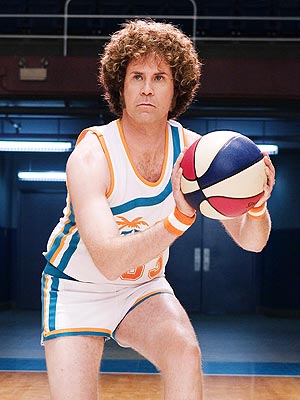
“And now the moment you’ve all been waiting for. At six foot five a solid meaty 215 pounds… your pregame announcer, your owner, your coach… your pop-singing sensation, but most importantly… your power forward… yours truly, Jackie Moon!”

The course itself was a great experience, and one that I’ll inevitably be referencing frequently in the near future. Not only was the information powerful, but as the only strength coach in a room of 55, speaking with the other attendees was equally as insightful as the course itself. It’s these educational and networking experiences that I rely on for continuing to improve as a professional in the field. Regarding PRI specifically, information from their courses provides the explanation for the staggering proportion of the general population that suffers from femoroacetabular impingement (see: An Updated Look at FAI), and is a major reason why I’m able to successfully work with current and former athletes that suffer from a myriad of hip injuries successfully.

As highly as I speak of PRI (and deservedly so), they are certainly not the only educational resource that I rely on. Since June, I’ve attended/completed 10 different seminars/courses to help broaden and deepen my understanding of material from Functional Movement Systems, USA Weightlifting, USA Hockey, and people like Joe Dowdell and Mike Roussell (among others). I also have a formidable stack of research on energy systems, heart rate variability, and GPS tracking that I’ve worked my way through in the last month. I say all that, not to boast, but simply to put things in perspective. If you want to be good at anything, it’s going to take two things:

  1. Focused, consistent work/practice
  2. Time

I consider myself very fortunate to have learned these lessons early from people like Mike Boyle and Eric Cressey. In my experience, the people that struggle in the fitness profession are those that, at some point, assume their educational journey is over and shut it down. This same thing can be said of almost every profession AND can be applied to athletes. There is always something or someone out there that can help you, and it’s wise to proactively seek these resources out.

Unfortunately, I’m not much of a business man. I’m not passionate about business; I’m passionate about athletic development and hockey training. That said, educating myself on contemporary marketing strategies is a “necessary evil” so to speak, as it doesn’t matter how much I, or the rest of the Endeavor staff, knows about training if no one knows we exist. With that in mind, I’m conscious of spending some (as little as possible) of my continuing education time on business-related materials. Over the last several years, the single best business resource I’ve come across is the Fitness Business Blueprint from Pat Rigsby, Eric Cressey and Mike Robertson.

I continue to refer back to my notes from their videos, and have used their information to reshape all of the internal and external business systems within Endeavor. Unlike many business resources, it’s not based on theory, it’s based on implementable steps and action plans, which makes things easier for the not-so-business savvy people like me. The GOOD thing about business resources is that if you apply the information correctly, the investment pays itself off many times over. The GREAT thing about this particular resource, which usually runs for $299, is that they’re offering a $1 30-day trial, at which point you’ll still receive a $100 discount off the package price and can divide the payments up across two months. Simply, you save $100 AND you get to try it for 30 days for a $1 before you make any commitment. If you’re an action taker, you’ll have made enough money to pay for the package by the end of your 30-day trial! Click here for more information: Fitness Business Blueprint

Remember that the path towards excellence in any area is an ongoing journey. Too many people quit right before their big break. Keep moving forward; it will be worth it in the end!

To your success,

Kevin Neeld

P.S. As with many great opportunities, the $1 trial for Fitness Business Blueprint will only be available for the next 72 hours so take action now and click here for more information on how you can get your hands on the best fitness business resource out there: Fitness Business Blueprint!

Please enter your first name and email below to sign up for my FREE Athletic Development and Hockey Training Newsletter!
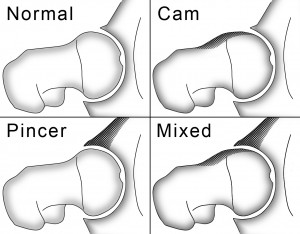
Over the weekend I posted a video at HockeyStrengthandConditioning.com of a former (and hopefully future) division 1 lacrosse player that I’ve worked with over the last few months at Endeavor Sports Performance. What makes this player unique is that he’s undergone 4 hip surgeries (2 on each side) secondary to femoroacetabular impingement (FAI) and bilateral sports hernia surgery. The video alludes to the importance of recognizing individual limitations and teaching the athlete how to move within his or her own confines.

Working with this athlete also highlights the importance of understanding these so-called abnormalities. When he first came to Endeavor, light jogging wasn’t even an option. In other words, his range of motion was so poor, damage so significant, and overall comfort level with athletic movements so degraded that we really had to start slow. A few months later, he’s sprinting, cutting, and jumping explosively and without pain; he’ll be the first to tell you that he’s never felt better. My ability to effectively work with athletes like this stems directly from the amount of time I’ve spent studying the relevant research. I think this information is valuable for anyone that trains anyone, but if you work with hockey players, it’s absolutely essential. The amount of research in this area has exploded over the last decade; understanding the causes and implications of FAI will help you more effectively train players that present with these injuries (which is most) and help to prevent unnecessary complications.

Illustrating “normal” hip joint anatomy and FAI abnormalities

Below is a brief review of some of the current literature:

High prevalence of pelvic and hip magnetic resonance imaging findings in asymptomatic collegiate and professional hockey players

  • MRI findings from 21 professional and 18 NCAA D1 players; all were asymptomatic
  • 14 (39%) dysfunction of adductor-rectus abdominis insertions
  • 25 (64%) hip pathologic changes
  • 30 (77%) have MRI finding of hip or groin pathologic abnormalities

The prevalence of cam-type femoroacetabular deformity in asymptomatic adults

  • Retrospective analysis of CT scans from 419 randomly selected patients from 2004-2009 that were taken for problems unrelated to the hip
  • Of the 215 male hips (108 patients) analyzed, a total of 30 hips (13.95%) were defined as pathological, 32 (14.88%) as borderline and 153 (71.16%) as normal.
  • Of the 540 female hips (272 patients) analyzed, 30 hips (5.56%) defined as pathological, 33 (6.11%) as borderline and 477 (88.33%) as normal.
  • This highlights the prevalence of these injuries in asymptomatic individuals, especially men. This means that, in the general population, roughly 1 in every 3-4 men that you train will have an underlying hip abnormality. The prevalence of these findings in hockey players is drastically higher (see above).

Prevalence of cam-type femoroacetabular impingement morphology in asymptomatic volunteers

  • 200 asymptomatic individuals (111 females, 89 males; average age 29.4 years) had an MRI taken of their hips.
  • 14% of the volunteers had at least one hip with CAM impingement
  • 10.5% had CAM on either the right or the left side; 3.5% had CAM in both hips
  • 22 of 28 individuals (79%) who had CAM were men; only 6 (21%) were women.
  • 22 of 89 (24.7%) men had CAM impingement, compared with only 6 (5.4%) of 111 women.

Hip flexor muscle fatigue in patients with symptomatic femoroacetabular impingement

  • Comparison of hip flexor strength during submaximal isometric and repeated maximal dynamic contractions in those with and without FAI.
  • FAI participants exhibited significant hip flexor weakness compared to the controls
  • No changes were noted in fatigue indices between the two groups
  • Authors noted that those with FAI tend to have adductor and hip flexor weakness. It’s easy to look at these weaknesses and point to them as potential causes of FAI secondary to poor femoral head control. That said, it’s also worth noting that the bony overgrowth limits hip adduction and hip flexion and may cause weakness secondary to neurological inhibition, especially as bony end-range is approached.

Can we predict the natural course of femoroacetabular impingement?

  • Because FAI is so strongly associated with future osteoarthritis, these authors sought to determine whether age of total hip arthroplasty was related to certain radiographic findings and/or activities.
  • Given the complex and dynamic nature of these injuries, it’s not surprising that they weren’t able to find a relationship through their methods. That said, I think they hit the nail on the head with their conclusion: “Hence, considering the high prevalence of FAI-related radiographic findings, we conclude that not every radiographic abnormality requires treatment.”
  • This highlights the importance of not taking every positive radiographic finding and shipping the player off to the surgical table!

Treatment of athletes with symptomatic intra-articular hip pathology and athletic pubalgia/sports hernia: a case series

  • Analyzed 37 hips (average age: 25 years) with BOTH a sports hernia and FAI. Patients were athletes competing at the pro (8), college (15) elite high school (5) and competitive club (9) levels.
  • Evaluation occurred at an average of 29 months post surgery (wide range of 12-78 months though)
  • Of 16 hips that had athletic pubalgia (sports hernia) surgery as the index procedure, 4 (25%) returned to sports without limitations, and 11 (69%) subsequently had hip arthroscopy at a mean of 20 months after pubalgia surgery.
  • Of 8 hips managed initially with hip arthroscopy alone, 4 (50%) returned to sports without limitations, and 3 (43%) had subsequent pubalgia surgery at a mean of 6 months after hip arthroscopy.
  • Thirteen hips had athletic pubalgia surgery and hip arthroscopy at one setting. Concurrent or eventual surgical treatment of both disorders led to improved postoperative outcomes scores (P < .05) and an unrestricted return to sporting activity in 89% of hips (24 of 27).
  • While it’s impossible to make any accurate inferences, I’d be interested to see how these numbers may differ if the athletes were in sport programs with medical professionals that truly understood the implications of the abnormalities and could teach the players how to move within their limits.

In my experience, most players do very well when they understand the limitations in their joint anatomy and are taught how to move within these confines. Because the primary suggested mechanism underlying athletic pubalgia involves a tug of war across the pubic symphysis between the adductors and abdominals AND because those with FAI tend to have very dense/fibrotic adductors, many players will benefit from some soft-tissue work in this region, especially in the area of the proximal adductor magnus attachment. Also, because posterior capsule density can push the femoral head forward in the joint and put excess stress on the anterior/superior labrum, this is another area worth having a manual therapist look at. The manual method itself is less important than the proficiency of the therapist. It can be tough to find someone that is comfortable working in that area, but it is well worth the trouble when you do!

To your success,

Kevin Neeld

P.S. If you’re interested in learning more about hockey hip injuries and associated assessments and corrective strategies, I highly encourage you to check out my presentation “Hockey Hip Assessments: An In-Depth Look at Structural Abnormalities and Common Hip Injuries”, which is now available at Hockey Strength and Conditioning

Please enter your first name and email below to sign up for my FREE Athletic Development and Hockey Training Newsletter!

I’m really looking forward to this week. On Wednesday I’m taking off for Lincoln, Nebraska for a 4-day course called Advanced Integration from the Postural Restoration Institute. Lincoln isn’t exactly the most ideal December destination (I would have preferred they host the course in St. Maarten), but the course is going to cover integrated ways to assess for and apply corrective strategies for the hip and thoracic dysfunctions covered in two previous courses that I’ve taken. Should be a great experience.

It’s been a while since I’ve touched on some of the “newer” hockey-related research, so I wanted to give you a quick update on what’s been going on in the literature. Some of these studies are over a year old, but I’m coming across them for the first time.

Accuracy of professional sports drafts in predicting career potential
This was an interesting study looking at the relationship between games played and draft round in NFL, NHL, NBA, and MLB athletes drafted from 1980-1988. The analyses included 4,874 athletes over that time span. The assumption is that games played is indicative of career success. Naturally, there are some inherent limitations to using such a general marker of success, but overall I think it’s probably the best choice, especially in consideration of the intent to make generalizations across several sports. As would be expected, they found a significant difference in games played across draft rounds, and a significant negative relationship between draft round and games played (earlier draftees played more games). However, the authors note that draft round accounts for only 17% of the variance in games played. In other words, while the relationship between draft round and games played may be statistically significant, the relationship between draft round and future professional success is extremely weak. This provides support for the long-term athletic development model, as it’s evident that early successes (indicated by being drafted early) do not always develop into later success at the professional level. I’ve written quite a bit about this in the past, but this same concept can be applied when looking at how dominant peewees play at the midget level, how dominant midgets play at the junior or college level, and how dominant college players play at the pro level. Development is a long-term process!

Examination of birthplace and birthdate in World Junior ice hockey players
This study examined 566 junior ice hockey players from the U.S., Canada, Sweden, and Finland that competed in the International Ice Hockey Federation World U20 Championship between 2001 and 2009. They found a consistent relative age effect (RAE) across ALL FOUR countries, and that players were less likely to be from major cities. They also noted that there was no interaction between RAE and birthplace. For those of you that aren’t familiar, RAE refers to a phenomenon whereby players born earlier in the calendar year (e.g. January-March births) are relatively older than those born later in the calendar year (e.g. October-December births), and therefore are more developed and perform at a higher level compared to their age-matched peers. This leads to these players being selected as “more elite” and being provided with better development opportunities (play at higher levels with more ice time and better coaches, more positive reinforcement of them being “elite”, more exposure opportunities, etc.). This is strictly a consequence of our rush to identify early talent, which inevitably cheats many potential high-performers out of development opportunities strictly because they were born later in the year. This finding also prevails in the NHL. Turns out if you want to create an NHL player, you need to cluster your romantic endeavors around April and May!

Intragame blood-lactate values during ice hockey and their relationships to commonly used hockey testing protocols
This study looked at blood lactate levels in 6 NCAA division 1 hockey players during certain shifts in the first and third period of a game. They found that players’ blood-lactate values ranged from 4.4 to 13.7 mmol/L with a mean value of 8.15 (+2.72) mmol/L. As a general statement, the thought is that the ability for the body to provide energy using primarily aerobic systems diminishes around work intensities that results in blood lactate levels ~4 mmol/L. This is obviously an over-generalization, but will suffice for our purposes here.  The findings of this study are far from groundbreaking, but highlights the intensity and fatigue accumulation associated with typical hockey shifts. This should not be interpreted as evidence AGAINST the use of aerobic training for hockey players. Quite the contrary. It’s the adaptations from aerobic training that facilitate an expedited recovery from these intense work bouts, AND that can minimize the metabolic damage associated with prolonged high intensity work (e.g. provide more energy from aerobic systems at higher intensities, so to somewhat spare the lactic system).

That’s a wrap for today. In a couple days I’ll be back with research updates on a common hip abnormality that is leading many players to get surgery. Stay tuned!

To your success,

Kevin Neeld

P.S. I also wanted to remind you that I’ve added an “ebook only” option to Ultimate Hockey Training, so if you don’t want to shell out for shipping a physical copy, you can now get instant access to the entire package digitally here: Ultimate Hockey Training


Please enter your first name and email below to sign up for my FREE Athletic Development and Hockey Training Newsletter!
Use CODE: "Neeld15" to save 15%