Over the last few years, I’ve written and talked quite a bit about preventing hip injuries in hockey players. Unfortunately, things like adductor and hip flexor strains have become accepted as “part of the game”, and now we’re seeing a surge of femoroacetabular impingement, labral tear, and sports hernia cases. The underlying mechanisms to many of these injuries can be pretty complex, but once you get it, many of these cases can be prevented.

A few months back, I posted a video on how to assess for a pretty common structural “abnormality” that we see in hockey players known as “version”. More specifically, players can have unilateral or bilateral ante- or retro-version. If you missed the video, take a few minutes to watch it below:

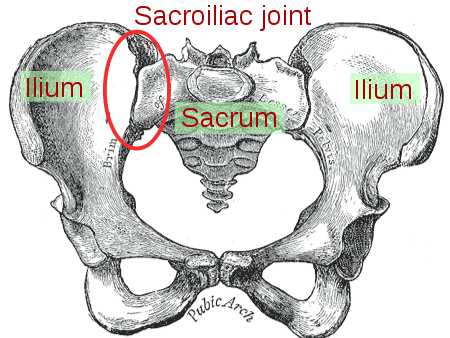
In the past, I’ve worked with a lot of players that complain of groin pain that present with associated weakness. It’s important to point out that pain completely changes function, often in unpredictable ways. This is one of the reasons that training or playing through pain can lead to additional problems down the line. Compensations are inevitable. Specific to these cases, often times the cause of the pain and weakness is a misaligned pelvis. As a quick anatomy review, each hemi-pelvis integrates with the spine via the SI joint in the back and with each other via the pubic symphysis in the front.

These three connection points (SI joint on each side and pubic symphysis in the front) form a continuous loop. Because of their integration, one segment become misaligned will necessarily result in a misalignment at another segment. For example, an SI joint being out of whack can lead to a shift in the other SI joint and/or the pubic symphysis. Alignment can be compromised from contact, and/or instability secondary to poor or asymmetrical movement patterns, postures, and strength. Misalignments can refer pain to a number of places throughout the thigh, hips, and lower back, but a common one that we see relates to pubic symphysis irritation. When there is excessive movement across the pubic symphysis, the cartilaginous disc that helps improve the contact area of the two adjoining bones becomes inflamed. This is referred to as osteitis pubis and is one of the most overlooked sources of groin pain. These cases are frequently treated with injections to reduce the inflammation, which is effective in putting a band-aid over the pain, but completely overlooks the cause.

In these cases, asking the athlete to squeeze something between their legs while lying with their knees bent will reproduce the pain radiating from their groin up into their hip AND strength will be poor. Many times, a simple “SI readjustment” from a physical therapist or chiropractor will restore alignment and the pain will be gone and strength restored, instantly. At this point, the athlete has a more neutral alignment, but has demonstrated that they’re prone to slipping back into misalignment (and pain, and weakness). Following readjustment, it’s important to incorporate strengthening exercises that put multi-directional bilateral stress across the hips. These exercises serve to improve the integrity of the hip in a neutral position, which will help ensure that they player doesn’t fall in and out of alignment and progressive degenerate the joint. The exercises in the video below were a few that we’ve used at Endeavor in cooperation with Ned Lenny, a really bright physical therapist in Cherry Hill, NJ. Enjoy.

To your success,

Kevin Neeld

P.S. I’ve added an “ebook only” option to Ultimate Hockey Training, so if you don’t want to shell out for shipping a physical copy, you can now get instant access to the entire package digitally here: Ultimate Hockey Training

Please enter your first name and email below to sign up for my FREE Athletic Development and Hockey Training Newsletter!

I hope you had a great weekend. David Lasnier and I headed into West Chester, PA for the USA Weightlifting Sports Performance Coach Certification. We’ve been teaching Olympic lift variations for years, but it’s always good to hear it right from the source. I think we both picked up a few good cues that will help refine the learning process a bit.

Last week I discussed, from a nutrition and program design perspective, the idea that living in a “high intensity mode” can be detrimental to recovery and therefore to subsequent performance. The hockey season is long, and if players and coaches aren’t conscious and proactive about their recovery, they’re going to break down toward the middle/end of the season. Recovery is key to long-term excellence. If you missed those posts, you can check them out here:

  1. UCAN Break Carbohydrate Dependence
  2. A New Perspective on Program Design

Essentially this idea boils down to teaching your body to appropriately balance the sympathetic and parasympathetic nervous systems. If you’re not familiar with this terminology, these systems are often oversimplified as:

  1. Sympathetic: Fight or flight (or freeze)
  2. Parasympathetic: Rest and digest

While they’re often discussed as opposing systems, the reality is that they work in a complimentary fashion to create the appropriate environment for the body to be successful. Different strategies have been proposed to monitor the “state” an athlete is in, as athletes that start to get stuck in a sympathetic state or thought to be overstressed/under-recovered/overtrained, which can progress to an even more severe state of parasympathetic dominance if left unchecked. Again, it’s not that one system is good and the other bad, it’s that both need to be emphasized at appropriate times.

I recently came across a study that provides powerful information on how hockey’s original recovery drink physiologically impairs recovery.

Hockey’s Original Recovery Drink
I remember an old teammate of mine from Delaware called me a couple years after I graduated and said, “Neeld, how do I lose fat, while binge drinking 5-6 days per week?” If you’re even remotely health conscious, the futility in this question may strike you as comical. The truth is that many players have a somewhat related question in that they want to know how they can minimize the damage of alcohol without giving it up completely. And I think that many of the nutrition “experts” will quickly lose the attention of older players when they put their anti-alcohol foot down. Is it good for you? Not by a long shot. Will players give it up completely? Not by a long shot, and they’ll shut you out completely if that is your expectation.
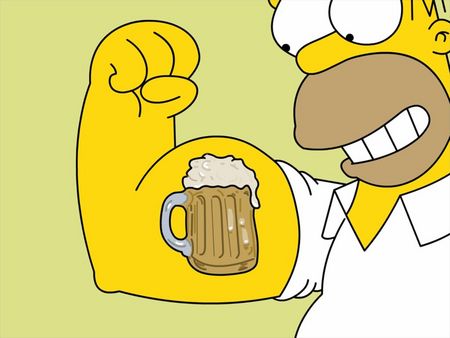
This isn’t quite how it works

That said, it’s important to provide players with the necessary information to allow them to make decisions for themselves. On that note, I recently came across an interesting study related to alcohol consumption and recovery: Alcohol Has a Dose-Related Effect on Parasympathetic Nerve Activity During Sleep

In possibly the most appealing study ever offered to college students (I’m sure they weren’t at a loss for volunteers on this one), researchers took 10 sufficiently aged students and had them consume 0 (control group), 0.5 (low dose), or 1.0 g (high dose) of pure ethanol per kg of body weight about 2 hours before they went to bed. On the nights that they consumed the alcohol, they wore a non-invasive device to monitor electrocardiological activity throughout the night.

They found that alcohol consumption increased the students’ heart rate, decreased heart rate variability (HRV), and increased the Low Frequency/High Frequency ratio of HRV, with higher doses being associated with more significant changes. Taken together, these results indicate that, as the title indicates, alcohol consumption leads to a shift toward a sympathetic state by both increasing sympathetic activity and inhibiting parasympathetic activity, with greater degrees of consumption leading to a more significant shift toward a sympathetic state.

Practical Implications
From a practical standpoint, these results can be taken to mean that alcohol impairs sleep quality. While this seems like a pretty straight-forward concept, it directly conflicts with the conception that many players have that alcohol actually helps them sleep. It may help your eyes shut, but your body isn’t resting and recovering during the night.

To help relay this information in more practical terms, let’s take a look at the doses used in the study for three players:

Weights

  1. Players 1: 180 lbs = ~ 82 kg
  2. Player 2: 200 lbs = ~ 91 kg
  3. Player 3: 220 lbs = ~100 kg

Alcohol Dosage

  1. Player 1: 82 kg x 0.5 = 41g of ethanol (low dose); 82 kg x 1.0 = 82 g of ethanol (high dose)
  2. Player 2: 91 kg x 0.5 = 45.5 g of ethanol (low); 91 x 1.0 = 91 g of ethanol (high)
  3. Player 3: 100 kg x 0.5 = 50 g of ethanol (low); 100 kg x 1.0 = 100 g of ethanol (high)

Beer Dosage
A typical beer with 4.5% alcohol content contains about 16 g of ethanol.

  1. Player 1: Low Dose- ~2.5 beers; High Dose- ~5 beers
  2. Player 2: Low Dose- ~3 beers; High Dose- ~5.75 beers
  3. Player 3: Low Dose- ~3 beers; High Dose- ~6.25 beers

In other words, it doesn’t take much to significantly impair sleep quality. More importantly, more is worse. Alcohol consumption doesn’t need to be an all or nothing experience. Having a couple beers after a tough game isn’t ideal, but having a dozen will have a significantly detrimental effect on the player’s recovery. On a related note, light beer with a lower alcohol content and less calories looks good on paper, but if it’s between 2 Magic Hat #9s and 12 Coors Lights, then drinking the heavier beer may be a better option.

Also, knowing that processing alcohol will impair sleep quality, it seems logical to shut down your drinking as far before your typical bedtime as possible. Because going to bed and waking up within an hour of the same times everyday (at least as much as possible) is important for establishing an optimal circadian rhythm, this means that drinking after night games should be kept to a minimal (as a habit, exceptions are inevitable), as should drinking during trips that involve significant changes in time zone (e.g. east coast teams playing on the west coast or any North American team playing overseas).

Take Home
Alcohol’s impairment in sleep quality can facilitate a viscous cycle. Because they slept in a more sympathetic state, they’ll wake up feeling less rested and lean on coffee or other forms of caffeine to help kick start their day. Like alcohol, caffeine also pushes them toward a sympathetic state. These habits, superimposed on an already sympathetic lifestyle (training, practices, games, travel, relationship stress, schoolwork for junior/college players, etc.) doesn’t allow athletes to shift back into a parasympathetic state, which significant impairs their ability to recover.

Hopefully you understand the underlying thought process. Players are going to make their own decisions and there will always be exceptional circumstances. That said, it’s important for players to understand what “ideal” is, so that they know when they’re venturing in the other direction. The more time players live in ideal circumstances, or said another way, the less time they spend venturing in the other direction, the better their performance will be over both the short- and long-term.  

To your success,

Kevin Neeld

Please enter your first name and email below to sign up for my FREE Athletic Development and Hockey Training Newsletter!

I hope you’ve had a great week. David and I are heading out to West Chester, PA for the USA Weightlifting Sports Performance Course certification over the weekend. I grew up in West Chester, so it’ll be great to stop in to see my parents and spend some time in my old stomping grounds.

Things picked up a bit this week at Hockey Strength and Conditioning. Before I get to that, if you missed my two articles from earlier in the week, you can check them out at the links below:

  1. UCAN Break Carbohydrate Dependence
  2. A New Perspective on Program Design

While these posts approach somewhat different concepts, one of the underlying take homes from both is that we need to be adept at STRATEGICALLY implementing stressors. In this vein, stress doesn’t just refer to those from training or competition (although, these will make up a significant proportion of the total stressors for in-season players), but also dietary, environmental, psychological, and social stressors (amongst others!). Stress is cumulative and needs to be mediated or “overtraining” will result.  Overtraining can just as accurately be described as “under recovery” as it’s possible to drive someone into a state of overtraining without ANY training stressors at all.

Also, I wanted to remind you that today is the last day to pick up your copy of Joe Dowdell and Mike Roussell’s Peak Diet and Program Design Summit Package for $100 off. They’ve added a special bonus from Pat Rigsby (great for those of you that may own your own training business) AND a new payment plan. If you’re interested, check out their program here: Peak Summit Package

Moving on to this week’s content at Hockey Strength and Conditioning…

Mike Potenza kicked things off with a new “Youth Training Program” that emphasized lateral speed training. This exercise series, which Mike demos in the videos, is a great way to teach young players how to accelerate, decelerate, and change direction while maintaining proper body position. In other words, it drives performance through body awareness. For higher level players, under the assumption that they’ve developed these qualities already (not always a safe assumption), these are still great exercises to incorporate into off-season programs or toward the end of a warm-up at any time of year. Great stuff from Mike.

Click here to check out the program >> Youth Program: Lateral Speed Teaching

Darryl Nelson added an exercise video of two variations of a lunge complex, one using a valslide and one without it. I’m not exactly sure how Darryl builds these into the program, but they seem like great options for a warm-up or to build some low-intensity “hip mobility” or “lower body” work into an upper body day or full body lift where you want to back off the legs a bit.

Check out the lunge matrix video here >> Left Middle Right Reverse Lunges

The second part of my article series on developing youth training programs for an entire youth hockey organization just went up. This series gives you an inside look into my philosophy and approach to designing a program for a local youth club. As this is a question I get a lot (typically from a coach at one specific level), I think the article series will have a lot of valuable information in it for those of you that don’t necessarily train people for a living, but are left to your own devices for your hockey club. In my (unbiased) opinion, the strength of this series is that I don’t necessarily suggest that you need to do it EXACTLY how I do, but understanding my philosophy underlying the approach I take will help you apply concepts that seem most relevant to your situation. As I always say, there’s a madness to my method!

Check out the article here >> Youth Hockey Training Blueprint: Part 2

Make sure you check out these threads on the forum too:

  1. Motivation
  2. 1 Leg Cleans?
  3. Athlete Metabolism Issue
  4. Hockey’s Original Recovery Drink

That’s a wrap for today. As always, if you aren’t a member yet, I encourage you to try out Hockey Strength and Conditioning for a week. It’ll only cost $1, and if it’s not the best buck you’ve ever spent, I’ll personally refund you!

To your success,

Kevin Neeld

P.S. Last chance to save $100 on this: Peak Summit Package

Please enter your first name and email below to sign up for my FREE Athletic Development and Hockey Training Newsletter!
A couple days back, I wrote an article on the benefits of Generation UCAN as they pertain to maintaining/achieving low body fat levels AND in avoiding the deleterious effects of an over-reliance on carbohydrates. If you missed it (or want a re-read!), you can check it out here: UCAN Break Carbohydrate Dependence

The general idea of that article was that we don’t want to rely on high-intensity systems when we don’t need them. This is true from both a performance and fuel perspective, and has significant implications on training program design. This conversation highlights a change in my thinking regarding program design that stems from interactions I’ve had with Patrick Ward, Joel Jamieson, and David Tenney. Most recently, I spent 4 days with Patrick when I was out in Phoenix for a Postural Restoration Institute seminar. As Patrick described it, programs can be designed with a solitary or combined focus of these foundations:

  1. Exercise Progressions
  2. Energy System Utilization

While I think most people reading this are familiar with exercise progression concepts, the idea of energy system utilization congruency might be less familiar. A simple way to grasp this concept is to refer back to the article from last week: Peak Performance and Diet Design Seminar. More specifically, the list of physical quality competing demands from Dr. Issurin provides a structure through which we can begin to understand how to design programs around energy system congruency.

  1. Aerobic Endurance: Alactic (Sprint) abilities, strength endurance-aerobic, maximum strength-hypertrophy (after)
  2. Anaerobic (Glycolytic) Endurance: Strength endurance-anaerobic, aerobic restorative exercises, aerobic-anaerobic (mixed) endurance
  3. Alactic (Sprint) Abilities: Aerobic endurance, explosive strength, maximum strength-hypertrophy (after), aerobic restoration exercises
  4. Maximum Strength-Hypertrophy: Maximum strength-innervation, flexibility, aerobic restoration
  5. Learning New Technical Elements: Any kind of training modality, but after the dominant tasks

This list refers to a basic physical quality or energy system, and what other qualities can be developed concomitantly without the interfering with each other. Recently there has been an increased focus on high intensity interval training (or “Anaerobic/glycolytic endurance” in the list above) as a primary conditioning method for athletes. If you refer to the list above, you can see that this approach can be used coincidentally with training for anaerobic strength endurance, aerobic-anaerobic endurance, and aerobic restorative exercises. Notably absent from this list are many of the other major qualities that are important for both hockey players and almost all other team-sport athletes: alactic (sprint) abilities, maximum strength-hypertrophy, maximum strength-innervation, and explosive strength. 

Strength matters

Related to my previous post, putting such a high emphasis on anaerobic/glycolytic training, such as that commonly used during high intensity interval training sessions, will not only interfere with the development of other qualities, it will also make the body reliant on the glycolytic system (carb dependence!), which has a limited fuel supply, creates a high degree of stress on the body and has longer recovery times, especially in the absence of a well-developed aerobic system.

There is a time and a place for this, but this type of training should not be used haphazardly

Interestingly, last off-season I made some changes to our off-season conditioning progression based solely off of my feelings about how the athletes recovered from the progression in the previous off-season that appear to be in line with this “energy system utilization congruency” idea. That said, there is always room for improvement and I’ll be readdressing this for all of our athletes in the coming weeks.

Early in my career, if you would have said “energy systems training” I would have said, “sure, conditioning.” Recently, I’m finding that EVERYTHING is energy systems training, and viewing things in this light will have pretty profound implications on how I design programs in the future. A related take home is that it’s important to be proactive in seeking new information and to continually improve yourself. In this regard, it’s helpful to stand on the shoulders of giants, to learn from the best in the industry. Patrick, David, and Joel have been outstanding resources for me, and I’m confident they will be for you too. If you haven’t already, start looking into their work, much of which can be found here: StrengthCoach.com

Lastly, remember that you only have a couple days left to save $100 on Joe Dowdell and Dr. Mike Roussell’s Peak Diet and Training Summit Package, which includes 12 DVDs and 3 manuals with over 500 pages jammed full of quality training program and diet design information. Go here to take advantage of their offer before the price jumps! Peak Diet and Training Summit Package

To your success,

Kevin Neeld

P.S. If you’re interested in more information on energy systems training, Joel posted a great video from a talk he gave that you can watch for free here: A New Perspective on Energy Systems Training

Please enter your first name and email below to sign up for my FREE Athletic Development and Hockey Training Newsletter!

I mentioned a couple weeks back that I recently gave a nutrition talk to a U-18 hockey team. The talk started by describing the relationship between glucose, insulin, and other markers of fuel and performance. Without going into excessive detail, the generally ideas can be summarized as:

  1. The body breaks down energy stores and/or food into glucose which enters the blood stream to be used as fuel.
  2. With regards to food, the more simple the carbohydrate, the faster the digestion process and the more rapid and pronounced the spike in blood sugar (glucose). Cotton candy, which is entirely digested in the mouth, is an extreme example of rapid carbohydrate digestion and absorption, whereas something like sprouted-grain bread will take substantially longer to break down and will therefore have a “time-release” effect in delivering the nutrients to the blood stream.
  3. When there is excessive glucose in the bloodstream, a hormone called insulin is released to shuttle the excess to appropriate storage sites. This is not the only function of insulin, but this view will suffice for our purposes here. The greater the excess of glucose, the greater the spike in insulin release, so more insulin will be released in response to a 100 calories of cotton candy than 100 calories of sprouted-grain bread.
  4. With quick/large spike of blood glucose, insulin can overcompensate in pulling glucose from the blood. When this happens, blood sugar levels drop below baseline (where they were before the sugar rush). This is one of the reasons people feel borderline psychotically energetic after eating something sugary and shortly after feel completely drained.
  5. When there’s more insulin in the blood, your body’s ability to use fat as a fuel source is blunted. This isn’t only a negative for people that have body fat concerns (elite hockey players are generally required to be under 10%, so anyone over ~14% that is serious about playing at high levels needs to be proactive about changing their body composition), but it also makes the body more heavily dependent upon carbohydrates as a fuel source.

I’ll come back to this latter point, but this relationship between glucose, insulin, and fat burning is one of the major reasons I’m such a big proponent of Generation UCAN’s SuperStarch products. Simply, unlike most sports drinks, UCAN’s SuperStarch has a less drastic and more prolonged delivery of carbohydrates (think time-release), which significantly diminishes the insulin response AND allows the body to use fat as a fuel source to a greater degree. This means athletes will avoid the spike-and-crash effect of excess sugar consumption that is typical from the sports drinks they consume most frequently.

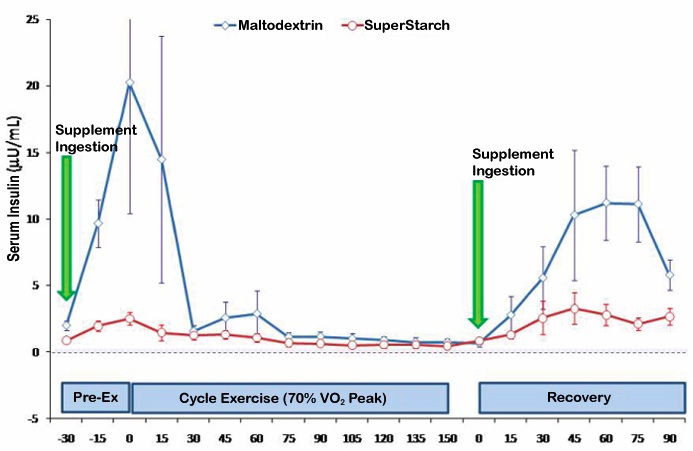
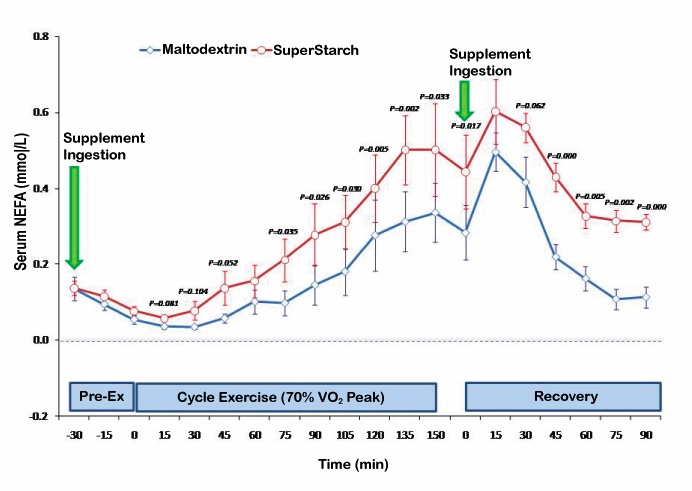
Check out this data from the University of Oklahoma comparing UCAN to maltodextrin (a carbohydrate source found in most sports drinks).

Note the drastically higher spike in insulin for the maltodextrin drink both pre- and post-training compared to UCAN’s SuperStarch

Note the increased availability of fat for SuperStarch, both pre- and post-training, compared to maltodextrin

Teaching the body to use fat as a fuel source is extremely important, as fat stores are so plentiful that they can basically be thought of as an unlimited source of energy for athletic purposes. Carbohydrates are broken down and used for fuel quicker than fat, meaning it’s a more effective source of energy for high intensity activities (such as during a hockey shift). While we rely on a combination of fuel sources (ATP, PCr, Glycogen/Carbohydrates, Triglycerides/Fat, etc), given that ATP, PCr, and Glycogen best fuel high intensity/short-duration efforts and are in limited supply within the body, it’s reasonable to take steps to conserve these sources for when they’re absolutely necessary. Many players will describe “hitting a wall” or “not having any legs”, which can be related to excessive depletion of carbohydrate stores. The players I’ve worked with that complain of these “symptoms” feel incredible when they switch over to using UCAN before/during games. Consuming a drink (or meal) high in sugar will ensure that the body relies more heavily on carbohydrates for energy on a short-term scale; consuming excessive carbohydrates in the diet will do the same over a long-term scale.

The more we can keep our body OUT of high-intensity mode, or, in other words, limit excessive stressors on the body (think sympathetic nervous system activity), the faster we’ll recover and the longer we can sustain high-level performance. I’m not suggesting that players shouldn’t work hard, only that there are strategies players can take to ensure that they get into high-intensity mode (sympathetic state) when they need to be, and then out of it when they don’t (parasympathetic state).

In a couple days, I’ll follow up on this post with how this idea influences training programs. In the meantime, if you’re interested in learning more about Generation UCAN’s products, check out these posts, which I wrote about a year ago:

  1. Revolutionary Hockey Nutrition
  2. The Death of Gatorade

If, after reading through those posts and some of the material on their site, you decide you want to pick some up for yourself, you can save 10% by purchasing through this site that we set up for our Endeavor clients link: Generation UCAN

To your success,

Kevin Neeld

Please enter your first name and email below to sign up for my FREE Athletic Development and Hockey Training Newsletter!

Use CODE: "Neeld15" to save 15%