After last week’s post, which featured 14 new articles, training program, exercise videos, and webinars, this week’s update is a little less overwhelming. If you want a quick synopsis on those, you can read up on them here: This Week in Hockey Strength and Conditioning

If you’re coming here for the first time this week, check out these two posts from earlier in the week:

  1. Mike Robertson Interview
  2. Peak Performance and Diet Design Seminar

Over at Hockey Strength and Conditioning, I posted the next phase of our 2-day in-season program for the 16U-18U teams that I work with. You can check that out here:

2-Day In-Season Training Program: Phase 2

Running the off-ice training program for these teams has been a fun process. For most of the kids, this is their introduction to organized training. A few have been on the mirror-muscle program that their HS buddies told them was the only option, but many have never trained before. As a result, the goal has been to build a program that incorporates all the stresses I feel that they need during the season, AND simultaneously build-in exercise progressions that allow them to develop proficiency in basic exercises. This undertaking is done with a space less than 900 sq ft, with no racks, and an athlete to coach ratio that typically floats around 15-20:1. Certainly not ideal, but we get the job done.

When you head over to Hockey Strength and Conditioning make sure to check out the forum. There are three great discussions going on right now:

  1. Reactions to LTAD
  2. Athlete Metabolism Issue
  3. Vibration Training

That’s a wrap for today. A lighter load should allow you to catch up on all the great stuff I mentioned last week.  As always, if you aren’t a member yet, I encourage you to try out Hockey Strength and Conditioning for a week. It’ll only cost $1, and if it’s not the best buck you’ve ever spent, I’ll personally refund you!

To your success,

Kevin Neeld

P.S. I also wanted to let you know that Joe Dowdell and Dr. Mike Roussell have released their Peak Diet and Training Summit Package, which includes 12 DVDs and over 500 pages spread across the 3 accompanying manuals. Having attended the summit live, I can tell you that this will be one of the most comprehensive collection of high quality training and nutrition/supplementation information that the fitness industry has ever seen. You can get the package, along with a few great bonuses, for $100 off if you buy before Friday, and it’s been approved for 2.0 CEUs from the NSCA, which is a great feature given that recertification deadlines are quickly approaching! Check it out here: Peak Diet and Training Summit Package

Please enter your first name and email below to sign up for my FREE Athletic Development and Hockey Training Newsletter!

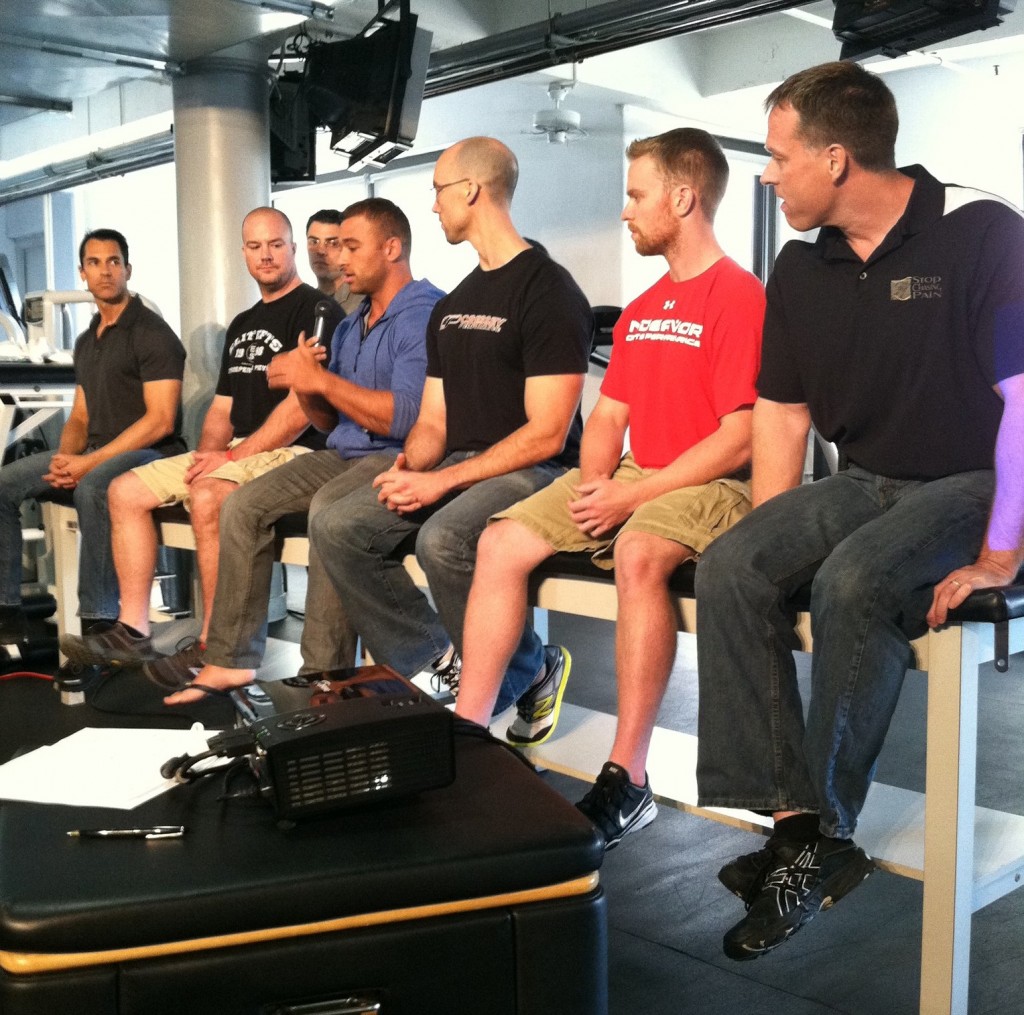
Over the Summer I was very fortunate to attend Joe Dowdell and Dr. Mike Roussell’s Peak Performance and Diet Design Seminar and Joe’s facility Peak Performance NYC. The seminar was a blast. It was great to catch up with Dr. Perry Nickelston, Tony Gentilcore, and Joe and meet John Romaniello, Sean Hyson, Jim Smith, Mike Roussell, and a number of the other attendees.

You may recall that I discussed the “expert” panel Q&A that Joe asked me to be a part of here: Become a Great Coach!

Social gatherings aside, the seminar itself was packed with great information. It was the first time I saw either Joe or Dr. Mike speak, so to say it was an eye opener would be an understatement. I’ve referenced back through the binder that all of the attendees received several times since the course and thought it would be a good topic for today’s post. Without further ado, here are 5 things I picked up at the seminar.

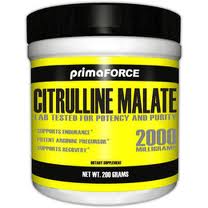
5) Citrulline Malate
Dr. Roussell discussed his supplement recommendations, and divided them up into “core”, “performance enhancers”, and “case specific.” This in itself is an important concept as many people are quick to start taking supplements (or following training programs for that matter) based on what others are doing, which completely neglects the importance of individual training and body composition goals and stress tolerance. I was familiar with most of the supplements Dr. Mike spoke about, but one really caught my attention: citrulline malate.


According to Dr. Mike, citrulline malate can help fight fatigue and decrease muscle soreness by preventing lacate build-up and acidosis, as well as clearing ammonium.  CM also increases BCAA utilization during exercise, so it’s a great compliment to BCAA or protein supplementation. Some of these attributes have been described with arginine supplementation (such as one of the main active ingredients in all the garbage NO supplements), but Dr. Mike pointed out that arginine is shuttled to the liver shortly after absorption, making it a less effective option that citrulline malate. For hockey players, this means maintaining high performance through long shifts and physical games. For lifters, this means achieving more work in a training session and an expedited recovery. For everyone, this seems like good news.

4) Comprehensive Periodization
Joe is one of the most thorough planners I’ve ever spoken with. When a pro athlete comes to him, he lays out their schedule for the next several weeks or months (depending on what they know) and varies the stresses of the training based on their sport-specific training/practices, travel, and their competitions. This allows for both optimal progress and facilitate recovery, which in turn feeds optimal progress/performance. To an extent, every strength coach does this, but Joe really takes it to the next level. In the manual, Joe included a 4-phase (~5 months) training program that he used with National Fencing Champion Tim Morehouse and 4-phase energy system development program that he used with MMA fighter Marcos “Loro” Galvao. Looking through these programs spawn a lot of ideas regarding the importance of long-term planning and stress management, options for program periodization, and general options for resistance and energy systems training. You can infer a lot about the quality of a coach from analyzing his/her programs, and the attention to detail Joe builds into his programs explains why his gym is a top 3 gym in the nation.

3) Variety
I’ll be honest, I’m not usually impressed with random exercise variations. I think a lot of people put an excessive emphasis on variety at the expense of actually becoming proficient in the movements and their progress suffers accordingly. I also think that people prioritize effective behind “sexy” in selecting exercises (hence all the crazy BOSU and stability ball exercises that people fell in love with). That said, Joe put together a 23-page list with ~650 different exercise variations, describing the “dominant movement pattern or emphasis” for each and including additional classifications when appropriate. Beginners need to master the basics; that should be clear. But more advanced athletes with longer training backgrounds (5-10+ years depending on the consistency) will benefit both physically and psychologically from a varied stimulus. This is by far the most comprehensive list of categorized exercises I’ve ever come across. I’m impressed.

2) Training Residuals
In the interest of prioritizing different training qualities to help make maximum progress, it’s important to understand how long you can leave a quality alone before it starts to degrade. Joe did an outstanding job of discussing Dr. Issurin’s research in this area. Understand “motor ability” residuals as Dr. Issurin calls them, is extremely important in designing programs for elite level athletes. Joe also discussed the physiological changes that drive these residuals, but the list below will give you an idea of how long qualities last before they start to degrade.

  1. Aerobic Endurance: 30 +/- 5 days
  2. Maximum Strength: 30 +/- 5 days
  3. Anaerobic Glycolytic Endurance: 18 +/-4 days
  4. Strength Endurance: 15 +/- 5 days
  5. Maximum Speed (Alactic): 5 +/-3 days

1) Competing Demands
Related to the point above, it’s important to understand which physical qualities will interfere with the development of other qualities. In other words, you want to design your training so that the primary, secondary, and tertiary (if applicable) emphases of a given training phase compliment each other. Mixing contrasting qualities will limit the development of both. Again, Joe highlighted Dr. Issurin’s work in this area, which is briefly illustrated below:

  1. Aerobic Endurance: Alactic (Sprint) abilities, strength endurance-aerobic, maximum strength-hypertrophy (after)
  2. Anaerobic (Glycolytic) Endurance: Strength endurance-anaerobic, aerobic restorative exercises, aerobic-anaerobic (mixed) endurance
  3. Alactic (Sprint) Abilities: Aerobic endurance, explosive strength, maximum strength-hypertrophy (after), aerobic restoration exercises
  4. Maximum Strength-Hypertrophy: Maximum strength-innervation, flexibility, aerobic restoration
  5. Learning New Technical Elements: Any kind of training modality, but after the dominant tasks

A “Top 5” doesn’t really do the seminar justice. Joe described ALL of the adaptations to various resistance training and energy system development strategies and Dr. Mike gave the most comprehensive talk on nutrition and supplementation that I’ve ever seen. Simply, there wasn’t really any component of designing training programs or diets that they didn’t discuss, in detail (I think that was their intention!).

For those of you that missed the seminar, I know they recorded the entire thing and are in the final stages of putting together a huge package with all of the DVDs and the binder I alluded to earlier with all of the slides and extra bonuses from the presentation. Look out for more information on that in the near future, but in the meantime, Joe Dowdell put together a free webinar for you on the “Top 5 Keys for Success in the Fitness Industry.” If you’re coming from a hockey background, this may not interest you, but if you’re personal trainer, strength and conditioning coach, or fitness enthusiast, I highly recommend you check out the webinar!

Click here to watch >> Top 5 Keys for Success in the Fitness Industry

Please enter your first name and email below to sign up for my FREE Athletic Development and Hockey Training Newsletter!
Just wanted to let you know that I recently did a hockey training interview with Mike Robertson that is now available through his site. The interview covers everything from what makes the best players the best to strategies to improve players’ durability to what young hockey strength coaches can do to excel in the field! Check it out at the link below:

Click here >> Hockey Training with Kevin Neeld

To your success,

Kevin Neeld

Please enter your first name and email below to sign up for my FREE Athletic Development and Hockey Training Newsletter!
// ]]>

It’s been a couple weeks (again) since I had an opportunity to write one of these posts. The last few weeks have been pretty crazy in preparing for the release of Ultimate Hockey Training. On top of that, we’re in the process of moving Endeavor to a new location a few miles away from our current one, which I’m really excited about. We’re fortunate to have an opportunity to rebuild our space from scratch a few years in, so we can make adjustments based on some of the frustrations we’ve had in the current space.

On Wednesday I had an opportunity to head up to Quinnipiac University in Hamden, CT to help Coach Boyle and Dawn Strout with another round of testing for the U.S. Women’s National Program. I’ve really enjoyed my work with the program. The girls all work their assess of, and are constantly pushing each other. Great team atmosphere. It was also nice to catch up with Brijesh, who I haven’t seen in too long. That night I drove home from Connecticut packed a bag, woke up the next morning, and got on a plane to Phoenix. I’m in Phoenix for PRI’s Impingement and Instabilities course, which rain prevented me from attending with Cressey in Maine a couple months back. No complaints about being “forced” to coming to Phoenix though! I spent most of the day yesterday with Patrick Ward talking about the nervous system (this is what most cool people do when they get together). Patrick is ridiculously bright and has a different background than I do, so it’s awesome to hear his perspective on things. If you’re not familiar with his work, check out his site (and an article he wrote on my new book) here: Show & Go and Ultimate Hockey Training

This week I wrote two posts that touch on elite hockey development. If you haven’t read them already, you can check them out here:

  1. What if Talent Doesn’t Exist?
  2. What Would You Do to Succeed?

Over the last several weeks, we’ve added A LOT of terrific content to Hockey Strength and Conditioning. Check out what you’ve missed:

New Articles

Why Shoes Make Normal Gait Impossible from Dr. William Rossi

Five Exercises That Hockey Players Should Be Doing in the Weight Room from Sean Skahan

Toronto Maple Leafs 1962 Training Camp

Youth Hockey Training Blueprint: Part 1 from me

The Case for Direct Cuff Training in Contact Sports from Anthony Donskov

Managing Injuries through Manual Therapies from Eric Reneghan

This is an almost overwhelming collection of articles. The Maple Leafs Training Camp article is more for fun than anything else. We’ve certainly come a long way since those days. My article on youth hockey training is the first in a 3-part series that will walk you through exactly how I put together the off-ice training program for a youth hockey organization that we work with. This series will answer most of the questions I get regarding what I recommend for training youth players at different age levels at the rink and identify how I’ve addressed some of the challenges inherent in the space we’re allotted there. Keep your eye out for the other two parts. Dr. Rossi’s shoe article was outstanding. I think the impact of footwear is overlooked by the majority of youth athletes (and their parents) because the assumption is that they wouldn’t sell shoes if they were detrimental to your health. Dr. Rossi’s article systematically explains the impact different shoes have on your structure and performance. Great read.

Training Programs

Off-Season 2011 Phase 2 Strength Training from Sean Skahan

Quarter Sprints from Darryl Nelson

Strength Training for a Hockey Player with a Unilateral Lower Body Injury from Mike Potenza

Three great programs from three great coaches. I think it’s especially important to read through Potenza’s program because of the message it sends. Unilateral injuries are NOT an excuse to stop training! Most players get hurt, go to the doctor, are told the injury will take 6-8 weeks to heal and assume that means they’ll be ready to play in 6-8 weeks. In reality, in 6-8 weeks they have a almost completely healed segment within a drastically deconditioned body. There are RARELY injuries that warrant a complete shutdown (concussions, and recent disc herniations and hernia surgeries are amongst the few). Players can continue to make progress by intelligently training the healthy segments, which will facilitate a faster recovery, return to play, and ensure continued progress despite an injury. Sean’s program series on training an athlete with an ACL tear are great examples of this too so check them out if you haven’t already.

Exercise Videos

Farmer Carry Lateral Squats from Darryl Nelson

Frontal Plane Core Exercises from Mike Potenza

Reach, Roll, and Lift from me

Half Get-Up with Cup of Water from Sean Skahan

Darryl’s video will really appeal to hockey players because it is a relatively hockey-specific movement. We don’t typically load these movements very heavy, but we do use them to groove the pattern and improve hip mobility. Potenza had some creative core exercises in his video montage. The Reach, Roll, and Lift is a lower trapezius activation exercise that has really humbled a lot of our youth players. It’s easy to cheat your way through this one, but when done correctly, it will surprise you how difficult this is. In my opinion, an inability to perform this exercise disqualifies you from overhead lifts. Sean’s video provides another great example of how to continue to groove important patterns, even when an athlete has suffered an injury.

Hockey Assessment Webinar

Hockey Hip Assessments from me

This was a webinar I did a couple months back detailing all of the hip assessments I used with our off-season hockey group at Endeavor, how to interpret the results, and how to use this information to improve the durability of your players. I’m pretty proud of this one as I think it provides strength and conditioning professionals as well as rehab folks with some important tools to recognize structural “abnormalities” that may predispose players to predictable injuries.

Lastly, the forum has been hopping recently. While there are several interesting discussions, I’d recommend checking out the “Post-Game Flush”, “Neck Strengthening”, “Motion Analysis for $5”, “Barefoot Training”, “Diet Programs that Reduce Inflammation”, and “Reactions to LTAD” threads first.

As always, if you aren’t a member yet, I encourage you to try out Hockey Strength and Conditioning for a week. It’ll only cost $1, and if it’s not the best buck you’ve ever spent, I’ll personally refund you!

To your success,

Kevin Neeld

Please enter your first name and email below to sign up for my FREE Athletic Development and Hockey Training Newsletter!
Last night I had an opportunity to give a nutrition talk to the Team Comcast U18 team. The talk went pretty well, as I know the kids pretty well since all but a couple spent their Summer with me over at Endeavor. During the talk, and interspersed Q&A, we touched on a lot of topics:

  1. What Generation UCAN is and how their products are better alternatives to typical sports drinks
  2. As part of #1-the relationship between foods, blood sugar, insulin, energy levels, and fat burning
  3. When to eat a pre-game meal
  4. What pre-game meals should be composed of (and what they SHOULDN’T be composed of)
  5. What to eat for breakfast and how to prepare it without losing too much sleep
  6. What to pack for lunch
  7. The reality about the kids that say they eat a lot, but just can’t put on weight
  8. How much water to drink everyday and how to get it in for non water drinkers
  9. The easiest way to grocery shop and ensure you’re not buying garbage

Overall, I tried to keep the discussion as practical as possible. Kids aren’t nearly as interested in the science as I am. They want to know what to eat, when to eat it, and a brief explanation as to why it matters.

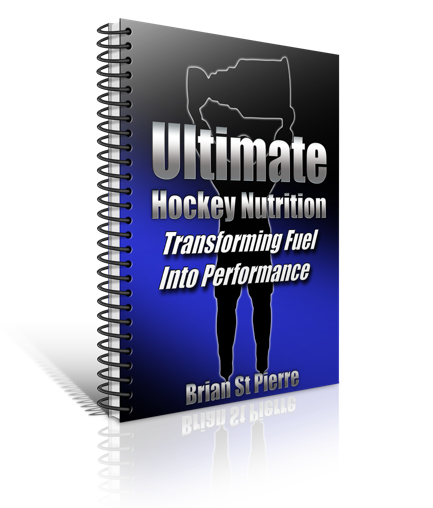
The best hockey nutrition resource I’ve ever come across

After discussing all of the above items, I felt the team had a pretty thorough understanding of how they should eat, and how they could make better choices a reality (implementation is a major road block). So I wrapped up by asking a relatively simple question:

“How many of you want to play college hockey?”

Every hand in the room went up. Perfect. I then suggested that if I approached each individual and asked what they would do to get there, that they’d probably all say some variation of “I’d do whatever it takes.”

In fact, I think you’d hear a similar response from any athlete that wishes to advance to a next level. Unfortunately, wishing won’t quite cut it, and what most of these athletes really mean is “I’ll do what’s most convenient and least invasive” and in many cases “and then bitch about how much better I am than the worst three players that made it over me.”

There is an optimal way to do everything-eat, hydrate, train, practice, facilitate recovery, etc. Naturally, there is a poor way to do everything as well. It’s a continuum from most ideal to least ideal. No one will be perfect 100% of the time. But if players are truly motivated, they should make a consistent focused effort to live their lives more toward optimal than not, and should quickly get back on track when things slip momentarily.

Everyone wants to take the dynamite approach to development. They want it all, now, and expect it yesterday. The truth is that development is more like erosion. In this analogy, every component I mentioned above can be signified as more water to stimulate erosion (development). Get your nutrition on track-more water. Learn proper recovery techniques (e.g. foam roll, stretch, perform breathing exercises after training, read before bed, go to bed and wake up within an hour of the same times every day, etc.)-more water. Follow a quality, progressive hockey training program-more water. And so on. This is how development works. If the athlete pursues optimal in all aspects of preparation and performance, they will continue to develop over time and eventually have an opportunity to compete at elite levels. If the process is rushed, and/or the little sacrifices aren’t made, development suffers.

Once athletes have the information, it’s up to them to use it. If you say you’ll do anything to achieve your goal, understand what everything means. Amongst other things, it means waking up a few minutes early to make a quality breakfast; it means packing your lunch the night before; it means doing the foam rolling, stretching, and dynamic warm-up routines your strength coach taught you, even when you’re sick of them; it means going to bed a little earlier on the weekends than you’d want and waking up WAY earlier than you want; it means watching the next level above you and studying the game; it means practicing specific skills repeatedly until you perfect them, and then practicing even more to cement them into automacity. These are just a few examples, but it should shed some light on my point. Develop your drive to succeed and then don’t let anything stop you, especially not your own apathy!

To your success,

Kevin Neeld

P.S. If you’re looking for a great hockey-specific nutrition manual, I highly encourage you to invest in Ultimate Hockey Nutrition by Brian St. Pierre, which is only available to all Ultimate Hockey Training customers! Click here for more information: Ultimate Hockey Training

Please enter your first name and email below to sign up for my FREE Athletic Development and Hockey Training Newsletter!
Use CODE: "Neeld15" to save 15%