On Tuesday, I mentioned that Eric Cressey posted a video of a staff in-service of him outlining his lower body assessments. A lot of the lower body assessments we incorporate with our athletes at Endeavor I learned directly or indirectly (through resources he recommended) from Eric, so it was great to get a current look at what he’s doing. I definitely picked up a couple ideas that we’ll be using in the future. If you missed that post, check it out here: Elite Training Mentorship. Alternatively, if you don’t care about the post at all, and just want to watch Eric’s video, go here: Elite Training Mentorship

They’ll be releasing another video in the near future so make sure you head over to the site now so you don’t miss it!

Body By Boyle Online

Over the last year, I’ve mentioned on several occasions how great of a resource I thought BodyByBoyleOnline was. For those of you that don’t know, Mike Boyle’s private facility Mike Boyle Strength and Conditioning (MBSC) in Woburn, MA was voted as the #1 Gym in America by Men’s Health. Since that time, Mike was appointed as the Strength and Conditioning Coordinator for the Boston Red Sox, another feather in his cap after training a gold medal winning team in the U.S. Women’s Ice Hockey Team (’98), working in the NHL with the Boston Bruins, and being credited with creating the first true “NFL Combine Training” success story in Mike Mamula. This is on top of the professional athletes and celebrities that he’s trained over the years in his private facility. In short, he knows his stuff.

The Ultimate Online Strength and Conditioning Educational Resource
 

What makes BodyByBoyleOnline so valuable is that it’s essentially an inside look at how Mike runs his facility. They post all their staff meetings, guest speakers, and a ton of other valuable content. In fact, they now have over 100 hours of video content on topics such as strength and conditioning, assessments, speed training, rehab, kettlebell training, sandbag training, a talk on the thoracic spine, mobility with bands, rotary training, the FMS, and much more. While a lot of the content comes from Mike directly, some of it also comes from guest speakers such as SueFalsone (Athletes Performance/LA Dodgers), Charlie Weingroff, Dan John, Kelly Starret (MobiliyWod), Nick Tumminello, Negar Fonooni, Joe Sansalone, Charles Staley, and more! In other words, it’s a great resource for fitness enthusiasts, strength coaches, personal trainers, athletic trainers, and physical therapists.

The only thing that could really make it a more valuable resource is if they made it more accessible via smartphones, tablets, etc. And, I’m happy to report, they did exactly that. I got an email from Kevin Larrabee who does a lot of the behind the scenes work for the site and he told me that the site now offers iOS support…which basically meant nothing to me. But he went on to explain that iOS support means the videos can now be accessed and watched on your iPhone, iPad, and iPod
Touch. This makes the information much more easily accessed, especially for those that travel a lot and can’t always get internet access through their computer. I’m excited about the change, as I know the content is top notch, so making it “portable device” compatible will surely make it more accessible to everyone and therefore get quality information out to more people. And I spent a full work week in airports last year with no internet access, so it’d be great to have access to something like this! If you’re interested, check out this link for more information: BodyByBoyleOnline.

To your success,

Kevin Neeld

Please enter your first name and email below to sign up for my FREE Athletic Development and Hockey Training Newsletter!

On Monday, I recounted a few of the highlights of 2011. If you missed it, you can check it out here: 2011 in Review

As I mentioned in that post, KevinNeeld.com has grown significantly over the last year, all in thanks to your help in spreading the word. After reviewing the popularity of all posts over the last year, I’ve compiled a list of the top 10 Athletic Development & Training Posts of 2011. Check them out at the links below!

10) Predicting Long-Term Athletic Success

9) 5 Signs You Have a Great Coach

8) Combating Internet Ninjas

7) What if Talent Doesn’t Exist?

6) Dissecting a Hip Mobility Exercise

5) 3 Keys to Successfully Pairing Exercises

4) What Football Does Right

3) Training Around Femoroacetabular Impingement

2) Myofascial Release Basics

…And the #1 Athletic Development Post of 2011 is…drum roll please…

1) Shoulder Pain with Pressing Exercises

These were all well-received posts related to general athletic development and strength and conditioning. I’ll wrap up the week in a couple days with the top hockey training and nutrition posts of 2011. Stay tuned for that and please pass this along to everyone!

To your success,

Kevin Neeld

Please enter your first name and email below to sign up for my FREE Athletic Development and Hockey Training Newsletter!
Last week my good friend David Lasnier wrote two great articles that are pertinent to both strength and conditioning coaches and any consumers of strength and conditioning information (athletes, parents, coaches, etc.). Take a few minutes to read through these.

This first piece is a must-read for coaches. I understand the tendency to want to be a “specialist”, but the movement toward people being a “crossfit” or “kettlebell” guy is downright stupid. There is no magical system that will meet everyone’s needs. The best coaches understand the development process and know when to apply certain tools to facilitate an adaptive stress (and recovery from these stressors). David’s article highlights the pros and cons of a couple really popular training methods and delivers a great underlying message.

Click here >> Having Different Tools In Your Toolbox

The second touches on another hot topic that affects us all in understanding the truth behind who lives under the internet veil. Internet marketing experts have made it easier than ever to establish yourself as a topic expert without ever having experience developing real-world results in that area. Frankly, it’s scary how deceptive people are online. It’s even scarier that they have large audiences of people that are drinking their koolaid.

This guy knows what I’m talking about

David presents a very level-headed view point on the research vs. real-world evidence debate, a much needed change from the excessively vocal extremists out there. (check out the cameo appearance from a half-nude santa clause)

Check it out here >> Who Do You Train? Putting Things in Perspective

I wrote a slightly more hockey-specific article on a similar topic that you can check out here if you’re interested:

Click here >> Internet Hockey Training Experts

To your success,

Kevin Neeld

Please enter your first name and email below to sign up for my FREE Athletic Development and Hockey Training Newsletter!

Last Friday David and I made a trip up to Ramsey, NJ and White Plains, NY to hang out with Perry Nickelston and Anthony Renna. Hanging out with those guys was awesome. I really click well with entrepreneurs and people that are passionate about what they do. This is true of people in any field/industry, but especially when it comes to sports medicine and athletic development.

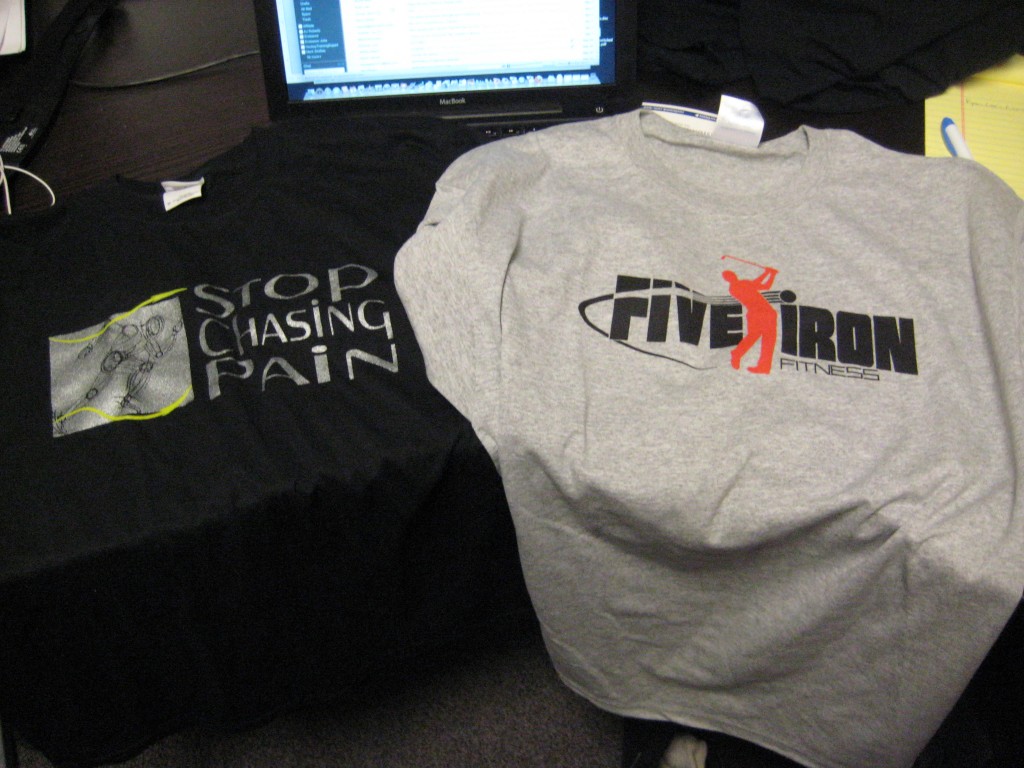
And nothing lights my lamp more than getting free t-shirts

One of the things that came out of talking with both Perry and Anthony was the value of actual training experience. The internet has completely revolutionized the education process. Because of the ease of starting a blog, everyone can share current information about how they’re training their athletes/clients. I remember Mike Boyle saying several years ago that most books were outdated by the time you get them. This may be less true with anatomy texts, but with books on training philosophies and methods, the time necessary to finish writing, editing, and publishing a book will make at least a portion of the material obsolete by the time it hits the presses. In other words, many book authors won’t agree with what they wrote in the book by the time we read it. It’s interesting because books are, or were, thought of as the “holy grail” of educational resources. The internet has gone a long way in cutting down on the deleterious effects of long publishing processes and in providing the most current information possible. This is good.

Unfortunately, the internet also spawned a population of unscrupulous “marketers.” The good thing about the long book publishing process is that it filtered the content. It’s a lot harder to get a book on any topic published than it is to start a website about it. Over the last couple years, the amount of hockey training information online has exploded. Some of it is outstanding; some of it is downright dangerous. What most casual readers don’t realize is that some of the information they’re reading comes from:

  1. People that don’t train anyone
  2. People who built a website for the sole purpose of making money (note that these people also don’t train anyone)

A lot of people in the strength and conditioning industry get really bent out of shape at the idea of people writing about training if they don’t train. To be honest, if people are reading and summarizing current research, it doesn’t bother me that they don’t work with a large athlete base because they’re writing can often introduce studies that I’m not familiar with, which leads me to seeking them out to read them myself.

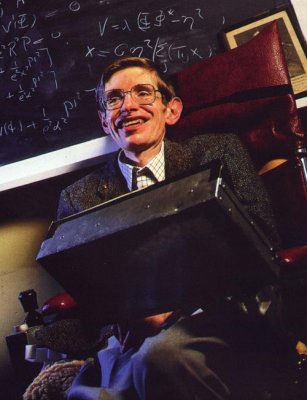
There are “theorists” in every field. I remember reading Stephen Hawking’s book “Black Holes and Baby Universes and Other Essays” several years ago and being amazed that he essentially outlined a mechanism for time travel. Of course, Hawking is known for being a profoundly intelligent mind in the field of THEORETICAL physics. Nobody actually thinks he’s traveling through time, nor would he ever represent himself as doing so.

One of the greatest minds in the history of the world

In contrast, many online crowds misrepresent themselves as working with vague, but insinuatingly large numbers of athletes. This misrepresentation is what I have a problem with. If you don’t train anyone, call yourself a theorist. If you only train one team, that you also coach, say that. If you’re training a few people, but helping out as an intern with other more advanced programs, say that. There’s no shame in developing as a professional and ramping up your business. I think most people avoid this because they’re either:

  1. Young and want to people to acknowledge their information as legitimate
  2. Selling something and want to be perceived as an expert

Obviously there are some similarities between these two, but in my view the latter is more repugnant than the former. Maybe I’m sympathetic because I started my website while I was still in grad school, but I look at writing online similar to anything else-it’s going to take time and practice to get good at it. Students that know they’re going to make a living training people wanting to start a site early in their careers just doesn’t bother me as much because their intentions are pure.

That said, I’d be interested to buy every hockey product online and then travel around the world to all of the author’s locations and see what they do on a day-to-day basis. I’d guess that many train people for less than 5 hours per week and that many have a background in playing hockey, but not in training players. This is BY FAR the biggest myth in all of hockey development:

Playing high level hockey does not qualify someone as a training expert!

Hell, playing high level hockey doesn’t even mean a player can TEACH the basics of hockey. All it means is that they were a good player. Not every good player is a good hockey coach; coaching takes special skill sets. Training is in a different universe altogether. There are BRILLIANT hockey strength and conditioning coaches that have never played a competitive game of hockey in their lives. This isn’t a knock on them at all. Having a profound knowledge of how the body functions doesn’t require playing the game, just understanding it.

Think of it like this-would you not trust a physical therapist because they’ve never played hockey? Would you not trust a hip surgeon JUST because they didn’t play?

WAIT! Before you saw off part of my femoral head…did you even play hockey??

Obviously not! These professionals make a living on their understanding of the body and perfecting their trade. Playing hockey will help strength and conditioning coaches understand the language and a bit more about the mentality of the players, but that’s it. It doesn’t in any way qualify someone without an educational background or coaching experience as an expert.

Hockey Playing Expert

Hockey Training Expert

When I see a new training product and the author’s biggest claim is that they played good hockey themselves, a red flag goes up.

Where you can find REAL hockey training experts

This is one of the reasons I have so much respect for my partners at HockeySC.com (Sean Skahan, Mike Potenza, and Darryl Nelson) and for my friend Maria Mountain; they ACTUALLY train real, live hockey players as their full time job, and the things they write about online, they actually do in real life! THESE are the people you should be getting your information from!

On a related note, I’ll conclude this long-winded rant by saying if you’re ever in the Philadelphia area and want to swing by Endeavor Sports Performance to see our facility and how we train our athletes, you’re more than welcome. I’ve always had an open door policy, and I think it’s good for people that have encountered some of my stuff on the internet to see that we’re actually implementing the same strategies I write about into our training systems, on a daily basis.

To your success,

Kevin Neeld

Please enter your first name and email below to sign up for my FREE Athletic Development and Hockey Training Newsletter!

Monday’s post dove into some of the common misconceptions about elite hockey development (and athletic development in general for that matter), with cameo appearances from a young Tom Brady and Sidney Crosby. In case you missed it, you can check it out here: Random Hockey Development Thoughts

Writing that post made me think about a couple other things that I probably should have told you a long time ago.

Endeavor Internships

First, and probably most time-relevant, we’re currently accepting applications for interns at Endeavor Sports Performance this summer. A few people have hopped on the forums at Hockey Strength and Conditioning (which is an awesome use of the very talented/experience audience on the site) and inquired about good hockey training internships. We have 3-4 spots available. Last year we drew interest from people ranging from local universities to Canada to Australia.

Our past interns have gotten a lot out of their experience with us. On top of being surrounded by passionate people that continually want to learn and get better (both coaches and athletes), our off-season hockey group includes a wide variety of skill (on- and off the ice). I know it’s a lot “sexier” to work with NCAA D1 and professional athletes and that’s what most interns are looking for. In truth, these experiences are great for networking (and general exposure), but probably not as good for coaching. Athletes at these levels tend to move extremely well and don’t require a lot of coaching, just some simple cuing.

In contrast, younger athletes need A LOT of help (turns out sitting on your ass for 22 hours a day isn’t great for building athleticism), and it’s the practice you get coaching these athletes that really helps you understand how to use efficient coaching techniques, change your language based on the athlete, and ultimately to become a better coach. Because we have players ranging from Tier II youth PeeWee programs to those in pursuit of permanent NHL roster-spots, you get the best of both worlds.

In addition to experience, the other two main reasons to pursue internships are to network and potentially pursue employment. Since I’ve joined Endeavor, we’ve had 6 interns. We hired 4, one went on to pursue a different career path, and another had a job lined up for immediately after his internship and is now going back to school in pursuit of his DPT. If you’re interested, go to the link below to read more information and to download the application. You can email the finished ones to me or fax them to Endeavor at (856) 269-4153.

>> Endeavor Sports Performance Internships <<

Endeavor Sports Performance Website

I’ve alluded to this in the past, but I do a lot of writing for the Endeavor site. Because we work with athletes in all sports, the writing tends to discuss sports other than hockey (although I do write about hockey too), general athleticism, and research related to performance enhancement. If you don’t work with hockey players and/or just want more of the good stuff, I highly encourage you to go over to Endeavor’s site and check out the blog:

>> Endeavor Sports Performance Blog <<

And follow us on youtube:

>> Endeavor Sports Performance YouTube Page <<

You’ll get all sorts of great stuff…like how to eat fruit, functionally:

…Never give a Canadian a camera

A few noteworthy posts to get you started:

The Truth About ACL Injury Prevention

High Quality Breakfast for Teenage Athletes

Long-Term Athletic Development: Training Youth Athletes

Strength and Conditioning Programs for Youth Athletes

Why Every Athlete Should Get Hurt…Once

USA Hockey’s ADM (American Development Model)

The more I learn about what USA Hockey is doing with their new ADM the more I support it. Since I started playing, it seems like the American development model has simply been wrong. We play way too many games, we practice too little, and most practices don’t make good use of the ice to enhance skills. There is a reason why, in general, the NHL’s most skilled players are consistently from overseas. From what I understand, Canada is similarly “backwards” in their systems, but hockey is so much more popular there that more talent seems to rise through the ranks, possibly despite the overall development structure.

This certainly isn’t to undermine the jobs that the thousands of coaches in both countries are doing, only to say that we need a better development framework so that new coaches have better plans and philosophies to draw from and so we can be more consistent in our teachings across the country. Naturally, I’m also of the opinion that off-ice training is a necessity, not a luxury, at least not for players that are serious about pursuing elite levels. USA Hockey has done an outstanding job of “righting the ship” so to speak. If you aren’t familiar with the ADM, you can read up on it here:

>> USA Hockey’s ADM <<

If you’re coaching, I urge you to look into this and do your best to begin implementing these concepts immediately. On an international level, it seems that the US has found some success because of their heart, not because they have comparable talent to their Canadia, Russian, Finnish, and Swedish competitors. I think, if coaches and parents buy into what USA Hockey is providing in the ADM, we’ll start to see the U.S. dominate internationally because of improved skill sets. Of course, if everyone takes the “what we’re doing now is fine” approach, we’ll simply continue to tread water.

It’s up to us to make a change! I’m in. Are you?

To your success,

Kevin Neeld

Please enter your first name and email below to sign up for my FREE Athletic Development and Hockey Training Newsletter!
Use CODE: "Neeld15" to save 15%