
We’ve had a lot of great additions this week at Hockey Strength and Conditioning. In no particular order (don’t miss the last one!):

My friend Kevin Schaeffer (former National Championship winner with BU and current AHL/ECHL player) wrote an article on how he’s been able to apply some of the things he’s learned from his experience working with Michael Boyle and from our site into his personal training. This may come as a surprise to those involved in youth hockey, but other than the NHL (more on this in a bit), most other pro, junior, and prep levels of hockey don’t have anyone running their training programs. It’s a scary reality. Kevin’s article does a great job of outlining some of the far from ideal realities of playing minor league hockey and how he’s been able to help fill some voids in his own training and that of his teammates.

Check it out here >> A Minor League Hockey Player Aspiring to be a Strength Coach

Kevin also posted a link to an interview with former Oiler’s Strength and Conditioning Coach Chad Moreau. I don’t know Dr. Moreau personally, but after reading this article it seems like he really knows his stuff. Similar to Kevin’s articles, I think this interview illustrates many of the harsh realities of professional hockey and how the success of a strength and conditioning program really hinges upon the enthusiastic support of the coaching staff.

Another big take home is that there are STILL NHL programs that don’t fully buy into the importance of training, at least not as demonstrated by their actions. To some extent, this probably comes down to a “we’ve been successful doing it this way, why begin to incorporate something new that wasn’t necessary before.” I guess it all depends on what you consider “success.” Imagine if equipment manufacturers took the same approach: “players have scored goals with wooden sticks, why try something new?” In my opinion, this is a dangerous mentality that stunts innovation and growth. It’s one that many talented young players adopt; “I dominate and I don’t train at all. Why should I start?” For some players, it may be a matter of being able to continue to dominate at the next level. For the Sidney Crosby’s of the world, it’s a matter of expanding the capacities of the game. In other words, it’s about taking the game to the next level. Bottom line: If individuals and organizations adopted a more comprehensive development model, the game of hockey would benefit.

Read the article here (no membership required): Chad Moreau Interview

Darryl Nelson had a couple great additions this week. He wrote an article on the importance of youth sports and fitness that caused one of those “take a step back and see how we are influencing are youth through sports” moments. It’s more than winning and losing; it’s about instilling habits and mentalities that will allow our youth to grow up and lead healthy lifestyles. His article concluded with some STAGGERING statistics about the current state of “youth health”.

Check out the article here >> Youth Sports and Fitness

Darryl also added a Metabolic Conditioning Circuit program with videos that doesn’t require much equipment. In fact, it doesn’t require anything that can’t be MacGyver’d (e.g. make your own weight or just use a light object like a water bottle). This is the newest feature of our “Youth Training Program” addition to the site. The thing I like the most about this circuit is that it lends itself well to larger groups of people, which is perfect for youth programs, which are typically run by one coach. Although this was posted in the vein of “conditioning”, it will also likely have a strengthening effect, especially with younger or less-trained athletes.

Get the program here >> Metabolic Circuit

Without question, the greatest addition to the site this week was a video of a presentation Toronto Maple Leafs President and GM Brian Burke gave during a recent USA Hockey American Development Program (ADM) seminar. Burke outlines a lot of the common mistakes being made in youth hockey now and what we NEED to focus on to continue to develop the sports. For those of you that caught Mike Boyle’s presentation from the same seminar, this is the perfect on-ice compliment to what Boyle discussed. With the right information in front of us, it’s up to us, as a hockey community, to put it to good use. And we have a lot of bad habits to break!

YOU MUST WATCH THIS!! >> Youth Hockey Presentation

You can try out the site for $1 for 7 days. Now is as good of a time as ever to do it. Spend the buck to watch Brian Burke’s presentation. Hockey needs you to!

Click Here for the best in Hockey Strength and Conditioning

To your continued success,

Kevin Neeld

P.S. Try HockeyStrengthandConditioning.com for 7 days for only $1! It’ll be the best dollar you’ve ever spent.

Please enter your first name and email below to sign up for my FREE Athletic Development and Hockey Training Newsletter!
It’s been one of those weeks over at Hockey Strength and Conditioning where the forums have really been hopping. There are a couple great discussions worth checking out on a few of the articles and programs posted recently, as well as a thread I started on Vitamin D (I’m curious to see how many programs are monitoring this closely with their players).

San Jose Sharks Strength and Conditioning Coach Mike Potenza posted an article titled The Best Nutrition Book on my Shelf which really struck a chord with me. As I continue to learn about nutrition, it becomes increasingly apparent how overly complicated some “sources” make it (e.g. media, government, etc.). Potenza’s article does a great job of outlining a few extremely important things that everyone should be aware of. Great read.

Click Here >> The Best Nutrition Book on my Shelf

Anaheim Ducks Strength and Conditioning Coach Sean Skahan posted a video of a full body mobility exercise called Toe Touch Squat with Alternating Arm Reach. Mobility exercises like this also serve as great opportunities to assess your athletes’ limitations. This exercise should help shed some light on whether an athlete has restrictions in ankle dorsiflexion, hip flexion, thoracic extension, and thoracic rotation. It also provides an opportunity to observe how the athlete moves their weight as they perform the initial movement toward the floor, which will likely be indicative of their ability to load their posterior chain. Just a few things to keep in mind when watching this video from Coach Skahan.

Check out the video here >> Toe Touch Squat with Alternating Arm Reach

There was a problem with the program that Darryl Nelson posted last week. if you weren’t able to access it, you can check it out now here:

Click Here >> Off-Season Strength Training Program

Details on the best hockey training seminar ever are now available. I’ve been to the Boston Hockey Summit the last two years and it’s been fantastic. It’s a great opportunity to network with other like-minded people and to learn from some of the smartest minds in performance enhancement. I’ll definitely be going again this year; the line up is pretty incredible. Check out the link below for more information:

You can’t miss this! >> Boston Hockey Summit

Lastly, I posted my video of the DB 1-Leg Reverse Deadlift last week. If you haven’t seen it yet, it’s worth taking a look. After posting the video I got an email from someone, which (I’ll paraphrase) basically said “I understand the marketing appeal of bringing new things to the forefront, but is new necessarily better?” I thought it was an outstanding question and I always love getting emails from people that shows me they’re actually thinking. My response below:

“Trust me when I say that I don’t write anything just for the sake of “standing out.” I know that may be considered bad marketing my some, but I’d guess that I share your sentiments that there is a difference between quality information and just “controversial” or “different” information.

With regards to the video, the 1-leg DB deadlift isn’t the next coming of exercises; it’s simply another tool for coaches to incorporate into their programs. As you likely know, deadlifting patterns reinforce a proper hip hinge pattern and effectively load and strengthen the posterior chain (hamstrings and glutes). Hockey players tend to move with more “quad dominant” patterns, so putting in a slightly greater amount of posterior chain work into their programs can help restore and maintain balance across the hip and knee. As with all single leg exercises, the 1-leg DB deadlift will also necessitate quite a bit of strength in the form of stabilization/control from the lateral hip musculature, as is required during skating and any single-leg positions/maneuvers on the ice.

Unfortunately, with a website like mine there is an underlying assumption that people are familiar with the material I’ve written in the past, which more times than not will likely be a false assumption. With that said, I can’t rewrite a “why I think single-leg training is safer and more effective for hockey players” preface to every post I write that references lower body training. While that may be good for some newcomers, it will likely bore and annoy people that have been with me for a while. I hope this makes sense.

You’re absolutely correct that new doesn’t always mean better. This is an exercise that I’ll incorporate in the same vein as a 1-leg RDL or 1-leg stiff-legged deadlift (I use these two names interchangeably, so within my definition the SLDL still includes a slight knee bend). My goal in presenting it on the site is to expose other coaches to it that may not be familiar with it. Ultimately, this is the fastest way to get feedback to determine if other think it’s a mainstay or not.”

Hopefully that clears up any questions that you may have had!

If you aren’t a member, go check out what you’ve been missing by clicking the link below. If you are a member, go check out all the content I mentioned above and hop on the forums to comment on the threads!

Click Here for the best in Hockey Strength and Conditioning

To your continued success,

Kevin Neeld

P.S. Remember, it’s only $1 to try HockeyStrengthandConditioning.com for the first week. You will never find more hockey training content anywhere for $1, and it’s only getting better. I’ll throw in a bonus offer-Register for $1 so you can check out all the content, and I’ll buy you a coffee (or protein shake?) the next time I see you. Can’t beat that!

Please enter your first name and email below to sign up for my FREE Athletic Development and Hockey Training Newsletter!
In writing last week’s post on what it takes to be a Modern Strength Coach, I failed to mention that strength and conditioning for sports largely began with football. Because of this, there is (or at least has been) a high proportion of strength and conditioning coaches with a football background.

In general, the hockey community largely frowns upon football’s influence on strength and conditioning. I hear from players all the time, “you know, he’s a football guy.” The implication is that the “guy” is a stereotypical meathead who emphasizes moving more weight at the expense of everything else. Naturally, I disagree with that philosophy, and there are inherent differences between the demands of football and hockey, but I think football has done something right that no other sport, including hockey, has done to this point.

The football guy?

From my work at Endeavor Sports Performance, I’ve had an opportunity to interact with athletes in every major sport, including (in no particular order) hockey, soccer, lacrosse, football, baseball, softball, basketball, field hockey, and tennis. Of those, the ONLY sport where the coach emphasizes the importance of strength and conditioning is football. Most other sports don’t even consider it a piece of the puzzle. While I think hockey is coming around, a lot of the high school hockey kids we see are more interested in lifting for “flex appeal” than performance improvement (and the even less sexy “injury resistance”).

This isn’t to throw hockey players under the bus; I think the more serious ones get it. The glamor muscle emphasis is more indicative of the high school culture in general than anything else. However, when we ask our football athletes what they do with their teams, there is an emphasis on movements like power cleans, deadlifts, squatting, bench pressing, and heavy rowing. Albeit, this is far from the perfect program, but this is certainly more on track than the majority of other sports. At least football is:

  • Lifting weights (resistance training)
  • Emphasizing getting stronger
  • Focusing on complex multi-joint movements
  • Training consistently

To be honest, most of these kids aren’t terrific lifters. In other words, they haven’t been taught technique sufficiently, and there IS likely an over-emphasis on moving more weight at the expense of proper movement patterns. But it’s hard to blame the coaches; their background is in football, not in designing and implementing strength and conditioning programs. With that said, at least football has internalized the importance of strength training. It’s not a “if I have time for it” thing; it’s a must.

Football: Maybe it’s not so bad after all?

The truth is that it’s equally valuable, or should I say equally necessary in all other sports. The thing I always come back to is that EVERY professional and NCAA D1 collegiate program has a strength and conditioning coach, because it’s a necessary part of an athletic development program. It’s best practice. Hopefully youth sports programs will start to get the picture. Even if they fail to see the performance enhancement benefit, it’s hard to argue against the injury resistance benefit of training. I can’t help but wonder what would happen to the youth incidence of adductor and hip flexor strains, low back pain, ankle sprains, and ACL tears if every program set aside two hours a week to get some training in. Wouldn’t it be worth that time to avoid career- and life-limiting injuries? Don’t we owe our youth best practice?

To your success,

Kevin Neeld

Please enter your first name and email below to sign up for my FREE Athletic Development and Hockey Training Newsletter!
A few great additions to the site this week:

Anaheim Ducks Strength and Conditioning Coach Sean Skahan wrote an article called Reap the Benefits of Proper Stretching. If you’ve stayed current with the scientific research behind stretching, you know that it’s been a controversial topic for the last decade or so. As with any debate, there are people on both extremes. Some say you must stretch; others say it’s a complete waste of time (this comes as a surprise to most people in the hockey world). Much of the discrepancy lies in what people are thinking of when they hear “stretching” and when various stretching strategies are used. Sean does a great job of describing different kinds of stretching and if/when they’re appropriate to use.

Check it out >> Reap the Benefits of Proper Stretching

Darryl Nelson, the Strength and Conditioning Coach for the U.S. National Team Development Program, posted an off-season hockey training program. With the off-season rapidly approaching for most youth programs, I thought this was a timely addition. As I’ve mentioned in the past, there is a ton of value to be gained from seeing how other coaches design programs. In most cases, it’s not appropriate to take the program and use it “as is”, but you can pull ideas about exercise selection, order, and pairing, and other program design strategies from seeing how successful experienced coaches design theirs.

Hockey Training Program Here >> Off-Season Strength Training Program

My friend Maria Mountain has been a welcomed member to the Hockey Strength and Conditioning community. This week she posted an article entitled Top 5 Take Homes from my Weekend with Dr. Stuart McGill that I think anyone working with hockey players should take a few minutes to read. In the article, Maria describes several big-picture messages she gathered from Stuart McGill, one of the world’s leading researchers on low back injuries. As these are injuries that effect an overwhelming majority of both the hockey and general populations, it’s imperative that we do everything we can do understand how to avoid them. Maria’s article will get you started on that path.

Check it out >> Top 5 Take Homes from my Weekend with Dr. Stuart McGill

If you aren’t a member, go check out what you’ve been missing by clicking the link below. If you are a member, go check out all the content I mentioned above and hop on the forums to comment on the threads!

Click Here for the best in Hockey Strength and Conditioning

To your continued success,

Kevin Neeld

P.S. Remember, it’s only $1 to try HockeyStrengthandConditioning.com for the first week. You will never find more hockey training content anywhere for $1, and it’s only getting better. I’ll throw in a bonus offer-Register for $1 so you can check out all the content, and I’ll buy you a coffee (or protein shake?) the next time I see you. Can’t beat that!

Please enter your first name and email below to sign up for my FREE Athletic Development and Hockey Training Newsletter!

With 2011 officially upon us, I can’t help but reflect on what a great year 2010 was. A few of the highlights:

  1. We had an extraordinary Summer at Endeavor (awesome to watch Eric Tangradi score his first NHL goal and Colby Cohen play his first NHL game).
  2. I was able to make a trip out to San Jose to spend some time with my friend Mike Potenza, and another trip down to Raleigh to meet Pete Friesen and attend his Physio-Fitness Summit (which I recapped for a HockeyStrengthandConditioning.com article).
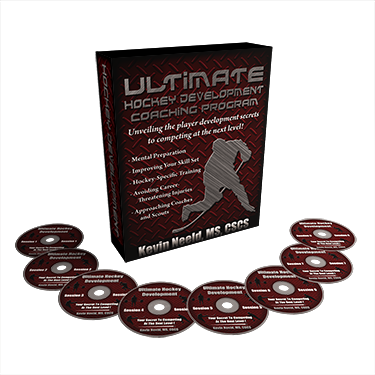
  3. My Ultimate Hockey Development Coaching Program was not only a big success, it was a lot of fun to do. The thing I like about doing “interviews” is that I pick up a lot of new stuff too. Joe Heiler, Jeff Cubos, Brijesh Patel and Jared Beach’s talks were especially enlightening to me, but I’ve heard great feedback about all the other talks as well.

  4. Along those same lines, the launch of HockeyStrengthandConditioning.com was particularly exciting. When I was growing up as a player, it was nearly impossible to get access to NHL coaches, players, trainers, etc. Now, the internet has made this exceptionally easy. The fact that you can now make a nominal investment and get immediate access to the guys that have help develop elite level hockey players at all ages doesn’t only appeal to me as a professional, it excites me as a former player. And the networking possibilities are unreal. When I was a senior at the University of Delaware, I wrote a letter to every US-based NHL Strength and Conditioning coaches inquiring about internship opportunities. While I wasn’t able to grab an internship out of their effort, there were a few NHL Strength Coaches that called me and spent some time giving me advice on how to break into the industry (Mike Kadar, who is now with the Pittsburgh Penguins was especially helpful). At HockeyStrengthandConditioning.com, you can post an inquiry on the forum and get responses from many of the top hockey strength and conditionign professionals in the world (including several that work in the NHL or with NHL players). Awesome.
  5. Emily and I made the move from Baltimore to Philadelphia at the end of August. My commute to Endeavor has dwindled to measly 25 minutes from what was a grueling 2 hour trek. It’s still enough time that I can go through an audio book every week, but short enough that I don’t need to wake up at 5:30 and drink 3 coffees and a spike just to make it to work (awake) by 8:30.

And finally, I’ve gotten terrific feedback on many of the posts on this site over the last year. It’s certainly come a long way from when I first started a few years back. As you continue to spread the word about this information to people you know, I continue to get more feedback to cater the content to your interests.

With all that said, here are the top Hockey Development posts of 2010!

7. Hockey Injuries: Sports Hernia Case Study

6. Hockey Training Tip to Prevent Shoulder Injuries

5. Hockey Training with the Vertimax

4. Randy Pausch, Will Smith, Kevin Neeld?

3. Video Reveals Secret to Developing Elite Level Hockey Players!

2. No One Conditions Alone

1. The Truth About Sidney Crosby

To your success,

Kevin Neeld

P.S. If you haven’t yet, go sign up for the 2011 Sports Rehab to Sports Performance Teleseminar. It’s free, and the speaker line-up is incredible!

Please enter your first name and email below to sign up for my FREE Athletic Development and Hockey Training Newsletter!

Use CODE: "Neeld15" to save 15%