A few random thoughts/resources for you today:

Things You Should Read

Over the last couple weeks I’ve written quite a bit for our Endeavor site. It’s not always easy to come up with content for this site, Endeavor’s site, and Hockey Strength and Conditioning every week, but I do not best not to recycle too much material so everyone gets fresh stuff.

Just….one….more…article idea!

With that said, I think these three posts are worth reading. The first two will help keep the motivation of athletes and coaches high as the new year progresses. The third will dive into some of the misconceptions about ACL injury prevention. Check them out here:

Achieving Athletic Excellence in 2011

Hold Yourself to a Different Standard

The Truth about ACL Injury Prevention

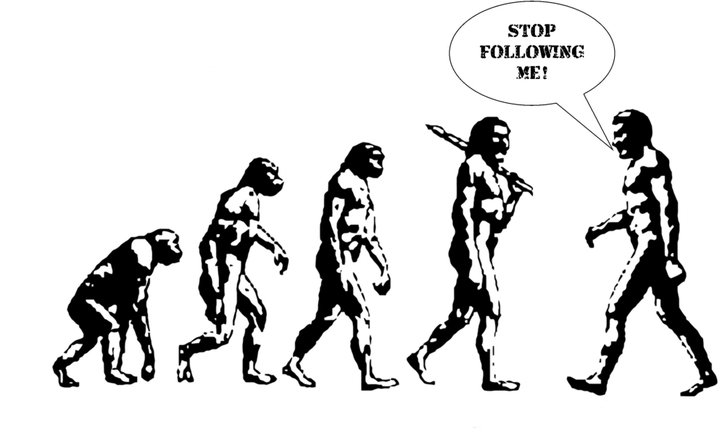
The Devolving Athlete?

Last week I dialed in to catch the second half of a teleseminar that IYCA founder Brian Grasso hosted with Mike Robertson, Eric Cressey, and Will Fleming. I don’t know much about Will, but Mike and Eric have been outstanding resources for me over the last several years. As you know, I speak very highly of their work and have a deep respect for their knowledge and coaching ability. Naturally, it’s always great to hear these guys speak about their philosophies and what they’re doing currently. The call was in regards to a new High School Athlete Certification program that Brian is launching with the IYCA, but there were some important messages discussed throughout. You can listen to the call for free at the link below:

Training High School Athletes Teleseminar

One of the things Eric mentioned toward the end of the call is how athletes today are DEVOLVING. In other words, because of the increased tendency to sit ALL day long and because kids aren’t nearly as active in their spare time as they used to be, their bodies are undergoing structural changes. I agree whole-heartedly with his observation, and this is one of the major reasons why the “this is what I did as a kid, so this is what you should do now” mentality of so many coaches is grossly misguided. Even if our knowledge of training hasn’t changed (which it has, substantially), the ATHLETE absolutely has and the design of our training programs needs to accommodate the differences.
I can’t help but think back to my early anatomy and physiology classes where there were times that I, like most students, got that feeling of “when will I ever need to know this?” Over time I’ve come to appreciate some of the less obvious teachings of those years. For instance, understanding how various soft-tissue structures within the body adapt to different stimuli is not only essential for anticipating changes occuring from everyday living, it’s also essential in order to design training programs to modify these structures. A brilliantly written training program for an athlete 15 years ago, that doesn’t take into account the anterior hip and upper chest restrictions present in the overwhelming majority of the current population will almost inevitably lead to injury (or at the very least, impaired performance). If you’re a student, soak it all up-you’ll be surprised at how much that information helps in the long run.

Training vs. Working Out

With the spawning of the profound idiocy that is Planet Fitness, there seems to be an increasing divide in the perception of training and fitness. Check out this ESPN attempt at a comical portrayal of what you may encounter at your local gym:

Annoying People You Can’t Avoid at Gym

In reality, people go to gyms/training facilities for one of only a handful of reasons:

  1. To feel good about themselves (which may or may not include any actual hard work)
  2. To socialize
  3. To get results

I think it’s important to distinguish between working out, which is the exercise equivalent of spinning your tires with regard to body composition changes, and training, which is progressive and goal-oriented. I realize that people use them interchangeably; apply your definition as you see fit, but recognize the difference in mentality between what I’ve described above. People that “work out” are a combination of health conscious and goal-dreaming. In other words, some are in because their doctors told them they needed to start exercising or they’d subject themselves to a substantial health risk (these people should be commended for at least taking the first step); others are in because they want a different body, but not bad enough to actual set goals and consistently work toward them (the overwhelming majority of people in the gym). Planet Fitness was not so surprisingly left off Men’s Health’s Top 10 Best Gyms in America List (nor would you likely see them on a Top 1000 list).

Look, I COMPLETELY understand that there are populations that are turned off by the typical “meat head” and that PF just isn’t the place for the heavy lifters (Quick Side Story: When I was a grad student at UMass Amherst, I trained an incredible group of five women, mostly faculty at the University, between the ages of 40-60, using complex circuit-based resistance training and interval conditioning. Screams, grunts, and groans were frequent. They used to joke that they wanted to go to Planet Fitness together and try to set off the lunk alarm. Meat heads?). And I’m back… What is outrageously socially irresponsible is having a constant supply of candy at your front desk for members to take for free and hosting bagel and pizza parties every month. C’mon-trying to make your members feel comfortable? Give me a break. Promoting unhealthy foods as a means of “comfort” is one of the underlying reasons why so many people are dangerously overweight as it is.

As a society, we’ve drastically overcomplicated this obesity “epidemic”, and places like Planet Fitness are feeding right into it. In the old days, effort was necessary for survival. Didn’t feeling like moving around to catch or grow food? You died; it’s Darwinism. Nowadays there are so many dietary quick fixes that modern day Darwinism has simply becoming keeping these inevitable diabetics alive via increased health care rates.

But I digress.

The big take home of that rant is that results require goal-setting and effort…and Planet Fitness makes me sick. “Working out” has some merit, but if more people adopted the “training” mentality, we’d have a lot more success stories.

To your success,

-Kevin Neeld

Please enter your first name and email below to sign up for my FREE Athletic Development and Hockey Training Newsletter!

Last week, I received an email from a newsletter subscriber letting me know that one of my articles had been featured on Fox News’ website (Exercises for Guys Over 40). The article was a reprint from an article I had written for AskMen.com (who I believe is owned by Fox) several months back. The day after I found out the article had been featured, I was invited to do a radio interview with “The Morning Monarch” Bob Conners for his show in Columbus, Ohio. It wasn’t the Oprah Winfrey Show, but it was still a cool experience.

Next on Oprah-Suze Orman, Jenny McCarthy, and Kevin Neeld (someday…)

Because Fox reprinted the article without the videos I included, there were some unhappy readers speaking their mind in the comments section about how they didn’t know what any of the exercises were. If you read the article, this lack of knowledge may come as a surprise to you (what is this “push-up” you speak of?!). Skimming through those made me realize how thick my skin has gotten from writing online for a few years. There is a difference between scientific fact (or what we refer to as “fact” currently) and opinion, and whenever you post an opinion you’re absolutely going to piss some group of people off. For example, there are basically three types of people that will comment on a “Top 10 Exercises” article: The “all you need to do is bench, squat, deadlift, and clean” guy; the “just stick with the basics like going for jogs and biking and maybe mixing in some machine circuits” guy, and the guy that gets it. Of those, the overwhelming majority will have absolutely no idea what they’re talking about, don’t train anyone, don’t have an education in the field, and spend their free time as internet ninjas-perusing the net to bash some things that they don’t even have sufficient knowledge to know what they don’t know.

My pride tempts me to respond to these posts, but frankly I just don’t have the time. Plus, I’ve learn to recognize the futility in these endeavors. Most people aren’t commenting to gain understanding, they’re doing the internet equivalent of yelling at the TV.

What?! Cleans aren’t in your Top 10 Exercises for Guys over 40? AHHHHHHHH!

I think Tony Gentilcore said it best (although not in the most politically correct way): “Arguing over the internet is like the special Olympics; nobody wins and you’re still a retard”

But I digress. One of the underlying points of the article is to challenge the notion of training “aging” people differently than “younger” people. To be clear, 40 is not old…at all. But I think there is this misconception that once you reach a certain age, you’re no longer able to train hard, or that you shouldn’t be doing the same exercises as younger people. If you read the article, you’ll see that every exercise involves multiple muscles groups and joints and functional movement patterns. That article aside, my philosophy for training a 12 year-old is the same as training an NHL player and the same as a senior citizen: Groove and strengthen functional movements, where function is determined by the individual’s needs.

It sounds simple, and it should be. As health professionals, we need to stop feeding into the helplessness mentality that accompanies aging and get people off their assess (this means you hockey moms and dads!). Everyone can and should train hard-they’ll live longer and happier as a result.

To your success,

Kevin Neeld

Please enter your first name and email below to sign up for my FREE Athletic Development and Hockey Training Newsletter!

As I’ve mentioned in the past, I’m a huge fan of videos. Not only do they give my eyes and brain a rest from reading, but it also provides a more effective model to present new exercises. Because most of my videos go directly up to Hockey Strength and Conditioning, I’ve been slacking a bit on posting exercise videos here. Here are a few “new” exercises to start incorporating into your programs:

Adductor Magnus Mobilization (also known as the “Come Here Often?” Mobilization)


The adductor magnus is a huge muscle and can become overworked and locked up pretty easily as it picks up the slack for weak or inhibited hip flexors AND hip extensors. This is a great dynamic warm-up exercise to help improve the extensibility of the adductor magnus, which is important for maintaining stride length, and for sufficient celebration technique (see below).


Crosby demonstrating the Come Here Often Mobilization on the ice

Endeavor Crawl
Another core exercise variation that encompasses components of anti-extension and anti-rotation. The goal here it to use the arms to drive movement while keeping the lower torso, hips, and legs perfectly still. As per Friday’s post regarding program changes I’ve made as a result of Charlie Weingroff’s DVD set (Training = Rehab, Rehab = Training), it’s also important to keep the chin tucked.

Lifting Music

This is one of my new favorite lifting songs. I realize that this song isn’t new, but no one told me that Sum 41 stopped whining and started screaming…

This loosely qualifies as what I call “smashing baby music.” Before you report me, no real babies were harmed in the naming of this music genre. Simply, the term refers music that elicits such a strong energy response that it almost causes you to do completely erratic, ridiculous, socially unacceptable things (like smash babies). It’s used to separate REAL lifting music from the garbage that is Bon Jovi.

It’s okay little buddy-you’re safe; you can get back to trading stocks on e-trade.

As a bonus feature, here’s a new song from one of my favorite artists (with a fitness emphasis!). J-Live is an underground rapper; he’s also a school teacher in Brooklyn. This makes me wonder how many of my teachers in middle school were moonlighting as rappers.

Have a great week!

Kevin Neeld

Please enter your first name and email below to sign up for my FREE Athletic Development and Hockey Training Newsletter!

To wrap up our week-long series on Charlie Weingroff’s brilliant new DVD set Training = Rehab, Rehab = Training, let’s jump right into some more content and how I’ve integrated some of Charlie’s teachings into our training programs at Endeavor.

Own the Movement
You’ll recall from Monday that there is an important distinction between movements and exercises. As a reminder, there are ranges of motion that your body should be able to move into under control (e.g. lumbar flexion), but that SHOULD NOT be included as exercises. I recognize this may seem counterintuitive; I went into a bit more detail in Monday’s post (Training = Rehab, Rehab = Training).

Charlie goes on to describe “owning a movement” as being able to maintain the correct posture/positioning at movement end-range while taking a full deep diaphragm-driven breath. In many cases, you’ll see someone pull back from the end range of the movement a bit as they take a deep breath, which can be indicative of a couple things:

  • An inability to perform a diaphragm-driven breath (at least in that position)
  • A lack of inner core stability in that position

With rare exception (e.g. a position where a forceful inhalation presses the belly out into an individuals thighs, causing a slight movement), it should be possible to breathe comfortably in end ranges without compensatory movement. Don’t just have it; own it!

High vs. Low Threshold Strategies
As a VERY brief neuroscience reminder, low and high threshold refer to the characteristics of motor units driving muscle contraction. Lower threshold units tend to produce less force, but be less fatiguable (better endurance), and higher threshold units tend to produce more force, but be more fatiguable. Depending on the primary role of a muscle (or muscle group), certain muscles will have a higher proportion of either lower or higher threshold motor units. As a result, simple movements like standing that only require minimal muscle contraction to maintain appropriate alignment can be controlled by “low threshold strategies.” In contrast, a max effort vertical jump or sprint would require a “high threshold strategy.”

Problems arise when we start to use high threshold strategies for movements and exercises that should only require low threshold strategies. This caused an “ah-ha” moment for me and will change the way I cue certain exercises at Endeavor. For example, a front plank shouldn’t be overly difficult. It’s inappropriate for someone performing a front plank to squeeze their butt and core as hard as they can while holding that position because it’s reinforcing using muscles groups that are primarily responsible for high force/power production for low force/power movements/exercises. Instead, the goal should be to set the athlete up in proper alignment, cue them to breathe using their diaphragm, and let them hold it using a more natural strategy.

In contrast, an exercise like a slideboard bodysaw may require a more high threshold strategy, and therefore cuing some of the larger prime movers is more appropriate.

Tuck your chin!

Endeavor Program Changes
In all, I took a little over 5 pages of notes while watching Training = Rehab, Rehab = Training. The DVDs gave me a lot of ideas, stimulated a lot of questions, and provided a number of other resources that I’ll need to look for to get some more information on different things Charlie talked about (or alluded to).

I rarely immediately incorporate new exercises into our athletes’ programs because I want to take time to experiment with them first. This allows me to better understand where the exercises fit within our program design philosophies, as well as how to teach and cue the exercises. With that said, I was also able to pull a few concepts out and start using them immediately as they pertain more to coaching cues than exercise selection.

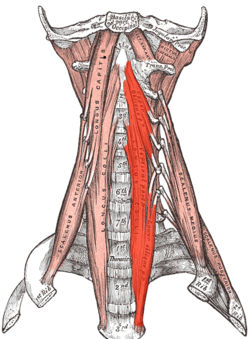
One of the major themes of the DVDs was understanding the importance of the “inner core.” This was something that Joe Heiler hit on really well in my Ultimate Hockey Development Coaching Program. In this regard, packing the neck to promote proper spinal alignment and breathing using the diaphragm seemed to be two recurring recommendations for stimulating proper inner core function that we don’t cue a lot (or weren’t cuing a lot).

The deep cervical flexors are an integral part of the inner core

While I think packing the neck (think of getting tall and pulling the chin in) is a cue that can be universally applied to just about every exercise (including squatting, deadlifting, single-leg lifts, and all core work), an emphasis on focused diaphragm breathing needs to be taught differently for  core exercises and other exercises that may fall more toward the “lower threshold strategy” end of the continuum in comparison to some of the heavier lifts.

Preparing for a deadlift PR

In comparison to the controlled breathing of lower threshold strategy exercises, high threshold exercises will require more of a “fat gut” isometric contraction of the core hoop with a diaphragm driven breath to pressurize that area. This breath is only partially released and refilled in between reps, so the athlete never fully exhales until the set is over. From an external perspective, you shouldn’t see much lower rib or abdominal movement in these exercises, whereas you may during an exercise like a front plank.

Lastly, another way to stimulate the inner core is through basic “soft” rolling patterns. Charlie highlighted a 2-way arm-drive roll and a 2-way leg-driven roll that we’ll eventually add to the end of our mobility/activation warm-up pairs once I get a firm grasp on how to teach and cue them. As with all stimulation/activation exercises, the goal is just to get the muscles firing in the patterns they’re supposed to be active in, allowing them to naturally integrate into other movements/exercises.

If you haven’t already, go to the link below to pick up your copy of Training = Rehab Rehab = Training. It’s been a huge eye-opener for me. It’s one of the few “must-have resources” I’ve come across to date.

Click here now to get your copy >> Training = Rehab, Rehab = Training

To your continued success,

Kevin

P.S. Last chance; this starts this week! 2011 Sports Rehab to Sports Performance Teleseminar

Please enter your first name and email below to sign up for my FREE Athletic Development and Hockey Training Newsletter!

On Monday, I went through some of the highlights of Charlie Weingroff’s new DVD set Training = Rehab, Rehab = Training.

The post dove into three big picture take home messages about human performance:

  1. The New Definition of “Stability”
  2. The Core Pendulum Theory
  3. The Difference Between Movements and Exercises

If you missed it, go to the link below to check it out:

>> Training = Rehab Rehab = Training <<

Since I put that up, I’ve gotten a few emails with similar questions. Basically, people want to know two things:

  1. Is it a resource they should move to the top of their “to get” list
  2. Is it more geared toward strength and conditioning professionals or athletic trainers/therapists

To address the latter, the entire premise of Charlie’s presentation is that there shouldn’t be a difference between how the human body is treated in a physical therapy versus strength and conditioning setting, at least not based on the setting alone. Instead, he contends, that these differences should be based on skill sets. As an example, if a practitioner is a qualified manual therapist, than he/she should do manual therapy. If not, then don’t. This could be in a PT setting; it could be in a training setting. Simple enough.

The overwhelming commonality in “training” and “treatment” (which is also training, since every stimulus we provide our bodies elicits an adaptation response) SHOULD be built upon the immutable laws of human movement, which he details in-depth in his DVDs (especially the first two). He provides the example of his own setting, where his “physical therapy” work looks substantially more like training than it does traditional PT work.

To get back to the original question of whether Training = Rehab, Rehab = Training is more appropriate for physical therapists or strength and conditioning professionals, the answer is “yes!” In my opinion, maximizing my understanding of how the human body moves and functions is the first step toward optimizing these processes for maximal performance. Charlie describes the complexities of the interaction between functional anatomy and biomechanics brilliantly. This understanding applies to all training and rehab settings.

This transitions us nicely into the first question-“Is this a resource I should move to the top of my ‘to get’ list?” You can probably guess my answer here. I can empathize with the people that emailed me with this. Frankly, there is SO much information out there right now that it’s easy to become overwhelmed, both in terms of time and finances. I, like many of you, am responsible for funding all of my own continuing education endeavors. In the last few years, I’ve spent in excess of $15,000 on continuing ed stuff, which for a while was putting a damper on the quantity of food I had in the house! I understand that for many it’s going to come down to an either/or situation. In my opinion, you’d be crazy NOT to pick up a copy of Training = Rehab, Rehab = Training as soon as possible. It will likely lead to significant changes in the way you train and/or rehab your athletes, which I can’t say with nearly as much enthusiasm for much of the other stuff out there.

With that said, let’s transition into some content from Charlie’s DVDs:

The Chicken or the Egg
Charlie highlights the fact that pain changes everything. If an athlete is in pain, it’s going to change the way that both local and global muscles function to produce movement. In other words, pain changes muscle firing patterns. Coming back to the idea that every movement creates a training stimulus to the body, it’s important to minimize (if not eliminate) the number of movements athletes perform while in pain. This comes back to Michael Boyle’s profoundly simple idea of “rehabbing” athletes-if it hurts, don’t do it.

Charlie also points out that, in the presence of pain, you rarely know if a faulty movement pattern caused the pain or if the pain is causing the faulty movement pattern.

Who came first?

The exception to this is if you’ve been working with an athlete for an extended period of time when they’ve been pain free, but exhibited a relevant movement abnormality that, over time lead to them getting hurt. In many situations, ESPECIALLY with in-season athletes that get banged around all the time, this is not the case. It’s important to keep this in mind in all training situations, but Charlie also points out that pain anywhere makes the findings of the Functional Movement Screen irrelevant. After all, how can you assess movement pattern quality if pain is changing the underlying neuromuscular patterns that contribute to normal movement?

The Truth about Training Professional Athletes
There’s a longstanding trend, especially amongst youth athletes, to want to train exactly “how the pros do”. The thought process is both logical and admirable-they’re the best athletes because they get the best training; because they’re the best, they work with the best strength and conditioning coaches. As you know, it is almost never appropriate for a youth athlete to work off a pro athlete’s training program because they lack the training foundation that most pro athletes have (amongst other reasons).

Charlie said something that really jumped out at me because it’s something I don’t think many people realize. With regards to strength and conditioning for professional athletes he said,

“Every person in this room would vomit if they saw some of the things that go on in professional sports.”

This highlights an important point-not only should people not blindly follow the programs of professional athletes because they likely aren’t ready for the demands those programs require, but they shouldn’t be following them because many times the program may be complete garbage! As with any job, there are great people in professional sports and there are, well, less-great people in professional sports.

Networking: The key to getting a job in professional sports

On Friday, I’ll be back with more insights from Charlie’s DVD set, including:

  • How Charlie defines “owning a movement”
  • The difference between and time appropriateness of high and low threshold strategies
  • Program design changes I’ve made as a result of watching these DVDs

In the meantime, go to the link below to pick up your copy of Training = Rehab Rehab = Training!

Click here now to get your copy >> Training = Rehab, Rehab = Training

To your success,

Kevin Neeld

P.S. Last chance; this starts this week! 2011 Sports Rehab to Sports Performance Teleseminar

Please enter your first name and email below to sign up for my FREE Athletic Development and Hockey Training Newsletter!

Use CODE: "Neeld15" to save 15%