
It’s good to be home and settled again. I got back to Philadelphia from my trip out to Postural Restoration Institute‘s Advanced Integration course in Lincoln on Sunday at midnight. Lincoln’s airport was an interesting experience. It was one of those places where they had one cab driver on call for the entire city…who also doubled as airport security, flight attendant and pilot.
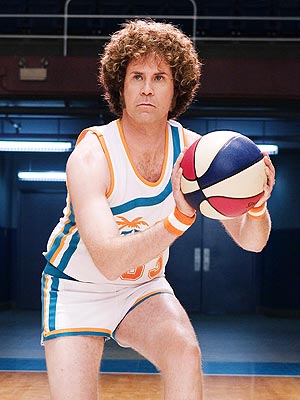
“And now the moment you’ve all been waiting for. At six foot five a solid meaty 215 pounds… your pregame announcer, your owner, your coach… your pop-singing sensation, but most importantly… your power forward… yours truly, Jackie Moon!”

The course itself was a great experience, and one that I’ll inevitably be referencing frequently in the near future. Not only was the information powerful, but as the only strength coach in a room of 55, speaking with the other attendees was equally as insightful as the course itself. It’s these educational and networking experiences that I rely on for continuing to improve as a professional in the field. Regarding PRI specifically, information from their courses provides the explanation for the staggering proportion of the general population that suffers from femoroacetabular impingement (see: An Updated Look at FAI), and is a major reason why I’m able to successfully work with current and former athletes that suffer from a myriad of hip injuries successfully.

As highly as I speak of PRI (and deservedly so), they are certainly not the only educational resource that I rely on. Since June, I’ve attended/completed 10 different seminars/courses to help broaden and deepen my understanding of material from Functional Movement Systems, USA Weightlifting, USA Hockey, and people like Joe Dowdell and Mike Roussell (among others). I also have a formidable stack of research on energy systems, heart rate variability, and GPS tracking that I’ve worked my way through in the last month. I say all that, not to boast, but simply to put things in perspective. If you want to be good at anything, it’s going to take two things:

  1. Focused, consistent work/practice
  2. Time

I consider myself very fortunate to have learned these lessons early from people like Mike Boyle and Eric Cressey. In my experience, the people that struggle in the fitness profession are those that, at some point, assume their educational journey is over and shut it down. This same thing can be said of almost every profession AND can be applied to athletes. There is always something or someone out there that can help you, and it’s wise to proactively seek these resources out.

Unfortunately, I’m not much of a business man. I’m not passionate about business; I’m passionate about athletic development and hockey training. That said, educating myself on contemporary marketing strategies is a “necessary evil” so to speak, as it doesn’t matter how much I, or the rest of the Endeavor staff, knows about training if no one knows we exist. With that in mind, I’m conscious of spending some (as little as possible) of my continuing education time on business-related materials. Over the last several years, the single best business resource I’ve come across is the Fitness Business Blueprint from Pat Rigsby, Eric Cressey and Mike Robertson.
I continue to refer back to my notes from their videos, and have used their information to reshape all of the internal and external business systems within Endeavor. Unlike many business resources, it’s not based on theory, it’s based on implementable steps and action plans, which makes things easier for the not-so-business savvy people like me. The GOOD thing about business resources is that if you apply the information correctly, the investment pays itself off many times over. The GREAT thing about this particular resource, which usually runs for $299, is that they’re offering a $1 30-day trial, at which point you’ll still receive a $100 discount off the package price and can divide the payments up across two months. Simply, you save $100 AND you get to try it for 30 days for a $1 before you make any commitment. If you’re an action taker, you’ll have made enough money to pay for the package by the end of your 30-day trial! Click here for more information: Fitness Business Blueprint

Remember that the path towards excellence in any area is an ongoing journey. Too many people quit right before their big break. Keep moving forward; it will be worth it in the end!

To your success,

Kevin Neeld

P.S. As with many great opportunities, the $1 trial for Fitness Business Blueprint will only be available for the next 72 hours so take action now and click here for more information on how you can get your hands on the best fitness business resource out there: Fitness Business Blueprint!

Please enter your first name and email below to sign up for my FREE Athletic Development and Hockey Training Newsletter!
Over the last few years, I’ve written and talked quite a bit about preventing hip injuries in hockey players. Unfortunately, things like adductor and hip flexor strains have become accepted as “part of the game”, and now we’re seeing a surge of femoroacetabular impingement, labral tear, and sports hernia cases. The underlying mechanisms to many of these injuries can be pretty complex, but once you get it, many of these cases can be prevented.

A few months back, I posted a video on how to assess for a pretty common structural “abnormality” that we see in hockey players known as “version”. More specifically, players can have unilateral or bilateral ante- or retro-version. If you missed the video, take a few minutes to watch it below:

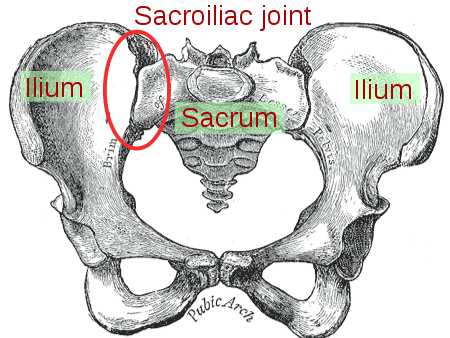
In the past, I’ve worked with a lot of players that complain of groin pain that present with associated weakness. It’s important to point out that pain completely changes function, often in unpredictable ways. This is one of the reasons that training or playing through pain can lead to additional problems down the line. Compensations are inevitable. Specific to these cases, often times the cause of the pain and weakness is a misaligned pelvis. As a quick anatomy review, each hemi-pelvis integrates with the spine via the SI joint in the back and with each other via the pubic symphysis in the front.

These three connection points (SI joint on each side and pubic symphysis in the front) form a continuous loop. Because of their integration, one segment become misaligned will necessarily result in a misalignment at another segment. For example, an SI joint being out of whack can lead to a shift in the other SI joint and/or the pubic symphysis. Alignment can be compromised from contact, and/or instability secondary to poor or asymmetrical movement patterns, postures, and strength. Misalignments can refer pain to a number of places throughout the thigh, hips, and lower back, but a common one that we see relates to pubic symphysis irritation. When there is excessive movement across the pubic symphysis, the cartilaginous disc that helps improve the contact area of the two adjoining bones becomes inflamed. This is referred to as osteitis pubis and is one of the most overlooked sources of groin pain. These cases are frequently treated with injections to reduce the inflammation, which is effective in putting a band-aid over the pain, but completely overlooks the cause.

In these cases, asking the athlete to squeeze something between their legs while lying with their knees bent will reproduce the pain radiating from their groin up into their hip AND strength will be poor. Many times, a simple “SI readjustment” from a physical therapist or chiropractor will restore alignment and the pain will be gone and strength restored, instantly. At this point, the athlete has a more neutral alignment, but has demonstrated that they’re prone to slipping back into misalignment (and pain, and weakness). Following readjustment, it’s important to incorporate strengthening exercises that put multi-directional bilateral stress across the hips. These exercises serve to improve the integrity of the hip in a neutral position, which will help ensure that they player doesn’t fall in and out of alignment and progressive degenerate the joint. The exercises in the video below were a few that we’ve used at Endeavor in cooperation with Ned Lenny, a really bright physical therapist in Cherry Hill, NJ. Enjoy.

To your success,

Kevin Neeld

P.S. I’ve added an “ebook only” option to Ultimate Hockey Training, so if you don’t want to shell out for shipping a physical copy, you can now get instant access to the entire package digitally here: Ultimate Hockey Training

Please enter your first name and email below to sign up for my FREE Athletic Development and Hockey Training Newsletter!

I hope you had a great weekend. David Lasnier and I headed into West Chester, PA for the USA Weightlifting Sports Performance Coach Certification. We’ve been teaching Olympic lift variations for years, but it’s always good to hear it right from the source. I think we both picked up a few good cues that will help refine the learning process a bit.

Last week I discussed, from a nutrition and program design perspective, the idea that living in a “high intensity mode” can be detrimental to recovery and therefore to subsequent performance. The hockey season is long, and if players and coaches aren’t conscious and proactive about their recovery, they’re going to break down toward the middle/end of the season. Recovery is key to long-term excellence. If you missed those posts, you can check them out here:

  1. UCAN Break Carbohydrate Dependence
  2. A New Perspective on Program Design

Essentially this idea boils down to teaching your body to appropriately balance the sympathetic and parasympathetic nervous systems. If you’re not familiar with this terminology, these systems are often oversimplified as:

  1. Sympathetic: Fight or flight (or freeze)
  2. Parasympathetic: Rest and digest

While they’re often discussed as opposing systems, the reality is that they work in a complimentary fashion to create the appropriate environment for the body to be successful. Different strategies have been proposed to monitor the “state” an athlete is in, as athletes that start to get stuck in a sympathetic state or thought to be overstressed/under-recovered/overtrained, which can progress to an even more severe state of parasympathetic dominance if left unchecked. Again, it’s not that one system is good and the other bad, it’s that both need to be emphasized at appropriate times.

I recently came across a study that provides powerful information on how hockey’s original recovery drink physiologically impairs recovery.

Hockey’s Original Recovery Drink
I remember an old teammate of mine from Delaware called me a couple years after I graduated and said, “Neeld, how do I lose fat, while binge drinking 5-6 days per week?” If you’re even remotely health conscious, the futility in this question may strike you as comical. The truth is that many players have a somewhat related question in that they want to know how they can minimize the damage of alcohol without giving it up completely. And I think that many of the nutrition “experts” will quickly lose the attention of older players when they put their anti-alcohol foot down. Is it good for you? Not by a long shot. Will players give it up completely? Not by a long shot, and they’ll shut you out completely if that is your expectation.

This isn’t quite how it works

That said, it’s important to provide players with the necessary information to allow them to make decisions for themselves. On that note, I recently came across an interesting study related to alcohol consumption and recovery: Alcohol Has a Dose-Related Effect on Parasympathetic Nerve Activity During Sleep

In possibly the most appealing study ever offered to college students (I’m sure they weren’t at a loss for volunteers on this one), researchers took 10 sufficiently aged students and had them consume 0 (control group), 0.5 (low dose), or 1.0 g (high dose) of pure ethanol per kg of body weight about 2 hours before they went to bed. On the nights that they consumed the alcohol, they wore a non-invasive device to monitor electrocardiological activity throughout the night.

They found that alcohol consumption increased the students’ heart rate, decreased heart rate variability (HRV), and increased the Low Frequency/High Frequency ratio of HRV, with higher doses being associated with more significant changes. Taken together, these results indicate that, as the title indicates, alcohol consumption leads to a shift toward a sympathetic state by both increasing sympathetic activity and inhibiting parasympathetic activity, with greater degrees of consumption leading to a more significant shift toward a sympathetic state.

Practical Implications
From a practical standpoint, these results can be taken to mean that alcohol impairs sleep quality. While this seems like a pretty straight-forward concept, it directly conflicts with the conception that many players have that alcohol actually helps them sleep. It may help your eyes shut, but your body isn’t resting and recovering during the night.

To help relay this information in more practical terms, let’s take a look at the doses used in the study for three players:

Weights

  1. Players 1: 180 lbs = ~ 82 kg
  2. Player 2: 200 lbs = ~ 91 kg
  3. Player 3: 220 lbs = ~100 kg

Alcohol Dosage

  1. Player 1: 82 kg x 0.5 = 41g of ethanol (low dose); 82 kg x 1.0 = 82 g of ethanol (high dose)
  2. Player 2: 91 kg x 0.5 = 45.5 g of ethanol (low); 91 x 1.0 = 91 g of ethanol (high)
  3. Player 3: 100 kg x 0.5 = 50 g of ethanol (low); 100 kg x 1.0 = 100 g of ethanol (high)

Beer Dosage
A typical beer with 4.5% alcohol content contains about 16 g of ethanol.

  1. Player 1: Low Dose- ~2.5 beers; High Dose- ~5 beers
  2. Player 2: Low Dose- ~3 beers; High Dose- ~5.75 beers
  3. Player 3: Low Dose- ~3 beers; High Dose- ~6.25 beers

In other words, it doesn’t take much to significantly impair sleep quality. More importantly, more is worse. Alcohol consumption doesn’t need to be an all or nothing experience. Having a couple beers after a tough game isn’t ideal, but having a dozen will have a significantly detrimental effect on the player’s recovery. On a related note, light beer with a lower alcohol content and less calories looks good on paper, but if it’s between 2 Magic Hat #9s and 12 Coors Lights, then drinking the heavier beer may be a better option.

Also, knowing that processing alcohol will impair sleep quality, it seems logical to shut down your drinking as far before your typical bedtime as possible. Because going to bed and waking up within an hour of the same times everyday (at least as much as possible) is important for establishing an optimal circadian rhythm, this means that drinking after night games should be kept to a minimal (as a habit, exceptions are inevitable), as should drinking during trips that involve significant changes in time zone (e.g. east coast teams playing on the west coast or any North American team playing overseas).

Take Home
Alcohol’s impairment in sleep quality can facilitate a viscous cycle. Because they slept in a more sympathetic state, they’ll wake up feeling less rested and lean on coffee or other forms of caffeine to help kick start their day. Like alcohol, caffeine also pushes them toward a sympathetic state. These habits, superimposed on an already sympathetic lifestyle (training, practices, games, travel, relationship stress, schoolwork for junior/college players, etc.) doesn’t allow athletes to shift back into a parasympathetic state, which significant impairs their ability to recover.

Hopefully you understand the underlying thought process. Players are going to make their own decisions and there will always be exceptional circumstances. That said, it’s important for players to understand what “ideal” is, so that they know when they’re venturing in the other direction. The more time players live in ideal circumstances, or said another way, the less time they spend venturing in the other direction, the better their performance will be over both the short- and long-term.  

To your success,

Kevin Neeld

Please enter your first name and email below to sign up for my FREE Athletic Development and Hockey Training Newsletter!
Just wanted to let you know that I recently did a hockey training interview with Mike Robertson that is now available through his site. The interview covers everything from what makes the best players the best to strategies to improve players’ durability to what young hockey strength coaches can do to excel in the field! Check it out at the link below:

Click here >> Hockey Training with Kevin Neeld

To your success,

Kevin Neeld

Please enter your first name and email below to sign up for my FREE Athletic Development and Hockey Training Newsletter!

// ]]>

It’s been a couple weeks (again) since I had an opportunity to write one of these posts. The last few weeks have been pretty crazy in preparing for the release of Ultimate Hockey Training. On top of that, we’re in the process of moving Endeavor to a new location a few miles away from our current one, which I’m really excited about. We’re fortunate to have an opportunity to rebuild our space from scratch a few years in, so we can make adjustments based on some of the frustrations we’ve had in the current space.

On Wednesday I had an opportunity to head up to Quinnipiac University in Hamden, CT to help Coach Boyle and Dawn Strout with another round of testing for the U.S. Women’s National Program. I’ve really enjoyed my work with the program. The girls all work their assess of, and are constantly pushing each other. Great team atmosphere. It was also nice to catch up with Brijesh, who I haven’t seen in too long. That night I drove home from Connecticut packed a bag, woke up the next morning, and got on a plane to Phoenix. I’m in Phoenix for PRI’s Impingement and Instabilities course, which rain prevented me from attending with Cressey in Maine a couple months back. No complaints about being “forced” to coming to Phoenix though! I spent most of the day yesterday with Patrick Ward talking about the nervous system (this is what most cool people do when they get together). Patrick is ridiculously bright and has a different background than I do, so it’s awesome to hear his perspective on things. If you’re not familiar with his work, check out his site (and an article he wrote on my new book) here: Show & Go and Ultimate Hockey Training

This week I wrote two posts that touch on elite hockey development. If you haven’t read them already, you can check them out here:

  1. What if Talent Doesn’t Exist?
  2. What Would You Do to Succeed?

Over the last several weeks, we’ve added A LOT of terrific content to Hockey Strength and Conditioning. Check out what you’ve missed:

New Articles

Why Shoes Make Normal Gait Impossible from Dr. William Rossi

Five Exercises That Hockey Players Should Be Doing in the Weight Room from Sean Skahan

Toronto Maple Leafs 1962 Training Camp

Youth Hockey Training Blueprint: Part 1 from me

The Case for Direct Cuff Training in Contact Sports from Anthony Donskov

Managing Injuries through Manual Therapies from Eric Reneghan

This is an almost overwhelming collection of articles. The Maple Leafs Training Camp article is more for fun than anything else. We’ve certainly come a long way since those days. My article on youth hockey training is the first in a 3-part series that will walk you through exactly how I put together the off-ice training program for a youth hockey organization that we work with. This series will answer most of the questions I get regarding what I recommend for training youth players at different age levels at the rink and identify how I’ve addressed some of the challenges inherent in the space we’re allotted there. Keep your eye out for the other two parts. Dr. Rossi’s shoe article was outstanding. I think the impact of footwear is overlooked by the majority of youth athletes (and their parents) because the assumption is that they wouldn’t sell shoes if they were detrimental to your health. Dr. Rossi’s article systematically explains the impact different shoes have on your structure and performance. Great read.

Training Programs

Off-Season 2011 Phase 2 Strength Training from Sean Skahan

Quarter Sprints from Darryl Nelson

Strength Training for a Hockey Player with a Unilateral Lower Body Injury from Mike Potenza

Three great programs from three great coaches. I think it’s especially important to read through Potenza’s program because of the message it sends. Unilateral injuries are NOT an excuse to stop training! Most players get hurt, go to the doctor, are told the injury will take 6-8 weeks to heal and assume that means they’ll be ready to play in 6-8 weeks. In reality, in 6-8 weeks they have a almost completely healed segment within a drastically deconditioned body. There are RARELY injuries that warrant a complete shutdown (concussions, and recent disc herniations and hernia surgeries are amongst the few). Players can continue to make progress by intelligently training the healthy segments, which will facilitate a faster recovery, return to play, and ensure continued progress despite an injury. Sean’s program series on training an athlete with an ACL tear are great examples of this too so check them out if you haven’t already.

Exercise Videos

Farmer Carry Lateral Squats from Darryl Nelson

Frontal Plane Core Exercises from Mike Potenza

Reach, Roll, and Lift from me

Half Get-Up with Cup of Water from Sean Skahan

Darryl’s video will really appeal to hockey players because it is a relatively hockey-specific movement. We don’t typically load these movements very heavy, but we do use them to groove the pattern and improve hip mobility. Potenza had some creative core exercises in his video montage. The Reach, Roll, and Lift is a lower trapezius activation exercise that has really humbled a lot of our youth players. It’s easy to cheat your way through this one, but when done correctly, it will surprise you how difficult this is. In my opinion, an inability to perform this exercise disqualifies you from overhead lifts. Sean’s video provides another great example of how to continue to groove important patterns, even when an athlete has suffered an injury.

Hockey Assessment Webinar

Hockey Hip Assessments from me

This was a webinar I did a couple months back detailing all of the hip assessments I used with our off-season hockey group at Endeavor, how to interpret the results, and how to use this information to improve the durability of your players. I’m pretty proud of this one as I think it provides strength and conditioning professionals as well as rehab folks with some important tools to recognize structural “abnormalities” that may predispose players to predictable injuries.

Lastly, the forum has been hopping recently. While there are several interesting discussions, I’d recommend checking out the “Post-Game Flush”, “Neck Strengthening”, “Motion Analysis for $5”, “Barefoot Training”, “Diet Programs that Reduce Inflammation”, and “Reactions to LTAD” threads first.

As always, if you aren’t a member yet, I encourage you to try out Hockey Strength and Conditioning for a week. It’ll only cost $1, and if it’s not the best buck you’ve ever spent, I’ll personally refund you!

To your success,

Kevin Neeld

Please enter your first name and email below to sign up for my FREE Athletic Development and Hockey Training Newsletter!

Use CODE: "Neeld15" to save 15%