A few days back I kicked off “Hockey Training Radio Week” with an interview I did for Maria Mountain on hip impingement (FAI). If you missed it, you can check it out here: Hockey Training Radio Week: Part 1

Hockey Training Radio Week continues with an interview I did for Joe Heiler and his site Sports Rehab Expert, shortly after the release of my new book Ultimate Hockey Training.

I’ve been flattered to be asked to contribute to Joe’s site since it first launched several years ago. If you’re not familiar with it, it features articles, videos, webinars, and forum discussions from some of the top minds in sports training and rehabilitation. If you’re reading this as a hockey player or parent, the site may not be for you. But if you’re a strength coach or sports medicine professional, I HIGHLY recommend you check it out it.

In this “Ultimate Hockey Training Interview”, we discuss:

  1. Updates on sports hernia and FAI
  2. Unilateral versus bilateral training
  3. Taking advantage of the CNS to improve power and strength
  4. My ‘core’ training system
  5. And a whole lot more!

You can listen to the interview by clicking the link below!

Listen Here >> Ultimate Hockey Training Interview

To your success,

Kevin Neeld

P.S. If you’re interested in more sports rehab and sports performance information, check out Sports Rehab Expert!

P.S.2. As always, I appreciate you forwarding this along to anyone you think will benefit from the info! You can use the social media dropdown menu at the top right hand corner to share it via Twitter and Facebook!

Please enter your first name and email below to sign up for my FREE Athletic Development and Hockey Training Newsletter!

This is an exceptionally busy week for me. On Thursday I fly up to Boston for a 3-day course, then immediately drive to Lake Placid to help with the end of the US Women’s National Team camp, before ultimately heading to Burlington, VT with the team for the IIHF World Championships. In a nutshell, I’ll be on the road from March 29-April 15th, which means I have 3 days to prepare for being gone for 2.5 weeks! That said, I’m pumped up for the course coming up and to spend some time with my friend Devan McConnell, who took over this year as the Head Strength and Conditioning Coach at UMass Lowell. I’m honored to have an opportunity to be involved with the US program as well, and humbled to work alongside such a great staff and group of players. Should be an exciting few weeks!

With all that in mind, I’m going to do my best to continue posting some hockey training and player development articles/videos for you over the ensuing weeks, but I’m really not sure how much down time I’ll have. Instead of leaving you stranded this week, I wanted to share a few interviews that I’ve done over the last month, starting with one I did with my friend Maria Mountain on Femoroacetabular Impingement (FAI). If you’re unfamiliar with FAI, this is one of the most common injuries that affects elite level hockey players currently and early intervention is key to minimizing the damage (e.g. those working in youth hockey should be aware of some of the potential developmental causes and symptoms). You can listen to and/or download the interview at the link below.

Listen Here >> Kevin Neeld Interview on Hip Impingement

Enjoy! And if you have questions about any of the topics we talk about, please post them below.

To your success,

Kevin Neeld

P.S. As always, I appreciate you forwarding this along to anyone you think will benefit from the info! You can use the social media dropdown menu at the top right hand corner to share it via Twitter and Facebook!

Please enter your first name and email below to sign up for my FREE Athletic Development and Hockey Training Newsletter!

What a week! We recently wrapped up a promotion with LivingSocial at Endeavor so we had a bunch of new start-ups this week. I’ve really been impressed with the work ethic of the new kids we’ve had. I strongly believe that’s a quality that you can develop with the right environment, but it’s refreshing to see kids enter with a high compete level.

Endeavor is also launching a new U-12 Athletic Development Program in April that I’m really excited about. I spent several hours with Matt Siniscalchi designing a template program early in the week and then several more refining it with the help of David Lasnier and Karl Kurtz (Karl doesn’t have a website, but he’s the mastermind behind all of my graphics work, so if you’re in need of a photoshop wizard, feel free to shoot me a message and I can put you in touch). It’s times likes these that it’s helpful to be surrounded by such a knowledgeable staff. If you live in the Eastern PA/New Jersey area, come check us out. We have a couple great specials running through the end of the month!

Before we get into the hockey training content from this past week, I wanted to let you know that I’ve posted 4 mini-webinars, which you may or may not have seen already), on Facebook. These were videos I made as part of the launch of my book Ultimate Hockey Training, and most recently, the complete video on concussion-like symptoms. I’m testing out a really cool new Facebook Webinar service (which I HIGHLY recommend if you have your own website or otherwise run your own business) that makes it easy for people to share the information with their friends. As I’ve said in the past, I’m indescribably grateful to all of you for forwarding some of my articles and videos along to your teammates, coaches, friends, and family. With the new Facebook Webinar service, it’s more convenient to watch the webinars AND to share them. It’s a win-win. In case you haven’t seen them already, check out these 4 webinars and please pass them along to anyone you think will benefit from the information!

  1. Transitional Speed Training for Hockey
  2. Hockey Conditioning
  3. Off-Ice Hockey Training Program Design
  4. The Truth About Concussion-Like Symptoms

This week, in quite possibly the most disclaimer-filled articles series in the history of the written word, I added a 4-part webinar series on concussions titled “The Truth About Concussion-Like Symptoms”. If you missed them, you can check them out here:

  1. The Truth About Concussion-Like Symptoms
  2. The Truth About Concussion-Like Symptoms: Part 2

Over the last week at Hockey Strength and Conditioning, we’ve added two new programs from Mike Potenza and Darryl Nelson and another great article from Anthony Donskov.

Darryl kicked things off with a timely training program for his players at the US NTDP (elite high school aged players). I like to see what other coaches are doing at specific times of the year because it sparks some good ideas on things I can incorporate into our programs and provides some insight into their philosophy. Darryl does a great job with the USA program so his programs are worth studying/modeling.

Check out the training program here >> Early Spring Off-Season Workout

Mike Potenza added a 2-day youth training program with videos of all the exercises. The program has a bit of a strength emphasis, but Mike does a terrific job of keeping everything simple, which is really important for youth players that don’t have a strong training background. Master the basics before you move on to advanced tactics. The videos are a great addition so youth players or parents that are reading the article can get an idea of how to perform the exercises with perfect technique.

Check out the youth training program here >> Youth Training Program: Strength Phase 1

Anthony Donskov, who I’ve had the pleasure of working alongside at a few of the US Women’s National Team camps over the past year, added another outstanding piece on designing training programs for contact athletes to preserve shoulders. As you likely know, shoulder injuries are extremely common in hockey, and because they typically result from high velocity contact, it’s generally thought that they are largely unpreventable. While there is some truth to that idea, following Anthony’s concepts will go a long way in minimizing the risk of a separation or dislocation.

Read Anthony’s article here >> Push/Pull Ratio for Contact Athletes

That’s a wrap for today. As always, if you aren’t a member yet, I encourage you to try out Hockey Strength and Conditioning for a week. It’ll only cost $1, and if it’s not the best buck you’ve ever spent, I’ll personally refund you!

To your success,

Kevin Neeld

P.S. Don’t forget to check this out! Facebook Webinars

Please enter your first name and email below to sign up for my FREE Athletic Development and Hockey Training Newsletter!

If you missed Part 1, you can check out the first half of the presentation here: The Truth About Concussion-Like Symptoms

The second half of the presentation was divided into two videos, which are available below.

As a disclaimer, I’m a strength and conditioning coach. I’m not a physician, nor am I an expert on brain injuries. The information in these videos is NOT meant to be taken as medical advice, nor does it suggest that concussions are being mishandled in any way by medical professionals in hockey. My interest in concussions stems solely from wanting to ensure that I can help the players I work with find the best care via the most appropriate referrals to medical professionals, to help make sure they aren’t missing unnecessary time.

The Truth About Concussion-Like Symptoms: Part 3

The Truth About Concussion-Like Symptoms: Part 4

*This information is by no means a replacement for medical advice or diagnosis, nor does it suggest that any of the players whose names or images were presented in the videos had cases that were mishandled in any way. It’s simply meant to provide additional potential causes of symptoms so players are aware of what other injuries they may need to get checked out by a medical professional.

To your success,

Kevin Neeld

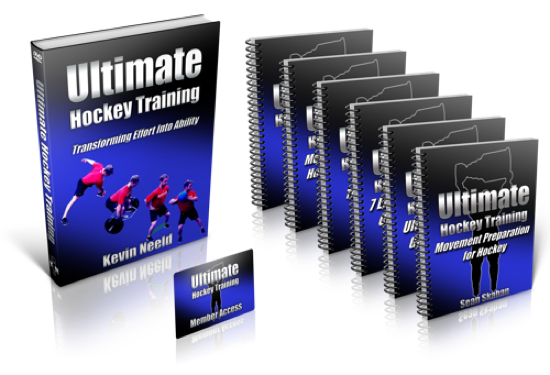
P.S. It has often been said that injury prevention is just good training. Now you can get access to a comprehensive hockey training system that can be altered to help improve the performance of U-10 players all the way up through the pros: Ultimate Hockey Training.

Please enter your first name and email below to sign up for my FREE Athletic Development and Hockey Training Newsletter!
Over the last year, concussions have plagued all levels of hockey more than any other injury. While much attention is now being paid to the prevention of concussions and following more appropriate return to play protocols, the fact is that these injuries, and the other causes of related symptoms, are relatively poorly understood.

Last week I filmed a 30-minute presentation titled “The Truth About Concussion-Like Symptoms”. The presentation starts by discussing the basics regarding symptoms and the return to play process, which is incredibly important information to minimize the risk of repeat occurrences, and exponentially more profound long-term consequences. However, the real value of this presentation lies in identifying the most commonly overlooked predisposing factors and causes of concussion-like symptoms. As you’ll quickly see, we may have many players sitting out with concussion-like symptoms that don’t or no longer have a true concussion.

I strongly believe this is the most powerful collection of practical concussion information for hockey players that has ever been compiled. To make the information more manageable, I’ve divided the presentation into four parts. The first two are presented below. Please share this with everyone you know in the game of hockey. Information is power.

As a disclaimer, I’m a strength and conditioning coach. I’m not a physician, nor am I an expert on brain injuries. The information in these videos is NOT meant to be taken as medical advice, nor does it suggest that concussions are being mishandled in any way by medical professionals in hockey. My interest in concussions stems solely from wanting to ensure that I can help the players I work with find the best care via the most appropriate referrals to medical professionals, to help make sure they aren’t missing unnecessary time.

The Truth About Concussion-Like Symptoms: Part 1

The Truth About Concussion-Like Symptoms: Part 2

*This information is by no means a replacement for medical advice or diagnosis, nor does it suggest that any of the players whose names or images were presented in the videos had cases that were mishandled in any way. It’s simply meant to provide additional potential causes of symptoms so players are aware of what other injuries they may need to get checked out by a medical professional.

To your success,

Kevin Neeld

P.S. It has often been said that injury prevention is just good training. Now you can get access to a comprehensive hockey training system that can be altered to help improve the performance of U-10 players all the way up through the pros: Ultimate Hockey Training.

Please enter your first name and email below to sign up for my FREE Athletic Development and Hockey Training Newsletter!
Use CODE: "Neeld15" to save 15%