Concussions have been a hot topic over the last two years in the NHL. Not in small part to Sidney Crosby’s concussion, more attention is now being paid awareness, prevention, and more conservative return-to-play guidelines.
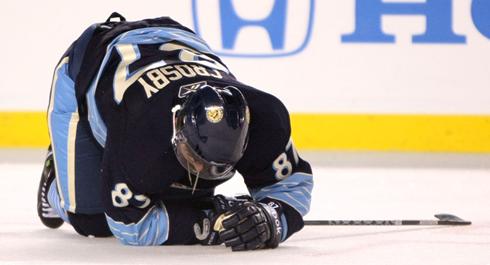
Long-term concussion symptoms are becoming a more prevalent problem

Concussions are far from a simple injury. It’s the underlying complexities in injury mechanism AND predisposition that makes concussions so hard to treat. As I’ve mentioned in the past (see Sidney Crosby’s Concussion), a large component of preventing things from getting worse than they need to is following a complete return-to-play sequence. Given the alarming statistic that 92% of repeat-concussions occur within 10-days of the original incident, it would seem logical that a bare minimum precaution should be to keep players out for 2 weeks following ANY concussion suspicion. I can see the hesitation in adopting this practice as a norm, but the reality is that the amount of development and exposure that can occur within this time frame is negligible, especially when put in the light of the potential short- and long-term consequences of suffering a repeat head injury.

As my friend Maria Mountain recently wrote (see A Rant about Concussions in Hockey), it’s bizarre that the phrase “concussion-like symptoms” seems to frequent hockey media channels now. This is a suspicious description given both the diverse nature of concussion symptoms (which can range from those comparable to tension headaches to those resembling vertigo), and the lack of clarity in diagnosis in general. How does someone suffering concussion-like symptoms differ from someone with a concussion? Is concussion-like symptoms simply being used as an umbrella diagnosis to put a name on something not medically understood? If concussion-like symptoms are being used as a diagnosis for those exhibiting symptoms that don’t present with observable brain trauma and/or have relatively normal ImPACT scores, then it’s important to look at some of the underlying mechanisms that dispose athletes to these symptoms.  There are certainly a lot of questions that remain to be answered regarding concussions, but with the increased attention being paid to the associated consequences of impact and adaptations to the brain itself, I thought it would be beneficial to discuss some of the lesser known underlying causes of “concussion-like symptoms” that may be related to or exacerbated by impact, but aren’t necessarily a brain injury.

Mechanisms of Concussion-Like Symptoms
Below are three mechanisms that can cause concussion-like symptoms, that are not associated with a brain injury:

  1. Poor Visual Tracking
  2. Sub-occipital nerve impingement
  3. Altered sensory input secondary to a loss of neutrality

Poor Visual Tracking
I was first introduced to this idea by Dr. Josh Bloom at Pete Friesen’s Physio-Fitness Summit a couple years ago. Dr. Bloom pointed out that in players with ongoing symptoms, or those that do not seem to be making progress, it is often the case that they have an eye that is not tracking properly. In a sort of ocular constraint-induced movement therapy, the employed strategy involved covering the properly functioning eye and training the eye that did not track optimally. He noted that in some cases, symptoms resolved almost immediately (within a single session) and had no recurrence. Whether ever player has this experience or not, it’s certainly worth looking into. The idea that a player may have ongoing symptoms that they think are related to a concussion may cause inappropriate limitations in their training and practice and a delayed return to play.

Sub-Occipital Nerve Impingement
Over the Summer, my friend Ned Lenny (physical therapist based in Cherry Hill, NJ if you’re local) and I were talking about postural adaptations that we see in both the hockey and general populations, and about how the hockey adaptations were typically in-line with a more extreme version of what we saw in the general population. In other words, the postural changes we see in most people that result from sitting too much and moving too little are significantly worse in hockey players. In general, these adaptations can be described by Janda’s upper and lower crossed syndromes.
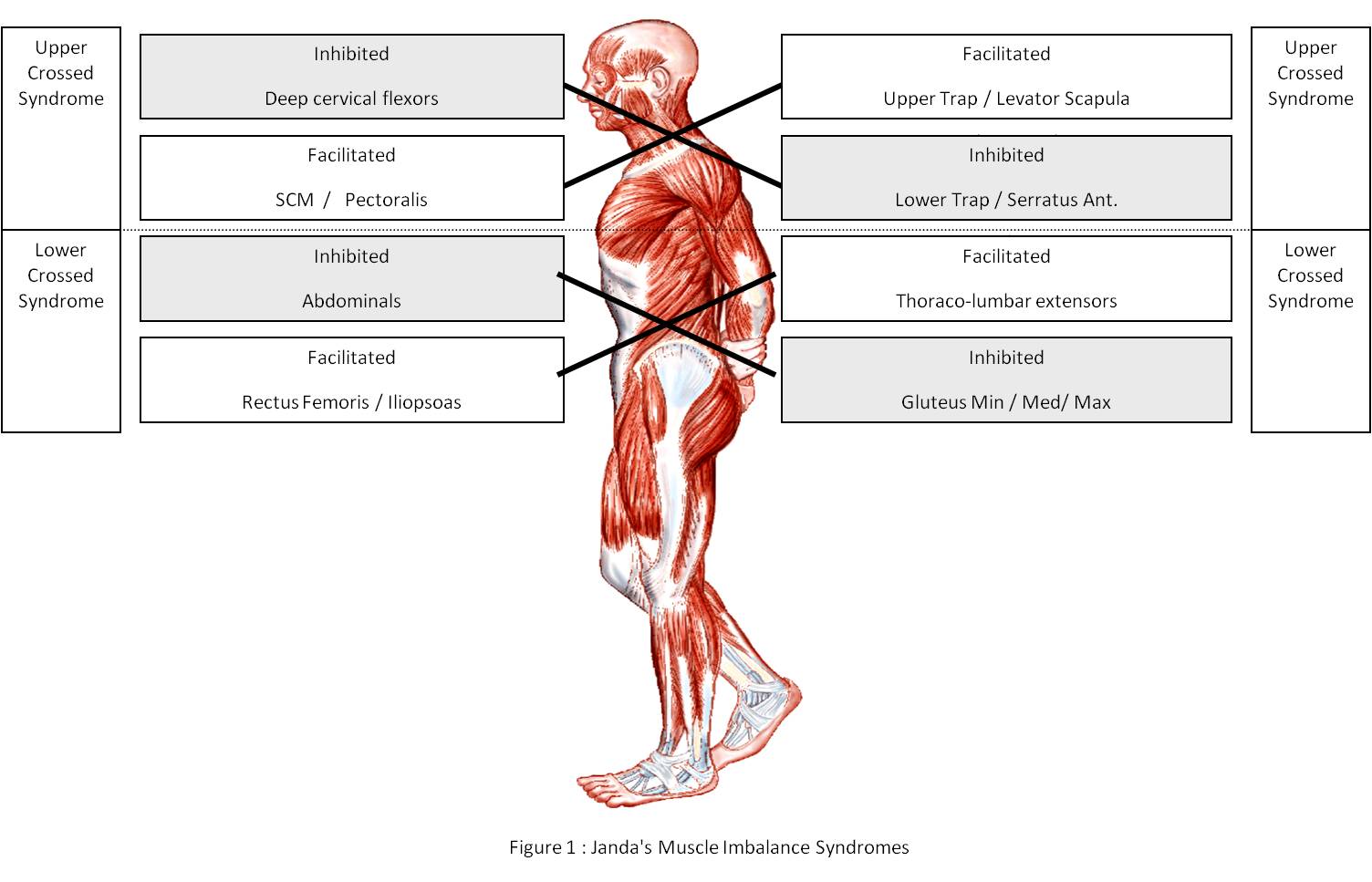
Most relevant to the concussion discussion, the adaptation that most directly influences these symptoms is a forward head posture, or more directly, a posterior rotation of the occiput on the atlas.

Ned pointed out that hockey players spend a substantial amount of time sitting on the bench, in cars/buses/airplanes, playing video games at home, and after many practices and games, they hop on a stationary bike. Going for a post-skating bike ride isn’t inherently harmful; in fact there is some value in restoring a more optimal autonomic nervous system balance. The kicker is that players hop on the bike and immediately look for the TV, which is usually posted above their heads somewhere, forcing them to rotate their head further back. Living in this position of posterior cranial rotation predisposes them to suffering symptoms related to impingement of the local nerves when forced further into posterior rotation, which can result from contact of varying severity. This might be why you see some players with prolonged symptoms after taking what looked like a relatively innocent hit.

The key to minimizing this predisposition is to improve the player’s posture and awareness of cervical position. We spent a lot of time last off-season emphasizing a “packed neck” position with all our hockey players at Endeavor and continue to emphasize this position now with our in-season groups. In reality, this isn’t an injury prevention strategy as much as it’s just the right way to train, but it can feel a bit unnatural for players at first.
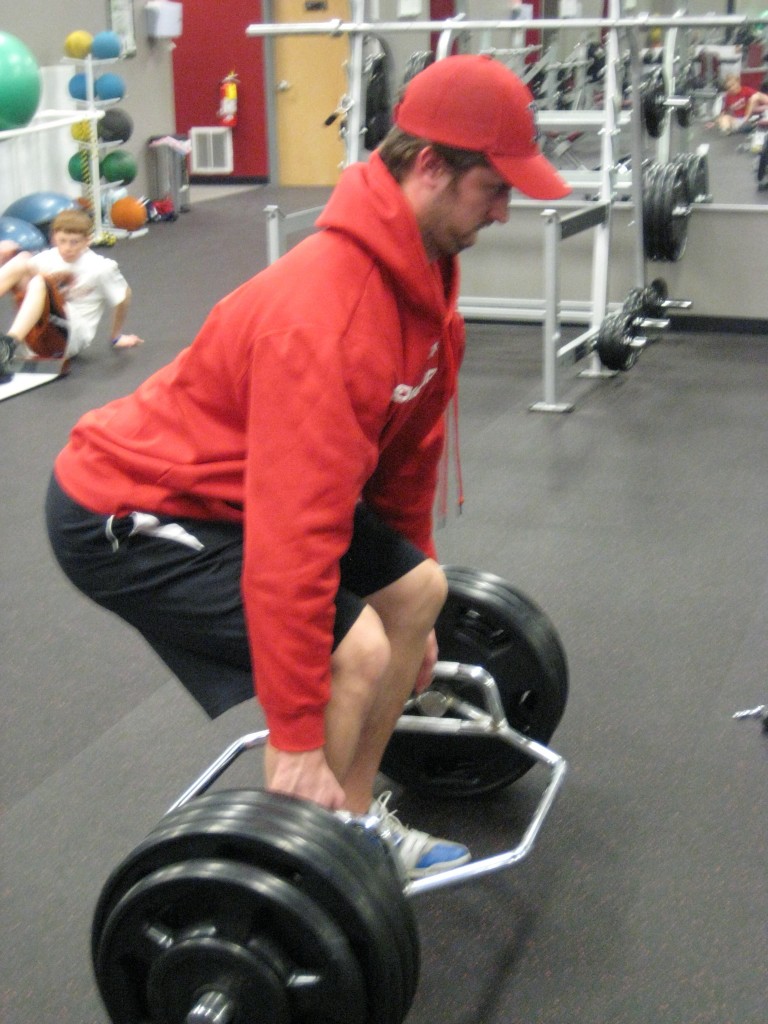
Chicks dig guys with a good neck pack

Altered Sensory Input Secondary to a Loss of Neutrality
This is a very complex way of saying that humans are inherently asymmetrical and have tendencies to drift toward predictable positions of non-neutrality. This concept stems from my ongoing apprenticeship of the Postural Restoration Institute information, and has profound implications for athletes and non-athletes alike. Over the last week at Endeavor, I’ve assessed a dozen people that all had NO adduction on their left side, but had full adduction on their right side. For hockey players, this pattern will compromise their stability and skating power, and it’s likely that a player will feel more comfortable crossing over one way (usually to the right) than the other. Failing to address this pattern can lead to a number of compensations of varying severity. Luckily, neutrality can be restored pretty easily using a number of specific breathing techniques.

Importantly, these human tendencies aren’t limited to the hips, but affect everything from the position of the foot to the position of the temporal bones. Specific to the cranial region, it’s worth noting that the common adaptations in the spine lead to a non-neutral head orientation. Because the body naturally seeks a position where the eyes are horizontal, there are compensations that occur through the spine, bones of the head, and the ocular system, all of which will alter the related sensory input, and can lead to feelings of dizziness or general feelings of spatial instability. I realize this is an abstract concept, but it’s not one to be overlooked. At PRI’s Advanced Integration course a couple weeks back, Ron Hruska discussed what he referred to as “ocular scoliosis” and noted that restoring neutrality can actually change a person’s eye prescription. The eyes are among the body’s most powerful sensory organs. Restoring a more neutral position can lead changes in sensory “symptoms” stemming from multiple sources.

Take Home
The major take home from this discussion is that it’s possible to have symptoms resulting from contact that resemble those of a concussion that have an underlying cause not related to brain impact. Because all of the above mechanisms have relatively quick fixes, they’re certainly worth exploring if you have ongoing symptoms AND should be attended to regularly in the interest of minimizing concussion risk in the first place. With the medical team that Sidney Crosby has put together, you would hope that these, and all other underlying factors, are also being addressed.

That’s a wrap for today. Pass this along to other players, parents, and coaches, or anyone else you think may benefit from learning more about concussion prevention!

To your success,

Kevin Neeld

Please enter your first name and email below to sign up for my FREE Athletic Development and Hockey Training Newsletter!

It’s good to be home and settled again. I got back to Philadelphia from my trip out to Postural Restoration Institute‘s Advanced Integration course in Lincoln on Sunday at midnight. Lincoln’s airport was an interesting experience. It was one of those places where they had one cab driver on call for the entire city…who also doubled as airport security, flight attendant and pilot.

“And now the moment you’ve all been waiting for. At six foot five a solid meaty 215 pounds… your pregame announcer, your owner, your coach… your pop-singing sensation, but most importantly… your power forward… yours truly, Jackie Moon!”

The course itself was a great experience, and one that I’ll inevitably be referencing frequently in the near future. Not only was the information powerful, but as the only strength coach in a room of 55, speaking with the other attendees was equally as insightful as the course itself. It’s these educational and networking experiences that I rely on for continuing to improve as a professional in the field. Regarding PRI specifically, information from their courses provides the explanation for the staggering proportion of the general population that suffers from femoroacetabular impingement (see: An Updated Look at FAI), and is a major reason why I’m able to successfully work with current and former athletes that suffer from a myriad of hip injuries successfully.

As highly as I speak of PRI (and deservedly so), they are certainly not the only educational resource that I rely on. Since June, I’ve attended/completed 10 different seminars/courses to help broaden and deepen my understanding of material from Functional Movement Systems, USA Weightlifting, USA Hockey, and people like Joe Dowdell and Mike Roussell (among others). I also have a formidable stack of research on energy systems, heart rate variability, and GPS tracking that I’ve worked my way through in the last month. I say all that, not to boast, but simply to put things in perspective. If you want to be good at anything, it’s going to take two things:

  1. Focused, consistent work/practice
  2. Time

I consider myself very fortunate to have learned these lessons early from people like Mike Boyle and Eric Cressey. In my experience, the people that struggle in the fitness profession are those that, at some point, assume their educational journey is over and shut it down. This same thing can be said of almost every profession AND can be applied to athletes. There is always something or someone out there that can help you, and it’s wise to proactively seek these resources out.

Unfortunately, I’m not much of a business man. I’m not passionate about business; I’m passionate about athletic development and hockey training. That said, educating myself on contemporary marketing strategies is a “necessary evil” so to speak, as it doesn’t matter how much I, or the rest of the Endeavor staff, knows about training if no one knows we exist. With that in mind, I’m conscious of spending some (as little as possible) of my continuing education time on business-related materials. Over the last several years, the single best business resource I’ve come across is the Fitness Business Blueprint from Pat Rigsby, Eric Cressey and Mike Robertson.

I continue to refer back to my notes from their videos, and have used their information to reshape all of the internal and external business systems within Endeavor. Unlike many business resources, it’s not based on theory, it’s based on implementable steps and action plans, which makes things easier for the not-so-business savvy people like me. The GOOD thing about business resources is that if you apply the information correctly, the investment pays itself off many times over. The GREAT thing about this particular resource, which usually runs for $299, is that they’re offering a $1 30-day trial, at which point you’ll still receive a $100 discount off the package price and can divide the payments up across two months. Simply, you save $100 AND you get to try it for 30 days for a $1 before you make any commitment. If you’re an action taker, you’ll have made enough money to pay for the package by the end of your 30-day trial! Click here for more information: Fitness Business Blueprint

Remember that the path towards excellence in any area is an ongoing journey. Too many people quit right before their big break. Keep moving forward; it will be worth it in the end!

To your success,

Kevin Neeld

P.S. As with many great opportunities, the $1 trial for Fitness Business Blueprint will only be available for the next 72 hours so take action now and click here for more information on how you can get your hands on the best fitness business resource out there: Fitness Business Blueprint!

Please enter your first name and email below to sign up for my FREE Athletic Development and Hockey Training Newsletter!
A few weeks ago, after returning from USA Hockey’s ADM Symposium I ordered a half dozen books, many of which were recommended by the presenters. After wrapping up On Combat: The Psychology and Physiology of Deady Conflict in War and in Peace by Lt. Col Dave Grossman and Loren W. Christensen (a really interesting insight into “warrior preparation”), I opened The Talent Code: Greatness Isn’t Born, It’s Grown by Daniel Coyle. I knew I would have a hard time putting The Talent Code down, as Bounce by Matt Syed, which is written on a similar topic, is one of my favorite books of all time.

As you may have noticed, I’m on a bit of a long-term athletic development kick recently. That USA Hockey Symposium really “lit my lamp”.  The symposium was largely responsible for sparking these posts, which I encourage you to read if you haven’t already:

  1. The State of Youth Hockey
  2. Hockey Development Resistance
  3. The Truth About Practice: The 10,000 Hour Rule
  4. Hockey Development Recommendations

There are clearly areas for improvement in our long-term hockey development programs, and I think USA Hockey is on the right track with their guidelines and recommendations. As I anticipated, components of their ADM are being criticized largely by people that haven’t taken the time to fully understand the intentions, guidelines, and progressions of the system. It’s a shame that the people with the loudest voices have a tendency to be the least well-informed.

Getting back to my reading endeavors, I thought Bounce was interesting because it systematically challenged the idea of “natural talent”. While this doesn’t quite do the book service, I think Bounce was a creative way of explaining the 10,000 Hour Rule, and how seemingly “natural” talents can always, regardless of the chosen field, be explained via dedicated practice. As Michaelangelo said,

“If people knew how hard I worked to get my mastery, it wouldn’t seem so wonderful at all.”

What we consider, or should I say what we don’t consider practice may be the reason that people miss this. This topic could be a post in itself (it is. see The Truth About Practice above), I’ll point out that WATCHING higher level performance is one of the most overlooked and incredibly powerful forms of practice. Many of the “young geniuses” accumulated SUBSTANTIAL practice hours watching/listening to their parents or some other mentor at a young age.
Lesson 1: Quality mentors accelerate excellence.
The Talent Code uses similar examples of unexpected excellence, such as the international dominance of Russian female tennis players (from ONE club!), Curacao little league teams, and even the true story of the Renaissance artists to illustrate the same point. These stories are truly miraculous when you consider how few resources many of these outstanding achievers had. Natural talents? Hardly.

Simply, in every case, peak performers have put forth a RIDICULOUS amount of focused, progressive effort to achieve their excellence. They don’t just go through the motions; they attempt, refine, and attempt again until they get it right. Daniel Coyle does a great job of explaining the physiology behind how this eventually leads to automacity (consistent performance without conscious thought).

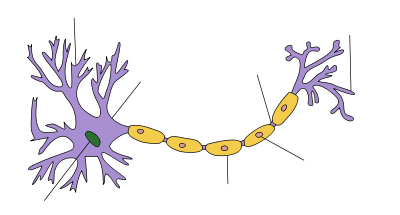
The secret lies in myelin. Myelin forms a sheath around the axon of neurons. Think of the neuron’s axon as a wire, and myelin as the casing around it. Myelin serves to “insulate” the axon, creating a smoother, faster signal. Because all active human movement (and thought for that matter) results from the coordinated firing of vast neuronal networks, myelin has a profound effect on our everyday lives.

Cartoon Neuron. Myelin in yellow.

Think about it. EVERYTHING you think or do involves the firing of a vast network of neurons. When you drink Generation UCAN after your practice, a specific network of neurons fires. When you celebrate after a great game, a specific network of neurons fires. When you get mad because you don’t like a coaching decision, a specific network of neurons fires. As a network fires more and more, more myelin is laid down to insulate the connecting axons (the cord connecting one neuron to another). In other words, that pathway is reinforced and becomes more efficient. As I’ve mentioned, this has tremendous physical AND psychological implications. Essentially, this explains “muscle memory”, why highly practiced skills can be replicated with decent proficiency even after a long hiatus. This also explains why it becomes increasingly easy to skip going to the gym to train.

Lesson 2: Every decision or indecision, action or inaction results in a physiological response that makes you more likely to do it the same way again in the future.

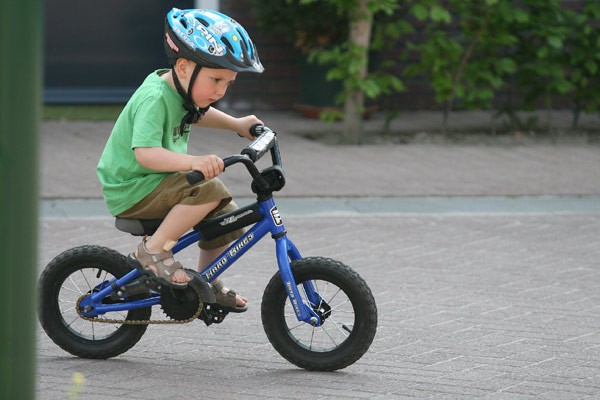
You may have heard the expression “It’s like riding a bike”, which eloquently illustrates the idea of muscle memory. Although, when I got on a bike while at grad school at UMass for the first time in over 10 years, I didn’t feel so balanced. I must have not laid down enough myelin.

The key to becoming a world-class athlete isn’t just to pick your parents right as is often said; it’s to develop highly myelinated high performance neuronal networks. This doesn’t mean that performing a movement incorrectly is undesirable. Quite the contrary. In fact, stumbling through practice is NECESSARY to find the right movement, which can be cemented with further practice. The idea isn’t to not make mistakes; it’s to not overlook mistakes. Mistakes are an important step in the skill development process. But what happens if an athlete, in practically any team sport, makes a mistake that results in a turnover? Instant negative feedback from the coach. A single failed attempt paired with negative feedback causes most athletes to abandon that strategy. Is it any wonder that athletic development experts are calling for more UNSTRUCTURED play amongst athletes at younger ages? These “pick-up” settings typically involve more movement, more “touches” with the ball/puck, and ultimately more opportunities to self-correct. In other words, they have more opportunities to identify effective neuronal networks and start laying down myelin.

Lesson 3: Unstructured play and uncoached small area games create outstanding environments for rapid skill development.

Take Home
At every level of sport, you hear athletes, parents, and coaches talking about how “talented” an athlete is, as if their abilities were developed passively. I’m becoming increasingly convinced that talent, or natural ability as we currently think of it, doesn’t exist. Or should I say, the neuronal network that creates the thought that talent may not exist is becoming increasingly myelinated. The trouble in accepting that talent doesn’t exist, is that we need to look at two athletes, the best and worst on any given team, and treat their potential for future excellence equally.

To your success,

Kevin Neeld

Please enter your first name and email below to sign up for my FREE Athletic Development and Hockey Training Newsletter!
Last week I posted two discussions on the status of youth hockey development that pointed out some commonly held misconceptions, areas that need revamping (or at least have room for improvement) and some of the barriers that the hockey community will face in pursuing a more effective model. If you missed those posts, I highly encourage you to go back and read them before continuing on here today. Check out the links below:

Hockey Development Post 1 –>> The State of Youth Hockey

Hockey Development Post 2 –>> Hockey Development Resistance

Those discussions were primarily inspired by my experiences in learning more about USA Hockey’s American Development Model. If you haven’t yet, I recommend heading over to their site and reading more about it: ADM Kids

Somewhat to my surprise (I thought I’d get more hate mail), both posts were really well received and a few people responded with great comments. One in particular had to do with the apparent discrepancy between the recommendation that youth players participate in multiple sports and activities in order to achieve elite level status later down the road, and the idea that players need to spend a substantial amount of time developing their sport-specific skills in order to perfect their abilities. This latter idea is referred to as the 10,000 hour rule, as some research has shown that it generally takes about 10 years and 10,000 hours of purposeful practice for an individual in ANY field to achieve expert mastery.

It’s easy to interpret the 10,000 hour rule as meaning that hockey players should focus ALL of their athletic time on the game of hockey to accumulate as many “practice hours” as possible at younger ages. Unfortunately, this idea is often misunderstood because “practice” is never adequately defined, and the idea of progressions and age-/developmental stage specificity is often lost. Briefly, I think it’s important to note that taking a young kid and submerging them into a single activity with the intention of making them one of the world’s elite has TREMENDOUSLY negative physical and psychological consequences. For our purposes today, however, I want to focus on what constitutes practice within the 10,000 hour rule paradigm.

In order to understand what counts as practice, we need to have an understanding of what drives performance. At a minimum, it’s important to understand that there are physical and psychological components. The lists below are slight expansions on these ideas.

Physical Components of Performance

  1. Technical Skill
  2. Athletic Ability
  3. Durability

Psychological Components of Performance

  1. Hockey Sense
  2. Mental Preparation
  3. Grit

Again, these lists are far from exhaustive, but are meant to start directing your thoughts as to lesser recognized components of performance and therefore of lesser recognized necessities of practice. So for a young hockey player looking to accumulate as much practice time as possible, what should they do?

10,000 Hours of Hockey Practice

  1. Structured hockey practice
  2. Unstructured hockey (pick-up)
  3. Watching game film of personal performances
  4. Watching practices, games, and/or film of players at the next level up
  5. Playing other sports
  6. Off-ice training

This is a pretty short list, but can be branched out to a wide variety of activities. Structured practice will help players develop technical skills, hockey sense and, at the appropriate age, their tactical awareness. It’s important to recognize that having 100 hours of practice won’t lead to 100 hours of benefit if the players spend the majority of their time standing in lines or staring at the ceiling while the coach draws on the whiteboard. This is one of the strongest points of USA Hockey’s recommendations for players at younger levels and one of the primary benefits of unstructured play-the kids actually get to touch a puck and move around on the ice! Unstructured play will also help develop technical skills and hockey sense, but increases the emphasis on fun (this doesn’t mean not COMPETING, it just means that the competition is for pride instead of the mixed emotions of pride, not letting your coach down, and not getting “Vince Lombardied” by your parents on the ride home from the rink), and ultimately fuels a kid’s passion for the game. Watching game film and next-level hockey will help players develop hockey sense, tactical skills, and components of technical abilities secondary to visualization. In other words, hockey players can improve their performance simply by analytically WATCHING players at the level above theirs.

Playing other sports and off-ice training serve some common and quite supplementary purposes. First, playing other sports exposes kids to different coaching methods, different social groups, different physical stresses, and emphasizes different athletic components. This helps develop highly coachable athletes with lots of friends, that are further from injury threshold and have more advanced athletic capacity. Simply, there is NO wrong here. To provide an athletic ability example (because that’s all the crazy parents and coaches will care about), playing baseball is “hockey-specific training” at younger ages. It teaches rotational power, hand-eye coordination, first step quickness, rapid reaction, and athletic body positions, all things that transfer. Similar arguments could be made for the benefits of soccer, lacrosse, basketball, football, and tennis for hockey. These other sports also provide more opportunities for young athletes to experience success, which is a primary driver in confidence. Also, simply because the “hockey player” is NOT playing hockey, they are maintaining a safe distance from their injury threshold due to overuse/under recovery (e.g. my stress overflow “theory”). Playing competitive hockey year-round is making old men out of young players; the insane number of players we see with chronic hip flexor and adductor (groin) injuries is evidence of a flawed development system. These nagging injuries become career limiting/ending for some, and experience/potential fulfillment limiting in everyone. Referring back to the lists above, it COMPROMISES durability.

Regarding off-ice training, even BASIC off-ice activities like skipping, hopping, holding single-leg stance, etc. will help improve coordination, rythmicity, balance, and other motor qualities that will positively influence hockey. The nature of the off-ice training should develop in accordance with the physical quality sensitive periods.

Take Home Message
The 10,000 hour rule holds merit in long-term hockey development. If the goal is to achieve elite level status, it’s going to take time and hard work. Throughout this process, it’s important to broaden our horizons on what is considered practice and not ignore age-specific recommendations. 1,000 hours of practice for a 10-year old should NOT look like 1,000 hours of practice for a 20-year old. Seeking to build advanced hockey-specific skill sets on a narrow foundation of proper movement is a recipe for disaster. They call it long-term player development for a reason. Follow age-appropriate recommendations and be patient; excellence is inevitable.

To your success,

Kevin Neeld

P.S. I have a really special announcement later this week so make sure you check back!

P.S.2. If you think other players, parents, coaches, friends, family members, or co-workers would benefit from this information, please pass it along!

Please enter your first name and email below to sign up for my FREE Athletic Development and Hockey Training Newsletter!
A couple days ago, I wrote a long post highlighting three of the major problems in our current youth hockey player development systems. If you missed it, you can check it out here: The State of Youth Hockey

That post was largely inspired by USA Hockey’s American Development Model Symposium, which I attended a couple weekends ago. Today I want to follow up on that post with a discussion on the most prominent barriers that USA Hockey will face in attempting to revamp the youth hockey development programs in our country.

It was interesting to hear speakers with backgrounds in basketball in the U.S., tennis in the U.S., hockey in the U.S., hockey in Canada, hockey in Sweden, and hockey in Finland ALL allude to the idea that parents are one of the largest problems in trying to do the right thing for youth athletes. In other words, it appears that the “parent problem” permeates all sports and all countries.

The Parent Problem Paradox
The idea that parents create an obstacle to doing what is in a kid’s best interest is a bit strange. Why would a parent NOT want the best for their kid? My guess is that not a single parent, not one, would admit that they’re purposely doing something to harm their child’s development. In fact, I would bet that a large proportion of parents would defend their attitudes and behaviors as HELPING their kids, if anything (the rest would probably admit to not really knowing what the best course is and just following the trend around them). In other words, it’s not that parents are consciously out to impair their kids’ development, but simply that there is a disconnect between intention and outcome. The paradox lies in the collective parents’ demands for what they view as best for their kids PREVENTING organizations from implementing what is actually best for their kids.

Of particular interest is where the disconnect originates. In other words, where has the misinformation regarding youth athletic development stemmed from and how has it permeated such a large audience? In this regard, the three largest culprits might be:

  1. Entrepreneurs
  2. Tiger Woods
  3. “This is what I did as an athlete” thinkers

Each of these could be the subject of an entire post, but in brief:

  1. Entrepreneurs, very wisely, have marketed year-round sports participation as the key to development and exposure. NEITHER of these is remotely accurate, but the people responsible for running “off-season” camps, select teams and tournaments make an incredible amount of money preying on the fears of youth athlete families.
  2. In April 1997, Tiger Woods won the Master’s at the age of 21, the youngest golfer to ever win. Shortly after, commercials were aired showing a very young Tiger hitting golf balls with his dad. This may have marked the official death of long-term athletic development and the birth of short-term athletic development. On a subconscious level, these commercials set the stage for a push toward early specialization. As Tiger continued to excel, so did the early specialization movement. Unfortunately, the model that produced Tiger is the same model that drives many potential world-class athletes out of sport altogether, and invariably leads to reduced peak performance and injuries in those that decide to stick it out.
  3. Some ex-athletes simply self-pronounce themselves as experts in that sport. We’ll discuss this more in a bit, but it’s important to recognize how inherently flawed this concept it. First, what works for one person rarely is the best solution for another. Individuals have individual needs. Second, the best coaches are rarely the best athletes. In fact, the more natural certain components of a sport come to a player, the harder it will be for them to relay that quality to another individual or group of athletes. How many hall of fame hockey coaches are there that were also hall of fame hockey players?

To be clear, these factors don’t just influence parents. They also influence coaches, organization heads, etc. In general, the problem in youth athletic development is that the people making the decisions are rarely long-term athletic development experts. It’s interesting, though, that many coaches and parents may view themselves (or at least behave as if they view themselves) as such. When was the last time a parent barged into a dentist’s office and demanded that the dentist did his/her job in accordance with the parent’s wishes. Think that happens to a heart surgeon? A lawyer? An accountant? A skydiving instructor? A street cleaner? No. In almost EVERY profession, outsiders defer to the professional. Athletics, for whatever reason and quite inappropriately, are an exception. Parents know how to coach better than the coach. They know what their kids need. They are the experts. Likewise, coaches with ZERO background or understanding of the physical, social, technical, and social development time courses of athletes are convinced that their system is the best. Does this sound familiar?

It’s interesting that the majority of these people have never heard of Istvan Balyi, the world’s foremost expert on long-term athletic development.

This guy really knows his stuff!

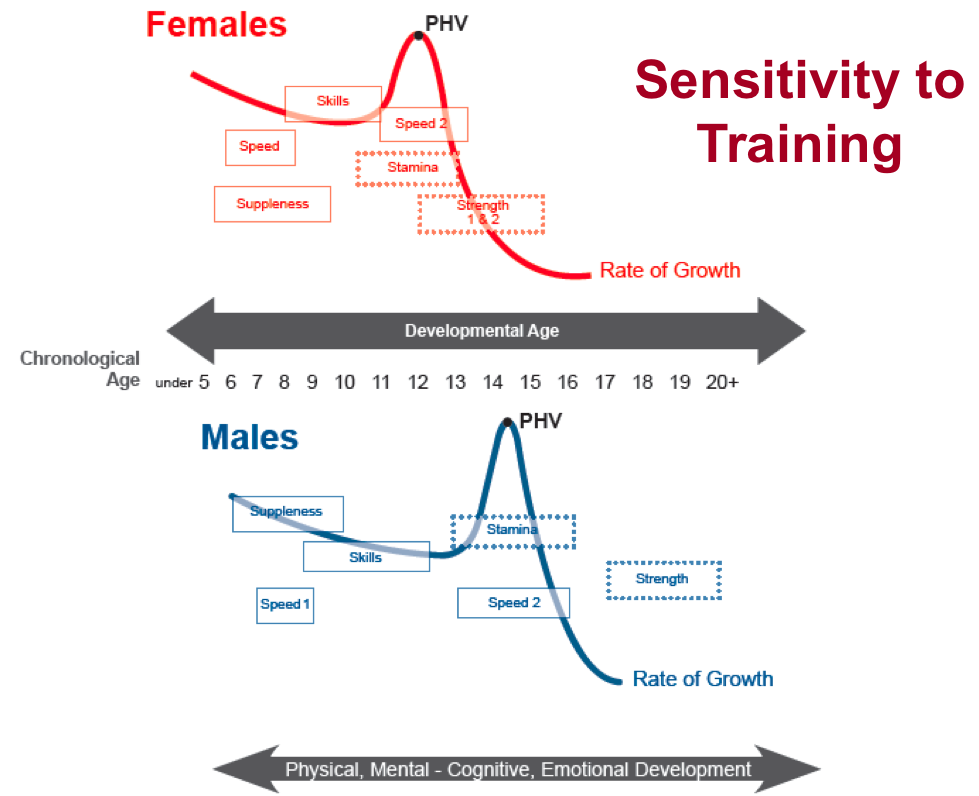
Nor are they familiar with the sensitive periods of specific athletic qualities during a young athlete’s development process.

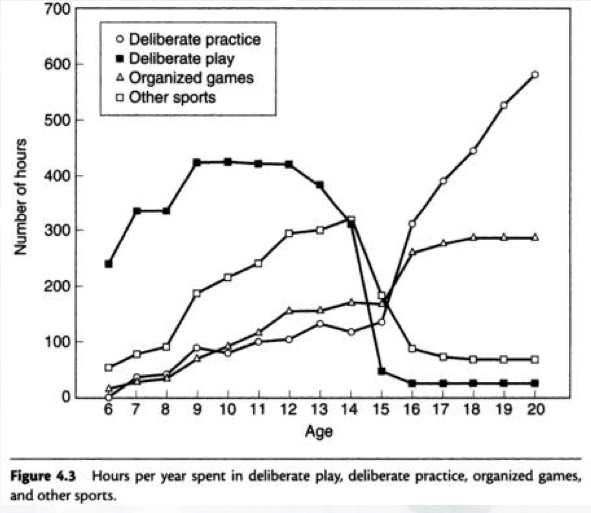
Nor are they aware that research has shown that the world’s best hockey players spend the overwhelming majority of their time during their developmental years playing for fun and playing other sports. Note that deliberate practice (what we think of as normal practice) and organized games don’t take over these players’ sport time until ~15 years old!

Taken from: Soberlak, P. & Cote, J. (2003) The Developmental Activities of Elite Ice Hockey Players. Journal of Applied Sport Psychology, 15 (1), pages 41 – 49.

I realize that the general tone of this post could be interpreted as blaming parents (and youth coaches for that matter). This is not my intention. In fact, hockey parents and youth coaches are truly heroic in the amount of time and energy they put into helping the kids. I don’t think any sport requires as much of a total commitment as ice hockey (team costs, equipment costs, travel time and costs, etc.). Youth hockey wouldn’t exist without their collective consistent efforts. Instead, the intention of this discussion is one of awareness. Parents are the largest advocates for the development of their kids, but are viewed as one of the larger barriers to positive change.

Ultimately, I think that player development decisions need to be placed back in the hands of the TRUE experts in long-term athletic development (and related fields), and that youth parents and coaches just need to be a little more patient with younger kids. It doesn’t matter if a kid isn’t a superstar at age 10! We shouldn’t be dividing kids by ability at this age anyway. At the mite and squirt levels, kids should have pucks on their sticks for the majority of the time they’re on the ice and should almost never stop moving. It should look like chaos, and it should be fun! By backing off the “rushed development” idea a bit, we can allow kids to develop a true love for the sport, which will be what fuels them to want to put in the time and energy to achieve excellence later in the development process.

I say all that to say this: It will be of great benefit to the hockey community to learn more about USA Hockey’s American Development Model-their intentions, their age-specific recommendations, and their plan of implementation. In a future post, I’ll identify some of the more “big picture” messages that accompany their ADM, but in the meantime you can refer to here for more information: ADM Kids

If your initial reaction to anything you read from their site is dismissive or generally disagreeable, please ask yourself these two questions:

  1. Do you believe that knowledge has the power to change opinion?
  2. Do you believe that you possess greater knowledge than the collective group of people that have collaborated in developing the model?

To your success,

Kevin Neeld

Please enter your first name and email below to sign up for my FREE Athletic Development and Hockey Training Newsletter!
Use CODE: "Neeld15" to save 15%