Several years ago Eric Cressey introduced me to Sean Skahan, who was then and is still now the Strength and Conditioning Coach for the Anaheim Ducks. Since that first introduction, Sean has been a terrific resource and mentor for me. I recently had an opportunity to borrow some of his time to do an exclusive interview for you. Check it out below!

KN: Sean, I think most of the people reading this will recognize your work from HockeyStrengthandConditioning.com, but why don’t we kick things off by having you tell us a bit about who you are, and the path you took to get where you are.

SK: First off Kevin, thank you for giving me the opportunity to answer your questions.  I really appreciate it!

I am a Strength and Conditioning Coach in the National Hockey League.  I’ve been employed by the Anaheim Ducks for 10 seasons.  I’ve been fortunate to work with an organization for that time.  Prior to that, I was a Strength and Conditioning Coach in the collegiate ranks.  Most recently, I was an Assistant Strength and Conditioning Coach at Boston College for 1 year where I was responsible for the strength and conditioning program for both the men’s and women’s hockey programs amongst other sports.  Before BC, I was an Assistant Strength and Conditioning Coach at the University of North Dakota for 1 year.  At North Dakota, I assisted with the hockey program as well as being the Strength and Conditioning Coach for several other sports.  Prior to that, I was a Graduate Assistant Strength and Conditioning Coach at the University of Minnesota where I assisted with the hockey program as well as several others.  Before that, I was intern at Sports Acceleration North, which would now be considered Mike Boyle Strength and Conditioning.
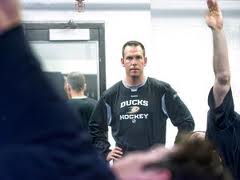
I was able to get a lot of hockey training experience in 4-5 years before I worked in the NHL.  I consider myself to be very fortunate and lucky that I was able to work in really strong collegiate hockey programs which prepared me for the professional ranks.

KN: Having worked with three of the top college hockey programs in the country and now having spent a decade in the NHL, you certainly have an impressive track record. I imagine your training philosophy has evolved over the years. How would you describe your hockey training philosophy currently?

SK: My hockey training philosophy would probably consist of doing whatever it takes to keep my players injury free while also improving their performance.  While trying my best to accomplish this, I will do whatever I feel would help them achieve this as effectively as possible.  The key is figuring out what each player will need to help them succeed in the safest environment as possible.

KN: The injury prevention component of a quality program is one thing I see a lot of players overlook. What are some of the common training mistakes you see players make before they get to you?

SK: Some of the mistakes I may see that would prohibit players from progressing would include:

  1. Inadequate nutrition-Elite hockey players are lean.  You don’t see many over-weight pro hockey players.  That is reality.
  2. Lack of leg strength and power- Young players need to develop strength and power in their legs.  Like #1, elite players have an enormous amount of leg strength and power when compared to the average player.
  3. Too much time dedicated to aerobic training- While I am not saying to disregard the aerobic energy system, I do feel that there a many young players and teams that are still training to develop endurance.  The priority is increasing their VO2 maxes by going for long distance runs and bike rides.  They should be using aerobic methods like that way less frequently than being in the weight room.
  4. Not being on an organized training program- There are still many young players and even some pros, who still may just “go to the gym” 3-4 times per week in the off-season.  They also sometimes have no clue what they will do before they get to the gym.   I really think that those players are going to be left behind as quality strength and conditioning programs continues to grow.

KN: Great stuff. It amazes me how many high school players I run into that claim they want to play elite level hockey, but just want to do the same bodybuilding routines their non-hockey buddies are doing.

You recently released two new DVDs, Kettlebell Lifting for Hockey and Slideboard Training for Hockey. Tell us a bit about the DVDs-why you decided to make them, who they’re for, what customers can expect to get from watching them, etc.

SK: Honestly, I wanted to create my own information products, but I really didn’t want to develop an info product just to say I did it.  I wanted to develop products on thoughts, philosophies, and equipment that I really believed in.
Slideboard Training for Hockey was developed in conjunction with my good friend, Barry Slotnick, from Ultraslide.  This was a project where we both put our heads together and came up with an idea for a DVD.  I am a big fan of Barry and his company Ultraslide, which manufactures the slideboard.  Using the slideboard has been a big part of my philosophy for a long time.  Not only is it a frontal plane conditioning tool, but it’s also as a piece of equipment that aids in the strength training process.

Kettlebell Lifting for Hockey is a result of seeing the proper application and benefits of using the kettlebell in the training process.   Although I am recently RKC certified, I would not consider myself to be a kettlebell only guy.  I think that the kettlebell is a fantastic tool when it is applied appropriately.  Prior to getting my RKC, I was using kettlebells with my players.  Even though I was incorporating them in my programs, I thought that I could improve my coaching by becoming RKC.  I learned so much at the RKC that I felt that I needed to help other hockey strength and conditioning coaches and trainers who use kettlebells with their players and teams.

KN: It seems like kettlebell training is a hot fad right now. As you know, sometimes implement-centric training fads come and go in a few years. Are kettlebells here to stay? How are you using them in your programs?

SK: I really think that kettlebells are here to stay.  They have actually been around a real long time and have recently been re-discovered.  I think that when more coaches learn that there are some awesome exercises and progressions that can only be done properly with a kettlebell, then they have the best chance to stick.

Honestly, I only use them in my program for a few exercises- swings, goblet squats, get ups, carries, and presses- which includes bottoms up variations.

KN: I was really impressed with the variety of exercises in the slideboard DVD. When I was first introduced to the slideboard as a player, it was only used to closely replicate the skating pattern for conditioning work. Talk to us about how you’re using the slideboard and where you got the ideas for all of the unique exercises in the DVD.

SK: We are using the slideboard for many different reasons.  We use them for abdominal/trunk exercises, lower body exercises, and upper body exercises.  Where we also spend a great amount of time with it is in the rehab/return to play phase for our injured players.  One of my goals in the DVD was to not only show the exercises, but to explain to the viewer why we use each exercise.

Most of the exercises in the DVD, I have seen them somewhere else, while some were just a result of  looking for a way to challenge an injured athlete who may have needed a progression to help them get better.  

KN: A lot of youth players/parents ask me what equipment they should buy so they can train at home. Naturally, it’s not possible for them to build a fully equipped weight room, but I think your DVDs provide a great framework for how kettlebells and slideboards can be used separately and together to train every major physical quality.

SK: What I think is important to mention is that the slideboard and the kettlebell are 2 different pieces of equipment that are huge parts of my philosophy.  I am currently at a point at my career where I know what I need to help train a hockey player.  These are 2 different pieces that I feel are absolutely necessary to me for to train a hockey player properly.

KN: Sean, thanks for taking the time to talk to us about hockey training and your new DVDs. Where can people learn more about you and pick up a copy of Kettlebell Lifting for Hockey and Slideboard Training for Hockey?

SK: Thanks for having me. People can check out my site www.SeanSkahan.com. The DVDs are available on the “Products” page there!

To your success,

Kevin Neeld

Please enter your first name and email below to sign up for my FREE Athletic Development and Hockey Training Newsletter!
Last week the Endeavor staff wrapped up a new training program that David Lasnier wrote based on some of the principles we’re experimenting with from Joel Jamieson’s book Ultimate MMA Conditioning. It’s certainly been a change of pace, as none of us have done an endurance block of training in quite some time.

One of the more novel components of this latest training phase was intentionally slow concentric phases of lifts. As a quick refresher for those of you that may have slept through or not taken an anatomy and physiology class, in general there are three types of contractions:

  1. Concentric: Muscle produces force while shortening
  2. Isometric: Muscle produces force while maintaining a given length
  3. Eccentric: Muscle produces force while lengthening

While most people assume that muscles are shortening, lengthening, or remaining the same length based on external joint movement, the truth is that “external” and “internal” movement aren’t always the same. For example, there is some research that suggests that when people shift their weight forward, which causes the illusion of the calves lengthening, the muscle fibers are in fact shortening while the achilles tendon lengthens. This is not inconsequential as it’s the position and length change of the muscle fibers that determines the force producing ability of the muscle Admittedly, this is more of an academic point; making determinations based on joint movement is more practical and generally appropriate.

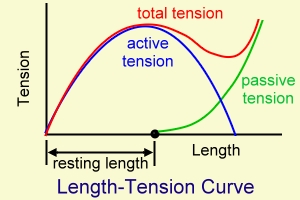
Length-Tension Curve. Notice how the tension (or force) that a muscle can produce varies as its length changes

That said, the eccentric phase of the lift is almost always synonymous with the lowering portion of the lift. Think of lowering a bar to your chest in a bench press, lowering your hips in a squat, lowering your body and extending your arms in a chin-up, etc. The concentric phase of the lifts therefore is the opposite, the “raising” part of the lift. Isometric contractions can be performed at any point in the range of motion, but typically pauses are built in to the top or bottom of a specific lift.

While certain exercises lend themselves more to specific phases of the lift (hang cleans with a high catch position and deadlifts tend to emphasize the concentric phase of the lift more than the eccentric), almost every exercise can be broken down into four phases:

  1. Isometric at Start Position
  2. Eccentric
  3. Isometric at Mid-Point Position
  4. Concentric

Exercises that could be categorized as lower and upper body pushing variations would likely follow the above sequence, whereas those categorized as lower and upper body pulling variations would likely follow this sequence:

  1. Isometric at Start Position
  2. Concentric
  3. Isometric at Mid-Point Position
  4. Eccentric

When designing training programs, these phases are used to dictate the tempo of the exercise. Each strength coach approaches this differently, but more common approaches include:

  1. 4-Phase Tempo. Bench Press (0-2-1-0) would mean go down in two seconds, pause at the bottom for one, then go up as explosively as possible with no pause at the top before repeating the next rep.
  2. 3-Phase Tempo. Bench Press (2-1-0) would mean the same as above, but the tempo for a pause at the top is removed altogether.
  3. Eccentric Tempo Only. Bench Press (3s negative) would mean go down in 3 seconds, no pause at the bottom, up as fast as possible, and no pause at the top.

Pauses at the starting positions of lifts aren’t used frequently, or at least aren’t dictated frequently. In general, the athlete will only pause at this spot if they need to get some more air or restore a tight position from which to do the next rep.

Slowed eccentric phases are used frequently to increase the time under tension of the lift, which is a known strategy to help improve gains in muscle hypertrophy (size) and can also be an effective strategy to improve strength.

Pauses at the bottom are used to interrupt the stretch shortening cycle and put a greater emphasis on the athlete’s ability to develop force quickly, a quality known as rate of force development (ROFD).

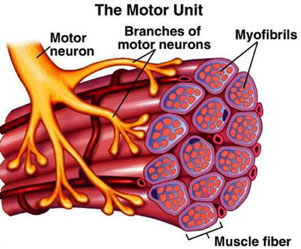
Similarly, it is quite common to simply encourage the lifter to perform the concentric phase of the lift (the “up” portion) as quickly as possible. Motor units are recruited from small to large for any given movement. When the athlete attempts to move the weight concentrically as quickly as possible, the recruitment threshold of high force motor units lowers, meaning more motor units and therefore more muscle fibers are recruited to perform the exercise. This is true even if the weight doesn’t actually move fast. Indeed, it is the INTENTION to move quickly that lowers the threshold of these motor units. To oversimplify, intending to move quickly recruits more muscle fibers. And because the order of recruitment is preserved, this means that both small AND large motor units/muscle fibers would be active. Everything gets trained.

It is this latter point that I want to expand on. The foundational rationale of this strategy is that recruiting more muscle fibers is always desirable. After all, more muscle fibers means more force, more power, and typically faster movement. These are certainly desirable qualities for athletes and even for those that just want to get big, strong, and fast. However, as Joel did an excellent job of discussing in his book, and as I alluded to in previous posts (See: A New Perspective on Program Design, Hockey Conditioning: Understanding Fatigue, Hockey Conditioning: Combating Fatigue), training high-threshold muscle fibers constantly may create less than optimal adaptations. While it would certainly improve your body’s ability to move with speed, strength and power, it would also teach your body to rely on these high-threshold fibers and accompanying fuel systems for all tasks, even when it may not be necessary.

It is the smaller motor units that possess a greater oxidative capacity and therefore are more fatigue resistant. In contrast, larger motor units possess a greater ability to produce force (power and speed), but can only do so for a brief period of time. While it’s true that both smaller and larger motor units are activated when attempting to perform the concentric phase of the lift quickly, it will ultimately be the fatigue in the larger units that dictates an inability to perform more reps. Simply, the high force units fatigue faster, and the sets over. The low force units are active, but they aren’t pushed even remotely close to their fatigue threshold because the set ends when the larger units tap out.

Therefore, performing exercises with a slower concentric phase with lighter loads will help target the smaller units, which will lead to improvements in the size, strength, and fatigue-resistance of the active muscle fibers. Placing a greater focus on these units will help ensure that they play a greater role in your performance, which will ultimately allow you to compete harder longer and recover more quickly. As with anything, it’s important not to take this concept and plug it into your program haphazardly. The strategic application of specific training principles is what drives continued adaptation. Random compilations of exercises and strategies will create random results.

To your success,

Kevin Neeld

P.S. If you’re looking for a strategic hockey training plan, check out my book Ultimate Hockey Training!

Please enter your first name and email below to sign up for my FREE Athletic Development and Hockey Training Newsletter!
This has been a groundbreaking week here at KevinNeeld.com, and it’s all thanks to you! The site reached a personal traffic best with 15,767 visitors over the last 30 days. Not bad for a hockey training site, and it’s all because many of you have been forwarding along posts that you like through facebook, twitter, email, etc. I really appreciate your help in spreading the word!

Another reason for the recent boost in traffic is because of how well-received these two hockey development posts were. If you haven’t had an opportunity to read them yet, check them out at the links below:

  1. A Letter to Parents of Undersized Players
  2. Hockey Development: The Catapult or the Wall?

As a quick reminder, if you haven’t joined my Hockey Training group on Linked In, please do so now! It’s completely free, and we get to talk about anything hockey related you want. I recently posted a poll about how to deal with the NHL concussion issue that I’d love to have you weigh in on. Check it out here: Hockey Training LinkedIn Group

We also had a few great additions at HockeyStrengthandConditioning.com. If you haven’t already, be sure to check these out.

Mike Potenza kicked things off with an interesting video featuring a piece of equipment I have never seen before. I really liked the control it helped provide during the 1-leg squat Mike demoed in the video. Hopefully I’ll get an opportunity to play around with one soon as I’m sure there is a lot more that you can do with it.

Watch the video here >> Pilates Bench-Assisted 1-Leg Squat from Mike Potenza

Sean Skahan added the final phase of his off-season training program. This was the program he used when all of the Ducks were back in town for pre-season, and the volume of on-ice work and bike conditioning was a little higher.

Check out the program here >> Summer 2011 Phase 5 Training Program from Sean Skahan

Finally, Anthony Donskov added a great video on stress management as it pertains to training program design. Anthony is a bright guy and an energetic coach. I’ve been fortunate to have spent some time with him at the Perform Better Summit in Chicago last Summer and at a few of the USA Women’s National Team camps that we’ve worked at. This is a great video because it underlines all the variables that can be manipulated in a training program, some of which are more readily apparent than others.

Watch the video here >> Managing Stress from Anthony Donskov

Lastly, make sure you check out the forum, as there are a couple great discussions. After you log-in, look for these threads:

  1. Controlling our Food
  2. Youth Hockey Practice Times
  3. Competition Hydration
  4. Flyers PreSeason Testing

That’s a wrap for today. As always, if you aren’t a member yet, I encourage you to try out Hockey Strength and Conditioning for a week. It’ll only cost $1, and if it’s not the best buck you’ve ever spent, I’ll personally refund you!

To your success,

Kevin Neeld

Please enter your first name and email below to sign up for my FREE Athletic Development and Hockey Training Newsletter!

I’ve been involved in the game of hockey for 20 years now. Throughout that time I’ve played the roles of diverse player, power skating and skills clinic instructor, coach, athletic development coach, and injury consultant. Within each one of these roles, I’ve worn many hats. I’ve been a forward and defenseman, a leader and a follower, a head instructor and a puck pusher, a boss and an intern/volunteer. I’ve played with, coached, and worked alongside countless players and coaches.

When I reflect back on my path to get to where I am today, there are a few landmark achievements that I’m really proud of. Things like making my Middle School A team in 6th grade and leading the team in assists. Getting called up to the Bantam A team mid-year and leading the team in scoring for the second half of the season. Making Varsity as a Freshman. Taking our HS team to their first Flyers Cup (despite losing in tragic fashion this was still a positive memory). Being named Team MVP my junior year at Delaware. Being named captain my Senior year, winning the Lifetime Achievement Award (which had never been given to a player), and helping to lead the team to the 2nd best finish in school history. And more recently, having opportunities to work with the San Jose Sharks, US Women’s National Team, and publishing my first book Ultimate Hockey Training. While these things may not seem very glamorous for some people, they were all highlights for me.

The truth is, nothing has ever come very easily to me, ever. As you may recall from reading the two interviews I did with Tony Gentilcore and Brian St. Pierre (Ultimate Hockey Training Interview & Ultimate Hockey Training-The Interview), I wasn’t exactly blessed with the “natural athleticism” you hear some people talk about. I think I was more genetically primed for sundae eating contests than I was elite level hockey.

With every achievement I’ve ever had, there was ALWAYS a crowd of people that were ready to tell me why it wasn’t possible. This is kind of interesting actually, especially because I know I’m not unique in this feeling. EVERYONE experiences this. From a psychological perspective, it’s somewhat disheartening to realize that the overwhelming majority of the people around us are more apt to tell us why things aren’t possible than why they are or how they could be. Many of these people don’t have evil intentions, but are simply trying to protect you from the pain of failure, the agony of defeat.

This isn’t all bad, per se. The effect of this negativity depends on your attitude. Sometimes players are motivated by it. I remember Eric Tangradi telling me a couple Summers ago about the head coach of a youth select team that said he would never amount to anything in hockey.

“Sorry kid. Hockey is just not for you.”

“You’ll never make it in this game”

Eric currently plays for the Pittsburgh Penguins. Turns out the guy was wrong, but Eric interpreted his words (and those of other naysayers) as more of a challenge. In other words, it fueled his fire.

Turns out that players develop over time…

Unfortunately, this interpretation of negativity is the minority. More often than not, people are, either consciously or subconsciously, defeated by it and stop taking the extra steps to make their dreams comes true.

“I can accept failure, everyone fails at something. But I can’t accept not trying.” – Michael Jordan

This isn’t a story about me. It’s not a story about Tangradi. The reality is that this happens to almost every athlete at one point in their career (and just about everyone throughout their life). More than anything else, the one thing that sticks out in my mind with every achievement I’ve ever had is that there was always at least ONE PERSON that pushed me along. Sometimes it was a family member. Sometimes a friend. Sometimes a teammate. Sometimes a coach. Sometimes a co-worker, colleague, or mentor. In other words, it wasn’t always the same person, nor the same “category” of person. But there was always someone and frankly, I’m not sure I would have accomplished any of the things I have if I didn’t have that person, at that time.

Reflecting back on all my experiences in hockey has taught me a lot about what kind of coach I want to be. The world is filled with people that will put up walls between you and your goals, tell you that you can’t do it, to “be realistic.”

“Being realistic is the most commonly traveled road to mediocrity.” – Will Smith

I don’t want to be another one of those people, not as a coach, not as a co-worker, and not as a person in general. I’d rather be the ONE PERSON that says you can, that pushes you along when you’re thinking of quitting, that catapults you over the walls that others have built in front of you.

“If you’re trying to achieve, there will be roadblocks. I’ve had them; everybody has had them. But obstacles don’t have to stop you. If you run into a wall, don’t turn around and give up. Figure out how to climb it, go through it, or work around it.” – Michael Jordan

Even if their goals AREN’T “realistic”. Who cares! Why do we discourage people from aspiring for greatness? What great thing was ever accomplished by someone dreaming realistically? It’s important not to overlook the fact that setting and passionately chasing goals is inherently valuable, regardless of their attainment. This process builds character. It builds heart. It builds resiliency. And in the long run, it will ALWAYS build success.

“I’ve missed more than 9000 shots in my career. I’ve lost almost 300 games. 26 times, I’ve been trusted to take the game winning shot and missed. I’ve failed over and over and over again in my life. And that is why I succeed.” – Michael Jordan

Whether you’re a player, parent, or coach, think about what kind of person you want to be. Do you want to be one member of the discouraging masses, or do you want to be the ONE source of encouragement. Do you want to be the wall or the catapult?

To your success,

Kevin Neeld

Please enter your first name and email below to sign up for my FREE Athletic Development and Hockey Training Newsletter!
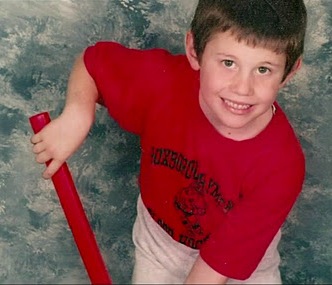
I regularly get emails from parents of youth players that are lagging in size, speed, and overall physical development. They’re concerned their kid(s) is falling behind and want to know what they can do to stay ahead of the curve. While I cater each response individually to the specifics of their questions, the message below highlights the general thought process that I think would benefit all parents in these situations.

Dear Concerned Hockey Parent,

Thank you for reaching out. I fully understand your concerns about your son being undersized and appearing to fall a step behind the rest of the players. From a short-term perspective, it would appear that your son is not keeping up with the development of these players, and if it continues this way, your son would fall increasingly behind as these players go on to excel. I hope I can put your mind at ease.

First, it’s important to understand that your son is at an age where kids begin to go through rapid stages of development. Development in this sense can be physical (taller, heavier, stronger, faster, etc.), psychological (more mature), and even neurological (improved coordination, and better ability to learn and refine new skills). In general, the 9-16 year-old time window is one of turbulent changes in all of these development factors. In my experience, the players that excel at any given level within this frame are generally those that have developed FASTER in one or more of the above components. Bigger kids dominate physically. More mature kids play a stronger leadership role and generally understand the game better. Neurologically developed kids have better skating technique and hands than those that they play against. If you take a cross-section of all the players on any given youth team, it is almost always the kids that have developed sooner in these areas that excel AT THAT TIME. Unfortunately, past success is not at all indicative of future success. Many of the best peewees are not the best midgets, and in many cases, the best midgets aren’t the best college players, and the best college players aren’t the best pros. Developing FASTER does NOT mean developing to higher peak levels. In other words, if your son is lagging slightly behind now, it’s NO indication that he won’t fly by everyone in the future. Be patient, and focus on developing positive on- and off-ice training habits. These are what build champions.

Being smaller and/or slower at a given level can actually be an advantage, from a technical, tactical, and psychological standpoint. It is often the under-sized players that are forced to develop above-average skill sets in order to compete at a level with larger and/or faster players. They need better hands, better skating ability, an improved spatial awareness, ability to read the play, and overall understanding of the game. Think of the best players at the highest levels of hockey and then reread these qualities. You’ll likely see a significant amount of overlap. Elite hockey today is more about skill and speed than ever. The kids that are bigger and/or faster than everyone else at young ages simply push the puck past kids and then outrace them, or bowl through them. There isn’t much skill development there. Emphasize to your son that he has an opportunity to develop incredible skill sets while others are relying on their physical gifts, which will eventually fail them as everyone around them, including your son, begins to catch up.

There are size mismatches at every level. Your son will need to learn to excel with his own strengths, not be victimized by the strengths of others.

Finally, it’s important to recognize that a VERY small percentage of youth players go on to compete at professional levels. Playing hockey provides an opportunity for a lot of fun, and almost as importantly, ongoing opportunities to develop characteristics that will benefit your son later in life. There are very few handouts in life. Most things of any value need to be worked for. They often need to be continually worked for despite several setbacks and periods of hopelessness. Use your son’s lack of size as an opportunity to teach him that the way he’s going to be successful is by adopting the attitude of constantly outworking everyone else. Teach him perseverance. Teach him drive. Let him develop a passion for the game, and also for goal hunting (the process of setting goals and then hunting them down with an unparalleled feverent determination).

Elite athletic development is a long-term process. Keep this in perspective.  If your son develops quality habits now, they will serve him for the rest of his career and the rest of his life. This is the goal. Build a better hockey player. Build a better person.

To your success,

Kevin Neeld

Please enter your first name and email below to sign up for my FREE Athletic Development and Hockey Training Newsletter!
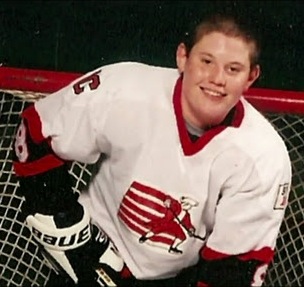
Use CODE: "Neeld15" to save 15%