
This was an exciting week. On Wednesday, I had my first “hands-on” day in massage school. It was pretty basic work, but it was good that they put us right into it. I’m really looking forward to the experience, as I think becoming proficient in different manual therapies will help us trouble shoot a lot of the movement impairments we see in our more elite players. Typically we have to refer out for these, and simply hope that the players will take the initiative to go get the work done. In the near future, we’ll be able to handle it all in-house.

We also got our first shipment in of our men’s high performance shirts for our new apparel line. I haven’t spoken much about this because the overwhelming majority of the work has been planning and we haven’t had anything tangible to show for it until recently. The shirts came out perfectly, and they have performance qualities that can’t be matched by any other apparel line out there. More on this in the near future.

Lots of exciting things coming in the near future from Endeavor

This week I added two new articles that I think are geared a little more toward the hockey player, parent, and coach populations more so than the hockey training crowd. I recognize that some of my articles can get pretty scientific and might be over the head of the average hockey enthusiast. These posts are simple, yet very powerful. If you haven’t already, please give them a read and forward them along to anyone you think would benefit from reading them as well.

  1. 3 Tips for High Performance Hockey Players
  2. Will Playing More Hockey Make You Better?

We had a few great additions to HockeyStrengthandConditioning.com this week too.

Mike Potenza kicked things off with a new article on building leg strength in youth goaltenders. Don’t let the title fool you, this is outstanding information for hockey players at any position. Mike presents a strong rationale for why this type of training is important, and then presents a detailed exercise progression, with a ton of pictures and exercise descriptions. The article concludes with a 4-phase training program utilizing the exercises presented in the article. This is a great article for youth players, parents, and coaches to read and begin implementing immediately.

Read the article here >> Establishing a Foundation: Leg Strength for Young Goaltenders from Mike Potenza

Darryl Nelson added a video of a couple single-leg Olympic lift variations that he includes in his programs at the US NTDP. I’ve never used these in our programs, but I liked the way they looked in the video. I’ll likely start playing around with these myself and they may make their way into our off-season hockey programs this year.

Check out the videos here >> Single Leg Olympic Lifting from Darryl Nelson

David Lasnier wrote an outstanding article on integrating frontal plane movements into hockey training programs. David has been on a tear recently. He’s had a few incredible posts on his site DavidLasnier.com, has a couple articles in the pipeline that I’ve had an opportunity to read in advance, and this article is really well done. He presents the rationale for why frontal plane exercises are important for hockey players, and discusses specific exercises (using videos to demonstrate proper technique) to improve strength and power in this plane. Many of these exercises can also be used for work capacity or conditioning purposes as well. Great read for everyone in hockey (players, parents, coaches, sports med professionals, etc.).

Finally, there have been some great discussions on the forum that are worth joining. When you sign in, check out these forum threads:

  1. Conditioning Tools
  2. Controlling our Food
  3. Low Back Pain/Tightness with Female Athletes
  4. On-Ice Testing

That’s a wrap for today. As always, if you aren’t a member yet, I encourage you to try out Hockey Strength and Conditioning for a week. It’ll only cost $1, and if it’s not the best buck you’ve ever spent, I’ll personally refund you!

To your success,

Kevin Neeld

Please enter your first name and email below to sign up for my FREE Athletic Development and Hockey Training Newsletter!
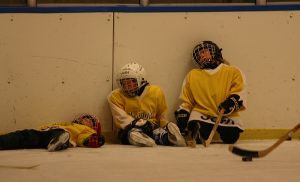

January is quickly coming to a close, which means most youth hockey seasons are wrapping up. I remember at the beginning of the year when talking to several of the teams I train saying something along the lines of:

“It’s important that we get these things down now, because when December and January roll around and you’re all grumpy and miserable, we still need to be able to do things right.”

The borderline depression that almost all players go through about mid-season is incredibly predictable. Enthusiasm to play goes down. Enthusiasm to train is non-existent. Fatigue is high. Attitudes are generally mediocre, at best. Players start to get sick. Some get hurt. I don’t generally think that you need to be an ex-player to properly train hockey players, but I do think my background as a player allows me to relate to this mid-season struggle a bit better than an “outsider” and also allows me to make anticipatory changes to their in-season training programs.

That said, it’s important to take a step back and gain an understanding of why this mid-season lull occurs in the first place, as it certainly has a notable effect on most players’ physical and psychological readiness, and typically also in their production. Essentially, players begin to show signs of over-training and under-recovery. Think about what happens at this time of year:

  1. Fatigue accumulates from the volume of past practices and games
  2. In most areas the weather is cold and dark, depriving players of the physical benefit of Vitamin D derived from sunlight (most players should probably be taking supplemental Vitamin D for the majority of the year), and the psychological benefit of sun exposure
  3. School marking periods or semesters are wrapping up so players have a ton of last minute papers and assignments to hand in and tests to prepare for
  4. In many areas, high school hockey is also underway, adding MORE volume on top of the already rigorous schedules of club hockey

This latter point is one I want to expand on. In talking with one of our U16 teams the other week, I asked them about how many games they had on the schedule, which was about 70. Practices? About 100.  So across the ~7 month season (roughly the end of August through early March), they skate ~175 times. This shakes out to a weekly schedule that involves 2-3 practices and 2 games, on average, with weeks of more practices and tournaments mixed in throughout the season. A weekly schedule might look like:

Monday: Off
Tuesday: Off-Ice Training and On-Ice Practice
Wednesday: On-Ice Practice
Thursday: Off-Ice Training and On-Ice Practice
Friday: Off
Saturday: Game
Sunday: Game

When you superimpose high school hockey schedules on to this, at least in our area, you’re looking at another 2 practices per week and a game each weekend. Now instead of 4-5 skates per week, the player has 7-8. Now the weekly schedule looks something like:

Monday: HS On-Ice Practice
Tuesday: Off-Ice Training and On-Ice Practice for Club Team
Wednesday: HS On-Ice Practice and Club On-Ice Practice
Thursday: Off-Ice Training and On-Ice Practice for Club Team
Friday: HS Game
Saturday: Club Game
Sunday: Club Game

“Okay now off to school practice!”

The high school hockey schedule is typically a bit shorter, but it occupies the times of year when fatigue accumulation from club hockey is at an all time high. The overlapping schedules add more stressors (in the true sense of the word stress, not in an “anxiety” sense to which stress is often referred) AND provides less time for recovery between stressors to an athlete that is already struggling to fully recover from the current demands. Unfortunately this manifests in the symptoms I described above, the most recognizable of which may be a lack of on-ice production. The kicker is that the best intentioned players may respond to this by saying things like “I just need to work harder.” The truth is that the best option for the players is to do less. It’s not that they aren’t providing sufficient stimuli for adaptation; it’s that they aren’t providing adequate recovery opportunities between these stimuli. These players make appear to not be giving an effort and/or not mentally focused. It’s not that they aren’t, it’s that they don’t have the capacity to do so. They’ve exceeded their recovery capacity. They need a nap, some sunlight, and this incredible food type called “vegetables” (which most teenagers are only loosely familiar with), but not a different attitude and certainly not more conditioning.

The cure for a mid-season slump!

This may raise the appropriate question about whether playing more hockey will make the player better. As you can infer from the tone of the current discussion, the answer isn’t always yes. Playing more hockey will make the player better if these conditions are met:

  1. The level of play challenges the player or inspires sufficient creativity to develop improved skill sets, and an augmented ability to read the play
  2. The player is given adequate time and resources to fully recover from the stresses associated with playing more

In reality, high school hockey probably doesn’t meet either of these criterion, at least not for the level of players I’m referring to. If you play Tier I youth hockey in the US, school hockey will probably involve a lower level of competition, and push you over your recovery threshold from a volume standpoint. I’m sure there are exceptions to this rule as there are likely to be a few outstanding school teams with above average coaches, but in general, it’s a step down.

I understand why most club players play high school. Bragging rights. Notoriety. Fun. Unfortunately these players will need to make a mature decision whether these things are worth the potential negative outcomes. Injuries. Impaired club team performance. Impaired school performance. Overall moodiness! This all comes back to the message I’ve been trying to share a lot with you over the last several months in that development is a long-term process and it’s important to keep your ideal finish line in mind while you’re taking steps along the way. If you don’t plan on playing beyond high school, it might not be that difficult to suffer the consequences of over-playing and under-recovery. If, however, your finish line involves playing college and possibly pursuing professional hockey, you’ll need to take the appropriate steps to pursue that goal, which may mean passing on opportunities to play more hockey. This could include high school hockey in-season, and most spring leagues and tournament teams in the off-season. The decision is always in your hands. What’s your finish line?

To your success,

Kevin Neeld

Please enter your first name and email below to sign up for my FREE Athletic Development and Hockey Training Newsletter!

Below is an adapted version of a newsletter I wrote for Endeavor Sports Performance. If you haven’t already, you might want to sign up for our Endeavor Newsletter here: Endeavor Sports Performance Newsletter as we regularly announce special deals on training packages, supplements, and training gear that may be of interest to you.

3 Tips for High Performance Hockey Players

Many of the greatest coaches of all time (in every sport) drill the importance of fundamentals. While this message is typically delivered regarding sport-specific technical and tactical abilities, it also has a ton of merit regarding more general preparation techniques. Below are three tips that are easy to implement, and will have a huge effect on an athlete’s performance.

1) Regulate Your Sleep Cycle
Sleep is a time for recovery and regeneration. It’s a time for your sympathetic nervous system, also known as your “fight or flight” system, to down-regulate, and for structures within your body to repair themselves from whatever physical or mental stresses they were exposed to throughout the day. Sleep is essential.

Most people are familiar with the idea that too little sleep can negatively impair performance. The same can be said for too much sleep (although I’d err on this side!). Many people, however, have never been taught how important it is to regulate your sleep cycle. In other words, you should attempt to go to bed and wake up at the same times every night/day. Because this isn’t always logistically possible, it’s okay to give yourself an hour window on either side. For example, if you typically go to bed at 11pm and wake up at 7am, it’d be okay for you to go to bed from 10pm-12am and wake up between 6am-8am, as long as you get the same total amount of sleep each night (8 hours in this example). A sporadic sleep schedule is interpreted by the body as a source of stress, meaning the very time that should serve to help you recover is actually pushing you in the opposite direction. Regulating your sleep cycle will help maximize your recovery and regeneration, and ensure that you’re continually making progress and not slowly breaking down.

2) Pack A Lunch
Athletes spend an average of around 8 hours per day at school. Within this time span, they’re provided roughly 45 minutes to eat, and offered a variety of fried and highly processed foods to fuel the students’ brains and bodies for the rest of the day. Frankly, these aren’t appropriate meal choices for a sedentary, goal-less sloth of a student, but they’re DEFINITELY not appropriate for serious athletes. Even choices like chicken caesar wraps, which are generally considered healthy choices by students” consist of a processed white tortilla, nutrient-less lettuce, caesar dressing which is full of fat (with no upside), and chicken of variable quality. In other words, it may be better than the chicken nuggets and tater tots your friends are eating, but not much.

The reality is that very few schools provide even reasonably healthy food options for their students because they’re more expensive, tougher to mass produce, and less likely to stay preserved for prolong periods of time. The system is less about optimally fueling students for mental and physical performance and more akin to mass-producing feedlot level nutrients to adequately stuff them until the next day. Pack a lunch with a couple pieces of fruit or vegetables, a water, bag of almonds or cashews, and a meat sandwich on sprouted grain bread. It takes about 5 minutes to throw something like that together, which you can do the night before. It’s a simple change, that will cause you to feel, perform, think, and look better.

1) Take This AMAZING Supplement Everyday!
A couple years ago I spoke at a group of youth lacrosse players at the Wells Fargo Center for an event hosted by the Philadelphia Wings. Addressing the athletes, their parents, and a portion of our staff at Endeavor, I mentioned that there was an amazing supplement that was scientifically proven to improve speed, agility, strength, power, conditioning, and mental processing. Does that sound appealing? You bet. More than appealing, it sounds like magic. Too good to be true. When I asked what people thought it was, I heart responses like “creatine” and “beta alanine”, which are actually well-educated guesses. At least, it’s better than the “Nitric Oxide” powders, and all the other crazy supplements who’s advertisements are borderline illegal and incredibly morally suspect. The truth is that all of these results can be expected simply from drinking water.

The world’s most effective supplement

Even minimal dehydration (1% of body weight) can have a profound influence on physical and mental performance, and the majority of youth athletes (and their parents for that matter) live their lives in some relative state of dehydration. Some do so out of a lack of awareness; others because they don’t like the taste of water. Keep in mind that the average water requirement for inactive individuals to avoid dehydration is 6-8 cups of water. I tell our athletes that that recommendation doesn’t apply to them. They’re HIGHLY active and are looking to do more than simply avoid dehydration. 12-16 cups is a bit safer. I encourage athletes not to think of “if” they can drink that much, but think of “how” they can get it in throughout the day. 16oz of ice water when you first wake up is a great way to start the day. Drinking 2 16oz bottles of water throughout the school day is a great way to stay awake. 16oz within an hour before practice, 8-16oz during, and 16 oz after will help ensure you’re properly hydrated to perform your best. 16oz bottles aren’t that big, and if you stick to that schedule, you’ll have consumed 11-12 cups of water. If you don’t like the taste, try adding some flavor like lemon or lime juice. Remember, it’s not candy, it’s water. You’re going to need to drink it in copious amounts for the rest of your life, so get used to it!

Simple tactics. Huge payoff. Start building positive habits to pursue athletic excellence today!

To your success,

Kevin Neeld

P.S. Tip #4: Train using a PROVEN off-ice hockey training system!

P.S.2. If you’re local and not actively enrolled in a sports training program, you can start training with us for only $89! We’re currently offering an $89 30-day trial for all new athletes and personal training clients. Call us today at (856) 269-4148 to take advantage of this incredible offer!

Please enter your first name and email below to sign up for my FREE Athletic Development and Hockey Training Newsletter!

I hope you’ve had a great week. I started massage school on Wednesday, and was happy to hear that I was able to test out of the two Anatomy and Physiology classes they have in the first semester. I’m hoping to test out of a business class over the Summer too. It should make tackling the program a bit more realistic given an already chaotic schedule.

This week strayed a bit from the traditional content topics here, as I was excited to announce the release of two great products. It seems like great products tend to launch in clumps, which makes it difficult for people on a limited budget to choose which direction they want to go. Either way, Eric Cressey’s lower body assessment video is completely free so be sure to check it out! Here’s what you’ve missed over the past week:

  1. Outwork Everyone (MUST READ FOR ALL PLAYERS!)
  2. Elite Training Mentorship (Read this to get Cressey’s Assessment Video)
  3. Body By Boyle Online in the Palm of Your Hands (Outstanding resource now more accessible than ever)

I’ve been busy over at HockeyStrengthandConditioning.com this week too. Check out what you’ve missed over the last week!

Exercise Video: Chin-Ups from Sean Skahan
In this mini-article and video, Sean outlines a change he’s made to how he teaches/coaches chin-ups, which are an exercise that should be in the programs of almost all hockey players. Great tip from a coach that’s been in the NHL for 10 years now!

Hockey Training Program: 2-Day In-Season Training: Phase 4 from me
This is the 4th Phase of our in-season training program. I wrote this program for the midget teams I train, and it was originally scheduled to be the last one entering the holidays. Because of tournament weeks, and unplanned deload weeks, we actually didn’t get to it until this month, which is fine. It will likely be the last “high intensity” program of the year, as the final phase or two will have only sporadic high intensity lifts. The home stretch is the time to minimize non-hockey stresses and focus everything on the ice. It’s peaking time!

Youth Hockey Training Program: Youth Hockey Training Program Phase 2 from me
This is the second phase of the in-season program I wrote for the ’00-’02 birth years we train. The idea is to begin to implement a little bit of structured training, while being aware of their sensitive periods for the development of specific training qualities, AND in allowing them to have some fun. At this age, it’s important to remember that they’re likely going to base their opinions on training (and potentially physical activity in general) on how much fun they do or don’t have during their off-ice training. Fun is the number one priority, but some of that is delivered in how we coach, not necessarily in the exercise selection (although mirror shuffles are fun for kids!). You’ll have to excuse the demonstration of this particular drill from Matt and Karl. It looks like they were shuffling through quicksand!

Hockey Strength Podcast: Anthony Renna interviews Darryl Nelson
Anthony really does a great job with these. In episode 2 of the Hockey Strength Podcast, Anthony speaks with Darryl about set and rep schemes in hockey training programs, hockey conditioning, and several of Darryl’s articles. Be sure to give this a listen!

If you have some extra time on your hands, last week’s update featured a ridiculous amount of content, so go back and read through anything you haven’t finished!

More hockey training content here >> Last Week in Hockey Strength and Conditioning

That’s a wrap for today. As always, if you aren’t a member yet, I encourage you to try out Hockey Strength and Conditioning for a week. It’ll only cost $1, and if it’s not the best buck you’ve ever spent, I’ll personally refund you!

To your success,

Kevin Neeld

Please enter your first name and email below to sign up for my FREE Athletic Development and Hockey Training Newsletter!
On Tuesday, I mentioned that Eric Cressey posted a video of a staff in-service of him outlining his lower body assessments. A lot of the lower body assessments we incorporate with our athletes at Endeavor I learned directly or indirectly (through resources he recommended) from Eric, so it was great to get a current look at what he’s doing. I definitely picked up a couple ideas that we’ll be using in the future. If you missed that post, check it out here: Elite Training Mentorship. Alternatively, if you don’t care about the post at all, and just want to watch Eric’s video, go here: Elite Training Mentorship

They’ll be releasing another video in the near future so make sure you head over to the site now so you don’t miss it!

Body By Boyle Online

Over the last year, I’ve mentioned on several occasions how great of a resource I thought BodyByBoyleOnline was. For those of you that don’t know, Mike Boyle’s private facility Mike Boyle Strength and Conditioning (MBSC) in Woburn, MA was voted as the #1 Gym in America by Men’s Health. Since that time, Mike was appointed as the Strength and Conditioning Coordinator for the Boston Red Sox, another feather in his cap after training a gold medal winning team in the U.S. Women’s Ice Hockey Team (’98), working in the NHL with the Boston Bruins, and being credited with creating the first true “NFL Combine Training” success story in Mike Mamula. This is on top of the professional athletes and celebrities that he’s trained over the years in his private facility. In short, he knows his stuff.

The Ultimate Online Strength and Conditioning Educational Resource
 

What makes BodyByBoyleOnline so valuable is that it’s essentially an inside look at how Mike runs his facility. They post all their staff meetings, guest speakers, and a ton of other valuable content. In fact, they now have over 100 hours of video content on topics such as strength and conditioning, assessments, speed training, rehab, kettlebell training, sandbag training, a talk on the thoracic spine, mobility with bands, rotary training, the FMS, and much more. While a lot of the content comes from Mike directly, some of it also comes from guest speakers such as SueFalsone (Athletes Performance/LA Dodgers), Charlie Weingroff, Dan John, Kelly Starret (MobiliyWod), Nick Tumminello, Negar Fonooni, Joe Sansalone, Charles Staley, and more! In other words, it’s a great resource for fitness enthusiasts, strength coaches, personal trainers, athletic trainers, and physical therapists.

The only thing that could really make it a more valuable resource is if they made it more accessible via smartphones, tablets, etc. And, I’m happy to report, they did exactly that. I got an email from Kevin Larrabee who does a lot of the behind the scenes work for the site and he told me that the site now offers iOS support…which basically meant nothing to me. But he went on to explain that iOS support means the videos can now be accessed and watched on your iPhone, iPad, and iPod
Touch. This makes the information much more easily accessed, especially for those that travel a lot and can’t always get internet access through their computer. I’m excited about the change, as I know the content is top notch, so making it “portable device” compatible will surely make it more accessible to everyone and therefore get quality information out to more people. And I spent a full work week in airports last year with no internet access, so it’d be great to have access to something like this! If you’re interested, check out this link for more information: BodyByBoyleOnline.

To your success,

Kevin Neeld

Please enter your first name and email below to sign up for my FREE Athletic Development and Hockey Training Newsletter!

Use CODE: "Neeld15" to save 15%