The other day I mentioned that Eric Cressey, Mike Robertson, Dave Schmitz and BJ Gaddour have teamed up to create a special program known as the Elite Training Mentorship, where these guys pull back the curtain on how they deliver staff training, teach movements, design programs and get results for their
clients. The program strikes me as a unique opportunity to stand on the shoulders of giants, a no-brainer for anyone that trains people for a living (and for the fitness enthusiasts).

Hopefully you had an opportunity to watch the free lower body assessment video that Eric put together. Assessing the hip and lower body is an area that I feel pretty confident in. Eric does an outstanding job in this video demonstrating a comprehensive assessment protocol. Given the proportion of sports injuries that directly affect and/or were driven or influenced by the hips and lower body, the information Eric provides is incredibly powerful, both in terms of maximizing performance by removing barriers, and augmenting injury resistance.

They’ll be releasing their Elite Training Mentorship program next week, but in the mean time, they just released another video that I wanted to share with you:

Watch the video here >> Metabolic Training

In this video, BJ Gaddour teaches you how to become the go-to metabolic training expert in a bootcamp style training session. I had an opportunity to meet BJ at last year’s Perform Better Summit in Chicago; he’s a great guy. I think “bootcamps” are easy to do wrong. It comes back to the “any idiot with a whistle can make a group of people tired, but that doesn’t mean it’s good training” thought process. Bad bootcamps still sell well because people equate tired with effective. BJ does it right. Whether you’re interested in running bootcamps or simply want to learn more about metabolic training, this is a great video to check out!

Watch the video here >> Bootcamp Training

To your success,

Kevin Neeld

Please enter your first name and email below to sign up for my FREE Athletic Development and Hockey Training Newsletter!

Last week I received an email with some exciting news. A couple of my good friends in Eric Cressey and Mike Robertson, alongside two highly regarded strength and conditioning coaches in BJ Gaddour and Dave Schmitz, have created what will be known as the Elite Training Mentorship.

The Elite Training Mentorship provides a unique opportunity for strength and conditioning coaches, personal trainers, sports medicine professionals, and even motivated people that simply train themselves to get an inside look at how some of the top coaches in the industry:

  1. Teach movements and exercises
  2. Design programs to get incredible results for their clients/athletes
  3. Deliver staff training sessions to create a world-class staff

The Elite Training Mentorship isn’t available to the public yet, but Eric Cressey just released a video from a staff in-service he did outlining his lower body assessment protocol. If you’ve been reading my work for any extended period of time, you know that Eric has had a profound impact on my career. I still credit interning with him as the smartest career decision I’ve ever made in my life, and he continues to be a great mentor and friend. He’s someone I always look to for innovative information, and this video doesn’t disappoint (this could easily be a stand alone product by itself!). Check out the video at the link below:

Watch Eric’s Lower Body Assessment here >> Elite Training Mentorship

To your success,

Kevin Neeld

P.S. People ask me all the time what assessments I do for our athletes. Eric covers a lot of them here. Check out the video (it’s completely free!): Elite Training Mentorship

Please enter your first name and email below to sign up for my FREE Athletic Development and Hockey Training Newsletter!

I hope you had a great weekend. Emily and I kept pretty busy. We hosted a game night for a few of her friends Saturday night; I discovered that I’m not very good at Pictionary. Oddly, the group wasn’t very receptive when I proposed a redemption challenge of a deadlift contest.

I thought we’d mix things up a bit to start the week off and I’d direct you to a few articles I think you’ll really enjoy.

Good Read # 1: 2012 Resolutions: A Healthier Plan Creates a Healthier Golfer

About a year ago I started doing some writing for the Golf Association of Philadelphia. In this article, they asked me for some tips on how to avoid the pitfalls of traditional new year’s resolutions. While this was written for a golf audience, almost everything in the article is applicable to anyone reading this. Give it a read and let me know what you think by posting your comments below!

Good Read # 2: What’s Wrong With Keeping Your Chest Up?

David Lasnier wrote this post earlier in the year and I thought it was really well-written. David outlines why a common coaching cue needs to be put into perspective, and highlights the effect that extension at the thoraco-lumbar junction has on the ribs anteriorly. There are a number of powerful performance implications from the message David provides in this article; a definite must-read for anyone in the performance training field.

Good Read # 3: 24 Habits of 24-Hour Athletes

This is a simple, to the point article from my friend Kyle Bangen. Kyle is the Head Strength and Conditioning Coach at Michigan Tech. I’ve had the pleasure of going to a few seminars with him, which affords some time to talk shop and pick his brain. In this article, he emphasizes that athletes can’t just be committed during their 2-hour practice or training time if they want to be successful; it has to be a lifestyle. I recommend retyping his 24 habits, printing them, and posting the list somewhere where you’ll see it frequently.

Good Read # 4: Core Values

This is another article from Kyle Bangen on the core values of his program at Michigan Tech. Along the same concept as the previous post, Kyle uses core values to describe his philosophy and expectations, both for himself and for his athletes. #9 is the key to success in hockey, as in life.

Bonus Read: Good Fitness Reads for the Week

Every week, Ben Bruno puts together an EXHAUSTIVE list of fitness articles, videos, and interviews that he enjoyed the previous week. I’ve been fortunate to be included in many of these; that may have even been how you first came across my site! If you’re looking to kill a few minutes…hours…or days, check out Ben’s list and click through some of the articles that pique your interest.

To your success,

Kevin Neeld

Please enter your first name and email below to sign up for my FREE Athletic Development and Hockey Training Newsletter!

I hope you had a great week. We’ve had a good week at Endeavor. We’re wrapping up our in-season training for the youth program we work with. They’ve done a great job this year. One of our ’96s just committed to Penn State, and one of our U-18s has offers on the table from Yale and Princeton (not bad schools to choose from). I’m really proud of how hard these players (and their teammates) have worked this year and am happy to see that I’m not the only one noticing! I’m looking forward to watching some of the older teams compete in the playoffs over the next few weeks.

It’s been two weeks since my last hockey strength and conditioning update. In that time, I’ve added a ton of hockey training content that you’ll want to check out. Last week, I posted three videos on speed training for hockey, hockey conditioning, and designing comprehensive off-ice training programs. You can check those out here:

  1. Ultimate Hockey Training: Transitional Speed Training
  2. Ultimate Hockey Training: Hockey Conditioning
  3. Ultimate Hockey Training: Comprehensive Off-Ice Training

This week, I added two new articles, one on an incredibly important concept related to human (and therefore hockey) performance that is often only glossed over, if mentioned at all, in academic programs. I also added an article dissecting the “nature vs nurture” debate of athletic excellence. Check them out at the links below:

  1. Understanding Regional Interdependence
  2. Athletic Excellence: Nature vs Nurture

We’ve also added some great stuff at HockeyStrengthandConditioning.com over the last two weeks.

Darryl Nelson added a new youth hockey training program geared toward improving conditioning or what others may refer to as “work capacity”. These youth training features are meant to provide those in the trenches training youth hockey programs without much equipment some new ideas on things they can implement. Darryl’s players are holding light weight plates, but if you don’t have access to weights you can really use anything (water jug, puck bag, etc.). This circuit looks pretty brutal!

Watch the video here >> Metabolic Circuit #2

Mike Potenza added a pre-camp off-season work capacity program, which is similar on concept to what Darryl posted in his video. Mike’s program is really insightful because it shows how he structures the training week (not every day is a grind), and he provides some extra examples of work capacity circuits that players can use. Because Mike’s players, in general, have a relatively strong training background, he’s built quite a bit of diversity/variety into these circuits, attacking the same physical quality(or qualities) through different means.

Get the program here >> Off-Season Pre-Camp Work Capacity Circuits

Eric Renaghan, who I had the pleasure of meeting when I was out in San Jose last Fall, is Mike Potenza’s assistant with the Sharks this year. Eric is a really bright guy that has a unique combination of insight stemming from his experience as an elite soccer player, strength and conditioning coach, and manual therapist. He put together an interesting article on breaking the cycle of repeat groin strains. His thoughts are very much in-line with what I’ve been preaching for the last few years. An adductor (or “groin”) strain is a SYMPTOM of a larger problem. Avoiding these injuries certainly requires some soft-tissue work to the adductors themselves, but the most causative factors likely lie elsewhere, which is what Eric discusses in this article.

Read the article here >> Help…I’ve strained my groin, again

We also added a new “poll” feature. Log in to the site today to weigh in on what you think needs to be addressed most regarding the current concussion epidemic! This is a very controversial topic, so we’d love to have your opinion. This should spark some great conversations on the forum.

That’s a wrap for today. As always, if you aren’t a member yet, I encourage you to try out Hockey Strength and Conditioning for a week. It’ll only cost $1, and if it’s not the best buck you’ve ever spent, I’ll personally refund you!

To your success,

Kevin Neeld

Please enter your first name and email below to sign up for my FREE Athletic Development and Hockey Training Newsletter!

We live in an era where the human genome has been mapped, gene cloning is available, and specific physical traits can be traced back to the presence or absence of specific genes. This is “nature”, or maybe more appropriately, mankind’s discovery and manipulation of it. In understanding how much peak performance in any category (physical, psychological, etc.) is pre-determined by genetic limitations, it’s easy to see why so much attention is being paid to the nature component of athletic excellence. After all, it’s extremely unlikely that the son of two short, overweight, generally unathletic parents will grow up to be a world-class hockey player. It’s a sad reality.

That said, extremely unlikely certainly does not mean impossible. Athletes in every sport have gone on to compete at high levels despite having the cards stacked against them. Using height deficiencies as an illustrative example, look at what athletes like:

  1. Muggsy Bogues, who at 5’3″ was drafted 12th overall in the 1987 NBA draft, competing 14 years in the world’s most elite basketball league as the smallest player ever to reach that level. He still holds records as the Hornets’ career leader in minutes played (19,768), assists (5,557), steals (1,067), turnovers (1,118), and assists per 48 minutes (13.5).
  2. Wes Welker, who at 5’9″, entered the NFL, a league that boasts largest, fastest, and strongest athletes in the world, and is 2nd all-time in all purpose yards during his first three seasons, holds the Dolphins’ all-time records for total kickoff returns, kickoff return yardage, total punt returns, and return touchdowns, has led the Patriots in receptions twice (2007 and 2009), holds the four highest single-season reception totals in Patriots history, as well as four of the top ten receiving yardage totals, including the franchise record. He also holds the franchise records for most receptions in a single game, most receiving yards in a single game, and longest reception. He had three consecutive 110-reception seasons, is the only receiver in NFL history with at least 110 receptions in any three seasons.
  3. Theo Fleury, who at 5’6″ and having been drafted in the 8th round of the 1987 NHL draft, went on to have 1,088 points (455 goals, 633 assists) in 1,084 NHL games. He also won a Gold Medal with Canada at the World Juniors and Olympics, a Stanley Cup with Calgary in 1989, and was elected to 7 NHL All-Star games.
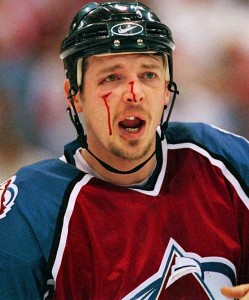
 While all of these athletes surely have/had other redeeming qualities, the point is that they succeeded despite clear genetic disadvantages. It’s worth pointing out that, while the genetic ceiling is very real, only an exceptionally small percentage of the athletic population ever converges on that limitation. Most don’t put in nearly enough general and specific preparation work to ever fully realize their potential. And while some do possess the raw genetic gifts to still succeed at high levels despite this lack of preparation, this provides a distinct advantage for the athlete that, whether among the world’s elite talents or relatively average, is willing to maximize his or her potential. In other words, 70% of 100 (the raw talent) isn’t as high as 90% of 85 (the potential filler).

The more important question that arises out of this discussion is what should we be emphasizing to our youth athletes? Do we discourage participation simply because someone does not have the genetic gifts thought to be important in any given sport?

This raises an equally important question about the true purpose of sports participation. Expanding the capacity of the game is undoubtedly a goal of athletic development programs, but on a wider scale, for reasons related to nature and nurture, this only applies to an exceptionally small segment of the athletic population. At USA Hockey’s ADM Symposium last year, Kristen Dieffenbach presented that roughly 10.9% of high school hockey players will go on to play NCAA hockey, and roughly 3.7% of NCAA players or 0.31% of high school players will go on to play pro hockey. So for the other 99.69% of high school players, a system solely designed toward expanding the capacities of the game doesn’t seem worthwhile. Not to mention that our current systems force most kids out of sports before they even reach the high school ranks.

 In reality, many of the major benefits of sports participation stem from the character-building opportunities associated with playing. Amongst other things, this includes setting and hunting goals, building confidence and resilience through practice and competition successes, learning to appropriately process criticism, and developing social skills related to teamwork and leadership. These are all qualities that will serve to enhance the athlete’s quality of life long after his or her “career” ends. Theoretically, this would make playing sports inherently valuable, regardless of the athletic outcome. Of course, the development of these qualities is dependent upon a system of inclusion and relative equal opportunity.

In the U.S. the well-documented flaws of early talent identification haven’t prevented most youth sports programs from forming elite teams and funneling kids into single-sports participation with short-term success aspirations despite participating in long term athletic development sports. This system has created PHENOMENAL youth athletes that quit, sustain unnecessary injuries or simply plateau when they reach the age of actual elite competition, causing many advisers, junior programs, colleges, and even pro teams to regret their early commitments. These athletes win the race to the wrong finish line. And in the process, have the fun, freedom and development associated with unstructured play stripped from their youth. Surely, this is not the answer.

We have created a development system that produces worse athletes, which is largely masked by the absolute growth in sports participation. More athletes participate, so a few succeed DESPITE the system, not because of it. Without question, sports participation should prioritize athletic development, but not at the expense of all of the other benefits. Placing an excessive emphasis on genetic limitations undermines the path, and all of its associated lessons, an athlete could take to fulfilling his or her potential. From an athlete perspective, they need to focus on what they can control, and not be victimized by the things they can’t. From an athletic development systems perspective, we need to make a significant change toward the restoration of sanity, toward allowing kids to develop a love for playing before we superimpose adult paradigms of pressured competition. It starts with parents and coaches standing up for what is right, and spreading the word to as many people as they can. What are you going to do today to help right the ship?

To your success,

Kevin Neeld

P.S. Arguably the best long-term athletic development model, to maximize participation and fun, as well as long-term peak performance and excellence, can be found in USA Hockey’s American Development Model. If you haven’t already, check out their site: USA Hockey’s ADM

P.S.2. Want a comprehensive long-term off-ice training plan for hockey players? Check out my new book Ultimate Hockey Training

Please enter your first name and email below to sign up for my FREE Athletic Development and Hockey Training Newsletter!

Use CODE: "Neeld15" to save 15%