We’re wrapping up another great week at Endeavor. On a personal note, I’ve restored my eternal sense of optimism that tends to dwindle when I don’t eat, lift, or sleep as much as I’d like. It might also have something to do with the fact that I’ve watched this video at least once every day this week.

Turns out when you surround yourself with inspirational, unconditionally positive messages, you tend to be more positive! Although, I never thought Fresh Prince would be that source of inspiration. I’m also nearing the final stages (within 7 days) of completing a HUGE project, so stay tuned for announcements on that (you won’t want to miss it)!

There has been some exceptional content additions to Hockey Strength and Conditioning over the last couple weeks. In no particular order:

Video: International Hockey Panel with Igor Larionov
This is another USA Hockey American Development Model video that has leaked into our hands. Igor Larionov has about as impressive of a hockey success record as anyone, so it was great to get his perspective on an assortment of hockey development topics. If you’re a true student of the game, you’ll really enjoy this!

Click here to watch >> International Hockey Panel with Igor Larionov

Program: Beginner Phase 2 Off-Season Training Program from Darryl Nelson
Darryl Nelson added Phase 2 of his beginner off-season hockey training program. I recently read an article on this year’s NHL combine (someone posted this in a HockeySC.com forum thread) commending two players from Darryl’s USA NTDP on their performance in the off-ice tests. It’s great to see Darryl’s work being rewarded (indirectly). For the millions of hockey players out there aimlessly following unguided programs that lack organization and progressions (or any semblance of an intelligent thought in general), you’d be much better off just downloading Darryl’s program and following that.

Click here to get the program >> Beginner Phase 2 Off-Season Training Program

Video: Bar Complex from Sean Skahan
Sean added a video of a bar complex that he uses late in the off-season. This is typically the time of year where the off-ice training focus changes from hypertrophy or strength development to more of a work capacity orientation. This is in conjunction with an increase in on-ice work. Barbell complexes are certainly a means of developing this quality, assuming the athletes know how to perform all the involved exercises with perfect technique. This is especially important as fatigue tends to negatively affect exercise execution in general, Mediocre form in the beginning will quickly turn to garbage form. Whether you use the exact exercises Sean does in your barbell circuits or not, exercise proficiency should be foundational.

Click here to watch >> Bar Complex

Article: Hockey Strength and Conditioning Roundtable: Facility Design Edition

Last, and most awesomely, Mike Potenza, Darryl, Sean and I posted a roundtable discussion on facility design. The roundtable is a new feature we’re adding to Hockey Strength and Conditioning, and because well all have different backgrounds and work in relatively different settings, the diverse perspective should be insightful for our readers. Facility design was a great topic to kick off the roundtables because it will ultimately drive the design of your programs and provide guidelines (for better or worse) on what you’re able to do with your players. Facility design will determine maximum athlete volume, exercise selection, how to pair exercises, and the overall flow of the program. If you’re a hockey training professional this is a must-read. We’ve made a lot of mistakes at Endeavor that you can avoid my checking out the article.

Click here to read >> Hockey Strength and Conditioning Roundtable: Facility Design Edition

After you’re done reading the articles and watching the videos, hop on the forums and check out the two posts on the NHL Combine and the BU Psychology Professor and post your comments about those.

If you aren’t a member yet, fork out the $1 to test drive Hockey Strength and Conditioning for a week. If it’s not the best buck you’ve ever spent, I’ll personally refund you!


To your continued success,

Kevin Neeld
Please enter your first name and email below to sign up for my FREE Athletic Development and Hockey Training Newsletter!

Last week, I got a message from Jim Cruver about a video on concussions in hockey that he thought I should check out (thanks Jim!). This actually aired on ESPN mid-last week; it’s definitely worth the 7-minutes to watch. Check it out:

Great to see some of the teams from my home-town making the video as part of the goon-squad. And I don’t have the cleanest mouth, but I’d be embarrassed if I were featured on ESPN saying some of the things these coaches were caught saying to young kids.

My pro-USA Hockey American Development Model stance continues. I applaud Kevin McLaughlin, Senior Director of USA Hockey’s Hockey Development program, for the steps he’s taking in trying to cut back on hockey concussions at younger levels, and most notably for pushing the checking age up to 13, instead of 11.

I know the contact-enthusiasts will argue against this change, but the bottom line is that the physical development range is too large and the psychosocial maturity is not developed enough at this level for checking to be safely and properly implemented. There needs to be a policy change in the interest of protecting our young players and Kevin McLaughlin is taking the steps to make this happen. If you’re initial thought is, “checking is a part of the game, and shouldn’t be removed from the 11-12 year-old level,” I’d urge you to consider how you may feel if your son was drilled from behind by a 12-year old that looked like a 16-year old, suffered a concussion, and missed 6 months of playing. The point isn’t that checking isn’t a part of the game, it’s that it’s being implemented the wrong way, especially at these younger levels. A change in emphasis needs to start with coaches and trickle down to players and parents, quickly.

The #1 concern in making this change is that players will be less “skilled” at giving and receiving contact at the 13-14 year-old level because they haven’t had as much practice or experience. Logical argument. I think the big thing is that MOST kids aren’t being taught how to give and receive hits at any age, they’re just told to go after people. But that argument aside, there’s actually been some research on this issue that will help shed some light on whether early exposure helps make contact safer at the bantam level.

Study 1:

Hagel, B., Marko, J., Dryden, D., et al. (2006). Effect of Bodychecking on Injury Rates Among Minor Ice Hockey Players. Canadian Medical Association Journal, 175, 155-160.

This study looked at the effect on injury rates that a particular rule change had. This rule change moved 11-year olds into a contact league with 12-year olds, opposed to keeping them in a non-contact league with 10-year olds. Notable results:

  1. The 11-year olds in the contact group had a 2.1x higher incidence of injuries than 11-year olds in a non-contact group. This injury rate was 85.5 per 1,000 players (astronomically high).
  2. More than 2x greater incidence of injuries classified as “severe” amongst 11-year olds in contact group.
  3. Contact-group had 3.4x greater incidence of concussions and 2.6x greater incidence of fractures

Study 2:

Macpherson, A., Rothman, L., & Howard, A. (2006). Body-Checking Rules and Childhood Injuries in Ice Hockey. Pediatrics, 117, e143-e147.

This study aimed to compare injury levels between Ontario youth hockey leagues (allowed body checking at 10-11 y/o range) and Quebec youth hockey leagues (allowed body checking at 14-15 y/o range). Straight from the abstract:

“Of the 4,736 hockey injuries, 3006 (63%) were in Ontario and 1730 (37%) were in Quebec. Most of the injuries occurred in areas in which checking was allowed (2824 [59.6%]). At ages 10 to 13, players had significantly greater odds of suffering a checking injury where checking was allowed (odds ratio [OR]: 1.86). Players in this age group were also more likely to suffer a concussion (OR: 1.42) or fracture (OR: 1.25) where checking was allowed. Among older players, when checking was allowed in both provinces, there were higher odds (OR: 1.90) of receiving a checking injury in the province that had introduced checking at a younger age, suggesting that there is no protective effect from learning to check earlier.”

Last sentence bolded for emphasis. Basically what this is saying is that players that have been checking since the 10-11 y/o age, were TWICE as likely to sustain a checking-related injury at the 14-15 y/o level compared to those that were just checking for the first time at this older age level.

These are far from the only two studies that illustrate these points, but they’re a good start. The take home messages from these studies is that introducing checking at younger ages substantially increases the injury rate at these levels, AND has absolutely no protective effect at older levels. In laymen’s terms, it’s a lose-lose.

Hockey can’t afford to lose any more players like this.

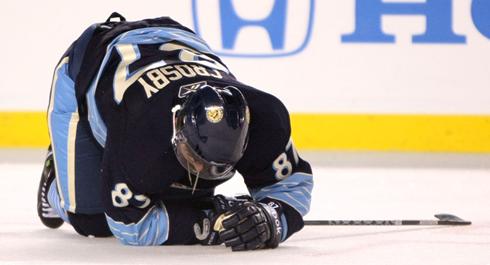
Hockey needs to get away from the “hit to hurt” mentality and get back to teaching the original intention of contact in the sport-separation of the player from the puck. Every hockey fan loves to watch a big hit, but we need to keep the potential consequences of these hits in mind. Some of the game’s best players have their careers cut short because of hits that probably shouldn’t have ever happened. Concussions in hockey deemed accidents are one thing, but coaches and parents (and even players!) encouraging players to take a run at someone is unacceptable. Hopefully the injuries to popular players like Sidney Crosby and Marc Savard, AND a growing body of research evidence will fuel a much-needed change in both the rules and teaching of the game.

To your HEALTH and success,

Kevin Neeld

P.S. Just a quick reminder that this webinar with Joe Dowdell is in a few days. If you’re interested in building a profitable fitness business, make sure you register today before all the spots are gone! The 5 Key Ingredients to Building a Successful Fitness Business & Career

Please enter your first name and email below to sign up for my FREE Athletic Development and Hockey Training Newsletter!

Over the weekend I was able to catch up with an old hockey friend from Delaware and some of the Endeavor guys to watch the Flyers/Islanders game. The Flyers won, which means two things:

  1. They secured the 2nd place spot in the eastern conference going into the playoffs
  2. Anthony Renna, and the other two remaining Islanders fans, had to suffer through another disappointing defeat

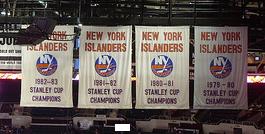
(this is when Anthony politely reminds me that he watched the Isles win 4 consecutive Stanley Cup championships before I was born!)

…damn it

This is my favorite time of year. Our off-season training group starts to trickle back in and the playoffs are starting. In our area, this is also the time that youth programs have their tryouts, which means this is an emotional time of year for youth players and parents. Some will finish the tryout process happy with how they played and the team they’re on for the following year; others will be upset with getting cut and will blame “politics” (sometimes rightfully so) for their misfortune.

Getting cut is not an easy thing to go through. I know; I was cut from multiple teams going up through the youth ranks. Some of those years I thought I was clearly better than a handful of the kids that made it; other years I knew I could at least be competitive with those kids. I say this only to point out that I’m not unsympathetic to the players that draw the short straw. With that said, I think too many players let a bad tryout experience or bad interaction with a coach typecast them as a certain type of player, which usually has a negative effect on their confidence.

As I’ve said in the past, success at the youth level is great for confidence but inter-player comparisons at U-14 levels is somewhat of an apples-to-oranges comparisons. For any given development situation, the kids that mature faster are always going to stand out as “better”, but won’t necessarily maintain that advantage over the long haul. Regardless if you’re over-sized or under-sized, exceptionally skilled or new to the game, respected for your speed or known as the slow kid, until you get paid to play (and even through that point),

YOUR GOAL SHOULD ALWAYS BE CONTINUOUS IMPROVEMENT!

Making or getting cut from any specific team doesn’t change the goal. Either way, players should be looking for areas they can improve on and actively working to do so. This idea of continuous improvement is known as “kaizen”. Kaizen is a Japanese term that I heard Dr. Steven Norris mention in his USA Hockey American Development Model presentation on Long-Term Athlete Development. I first came across the word while listening to a presentation from internet marketing expert Mark Joyner, and it’s stuck with me ever since.

I think kaizen highlights something that most of the hockey world still views the wrong way. One of the things that really struck me about Dr. Norris’ ADM presentation is how similar his message was to Mike Boyle’s and Brian Burke’s, despite the three of them having little involvement with each other professionally. In youth hockey, there is an over-emphasis on labeling kids as either talented or un-talented at insanely young ages. I don’t mean insanely young like 4 (although this is insane); I mean insanely young like 14.

The message that this practice sends is that certain kids were blessed with some sort of hockey playing magic and have a real shot at playing higher level hockey, and the others weren’t and really don’t stand a chance of making it anywhere.

“A person can succeed at almost anything for which they have unlimited enthusiasm.”- Charles M. Schwab

Yet, there are countless athletes that defy these odds ALL the time, to the point that it’s hard to consider it defying the odds at all. In fact, the idea that “talent” even exists has been rightfully questioned. Our belief in the concept of talent is what perpetrates it, and the “star” athletes that we think have natural ability almost always have SICK work ethics and put in incredible amounts of time away from the spotlight.

Natural talent? Crosby is recognized by everyone that crosses his path for being one of the hardest working hockey players in the history of the sport.

You’d be amazed at how much better “untalented” players get when they start practicing on their skills sets regularly under the supervision of a coach that understands how to introduce appropriate skill progressions. Coming back to the Boyle, Burke, Norris trifecta, an underlying message to all of their presentations is that we need to stop viewing youth hockey players through an NHL scouting eye, and start encouraging them to have fun and improve constantly.

Whether you made the team you wanted or not, your focus should be on kaizen. Development is a marathon, not a sprint. The players that continually take steps in the right direction are inevitably the ones that succeed over the long-run. The players that lean on their success at young ages inevitably fall victim to mediocrity at higher levels. We’ve had a dozen kids make NCAA Division I commitments over the last year, and they all did it the same way: Be patient, work hard, continually progress. That’s the formula; players need to stick to it, regardless if they make the peewee or bantam team they wanted or not!

To your success,

Kevin Neeld

Please enter your first name and email below to sign up for my FREE Athletic Development and Hockey Training Newsletter!

I have to run a training session (another decade-long groin pain case that has magically resolved itself with some focused training) in a few minutes so I’m going to keep this short and sweet today.

Plus, I’m probably going to need a few minutes for another Icy Hot bath. Still a bit sore from Wednesday’s lift:

On to this week’s content…

Darryl Nelson added an AWESOME video from Dr. Steven Norris from one of the ADM seminars. I’ve said in the past that USA Hockey is doing all the right things right now with their American Development Model; they have all the right people providing information to their organization. Every time I get access to one of these videos I watch it 3-4 times and take notes throughout. I’m only about 20 minutes in to this one, but I can already tell it’s one of the most-see videos.

A few of the messages that really stood out to me so far:

“Every idiot, including me, can organize a competitive schedule. That tells you NOTHING about the program.”

This really speaks to the marketing strategies some youth and tournament programs use and highlights the need to look at what coaches are doing to DEVELOP players, not just showcase them.

“Be patient while all hell breaks lose during puberty.”

I’m becoming known now for saying that testing youth is a senseless practice and shouldn’t be done. Whether we’re talking about hockey performance or overall athleticism, the fact is that every kid is going to develop at different rates and the adolescent years are especially volatile in this regard. This is ANOTHER reason why players shouldn’t get discouraged if they don’t make the PeeWee team they want. You see a lot of dominant peewees (U-12) that are mediocre midgets (U-18); early developers stand out at young ages. Keep doing the right things and you’ll win out over the long run.

I have a lot of notes (already), but one of the ideas that jumped out at me was that for the first 10 years of life, kids learn best through demonstration, and even better when this demonstration is performed by someone in close proximity age-wise to their peer group. In other words, a 10-year old will learn better from watching a 12-year old demonstrate or perform than he would from watching Ovechkin or Crosby. This is probably why so many athletes benefit from having an older sibling that is competitive in the same sport, and highlights an idea I’ve been pushing on you for years-GO WATCH GAMES AT THE NEXT LEVEL! Whether it’s a Tier II player watching a Tier I game at the same age level or a Tier I player watching a Tier I game at the next age level, the important thing is that players are getting exposure to what lies ahead. It’s not just about preparation; it’s about idea generation, and mental rehearsal.

Like I said, I’m only 20 minutes into the video. I’m sure there will be more great stuff throughout the rest of it. Check it out for yourself!

Watch the video here >> Long-Term Athlete Development from Dr. Steven Norris

Sean Skahan added Phase 2 of his ACL Rehab program to the site. Always great to see what someone with Sean’s experience is doing to bring a player back from one of these injuries. Seeing “return to play” programs can also shed some light on things we can do to avoid the injuries from occurring in the first place.

Check it out here >> ACL Rehab Phase 2 from Sean Skahan

Lastly, my friend Dennis Adsit asked a great question (rather, a series of great questions) on the forum about the idea of restoring proper hip function after the season. Definitely worth a few minutes of your day to read the responses.

That’s a wrap for today! If you aren’t a member yet, shell out the $1 to test drive Hockey Strength and Conditioning for a week. If it’s not the best buck you’ve ever spent, I’ll personally refund you!

To your continued success,

Kevin Neeld
Please enter your first name and email below to sign up for my FREE Athletic Development and Hockey Training Newsletter!

Monday’s post dove into some of the common misconceptions about elite hockey development (and athletic development in general for that matter), with cameo appearances from a young Tom Brady and Sidney Crosby. In case you missed it, you can check it out here: Random Hockey Development Thoughts

Writing that post made me think about a couple other things that I probably should have told you a long time ago.

Endeavor Internships

First, and probably most time-relevant, we’re currently accepting applications for interns at Endeavor Sports Performance this summer. A few people have hopped on the forums at Hockey Strength and Conditioning (which is an awesome use of the very talented/experience audience on the site) and inquired about good hockey training internships. We have 3-4 spots available. Last year we drew interest from people ranging from local universities to Canada to Australia.

Our past interns have gotten a lot out of their experience with us. On top of being surrounded by passionate people that continually want to learn and get better (both coaches and athletes), our off-season hockey group includes a wide variety of skill (on- and off the ice). I know it’s a lot “sexier” to work with NCAA D1 and professional athletes and that’s what most interns are looking for. In truth, these experiences are great for networking (and general exposure), but probably not as good for coaching. Athletes at these levels tend to move extremely well and don’t require a lot of coaching, just some simple cuing.

In contrast, younger athletes need A LOT of help (turns out sitting on your ass for 22 hours a day isn’t great for building athleticism), and it’s the practice you get coaching these athletes that really helps you understand how to use efficient coaching techniques, change your language based on the athlete, and ultimately to become a better coach. Because we have players ranging from Tier II youth PeeWee programs to those in pursuit of permanent NHL roster-spots, you get the best of both worlds.

In addition to experience, the other two main reasons to pursue internships are to network and potentially pursue employment. Since I’ve joined Endeavor, we’ve had 6 interns. We hired 4, one went on to pursue a different career path, and another had a job lined up for immediately after his internship and is now going back to school in pursuit of his DPT. If you’re interested, go to the link below to read more information and to download the application. You can email the finished ones to me or fax them to Endeavor at (856) 269-4153.

>> Endeavor Sports Performance Internships <<

Endeavor Sports Performance Website

I’ve alluded to this in the past, but I do a lot of writing for the Endeavor site. Because we work with athletes in all sports, the writing tends to discuss sports other than hockey (although I do write about hockey too), general athleticism, and research related to performance enhancement. If you don’t work with hockey players and/or just want more of the good stuff, I highly encourage you to go over to Endeavor’s site and check out the blog:

>> Endeavor Sports Performance Blog <<

And follow us on youtube:

>> Endeavor Sports Performance YouTube Page <<

You’ll get all sorts of great stuff…like how to eat fruit, functionally:

…Never give a Canadian a camera

A few noteworthy posts to get you started:

The Truth About ACL Injury Prevention

High Quality Breakfast for Teenage Athletes

Long-Term Athletic Development: Training Youth Athletes

Strength and Conditioning Programs for Youth Athletes

Why Every Athlete Should Get Hurt…Once

USA Hockey’s ADM (American Development Model)

The more I learn about what USA Hockey is doing with their new ADM the more I support it. Since I started playing, it seems like the American development model has simply been wrong. We play way too many games, we practice too little, and most practices don’t make good use of the ice to enhance skills. There is a reason why, in general, the NHL’s most skilled players are consistently from overseas. From what I understand, Canada is similarly “backwards” in their systems, but hockey is so much more popular there that more talent seems to rise through the ranks, possibly despite the overall development structure.

This certainly isn’t to undermine the jobs that the thousands of coaches in both countries are doing, only to say that we need a better development framework so that new coaches have better plans and philosophies to draw from and so we can be more consistent in our teachings across the country. Naturally, I’m also of the opinion that off-ice training is a necessity, not a luxury, at least not for players that are serious about pursuing elite levels. USA Hockey has done an outstanding job of “righting the ship” so to speak. If you aren’t familiar with the ADM, you can read up on it here:

>> USA Hockey’s ADM <<

If you’re coaching, I urge you to look into this and do your best to begin implementing these concepts immediately. On an international level, it seems that the US has found some success because of their heart, not because they have comparable talent to their Canadia, Russian, Finnish, and Swedish competitors. I think, if coaches and parents buy into what USA Hockey is providing in the ADM, we’ll start to see the U.S. dominate internationally because of improved skill sets. Of course, if everyone takes the “what we’re doing now is fine” approach, we’ll simply continue to tread water.

It’s up to us to make a change! I’m in. Are you?

To your success,

Kevin Neeld

Please enter your first name and email below to sign up for my FREE Athletic Development and Hockey Training Newsletter!

Use CODE: "Neeld15" to save 15%