Some great new additions to Hockey Strength and Conditioning this week from coaches that have a profoundly successful history training pro hockey players:

Video: TRX Lateral Line from Sean Skahan
Coach Skahan presents an interesting core training exercise using the TRX. This was one of those videos that gave me ideas for a half dozen other exercises. Great stuff.

Program: Phase 2 for an NHL or College Player from Michael Boyle
A sample training program for elite level players from a coach that has trained more elite level hockey players than anyone else in the world. Not a bad resource to look at!

Article: VO2 Max Testing from Jaime Rodriguez
Jaime is currently working as the Strength and Conditioning Coach for the Worcester Sharks, the AHL affiliate for San Jose. This is a great article addressing the appropriateness/importance of using VO2 as a quantitative measure for hockey players.

Article: How do you customize or individualize a workout for a hockey player? from Mike Potenza
Coach Potenza outlines how, why and when to customize training programs for specific individuals. This is a great look into his personal coaching philosophy, which has developed from years of education and experience.

If you aren’t a member yet, you’re missing out big time! The forums have been as busy as ever with great content, including a post with heart rate data from an elite level player during a game, and a grad student inquiring about NHL/AHL internships. For less than $10/month, you won’t find more powerful content anywhere.

Click the link below for more information about Hockey Strength and Conditioning!

To your continued success,

Kevin Neeld

Please enter your first name and email below to sign up for my FREE hockey training newsletter!

I’ve had a lot of different things on my mind recently, so I want to break free of the typical “article-style” post and touch on a wide variety of topics, ranging from professional to personal, intellectual to comical. Let me know what you think of these types of posts and I’ll use them more or less in the future. Enjoy!

1. ZMA may be my favorite auxiliary supplement. I wouldn’t put it in my “essentials” list, but as busy/stressed as I get sometimes, nothing helps me sleep better.

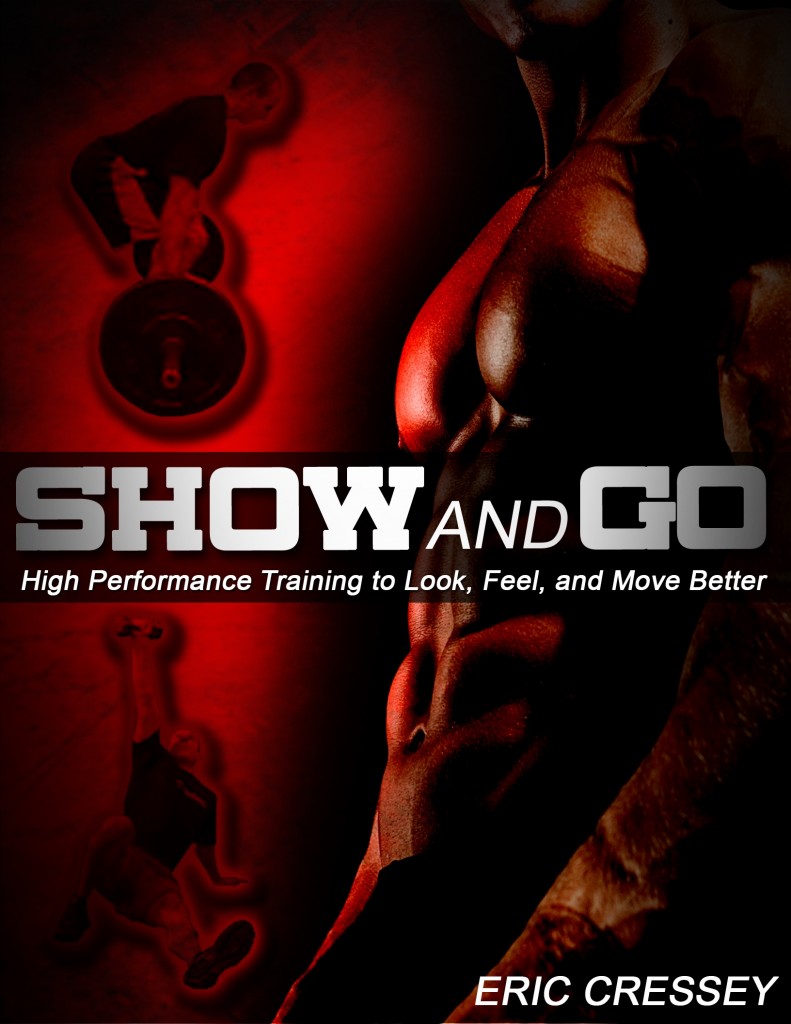
2. Eric Cressey’s Show and Go Program is incredible. The entire Endeavor Coaching Staff has been following it for the last two weeks; it’s intense and exceptionally well written. Last week I front squatted 275 for 3 reps and trap bar deadlifted 405 for 5 reps. Nothing to write home about, but pretty good for me.
3. Every time Bon Jovi comes on our satellite radio, my blood pressure skyrockets. There is a time and a place for Bon Jovi. That time is never. That place is nowhere.

4. Last week on my drive to work I noticed that all of traffic slowed to 5 mph below the speed limit, because there was a cop driving in the right lane at that pace. She then proceeded to change lanes without signaling while talking on her cell phone. Nothing like leading by example.

5. A lot of people in the hockey world say that vision is one of those things a player either has or doesn’t. I couldn’t disagree more. As with any ability, some players will naturally excel in this department more than others, but everyone can improve. The key is to spend time ANALYTICALLY watching the game. It’s helpful to do this by watching players at the same age, but higher skill level, or older players at the same skill level.

6. I’m amazed at the number of parents that come into Endeavor wanting their kids to be faster yesterday. Getting EVERYONE in the fitness industry (fat loss clients, body builders, athletes, etc.) to understand that training is a continuous, progressive process would be the single greatest breakthrough in the history of the industry.
7. A former intern of ours said one of her teachers told her that she’d have to cut all carbs out by 3pm if she wanted to get lean. While I don’t necessarily disagree with the concept, I strongly disagree with the clear-cut dichotomy here. What if she wakes up at noon because of her work? What if she trains at 4pm? What if it’s a cheat meal? Nothing is ever this black and white, in training or nutrition.

8. Last week I met with Shoba Murali and Shaun Gagnon, the CEO & President and VP of Sales for Generation UCAN, respectively. I whole-heartedly endorse their product because it’s the best out there. The carb-only mix is a drastically healthier alternative to the more well-known sugar-laden Gatorade and Powerade alternatives. The protein-carb mix is the perfect post-workout/post-practice/post-game drink. Even more pleasing to me, Shoba and Shaun are both incredible people that really have the athletes’ best interest in mind. This is quite different from the sleezy approach of most supplement companies (e.g. spending all their money to put a colorful label around their shit product, having steroid-enhanced spokespeople make false claims about the effectiveness of their product, etc.).

Enter the code “KNHockey” to get a special discount!

9. Cristi Landrigan wins the hockey parent of the year award. Over the Summer, she drove her kids around 90 minutes to train with us three times a week at 8am! Now, every couple days she’ll email me a great article she found on some aspect of sports performance (training, mentality, etc.). I wish every parent could adopt 10% of her enthusiasm for helping her kids succeed as members of society, and as athletes.

10. For young professionals out there, nothing will help you more than finding a good mentor. Since I was young, I’ve frequently been complimented on my “drive”. I think having that has been an important ingredient in my success so far. With that said, I wouldn’t be anywhere without the guidance of Chris Boyko, Eric Cressey, and Michael Boyle. I’ve learned from a ton of people, but these three mentors have done more for me than I could ever describe.  If you’re looking for internships, look to them first.

11. On internships, if you’re an intern, be realistic about your role. There is nothing more off-putting than hearing an intern talk about “their athletes”. As an intern, you don’t have athletes. You’re implementing someone else’s programs for their athletes. You have a long career to brag about all the great stuff you’re doing with your athletes; now is your time to learn/absorb.

12. I’m pretty good at blocking out distractions. In grad school, I frequently fell asleep with Avenged Sevenfold playing on my laptop next to me. But if there is a single fly in my office, my day is ruined.

Me…not getting any work done.

13. Lingo such as “can I get a spot” and “all you” is typical in the gym, but should not be used in a men’s room.

14. The growing popularity of Facebook continues to amaze me. My “Ultimate Ice Hockey Training” group now has over 4,025 fans!

15. We use the reverse lunge as one of our primary lower body lifts at Endeavor. We try to encourage our athletes to return to the top by “pulling through the heel of their front leg”. Inevitably, when the weights get heavy, there is a stronger push off the back leg. One way to eliminate this altogether is to have them perform the reverse lunge with their back foot on a slideboard. For the scientists out there, it may be interesting to test 3-RMs on ground, and on a slideboard to quantify how much that push/back-leg stability adds to the lift.

16. Speaking of scientists, my colleague Bret Contreras (who I believe has set up an EMG lab in his garage…awesome), mentioned me on his “Best Blogs” list: How I Learn. I’m flattered that someone with Bret’s intelligence would consider my site one of his top resources. I also read on Bret’s site that Jeff Cubos, an incredibly well-read professional from Canada, included this site as one of his go-to’s as well. If you guys are reading this, thank you!

17. In that post, Bret mentions that he wishes I wouldn’t “pigeon-hole” myself so much by just talking about hockey. I write mostly about hockey because that’s what I’m most passionate about, and why I got into training to begin with (to help hockey players develop and fulfill their potential). With that said, many of the training principles I write about in regards to hockey are directly applicable to most team sports and to training in general. My hope is that people that may work with athletes in other sports don’t write off the information simply because my site says ice hockey on it.

Check back in on Wednesday for more musings!

To your continued success,

Kevin Neeld

Please enter your first name and email below to sign up for my FREE Athletic Development and Hockey Training Newsletter!

Usually, the things I like the most about Hockey Strength and Conditioning are the articles, programs, and exercise videos. I learn a lot by delving into what some of the top hockey training professionals in the world are doing with their athletes. I usually come away with new ideas for exercises/exercise progressions or program design strategies. As an example, our entire off-season med ball progressions were built from ideas I gathered from watching Mike Potenza’s videos.

With that in mind, Mike Boyle posted a great article this week on essential equipment to have for training hockey players. Because equipment availability lays the foundation for your programming, it was really interesting to hear what someone with Coach Boyle’s experience thinks is a “need-to-have”, “nice-to-have”, or simply a “luxury”. You can check out the article here:

Article: Need to Have Vs. Nice to Have from Michael Boyle

Contrary to the norm, the thing I benefited from the most over the last week was the forum discussions. Coach Boyle’s article stimulated a great conversation about the importance of slideboards versus cable systems that gave me some great ideas for future equipment purchases/exercise ideas.

My friend Devan McConnell started a great post on concussions and fighting that was eye opening. Because concussions, probably more than any other hockey injury, have long-lasting life-altering effects on players’ health, it’s of paramount importance to try to prevent these injuries. Darryl Nelson had a couple very insightful additions to this conversation. He’s become a forum superstar; I always look forward to hearing what he has to say.

Lastly, former BU player and current pro hockey player (Las Vegas Wranglers of the ECHL) Kevin Schaeffer posed the question as to whether anyone noticed if more of their players were starting to wear orthotics in their skates. This is a really interesting topic yesterday; I’m interested in seeing what others have to say on this as I know many of the other coaches on the site have encountered this issue at least once.

Click the link below for more information about Hockey Strength and Conditioning!

To your continued success,

Kevin Neeld

Please enter your first name and email below to sign up for my FREE hockey training newsletter!

The first time I heard the name Sidney Crosby, I was a senior in high school. I was at practice for my Junior Flyers team, the week before we headed up north to play a tournament against many of the top Tier 1 teams in the country, including Crosby’s Shattuck St. Mary’s. At that time (’02-’03) Crosby was 15 years old and thought of as the top midget-aged player in North America. No pressure.

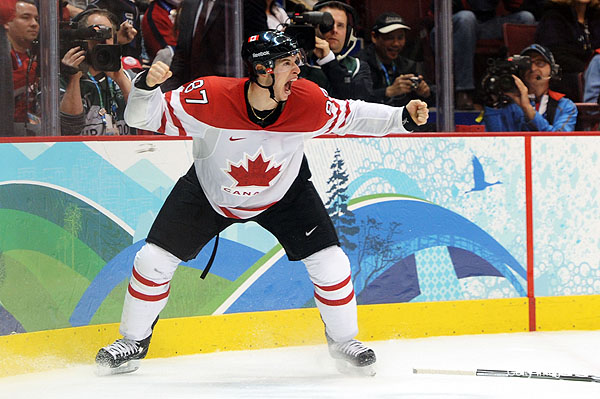
In the seven years following that tournament, Crosby has revived a dying NHL organization (Pittsburgh Penguins), been named Team Captain of now one of the top teams in the world, led his team to two Stanley Cup Finals, winning the second, and most recently scored the overtime Gold Medal winning goal in the 2010 Winter Olympics for Canada. This is on top of a LONG list of other personal and team accomplishments on his road to the NHL (read more here: Sidney Crosby). At the age of 23, Crosby has accomplished more than 99% of professional hockey players ever will. And after I gave my Fantasy Hockey Team a pep talk a few games into the year, Crosby has been on fire this season as well.

Admittedly, I wasn’t always the biggest Crosby fan. When he first joined the NHL, he struck me as a little “soft”. Being a bit more objective, maybe that behavior is a little more understandable given how young he was. After all, you wouldn’t throw an exceptionally talented peewee into a midget game and expect him to be at the same physical and mental maturity level as the other players.

Now, I’m a huge Crosby supporter. There is no denying what he’s done for hockey. With the help of a few timely rule changes and an exciting supporting cast (Ovehckin, Datsyuk, etc.), Crosby has helped drastically improve hockey’s popularity across the U.S. Who knows, a few more months and hockey may overtake Nascar in the sports popularity ranks! On top of that, I’ve had the opportunity to learn a bit more about Crosby’s character over the last year, leading me to have a deeper respect for what he’s been able to accomplish. He’s not a superstar by accident.

The correlation between hockey playing ability and beard growing ability isn’t well established.

From talking to people that have worked with and around Crosby, I’ve heard one thing consistently:

“He is always trying to get better.”

If he was a Tier II youth player trying to make the jump to Tier I, you’d expect that. If he was a college player trying to catch the eye of pro scouts, you’d expect that. Even if he was an AHL player or mediocre NHL player that wanted to make a more consistent contribution, you may expect that. Crosby is none of those. An argument could be made that he is the best player in the world, yet he still strives to be better.

I’ve been around hockey for the last 18 years and there is one thing that limits player and team development as much as, if not more than anything else: Contentedness.

I think every player should have the experience of being one of the “go-to” players on their team. It builds confidence to be a leader in some way. Likewise, I think every player should have the experience of being on a team that has a legitimate chance of winning a championship of some sorts. With that said, these successes should never justify cockiness, arrogance, or contentedness.

If a player is SERIOUS about competing at the next level, they need to consistently work to improve their game. This includes off-ice training (check out this article on Crosby and his Strength Coach Andy O’Brien: Trainer’s innovative regimen key to Crosby’s game), power skating, puck handling, studying game film, and watching games at the nextl level to prepare mentally for what is to come. The name of the game is always potential fulfillment. Everyone’s potential is different, but every player deserves to feel the success and accomplishment associated with fulfilling it. There is no certainty that past successes will lead to future ones. Everyone that has been around hockey for an appreciable amount of time has seen standouts at one level flounder at the next, or, contrarily, mediocre players at one level flourish at the next. Often times, it’s preparation time that explains this discrepancy.

Sidney Crosby may be the best hockey player in the world, yet he meticulously analyzes his game for areas to improve and tirelessly works to make these improvements. This characteristic is both admirable and inspirational, and represents a humility that every player should adopt. Things don’t always go according to plan:

…Wait for it…

But the best way to guarantee your own success is to never stop working toward improving yourself as a player and as a teammate.

To your continued success,

Kevin Neeld

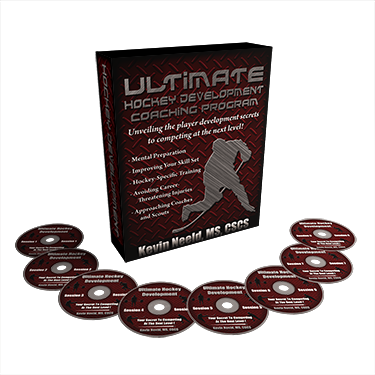
P.S. You can now get access to my entire Hockey Development Coaching Program at an EXTREME discount. Go to Hockey Development to take advantage of this offer today!

Finally, the Secrets of Elite Level Hockey Development are Revealed!

Click the image below to discover how you can benefit from over 150 years of collective hockey development experience from 14 of the world’s top experts!

Please enter your first name and email below to sign up for my FREE Athletic Development and Hockey Training Newsletter!

Another great content week over at Hockey Strength and Conditioning! Check out what you’ve been missing:

Video: Front Split Squat with Chains from Sean Skahan

Great variable loading exercise from Coach Skahan. These exercises are designed to unload the legs/hips during the ranges of motion when that musculature isn’t as strong (or is at a mechanical disadvantage), and overload the legs/hips at the ranges of motion when they’re stronger.

Article: If You Don’t Have Time, Make Time! A Daily Approach to Training the Hip Musculature and Core from Mike Potenza

This isn’t an article as much as it is a program. Coach Potenza outlines four unique core training workouts to target all the musculature around the hips and torso.

Videos: Dryland Skating Exercises, Part 2 from Darryl Nelson

These were cool. Coach Nelson posted these videos in response to a forum thread asking about what strength and conditioning coaches were doing off the ice, if anything, to help improve skating mechanics on the ice. Great stuff here coming from the U.S. National Development Program.

Program: In-Season Hockey Training Program (2x/Week) from me

Endeavor’s 2-day per week in-season hockey training program. As always, everything is laid out here from exercise selection to set and rep schemes.

Article: How to Choose a Personal Trainer/Strength and Conditioning Coach for Your Son and/or Daughter from Sean Skahan

Four great guidelines from Coach Skahan on how to sort through all the “hockey specific training” crap out there and find a quality coach for your son/daughter to work with. As a coach, these are things we should all be familiar with as well.

Click the link below for more information about Hockey Strength and Conditioning!

To your continued success,

Kevin Neeld

Please enter your first name and email below to sign up for my FREE hockey training newsletter!

Use CODE: "Neeld15" to save 15%