
Rotational power is an essential physical quality to train in most team sports.

There are a few key layers to improving rotational power:

  • Does the athlete have the foundational capacity to effectively perform rotational patterns (i.e., do they have optimal hip and thoracic spine rotation)?
  • Can the athlete separate/dissociate lower/upper body rotation?
  • Can the athlete produce power in rotational patterns?

Once mobility of the hips and t-spine is established, separation can be developed through different warm-up and core exercises in parallel with introducing rotational power work.

Because power is expressed in different positions within sport, it’s helpful to integrate rotational patterns from different positions (side standing, front facing, staggered stance, etc.) and with different dynamic lead-ins.

This video is of Front Standing Med Ball Scoop w/ a Partner Pass, which is a progression from a traditional scoop.

The pass emphasizes rotational deceleration, which has applications to both improving rotational power, and transitional running patterns.

Typically performed for 3-4 sets of 3-5 reps/side.

Feel free to post any comments/questions below. If you found this helpful, please share/re-post it so others can benefit.

To your success,

Kevin Neeld
SpeedTrainingforHockey.com
HockeyTransformation.com
OptimizingAdaptation.com

P.S. If you’re interested in improving power as part of a comprehensive hockey-specific training program, check out Ultimate Hockey Transformation.
Enter your first name and email below to sign up for my FREE Sports Performance and Hockey Training Newsletter!
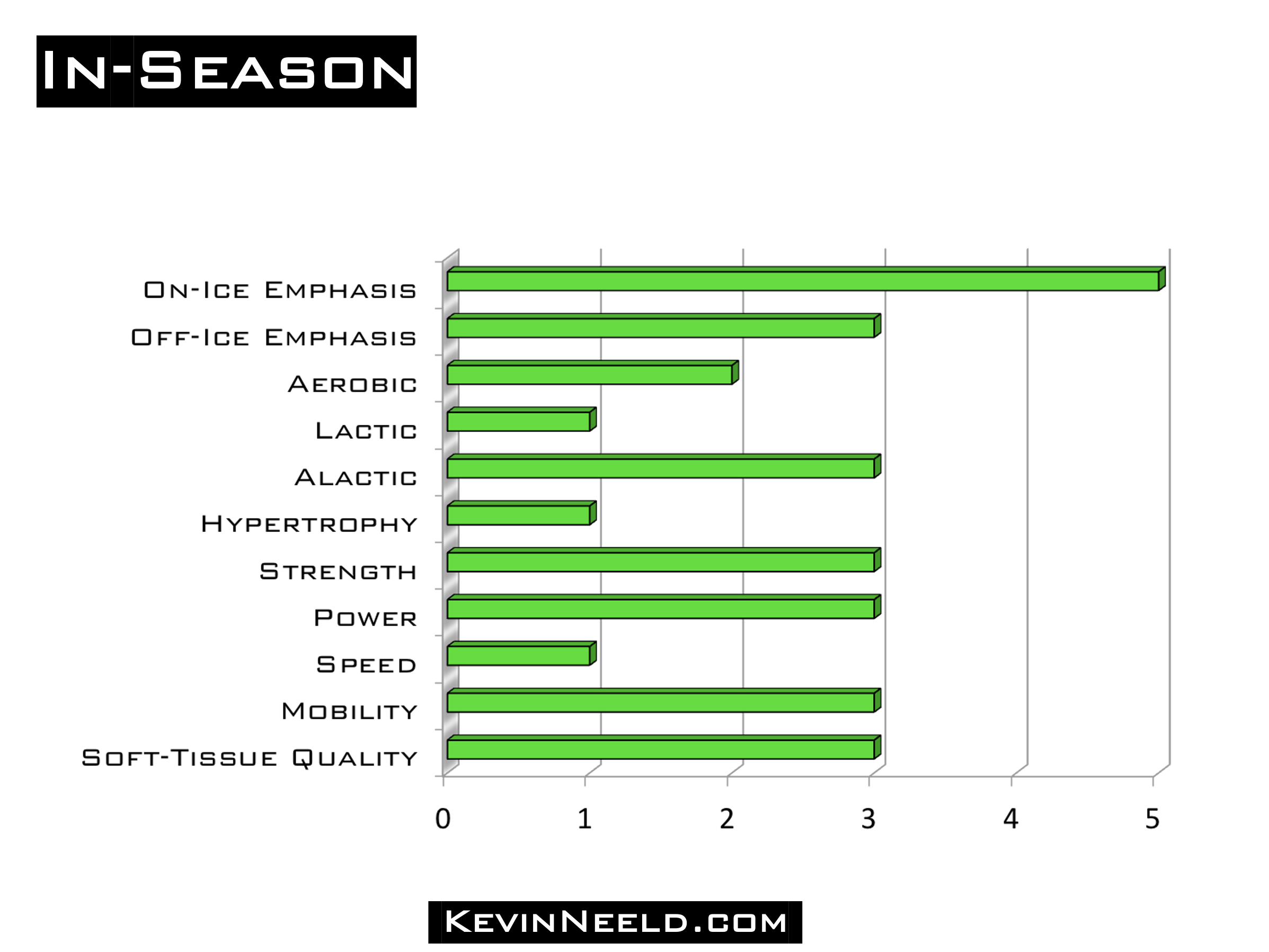
One of the big mistakes that the most committed youth athletes make is training the same way in-season that they do in the off-season.

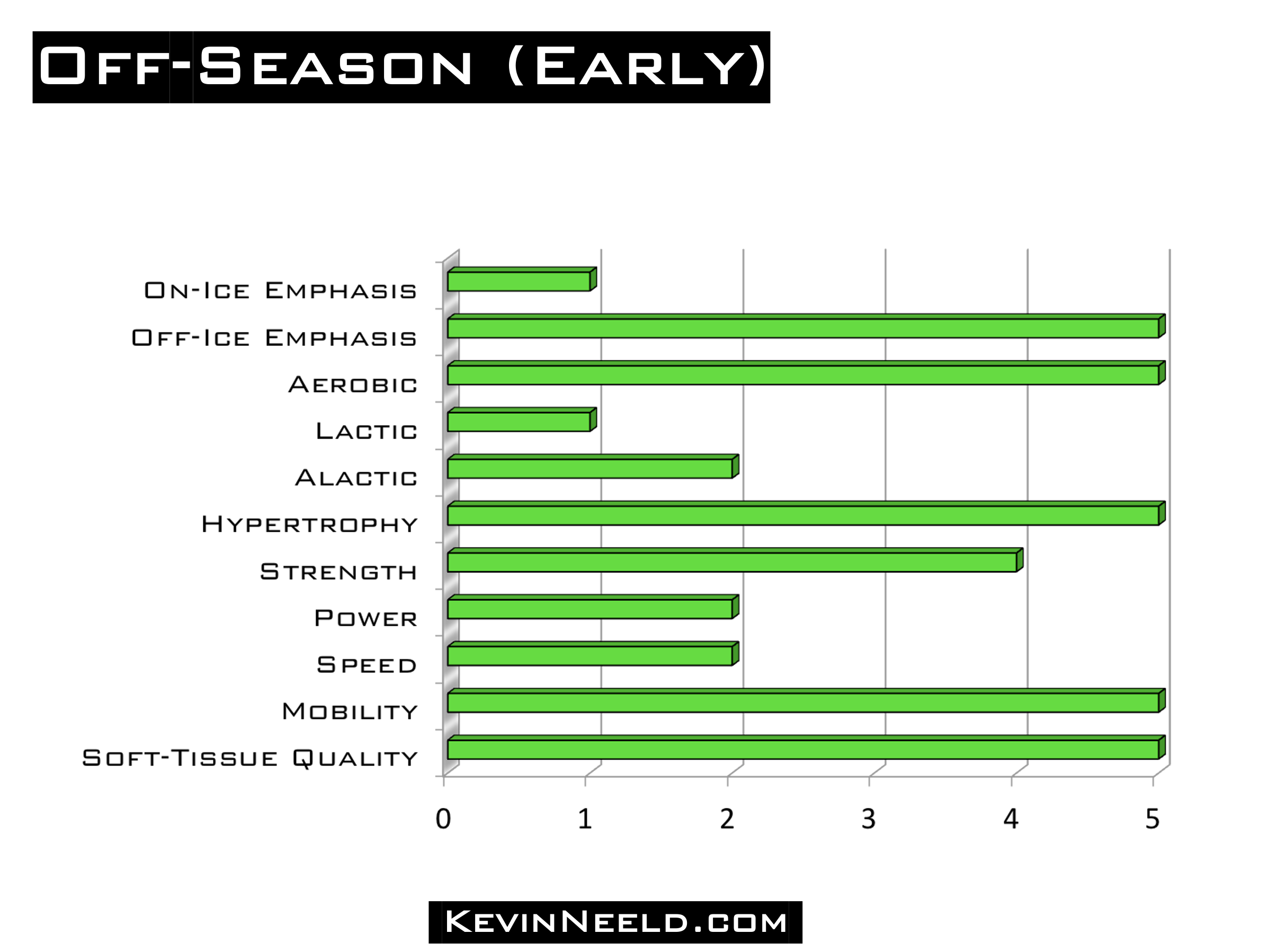
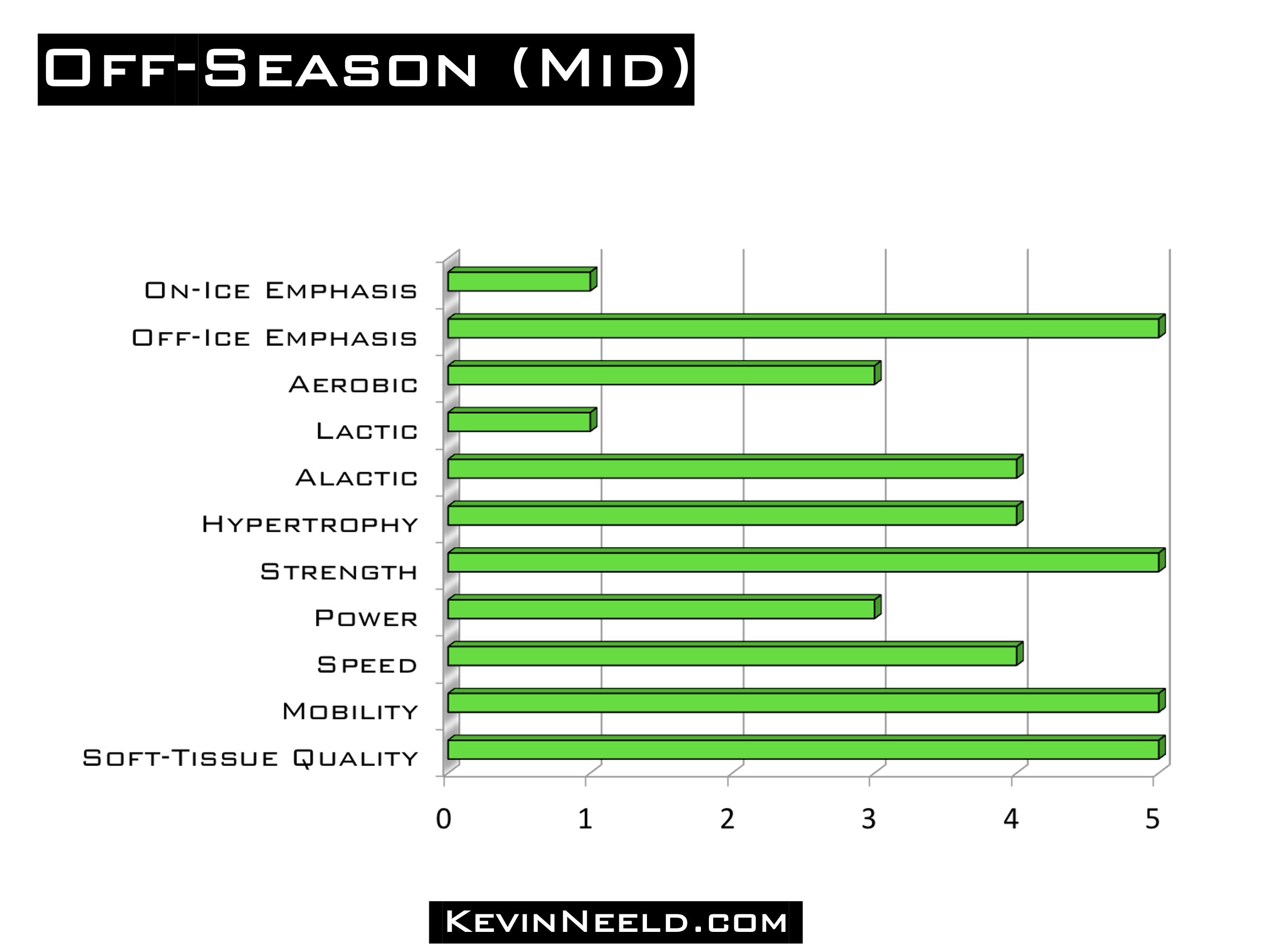
These graphs are from a talk I gave at the @nscaofficial Training for Hockey Clinic several years ago and provide an overview of how the emphases on specific physical qualities should change throughout the year. They also highlight the changes in time spent in on-ice and off-ice work throughout the year.

A few key take-homes:

  • Still an emphasis on off-ice work in-season, but lower volume across all qualities compared to off-season
  • Minimal emphasis on additional lactic work and hypertrophy work in-season (helps control soreness and fatigue)
  • Early Off-Season: Major shift away from on-ice work, and focus on restoring range of motion, building muscle (if the player needs it), and developing strength.
  • Mid Off-Season: Still low volume of on-ice work and minimal emphasis on lactic work. Increased focus on speed and power.
  • Late Off-Season: Increased emphasis on on-ice work and lactic conditioning. Decreased emphasis on building muscle and strength with continued focus on speed and power.
  • A lot of ways to break-up the year depending on the needs of the player, but there should be clear shifts in focus throughout the year to maximize progress and minimize risk of over-training, excessive fatigue and soreness.

Feel free to post any comments/questions below. If you found this helpful, please share/re-post it so others can benefit.

To your success,

Kevin Neeld
SpeedTrainingforHockey.com
HockeyTransformation.com
OptimizingAdaptation.com

P.S. If you’re interested in how core training fits into a hockey-specific training program, check out Ultimate Hockey Transformation.

Enter your first name and email below to sign up for my FREE Sports Performance and Hockey Training Newsletter!
Varying starting positions and incorporating partner chases are great ways to both teach/challenge different movement strategies and keep training engaging/fun for kids.

General rule: Pick 2 patterns to reinforce for the day and put the slower start position in the back. Switch positions after each rep, and read the room to see if the kids are enjoying the competition with a specific person or if it’d be better to rotate who is racing who.

Feel free to post any comments/questions below. If you found this helpful, please share/re-post it so others can benefit.

To your success,

Kevin Neeld
SpeedTrainingforHockey.com
HockeyTransformation.com
OptimizingAdaptation.com

P.S. For comprehensive hockey training programs to improve your speed AND repeat sprint ability, check out: Speed Training for Hockey

Enter your first name and email below to sign up for my FREE Sports Performance and Hockey Training Newsletter!

Lateral and rotational jumps can help goalies improve the speed at which they get across the crease.

One piece of feedback I’ve heard from goalies over the years is that after going through a training phase to improve speed/power, they OVER push, and end up past the position they need to be in.

A couple years ago, I had a conversation with my friend @goalietraining about this issue and she mentioned integrating more “short amplitude” lateral pushes. With these, the goal is to cover a shorter distance as fast as possible, instead of attempting to cover as much ground as possible. This better replicates the patterns goalies go through most commonly.

This video (Click here to see video: Goalie-Specific Power Training) from Maria is of a short-amplitude lateral push resisted by the @ancoretraining cable (which has been an awesome addition to both our training facility and my home gym).

Any significant off-ice changes will take some practice time to transition those improved qualities to the ice, but integrating both maximum effort jumps AND short-amplitude lateral pushes provides goalies with a more versatile movement skillset that better transitions to the ice.

Feel free to post any comments/questions below. If you found this helpful, please share/re-post it so others can benefit.

To your success,

Kevin Neeld
SpeedTrainingforHockey.com
HockeyTransformation.com
OptimizingAdaptation.com

P.S. For comprehensive hockey training programs to improve your speed AND repeat sprint ability, check out: Speed Training for Hockey

Enter your first name and email below to sign up for my FREE Sports Performance and Hockey Training Newsletter!
Goalies need to generate power in lateral and rotational patterns.

The Lateral Bound with Rotational Rebound is an example of a jump progression that emphasizes both patterns along with body control through the transition.

The goal is to cover as much ground as possible in each jump, while controlling the transition and the landing. We’ll start from a low position (opposed to tall), and cue the player to move “eyes first”, a strategy that helps reinforce the goalie finding the puck with their eyes as quickly as possible.

Typically performed for 3-4 sets of 3-5 reps per side.

There are clear benefits to this type of exercise, but there’s a short-term issue that arises when goalies improve their power that I’ll discuss more tomorrow.

Feel free to post any comments/questions below. If you found this helpful, please share/re-post it so others can benefit.

To your success,

Kevin Neeld
SpeedTrainingforHockey.com
HockeyTransformation.com
OptimizingAdaptation.com

P.S. For comprehensive hockey training programs to improve your speed AND repeat sprint ability, check out: Speed Training for Hockey

Enter your first name and email below to sign up for my FREE Sports Performance and Hockey Training Newsletter!
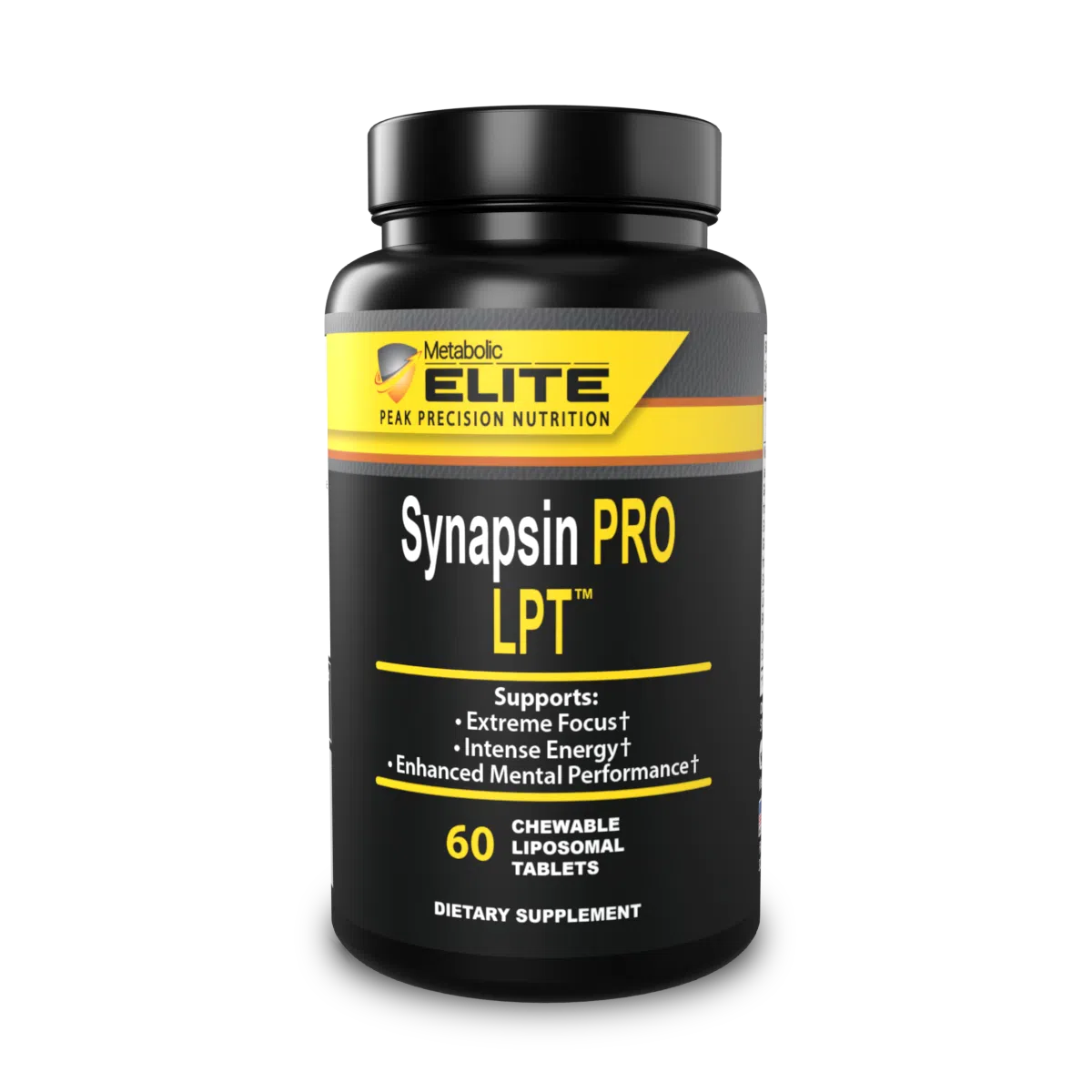
Use CODE: "Neeld15" to save 15%