P.S. If you want more information on designing effective off-ice hockey training programs, check out Ultimate Hockey Training!
Please enter your first name and email below to sign up for my FREE Athletic Development and Hockey Training Newsletter!
Off-Season Hockey Training Program
The last 4 weeks have been a whirlwind. In mid May I started to get extremely busy at Endeavor as we started filling our morning groups with hockey players that were returning home from their junior teams (which means assessments, designing programs, and lots and lots of coaching). Simultaneously, we started up with our off-season programs for Team Comcast at our satellite facility in Pennsauken, NJ. The result was, and continues to be, 12-13 hour days for David Lasnier and I. We also had 3 new interns start at Endeavor (doing a great job so far!).
Mixed in with all of that, I flew to Colorado Springs for USA Women’s National Team 6-day Performance Camp, flew back for a day to work 10 hours (felt like a half-day), then woke up at 5am the next morning (3am in Colorado time…where my body was still residing), and drove up to northern New Jersey for a 4-day Active Release Technique course. It’s always a great experience working with the incredible staff and players with the USA Women’s National Team, and I’m proud to say that I’m now ART certified!. Needless to say, though, things have been pretty busy, and I haven’t had much time to write.
Off-Season Hockey Training Program: Strength Phase
Every month I post the exact hockey training programs I wrote for our players at Endeavor to a special “Insider’s” membership section of Ultimate Hockey Training. Today, I wanted to share one of the programs that will be going into the Insider’s Section shortly, and highlight some of the most important features of the program.
This is “Phase 2” of our 4-day off-season program for players that trained with us during the “early off-season phase.” In contrast, players that are joining us now and weren’t with us for the early off-season have a different program, and players training 2 or 3 times days per week, naturally, have a different program as well.
Dissecting the Program
Population
In general, the players that train 4 days/week with us are competing at levels from Tier I U-18 through the NHL. As a result, they almost all have at least a couple years of training experience, and have gone through their major growth spurts (important consideration for long-term athletic development recommendations). The more advanced training age and stage of development are two reasons why the phases are only three weeks long. It provides an opportunity to emphasize more physical qualities with a stronger emphasis than a typical 4-week phase structure, which more advanced athletes need to continue to develop. In contrast, a novice lifter could do, for example, 3 sets of 8 reps on the same exercises for a year and continue to make progress in muscle size, strength, power, speed, etc.
Purpose
To be overly simplistic, this phase is meant to improve strength. To dig a little deeper, strength depends heavily on the alactic energy system. This can be further divided into alactic power (short duration high intensity efforts with complete rest) and alactic capacity (short duration high intensity efforts with incomplete rest). If you recall from previous posts I’ve written, it’s important to keep in mind which physical qualities send conflicting physiological messages to the body. This isn’t to say that conflicting qualities (e.g. alactic power and lactic capacity) need to be completely segregated, but too large an emphasis on conflicting qualities will impair adaptations to both stimuli.
As a result, an effort was made to keep the “conditioning” in-line with the energy systems emphasized throughout the rest of the phase.
Program Comprehensiveness
It’s still common for players to be subjected to the marketing of programs geared solely toward a specific quality (speed training program, conditioning program, etc.). As I mentioned in the below video, no program should be comprised entirely of a single physical quality, as most qualities compliment each other. Doing only, for example, speed training exercises will not only cause you to detrain a number of other important qualities (e.g. strength, power, conditioning), but it’s not even the best way to develop speed. Programs should be comprehensive, and need to emphasize multiple, complimentary qualities.
PRI
I’ve gotten a lot of questions from people about how we’ve been integrated exercises from the Postural Restoration Institute into our training. With the elite hockey players, David Lasnier or I take them through a comprehensive assessment process and each player gets a few specific exercises that they need to do before and after their training sessions (and preferably also on off days). We also build some of the most powerful PRI exercises into EVERYONE’S program, and progress them from phase to phase. As the off-season goes on, we decrease the volume of these exercises pretty significantly. The idea is that they’re meant to be “corrective”, so we impart the change we’re after, and then cut back to simply maintain the change we’ve created.
Wrap-Up
While I know many will be tempted to download the program and attempt to use it as is, it’s important to realize that our programs are really just templates. We’re constantly making changes at Endeavor to accommodate the individual needs of our players, in terms of exercise selection, loading, and volume (amongst other things). I wanted to share this program with you so you could get an idea of how I approach program design for a strength phase of training. Hopefully you can pull a couple new ideas to integrate into your own programs.
To your success,
Kevin Neeld
P.S. If you want more information on designing effective off-ice hockey training programs, check out Ultimate Hockey Training!
Please enter your first name and email below to sign up for my FREE Athletic Development and Hockey Training Newsletter!
Improving Athletic Performance Beyond Peak Strength: Part 2
Part 1 discusses the role strength plays in maximizing other physical qualities like speed and power, and lays the foundation for how players can improve their performance when they reach their genetic strength limits. Part 2, below, follows up with specific strategies on how to improve an athletes rate of force development, the secret to unlocking more power and speed in elite players.
Strategies for Improving ROFD
Rate of force development differs slightly from power in that power, by definition (Power = Force X Distance/Time), necessitates movement. In contrast, rate of force development encompasses the ability to generate force rapidly, even without external movement. For example, when players battle for possession in the corner, they often push against an opponent who does not move to any significant degree. Whether these efforts are proactive (you pushing up against them) or reactive (you responding to them pushing up against you), the player who is able to generate a high level of force quicker will likely gain optimal body possession and likely control of the puck. This is just one example of the expression of ROFD in environments that don’t involve much movement. Movement-based examples are drastically more prevalent. These include things like first-step quickness, transitional speed, shot release, and shooting power, among others. Naturally, these things can have a powerful (pun intended) impact on a player’s performance.
When training to improve ROFD, it’s important to understand that these adaptations are largely (although not entirely) neural, and that the intention to generate force quickly is more important than the actual speed of movement. When you intend (read: try) to move quickly, the recruitment threshold for high force producing motor units drops. This essentially allows you to develop higher levels of force sooner by bringing more and bigger neuromuscular hands on deck. This concept is key, because it means that ROFD can be improved even with the use of near-maximal loads, which will necessarily slow down the actual movement (as load increases, speed of movement decreases).
With that understood, here are 4 effective strategies to help maximize ROFD:
1) Train for power in low load, high velocity ranges (med ball throws, lower load Olympic lift variations, plyometrics, linear, lateral, and transitional speed exercises, lower load traditional lifting exercises, etc.)
2) Train for power in high load, relatively lower velocity ranges (higher load Olympic lift variations, sled drags variations, resisted linear, lateral, and transitional speed exercises, etc.
3) Intend to move through the concentric phase (typically the “up” phase of an exercise) of exercises as quickly as possible, every rep.
4) Train isometrically in weak ranges of motion of specific movements, and intend to develop force as quickly as possible.
Of these, the first three are the most practical and easiest to transition to as a quality hockey training program should already include components of speed, power in different load ranges, and more traditional strength training exercises. While it is appropriate to slightly shift a greater relative volume of work within the program to this aim, it’s important to recognize that these strategies require maximum efforts, which typically require low rep ranges (e.g. 1-6), complete rest, and only as many sets as the player can perform maximally (not just with maximum effort, but with actual maximum power/ROFD). This is difficult to monitor in isometric exercises, but players can use a Tendo unit to monitor bar speed to help determine drop-off in traditional lifting exercises, and stop watchers or electronic timers to monitor performance in sprint/sled work. An alternative, and likely more practical option, is to simply err on the side of lower volumes of work.
Maximal neural efforts place a high load on the nervous system, which takes time to recover and adapt. Throughout this process, it’s important that the athlete implements these principles strategically, and doesn’t overdue other neurologically taxing work (e.g. extremely high load or high speed efforts) within a given training cycle.
Please enter your first name and email below to sign up for my FREE Athletic Development and Hockey Training Newsletter!
Improving Athletic Performance Beyond Peak Strength: Part 1
It is fairly well accepted that strength, or the ability to produce force, lays the foundation for improvements in other important physical qualities such as speed and power. In other words, for any given strength level, an athlete has a limited ability to further improve speed and power. Once this relative ceiling is reached, improvements in strength create new opportunities to further develop speed and power. As a result, it is well-advised for athletes to consistently train for improved strength levels.
However, as an athlete’s training age increases, their window for adaptation shrinks. As they continue to develop various physical qualities (e.g. speed, power, strength, conditioning), they will approach their genetic ceiling and improvements will taper, if not halt altogether. Specific to strength, athletes will reach a point of peak or near-peak strength where further improvements will require a substantial amount of dedicated time, energy, and focus.
This raises a few questions:
How do we define peak strength?
When it comes to athletic performance, how important is it to allocate the time and energy to pursue improvements in non sport-specific qualities once initial easy adaptations have been exhausted?
Is the risk:reward ratio worth pursuing further improvements in strength?
Is an improvement in strength worth the time necessary to improve it, given that this will almost necessarily result in decreases in other qualities?
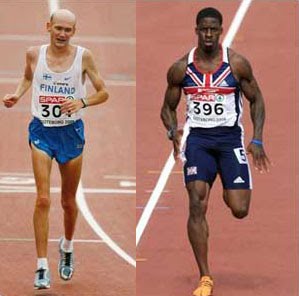
Peak strength, or an individual’s maximal strength potential, is not an easy point to define. Simply, most athletes will NEVER reach their true maximal potential for any given physical quality, because every sport requires a unique combination of qualities whose development conflict with one another. As one example, maximum strength requires a shift in motor unit/muscle fiber composition toward more fast twitch, high force producing units, whereas maximum endurance requires a shift toward more slow twitch, low force units with lower levels of fatigability. This is why you’ll note such varying body types between the athletes that compete in sports that thrive on these extremes, such as short-distance sprinters (maximum speed, which requires maximum force) and marathon runners (maximum endurance). Ice hockey, like most team sports, falls somewhere in between these two extremes, so the development of different conflicting qualities needs to be balanced to maximize performance.
Which guy would you rather have on your team?
That said, most players that train consistently will reach a point where further improvements in strength will require too larger of a proportion of their training efforts, an increased risk of injury for relatively small gains, and a decrease in the degree to which further increases in strength directly translate to on-ice improvements. Naturally, the point at which you start to question whether further improvements in strength are worth the pursuit is relative to the individual’s genetic potential, injury history, and role as a player. For most players at this point, the goal should shift toward strength maintenance and maximizing the player’s rate of force development (ROFD), a neuromuscular quality that allows players to express the strength that they have faster. This strategy will essentially help players squeak out further improvements in their quickness, speed, and power capacity for their already well-developed strength capacity.
Part 2 of this series will provide a few specific examples about how to improve your rate of force development. In the meantime, check out this article I wrote for Elite FTS several years ago on the same topic: Rapid Rate of Force Development
To your success,
Kevin Neeld
Please enter your first name and email below to sign up for my FREE Athletic Development and Hockey Training Newsletter!
The Myth of Wrist Strength in Hockey
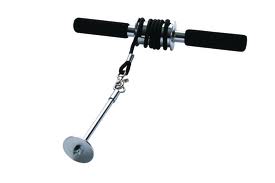
As long as I’ve been around the game, I’ve heard players and coaches preach about the importance of wrist strength. As a player, I bought in hard. I had an old skate lace wrapped around a broken stick, with a weight plate at the far end. I actually had a few, with different weights at the end. At some point, a coach had convinced me that doing that exercise would improve my wrist strength, which would improve my shot power. I still hear players talking about this now. And, although the athletes at Endeavor have come to expect my skepticism regarding mainstream training practices, many are still surprised to hear me dismiss the importance of doing extra exercises to improve the wrists/forearms. Let me explain.
Will this improve your shot power? Not likely.
Where does the power come from?
There are several specific ways to train off the ice for improved shot power. Naturally, if we’re training with a specific goal in mind (as we always should be), we need to have a comprehensive understanding of the movement patterns and involved musculature that we’re targeting. Simply, if we can’t see the target, we’re unlikely to hit it.
When most players think of shot power, they think of the wrists. The wrists are an important piece of the puzzle, but they’re FAR from the primary power generators. The overwhelming majority of the power comes from the hips and core, which is then transferred through the shoulders, arms, and refined by the wrists. The relative and absolute amount of power generated through the hips and core differs depending on the type of the shot. This power path is easy to visualize in a slap shot, but it’s still present in snap shots, wrist shots, and back hands. In realizing this, consider the amount of musculature involved in the hips, core, and shoulder musculature, and then compare it to that of the forearms.
The wrists are more active in force transfer and directional refinement than power generation.
If you want to improve shooting power, you need to develop massive legs and hips, a strong core, and maintain appropriate mobility through the hips and thoracic spine. The benefit of this approach is that it’ll also make you substantially faster on the ice.
I had a conversation with Mike Boyle several years ago where he only half-jokingly said something along the lines of “it doesn’t matter how strong their wrists are, they’re too slow to get to the puck anyway.” Conveniently, the best approach for the overwhelming majority of players to develop a stronger shot is also the same approach they should take to get faster.
Diaper and partial convulsions optional. Heavy training mandatory.
Movement vs. Muscles
Another major argument against players performing extra wrist work lies in the lack of specificity in the movement pattern. For starters, the velocity of traditional exercises (e.g. all forms of wrist curls) doesn’t come REMOTELY close to that of shooting. Also, with the understanding that shooting power is largely synonymous with rotational power, performing repeated wrist flexion/extension exercises doesn’t seem very appropriate. A better option would be to use a variety of rotational medicine ball exercises to develop this quality.
Med Ball Shotput w/ Rapid Step Behind & Partner Toss
Front Standing Med Ball Scoop w/ Partner Toss
These videos are a couple years old. As an aside, 5 of the 6 kids in the first two videos have moved on to play NCAA D1 hockey (the 4th is playing D3). Of the players in the third video, one advanced to play in the ECHL (as a former D3 player), one was already playing D1, two more have moved on to play D1, and one has a full ride commitment to Boston College and is playing in the USHL. Simply, training hard works.
Overlooked Forearm Work
Finally, most players do drastically more forearm work than they probably realize. If your program encompasses exercises like trap bar deadlifts, stiff-legged deadlifts, dumbbell reverse lunges, dumbbell RFE split squats, farmer’s walks, and any other exercise that involves holding something heavy in your hands, like it should, the stimulus to the forearm and wrist musculature is huge. I’m aware there are different forms of grip, but in general I think performing these exercises in parallel with some periodic puckhandling and shooting on or off the ice is sufficient to meet the needs across the wrist joint.
Take Home Message
Doing some extra forearm work throughout the off-season likely won’t hurt, but it’s far from necessary and should NEVER take the place of more purposeful off-ice training. If your goal is to improve your shooting power, focus on improving lower body and core strength, maintaining good mobility through your hips and thoracic spine, and on rotational power exercises, such as those in the videos above.
To your success,
Kevin Neeld
Please enter your first name and email below to sign up for my FREE Athletic Development and Hockey Training Newsletter!


 Use CODE: "Neeld15" to save 15%