

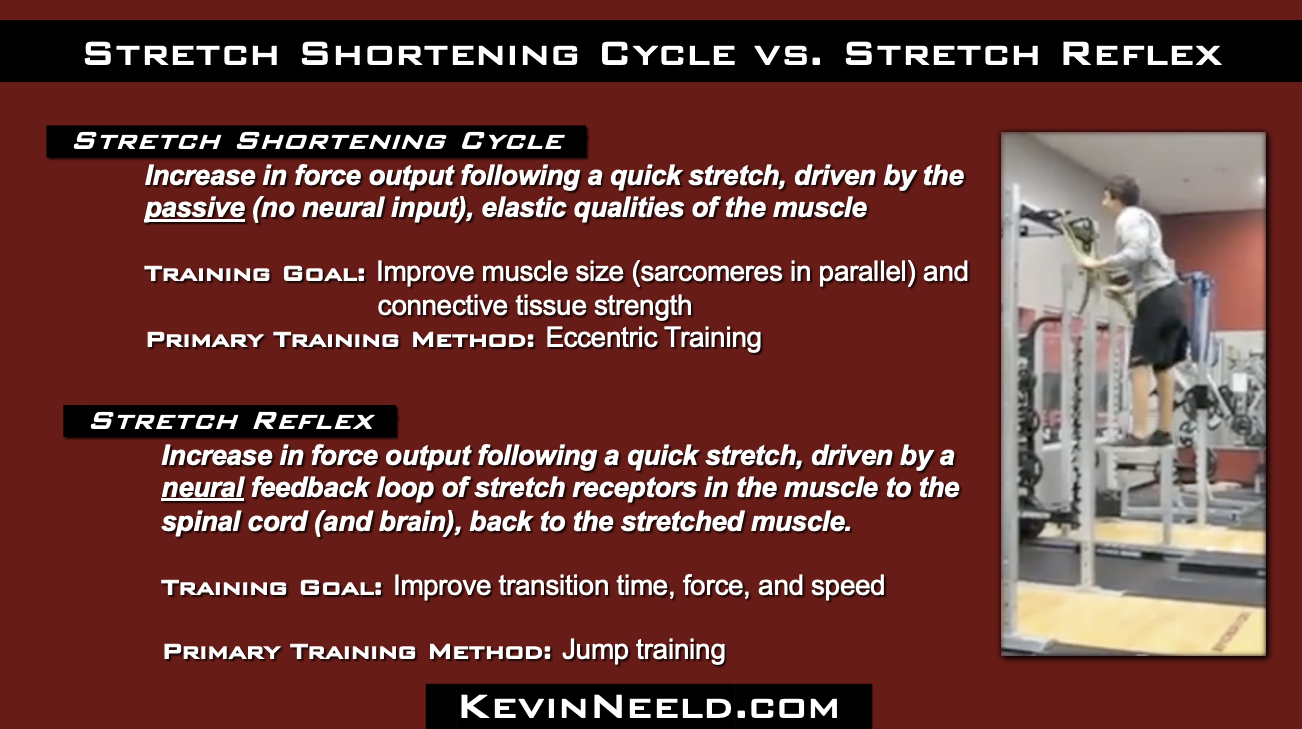
Different mechanisms. Different training implications. To your success, Kevin NeeldSpeedTrainingforHockey.comHockeyTransformation.comOptimizingAdaptation.com P.S. If you’re interested in improving your speed on the ice, check out my book Speed Training for Hockey. Enter your first name and email below to sign up for my FREE Sports Performance and Hockey Training Newsletter!
Blogs
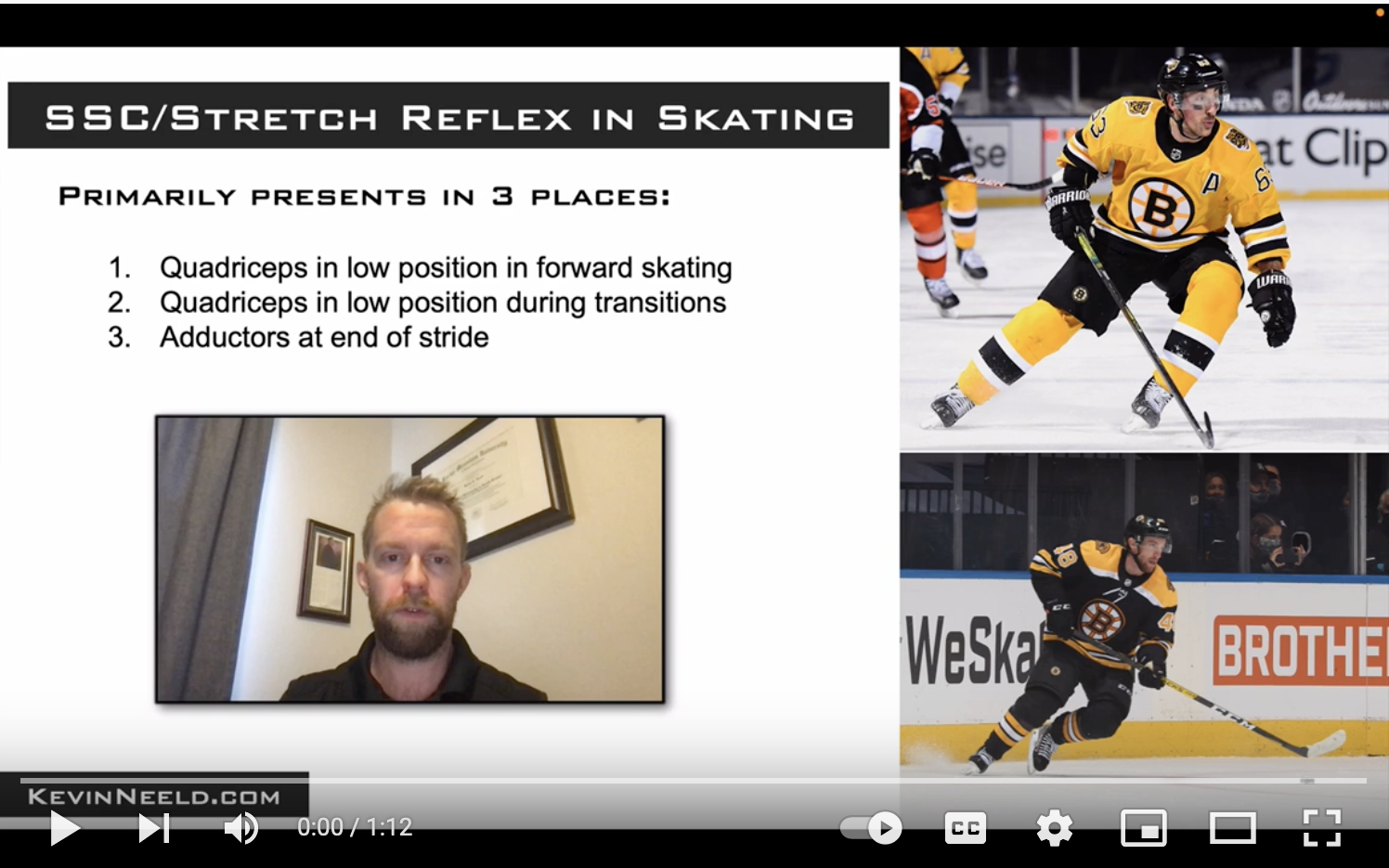
Understanding the Stretch Reflex in Skating
See below for a quick video outlining the influence of the stretch reflex and stretch shortening cycle in skating. Major Take-Away: The stretch reflex should primarily be trained in positions of deep hip and knee bend, with less focus on the more upright posture, short contact time exercises applicable to top speed sprinting OFF the […]
POSTED BY KEVIN NEELD Dec 27, 2021
Core Training Exercise for Balance
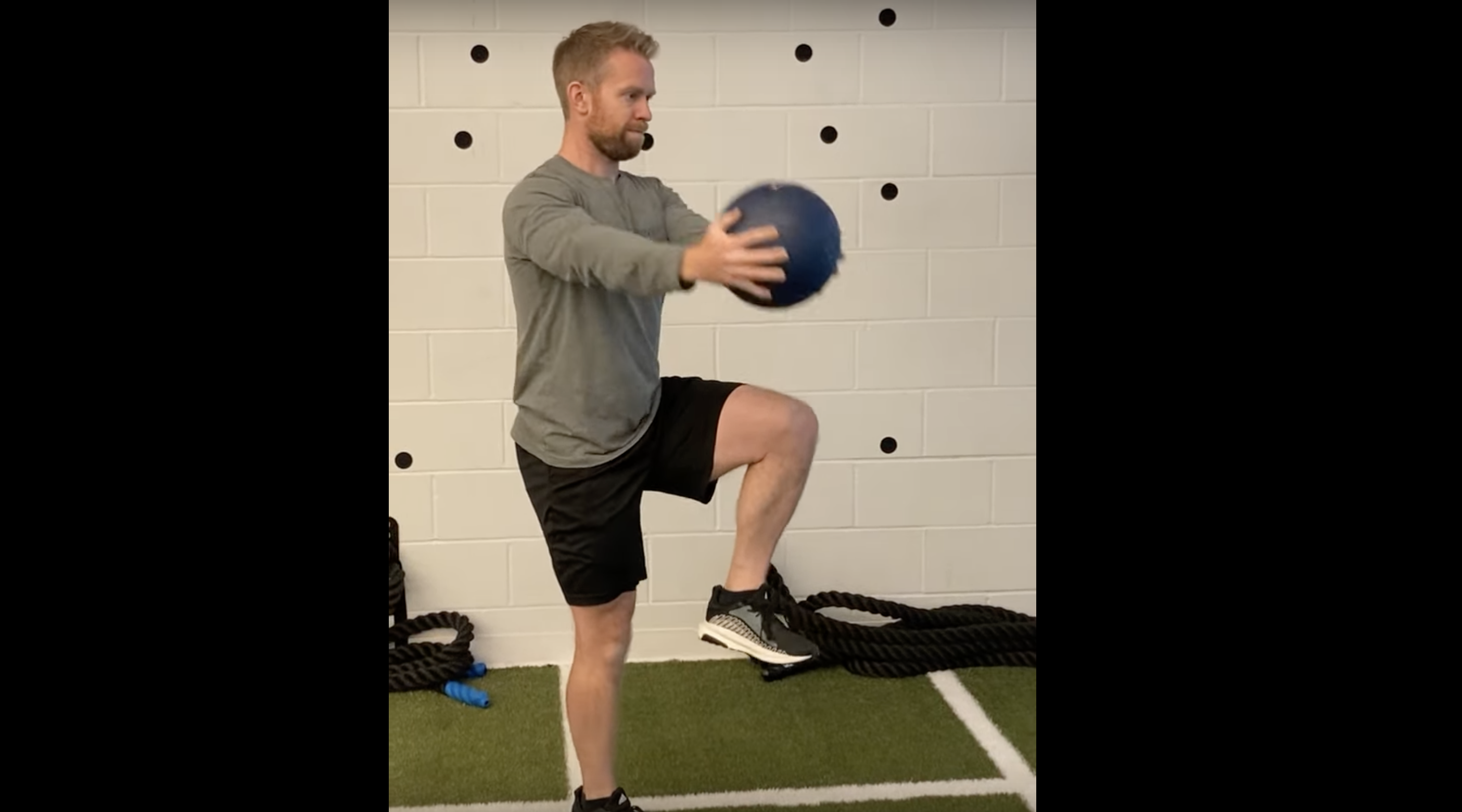
While the previous two videos (see: Integrated Core Training for Dynamic Stability and Core Training Variations for Dynamic Stability) help reinforce elements of low-position control important for skating, the Single Leg Stance Med Ball Figure 8 is more of a traditional balance exercise. The goal is to stay tall and centered over the foot. When someone […]
POSTED BY KEVIN NEELD Dec 8, 2021
Core Training Variations for Dynamic Stability
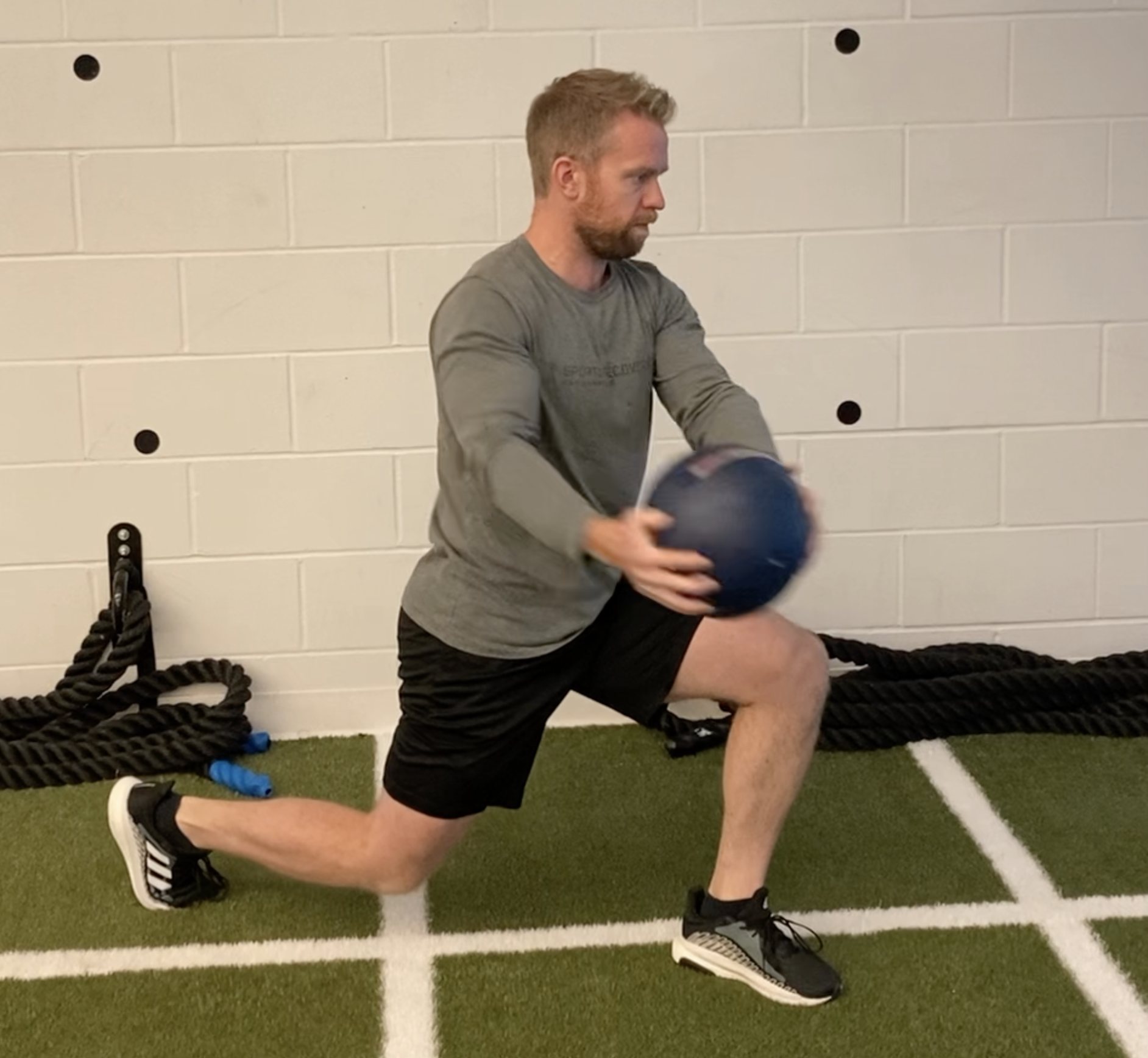
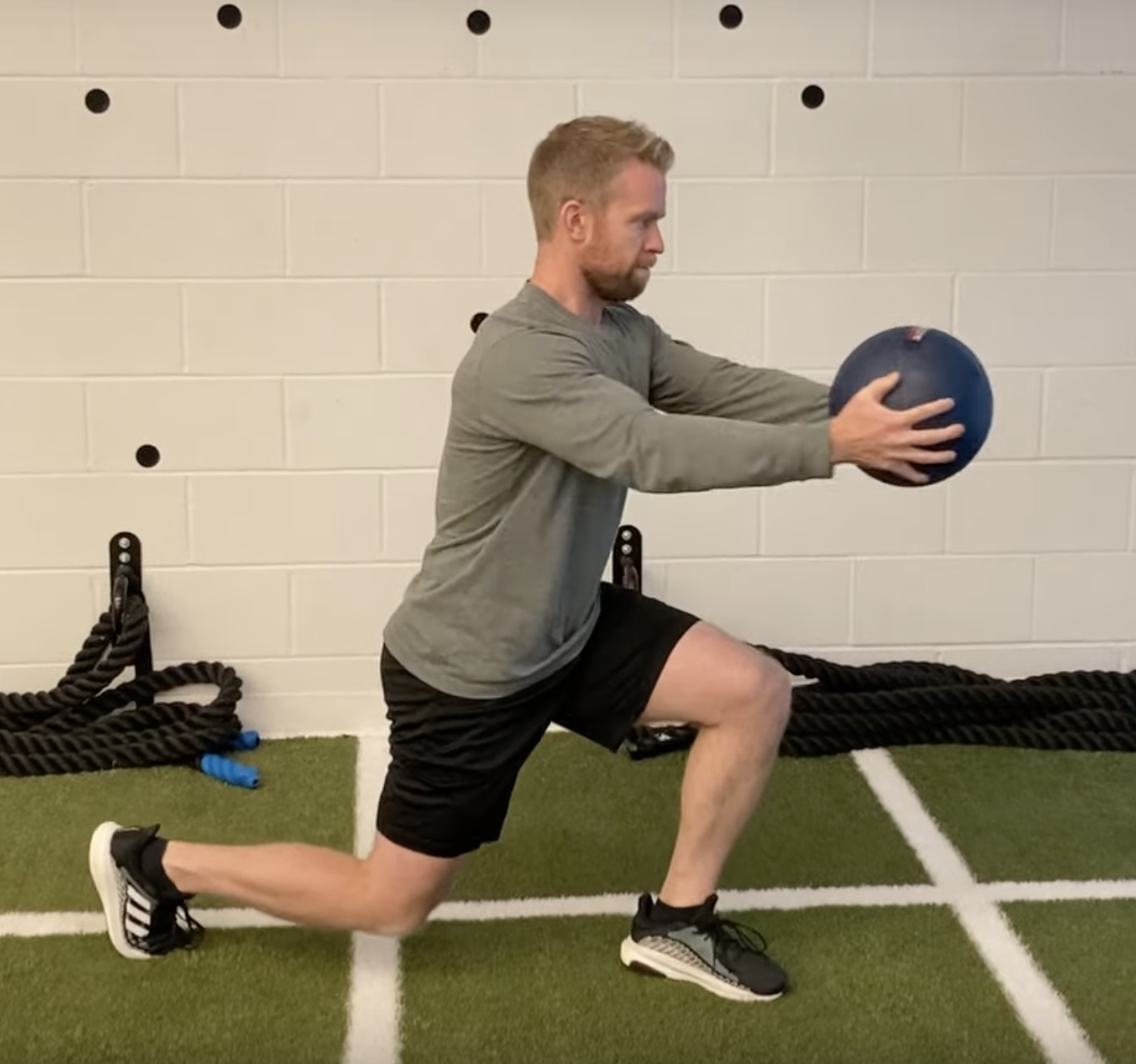
Following up on a previous post, over the next few days, I’ll share other core variations we use to reinforce stability across a variety of different positions. The video below is of a Split Squat Med Ball Figure 8. As with the last video, the goal is to maintain depth and a forward lean/shin angle, […]
POSTED BY KEVIN NEELD Dec 1, 2021
Integrated Core Training for Dynamic Stability
One of the key skating characteristics of elite hockey players is that they adopt a low skating position. From an off-ice training perspective, hockey players should first demonstrate that they have the mobility and low position strength and endurance to get into and hold these types of positions. Once this has been achieved, it can be helpful […]
POSTED BY KEVIN NEELD Nov 19, 2021
Improve End-Range Stride Strength and Stability
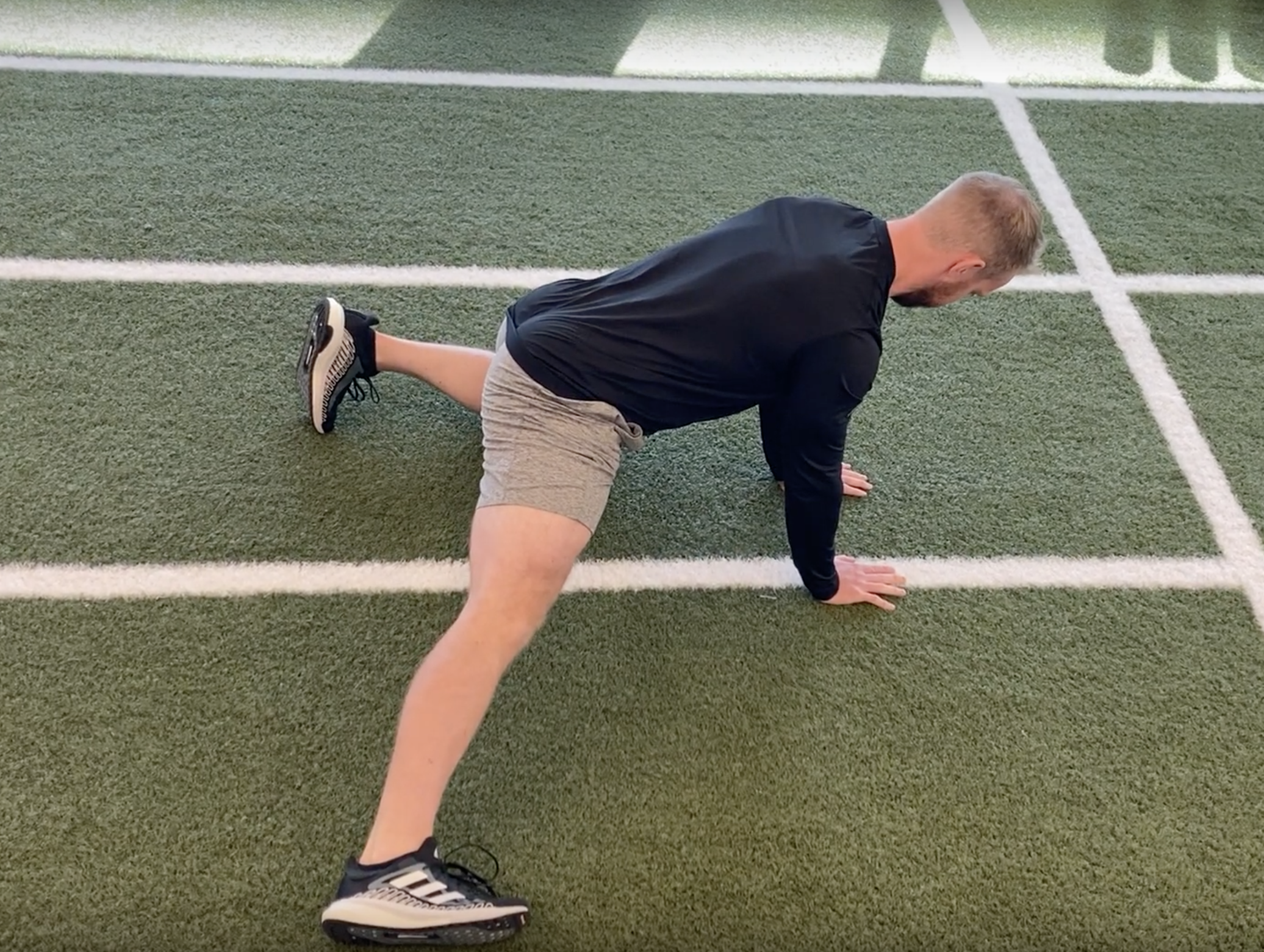
In a previous post, I discussed two strategies to improve hip abduction range of motion as a means of allowing hockey players to increase stride length from a deeper skating position. A key point of emphasis from that post is that range of motion is more likely to be integrated into dynamic patterns if strength/stability are […]
POSTED BY KEVIN NEELD Nov 17, 2021
Considerations for Agility Testing in Ice Hockey
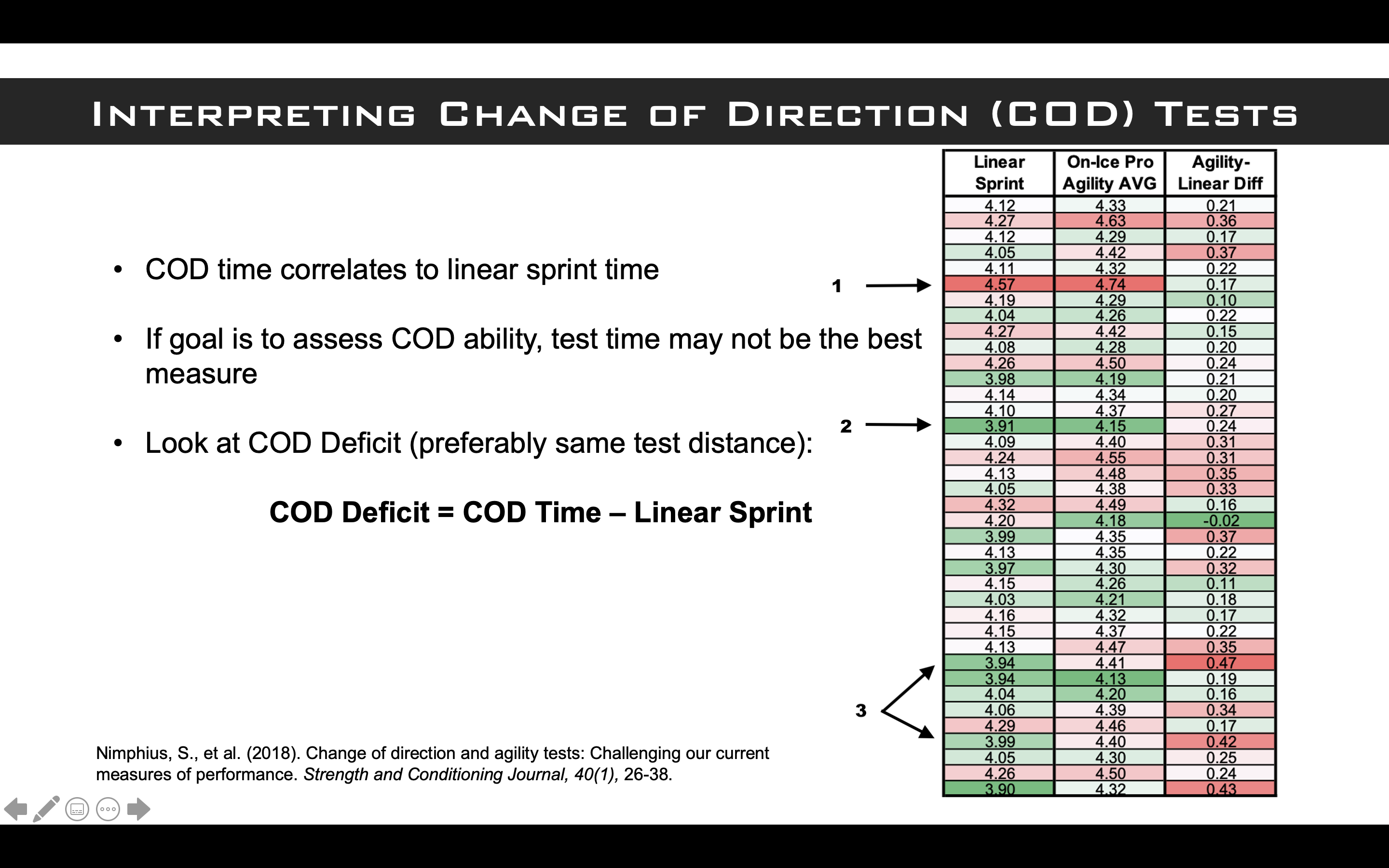
One of the things I’ve heard coaches mention frequently over the years is that a player “doesn’t move well laterally.” There are some key physical contributors to transitional patterns (e.g. range of motion, eccentric strength & rate of force development, effective use of range-specific stretch-reflex/stretch-shortening cycle), but skating technique and body control are also essential to […]
POSTED BY KEVIN NEELD Nov 12, 2021
Best Off-Ice Training Exercises to Improve Speed
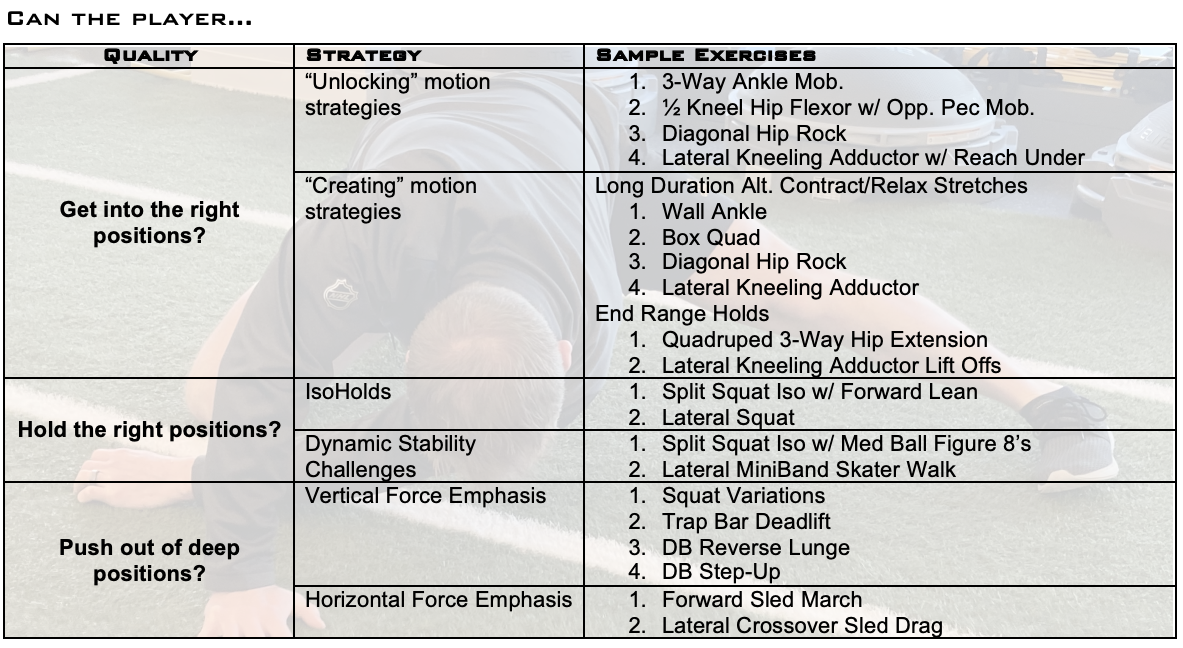
Last week I shared some research highlighting differences between acceleration and steady state skating, and between elite and sub-elite skaters through these two skating phases. In response to those posts, I was asked if I had any favorite exercises to improve acceleration and top-end speed. As I’ve mentioned in the past, I typically approach the training process […]
POSTED BY KEVIN NEELD Nov 4, 2021
Key Characteristics of Faster Skaters
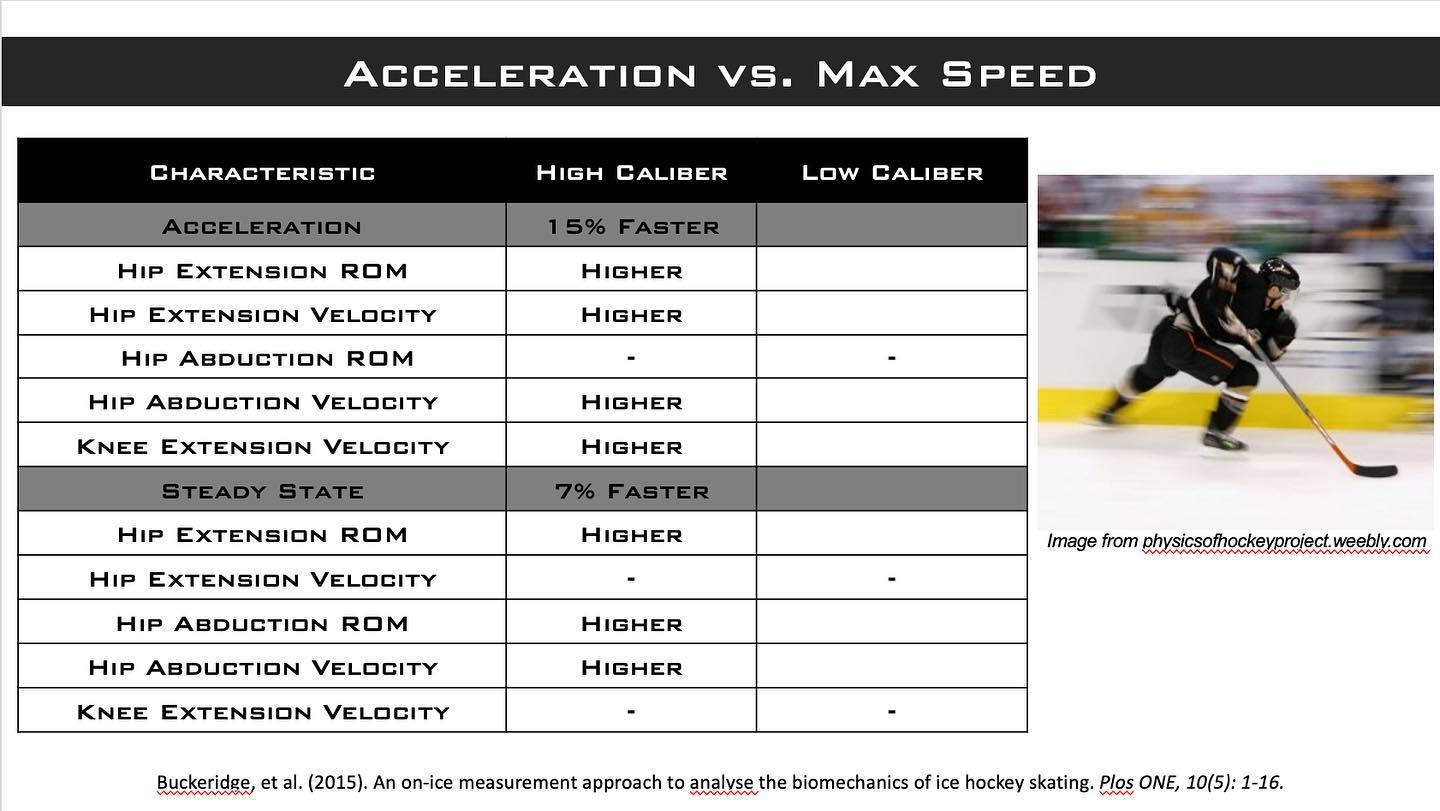
There are notable differences in skating stride characteristics between elite and sub-elite skaters in both acceleration and steady-state phases of skating. In the acceleration phase, elite skaters use a larger hip extension range of motion, and higher hip extension, hip abduction, and knee extension velocities. In steady state skating, the elite skaters used a larger […]
POSTED BY KEVIN NEELD Nov 1, 2021
Comparing Acceleration and Max Speed
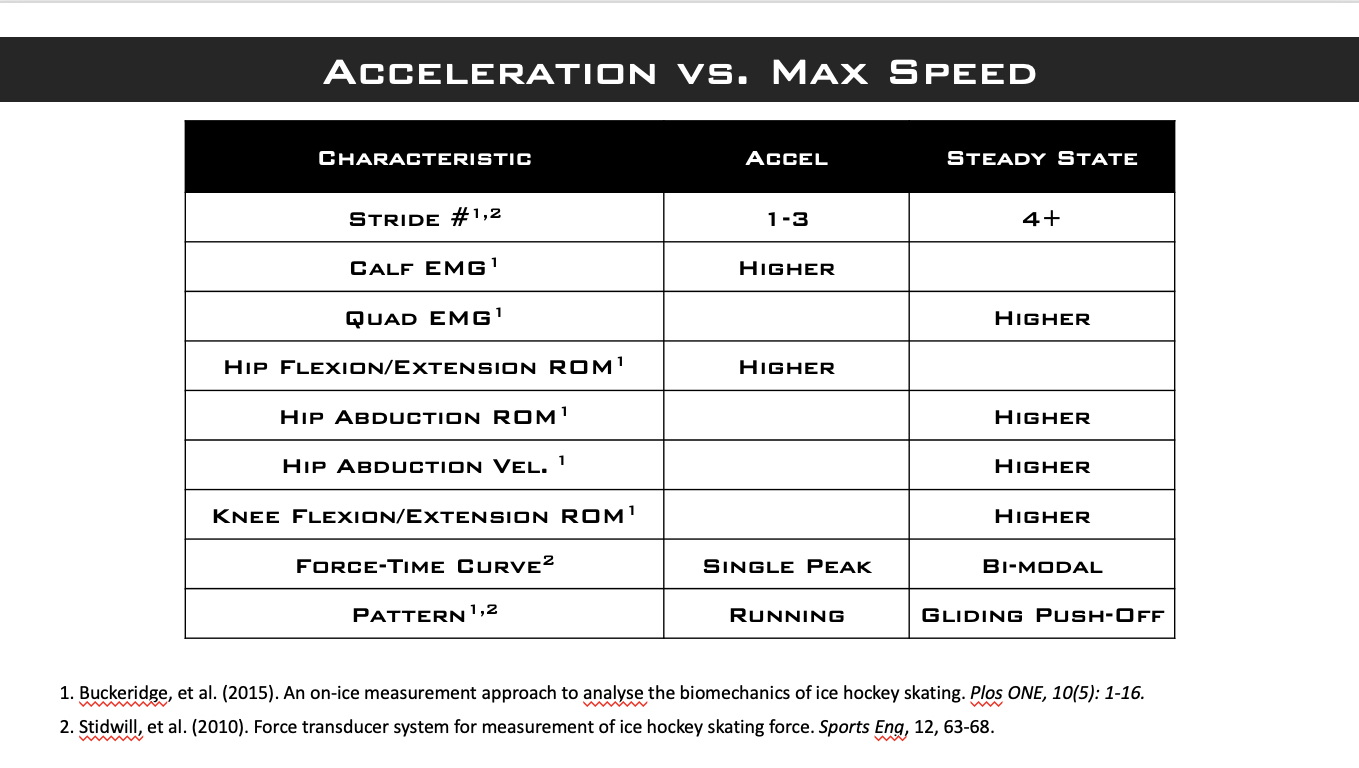
There are two general ways to approach linear speed training: 1) Improving the rate at which a player approaches top speed (e.g. acceleration) 2) Improving top speed It’s rare for a player to reach top speed with any regularity in hockey, whereas the ability to accelerate is integral to performance in every shift. However, the […]
POSTED BY KEVIN NEELD Oct 25, 2021
 Use CODE: "Neeld15" to save 15%