Today I have news that I’m extremely excited to share with you.

James LaValle, Mike Potenza, and I are doing a new seminar this Summer called Optimizing Adaptation and Performance.
The one-day seminar will be hosted at Mike Boyle Strength and Conditioning in Woburn, MA on Saturday July 14th, 2018. We just found out that the seminar has been approved for CEUs from the NSCA as well.

The seminar will dive into topics spanning the entire performance continuum, including:

  • Using blood markers and physiological goals to drive different nutrition and supplementation interventions to enhance adaptation, maximize performance, or facilitate recovery
  • Efficient ways to use assessment and monitoring data to improve individualization of training and recovery methods within a team environment
  • Effective program design strategies used to retain performance qualities and allow for recovery during times of increased competitive demand and stress

As a brief intro to the speakers…

James LaValle is one of the world’s leading experts in clinical pharmacology. In addition to consulting with collegiate and professional teams, Olympic athletes, and major pharmaceutical and nutrition companies like Bayer, CVS, Rite Aid, P&G, Helsin, and Thorne Research, he has authored 16 ebooks and 20 books including his most recently book, Your Blood Never Lies, and his best seller, Cracking the Metabolic Code. He was also selected to direct the Pro Football Hall of Fame state of the art performance and health rejuvenation facility at the Institute for a Hall of Fame Life in Canton, OH. James specializes in using blood markers to create an individualized plan to nutrition and supplementation. Despite an incredibly accomplished resume, he could very well be the best kept secret in sports performance.

Mike Potenza is entering his 13th year as the Director of Strength and Conditioning for the San Jose Sharks, which he joined after working at Wisconsin, Harvard and Colgate. He was also the Director of Performance for two United States Air Force Pararescue teams within the National Guard Bureau, overseeing performance testing, program design and implementation, establishing reporting metrics on injury trends, resource usage and team readiness, as well as directing the physical therapist and orthopedic manual therapist for the forces. In both settings, Mike is heavily involved with directing rehabilitation and reconditioning efforts to help bridge the gap between acute rehab and a full return to elite level performance/competition.

Click here for more information: Optimizing Adaptation and Performance

Needless to say, it’s going to be an awesome day. There is an incredible amount of education and experience behind the methods we’ll discuss at the seminar. Simply, the strategies you’ll learn work, and they’re incredibly powerful.

You can find a full itinerary below:
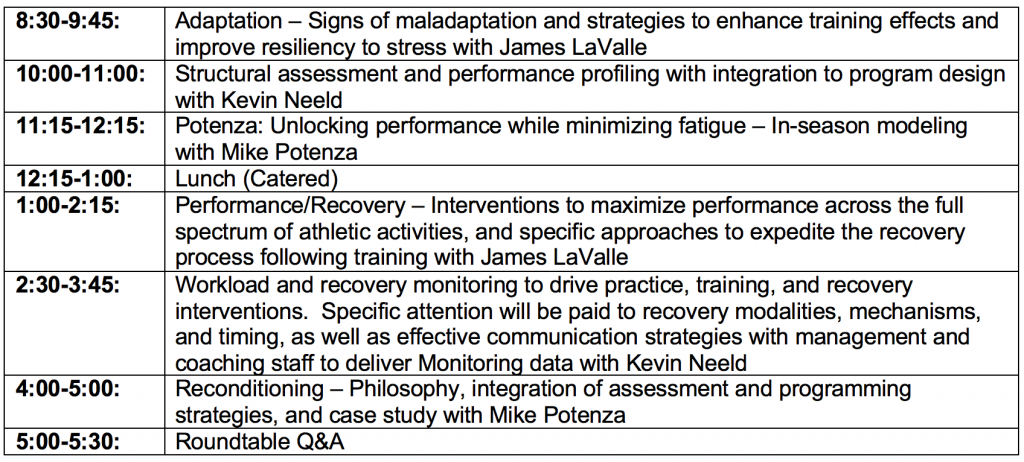
The overarching goal of the day is to provide you with a comprehensive model of athlete performance, including the assessment and analysis tools, as well as programming, recovery, nutrition and supplementation strategies to best serve the individual needs of today’s athlete.

I’m personally excited to hear James’ and Mikes’ presentations. With an in-house lunch, and a round table discussion to end the day, I also think a lot of the best exchanges will come through discussions with the audience.

In short, this will be a great opportunity to learn powerful strategies to help your athletes, get CEUs, and network with other sharp professionals within the field.

I hope to see you there! Feel free to email me with any questions or post them below.

Click here for more information: Optimizing Adaptation and Performance

To your success,

Kevin Neeld
HockeyTransformation.com
OptimizingMovement.com
UltimateHockeyTraining.com

Please enter your first name and email below to sign up for my FREE Athletic Development and Hockey Training Newsletter!

Get Ultimate Hockey Transformation Now!

Year-round age-specific hockey training programs complete with a comprehensive instructional video database!
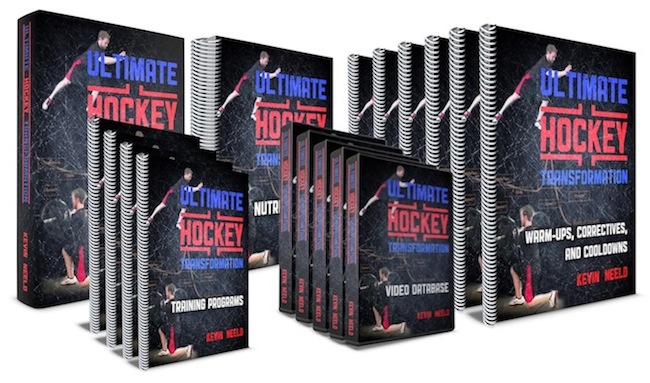
Ultimate Hockey Transformation Pro Package-small

Get access to your game-changing program now >> Ultimate Hockey Transformation

“Kevin Neeld is one of the top 5-6 strength and conditioning coaches in the ice hockey world.”
– Mike Boyle, Head S&C Coach, US Women’s Olympic Team

“…if you want to be the best, Kevin is the one you have to train with”
– Brijesh Patel, Head S&C Coach, Quinnipiac University

I’ve always been a huge proponent of the benefits of getting quality manual work. When I first started at Endeavor, one of the first things I did was do a search for local practitioners that had a few specific skill sets and mailed out letters introducing myself.

This process, albeit a little awkward, was crucial to building a local referral network. I quickly realized two things, however, that were huge barriers to successfully using this referral network:

  1. The “top” practitioners were ~30 minutes away from our facility
  2. Because we had clients that were already driving 30 minutes to 2 hours each way to come train with us, many simply weren’t willing to drive another half hour (often times in the opposite direction) to go get manual work.

As a result, I considered going back to massage school so I could offer some of these same services at our facility. I basically sat on this idea for 2 years, until I finally took the plunge and enrolled at Lourdes Institute of Wholistic Studies in Collingswood, NJ (where I later moved).

I basically went back for three major reasons:

  1. After studying anatomy consistently for ~8 years, I really felt that the next step for me to further internalize functional anatomy was to learn to differentially palpate different structures throughout the body. This was probably the biggest factor; it was an awesome opportunity to further my education and understanding of how we’re all built and how manipulating a structure can influence movement patterns.
  2. As I mentioned above, it is an additional service we can offer at our facility and ultimately a way to improve the convenience for a great service that would benefit our clientele
  3. I had talked to a few of my friends that work in or consult with pro sports teams and they said that having manual therapy skill sets opened the door for them working in these organizations.

For me, it wasn’t a huge time or financial commitment because I was basically able to test out of 1/3 of the curriculum.

With that said, I have no regrets about the decision and have since gone on to become Full Body ART Certified, in addition to taking Spina’s Functional Range Release course and a 3-part trigger point therapy course.

Functional Anatomy Seminars

Outstanding education to accompany an effective treatment system

It seems to be a trend now that more strength and conditioning coaches are looking into massage school, as I get emails fairly regularly asking for advice on what I think about the process and whether or not it’s “worth it”.

Should you go to massage school?

It’s interesting to me that people ask me if they should go to massage school or not. The reality is I have no idea what you want to pursue as a career. I think people often look at education backwards. Before you make a decision either way, I’d encourage you to answer these questions:

  1. What is my ideal career? In other words, what would I enjoy spending my time doing more than anything else? Picture the environment, clientele, typical work day, etc.
  2. With your answer to #1 in mind, does anyone already have this job? If so, what skill sets do they have and how did they acquire them?
  3. Use your responses to the above two questions to reverse engineer your path to your ideal career.

This may seem overly simplistic, but if you’re not passionate about manual therapy and don’t want to spend a significant portion of your day doing manual work on people, then it’d be a huge waste of money to go back to massage school.

Sure, being a licensed massage therapist can set you apart from other S&C coaches, but only if you actually use the skill set. If you hate doing it, you won’t use it. There are a lot of ways to distinguish yourself from other coaches; most notably, by getting better results.

Massage School does not Replace PT School

I think one of the major reasons many S&C coaches consider massage school is because they think, in conjunction with their training ability, that it’s a less expensive route to a physical therapy-like profession. This is an incredibly dangerous misnomer as massage therapists are neither credentialed, nor educated sufficiently, to replace a physical therapist. Among the countless examples of how different the education is between massage therapists and physical therapists, one of the most important is that massage therapists, even if they have good “treatment” skills, have almost no ability to diagnose sources of pain.  This is true, regardless of how many SFMA, FMS, PRI, and other movement assessment courses you take, as there are a lot of sources of pain that aren’t just movement-based.

Simply, massage therapy and physical therapy are significantly different professions. If you want to be a PT, go to PT school.

Benefits of Massage School

Having said all of that, there are some benefits to going to massage school. Having a good set of manual therapy skills can help you:

  1. Help facilitate recovery in your athletes by performing “flush” type massages and/or simply using massage as a stimulus to facilitate a parasympathetic shift in the athlete
  2. Manually release aberrant tension in muscles/soft-tissue structures that may be causing restricted movement or undesirable postures in your clients
  3. Work in conjunction with (not in replacement of) medical professionals to help facilitate client recovery from an injury

I think it’s a combination of all three of these points that makes the strength coach/massage therapist combo so attractive to teams, as it makes what is often a segregated “strength and conditioning staff” and “rehab staff” into a more cohesive “performance staff”.

That said, one of the things that I struggle with is finding time to do everything. With the Flyers Junior Team, I’m the Strength and Conditioning Coach, Manual Therapist, and am also responsible for data collection/player monitoring. This, of course, is on top of all of my other responsibilities for Endeavor, USA Hockey’s Women’s National Team, and running this site.

I mention this because I think it takes a pretty special work environment, which I have, to be able to balance the “strength coach” and “manual therapist” professions simultaneously. If I worked in a different environment, it may not be possible to do both. And with the increased responsibility of data analytics falling (appropriately so) on strength coaches, I think it will be even tougher for people to be exceptional as strength and conditioning coaches, while also being competent manual therapists. This is something I’d encourage you to consider very seriously before registering for massage school.

Wrap Up

In short, having the ability to offer manual therapy to your athletes can be extremely powerful in helping them stay healthy and recover fully. It can also allow you to work more effectively within a coordinated “performance team” that spans the sports medicine to sports performance continuum. That said, it’s not a fast-track replacement for PT school; the differences between the two need to be respected. Hopefully this sheds some light on my experience and provides some of the S&C coaches considering massage school some questions to think about before deciding one way or another.

To your success,

Kevin Neeld
OptimizingMovement.com
UltimateHockeyTraining.com

Please enter your first name and email below to sign up for my FREE Performance Training Newsletter!

Get Optimizing Movement Now!

“…one of the best DVDs I’ve ever watched”
“A must for anyone interested in coaching and performance!”

Optimizing Movement DVD Package

Click here for more information >> Optimizing Movement

Today’s Thursday Throwback is an appropriate follow-up to last week’s post on the relationship between flexibility and muscle injury risk. If you missed that, you can check it out here: Does Flexibility INCREASE your risk of injury?

This is another short, but important read, as it touches on an idea that I think every youth athlete I’ve ever worked with has been taught incorrectly. Enjoy the post, and please pass it along to any friends or family you think would benefit from reading it!

Should You Stretch After You Pull A Muscle?

Think about the times in your life that you’ve “tweaked” a muscle or slightly strained/pulled it.

What was the FIRST thing you did on your own or were told to do?

If you’re like most people, you immediately stretched the muscle.

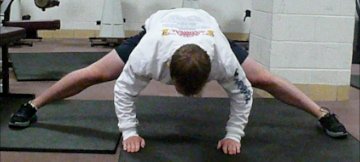
straight-leg-adductor-stretch-bilateral

This isn’t always the answer

The very first thing I tell my athletes if they tweak a muscle is NOT to stretch it!

A muscle strain can range from a slight over-stretch to a complete tear. Assuming the muscle isn’t COMPLETELY torn, it’s likely that there is some micro-damage to the muscle and that the muscle feels tight because it’s guarding against further injury.

This means that most people are attempting to stretch an over-stretched muscle AGAINST the muscles’ contraction.

Not only is this not an effective way to speed up your healing, but it’s probably making your injury worse!

Think about your muscle as a rubber band. Now imagine cutting a small slit in the rubber band with a razorblade.

If you stretch that rubber band now, what’s going to happen?

The small slit is going to expand, getting longer and wider.

Does making a slight tear in your muscle longer and wider seem like a smart recovery strategy?

If you tweak a muscle, DO NOT stretch it. You can ice it if you want (although I’m not convinced that ice does anything either). If you’re going to stretch anything, stretch the muscles that OPPOSE the injured muscle.

Many muscles are overworked or strained because of a relative stiffness imbalance with their antagonists, so stretching the opposing muscle can help bring you back into balance.

To your success,

Kevin Neeld
OptimizingMovement.com
UltimateHockeyTraining.com

Please enter your first name and email below to sign up for my FREE Performance Training Newsletter!

Get Optimizing Movement Now!

“…one of the best DVDs I’ve ever watched”
“A must for anyone interested in coaching and performance!”

Optimizing Movement DVD Package

Click here for more information >> Optimizing Movement

Today’s “Thursday Throwback” is a quick one from 2009. This continues to be a trend we see in our assessments today and I think, while basic, highlights that you can go wrong on both ends of the flexibility continuum. Those that are too immobile at one joint are likely to move excessively at another. Those that are too mobile at one joint may be more likely to suffer from injuries as a result of a lack of stability and/or constant attempt to manage the instability (e.g. muscle injuries). This is why optimizing movement is such an important concept!

Optimizing Movement DVD Package


Enjoy the post below:

Does Flexibility INCREASE your risk of injury?

A couple weeks ago I did an audio interview with Joe Heiler for SportsRehabExpert.com, one of the most underrated membership sites on the web. I’m really humbled that he asked me to contribute.

If you’ve never been there, check it out. Joe’s a really bright guy and has compiled a lot of great information from other smart, successful coaches and therapists.

SportsRehabExpert.com

One of the things that came up during the interview was what we can do to prevent “groin” (adductor) strains. We’ve been fortunate in that we haven’t had too many adductor injuries in our athletes. This is probably, at least in part, due to the hip mobility and hip muscle activation exercises we use.

We did have a couple athletes complain of adductor pain though, and they all had ONE thing in common:

OUTSTANDING ADDUCTOR FLEXIBILITY!

This trend flies in the face of the “you got hurt because you didn’t stretch or aren’t flexible enough” way of thinking.

In these athletes, we were able to resolve their pain relatively quickly, by having them STOP STRETCHING their adductors, start stretching their glutes a few times a day, and by doing isometric adductor strengthening exercises by crushing a medicine ball between their knees for time.

The rationale was simply that their adductors were weak relative to their abductors (to be overly simplistic: weak groin, strong glutes).

By stretching their glutes and strengthening their adductors, we were able to shift the strength and stiffness relationship between those muscles into more balance and get rid of their pain within a week or two.

To your success,

Kevin Neeld
OptimizingMovement.com
UltimateHockeyTraining.com

Please enter your first name and email below to sign up for my FREE Performance Training Newsletter!

Get Optimizing Movement Now!

“…one of the best DVDs I’ve ever watched”
“A must for anyone interested in coaching and performance!”

Optimizing Movement DVD Package

Click here for more information >> Optimizing Movement

Today’s Thursday Throwback features 6 videos from Dr. John Berardi, the founder of Precision Nutrition. Dr. Berardi has been one of my go-to resources for nutrition information for the last 8 years. Not only does he stay on top of current research, but he’s the best in the industry at delivering nutrition information in a way that people will actually do it. I believe that most people have a general understanding of better and worse food choices, but few actually do. This seems to be a psychology/behavior change issue more than purely an information issue. This is really where Dr. Berardi excels. If you’re interested in learning more about Dr. Berardi’s system, check out this link >> Precision Nutrition

If you’re looking for something more hockey-specific, be sure to check out Brian St. Pierre’s Ultimate Hockey Nutrition. Brian currently works for Precision Nutrition and delivers high quality nutrition information in ways that are easy for players at all ages to implement.

Ultimate Hockey Nutrition

6 AWESOME Nutrition Tips from Dr. Berardi

John Berardi is a brilliant nutritionist that has had a ton of success with a wide variety of people from elite athletes to non-athletes. His Precision Nutrition system is still the best nutrition product ever created. I think everyone should own a copy. For more information on Precision Nutrition, click here.

Below are 6 awesome videos of a TV interview that Dr. Berardi did with Christine Williams on the show “On The Line”. Take the time to watch these. Dr. Berardi goes through a lot of awesome nutrition strategies that will help you lose fat, and get lean and strong.

Part 1 – On The Line with Christine Williams
About me, my work, about the differences between athletes and recreational exercisers, and more…


Part 2 – On The Line With Christine Williams

How much protein should we eat, the body mass index, how to gauge progress, and more…

Part 3 – On The Line With Christine Williams

Advanced nutrition, healthy food/supplements, metabolism boosting foods, cravings, and more…

To learn more about how Precision Nutrition can help you get in the best shape of your life, click here.

Part 4 – On The Line With Christine Williams

Cutting cravings, metabolic slowdown with age, healthy recipes, fruits and veggies, and more…

Part 5 – On The Line With Christine Williams

Metabolism preservation, ideal rate of progress, crash dieting, loose skin, and we take some calls…

Part 6 – On The Line With Christine Williams

How to exercise, exercise for seniors, day 1 of your program, and more…


To learn more about how Precision Nutrition can help you get in the best shape of your life, click here.

To your success,

Kevin Neeld
OptimizingMovement.com
UltimateHockeyTraining.com

Please enter your first name and email below to sign up for my FREE Athletic Development and Hockey Training Newsletter!

Get Ultimate Hockey Training Now!

“…an extremely rare comprehensive look at the present state of ice hockey training.”
“…a must-have for coaches and strength professionals at all levels of hockey.”

Ultimate Hockey Training

Use CODE: "Neeld15" to save 15%