Hopefully you had an opportunity to watch Boyle’s video no squatting. If you missed it, you can check it out here:

>> Death of the Squat Revisited! <<

Coach Boyle does a great job of clarifying his stance on squatting, which has become one of the most highly debated topics in the strength and conditioning industry.

In a follow up video, Coach Boyle delves into how and why he’s changed how his athletes condition at Mike Boyle Strength and Conditioning. Interestingly, this type of conditioning can be implemented for fat loss programs. I’ve been getting an increasing number of emails from older hockey players asking how they can lose some weight and get back in “hockey shape”. This video will give you an idea of how to go about your conditioning (for performance enhancement and fat loss).

Check out the video here:

>> A New Look at Interval Training <<

If you do consider yourself a serious athlete, lifter, strength coach, or trainer, you owe it to yourself to hear what the owner of the #1 Gym in America has to say when it comes to performing better and getting clients and athletes real results that will improve their conditioning, body composition, and speed.

Keep an eye out this week as Mike is literally giving everyone the keys to Mike Boyle Strength and Conditioning with BodyByBoyle Online.

I’ve personally had a change to preview Body By Boyle Online, and am convinced that this service will change the training industry forever. It extends elite level training and up-to-date training information to people everywhere. From the training programs, to the exercise videos, to the educational content, it is an incredible resource for athletes and strength and conditioning professionals.

BodyByBoyle Online is officially launching on October 6th at 7:00 am EST. He’s limiting the number of spots initially so make sure you get in early so you don’t miss out!

In the meantime, go check out the interval training video here:

>> A New Look at Interval Training <<

To your success,

Kevin Neeld

Please enter your first name and email below to sign up for my FREE Athletic Development and Hockey Training Newsletter!

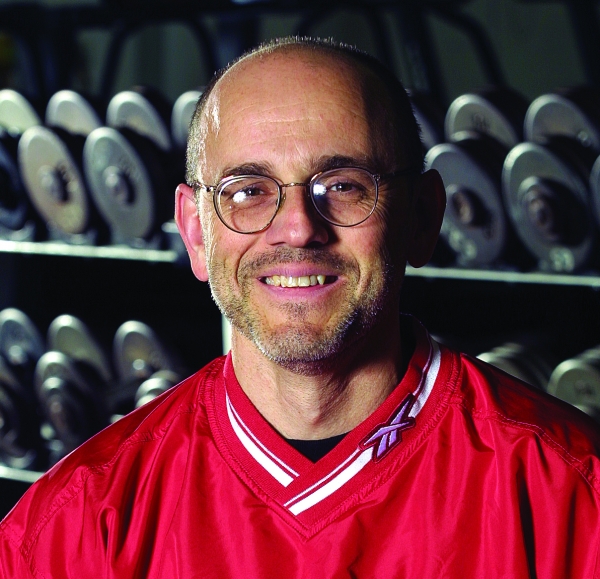
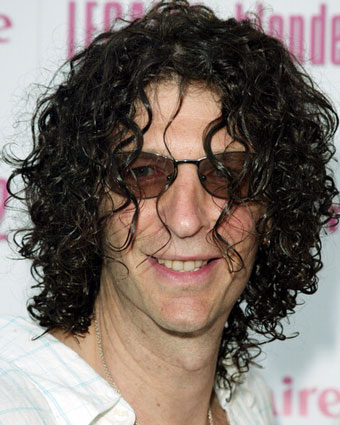
In a way, Mike Boyle has become the Howard Stern of Strength and Conditioning. Whether people love him or hate him, people listen when he speaks.

Okay. Maybe there are some slight differences.

And for good reason. He’s been one of the leaders in the fitness industry for the last 30 years!

What really sets Boyle apart from the thousands of other so-called experts is that he:

  1. Is always learning and implementing new techniques with his athletes.
  2. Consistently gets fantastic results with his athletes and clients.

Boyle threw the industry for a loop last year when he gave a presentation stating that athletes should not squat. In fact, the “hate” response to that concept has been startling. I even take some flack for supporting Boyle’s single-leg arguments. As I mentioned previously, I think most of this comes from a lack of understanding more than true distaste.

It has been almost a year since that video hit the mainstream. Now Mike is back, in a special video, to talk about what he’s changed since then and how he’s starting to use some squat variations with his athletes.

In this video, Coach Boyle discusses:

1. The importance of teaching the squat pattern
2. Why athletes should be front squatting if they Olympic lift
3. Why you will see athletes squatting at Mike Boyle Strength and
Conditioning

You can check out the video for FREE here:

>> Death of the Squat Revisited! <<

You may not be aware of this, but Mike Boyle Strength and Conditioning was recently voted the #1 Gym in America by Men’s Health. His results speak for themselves. If you do consider yourself a serious athlete, lifter, strength coach, or trainer, you owe it to yourself to hear what he has to say on one of the most controversial subjects in the industry.

There will be one more video coming later in the week on how and why Mike has completely restructured how he programs conditioning at Mike Boyle Strength and Conditioning.

Step 1: Check out this video now!
Step 2: Keep your eyes open for the next one.

>> Death of the Squat Revisited! <<

To your success,

Kevin Neeld

Please enter your first name and email below to sign up for my FREE Athletic Development and Hockey Training Newsletter!
Another great week over at Hockey Strength and Conditioning! This week we added:

Program: Off-Season Hockey Training Program (4 day/week-Phase 3) from me

This is the 3rd phase of our off-season hockey training programs at Endeavor. I’ve now posted 12 weeks of the EXACT programs we use to develop our elite level hockey players at HockeySC.com!

Article: Emulate the Best to be Your Best from Sean Skahan

This article is short, but incredibly profound. Definitely a must-read for everyone!

Video 1: 1-Leg Medial and Lateral Hop Overs from Darryl Nelson

Darryl works with the US National Developmental Program and has been a great addition to the site.

Video 2: Band Walking Patterns for the Glute Medius from Mike Potenza

Working with pro athletes has made Mike a master of variation. These videos include several great hip training exercises to help prevent some of the common hip flexor and groin strains we all see so much of.

As always, the forum has been hopping with great questions and contributions from people like Mike Boyle, Brijesh Patel, and Maria Mountain. You can get access to all this information for only $1!

Click the link below for more information about Hockey Strength and Conditioning!

To your continued success,

Kevin Neeld

For the last decade or so, the words “sport specific training” have frequented the marketing of people with services claiming (sometimes accurately) to develop athletes. The “sport-specific” movement was initially characterized by people taking identical movement found in sports (e.g. a baseball swing, a hockey shot, etc.) and providing some sort of resistance to the pattern.

The “Sport-Specific Training” Mistake
Unfortunately, the approach of loading skilled movement patterns is counterproductive. Whether or not you get stronger from doing these loaded repeated movements is somewhat debatable, but in the interest of optimism, let’s suppose that there is a strengthening effect. The problem is that the skilled pattern itself is negatively affected. The loaded movements ruin the movement pattern; usually in terms of both neuromuscular timing and outcome accuracy. This is just a fancy way of saying that the way your muscles control the movement and the accuracy of the movement are negatively affected. Think of the implications this has for ice hockey. Altered shooting form and accuracy can make a HUGE difference since most players only get a shot or two a game!

The other, less frequently acknowledged downside of this comes back to the idea of tissue stress accumulation I discussed a couple weeks back (Long Term Hockey Development and Injury Prevention). The more you move through a pattern, the larger the amount of stress the involved muscles and surrounding tissue take. Because we are a stimulus driven society and typically focus little, if at all, on recovery, doing extra work on top of playing your sport in these sport specific patterns can push you closer or over your injury threshold.

Do We Need “Sport-Specific Training” At All?
While the training was a bit off, the intention was great and it made a lot more people in the sports arena aware of the necessity of physically preparing to play. With that though, it gave the allusion that every sport had it’s own secret training protocol and that athletes need highly sport-specific training in order to get the results they deserve. In other words, hockeyplayers needed “hockey-specific” training, soccer players needed “soccer-specific” training, and so on.

In reality, most popular sports (soccer, baseball, hockey, football, lacrosse, basketball, field hockey, and volleyball, amongst others) share more athletic qualities than people realize. Maximizing athletic performance in any of these areas requires training to ensure:

  1. Appropriate multi-planar joint stability of the ankles, hips, thoracic spine (upper spine), and glenohumeral joint (shoulder).
  2. Appropriate stability of the knee, lumbar spine (lower back), scapulothoracic joint (shoulder blade), and elbow
  3. Improved full body power
  4. Improved strength of all major muscle groups in FUNCTIONAL movement patterns (e.g. lunge and squatting patterns, NOT machine work!)

With this in mind, over 80% of training will be almost identical for athletes of all the above sports. I remember hearing Mike Boyle joke once that he created the Boston University Field Hockey program by taking the Ice Hockey program, deleting “Ice”, and adding “Field”. I’m not sure if he actually did that or not, but his point was clear. The major differences in training programs between sports are:

  1. The proportion of work in the areas outlined above. For example, a lacrosse player may need more explosive upper body work than a soccer player because of the physicality and shooting in lacrosse
  2. The direction of the training stresses. For example, sports like volleyball and basketball necessitate more vertical power training (e.g. vertical jumping) than sports like soccer and ice hockey, which are predominantly (although not entirely) horizontal-based. Similarly, sports like baseball, golf, hockey, and lacrosse will necessitate more horizontal rotational power training than sports like football because of the importance of shooting in these sports.
  3. Conditioning. The metabolic demands between sports like football, volleyball, and soccer are completely different. As a result, so is the emphasis on conditioning. While almost all conditioning for sports should be interval-based, the frequency, intensity, and duration of the conditioning should be specific to the sport.

Sport- vs. Sports-Specific Training
The major take home from all of this is that athletes and parents should be actively seeking out “sports-specific” training, not “sport-specific” training. Sports-specific training creates separation from the largely irrelevant personal training and body building alternatives out there, but encompasses the important idea of training in the interest of athletic development.

Training for athletic development is the key to experiencing a long, successful sports career while avoiding the injuries imposed by so-called “sport-specific” training programs.

To your success,

Kevin Neeld

Please enter your first name and email below to sign up for my FREE Athletic Development and Hockey Training Newsletter!
The other day I posted a video of a Falling Side Lunge Sprint Start, which was the end of my lateral sprint start progression. The video below is one of the final stages of our horizontal power progression. This progression is designed to help hockey players use their hips to create and control rotational power.

I learned this exercise from Mike Potenza in a series of videos he posted at HockeySC.com. As a quick plug, if you still haven’t checked out the site, you need to. The quality of information continues to grow (and will); I’ve personally learned a great deal from people like Mike Potenza, Mike Boyle, Sean Skahan, Cal Dietz, Matt Nichol, Maria Mountain, and Devan McConnell and I know you will too.

Check out the Side Standing Med Ball Scoop with Partner Toss video:

As the bearded hockey player learns to catch, recoil, and accelerate the ball forward, you can throw the ball a little harder to increase the decelrative stress. Ideally, the player should keep their arms straigtht and the ball should br thrown toward their back hip in the same line that they’ll need to coil back in. In otherwords, don’t throw it at them; throw it almost in a parallel line to their orientation. Make sure the player is rotating their hips fully around on each throw.

To your success,

Kevin Neeld

Please enter your first name and email below to sign up for my FREE Athletic Development and Hockey Training Newsletter!
Use CODE: "Neeld15" to save 15%