The Endeavor staff just started a new training program last week, and it has been absolutely brutal. David was quoted saying, “this is the last time I let you write our program.”
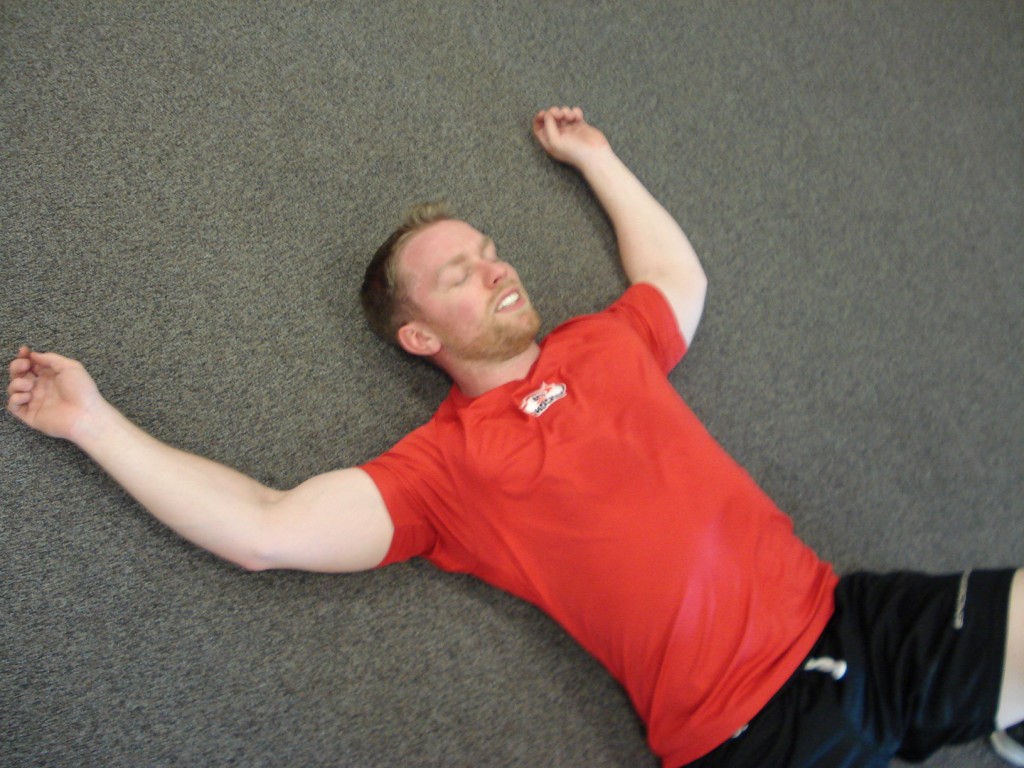
Volume. My worst enemy.

I was quoted saying, “uh…ah…oh…I hope I don’t throw up on myself.” In brighter news, I have some great info for you today. Before I get to that, I want to let you know about an upcoming event that I’m really excited to attend.

My friend Joe Dowdell is probably the best strength and conditioning coach you’ve never heard of. Unlike the guys that preach, but don’t practice, Joe has been quietly developing his systems over the last 17 years and has built one of the U.S.’s top training facilities in Peak Performance NYC. In fact, Men’s Health voted Peak the “Hottest Gym in America.” Joe and I spoke for an hour on Monday and, in a nutshell, he’s going to start revealing the secrets to his success, both from a training and a business standpoint. He’s kicking it off with a webinar called: The 5 Key Ingredients to Building a Successful Fitness Business & Career.

This may not appeal to all of you depending on your situation, but I grabbed a spot and am really looking forward to it so I wanted to share it with you. Joe is a great guy and his success speaks for itself, so I’m sure we could all pick up on a thing or two to help us do our jobs a little more effectively.Β  Go to the link below to read more about:

>> The 5 Key Ingredients to Building a Successful Fitness Business & Career <<

Moving on to today’s content…

A lot of times “new” training information will come out and a group of people will start regurgitating it with a sense of evangelical enthusiasm. Unfortunately, it tends to be the people with the least profound comprehension that have the loudest voices (more on this in last week’s post: Internet Hockey Training Experts). The “experts” that don’t actually train people aside, some people just catch wind of something and don’t understand the context in which it’s meant to be interpreted.

One example of this is when a lot of the strength and conditioning world started getting into Stuart McGill’s lower back research. I think it’s fair to credit Mike Boyle with really bringing McGill’s work to the forefront of the training industry. Although McGill’s work is incredibly extensive (if you actually read his research!), the major interpretations that came out of what people interpreted his work to say were:

  1. We shouldn’t flex at the lumbar spine during exercise
  2. We shouldn’t rotate through the lumbar spine

The implications for these messages will differ depending on your setting, but the most important thing to note is that NOTHING IN HUMAN PERFORMANCE IS BLACK OR WHITE!

McGill’s research demonstrated that a certain number of flexion/extension cycles would lead to a lumbar disc herniation. This research was performed on unsupported pig spines.

How will I maintain my six-pack without crunches!

In other words, in this experimental model, there was essentially no ligamentous or muscular support to attenuate (reduce) the force being transmitted through the spinal column. This is an important limitation to the implications of McGill’s findings. This isn’t to say that they should be completely dismissed. In fact, I think McGill’s findings in this area specifically shed a lot of light on the insanity that is the common practice of sitting for 18 hours/day and then rolling onto the floor to bang out a few hundred crunches. That is stupid, and no one should do it. It also highlights the importance of being able to dissociate hip and lumbar movement so that people don’t unnecessarily flex and load through the lumbar spine, when they should be flexing and loading through the hips.

On the other hand, for people that spend the majority of their day in upright positions, have decent posture and generally don’t subject themselves to significant amounts of prolonged spinal flexed postures and the associated tissue creep, using some spinal flexion exercises intermittently probably isn’t the worst thing in the world. The reason you haven’t heard me mention this stance much (if ever) here is because this applies to a very small percentage of the population and therefore shouldn’t be made as a general recommendation. In other words, I recognize the room for misinterpretation in saying “crunches are good” or “crunches are bad” and would rather err on the side of being safer for a larger audience than the alternative.

That said, there is a very fundamental principle that the body abides by-use it or lose it! If you never flex or extend at the lumbar spine, eventually you will lose this range of motion and the neuromuscular control of the ROM, which will have negative implications for your overall health and performance. This isn’t to say that you need to program flexion/extension exercises into your program, only that these movements are available for a reason and that you shouldn’t go out of your way to never move at the lumbar spine. As Charlie Weingroff pointed out in Training = Rehab Rehab = Training, there is a difference between movement and exercise. What is good for a movement isn’t necessarily good to hammer with load or volume in your training programs.

Charlie is a genius.

A similar thing can be said about lumbar rotation. Because of the structure of the lateral processes of the lumbar spine, rotation in this area is EXTREMELY limited (~13 degrees). In contrast, the thoracic spine is more appropriately built for rotary movements (~70 degrees). Again, this information should cause some people to stop doing 300 reps of Russian twists during their “core” work, but it certainly doesn’t mean the lumbar spine shouldn’t rotate at all. Repetitively and forcefully driving loaded lumbar rotation through end range is stupid. Rotating within the lumbar spine’s given rotation range of motion is not.

In fact, telling someone to never rotate through their lumbar spine at all is flat-out dangerous. If you’re rotating through the thoracic spine, you want a clean continuation of the rotation through the spinal column. If you cue someone to consciously stop the rotation at some point along the column (e.g. T12/L1), they’ll lose the rotation ROM below that point. Although the rotation below this point is not very substantial, it’s still quite important. A loss of ROM at any point will cause a compensatory increase in range of motion at some other point in the pathway. In this case, it’s likely to be higher up the spinal column. In other words, the conscious cessation of ANY lumbar rotation ROM will cause a lumbar HYPOmobility (less ROM), which will result in a thoracic HYPERmobility (too much ROM), neither of which are desirable.

WAIT! Do NOT rotate through your lumbar spine! I don’t care how unnatural it feels to stop spinal rotation segmentally.

I can’t emphasize enough that I’m NOT saying to go back to archaic core training methods of doing thousands of crunches, sit-up, leg throwdowns, Russian Twists, etc. We’ve come a long way in our understanding of the true function of the core and going back to these things as a primary training modality would be unacceptably regressive. The point is that every exercise recommendation has a context and you can’t overlook that in making recommendations or judging the recommendations of others. Are lumbar flexion and rotation great exercise choices for the majority of the population? Certainly not. But they are necessary movement capacities that everyone should maintain and learn to control. When people take a completely black or white outlook on movement concepts, people usually end up hurt. It’s important to understand the context in which information is being conveyed before spreading it on a massive scale.

To your success,

Kevin Neeld

Please enter your first name and email below to sign up for my FREE Athletic Development and Hockey Training Newsletter!

Over the weekend I was able to catch up with an old hockey friend from Delaware and some of the Endeavor guys to watch the Flyers/Islanders game. The Flyers won, which means two things:

  1. They secured the 2nd place spot in the eastern conference going into the playoffs
  2. Anthony Renna, and the other two remaining Islanders fans, had to suffer through another disappointing defeat

(this is when Anthony politely reminds me that he watched the Isles win 4 consecutive Stanley Cup championships before I was born!)

…damn it

This is my favorite time of year. Our off-season training group starts to trickle back in and the playoffs are starting. In our area, this is also the time that youth programs have their tryouts, which means this is an emotional time of year for youth players and parents. Some will finish the tryout process happy with how they played and the team they’re on for the following year; others will be upset with getting cut and will blame “politics” (sometimes rightfully so) for their misfortune.

Getting cut is not an easy thing to go through. I know; I was cut from multiple teams going up through the youth ranks. Some of those years I thought I was clearly better than a handful of the kids that made it; other years I knew I could at least be competitive with those kids. I say this only to point out that I’m not unsympathetic to the players that draw the short straw. With that said, I think too many players let a bad tryout experience or bad interaction with a coach typecast them as a certain type of player, which usually has a negative effect on their confidence.

As I’ve said in the past, success at the youth level is great for confidence but inter-player comparisons at U-14 levels is somewhat of an apples-to-oranges comparisons. For any given development situation, the kids that mature faster are always going to stand out as “better”, but won’t necessarily maintain that advantage over the long haul. Regardless if you’re over-sized or under-sized, exceptionally skilled or new to the game, respected for your speed or known as the slow kid, until you get paid to play (and even through that point),

YOUR GOAL SHOULD ALWAYS BE CONTINUOUS IMPROVEMENT!

Making or getting cut from any specific team doesn’t change the goal. Either way, players should be looking for areas they can improve on and actively working to do so. This idea of continuous improvement is known as “kaizen”. Kaizen is a Japanese term that I heard Dr. Steven Norris mention in his USA Hockey American Development Model presentation on Long-Term Athlete Development. I first came across the word while listening to a presentation from internet marketing expert Mark Joyner, and it’s stuck with me ever since.

I think kaizen highlights something that most of the hockey world still views the wrong way. One of the things that really struck me about Dr. Norris’ ADM presentation is how similar his message was to Mike Boyle’s and Brian Burke’s, despite the three of them having little involvement with each other professionally. In youth hockey, there is an over-emphasis on labeling kids as either talented or un-talented at insanely young ages. I don’t mean insanely young like 4 (although this is insane); I mean insanely young like 14.

The message that this practice sends is that certain kids were blessed with some sort of hockey playing magic and have a real shot at playing higher level hockey, and the others weren’t and really don’t stand a chance of making it anywhere.

β€Ž“A person can succeed at almost anything for which they have unlimited enthusiasm.”- Charles M. Schwab

Yet, there are countless athletes that defy these odds ALL the time, to the point that it’s hard to consider it defying the odds at all. In fact, the idea that “talent” even exists has been rightfully questioned. Our belief in the concept of talent is what perpetrates it, and the “star” athletes that we think have natural ability almost always have SICK work ethics and put in incredible amounts of time away from the spotlight.

Natural talent? Crosby is recognized by everyone that crosses his path for being one of the hardest working hockey players in the history of the sport.

You’d be amazed at how much better “untalented” players get when they start practicing on their skills sets regularly under the supervision of a coach that understands how to introduce appropriate skill progressions. Coming back to the Boyle, Burke, Norris trifecta, an underlying message to all of their presentations is that we need to stop viewing youth hockey players through an NHL scouting eye, and start encouraging them to have fun and improve constantly.

Whether you made the team you wanted or not, your focus should be on kaizen. Development is a marathon, not a sprint. The players that continually take steps in the right direction are inevitably the ones that succeed over the long-run. The players that lean on their success at young ages inevitably fall victim to mediocrity at higher levels. We’ve had a dozen kids make NCAA Division I commitments over the last year, and they all did it the same way: Be patient, work hard, continually progress. That’s the formula; players need to stick to it, regardless if they make the peewee or bantam team they wanted or not!

To your success,

Kevin Neeld

Please enter your first name and email below to sign up for my FREE Athletic Development and Hockey Training Newsletter!

Last Friday David and I made a trip up to Ramsey, NJ and White Plains, NY to hang out with Perry Nickelston and Anthony Renna. Hanging out with those guys was awesome. I really click well with entrepreneurs and people that are passionate about what they do. This is true of people in any field/industry, but especially when it comes to sports medicine and athletic development.

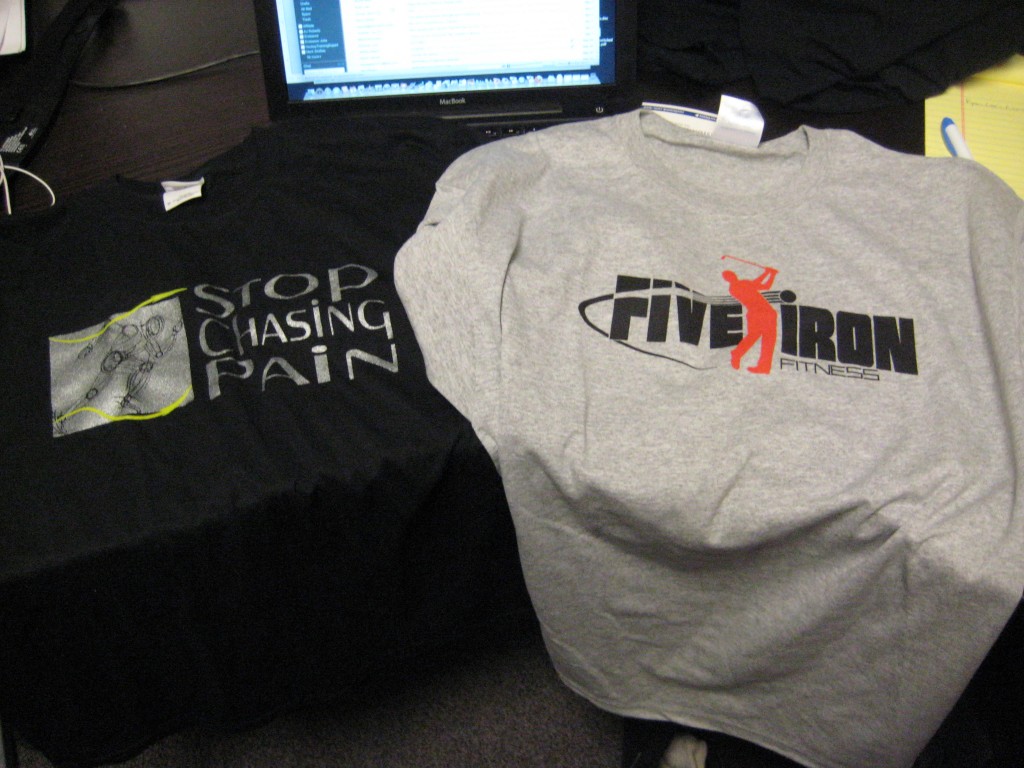
And nothing lights my lamp more than getting free t-shirts

One of the things that came out of talking with both Perry and Anthony was the value of actual training experience. The internet has completely revolutionized the education process. Because of the ease of starting a blog, everyone can share current information about how they’re training their athletes/clients. I remember Mike Boyle saying several years ago that most books were outdated by the time you get them. This may be less true with anatomy texts, but with books on training philosophies and methods, the time necessary to finish writing, editing, and publishing a book will make at least a portion of the material obsolete by the time it hits the presses. In other words, many book authors won’t agree with what they wrote in the book by the time we read it. It’s interesting because books are, or were, thought of as the “holy grail” of educational resources. The internet has gone a long way in cutting down on the deleterious effects of long publishing processes and in providing the most current information possible. This is good.

Unfortunately, the internet also spawned a population of unscrupulous “marketers.” The good thing about the long book publishing process is that it filtered the content. It’s a lot harder to get a book on any topic published than it is to start a website about it. Over the last couple years, the amount of hockey training information online has exploded. Some of it is outstanding; some of it is downright dangerous. What most casual readers don’t realize is that some of the information they’re reading comes from:

  1. People that don’t train anyone
  2. People who built a website for the sole purpose of making money (note that these people also don’t train anyone)

A lot of people in the strength and conditioning industry get really bent out of shape at the idea of people writing about training if they don’t train. To be honest, if people are reading and summarizing current research, it doesn’t bother me that they don’t work with a large athlete base because they’re writing can often introduce studies that I’m not familiar with, which leads me to seeking them out to read them myself.

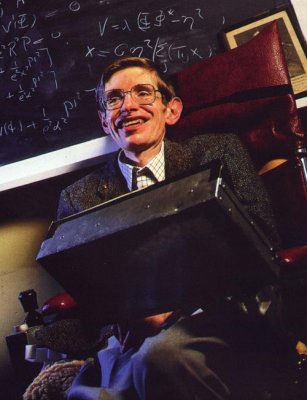
There are “theorists” in every field. I remember reading Stephen Hawking’s book “Black Holes and Baby Universes and Other Essays” several years ago and being amazed that he essentially outlined a mechanism for time travel. Of course, Hawking is known for being a profoundly intelligent mind in the field of THEORETICAL physics. Nobody actually thinks he’s traveling through time, nor would he ever represent himself as doing so.

One of the greatest minds in the history of the world

In contrast, many online crowds misrepresent themselves as working with vague, but insinuatingly large numbers of athletes. This misrepresentation is what I have a problem with. If you don’t train anyone, call yourself a theorist. If you only train one team, that you also coach, say that. If you’re training a few people, but helping out as an intern with other more advanced programs, say that. There’s no shame in developing as a professional and ramping up your business. I think most people avoid this because they’re either:

  1. Young and want to people to acknowledge their information as legitimate
  2. Selling something and want to be perceived as an expert

Obviously there are some similarities between these two, but in my view the latter is more repugnant than the former. Maybe I’m sympathetic because I started my website while I was still in grad school, but I look at writing online similar to anything else-it’s going to take time and practice to get good at it. Students that know they’re going to make a living training people wanting to start a site early in their careers just doesn’t bother me as much because their intentions are pure.

That said, I’d be interested to buy every hockey product online and then travel around the world to all of the author’s locations and see what they do on a day-to-day basis. I’d guess that many train people for less than 5 hours per week and that many have a background in playing hockey, but not in training players. This is BY FAR the biggest myth in all of hockey development:

Playing high level hockey does not qualify someone as a training expert!

Hell, playing high level hockey doesn’t even mean a player can TEACH the basics of hockey. All it means is that they were a good player. Not every good player is a good hockey coach; coaching takes special skill sets. Training is in a different universe altogether. There are BRILLIANT hockey strength and conditioning coaches that have never played a competitive game of hockey in their lives. This isn’t a knock on them at all. Having a profound knowledge of how the body functions doesn’t require playing the game, just understanding it.

Think of it like this-would you not trust a physical therapist because they’ve never played hockey? Would you not trust a hip surgeon JUST because they didn’t play?

WAIT! Before you saw off part of my femoral head…did you even play hockey??

Obviously not! These professionals make a living on their understanding of the body and perfecting their trade. Playing hockey will help strength and conditioning coaches understand the language and a bit more about the mentality of the players, but that’s it. It doesn’t in any way qualify someone without an educational background or coaching experience as an expert.

Hockey Playing Expert

Hockey Training Expert

When I see a new training product and the author’s biggest claim is that they played good hockey themselves, a red flag goes up.

Where you can find REAL hockey training experts

This is one of the reasons I have so much respect for my partners at HockeySC.com (Sean Skahan, Mike Potenza, and Darryl Nelson) and for my friend Maria Mountain; they ACTUALLY train real, live hockey players as their full time job, and the things they write about online, they actually do in real life! THESE are the people you should be getting your information from!

On a related note, I’ll conclude this long-winded rant by saying if you’re ever in the Philadelphia area and want to swing by Endeavor Sports Performance to see our facility and how we train our athletes, you’re more than welcome. I’ve always had an open door policy, and I think it’s good for people that have encountered some of my stuff on the internet to see that we’re actually implementing the same strategies I write about into our training systems, on a daily basis.

To your success,

Kevin Neeld
Please enter your first name and email below to sign up for my FREE Athletic Development and Hockey Training Newsletter!

I’m breaking my usual Monday-Wednesday-Friday update routine because I wanted to let you know about something I’m really excited about. As you know, I’ve been a huge promoter of Body By Boyle Online since it was first launched several months ago.

Mike Boyle’s work has had a profound impact on my training philosophies and methodologies. I’ve been fortunate to have had the opportunity to read his books, watch his DVDs, attend his seminars, and visit his facilities at BU and MBSC. He’s also been an incredible mentor, always making himself available to me if I have questions about anything from sports hernia referrals to running a private training facility. Moreover, I’ve learned and continue to learn a lot from his disciples (Sean Skahan, Mike Potenza, Darryl Nelson, Devan McConnell, Kim McCullough, and Jaime Rodriguez…to name a few).

In short, Boyle has had a remarkable impact on the hockey training and development industry as well as strength and conditioning as a whole. This is, in large part, a result of his dedication to continuing education. In fact, if there’s one thing that he taught me that I had to highlight as THE most important thing, it’s that I should never stop learning. In this way, I’ll always stay on top of my game, be aware of new information, and put my athletes in the best environment to succeed.

It is for that reason that I place so much value in Body By Boyle Online and why I know you’ll benefit so much from it as well. That brings us to today’s exciting announcement.

A couple weeks ago, I got an email from Boyle and Kevin Larrabee about them relaunching their site in a way that makes the content more easily accessible and costs less. Instead of having me try to describe all the changes to you, I thought it would be easier if I had Kevin (the other Kevin) come on and do a quick interview about it.

Enter Kevin:

Me: First off, congratulations to you and the rest of the Michael Boyle Strength and Conditioning staff for being ranked the #1 Gym in America. That’s quite an honor! As you know, I’ve been a huge supporter of BodyByBoyleOnline since you guys first launched it. Looking through the programs provides invaluable insight into Coach Boyle’s underlying philosophies and methodologies, and the constant content updates are outstanding. In fact, we use many of the presentations as continuing education for our staff during our weekly meetings. Can you talk a bit about what changes you’re making to the subscription options with this “re-launch” and what lead you to make these changes?

KL: Thank Kevin! We are bringing everything that has helped make MBSC the #1 Gym in America to BodyByBoyle Online. With the relaunch we had two major goals. First off we wanted to make the content as easy to assess as possible. For us, that meant duplicating all of our content for a website, and in doing so offering multiple qualities of the videos for those with fast or slow connections.

Second, we wanted to created a second membership level for those that might not want to do online training and just want the rich educational content that we have put together. To be honest over half of our members simply come to watch the staff meeting videos as well as the exclusive seminars that we film. For example we just filmed the 2011 MBSC Winter Seminar that featured Dan John as well as Mike. We understand that many people want to go to more seminars, but the time and cost of travel is just too high. So for those people, we now offer a standard version of BodyByBoyle Online at a reduced rate of $39.97/month (for now). Of course all of our current members will also be given access to the website as part of their Platinum membership ($59.97/month).

Me: Although the site is “Body By Boyle”, he’s not the only content contributor to the site. Can you provide some insight into some of the other guests you have add content?

KL: I think that is what makes BodyByBoyle Online so great and a pleasure to produce. We have had speakers come in to the facility to do private seminars for our staff. In the last couple months we have had Sue Falsone form Athlete’s Performance present and do a hands on about the thoracic spine, Nick Tumminello came in to talk rotary training, Chris Frankel did a lecture and hands on about suspension training, and always have guests stopping by, especially when the Perform Better Circuit is coming through town. This just goes to show you how much Mike values continuing education and how important it is for you to be one of the best in this field.

Me: I think one of the things that causes people to hesitate sign up for sites/services with monthly memberships is a fear that the information will stagnate. Can you talk about what plans you guys have for the site in the future and what members have to look forward to?

KL: Trust me when I say you have an ongoing stream of new content. We film our staff meetings each week, our guest speakers, F.A.Q. with Mike where he goes in depth on subjects and answers questions from the members, and we are even dipping into the vault with some classic Boyle videos. All you need to do is take a look at Mike’s shorts to see the videos are 15 years old or so. But the best part, is that the videos from the past are even more relevant now than they were then. One of the VHSs that Mike has converted to digital video is his olympic lift video where he goes through the various lifts. Guess what, we still use the same coaching steps as he did back then.

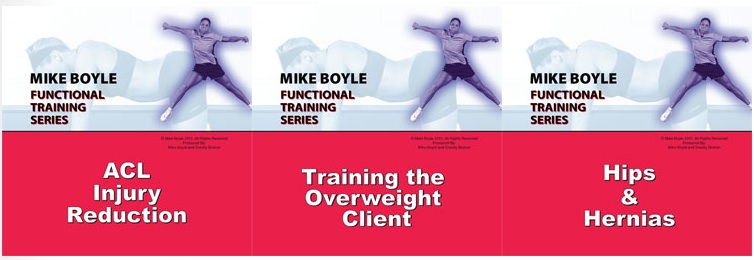
We have also made digital versions of Mike’s current DVD offerings such as the three DVD set he just produced and released a few months ago.

Me: Thanks Kevin. I appreciate you taking the time to be with us today. I look forward to seeing the content additions over the upcoming months!

To your success,

Kevin Neeld

Please enter your first name and email below to sign up for my FREE Athletic Development and Hockey Training Newsletter!

Happy Groundhog Day! Hopefully Bill Murray won’t see his shadow so we stop getting dumped on with all this snow!

For whatever reason, my ’99 Saturn is pretty good in the snow. Although, if you looked at it, you’d probably be wondering what is holding it all together. Last week on my drive back home from Endeavor, I stopped on the side of the road to help out a van that had swung off the road into a ditch. As I approached, I saw that there were two guys trying to push it up the small bank as another hit the gas. I hopped in behind the van on the left side to help push. About 4 seconds later, the van hit an icy patch, slid a few inches to the right, and I got blasted in the face with mud from the back tire. The next 15 minutes was filled with more of the same, but eventually we were able to push it out. The moral of the story is twofold

  1. If you see someone stuck on the side of the road, do what you can to help. Not everyone is okay on their own and most people don’t want to shell out the hundreds of dollars to be pulled a few feet by a tow truck.
  2. When abiding by “1”, opt to push in the middle…it’s much cleaner.

Over the last couple weeks I’ve been told on multiple occasions that I look like “that guy from Modern Family.”

What?! I’m not a red-head. I’m not gay! (Not that theres anything wrong with that)

The concept of the show highlights, as the title alludes to, the structure of the modern family in America. Having heard this comparison for the 3rd time in a few weeks and having just re-listened to Alwyn Cosgrove and Mike Boyle’s State of the Industry got me thinking about the structure of the “modern strength coach.”

In the development of a strength and conditioning professional, the commonly assumed path seems to be:

  1. Get a degree
  2. Get a certification
  3. Get a job

This was probably a great route when the profession first came to fruition, but now that’s only a piece of the puzzle. Because the field is so young, information is changing constantly. As a result, there are few (if any) academic programs that provide an adequate educational background, as a lot of the information in textbooks is overly narrow-focused or outdated. Similarly, I don’t think there’s a great single certification out there. While the CSCS is still the gold standard for people involved in training athletes (hopefully this is changing), I know quite a few CSCS certified people that I wouldn’t let train my dog.

This isn’t to say that an academic background and certification aren’t part of the equation, only that they are limited in their ability to continually prepare an individual for the requirements of this profession. In other words, these things are just the first step in a never-ending journey of continuous education. A “modern strength coach” needs to be well-versed in recognizing proper movement and movement impairments. They need to be able to quickly teach and cue exercise technique, using varying language to most effectively convey this information to specific individuals. They need to have sufficient knowledge and professionalism to communicate with sports medicine professionals of other specialties, including manual therapy, physical therapy, and orthopedics. Similarly, they need to build a referral network of these professionals to best serve their clients. They need to know how to motivate their clients, when to be a coach, and when to be a friend, and how to build a success-oriented atmosphere.

StrengthCoach.com: Go here to stand on the shoulders of giants!

All of this stems from a foundational in-depth understanding of functional anatomy, the neuromuscular system, andΒ  biomechanics, coupled with a sound comprehension of strength and conditioning methodology and programming, and finally, with countless hours of experience. This is certainly no easy task, which is why the drop-out rate in our profession is so high. So how do you stay on top of everything to keep up with modern changes? I think Mike Boyle said it best in his “State of the Industry” talk:

“Watch, read, and attend.”

This means watch as many DVDs as you can, read as many books as you can, and attend as many seminars as you can. I’d also add in to observe as many other professionals as possible, seek out and learn from great mentors, and surround yourself with as many like-minded people as possible.

I’ve been fortunate to learn from some of the best. I’m permanently indebted to Mike Boyle (who has been training athletes for longer than I’ve been alive) and Eric Cressey for all the guidance they’ve provided me over the last few years, and am incredibly thankful to have other mentors like Chris Boyko, Brijesh Patel, Sean Skahan, Mike Potenza, and most recently Charlie Weingroff to help guide me along the way. Nothing I’ve done in the past or plan to do in the future would be possible without those guys. The collective wisdom of this group is astronomical.

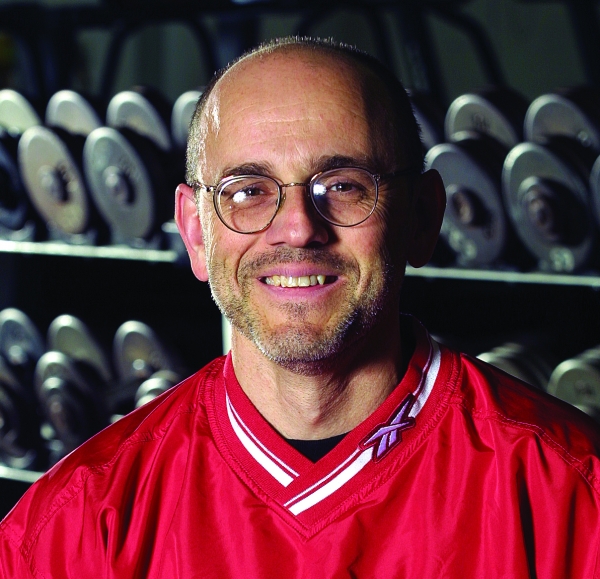
One slice a day keeps the ego away

Regardless of what you do, it’s likely you’ll have more people telling you why you can’t or shouldn’t than telling you why you can or should. Surrounding yourself with like-minded people is key for your development, and for your sanity. Doing things on your own is tough. When I first started at Endeavor, the rest of the training staff was pretty much gutted, leaving me on my own. As I’ve slowly rebuilt a staff I can trust, I continue to get the same feedback from them, that they love being here because everyone is so passionate about the field. In truth, I’m lucky to have them around. Being surrounded by passionate people helps keep you motivated; it also broadens the range of information you’re exposed to as everyone has different backgrounds and seeks out different information.

I’ve learned a lot in my first few years in the field, but more than anything I’ve learned that I’ll never stop learning; that’s what makes this so much fun. Mike Boyle once said “I’m not young enough to know everything.” I think there’s a profound wisdom in those words.

The modern strength coach, amongst other things, is ever growing.

To your success,

Kevin Neeld

Please enter your first name and email below to sign up for my FREE Athletic Development and Hockey Training Newsletter!

Use CODE: "Neeld15" to save 15%