Over the last 5 years I’ve written over 650 articles for this site. It’s a little crazy to think about!

Because of the sheer volume of content, I find myself answering a lot of emails these days by searching for old articles I’ve written that answer the person’s question and just firing them back over. The reality is that I may be the only person among us that has read every one. In short, there is probably some good stuff that you guys are missing out on!

It’s for this reason that I’m starting a new “Throwback Thursday” series that will highlight an article from the past that still contains information that is relevant today. This will be a great way to reignite some conversation and discuss what (if any) changes in philosophy/training methods have resulted since these were first written. Today we’ll kick things off with an article that covers what I still feel is a fairly controversial topic (extremists on both ends). Enjoy!

Rethinking Bilateral Training

Bilateral training frequents athletic development programs everywhere.  By bilateral I mean both legs or arms working simultaneously to produce force/motion in the same direction.  Exercises such as front squats, deadlifts, standing shoulder press, and bent over row are just a few examples.  While bilateral training and the associated exercises are deeply rooted in the history of strength training, it may be time to reconsider their use.  Heresy you say?

I’m certainly not the first to make this suggestion.  Michael Boyle has been making the case for single-leg training for years now.  After reading one of his articles on the topic, I began thinking more about the lack of respect single-leg training receives.  As the article mentions, people are probably reluctant to use single-leg training because they require less external load.  This raises a few more questions.  Is external load completely indicative of internal stress to the muscle?  If so, is neglecting the movement pattern and maximizing the external load really the goal of training athletes?  The article also mentions the “functional” inclusion of the medial and lateral musculature of the hips that is present in single-leg training and not bilateral training, functional being defined as “training the muscles that we’re using in the way that we use them.”

I want to preface the rest of this article by stating that I’m not yet calling for a complete abandonment of bilateral training.  Instead I simply want to present some of the research supporting the empirical evidence that Coach Boyle presented in his T-nation article.  In light of the available research on the nervous system, a working knowledge of functional anatomy, and injuries associated with heavy spinal loading, I think it is time to reconsider the efficacy of predominantly bilateral training programs.

Neural Hinderance?

A look into the literature on the nervous system’s role in force production revealed an interesting occurrence known as the bilateral deficit.  For those of you that aren’t familiar, the bilateral deficit simply describes the fact that the sum of individual extremity force production is greater than bilateral force production (1-5).  In other words, if you performed a one-legged knee extension with your left leg only, then your right leg only, and added these two forces together, they would be greater than if you performed a knee extension with both legs together.  Bilateral Deficit: Leg A + Leg B > Both Legs
In fact, the bilateral deficit is said to be as large as 20% (6,7) during slow contractions and as high as 45% (7,8) during rapid contractions!  Luckily, researchers were quick to monitor the changes in this relationship following a bilateral resistance training program and found that the deficit decreased.  In some instances the relationship even reversed so that both legs produced more force than the sum of individual leg efforts (9,10).  Phew!  Disaster averted.

Neural scientists refer to the bilateral deficit as a phenomenon.  I would question whether it is a phenomenal occurrence or a long-term adaptation to repeated movements.  As many of you already know, performing a movement repeatedly strengthens the associated neural circuitry resulting in improved force production.  In the words of my old neurobiology professor, “Neurons that fire together, wire together.”  This is the primary explanation for why novice lifters can experience rapid gains in strength in the first eight weeks of training.

Is it possible that the bilateral deficit is simply a life-long adaptation to producing force on one-leg?  I realize that no one grows up performing one-legged squats off their kitchen stools on a daily basis, but think about the movements we perform regularly, notably walking and running.  While one leg is producing a triple-extension force, the other is usually producing a triple-flexion force.  Let’s come back to the knee-extension example.  In consideration of the “neurons that fire together, wire together” statement, it would make sense that as one leg is extending the neural circuitry is telling the other to flex.  This pattern predominates in most human movements: walking, skipping, running, and even crawling!

The neural circuitry to explain this pattern is well-established.  Some of you may have been introduced to it through the flexor crossed-extensor reflex.  In this example, if someone steps on a sharp object or other painful stimulus, they will withdrawal that leg by flexing the hip and knee.  At the same time, they will extend the hip and knee on the other leg.  This is a stabilization mechanism.  If both hips and knees flexed, you’d like end up sitting on the painful stimulus you’re trying to avoid.  Basically, as the flexor group on one limb is excited, the contralateral flexor group is inhibited, and the contralateral extensor group is excited.

What does this have to do with athletes?

We are wired to effectively produce unilateral movements.  Athletics involve unilateral movements.  Most strength and conditioning programs revolve around bilateral movements.  Why?  I understand the benefits of including single-leg training is being increasingly recognized and that more unilateral training is being prescribed.  However, it still seems that we’re adding some single-leg training to a double-leg program, instead of the other way around.  What happens if we abandon double-leg training altogether?  Compared to double-leg training, single-leg training:

1. Requires greater force production from more muscles. Picking up one leg immediately requires greater force production from the hip abductors and adductors (among others) to stabilize the pelvis.  Some of the affected muscles would include: pectineus, adductor brevis, adductor longus, adductor magnus, gracilis, obturator internus, obturator externus, gluteus maximus, gluteus minimus, gluteus medius, psoas major, iliacus, sartorius, gemelli inferior, gemelli superior, piriformis, and tensor fascia latae.

2. Increases the proprioceptive and sensory demand. Decreasing stability by narrowing the base of support will absolutely necessitate greater proprioceptive and sensory feedback to maintain balance.

3. Decreases spinal loading. I’ve heard a saying a few times that goes something like “Live your life the wrong way, you’ll end up in a cardiologist office.  Live your life the right way, you’ll end up in an orthopedic office.”  This has come to be accepted as an inevitable truth.  Research supports the idea that repetitive heavy spinal loading, as is common in long-term weightlifting, results in a myriad of spinal issues including an increased incidence of spondylosis (11), decrease in intervertebral disc height (12), lumbar spine degeneration (13).  But does it need to be this way?  If we can maintain or even improve the quality of the stimulus to the muscle and cut the external load in half, could some of these injuries be prevented?

4. Reinforces the neural circuitry common to most athletic movements. The majority of athletic movements occur from one-leg or a staggered stance.  Could this more similar training approach help to decrease the incidence of injury?  I’m thinking specifically of hamstring strains and ankle sprains.  Hamstring strength absolutely plays a role in preventing hamstring strains.  But how do we explain the athletes with monstrous hamstrings that suffer an injury?  Bad running form?  Maybe.  Is it possible that these strains are occurring due to a neural mishap associated with hamstring momentarily attempting to contract concentrically bilaterally when one side should be lengthening?  The causative factors associated with ankle sprains remain relatively allusive, but there does seem to be some evidence that decreased proprioception and increased peroneal stretch reflex latency may be related to ankle injury.  As a global factor, fatigue seems to be related to injury, with more injuries occurring as fatigue increases.  Of interest is that muscle fatigue is training-specific, meaning that if double-leg training predominates, the athletes will resist fatigue more efficiently in double-leg movements than single-leg movements.9  Naturally, the opposite is also true.  Both of those factors are neural in nature, and may be positively affected by the increased demand on the sensory system provided by single-leg training.  Prior history seems to be the greatest predictor of future injury.  Therefore, if we can prevent an injury from ever happening, we significantly decrease the risk of future occurrences.

Admittedly, some of the proposed benefits of single-leg training on injury prevention are speculative.  There is a clear list of benefits to single-leg training, however, that shouldn’t be overlooked.  While I believe that largely moving away from double-leg training is premature (and somewhat scary), I think it is worth considering.  Albert Einstein once said, “The significant problems we face cannot be solved at the same level of thinking we were at when we created them.”  Weigh the pros and cons associated with eliminating double-leg training.  Is it time for a change?
StrengthCoach.com

This article was originally published on StrengthCoach.com, an athletic development website where some of the world’s experts in strength and conditioning print their articles and discuss current issues.

To your success,

Kevin Neeld
OptimizingMovement.com
UltimateHockeyTraining.com

Please enter your first name and email below to sign up for my FREE Athletic Development and Hockey Training Newsletter!

Get Optimizing Movement Now!

“…one of the best DVDs I’ve ever watched”
“A must for anyone interested in coaching and performance!”
Optimizing Movement DVD Package

Click here for more information >> Optimizing Movement

References

1.    Obtsuki, T. (1983). Decrease in human voluntary isometric arm strength induced by simultaneous bilateral exertion. Behavioural Brain Research, 7, 165-178.
2.    Schantz, P., Moritani, T., Karlson, E., Johansson, E., & Lundh, A. (1989). Maximal voluntary force of bilateral and unilateral leg extension. Acta Physiologica Scandinavica, 136, 185-192.
3.    Secher, N., Rorsgaard, S., & Secher, O. (1978). Contralateral influence on recruitment of curarized muscle fibres during maximal voluntary extension of the legs. Acta Physiologica Scandinavica, 103, 456-462.
4.    Secher, N., Rube, N., & Ellers, J. (1988). Strength of two- and one-leg extension in man. Acta Physiologica Scandinavica, 134, 333-339.
5.    Taniguchi, Y. (1998). Relationship between the modifications of bilateral deficit in upper and lower limbs by resistance training in humans. European Journal of Applied Physiology and Occupational Physiology, 78, 226-230.
6.    Howard, J., & Enoka, R. (1991). Maximum bilateral contractions are modified by neurally mediated interlimb effects. Journal of Applied Physiology, 70, 306-316.
7.    Koh, T., Grabiner, M., & Clough, C. (1993). Bilateral deficit is larger for step than for ram isometric contractions. Journal of Applied Physiology, 74, 1200-1205.
8.    Vandervoort, A., Sale, D., & Moroz, J. (1984). Comparison of motor unit activation during unilateral and bilateral leg extension. Journal of Applied Physiology, 56, 46-51.
9.    Rube, N., & Secher, N. (1990). Effect of training on central factors in fatigue following two- and one-leg static exercise in man. Acta Physiologica Scandinavica, 141, 87-95.
10.     Enoka, R. (1997). Neural adaptations with chronic physical activity. Journal of Biomechanics, 30, 447-455.
11.     Aggrawal, N., Kaur, R., Kumar, S., & Mathur, D. (1979). A study of changes in the spine in weight lifters and other athletes. British Journal of Sports Medicine, 13, 58-61.
12.    Granhed, H., & Morelli, B. (1988). Low back pain among retired wrestlers and heavyweight lifters. American Journal of Sports Medicine, 16, 530-533.
13.     Videman, T., Sarna, S., Battie, M., Koskinen, S., Gill, K., Paananen, H., & Gibbons, L. (1995). The long-term effects of physical loading and exercise lifestyles on back-related symptoms, disability, and spinal pathology among men. Spine, 20, 699-709.

Last week I came across a couple articles and a video on hockey development and hockey training that I thought were well done and wanted to share with you. Before we get to that, I wanted to ask a favor of you.

About a year ago, my friend Sarah Cahill first told me about a group in Boston known as Inner City Weightlifting. Sarah is an incredible strength coach, but also the most compassionate person I know. It did not surprise me at all that she would want to get involved with this type of effort. ICW is one of the most amazing organizations I’ve ever heard of.

InnerCity Weightlifting
Check out their mission statement:

“Our mission is to reduce violence and promote professional, personal and academic achievement among urban youth. We work with young people at the highest risk for violence in order to reduce youth violence by getting our students off the streets and into the gym, where they are empowered with the confidence and positive support needed to say no to violence and yes to opportunity.”

Lofty task, especially in the Boston areas they’re targeting. What doesn’t come through in the mission statement is the actual implementation. The founders, Jon and Josh Feinman, would literally drive into the most dangerous areas to pick up kids that couldn’t find a way to get there themselves. They’re pulling kids out of gang-driven, futureless areas, giving them a same place to spend time, teaching positive mental skills and life habits (while training) and providing kids with an opportunity to become strength coaches by sponsoring certifications and education opportunities for them. They’re also, quite impressively, breaking down social barriers, as the urban youth turned S&C coaches have opportunities to train clients from all walks of life (earning an income), but notably executives from Microsoft. Yes, former (and what would be future) gang members, training Microsoft execs.


Inner City Weightlifting

Jon shown here with an ICW disciple.

Check out the feature ESPN did on ICW: ESPN Feature on ICW

The weekend I filmed my Optimizing Movement DVDs in New Hampshire, I had an opportunity to stop by UMass Lowell on my drive home and sit in on a few presentations that Kevin Carr, Brendon Rearick, Ana Tocco, and Henry Lau (I’m sure amongst others) helped organize. Jon and Josh, along with Reggie Talbert (former gang member turned GM and Coach at ICW) and Joe Sierra (an ICW Coach and now Assistant Manager) had an opportunity to introduce themselves and tell us about their story. Honestly, I was fighting back tears through their entire talk, unsuccessfully (one dropped), which ultimately ended a 7.5 year no-cry streak that was reset shortly after watching The Notebook.

mcadams
There’s nothing to be embarrassed about here…
So…where do you fit in? If you’ve been reading my site for a while, you know that I almost never ask for favors. In fact, I think the single other time I did make a request, it was to help sponsor my dad who was doing his first 100-mile bike ride to raise money for Multiple Sclerosis. Likewise, this request has nothing to do with me, but is an opportunity to support an amazing cause that I believe in. My friend Anthony Renna, after hearing about ICW’s story, decided to dedicate an entire Strength Coach Podcast to help spread the word about their cause. He also went a step further and had co-branded (SC Podcast and ICW) t-shirts made. THIS is where you come in. The t-shirts are available for purchase here: Limited Edition ICW Fundraiser T-Shirt. They’re only $25 and all of the proceeds go to ICW. I just bought 6 for myself and coworkers at Endeavor. If they sell 500 shirts, they raise over $8,000 for ICW! That would be an amazing contribution!

Strength Coach Podcast Inner City Weightlifting Shirts

SC Podcast Logo on the Front; ICW on the back.

However, if each of you reading this buys ONE, WE can single-handedly raise over $24,000! 

$25 gets you a sweet t-shirt, and helps support an unbelievable cause, providing opportunities for inner city kids to not only get access to a safer environment, but to change the course of their future permanently.

Even better, if you buy a shirt and email me the receipt, I’ll hook you up with a FREE copy of Ultimate Hockey Training AND if you’re local to the Mid-Atlantic area and can make the trip to see me at Endeavor Sports Performance in Pitman, NJ, I’ll assess you (or your kid) and write a 1-month training program for you for absolutely FREE!

If you aren’t local to Endeavor, but would like some feedback on your exercise technique, just shoot video of yourself performing the exercises you want feedback with and send them to me (or post them on youtube and send me the links) and I’ll provide feedback and a few coaching cues to help make sure you’re getting the most out of your lifts. This is a GREAT deal! Basically you get an awesome t-shirt, a great hockey training resource, and 30-days of coaching for $25!

This is a cause that means a lot to me, and if we team up together we can have a HUGE impact on an incredible organization and the kids surrounding one of the greatest hockey cities in the world. Click the link below to grab your shirt today and then forward me the receipt (kn@kevinneeld.com)!

Grab your shirt here >> Limited Edition ICW Fundraiser T-Shirt

Tomorrow I’ll be back with a few great hockey development resources that you’ll want to see!

To your success,

Kevin Neeld
OptimizingMovement.com
UltimateHockeyTraining.com

Please enter your first name and email below to sign up for my FREE Athletic Development and Hockey Training Newsletter!

Get Ultimate Hockey Training Now!

“…an extremely rare comprehensive look at the present state of ice hockey training.”
“…a must-have for coaches and strength professionals at all levels of hockey.”

Ultimate Hockey Training

Click here for more information >> Ultimate Hockey Training

My new DVD set Optimizing Movement was released several months ago and I continue to get outstanding feedback from a wide range of professionals throughout the training and rehabilitation spectrum.

Optimizing Movement DVD Package
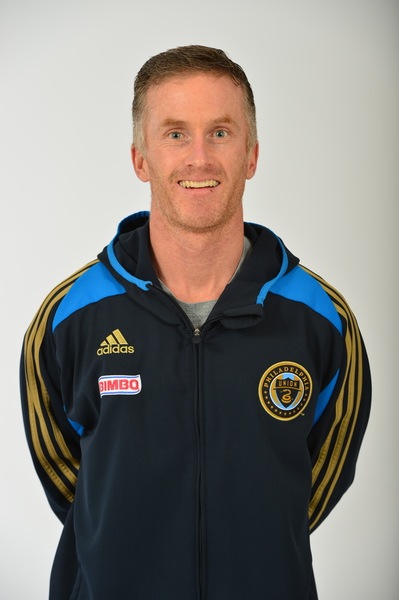
Today I wanted to share a review that Kevin Miller, Fitness Coach for the Philadelphia Union Major League Soccer Team, recently sent me. This is a neat review because it shows how this information not only impacts his athletes, but also his own health/performance. It also highlights the fact that there are underlying patterns that affect all movement, regardless of sport, and that these need to be addressed in order to get the most out of more sport-specific work. Enjoy!

Kevin Miller
“I recently purchased a copy of Optimizing Movement by Kevin Neeld. As a coach I am always looking for ways to reduce injuries as well as improve the performance of the athletes and clients that I work with. As an athlete myself I want to make sure that I am staying up with the latest research to improve my performance as well.

When I heard that Kevin was coming out with a product I had no doubt that what he was planning to offer would be a quality product. With new products coming out every day it’s hard to decide what products will actually offer value. I have followed Kevin over the past few years so I was confident that this product would offer tremendous value.

One of the main reasons I purchased the DVD was I wanted to see how Kevin and his staff set up their training system and specially their assessment and corrective exercise philosophy. Having taken a PRI course, I wanted to know what is the best way to implement these strategies into a group training environment.  The DVD is broken down into three parts, which I’ve described below with a few of my own thoughts.

Part 1 Key Topics

  1. Goals of training
  2. Movement is a big piece of reducing injuries
  3. Athletic Performance Pyramid
  4. Foundations of Optimal Movement
  5. Explains joint neutrality and basic overview of PRI
  6. Importance  of the diaphragm in performance
  7. Provides excellent pictures of athletes that present with problems
  8. Overview of FAI
  9. Provides his assessment for FAI
  10. Discusses regional interdependence
  11. Joint by Joint

Part 2 Key Topics

  1. Talks about his assessments
  2. Does a really good job of explaining some of the PRI tests
  3. This section was really good because he has videos for all of his assessments and does a really good job of explaining each test

Part 3 Key Topics

  1. Talks about how to manage movement and how he sets up his corrective exercise strategy
  2. Provides the four places he puts corrective exercise
  3. Provides video for LAIC problems and solutions for people that present with this pattern

Overall this product is excellent. Having taken a Myokinematic Restoration course from PRI this product has really helped my understand how to implement what I was able to learn in the two day course and integrate it into a team setting.  The information that I was able to learn in this DVD will help me tremendously with the professional soccer players as well as the weekend warriors that I work with on a daily basis.

From a personal standpoint I am a classic LAIC pattern in the PRI world. So for me I took a lot of the information that I was able to learn in this product and I have started to implement these strategies into my own training and I can honestly say that I feel better. Over the years I have suffered several nagging injuries on my left side and I really had no solution as to why this was happening. Foam rolling and stretching was not cutting it. With the addition of some  simple changes and a better understanding of why I may have had these injuries I expect to reduce the number of injuries in the future while improving my performance in the weight room as well as on the track.

In summary, I would definitely recommend this product. I have spent much more on products that were not worth the shipping costs. This product is high quality and Kevin provides valuable information to the coaches in the sports performance field.”

Kevin Miller
Philadelphia Union Fitness Coach

 Optimizing Movement Cover-Small

Get your copy now! >> Optimizing Movement

To your success,

Kevin Neeld
OptimizingMovement.com
UltimateHockeyTraining.com

Please enter your first name and email below to sign up for my FREE Athletic Development and Hockey Training Newsletter!

Being a strength coach and a manual therapist has given me a different perspective on how important it truly is to assess athletes for structural and functional limitations and address them before they become serious injuries and surgeries. Exercises that revolve around optimizing breathing patterns have become a big piece of that equation for me over the last few years. Despite being a “soft” training modality, these strategies can have a significant impact on sport performance. Below are 5 major ways that breathing can affect sport.

1) Improving Joint Range of Motion
Different activities require different ranges of motion (obviously), and different sports have different joints that tend to get looked at more than others. For example, the idea of a shoulder internal rotation deficit in baseball pitchers has received a lot of attention over the last decade, which lead to the popularization of the “sleeper stretch” to help improve IR. Interestingly, you can lay the athlete down on the floor, teach them to engage their left abdominal wall to help pull their ribs down while they cycle a few breaths in through their nose and out their mouth and right shoulder IR will improve tremendously (often times 15-30 degrees). A similar approach can be used to restore hip adduction and symmetry in hip rotation range of motion. The question then becomes “do these athletes need to stretch?” Simply, if you can get the desirable range of motion in 30s of breathing, then you probably don’t need to stretch. The range of motion was limited because of the position of the pelvis and thorax, NOT because of a limitation in the shoulder. Using specific breathing exercises can restore neutrality to the pelvis and thorax allowing the expression of the available range of motion.

[quicktime]http://www.kevinneeld.com/wp-content/uploads/2013/10/PRI-All-Four-Right-AIC-Respiratory-Crawl.mp4[/quicktime]
This is a breathing exercise from the Postural Restoration Institute that I use a lot to elicit rapid changes in shoulder and hip range of motion.
2) More optimal movement patterns
When an athlete starts in a non-neutral position, their range of motion will be limited in predictable ways. This is an idea I’ve talked about a lot in the past (See: Managing Structural and Functional Asymmetries in Ice Hockey: Part 1 and Part 2). Attempting to perform any sporting movement that passes through the positional end range limit will lead to a compensatory pattern. It’s interesting to work with athletes that are aware of these compensations. For example, I recently spoke to a pro baseball pitcher who said he felt like his hips hit a certain point during his delivery where they’d shift to the side, which was limiting his power. Not surprisingly, our assessment found he lacked IR on that front leg, meaning he would hit end range and then shift laterally as a strategy to still deliver the ball to the plate. Using breathing-driven exercises to help restore neutrality frees up range of motion (as mentioned above), which can then be incorporated into functional movements. This is one of the reasons I often tell skill coaches that my job is to make their life easier!

3) Decreased injury risk
Injuries are a tricky thing. There is a lot that goes into what predisposes an athlete to specific injuries and what strategies should be targeted to help decrease his or her risk. That said, muscles that are poorly positioned to do their job, fatigue, and poor recovery are three factors that are hard to ignore. The latter two will be discussed next, so I’ll just address the first. As I’ve alluded to above, positional breathing can help restore the pelvis to a neutral position and therefore unlock range of motion and restore the surrounding muscles to a more optimal position to do their jobs. By tying in specific exercises with respiration, you’re able to groove a better motor pattern and help reinforce more optimal function. As an example, a lot of athletes suffer from left groin pain secondary to being in a position of  flexion/abduction/external rotation and either attempting to push further into abduction/external rotation and/or attempting to use a long, neurologically weak adductor group. This position also leads to a descending anterior pelvic floor and ascended posterior pelvic floor. In other words, the anterior pelvic floor is in an “inhalation” position, and the posterior pelvic floor is in an “exhalation” position. Using an exercise like the Right Side Lying Left Adductor Pulback below allows the athlete to restore their pelvis to a neutral position, and engage their left adductors in a shorted position to help restore motor control in this range. By pulling the femur back on the inhale, the athlete can also “open up” their posterior hip capsule, helping to shift this into more of an inhalation state. By pulling the left knee down into the right leg upon exhalation, the athlete can “close down” their anterior pelvic floor, helping to shift this into more of an exhalation state, ultimately improving the ability of the pelvis to move reciprocally from a neutral position during the various phases of respiration.

[quicktime]http://www.kevinneeld.com/wp-content/uploads/2013/10/PRI-Right-Side-Lying-Left-Adductor-Pullback.mp4[/quicktime]
4) Delaying fatigue through changes in pH
pH is a significant factor in dictating the efficacy of muscle contraction. During high intensity activity, when the demands of the activity cannot be fully met by aerobic metabolism, pH levels lower as hydrogen ions accumulate as a byproduct of glycolytic metabolism. With this in mind, utilizing optimal breathing patterns, while still activity appropriate (as I mentioned here: Chest Breathing vs. Belly Breathing), can help maximize air exchange and therefore either delay the point at which metabolism changes to primary anaerobic processes and/or help facilitate a more rapid restoration following a high intensity effort.

Admittedly, making the leap that stationary breathing exercises will improve sport conditioning is confounded by a lot of factors. That said, I always come back to the idea that if an athlete does not possess the positioning, mobility, core control, and diaphragm power to hit a few sets of quality breaths in a somewhat static, relatively quiet environment, it’s extremely unlikely they’ll be able to do so while in competition. In other words, by removing the confounding factors we have a more realistic window to assess and train a pattern, as we do with all aspects of human performance that is then available to the individual to utilize in their sport.

5) Shifting into a parasympathetic state quickly following activity
I get a lot of questions about how I incorporate PRI or breathing exercises into a team setting. One of the methods that we use breathing for is to help elicit a shift toward a more parasympathetic state following training sessions and sometimes following practices if I’m at the rink.  Hyperinflation is associated with a more sympathetic state, so providing an opportunity for the athletes to lay down, exhale fully, and inhale calmly can quickly shift them more parasympathetically. This also highlights why optimizing breathing patterns can have a profound impact on everyday life; if we’re living life in a constant state of unwarranted sympathetic tone because of the breathing stereotype we use, we’re tapping into a lot of “fight or flight” resources that could be better utilized when we actually need them. This idea of facilitating a faster recovery is one of the main selling points I use in a team setting. More specifically, I let our athletes know that it will help them fall asleep faster at night. In hockey, as I suspect in many sports, a lot of games finish fairly late and players are amped up afterward. Despite getting home at 10-11pm, many won’t fall asleep until after 1. Using this strategy has helped a lot of our players “dim the lights”, so to speak, both physically and mentally and fall asleep faster.

Despite these concepts being presented separately, they are all very interrelated. All of the body’s systems influence one another. Simply, breathing exercises can be used to improve range of motion, joint stability, air exchange, and recovery from training. As a strength and conditioning coach, these are all things that can positively influence the athletes and clients we work with, which is why breathing exercises have become a mainstay in our programs.

To your success,

Kevin Neeld
OptimizingMovement.com
UltimateHockeyTraining.com

P.S. If you’re interested in understanding how position can influence respiration, range of motion, injury patterns, and the training process, check out my new DVD set Optimizing Movement, which has received rave reviews from professionals in rehabilitation and training settings!

Optimizing Movement DVD Package

Please enter your first name and email below to sign up for my FREE Athletic Development and Hockey Training Newsletter!

When I first started learning about breathing, it was within the context of “chest breathing is bad, belly breathing is good.” The short explanation for this thought process is that belly breathing is driven by the diaphragm, whereas chest breathing is driven by “accessory” respiration muscles and ultimately leads to dysfunction and/or pain. This explanation seemed to make sense and was simple enough to observe with our athletes, so I didn’t feel a strong pull to dig deeper into this relationship.

Around this time, I came across a book titled “Anatomy of Breathing” by Blandine Calais-Germain, which was recommended as a simple, but comprehensive description of breathing anatomy. This was my first introduction to the concept that there are different zones within the thorax that need to expand with inhalation and a limitation in any of them would warrant specific breathing strategies to correct it.

 Anatomy of Breathing

I really enjoyed this book: Anatomy of Breathing

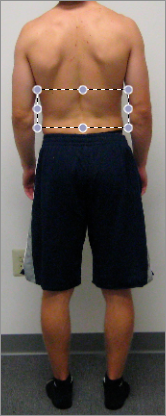
For example, you can imagine that, with the degree of extension this gentleman presents with, it will be difficult for him to get any posterior expansion upon inhalation on either side. This would be a “zone” to concentrate progressively feeding more air into to drive a more optimal breathing pattern.

 PEC Posture

This outlook of finding and addressing restricted zones immediately conflicts with “chest breathing bad, belly breathing good” thought process. 5 years and 144 hours of PRI courses later, it is more clear than ever that there is a lot more to the story than desiring chest or belly breathing. The reality is that we want diaphragm driven breathing with the opportunity for reciprocal chest wall expansion, which ultimately stems from appropriate pelvic and thorax/rib positioning and mobility, and surrounding muscular control. To help illustrate this point, consider the following example.

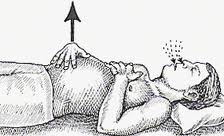
An individual in an extended state (as in the picture above) has two primary options to get air in upon inhalation. He/she can lift the rib cage vertically using “accessory” respiratory muscles, such as the scalenes, upper traps, and pec minor, or pull further into extension and allow the abdominal contents to bulge forward. This latter scenario is the outcome of many people attempting belly breathing and is as dysfunctional as any “chest breathing” pattern.

Belly Breathing

A quick search with google images uncovered this guy from breatheeasymassage.wordpress.com. This may be a useful strategy in raising the individual’s awareness regarding where their air is going, but this is NOT an optimal breathing strategy.

While symptoms can arise in a number of places from a dysfunctional breathing pattern, it’s easy to imagine how using muscles around the neck and shoulders to elevate a stiff rib cage could lead to neck/shoulder pain, and how driving from excessive extension to even more extension could result in back pain, especially with the abdominals becoming dystonic as a result of being attached to an anteriorly tipped pelvis and anteriorly flared rib cage, and having to bulge further outward.

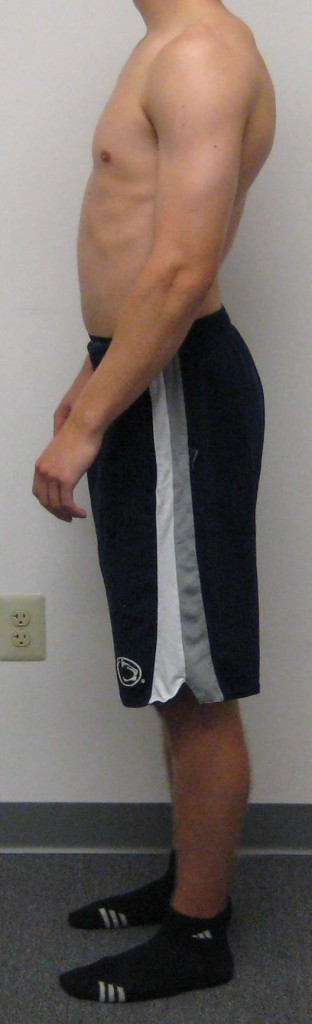
 PEC-Side View

Can you envision how driving a “belly breath” from this position would pull him further into extension?

I think the people that understand breathing the best understand what an optimal “belly breath” looks like, but what has trickled down to the layperson is that “more belly expansion is better”, which is a far cry from optimal respiration. Lurking in the background of this discussion is the idea that the pattern should fit the need for respiration. On one end of the spectrum, during times of complete inactivity (think sleeping), quiet breathing may result in a mild circumferential expansion of the lower ribs and abdomen (different than the abdominal wall just protruding forward) with very little chest expansion. In contrast, during high intensity activity, using accessory respiratory muscles is desirable to maximize air exchange. There’s a reason why they’re accessory! Naturally, the goal is always to train to create an environment where this “emergency” point is delayed as long as possible. The areas in between these two extremes should be characterized by a synchronous expansion of the abdominal and chest cavities. The greater the need for air exchange, the greater the degree of expansion in both areas. One at the expense of the other can be viewed as dysfunctional.

Hopefully this discussion helps shed some light on the limitations of the belly breathing vs. chest breathing thought process. Because the overwhelming majority of the athletes and clients we see present in an over-extended state, lying down in this extended state and driving air through their belly will, in fact, be counterproductive and further lock in their dysfunctional pattern. It’s important that we first correct POSITION before addressing the respiratory pattern, as the diaphragm (the target respiration muscle) cannot function optimally unless it is positioned to do so. If you’re interested in this topic, I’d encourage you to read the two articles below, which dig a little deeper into how to achieve more optimal diaphragmatic positioning and how it influences function.

  1. Zone of Apposition
  2. The Value of Blowing Up A Balloon

To your success,

Kevin Neeld
OptimizingMovement.com
UltimateHockeyTraining.com

P.S. If you’re interested in understanding how position can influence respiration, range of motion, injury patterns, and the training process, check out my new DVD set Optimizing Movement, which has received rave reviews from professionals in rehabilitation and training settings!

Optimizing Movement DVD Package

Please enter your first name and email below to sign up for my FREE Athletic Development and Hockey Training Newsletter!

Use CODE: "Neeld15" to save 15%