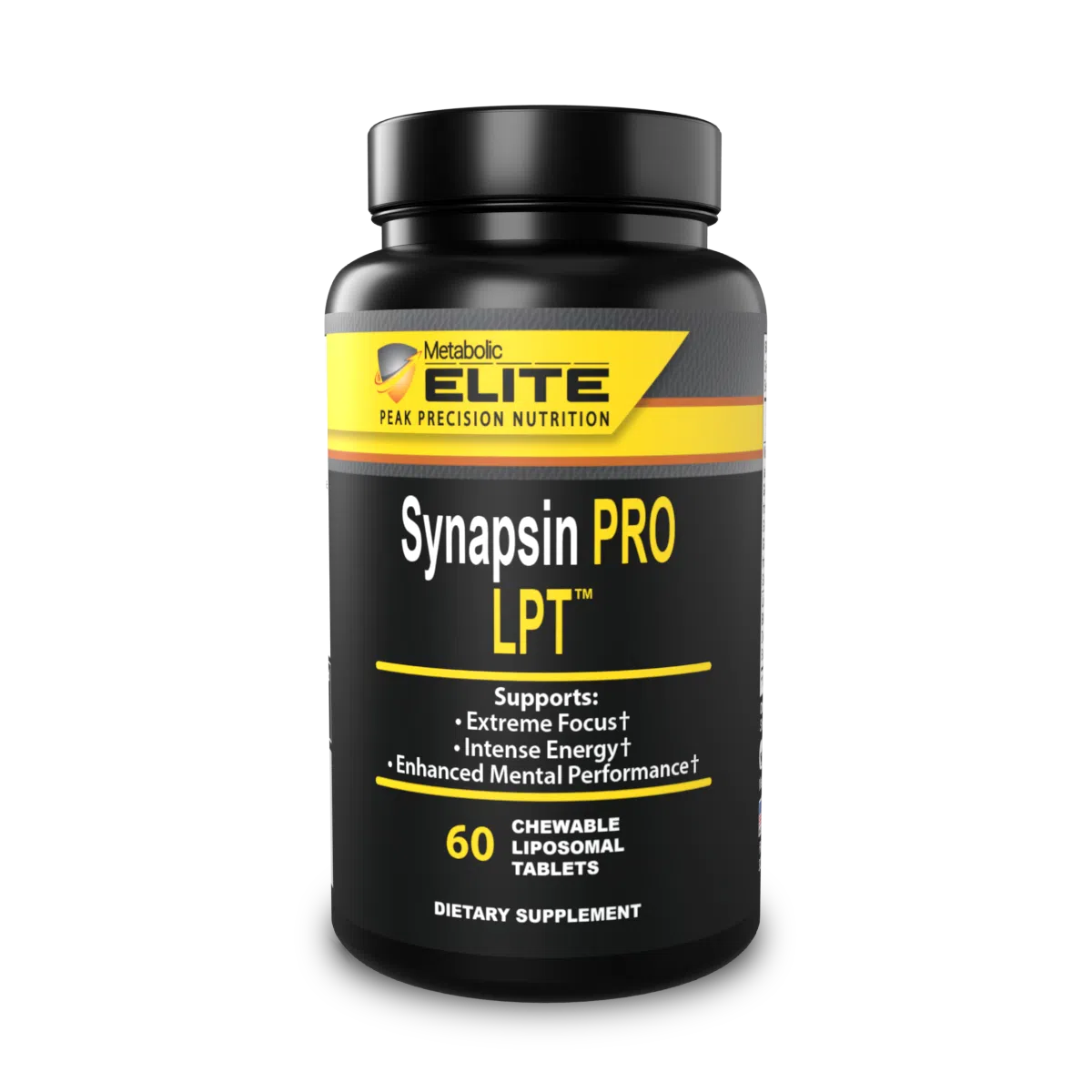
There are many ways to individualize a training program to make it more specific to an athlete’s needs.

One simple way is to skip phases of an off-season program NOT relevant to the athlete’s needs to create additional time for the athlete to cycle through phases more specific to their goals.

This table is from a paper I published in the Strength and Conditioning Journal in 2018. In it, you’ll find an example of a typical phase-by-phase progression of an off-season program for ice hockey players.

Using this as a reference, an athlete who wants to focus on speed/power could use Phase 1 as a hybrid anatomical adaptation/strength phase, progress to a power emphasis in Phase 2, Speed in Phase 3, Speed/Power Phase 4, and then transition to more anaerobic capacity work in the two weeks preceding training camp.

This would provide ~9 weeks where speed and power are the primary targets, opposed to 6 in the table.

In team settings, it’s helpful to build out several off-season templates (e.g. hypertrophy/strength emphasis, speed/power emphasis, conditioning emphasis) with specific phase progressions to ensure that athletes are safely and logically progressed in terms of exercise selection, intensity, volume, synchrony of the training program and “conditioning”, etc.

Feel free to post any comments/questions below. If you found this helpful, please share/re-post it so others can benefit.

To your success,

Kevin Neeld
SpeedTrainingforHockey.com
HockeyTransformation.com
OptimizingAdaptation.com

P.S. If you’re interested in more information about how to profile an athlete’s needs and use the profile to individualize a training program, check out the videos at Optimizing Adaptation & Performance

Enter your first name and email below to sign up for my FREE Sports Performance and Hockey Training Newsletter!

Over the last few months, I’ve shared examples of how an athlete’s speed or conditioning can be limited by different factors, and how game demands vary by position in ice hockey.

The reality is that every athlete is starting from a unique place, and therefore requires a specific path to get from where they are to where they want to go. As a result, the more a training program can cater to the specific needs of the individual, the more effective (or efficient) it will be in helping that athlete achieve his or her goals.

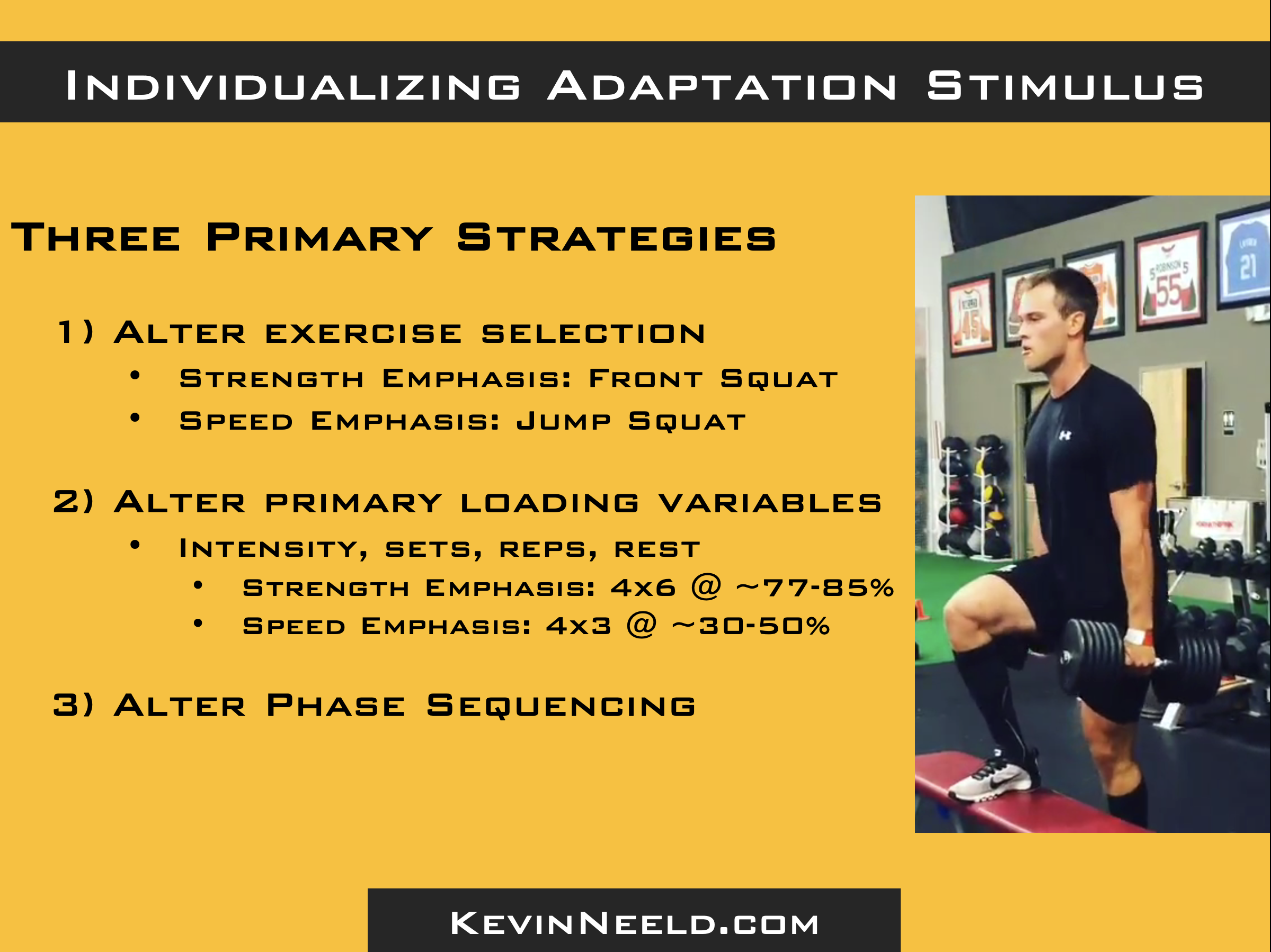
Making individualized adjustments can be challenging in a team or group environment, but here are 3 simple strategies:

  1. Alter Exercise Selection
  2. Alter Sets, Reps, Rest, etc.
  3. Alter Phase Sequencing

There are countless ways to use there 3 strategies, but the first two can be particularly helpful when the facility requires players to be in the same area (e.g. in a squat rack) at the same time.

Feel free to post any comments/questions below. If you found this helpful, please share/re-post it so others can benefit.

https://OptimizingAdaptation.com.

To your success,

Kevin Neeld
SpeedTrainingforHockey.com
HockeyTransformation.com
OptimizingAdaptation.com

P.S. If you’re interested in more information about how to profile an athlete’s needs and use the profile to individualize a training program, check out the videos at Optimizing Adaptation & Performance

Enter your first name and email below to sign up for my FREE Sports Performance and Hockey Training Newsletter!

If you missed the first two parts of this “Optimal Movement Series”, I’d encourage you to check them out at the links below, as they really lay the platform for today’s discussion.

  1. Structural Adaptations: Not Just a Hockey Problem
  2. The Truth About Corrective Exercise

One of the big questions that comes up in discussing integrating assessments and corrective work into training programs (and it’s a good one) is simply, “How do I do this in a group setting?” The reality is that for some of you, this will be much more easily accomplished than for others depending on the number of athletes and the amount of resources (e.g. time, space, equipment, help, etc.) you have. While the implementation will change depending on the setting, the thought process should remain almost exactly the same.

1) Identify the Assessments
The goal here is to decide, based on the logistical concerns identified above, which assessments you want to use. In making these decisions, consider:

  1. Which assessments do I (and the supporting staff) feel comfortable performing? Invalid data isn’t worth collecting unless you recognize it’s just more practice for you to get better at the assessment.
  2. Which assessments provide me the most usable information that will govern my programming and/or my approach to training an athlete? If there is no use for the collected information, it’s probably not worth collecting.
  3. Related to above, which assessments have correctives that I can successfully implement based on logistics? This is a big one, as it comes back to the idea of “if you can’t successfully teach it, don’t program it.”

2) Divide the Group into Buckets

The goal here is to provide everyone with the correctives that will best address their primary or most prominent restriction or dysfunction, while also keeping the implementation realistic. Naturally, if you have 20 athletes and you have 3 different corrective exercises for each of them that are all completely unique, the program will fail because it’s simply not feasible to teach 60 exercises at one time. Most assessment systems will have a priority order in terms of what to address first. For example, the FMS hierarchy is to address limitations in mobility tests, then stability tests, then integrated movement tests. Similarly, PRI would suggest addressing those with a dominant “Posterior Exterior Chain” (limitations of hip adduction on both sides) before addressing a “Left Anterior Interior Chain) (limitations of hip adduction on the left only). You can use these algorithms as a starting point to simplify the implementation of the corrective process.

For example, with the junior hockey team I’m training this year, we performed the Shoulder Mobility, Active Straight Leg Raise, and Ankle Mobility (an assessment I learned at an FMS course, but not technically part of the FMS “7”) assessments from the FMS, and the Extension Drop, Adduction Drop, and Passive Abduction Lift tests from PRI (among many others). Using this information, I was able to put the players into PRI and FMS buckets:

  1. PRI: PEC, Patho Left AIC (L anterior hip capsule laxity), Left AIC
  2. FMS: Shoulder Mobility, Active Straight Leg Raise, Ankle Mobility

Then based on these buckets, I put together 1-3 correctives based on each pattern/limitation/dysfunction, and posted them all on a sheet on the wall. Because a lot of the PRI exercise concepts were new to the guys, I chose exercises for the patterns that were fairly similar, but with a few different tweaks, so when the kids came in, I could teach a few different exercises at once and simply and quickly explain how to tweak it based on the specific exercise the player had. Most players had 2-3 PRI-based exercises, and then if they also fell into any of the FMS buckets, they would have one corrective for that, so at most someone would have 6, which didn’t happen in the first phase (Some players had 5, most had 3 or 4). Importantly, because of the overlap in the PRI exercises between the different buckets, I only had to teach ~8 different exercises, which was very manageable.

Teaching all of these on Day 1 to a team that was largely unfamiliar with the idea of assessments and corrective work, let alone exercise driven by breathing sequences, was a lot of work. Day 2 was still a lot of work, but less as the players began to internalize the positions, movements, breathing sequences, and what they should be feeling. A couple months into the season, it’s been fun as some of the players will simply ask others how to do things and those players will teach/explain it to their teammate…correctly.

Corrective Exercise without Corrective Exercise

Mathematically, you can make something more positive by adding more positives or by subtracting negatives. Similarly, you can improve movement quality by adding positives or by removing negatives.  In this context, positives might refer to corrective exercises to restore neutrality, mobility, and appropriate strength/control, and/or cuing in the form of physical touch, verbal instructions, or using implements like bands or balloons to drive the pattern you want. Negatives may simply refer to removing or changing exercises that don’t suit the individual athlete’s structure/function. For example, consider a posterior chain exercise for these populations:

  1. 5’8” athlete with optimal mobility: Trap Bar Deadlift with low grip from floor
  2. 6’4” athlete with optimal mobility OR 5’8” athlete with limited hip flexion: Trap Bar Deadlift with high grip from floor
  3. 6’4” athlete with limited hip flexion: Trap Bar Deadlift with high grip from blocks

Using this example, telling the 6’4” athlete with limited hip flexion to pull from the floor because that’s “full range of motion” would be misguided, and ultimately lead to excessive wear and tear on the athlete’s hip, lumbar spine, and any number of other places up and down the chain.

This is an oversimplified illustration of this concept, but the idea is to keep the pattern the same, but change the execution of the exercise based on the individual’s structure and functional competence. Simply changing the execution of exercises based on what depths/positions best cater to that individual’s structure can have a profound impact on that athlete’s ability to develop the physical capacities intended from the program while minimizing the risk of injury, which is always the goal.

Be an astute observer of movement and don’t make assumptions about what range of motion an individual should or shouldn’t have, and don’t hesitate to alter the performance of an exercise based on what allows the individual to perform the movement with the most optimal alignment and stability. Following these steps will make EVERY exercise more corrective…or at least less destructive, and allows you to improve (read: individualize) the execution of every exercise in group settings.

Get Optimizing Movement Now!

“…one of the best DVDs I’ve ever watched”
“A must for anyone interested in coaching and performance!”
Optimizing Movement DVD Package

Click here for more information >> Optimizing Movement

To your success,

Kevin Neeld
OptimizingMovement.com
UltimateHockeyTraining.com

Please enter your first name and email below to sign up for my FREE Athletic Development and Hockey Training Newsletter!

Hopefully you were able to grab a copy of Eric Cressey’s The High Performance Handbook already and grab all of the great bonuses Eric offered the first day. After reading through the book, I asked Eric if he’d write a post discussing the importance of individualization, which he humbly agreed to. This is a cool post because in addition to discussing individualization, it provides a very simple assessment that provides some valuable information about your structure and how it should impact programming. This is something we see a good amount in baseball players, a little less in hockey players, and A LOT in gymnasts and figured skaters. Check out the article below!

Individualization: How Results Go from Good to Outstanding by Eric Cressey

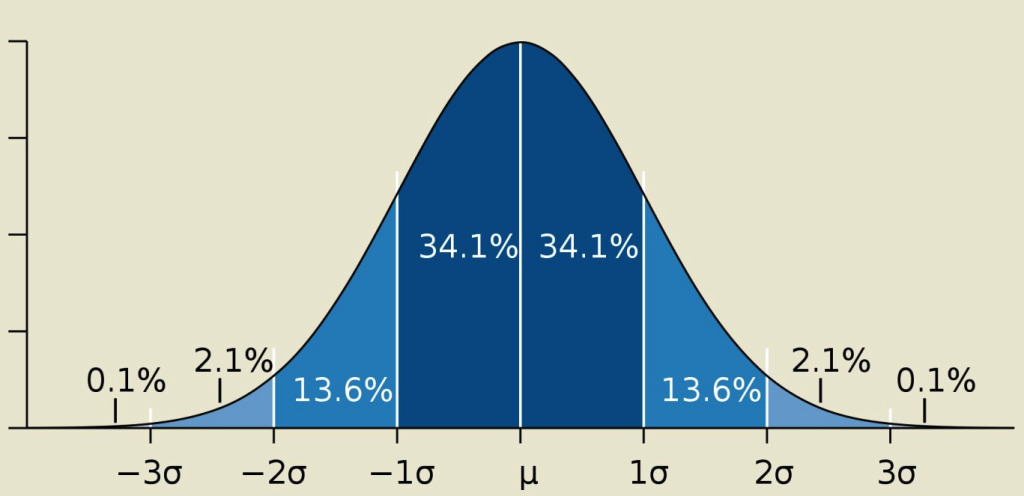
I’m no statistician, but I can say without wavering that the standard bell curve absolutely applies to fitness programs – just as it does to many other aspects of our daily lives.  For those of you who need a quick refresher, the standard bell curve represents a normal distribution of data points – meaning values are equally likely to wind up above or below the mean.  It looks like this:

BellCurve
As you can see, 68.2% of the data points in question fall within one standard deviation above or below the mean.  To get directly to my point, these are the people in the fitness world who do pretty well (above the mean) or reasonably well (below the mean) to cookie cutter programs.

The folks in the 13.6% zones (between one and two standard deviations) are a bit more extreme.  Maybe they are dissatisfied with the results (below the mean), or really happy with the results (above the mean).

Finally, the remaining 4.2% of people can go in one of two directions. On the bottom side (2-3 standard deviations below the mean) are the 2.1% who wind up royally jacked up.  Maybe they start off with structural issues like femoroacetabular impingement (bony overgrowth at the hip) that make squatting incredibly injurious.  Maybe they’re beginners who simply aren’t prepared for heavy loading right away. Or, on the other hand, they might be powerlifters who aren’t given sufficient loading to maintain strength.  Regardless, they get hurt – or just make absolutely no progress.

The top 2.1% (2-3 standard deviations above the mean) make absurdly good progress and tell all their friends about the program. They’re like the crazy participant in every spin class that sits in the front row and yells, “Give it to me!” at the instructor for the entire hour.

Finally, there is the remaining 0.1%.  At the bottom, they’re the ones who’ll badmouth a program to anyone and everyone because their results were so terrible that they can’t wait to rid the Earth of it.  Conversely, at the top, there is 1 person in every 1,000 who’ll sing the program’s praises to anyone who’ll listen. It’s his mission in life – because his results were so awesome.

We’d all love to say that all our programs deliver the top 2.2% of experiences, but the truth is, that’s not possible.  However, our goal in programming for athletes and clients is to reduce the number of extreme data points on the bottom side. In the process, we shift the entire curve to the right on the client satisfaction continuum – and we keep the lows from being “too low.”  It’s a novel concept, but how do we do it?

Very simply, we assess and individualize accordingly.

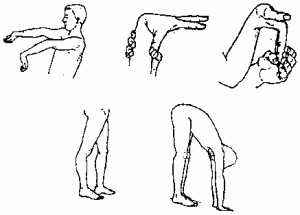
There are loads of different assessments we can utilize with folks to improve the quality of our programming, but I’ll highlight one here: the Beighton Hypermobility test. This assessment is a means of screening for joint hypermobility.  If someone scores high on a Beighton test, then we wouldn’t want to be stretching them – and certainly not to extreme ranges of motion.

The screen consists of five tests (four of which are unilateral), and is scored out of 9:

  1. Elbow hyperextension > 10° (left and right sides)
  2. Knee hyperextension > 10° (left and right sides)
  3. Flex the thumb to contact with the forearm (left and right sides)
  4. Extend the pinky to >90° angle with the rest of the hand (left and right sides)
  5. Place both palms flat on the floor without flexing the knees

beighton-300x215
Now, many programs – particularly in the hockey and football realms, it seems – assume all athletes are incredibly tight and need to stretch until the cows come home.  With that in mind, here’s a great example of an athlete who – at 6-4, 240 pounds – wouldn’t appear to be hypermobile to the naked eye.  However, when you run a Beighton score, you quickly see that he’s actually got a lot of laxity, and his programs need to focus on building stability first and foremost.

If you stretch him a ton, he would potentially wind up in the bottom 2.2% who’d hate you.  Conversely, if you trained him for stability, he might wind up in the top 2.2%.  And, you could say that this is exactly what happened with his training at Cressey Performance.  We’ve never stretched him, and he’s gone from pitching at 80-82mph to being consistently 88-90mph.  Individualization works.

Now, with that said, individualization often comes at an inconveniences.  It’s pricier, more time-consuming, and not necessarily accessible.  That’s why I went out of my way to make individualizing a program easier to do when I created my new resource, The High Performance Handbook.  Before you start the program, you go through a few quick, but important assessments – and then embark on a program that’s suited to your needs, goals, and schedule.

For more information, click here >> The High Performance Handbook

To your success,

Kevin Neeld
OptimizingMovement.com
UltimateHockeyTraining.com

Please enter your first name and email below to sign up for my FREE Athletic Development and Hockey Training Newsletter!
Use CODE: "Neeld15" to save 15%