Today’s “Throwback Thursday” post covers three powerful strategies to maximize recovery. Interestingly, I wrote another post on this exact topic recently that almost identically mirrors my thought process from 2009. In other words, over 4 years after this post was written, what I view as three of the most powerful recovery strategies has not changed at all! You can check out the more recent post here: 3 Powerful Recovery Strategies for Athletes

You may be surprised by how simple these are. It’s not a matter of cracking some magic code; it’s a matter of taking care of the things you already know are important.

1) Drink PLENTY of water. Maintaining proper hydration has positive implications on both mental and physical performance.Bluntly, it means you’ll be smarter and feel better if you drink enough water.  Plenty is not 6-8 cups a day.  That’s BARELY adequate for completely sedentary people on low caloric diets; you should be drinking AT LEAST double that.If you’re like most people, you’re not even close.It’s never too late to start. Increase your water intake significantly.You’ll likely be making many more trips to the bathroom than you’re used to, but that will cut back within a couple weeks when your body gets used to being fueled properly.

2) Sleep! Everyone’s sleep needs are different, but in general, most people should be getting 7-9 hours of QUALITY sleep.As in wake up in a pool of drool sleep.Wake up with no feeling in your arm because you didn’t move all night sleep.DEEP, QUALITY sleep.If you get 7 and you consistently wake up feeling tired, you need more sleep to recover from the stresses you’re experiencing (through training or other aspects of your life). Remember that this should be consistent from night to night.Your body doesn’t adjust well to 5 days of a lack of rest during the week, and then two days of excessive sleep on the weekend.Make it a priority to get a good night’s sleep every night.

3) Proper Nutrition. This comes in two parts: General Nutrition, and training-specific nutrition.With regards to general nutrition, it’s important that you eat adequate calories from QUALITY sources.This includes as many servings of vegetables as you can tolerate throughout the day, fats from olive oil, nuts, and cold-water fish (e.g. salmon), and carbohydrates from whole grain/high fiber sources.As a reminder, your carbohydrate intake should be determined by your activity level.The more medium-high intensity activity you do, the more carbohydrates you need.Training-specific nutrition is pretty straight forward.Consuming a liquid source of simple carbohydrates and rapidly digesting protein (e.g. whey protein) immediately after your training helps replenish glycogen (read: carbohydrate) stores within the body and stimulate protein synthesis (read: rebuilding).It shouldn’t be hard to see why this would be advantageous.There’s now research to support consuming these “shakes” immediately before and/or during your training, so the nutrients are readily available as your body begins to break down.Think of it as “on the fly” recovery.Personally, I usually make a half shake and sip it while I train, then make another half shake and drink it immediately after.  For the complete nutrition guide, check out John Berardi’s Precision Nutrition program.

Following these three simple (well, at least they’re simple conceptually…maybe not so simple to implement) strategies will help you maximize your rate of recovery, allowing you to get the most out of your training.

Keep training SMART!

To your success,

Kevin Neeld
OptimizingMovement.com
UltimateHockeyTraining.com

Please enter your first name and email below to sign up for my FREE Athletic Development and Hockey Training Newsletter!

Get Ultimate Hockey Training Now!

“…an extremely rare comprehensive look at the present state of ice hockey training.”
“…a must-have for coaches and strength professionals at all levels of hockey.”

Ultimate Hockey Training

This “Thursday Throwback” features an article I wrote over 4 years ago that overviews what may prevent someone from squatting deeply, and an assessment you can use to check your squat depth. Over the last several years, I’ve read a ton of research on hip anatomy and progressive structural changes. In the end, it seems that structural limitations are becoming more of the norm than the exception and it is incredibly important that coaches AND athletes/lifters recognize that what was previously considered a full squat may not apply to everyone/you. Symptoms of squatting past your range can manifest in many ways, but two of the more common ones are low back pain and anterior hip pain. I’ve also seen pretty significant discomfort in the piriformis, adductor complex, and TFL as a result of this pattern.

Check out the post below, as well as the article I link to, and please feel free to post any comments or questions you have below. This is an important topic that affects just about everyone that trains (or moves)!

The Truth About Deep Squatting

About a month ago, my article “Battling Anatomy: Implications for Effective Squatting“, was published at SBCoachesCollege.com, a website I couldn’t say enough good things about.

The other day I received an excellent question from Jason Price, Founder and CEO of Athletes Equation.

“Hello Kevin,
I read you article on SB Coaches College today and really found it informative and enjoyed it very much.  I did have a few questions after reading that I was hoping you could provide me with some further information or clarification.  What I have noticed with many of the youth athletes that I am training is that their hip mobility is terrible. I too have utilized the “touch and go” method to control how much depth they can attain until they have improved their mobility.  I have found this to be a fantastic method for most athletes.  But, I was thinking after reading your article about athletes which are dependent of being in the deep squat position in their sport.  I train several weightlifters and one of them still suffers from a very similar condition as the individual in your videos.  I am wondering what suggestions you would have for me in coaching this individual.  In the sport of weightlifting as I am sure you are aware you must get into the deep squat position to effectively clean and snatch significant weight.  My athlete does not have the significant discrepancy one side to the other.  But, he does have the tuck under at the bottom of the deep squat position.  So how can I effectively train him to receive the barbell deep in the squat with this technical flaw without placing him in this potentially hazardous position?  Should he not squat deep? Do you know of any methods outside of orthopedic evaluation for anatomical abnormalities?

Again, fantastic article i really enjoyed it and felt you gave many of the readers an alternative viewpoint as to why some of these technical breakdowns happen.  I appreciate your time and any response.”

My immediate thought is to first consider that everyone is not built for deep squatting.  Despite the increasing usage of pictures of babies in a deep squat position as evidence for this ability, the hip joint and associated ligaments change as a natural/circumstantial part of development, that may result in a range of motion (ROM) limitation in some people.  Having said that, it’s always better to assess than guess.

With regards to the lifter in the article video, the side-to-side discrepancy simply indicates that only one of his hips, the right one, lacks full ROM.  In his case, I was able to recommend he see a hip specialist because he had multiple signs of CAM impingement.  Notably, he lacked internal rotation ROM on the right side compared to the left and flexion/adduction on the right side was extremely painful.

Getting more to your question about the bilateral hip tuck, the first thing you could try is to coach him to push his knees out while he’s going down and to keep his knees out while driving up.  This opens up the hips to allow for maximal hip flexion while avoiding bony contact between the trochanters of the femur and the “spines” of the hip bone.  Mark Rippetoe wrote a great article called “You Don’t Know Squat without an “Active Hip”” about this topic.

If that doesn’t clear things up, there is a pretty straight forward assessment you can use to see whether this is a soft tissue restriction or a joint anatomy restriction.  A few months ago I had the pleasure of talking to Shirley Sahrmann about this issue.  She recommended using quadruped rocking to assess their ROM.

Quadruped rocking involves putting the lifter in a quadruped position, with their knees under their hips, top of their feet flat against the floor, and hands under their shoulders.  The lifter should set up in a neutral lumbar spine position, then use their arms to push their hips back (pushing into hip flexion) so as to sit on their heels, while MAINTAINING the neutral lumbar position.  Note the angle that the hips begin to tuck.  Stop them there, have them return to the starting position and try again.  Dr. Sahrmann basically said that 8-10 repetitions of this should improve their hip ROM.  If it doesn’t, their hip joint anatomy doesn’t allow  for it and never will.  Any attempt to push beyond this point will lead to lumbar flexion, and invariably some sort of back pain.

I’ve found this assessment to be incredibly useful.  In less than 30 seconds I’m able to see what kind of hip flexion ROM someone has.  If their hips start to tuck at 90 degrees every time, and it doesn’t improve with more repetitions, I know that’s the extent of their ROM and stop them at that point during all exercises (squats, lunges, etc.).  Depending on the severity of the restriction, this may also mean that they can’t perform a deadlift off the floor, in which case I’d move them to a rack pull from a height slightly above their end range.

Ask your athlete where they feel the restriction while quadruped rocking.  If they feel like they’re tight on the back side, some mobility work may clear that up, but it’s also likely that quadruped rocking will clear that up.  If they feel restricted in the front or any type of grinding in or around their “groin” area, it’s likely a hip joint limitation.  I don’t recommend forcing lifters through positions their hip joints don’t allow for.  That is, unless they’re looking for low back pain and a hip labral tear.  Hope this helps.

To your success,

Kevin Neeld
OptimizingMovement.com
UltimateHockeyTraining.com

Please enter your first name and email below to sign up for my FREE Athletic Development and Hockey Training Newsletter!

Get Ultimate Hockey Training Now!

“…an extremely rare comprehensive look at the present state of ice hockey training.”
“…a must-have for coaches and strength professionals at all levels of hockey.”

Ultimate Hockey Training

Over the last 5 years I’ve written over 650 articles for this site. It’s a little crazy to think about!

Because of the sheer volume of content, I find myself answering a lot of emails these days by searching for old articles I’ve written that answer the person’s question and just firing them back over. The reality is that I may be the only person among us that has read every one. In short, there is probably some good stuff that you guys are missing out on!

It’s for this reason that I’m starting a new “Throwback Thursday” series that will highlight an article from the past that still contains information that is relevant today. This will be a great way to reignite some conversation and discuss what (if any) changes in philosophy/training methods have resulted since these were first written. Today we’ll kick things off with an article that covers what I still feel is a fairly controversial topic (extremists on both ends). Enjoy!

Rethinking Bilateral Training

Bilateral training frequents athletic development programs everywhere.  By bilateral I mean both legs or arms working simultaneously to produce force/motion in the same direction.  Exercises such as front squats, deadlifts, standing shoulder press, and bent over row are just a few examples.  While bilateral training and the associated exercises are deeply rooted in the history of strength training, it may be time to reconsider their use.  Heresy you say?

I’m certainly not the first to make this suggestion.  Michael Boyle has been making the case for single-leg training for years now.  After reading one of his articles on the topic, I began thinking more about the lack of respect single-leg training receives.  As the article mentions, people are probably reluctant to use single-leg training because they require less external load.  This raises a few more questions.  Is external load completely indicative of internal stress to the muscle?  If so, is neglecting the movement pattern and maximizing the external load really the goal of training athletes?  The article also mentions the “functional” inclusion of the medial and lateral musculature of the hips that is present in single-leg training and not bilateral training, functional being defined as “training the muscles that we’re using in the way that we use them.”

I want to preface the rest of this article by stating that I’m not yet calling for a complete abandonment of bilateral training.  Instead I simply want to present some of the research supporting the empirical evidence that Coach Boyle presented in his T-nation article.  In light of the available research on the nervous system, a working knowledge of functional anatomy, and injuries associated with heavy spinal loading, I think it is time to reconsider the efficacy of predominantly bilateral training programs.

Neural Hinderance?

A look into the literature on the nervous system’s role in force production revealed an interesting occurrence known as the bilateral deficit.  For those of you that aren’t familiar, the bilateral deficit simply describes the fact that the sum of individual extremity force production is greater than bilateral force production (1-5).  In other words, if you performed a one-legged knee extension with your left leg only, then your right leg only, and added these two forces together, they would be greater than if you performed a knee extension with both legs together.  Bilateral Deficit: Leg A + Leg B > Both Legs
In fact, the bilateral deficit is said to be as large as 20% (6,7) during slow contractions and as high as 45% (7,8) during rapid contractions!  Luckily, researchers were quick to monitor the changes in this relationship following a bilateral resistance training program and found that the deficit decreased.  In some instances the relationship even reversed so that both legs produced more force than the sum of individual leg efforts (9,10).  Phew!  Disaster averted.

Neural scientists refer to the bilateral deficit as a phenomenon.  I would question whether it is a phenomenal occurrence or a long-term adaptation to repeated movements.  As many of you already know, performing a movement repeatedly strengthens the associated neural circuitry resulting in improved force production.  In the words of my old neurobiology professor, “Neurons that fire together, wire together.”  This is the primary explanation for why novice lifters can experience rapid gains in strength in the first eight weeks of training.

Is it possible that the bilateral deficit is simply a life-long adaptation to producing force on one-leg?  I realize that no one grows up performing one-legged squats off their kitchen stools on a daily basis, but think about the movements we perform regularly, notably walking and running.  While one leg is producing a triple-extension force, the other is usually producing a triple-flexion force.  Let’s come back to the knee-extension example.  In consideration of the “neurons that fire together, wire together” statement, it would make sense that as one leg is extending the neural circuitry is telling the other to flex.  This pattern predominates in most human movements: walking, skipping, running, and even crawling!

The neural circuitry to explain this pattern is well-established.  Some of you may have been introduced to it through the flexor crossed-extensor reflex.  In this example, if someone steps on a sharp object or other painful stimulus, they will withdrawal that leg by flexing the hip and knee.  At the same time, they will extend the hip and knee on the other leg.  This is a stabilization mechanism.  If both hips and knees flexed, you’d like end up sitting on the painful stimulus you’re trying to avoid.  Basically, as the flexor group on one limb is excited, the contralateral flexor group is inhibited, and the contralateral extensor group is excited.

What does this have to do with athletes?

We are wired to effectively produce unilateral movements.  Athletics involve unilateral movements.  Most strength and conditioning programs revolve around bilateral movements.  Why?  I understand the benefits of including single-leg training is being increasingly recognized and that more unilateral training is being prescribed.  However, it still seems that we’re adding some single-leg training to a double-leg program, instead of the other way around.  What happens if we abandon double-leg training altogether?  Compared to double-leg training, single-leg training:

1. Requires greater force production from more muscles. Picking up one leg immediately requires greater force production from the hip abductors and adductors (among others) to stabilize the pelvis.  Some of the affected muscles would include: pectineus, adductor brevis, adductor longus, adductor magnus, gracilis, obturator internus, obturator externus, gluteus maximus, gluteus minimus, gluteus medius, psoas major, iliacus, sartorius, gemelli inferior, gemelli superior, piriformis, and tensor fascia latae.

2. Increases the proprioceptive and sensory demand. Decreasing stability by narrowing the base of support will absolutely necessitate greater proprioceptive and sensory feedback to maintain balance.

3. Decreases spinal loading. I’ve heard a saying a few times that goes something like “Live your life the wrong way, you’ll end up in a cardiologist office.  Live your life the right way, you’ll end up in an orthopedic office.”  This has come to be accepted as an inevitable truth.  Research supports the idea that repetitive heavy spinal loading, as is common in long-term weightlifting, results in a myriad of spinal issues including an increased incidence of spondylosis (11), decrease in intervertebral disc height (12), lumbar spine degeneration (13).  But does it need to be this way?  If we can maintain or even improve the quality of the stimulus to the muscle and cut the external load in half, could some of these injuries be prevented?

4. Reinforces the neural circuitry common to most athletic movements. The majority of athletic movements occur from one-leg or a staggered stance.  Could this more similar training approach help to decrease the incidence of injury?  I’m thinking specifically of hamstring strains and ankle sprains.  Hamstring strength absolutely plays a role in preventing hamstring strains.  But how do we explain the athletes with monstrous hamstrings that suffer an injury?  Bad running form?  Maybe.  Is it possible that these strains are occurring due to a neural mishap associated with hamstring momentarily attempting to contract concentrically bilaterally when one side should be lengthening?  The causative factors associated with ankle sprains remain relatively allusive, but there does seem to be some evidence that decreased proprioception and increased peroneal stretch reflex latency may be related to ankle injury.  As a global factor, fatigue seems to be related to injury, with more injuries occurring as fatigue increases.  Of interest is that muscle fatigue is training-specific, meaning that if double-leg training predominates, the athletes will resist fatigue more efficiently in double-leg movements than single-leg movements.9  Naturally, the opposite is also true.  Both of those factors are neural in nature, and may be positively affected by the increased demand on the sensory system provided by single-leg training.  Prior history seems to be the greatest predictor of future injury.  Therefore, if we can prevent an injury from ever happening, we significantly decrease the risk of future occurrences.

Admittedly, some of the proposed benefits of single-leg training on injury prevention are speculative.  There is a clear list of benefits to single-leg training, however, that shouldn’t be overlooked.  While I believe that largely moving away from double-leg training is premature (and somewhat scary), I think it is worth considering.  Albert Einstein once said, “The significant problems we face cannot be solved at the same level of thinking we were at when we created them.”  Weigh the pros and cons associated with eliminating double-leg training.  Is it time for a change?

StrengthCoach.com

This article was originally published on StrengthCoach.com, an athletic development website where some of the world’s experts in strength and conditioning print their articles and discuss current issues.

To your success,

Kevin Neeld
OptimizingMovement.com
UltimateHockeyTraining.com

Please enter your first name and email below to sign up for my FREE Athletic Development and Hockey Training Newsletter!

Get Optimizing Movement Now!

“…one of the best DVDs I’ve ever watched”
“A must for anyone interested in coaching and performance!”
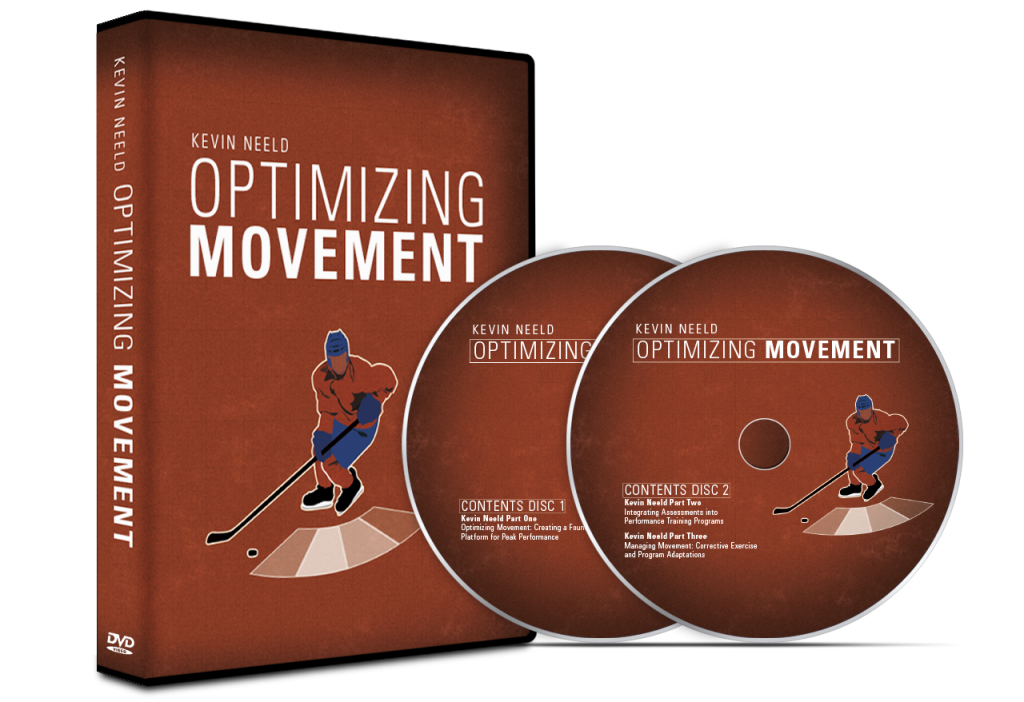
Optimizing Movement DVD Package

Click here for more information >> Optimizing Movement

References

1.    Obtsuki, T. (1983). Decrease in human voluntary isometric arm strength induced by simultaneous bilateral exertion. Behavioural Brain Research, 7, 165-178.
2.    Schantz, P., Moritani, T., Karlson, E., Johansson, E., & Lundh, A. (1989). Maximal voluntary force of bilateral and unilateral leg extension. Acta Physiologica Scandinavica, 136, 185-192.
3.    Secher, N., Rorsgaard, S., & Secher, O. (1978). Contralateral influence on recruitment of curarized muscle fibres during maximal voluntary extension of the legs. Acta Physiologica Scandinavica, 103, 456-462.
4.    Secher, N., Rube, N., & Ellers, J. (1988). Strength of two- and one-leg extension in man. Acta Physiologica Scandinavica, 134, 333-339.
5.    Taniguchi, Y. (1998). Relationship between the modifications of bilateral deficit in upper and lower limbs by resistance training in humans. European Journal of Applied Physiology and Occupational Physiology, 78, 226-230.
6.    Howard, J., & Enoka, R. (1991). Maximum bilateral contractions are modified by neurally mediated interlimb effects. Journal of Applied Physiology, 70, 306-316.
7.    Koh, T., Grabiner, M., & Clough, C. (1993). Bilateral deficit is larger for step than for ram isometric contractions. Journal of Applied Physiology, 74, 1200-1205.
8.    Vandervoort, A., Sale, D., & Moroz, J. (1984). Comparison of motor unit activation during unilateral and bilateral leg extension. Journal of Applied Physiology, 56, 46-51.
9.    Rube, N., & Secher, N. (1990). Effect of training on central factors in fatigue following two- and one-leg static exercise in man. Acta Physiologica Scandinavica, 141, 87-95.
10.     Enoka, R. (1997). Neural adaptations with chronic physical activity. Journal of Biomechanics, 30, 447-455.
11.     Aggrawal, N., Kaur, R., Kumar, S., & Mathur, D. (1979). A study of changes in the spine in weight lifters and other athletes. British Journal of Sports Medicine, 13, 58-61.
12.    Granhed, H., & Morelli, B. (1988). Low back pain among retired wrestlers and heavyweight lifters. American Journal of Sports Medicine, 16, 530-533.
13.     Videman, T., Sarna, S., Battie, M., Koskinen, S., Gill, K., Paananen, H., & Gibbons, L. (1995). The long-term effects of physical loading and exercise lifestyles on back-related symptoms, disability, and spinal pathology among men. Spine, 20, 699-709.

Last week I received a question from a reader that I’ve gotten a few times in the past and thought I’d address here. If you have specific questions you’d like me to address in a future post, please post them in the comments section below!

Question: If you could please tell me what muscles are used in taking the slap shot. What muscles are being used eccentrically, concentrically as well as isometrically. I would greatly appreciate it. Thanks Chris

I’ve written about exercises to improve shooting power quite a bit in the past, as I know that’s a question a lot of players have. Whenever I get these questions, my first thought is “why do you want to know?” I suspect that the line of thought here goes something like:

  1. I (or my son/daughter/member of my team) does not have a very hard shot (by someone’s standard)
  2. I need to learn what muscles are used in shooting
  3. I need to strengthen these muscles to improve my shot power

In response to this thought process, I could dissect all the muscles involved with various shot patterns, how their roles change depending upon body position, and explain their actions. That said, I think in this situation I might be providing the right answer to the wrong question. In my opinion, a better, more direction question would be:

“How can I improve my shot?”

Improving a shot in hockey comes down to a few simple concepts:

  1. Technique
  2. Accuracy
  3. Release
  4. Power

In almost every case, all of these things feed each other. If someone isn’t strong enough, they may not be able to shoot with the ideal technique (especially true at the youth levels). A slow release can make a hard shot seem slow, since the goalie/opponents have an opportunity to adjust their positioning to the expected shot before it gets off.

Check out the video below of my buddy Johnny Gaudreau. He’s not going to win any hardest shot contests, but he sure finds the back of the net!

Quick release and accuracy may be more important than shot power for some players

Many coaches like defensemen with a big shot from the point. This certainly isn’t a bad thing, and in many cases is desirable. That said, Mark Recchi played the point for years on the power play and almost exclusively took snap shots. As mentioned above, sometimes placement is more important than power.

I’ve also heard stories of some of the world’s top scorers admitting that they didn’t “aim” as much as just try to get the shot off as quickly and as hard as possible. The point of this discussion is to recognize that many players have found success using different strategies, most of which gravitate toward their talent predispositions. If you’re the parent or coach of an undersized player, they will absolutely benefit from some strength training, but they may never have the hardest shot on their team. That’s okay; they can find success with other strategies!

With all that said, let’s dig into the heart of this question: What muscles are used in shooting and how do we train off the ice to improve shooting power?

Do muscles matter?
There are in excess of 600 muscles in the body, most of which are active in some capacity during a max effort shooting pattern. Some will be used to “load”, some will be used to accelerate through the shooting pattern, and some will be used to decelerate the movement. While it might be possible to dissect the role of every muscle in every shooting situation, I think the training application of this information would get pretty muddy very quickly. For example, for a right-handed shot to open up and take a big slap shot would involve an eccentric loading of the back-side (right) external oblique during the loading phase, an isometric action during the transition from the wind-up to lowering the stick, and a concentric action as the player accelerates the stick down. This is just one example of one muscle in one shot from one position. To use information like this to design specific exercises to address each component would be overly laborious and incredibly inefficient. Not to mention, muscle action is position- and velocity-specific, so simply doing a bunch of Russian twists to train the obliques would leave A LOT to be desired (not to mention this is a garbage exercise anyway).

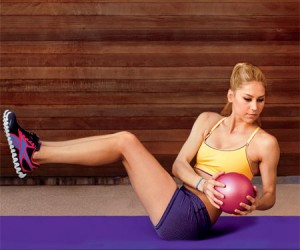
Scrap these in favor of plank rotations and belly press variations

In contrast, I’d urge you to temporarily let go of thinking of the involved muscles and start thinking more in terms of movement patterns. When you view sports in this frame, you’re able to train multiple muscles in their sport-specific roles simultaneously. This concept, however, has been bastardized by the “hockey-specific” folks that started loading up hockey sticks with resistance tubing and having players go through shooting motions in this manner. A few things to consider:

  1. Shooting patterns, like all truly sport-specific movements, are position and velocity dependent and involve a very specific motor program within the nervous system. Creating an excessive overload during sport-specific patterns can NEGATIVELY affect the motor program, ultimately leading to a sloppier pattern. This is especially true with movements where accuracy is a primary objective.
  2. Relevant to the above, tubing progressively increases resistance as it gets stretched, so the resistance is maximized as the players stick reaches the “follow through” phase of the shot. This is the exact opposite of shooting on the ice, where maximum resistance is reached either during the transition from wind-up to shooting phases, or during contact with the puck. A much more effective way of utilizing this concept would be to use pucks that are MODERATELY heavier (e.g. ~ 1 oz for bantams and midgets, and up to ~2oz heavier for juniors, college, etc.; peewees and below shouldn’t use heavier pucks!)
  3. Off-ice training can have a HUGE impact on sport-specific qualities by breaking down the movements into more fundamental patterns that don’t directly mimic those used on the ice, but still have some similarities. For example, shooting is a low load, high velocity rotational power movement. These can be trained off the ice using med ball throw variations from different positions, that will help mimic the rotational loading and force generation through the hips, transfer of this power through the core, and follow-through through the upper body. In this way, the pattern is similar enough that it can transfer to on-ice improvements, but not so similar that it will interfere with the accuracy/precision of the movement on the ice.

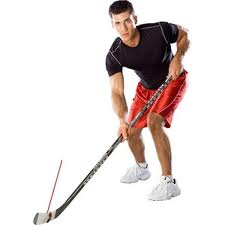
Tube-resisted shooting: The key to developing inaccurate shots and sports hernias

Our med ball work can generally be broken down into these variations:

  1. Shotput or scoop
  2. Front standing or side standing
  3. Static or dynamic start

In this way, we’re able to address a wide variety of shooting environments that players face on the ice. We generally progress to lighter loads throughout the off-season to help shift toward higher velocity movements. I’ve posted a ton of these videos in the past, so if you’re interested in seeing these exercises in motion, check out the posts below!

  1. The Myth of Wrist Strength in Hockey
  2. Improving Shot Power Through Rotational Power Training
  3. Final Phase Rotational Power Exercise

I hope this clears up any confusion regarding the most appropriate off-ice training strategies to improve on-ice shooting power. Please post any questions you may have below!

To your success,

Kevin Neeld

Please enter your first name and email below to sign up for my FREE Athletic Development and Hockey Training Newsletter!

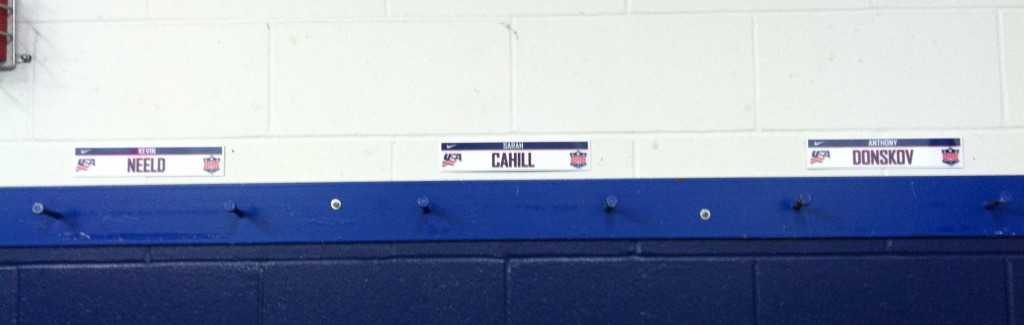
As has been the theme this Summer, the last several weeks have been exceptionally busy. I was in Blaine, MN for 10 days with the US Women’s National Team, which was an awesome experience. Anthony Donskov and Sarah Cahill were out there with me, both of which are awesome coaches that I always learn a lot from. The three of us have become affectionately known as “The Unit”. While I was out there, Sarah and I had an opportunity to meet and talk shop with Mike T Nelson and Cal Dietz (separately), which was great. I binge read Cal’s 350+ page book over the weekend so I’ll share some of the things I learned in the near future.

The Unit Locker

As a quick aside, last night I confirmed that I’ll be speaking at the USA Hockey Level 4 Clinic in New Jersey in a couple weeks. Let me know if you’ll be there!

Last night I also worked with David Lasnier to test the U-18 team we work with. It was interesting to see how all of their hard work paid off over the Summer. The team tested exceptionally well, but some of the highlights included the goalie knocking out 17 chin-ups (perfect form; team average was over 10), and one of the players doing DB Reverse Lunges w/ 90lb dumbbells for 20 on each leg, at which point I stopped him. Unfortunately, 90s were the heaviest dumbbells we had at the rink so that was where the majority of the team rep-tested (intended to do a 5-RM). Overall I was really impressed, and am looking forward to how the two U-16 teams do over the next couple of weeks and how everyone does with the few on-ice tests we’ll be doing soon.

Rotational Power Training

I’ve written in the past about the role that off-ice rotational power development plays in improving shooting power and other aspects of hockey performance. Today I just wanted to post a video of one of my favorite exercises: Side Standing Rotational Med Ball Shotput with Rapid Cross-Under and Partner Pass

There’s a lot to take in with this, but the idea is that it:

  1. Integrates a dynamic start and change in foot position
  2. Drives rotational power from the ground-up, very similar to the strategy most commonly used on the ice
  3. Utilizes rotational hip torque to generate power
  4. Integrates a rapid adjustment in eye position, both to track the ball into the hands, and to turn to pick a spot on the wall to throw the ball at (we coach our players to pick a spot and throw the ball through that spot…quickly) which happens constantly on the ice

Tough day to be the wall
This is a great exercise for a lot of reasons, but it’s also relatively simple to teach. I get questions a lot from people running youth off-ice programs that don’t have a lot of equipment or time; I think this is a good fit for those situations (starting without the foot movement and without the partner toss). That said, we wrap up our rotational med ball work at the end of the off-season and almost never come back to it until the end of the season because the players undergo so much rotational stress on the ice.

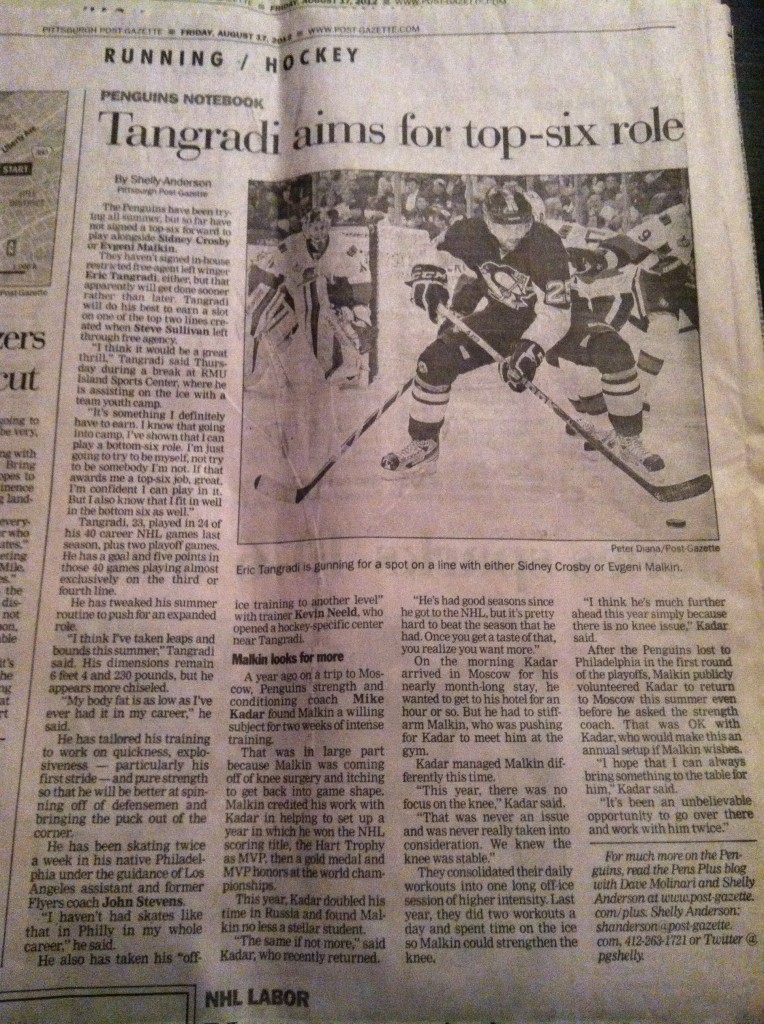
Aside from being a beast, I chose to gave Eric some press here to return the favor, as I found out early this week that my name ended up in the Pittsburgh Post-Gazette in an interview he did about his role with the Penguins next season.

Now he can tell his friends that he was featured at KevinNeeld.com, which is basically the same thing (no?).

Give this exercise a try and please post any questions you have about how or when to do it below!

To your success,

Kevin Neeld

P.S. Get an inside look at how I design year-round comprehensive hockey training programs here: Ultimate Hockey Training

Please enter your first name and email below to sign up for my FREE Athletic Development and Hockey Training Newsletter!

Use CODE: "Neeld15" to save 15%