As part of the launch for Ultimate Hockey Training, I recorded a few videos that go into detail about specific components of off-ice training programs, as well as how to design a comprehensive hockey training program.

This week I’ll be making these videos available to the public for the first time. A couple days ago, I released the video outlining my Transitional Speed Training System for hockey players. If you missed it, you can check it out here: Transitional Speed Training for Hockey

In addition to speed training for hockey, another popular training topic is hockey conditioning. In general, conditioning enthusiasts tend to fall on one side of the continuous aerobic training – interval anaerobic training continuum. Unfortunately, both of these extremes miss out on a HUGE component of hockey conditioning, one that is largely overlooked in most programs. Today’s video discusses off-ice hockey conditioning, and presents a training progression for the most overlooked quality that hockey players need to be successful on the ice!

Please take a few minutes to watch the video below and post your comments. If you picked up a couple good hockey conditioning ideas, please forward it along to all the players, parents, and coaches you know that would benefit from watching it also. Thanks!

To your success,

Kevin Neeld

P.S. If you’re looking for a comprehensive hockey training program, check out my book Ultimate Hockey Training!

Please enter your first name and email below to sign up for my FREE Athletic Development and Hockey Training Newsletter!

It’s been another exciting week for me personally and for this site. We broke another traffic record (over 16,500 visits in the last 30 days!), again thanks to all of you passing along the posts you like to your friends, and I broke the 1,000 twitter follower threshold. I’m going to be doing more twitter Q&As in the future, so if you want me to answer your questions live, then go here to follow me! Follow Kevin on Twitter

Earlier in the week I posted a hockey conditioning article on a new thought process I have about a specific component of resistance training and how it improves fatigue resistance, as well as a great interview with Sean Skahan of the Anaheim Ducks. You can check out both at the links below:

  1. Hockey Conditioning: Low Threshold Fatigue
  2. Sean Skahan Interview

Hockey Strength and Conditioning featured some great content this past week.

To get the week rolling, I added an article on “directional rolling”. Self-myofascial release work has become relatively accepted by most strength and conditioning programs over the last 5-10 years. That said, our understanding of the exact effects of what it does is still relatively limited, and we’re inevitably going to make changes as we move forward. This article dives into some information from Thomas Myers and how we should change our foam rolling protocols to make them more specific to our needs. Check it out at the link below.

Click here to read >> Directional Rolling

Darryl Nelson followed things up by posting two stretching/mobility/dynamic warm-up routines that he’s using with his players before practices and lifts now.  Players appreciate variety in their warm-ups, especially pre-lift, so if you’re feeling stagnant with your current routine, this would be a great program to grab.

Click here to check out the warm-ups >> Stretching and Warm-Ups from Darryl Nelson

Finally, Jeff Cubos wrote what may be the best “call to action” suggestion on the NHL concussion epidemic that I’ve come across to date. I’ve been somewhat outspoken over the last few months about the importance of distinguishing between actually brain injuries (concussions) and the other few factors that can cause concussion-like symptoms (that are NOT concussions, but may be brought on by the same contact as the concussion, if there was a concussion at all). Jeff took a different angle on the issue and addressed why so many players are taking violent hits to begin with. Frankly, I think his suggestion is an inevitable part of hockey’s future.

Click here to read >> NHL Concussions: Have Our Players “Outgrown” Our Sport? from Jeff Cubos

The forums have also been hopping over the last week. Make sure you log in and check out these threads. And chime in! We’d love to hear from you.

  1. On-Ice Testing
  2. Slideboards
  3. Flyers PreSeason Testing
  4. Flexibility Help
  5. Post Game Snack Variety
  6. NHL Concussions

That’s a wrap for today. As always, if you aren’t a member yet, I encourage you to try out Hockey Strength and Conditioning for a week. It’ll only cost $1, and if it’s not the best buck you’ve ever spent, I’ll personally refund you!

To your success,

Kevin Neeld

P.S. I have some really exciting stuff lined up for you next week so make sure you check back Monday!

Please enter your first name and email below to sign up for my FREE Athletic Development and Hockey Training Newsletter!

Last week the Endeavor staff wrapped up a new training program that David Lasnier wrote based on some of the principles we’re experimenting with from Joel Jamieson’s book Ultimate MMA Conditioning. It’s certainly been a change of pace, as none of us have done an endurance block of training in quite some time.

One of the more novel components of this latest training phase was intentionally slow concentric phases of lifts. As a quick refresher for those of you that may have slept through or not taken an anatomy and physiology class, in general there are three types of contractions:

  1. Concentric: Muscle produces force while shortening
  2. Isometric: Muscle produces force while maintaining a given length
  3. Eccentric: Muscle produces force while lengthening

While most people assume that muscles are shortening, lengthening, or remaining the same length based on external joint movement, the truth is that “external” and “internal” movement aren’t always the same. For example, there is some research that suggests that when people shift their weight forward, which causes the illusion of the calves lengthening, the muscle fibers are in fact shortening while the achilles tendon lengthens. This is not inconsequential as it’s the position and length change of the muscle fibers that determines the force producing ability of the muscle Admittedly, this is more of an academic point; making determinations based on joint movement is more practical and generally appropriate.
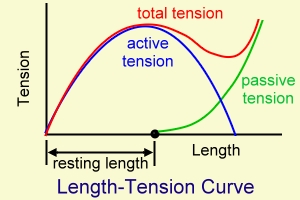
Length-Tension Curve. Notice how the tension (or force) that a muscle can produce varies as its length changes

That said, the eccentric phase of the lift is almost always synonymous with the lowering portion of the lift. Think of lowering a bar to your chest in a bench press, lowering your hips in a squat, lowering your body and extending your arms in a chin-up, etc. The concentric phase of the lifts therefore is the opposite, the “raising” part of the lift. Isometric contractions can be performed at any point in the range of motion, but typically pauses are built in to the top or bottom of a specific lift.

While certain exercises lend themselves more to specific phases of the lift (hang cleans with a high catch position and deadlifts tend to emphasize the concentric phase of the lift more than the eccentric), almost every exercise can be broken down into four phases:

  1. Isometric at Start Position
  2. Eccentric
  3. Isometric at Mid-Point Position
  4. Concentric

Exercises that could be categorized as lower and upper body pushing variations would likely follow the above sequence, whereas those categorized as lower and upper body pulling variations would likely follow this sequence:

  1. Isometric at Start Position
  2. Concentric
  3. Isometric at Mid-Point Position
  4. Eccentric

When designing training programs, these phases are used to dictate the tempo of the exercise. Each strength coach approaches this differently, but more common approaches include:

  1. 4-Phase Tempo. Bench Press (0-2-1-0) would mean go down in two seconds, pause at the bottom for one, then go up as explosively as possible with no pause at the top before repeating the next rep.
  2. 3-Phase Tempo. Bench Press (2-1-0) would mean the same as above, but the tempo for a pause at the top is removed altogether.
  3. Eccentric Tempo Only. Bench Press (3s negative) would mean go down in 3 seconds, no pause at the bottom, up as fast as possible, and no pause at the top.

Pauses at the starting positions of lifts aren’t used frequently, or at least aren’t dictated frequently. In general, the athlete will only pause at this spot if they need to get some more air or restore a tight position from which to do the next rep.

Slowed eccentric phases are used frequently to increase the time under tension of the lift, which is a known strategy to help improve gains in muscle hypertrophy (size) and can also be an effective strategy to improve strength.

Pauses at the bottom are used to interrupt the stretch shortening cycle and put a greater emphasis on the athlete’s ability to develop force quickly, a quality known as rate of force development (ROFD).

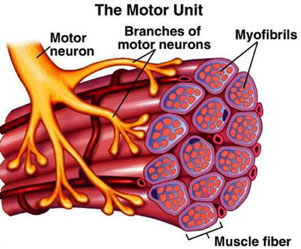
Similarly, it is quite common to simply encourage the lifter to perform the concentric phase of the lift (the “up” portion) as quickly as possible. Motor units are recruited from small to large for any given movement. When the athlete attempts to move the weight concentrically as quickly as possible, the recruitment threshold of high force motor units lowers, meaning more motor units and therefore more muscle fibers are recruited to perform the exercise. This is true even if the weight doesn’t actually move fast. Indeed, it is the INTENTION to move quickly that lowers the threshold of these motor units. To oversimplify, intending to move quickly recruits more muscle fibers. And because the order of recruitment is preserved, this means that both small AND large motor units/muscle fibers would be active. Everything gets trained.
It is this latter point that I want to expand on. The foundational rationale of this strategy is that recruiting more muscle fibers is always desirable. After all, more muscle fibers means more force, more power, and typically faster movement. These are certainly desirable qualities for athletes and even for those that just want to get big, strong, and fast. However, as Joel did an excellent job of discussing in his book, and as I alluded to in previous posts (See: A New Perspective on Program Design, Hockey Conditioning: Understanding Fatigue, Hockey Conditioning: Combating Fatigue), training high-threshold muscle fibers constantly may create less than optimal adaptations. While it would certainly improve your body’s ability to move with speed, strength and power, it would also teach your body to rely on these high-threshold fibers and accompanying fuel systems for all tasks, even when it may not be necessary.

It is the smaller motor units that possess a greater oxidative capacity and therefore are more fatigue resistant. In contrast, larger motor units possess a greater ability to produce force (power and speed), but can only do so for a brief period of time. While it’s true that both smaller and larger motor units are activated when attempting to perform the concentric phase of the lift quickly, it will ultimately be the fatigue in the larger units that dictates an inability to perform more reps. Simply, the high force units fatigue faster, and the sets over. The low force units are active, but they aren’t pushed even remotely close to their fatigue threshold because the set ends when the larger units tap out.

Therefore, performing exercises with a slower concentric phase with lighter loads will help target the smaller units, which will lead to improvements in the size, strength, and fatigue-resistance of the active muscle fibers. Placing a greater focus on these units will help ensure that they play a greater role in your performance, which will ultimately allow you to compete harder longer and recover more quickly. As with anything, it’s important not to take this concept and plug it into your program haphazardly. The strategic application of specific training principles is what drives continued adaptation. Random compilations of exercises and strategies will create random results.

To your success,

Kevin Neeld

P.S. If you’re looking for a strategic hockey training plan, check out my book Ultimate Hockey Training!

Please enter your first name and email below to sign up for my FREE Athletic Development and Hockey Training Newsletter!

January is quickly coming to a close, which means most youth hockey seasons are wrapping up. I remember at the beginning of the year when talking to several of the teams I train saying something along the lines of:

“It’s important that we get these things down now, because when December and January roll around and you’re all grumpy and miserable, we still need to be able to do things right.”

The borderline depression that almost all players go through about mid-season is incredibly predictable. Enthusiasm to play goes down. Enthusiasm to train is non-existent. Fatigue is high. Attitudes are generally mediocre, at best. Players start to get sick. Some get hurt. I don’t generally think that you need to be an ex-player to properly train hockey players, but I do think my background as a player allows me to relate to this mid-season struggle a bit better than an “outsider” and also allows me to make anticipatory changes to their in-season training programs.

That said, it’s important to take a step back and gain an understanding of why this mid-season lull occurs in the first place, as it certainly has a notable effect on most players’ physical and psychological readiness, and typically also in their production. Essentially, players begin to show signs of over-training and under-recovery. Think about what happens at this time of year:

  1. Fatigue accumulates from the volume of past practices and games
  2. In most areas the weather is cold and dark, depriving players of the physical benefit of Vitamin D derived from sunlight (most players should probably be taking supplemental Vitamin D for the majority of the year), and the psychological benefit of sun exposure
  3. School marking periods or semesters are wrapping up so players have a ton of last minute papers and assignments to hand in and tests to prepare for
  4. In many areas, high school hockey is also underway, adding MORE volume on top of the already rigorous schedules of club hockey

This latter point is one I want to expand on. In talking with one of our U16 teams the other week, I asked them about how many games they had on the schedule, which was about 70. Practices? About 100.  So across the ~7 month season (roughly the end of August through early March), they skate ~175 times. This shakes out to a weekly schedule that involves 2-3 practices and 2 games, on average, with weeks of more practices and tournaments mixed in throughout the season. A weekly schedule might look like:

Monday: Off
Tuesday: Off-Ice Training and On-Ice Practice
Wednesday: On-Ice Practice
Thursday: Off-Ice Training and On-Ice Practice
Friday: Off
Saturday: Game
Sunday: Game

When you superimpose high school hockey schedules on to this, at least in our area, you’re looking at another 2 practices per week and a game each weekend. Now instead of 4-5 skates per week, the player has 7-8. Now the weekly schedule looks something like:

Monday: HS On-Ice Practice
Tuesday: Off-Ice Training and On-Ice Practice for Club Team
Wednesday: HS On-Ice Practice and Club On-Ice Practice
Thursday: Off-Ice Training and On-Ice Practice for Club Team
Friday: HS Game
Saturday: Club Game
Sunday: Club Game

“Okay now off to school practice!”

The high school hockey schedule is typically a bit shorter, but it occupies the times of year when fatigue accumulation from club hockey is at an all time high. The overlapping schedules add more stressors (in the true sense of the word stress, not in an “anxiety” sense to which stress is often referred) AND provides less time for recovery between stressors to an athlete that is already struggling to fully recover from the current demands. Unfortunately this manifests in the symptoms I described above, the most recognizable of which may be a lack of on-ice production. The kicker is that the best intentioned players may respond to this by saying things like “I just need to work harder.” The truth is that the best option for the players is to do less. It’s not that they aren’t providing sufficient stimuli for adaptation; it’s that they aren’t providing adequate recovery opportunities between these stimuli. These players make appear to not be giving an effort and/or not mentally focused. It’s not that they aren’t, it’s that they don’t have the capacity to do so. They’ve exceeded their recovery capacity. They need a nap, some sunlight, and this incredible food type called “vegetables” (which most teenagers are only loosely familiar with), but not a different attitude and certainly not more conditioning.

The cure for a mid-season slump!

This may raise the appropriate question about whether playing more hockey will make the player better. As you can infer from the tone of the current discussion, the answer isn’t always yes. Playing more hockey will make the player better if these conditions are met:

  1. The level of play challenges the player or inspires sufficient creativity to develop improved skill sets, and an augmented ability to read the play
  2. The player is given adequate time and resources to fully recover from the stresses associated with playing more

In reality, high school hockey probably doesn’t meet either of these criterion, at least not for the level of players I’m referring to. If you play Tier I youth hockey in the US, school hockey will probably involve a lower level of competition, and push you over your recovery threshold from a volume standpoint. I’m sure there are exceptions to this rule as there are likely to be a few outstanding school teams with above average coaches, but in general, it’s a step down.

I understand why most club players play high school. Bragging rights. Notoriety. Fun. Unfortunately these players will need to make a mature decision whether these things are worth the potential negative outcomes. Injuries. Impaired club team performance. Impaired school performance. Overall moodiness! This all comes back to the message I’ve been trying to share a lot with you over the last several months in that development is a long-term process and it’s important to keep your ideal finish line in mind while you’re taking steps along the way. If you don’t plan on playing beyond high school, it might not be that difficult to suffer the consequences of over-playing and under-recovery. If, however, your finish line involves playing college and possibly pursuing professional hockey, you’ll need to take the appropriate steps to pursue that goal, which may mean passing on opportunities to play more hockey. This could include high school hockey in-season, and most spring leagues and tournament teams in the off-season. The decision is always in your hands. What’s your finish line?

To your success,

Kevin Neeld

Please enter your first name and email below to sign up for my FREE Athletic Development and Hockey Training Newsletter!

This has been a great week for us at Endeavor. We had a handful of new sign-ups and a number of returners join us. I also am in discussions with a few different people about exciting projects, but it’s too early to say anything definitive. I do have an exciting announcement for personal trainers, strength and conditioning coaches, and those of you that passionately train yourself, so stay tuned for that early next week.

Since our last Hockey Strength and Conditioning update, I’ve added quite a bit of content here. If you haven’t already, be sure to check out:

  1. Hockey Training Interview
  2. Predicting Long-Term Athletic Success
  3. Hockey Conditioning: Understanding Fatigue
  4. Hockey Conditioning: Combating Fatigue
  5. 2011 in Review
  6. 2012 Sports Rehab to Sports Performance Teleseminar
  7. Top Athletic Development Posts of 2011
  8. Top Hockey Training Posts of 2011
  9. UCAN Perform, Look, and Feel Better!
  10. Performance Training: Adaptations for Femoroacetabular Impingement (FAI)

Hopefully you’ve been keeping up over the last couple of weeks so that list isn’t too overwhelming!

We’ve been busy over at HockeySC.com over the last few weeks as well. Check out what you’ve been missing:

Articles

  1. Youth Hockey Training Blueprint: Part 3 from me
  2. AC Joint Injuries in Hockey from Anthony Donskov
  3. Using Kettlebells in Professional Hockey from Sean Skahan

The Youth Hockey Training Blueprint wraps up a 3-part series on how I’ve gone about designing and implementing training programs for an entire youth hockey organization with minimum equipment and space, and an unfavorable coach:athlete ratio. This series is probably the best real-world look at youth off-ice training for youth coaches and parents that are charged with the formidable task of development an off-ice training program for their kids.

Sean’s kettlebell article is fantastic. I’ve been following Sean’s work for years, and he continues to be a great teacher for me. This may be his best article ever. He goes into detail on how he implements specific kettlebell exercises and what the advantages/disadvantages of the exercises are in his setting. If you didn’t know, Sean also released two great DVDs called “Kettlebell Lifting for Hockey” and “Slideboard Training for Hockey“, which are worth checking out.

Exercise Videos

  1. TRX Core Exercises from Mike Potenza
  2. Vertimax Exercises for Hockey Players from me

These videos both display multiple exercises that can be strategically applied at various times of the year. As with any exercise, it’s important to put these in perspective and recognize when it’s appropriate to use them and when it’s not. Simply plugging “cool exercises” into your program will rarely work and will often hurt, if the broader perspective of the exact goals of a specific training phase are not considered. For the most part, all of the exercises in my video are ones we use in the off-season.

Training Programs

  1. Off-Season 2011 Phase 4 Strength Training from Sean Skahan
  2. Return From Holiday Break from Darryl Nelson
  3. Muscle Endurance Workouts for Goaltenders from Mike Potenza

Great programs from some of the best in the business. It was interesting to see how Mike incorporated some of the Olympic lifting progressions into the warm-ups of his goalie training program. With that said, I also think it’s worth pointing out that there’s very little about this program that comes off as “goalie-specific”, and I mean that in a positive way. Hockey goalies are still a population that falls victim to the over-hyped circus-like training trends out there. Goalies need to be mobile, strong, explosive, and have great work capacity, just like all hockey players. This means they need to lift, they need to do plyometric work, and they need to train hard in general. Stretching and chasing reaction balls all over the place won’t quite cut it!

That’s a wrap for today. As always, if you aren’t a member yet, I encourage you to try out Hockey Strength and Conditioning for a week. It’ll only cost $1, and if it’s not the best buck you’ve ever spent, I’ll personally refund you!

To your success,

Kevin Neeld

Please enter your first name and email below to sign up for my FREE Athletic Development and Hockey Training Newsletter!

Use CODE: "Neeld15" to save 15%