I’m excited about this week. Last week all the youth teams I train killed it. They worked hard, they moved well, they listened, and they helped each other. I couldn’t ask for anything more. It creates a positive atmosphere, for them and for me, and ultimately creates an environment that culminates success. Watching players develop, both as individuals and as a team, is what makes me jump out of bed every morning. The start of the new week also means that we’re only days away from the release of my new book Ultimate Hockey Training!

Last week I released a free hockey training video outlining my transitional speed training system for hockey players. The video went through:

  1. Common problems in current hockey speed training
  2. 3 types of hockey speed and off-ice training strategies for each
  3. Why “agility” training will NOT make you a faster skater
  4. How speed training fits into a comprehensive off-ice training program
  5. How to alter your speed training depending on the time of year

I got a lot of great feedback about the video from a wide range of people-hockey players, coaches, trainers, etc. Today, I’m releasing another video on the component of hockey training that I get the 2nd most questions about: conditioning. Like speed training, conditioning is an essential part of off-ice hockey development, but is often performed in a way that doesn’t produce on-ice gains. There is always a transfer process from off-ice training to on-ice performance, but the goal is to provide the most appropriate stimulus off the ice to facilitate the most pronounced on-ice gains. Unfortunately, many off-ice conditioning practices can actually impair development more than promote it.

Click here to watch the video >> Hockey Conditioning

In this video on hockey conditioning, you’ll discover:

  1. 5 most important considerations for off-ice hockey conditioning
  2. 3 primary mechanisms that fatigue can limit your performance
  3. The most overlooked component of hockey conditioning
  4. A 3-stage progression for quickly improving this incredibly important quality!

Check out the link below to access the video. And please continue to spread the word about the videos by forwarding this link to your friends or posting a link on Facebook and Twitter. I appreciate the help and feedback!

Click here to watch the video >> Hockey Conditioning

To your success,

Kevin Neeld

P.S. If you haven’t already, you will be asked to register with your name and email to access the video. This is necessary ONLY to let you know about the two other videos in this series and when my book is officially released (you’ll be glad you found out first!); you won’t be contacted for any other reason; nor will you receive duplicate copies of my newsletter. And as always, you’re free to unsubscribe at anytime!

Please enter your first name and email below to sign up for my FREE Athletic Development and Hockey Training Newsletter!

When I was a Bantam (13 y/o), I played for a coach that emphasized that we always keep our feet moving. The second we stepped on the ice, we were supposed to buzz around constantly. The goal was to force a high tempo; it worked. At that level, our team was extremely fast and the strategy of constant movement was overwhelming for other teams.

Unfortunately, this strategy does not work at higher levels. Speed kills and tenacity intimidates, but constant high speed movement is inefficient. At any given level of conditioning capacity, a player can improve his/her level of expressed conditioning by learning how to conserve energy on the ice.

Think about it this way: The goal is rarely to skate as fast as possible at any given moment on the ice. Instead, the goal is to skate just fast enough to win possession of the puck or positioning relative to an opponent. Sometimes this requires all-out efforts. Sometimes it does not. In every case, a player can improve his/her ability to win the race or gain optimal positioning by reading the play faster than their opponent.

Hockey conditioning comes down to preparing the body to delay fatigue to the greatest extent possible. In my setting, conditioning is mostly a preparatory effort. In other words, the idea is to pre-emptively overload the body and allow recovery time so that it is well-prepared for the rigors of the game. In reality, there is also a strategic component to conditioning that most players are never taught.


Off-ice conditioning is important, but only part of the equation

When a player hops on the ice and goes all out for the entire shift, they rely on a metabolic process known to have a longer recovery time and lead to impaired future performance. In contrast, if a player becomes an expert at alternating periods of near all-out efforts with periods of strategic gliding and repositioning, the shift is transformed from a 30-45s interval to something more like 8 x 2-3s/6s. In other words, the player skates all out for 2-3s, then strategically glides/rests/repositions for 6s, 8 times throughout the shift. This allows for less fatigue accumulation and a more prolonged maintenance of near-peak performance.

Naturally, hockey isn’t nearly this regimented. The game is chaotic in nature. However, players can adopt this strategy based on the demands of any given shift to help build in recovery intervals on the ice. To be clear, the message here isn’t to “loaf” on the ice. Certain shifts will mandate constant motion at maximal efforts. However, not all shifts do, and it’s important for players (especially at higher levels) to learn to read the game so they can position themselves properly to conserve energy without impairing performance.

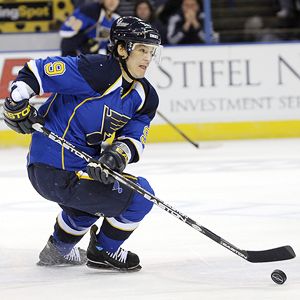
One of my favorite players of all time. Known for being a student of the game.

In the training world, we measure performance through things like time to move a given distance (speed and conditioning) and weight lifted. On the ice, all that matters is goals for and goals against. There are ways to maximize objective on-ice outcomes, while strategically conserving energy. Become a student of the game. Learn to anticipate play development. Develop the habit of creating time and space. More optimal on-ice positioning leads to shorter races to the puck and/or open areas on the ice, leading to less fatigue accumulation and more desirable hockey-specific outcomes (e.g. goals scored or prevented). Conditioning isn’t just a physiological state of being; it’s also a playing style-specific strategy. Maximize both and optimize your on-ice performance.

To your success,

Kevin Neeld

Please enter your first name and email below to sign up for my FREE Athletic Development and Hockey Training Newsletter!

In preparation for our Endeavor Staff Meeting last week, I spent a couple hours reading new research related to hockey players. Much to my surprise (because not a lot of research is done on the hockey population), there was actually some pretty interesting stuff out there. Check it out:

Laterality differences in elite ice hockey: An investigation of shooting and catching orientations

I wouldn’t say this is “groundbreaking”, but it’s intriguing. This study found that right-handed players were better goal scorers, left-handed players were better playmakers, and that there was an increase in left-handed goalies at higher levels (I always hated shooting on lefty goalies as a player!). Obviously, this isn’t to say that leftys can’t score goals and rightys can’t make passes, only that there is a tendency for more of the opposite to occur.

A 7-year review of men’s and women’s ice hockey injuries in the NCAA

The rate of concussion was 0.72/1000 exposures for men and 0.82/1000 for women, and the rate remained stable over the study period. Player contact was the cause of concussions in game situations for 41% of women and 72% of men. This goes to show that concussions are AT LEAST as big of a problem in women’s hockey as they are in men’s. Strength, speed, and awareness are the best ways to combat these!

Complex training in ice hockey: the effects of a heavy resisted sprint on subsequent ice-hockey sprint performance

This study found that performing a single heavy sled-resisted sprint on the ice was sufficient to improve 25-m on-ice sprint times. With my background in neuroscience, this isn’t surprising. Heavy training results in an increased neural drive to the working muscles. This does provide an on-ice training application for power skating work though. By performing heavy sled-resisted sprints, resting for a few minutes, then performing an unloaded sprint, you can train the body to use a greater proportion of the skating muscles’ capabilities to operate at higher velocities. The key is to provide ample rest between the two bouts (2-3 minutes), and not just run the players into the ground. Sean Skahan wrote a great post on this on his site: Complex Training in Hockey

Cellular responses in skeletal muscle to a season of ice hockey

This was the one that really stood out to me. The authors took metabolic enzyme samples from the vastus lateralis (lateral quad muscle) pre- and post-season and parlayed these findings to adaptive changes that occur in the muscle across the season. The result was “a smaller (p < 0.05) cross-sectional area (CSA) for both type I (-11.7%) and type IIA (-18.2%) fibres and a higher (p < 0.05) capillary count/CSA for type I (+17.9%) and type IIA (+17.2%) were also found over the season. No changes were found in peak oxygen consumption (51.4 ± 1.2 mL kg(-1) min(-1) vs. 52.3 ± 1.3 mL kg(-1) min(-1)).” This led the authors to conclude that “based on the alterations in oxidative and perfusion potentials and muscle mass, that the dominant adaptations are in support of oxidative metabolism, which occurs at the expense of fibre CSA and possibly force-generating potential.”

Taken at first glance, these findings would seem to question the “hockey players don’t need aerobic training” argument. A slightly deeper look at this information shows that the authors didn’t demonstrate an absolute increase in capillary count, only an increase in capillary count PER cross sectional area of the muscle fibers. In this regard, it’s especially relevant that cross sectional area decreased significantly in both Type I and Type II fibers. This means that capillary count could have also decreased, but decreased RELATIVELY LESS than the cross sectional area of the muscle fibers. I also think it’s important to note that these findings were from one muscle only, and it’d be difficult to make body-wide assumptions based on these findings.

At the risk of sounding stubbornly narrow-minded regarding my opinion on conditioning for hockey players, I think this study just further highlights the need for in-season training to maintain muscle mass. 12% and 18% decreases in the cross-sectional area of Type I and Type II muscle fibers, respectively, is pretty substantial! I’d be interested to see how the findings in this study would change if muscle mass was maintained throughout the season. I’d also be interested to see how the strength profiles of these players changed.

Risk Factors for Groin Strains in Sports from Mike Reinold

Mike Reinold is a really bright guy and I’ve enjoyed reading his work for the last several months. In this post he highlights a study on soccer players indicating that the top two risk factors for groin strains are previous strain and adductor weakness. If you’ve been following my work for a while this won’t be news to you, but it’s nice to know that the research community it continuing to find that this is the case. The more evidence we have that these are the two most common factors, the more convinced we can be that we’re on the right track by taking steps to maintain adductor strength and prevent initial injuries form occurring in the first place.

Last, but certainly not least, I think Body By Boyle Online has RAPIDLY established itself as one of the top strength and conditioning resources available. What started as a site to deliver the training programs used by Michael Boyle Strength and Conditioning to establish itself as the #1 Gym in America has expanded to include an incredible amount of information, including some of Boyle’s top presentations, and presentations from Sue Falsone (Physical Therapist from Athletes Performance) and my friend Nick Tumminello. When the site first came out, I thought it was a great option for individuals that wanted to follow a structured training program, and for strength and conditioning coaches that wanted to take the guess work out of program design for their clients. Now I think it’s a must-have for all strength and conditioning professionals. I’m blown away that they’d put so much content on the site and still only charge around $60/month to access it. Click the image below to head over to the site and see everything they have to offer.

To your success,

Kevin Neeld

Please enter your first name and email below to sign up for my FREE Athletic Development and Hockey Training Newsletter!

I’m in the process of writing an article for Hockey Strength and Conditioning on my experience helping with the San Jose Sharks prospect camp a few weeks back and I wanted to share a modified excerpt with you.

Mike’s intern Marcello, after coaching for a few hours (aka not at all warmed up or training) hopped in with one of the Sharks to do a brutal conditioning session on the treadmill. Why suffer the anguish? Conditioning alone sucks. Actually, conditioning sucks. Conditioning alone just sucks worse. It’s a huge help to have someone going through the grind with you.

Since returning, I’ve implemented a No One Conditions Alone policy at Endeavor. Coming back to Potenza’s incredible ability to lead by example, I didn’t tell anyone it was our policy; I just started conditioning with people who ended up having to condition on their own (we have to audible on our conditioning strategies for some of our athletes based on weekend tournaments and injuries). The first time I hopped in to do shuttles with someone, I got a thank you email. Our athletes noticed. Our staff noticed.

Just the other day, as luck would have it, one of our hockey players had to go through this brutal isohold->slideboard series 6x through, all with a 12 lb vest (the highest volume we go with this).

He was alone. I hopped in. Fellow coach David Lasnier hopped in. One of our interns hopped in.

Most recently, David and I trained together through a torturous circuit (4x through 50 yard sled march, 50 yard farmers walk, 20 sec squat hold, 20 kettlebell swings, 50 yard overhead keg walk, 20 sec front plank), after which I was only pretty sure that neither of us would throw up or pass out. I was in my dark place bad.

Quick side note. “Dark place” refers to that state of being where:

1) You can hear yourself breathing from the inside of your head

2) You can hear other people talking, but it sounds more likely someone narrating your life than someone actually speaking to you

3) You’re EXTREMELY fatigued. When I was in high school, I was so tired one morning (back to back practices with off-ice in between) that I got half way through my bowl of cereal before I realized I had poured orange juice on it. That is extreme fatigue.

After I got a drink from our fountain, I turned around to see one of our interns doing shuttle runs by himself. Damn it. I limped over to the track and immediately jumped in with him. As I returned back to the beginning of our track from the 1st lap on our shuttles I saw David walking over to one of our stationary bikes, where he sat down and finished a conditioning session with one of our other interns.

I try to encourage a team atmosphere at Endeavor. It’s important to me that our athletes know they aren’t being barked at by someone with a loud voice, but no work ethic. It’s important they know that our staff and everyone they’re training with are in it for the same goal: to make them succeed.

There are two major take homes from this “experiment”:

1) Lead by example. I didn’t have to say much before all of our coaches and interns were hopping in to condition with athletes or race them during sprints if they needed an extra push. I just did it.

2) Go through the grind together. Athletes have a lot more respect for coaches that put their blood lactate where their mouth is (not my best metaphor).

To your continued success,

Kevin Neeld

Please enter your first name and email below to sign up for my FREE Athletic Development and Hockey Training Newsletter!
A while back I wrote about about some unique hockey conditioning tools I’ve started using at Endeavor. If you missed the article, you can check it out here: A New Look at Hockey Conditioning.

The idea is that SOME aspect of your hockey training needs to incorporate periods of static holds to build up localized fatigue resistance in the deep hip and knee bends required for effective skating. Because the game of hockey alternates periods of static positions and explosive movements, it’d be ideal to incorporate this in your training. I originally got this idea of alternating static holds with explosive movements from Brijesh Patel (currently at Quinnipiac University). He had some of his athletes holding a squat position and alternating vertical jumps. I thought it was brilliant. A little more specific to hockey, if you have a slideboard, you can do this by alternating periods of either a squat hold or a split squat hold with slideboarding. Check out the video below.

In this video, the hockey players are doing a 10s split squat hold on one side, then 5 slideboards, then a 10s split squat hold on the other side, then 5 slideboards, three times through. You’ll probably notice that the slideboarding itself becomes increasingly less explosive as they go on. I expect that as they fatigue, which they did quickly since this was the first time they’ve done this. The goal is to increasingly emphasize quickness as they adapt to this type of training. This type of “conditioning’ will go a long way toward improving your performance on common tests like the Wingate Test. Plus…look how much fun they’re having in the video.

To your continued success,

Kevin Neeld

Please enter your first name and email below to sign up for my FREE Athletic Development and Hockey Training Newsletter!
Use CODE: "Neeld15" to save 15%