This week at Hockey Strength and Conditioning was one of those “forum weeks”. Every now and then we intentionally slow down the amount of content we add in the form of articles, programs, videos, etc. so that our members have an opportunity to catch up on some of the stuff we’ve posted over the previous few weeks.
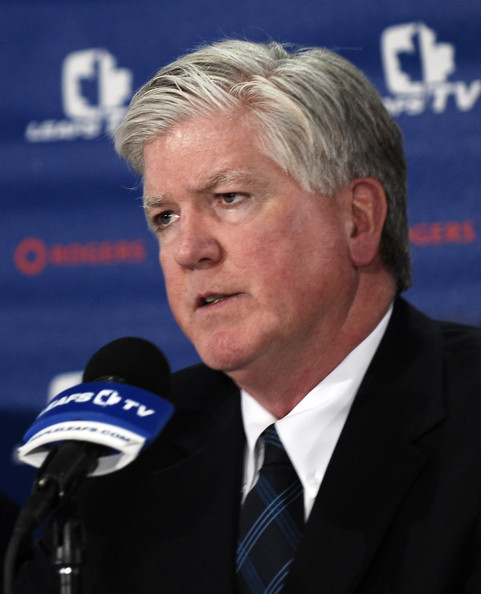
Last week we added Brian Burke’s presentation, which I think echos the hockey development sentiments of the HockeySC team, and (as you know) is one that I think everyone involved in hockey should take an hour to watch. On that note, I understand that some of the Maple Leafs fans out there are reluctant to listen because of a lack of satisfaction with the direction the organization has taken in recent years, but that is not the focus of his presentation-it’s on what changes need to occur in youth hockey to improve the development process. His words are equally applicable to current norms in both the U.S. and Canada!
We added a 2 day/week in-season program that I’ve used with our players at Endeavor. In it, you’ll see a new sprint start technique we’ve been experimenting with recently and a new method of conditioning in-season (which we do our best to cycle through to avoid overworking any one pattern).
When you sign in, make sure you’re checking in on the forums. The discussions over the last week have been awesome, and Darryl Nelson posted a great video (in the thread “Psychology vs. Physiology) from Dr. Larry Lauer on building/restoring confidence in your team. It’s only five minutes, but there are some important messages in it.
Lastly, my dad emailed this video to me a couple weeks ago and I wanted to share it with you. It’s amazing what people can accomplish when we work together!
P.S. Try HockeyStrengthandConditioning.com for 7 days for only $1! It’ll be the best dollar you’ve ever spent.
Please enter your first name and email below to sign up for my FREE Athletic Development and Hockey Training Newsletter!
Body By Boyle Online (New and Improved)
I’m breaking my usual Monday-Wednesday-Friday update routine because I wanted to let you know about something I’m really excited about. As you know, I’ve been a huge promoter of Body By Boyle Online since it was first launched several months ago.
Mike Boyle’s work has had a profound impact on my training philosophies and methodologies. I’ve been fortunate to have had the opportunity to read his books, watch his DVDs, attend his seminars, and visit his facilities at BU and MBSC. He’s also been an incredible mentor, always making himself available to me if I have questions about anything from sports hernia referrals to running a private training facility. Moreover, I’ve learned and continue to learn a lot from his disciples (Sean Skahan, Mike Potenza, Darryl Nelson, Devan McConnell, Kim McCullough, and Jaime Rodriguez…to name a few).
In short, Boyle has had a remarkable impact on the hockey training and development industry as well as strength and conditioning as a whole. This is, in large part, a result of his dedication to continuing education. In fact, if there’s one thing that he taught me that I had to highlight as THE most important thing, it’s that I should never stop learning. In this way, I’ll always stay on top of my game, be aware of new information, and put my athletes in the best environment to succeed.
It is for that reason that I place so much value in Body By Boyle Online and why I know you’ll benefit so much from it as well. That brings us to today’s exciting announcement.
A couple weeks ago, I got an email from Boyle and Kevin Larrabee about them relaunching their site in a way that makes the content more easily accessible and costs less. Instead of having me try to describe all the changes to you, I thought it would be easier if I had Kevin (the other Kevin) come on and do a quick interview about it.
Enter Kevin:
Me: First off, congratulations to you and the rest of the Michael Boyle Strength and Conditioning staff for being ranked the #1 Gym in America. That’s quite an honor! As you know, I’ve been a huge supporter of BodyByBoyleOnline since you guys first launched it. Looking through the programs provides invaluable insight into Coach Boyle’s underlying philosophies and methodologies, and the constant content updates are outstanding. In fact, we use many of the presentations as continuing education for our staff during our weekly meetings. Can you talk a bit about what changes you’re making to the subscription options with this “re-launch” and what lead you to make these changes?
KL: Thank Kevin! We are bringing everything that has helped make MBSC the #1 Gym in America to BodyByBoyle Online. With the relaunch we had two major goals. First off we wanted to make the content as easy to assess as possible. For us, that meant duplicating all of our content for a website, and in doing so offering multiple qualities of the videos for those with fast or slow connections.
Second, we wanted to created a second membership level for those that might not want to do online training and just want the rich educational content that we have put together. To be honest over half of our members simply come to watch the staff meeting videos as well as the exclusive seminars that we film. For example we just filmed the 2011 MBSC Winter Seminar that featured Dan John as well as Mike. We understand that many people want to go to more seminars, but the time and cost of travel is just too high. So for those people, we now offer a standard version of BodyByBoyle Online at a reduced rate of $39.97/month (for now). Of course all of our current members will also be given access to the website as part of their Platinum membership ($59.97/month).
Me: Although the site is “Body By Boyle”, he’s not the only content contributor to the site. Can you provide some insight into some of the other guests you have add content?
KL: I think that is what makes BodyByBoyle Online so great and a pleasure to produce. We have had speakers come in to the facility to do private seminars for our staff. In the last couple months we have had Sue Falsone form Athlete’s Performance present and do a hands on about the thoracic spine, Nick Tumminello came in to talk rotary training, Chris Frankel did a lecture and hands on about suspension training, and always have guests stopping by, especially when the Perform Better Circuit is coming through town. This just goes to show you how much Mike values continuing education and how important it is for you to be one of the best in this field.
Me: I think one of the things that causes people to hesitate sign up for sites/services with monthly memberships is a fear that the information will stagnate. Can you talk about what plans you guys have for the site in the future and what members have to look forward to?
KL: Trust me when I say you have an ongoing stream of new content. We film our staff meetings each week, our guest speakers, F.A.Q. with Mike where he goes in depth on subjects and answers questions from the members, and we are even dipping into the vault with some classic Boyle videos. All you need to do is take a look at Mike’s shorts to see the videos are 15 years old or so. But the best part, is that the videos from the past are even more relevant now than they were then. One of the VHSs that Mike has converted to digital video is his olympic lift video where he goes through the various lifts. Guess what, we still use the same coaching steps as he did back then.
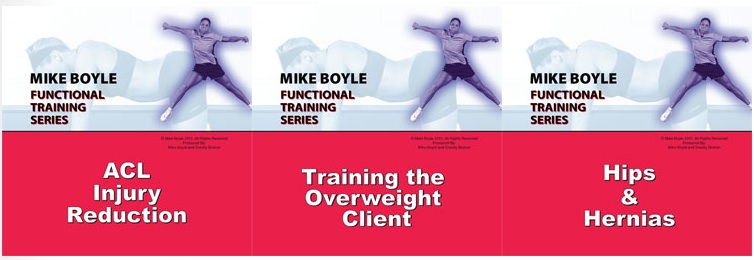
We have also made digital versions of Mike’s current DVD offerings such as the three DVD set he just produced and released a few months ago.
Me: Thanks Kevin. I appreciate you taking the time to be with us today. I look forward to seeing the content additions over the upcoming months!
To your success,
Kevin Neeld
Please enter your first name and email below to sign up for my FREE Athletic Development and Hockey Training Newsletter!
3 Lessons for Hockey Parents from the NHL
Last week I mentioned that we added a “must-see” presentation from Toronto Maple Leafs President and GM Brian Burke to Hockey Strength and Conditioning. I’ve now watched, re-watched, and re-watched the presentation again. For those of you that know me pretty well, you know that I’m constantly attempting to fit 25 hour days into a 24 hour world. I’m incredibly defensive about my time and dislike wasting it on anything that lacks purpose. As a result, I RARELY re-read or re-watch resources unless I feel like it’s absolutely essential. In this case, it was.
Listen to him. Hockey’s future depends on it!
There is incredible insight to be drawn from this presentation for hockey coaches and players, but also for parents. We’re living in a time where hockey players are faster, stronger, and more skilled than ever before in history. This may give the false illusion that changes we’ve made to our development systems are for the better. Mike Boyle used to say that great athletes will, in some cases, succeed DESPITE their training, not because of it. I think the same thing can be said about hockey development today.
I whole-heartedly and enthusiastically commend USA Hockey for the changes they’re making to with the launch of the American Development Model. As Burke mentioned in his presentation, they’re long overdue, but it’s going to be an uphill battle. Burke mentioned that parents are absolutely integral to the whole thing-they need to pay for their kids to play, buy equipment, drive them to the rink, etc. However, they can also be the most formidable opponent to changes that are in the best interest of their kids. As he points out, it’s quite a paradox.
Hockey Development, The Right Way (Finally)
3 Things all Hockey Parents Should Know 1) You’re a parent or you’re a coach, but not both
One of the most continually dreaded moments in a young player’s career is getting into the car after a bad game to hear his dad (and sometimes mom) tell him about all the things he did wrong. Burke mentioned that his father had an outstanding rule when he was growing up: If he didn’t want to talk about the game, he didn’t have to. I wish EVERY parent would adopt this rule. If we’re being honest, most parents don’t have the technical and tactical background necessary to give their kid appropriate feedback on their performance. Even if they did, there is still a questions as to whether that would benefit them in the long run. Kids play hockey to have fun, not to hear about how bad their parents think they played. Not only does it take the enjoyment out of the game, but it also takes some of the familial love out of the household.
2) You’re a spectator, not an elevated referee Burke pointed out that he was blown away that anyone would get into officiating anymore. I concur. Let’s face it-refs are human. They’re going to make good calls, but they’re also going to make mistakes. No one is infallible. In certain circumstances, bad calls may warrant a conversation between a coach and the ref. The fact that refs get openly screamed at by parents, EVEN AT MITE HOCKEY GAMES, strikes me as borderline comically insane. What kind of culture are we creating with this behavior? I can’t help but think of the Seinfeld episode where Jerry heckles a woman in her office in response to her heckling him at his performance.
I hope parents can see how obnoxious it would be if someone openly berated them for EVERY thing they did that any individual in a crowd of people disagreed with. Not that they were wrong, only that someone disagreed with their vantage point. Clap when your team scores or if they kill of a penalty. Otherwise, keep your mouth shut.
Burke made the a great analogy of parents starting to treat the ice rink like a school bus. When kids go to school, parents don’t get on the bus with them, sit next to them while they’re in class, and critique every mistakes they make. They put them on the bus, trust them in the hands of trained professionals, and leave them alone. Why not to the same with hockey? Or more relevantly, why does every parent feel they’re a fully trained hockey development expert?
“Pretend you’re on a school bus when you come to the rink. You can go up there and sit and watch, and cheer if you want, but shut up if it’s negative. And don’t come down and beat me afterward about who’s on the power play.” – Burke
3) STOP Playing Spring and Summer Hockey and START Training! This is something that anyone in hockey development worth his/her salt already knows, but parents really struggle with. Burke mentioned that they filmed and analyzed a couple dozen of these games a while back and they found that in any 90 minute game, on average, the third line right winger had the puck on his stick for about 2s and didn’t complete a single pass. Obviously these statistics would be more telling if we had information about other lines, but even if the kid is an absolute super star, the point is still clear. The American Game-to-Practice ratio is COMPLETELY wrong, and Spring and Summer hockey are the worst culprits. This is the time where players should be taking time away from the rigors of competitive hockey and training to improve their athleticism. When they’re on the ice, it should be for non-competitive SKILL work only. How much will that right winger’s hands improve during that game? Probably none. How much will they improve with a 60-minute puck handling clinic? Probably substantially. This is so intuitive and obvious I’m shocked that it’s not already the norm. The Europeans and Russians are way ahead of us in this regard. Igor Larionov, an INCREDIBLY skilled player of Russian descent, played his FIRST organized hockey game at age 12. Before that it was all for fun and for skill development. Less games. More practice. Better players.
This is one more pass than you’re son or daughter will complete in a typical Spring or Summer League game!
“If you’re gearing your program to get kids to me, you’re sadly sadly mistaken. The odds of a player on any one team playing in the NHL are infinitesimal. If he’s good enough, he’ll find us, and we’ll find him.” – Burke
Addressing the Hockey Community
“You people are vital to the development of hockey players. You’re our sales staff. You have to go back and sell this to these parents that have a different vision of how hockey should be played because it’s all they know. They’re ignorant; it doesn’t mean they’re stupid. They’re uninformed; it doesn’t mean they can’t be changed. That’s your job. This is the way to go. And I can tell you confidently that this will be copied in lots of other countries in a hurry, because this is the best way to develop young players.” -Burke
The information on how to do things the right way is becoming available. It’s up to us to use it.
To your success,
Kevin Neeld
Please enter your first name and email below to sign up for my FREE Athletic Development and Hockey Training Newsletter!
Hockey Strength and Conditioning (must-see video!)
We’ve had a lot of great additions this week at Hockey Strength and Conditioning. In no particular order (don’t miss the last one!):
My friend Kevin Schaeffer (former National Championship winner with BU and current AHL/ECHL player) wrote an article on how he’s been able to apply some of the things he’s learned from his experience working with Michael Boyle and from our site into his personal training. This may come as a surprise to those involved in youth hockey, but other than the NHL (more on this in a bit), most other pro, junior, and prep levels of hockey don’t have anyone running their training programs. It’s a scary reality. Kevin’s article does a great job of outlining some of the far from ideal realities of playing minor league hockey and how he’s been able to help fill some voids in his own training and that of his teammates.
Kevin also posted a link to an interview with former Oiler’s Strength and Conditioning Coach Chad Moreau. I don’t know Dr. Moreau personally, but after reading this article it seems like he really knows his stuff. Similar to Kevin’s articles, I think this interview illustrates many of the harsh realities of professional hockey and how the success of a strength and conditioning program really hinges upon the enthusiastic support of the coaching staff.
Another big take home is that there are STILL NHL programs that don’t fully buy into the importance of training, at least not as demonstrated by their actions. To some extent, this probably comes down to a “we’ve been successful doing it this way, why begin to incorporate something new that wasn’t necessary before.” I guess it all depends on what you consider “success.” Imagine if equipment manufacturers took the same approach: “players have scored goals with wooden sticks, why try something new?” In my opinion, this is a dangerous mentality that stunts innovation and growth. It’s one that many talented young players adopt; “I dominate and I don’t train at all. Why should I start?” For some players, it may be a matter of being able to continue to dominate at the next level. For the Sidney Crosby’s of the world, it’s a matter of expanding the capacities of the game. In other words, it’s about taking the game to the next level. Bottom line: If individuals and organizations adopted a more comprehensive development model, the game of hockey would benefit.
Darryl Nelson had a couple great additions this week. He wrote an article on the importance of youth sports and fitness that caused one of those “take a step back and see how we are influencing are youth through sports” moments. It’s more than winning and losing; it’s about instilling habits and mentalities that will allow our youth to grow up and lead healthy lifestyles. His article concluded with some STAGGERING statistics about the current state of “youth health”.
Darryl also added a Metabolic Conditioning Circuit program with videos that doesn’t require much equipment. In fact, it doesn’t require anything that can’t be MacGyver’d (e.g. make your own weight or just use a light object like a water bottle). This is the newest feature of our “Youth Training Program” addition to the site. The thing I like the most about this circuit is that it lends itself well to larger groups of people, which is perfect for youth programs, which are typically run by one coach. Although this was posted in the vein of “conditioning”, it will also likely have a strengthening effect, especially with younger or less-trained athletes.
Without question, the greatest addition to the site this week was a video of a presentation Toronto Maple Leafs President and GM Brian Burke gave during a recent USA Hockey American Development Program (ADM) seminar. Burke outlines a lot of the common mistakes being made in youth hockey now and what we NEED to focus on to continue to develop the sports. For those of you that caught Mike Boyle’s presentation from the same seminar, this is the perfect on-ice compliment to what Boyle discussed. With the right information in front of us, it’s up to us, as a hockey community, to put it to good use. And we have a lot of bad habits to break!
You can try out the site for $1 for 7 days. Now is as good of a time as ever to do it. Spend the buck to watch Brian Burke’s presentation. Hockey needs you to!
P.S. Try HockeyStrengthandConditioning.com for 7 days for only $1! It’ll be the best dollar you’ve ever spent.
Please enter your first name and email below to sign up for my FREE Athletic Development and Hockey Training Newsletter!
Valentine’s Day & Endeavor Sports Performance: Random Musings
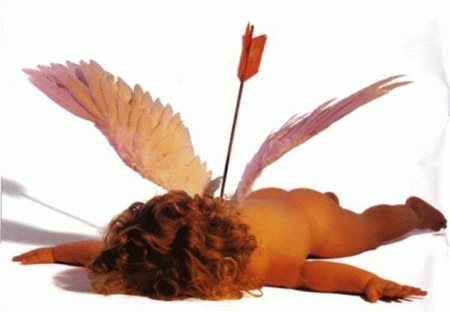
Happy Valentine’s Day to all the happy couples out there! And for the singles, don’t be so bitter; your day will come.
I love my job. I couldn’t picture myself working anywhere else. People ask me all the time if I have an interest in pursuing collegiate or professional strength and conditioning, and my answer changes frequently. I have a hard time imagining a better situation than the one I’m in now.
With that in mind, here are 5 of my favorite things about Endeavor:
5) Demonstrating Proper Inner Core Function One of the big take-homes from Charlie Weingroff’s Training = Rehab Rehab = Training DVD set was that we need to pay more attention to inner core function/activation. The two primary means of doing this are through diaphragm activation and packing the neck, which has led our coaches to yelling things like “get fat” and “more chins.”
Most of our clients, like most people in general nowadays, have some degree of a forward head posture, making the “packed neck” posture feel extremely unnatural. Getting everyone to do this, all the time, has been an uphill battle for our coaches. I’ve gone as far as putting a Lynx grip under someones chin and telling them to “crush it back and don’t let it drop” while they were doing push-ups. When one of our athletes get it without my constant reinforcement, it really lights my lamp.
More Chins = More Friends at Endeavor
4) The Staff
I’ve mentioned in the past how lucky I am to have the supporting cast I do. Everyone I work with is equally as passionate, motivated, and driven as I am, which creates an outstanding work environment and fosters continuing education and overall job happiness.
Our newest addition, Matt Siniscalchi, is a really bright, hungry young coach, and we’ve been lucky to have him as part of our staff. Matt was basically born, raised, and continues to live in the ’80s. He, while current on his athletic development information, seems to be completely oblivious to recent (last 20-30 years) changes in music and fashion, which has earned him the name “Coach Jorts” around Endeavor.
“The more faded the jorts, the better”
Matt was disappointed to learn recently that he was the only remaining owner of jorts in the country. For more information on Matt, check out his site Coach Jorts Training (I’ve learned just enough about websites to buy hilarious URL’s and point them at my co-workers existing sites)
3) The Location New Jersey houses a special breed of people. While I think all the TV shows in NJ’s honor may over-exaggerate some of the cultural tendencies, there is a certain level of contagiousness present here that can’t be avoided.
For example, when David Lasnier first joined us from Montreal, Quebec, his experience in the U.S. was minimal and in New Jersey non-existent. His first few months here, he was a walking poster child for functional training. He would talk about things like training the rotator cuff for dynamic stabilization using perturbations, the collective importance of acknowledging foot and hip issues when addressing single-leg stability and/or knee pain, and the role of inner core function in inside-out stabilization. The other week, I was sitting in my office when I heard this terrible sound coming from the gym. It…it was Bon Jovi, which is strictly forbidden in my facility. I quietly snuck out, and what I found was shocking.
Observe the new David Lasnier, in his natural habitat…
Arm work? Rolled up sleeves? Grunting? It was inevitable. He assimilated.
2) The Clients The way we design and run programs at Endeavor is pretty different from the other options out there, especially in our area. As a result, most of the athletes we get aren’t accustomed to our philosophies or systems. We’ve been fortunate to attract a predominantly well-mannered, optimistic, hard working group of athletes over the last couple years. Most of our athletes buy in immediately to our way of doing things and really excel when they do so. While I take pride in all of the successes of our athletes, a few things that really make me proud are:
1. When one of our younger and/or less coordinated athletes demonstrates proficiency in learning new movement patterns (e.g. hip hinge, lumbar stabilization, single-leg stability, shoulder packing, etc.)
2. When female athletes move heavy weights. We’ve had a few middle school and early high school girls do DB Reverse Lunges with between 45-55s for 4-6 reps/side. With all the misinformation about what females should be doing in terms of strength training, I like the “go for it” attitude these young girls demonstrate.
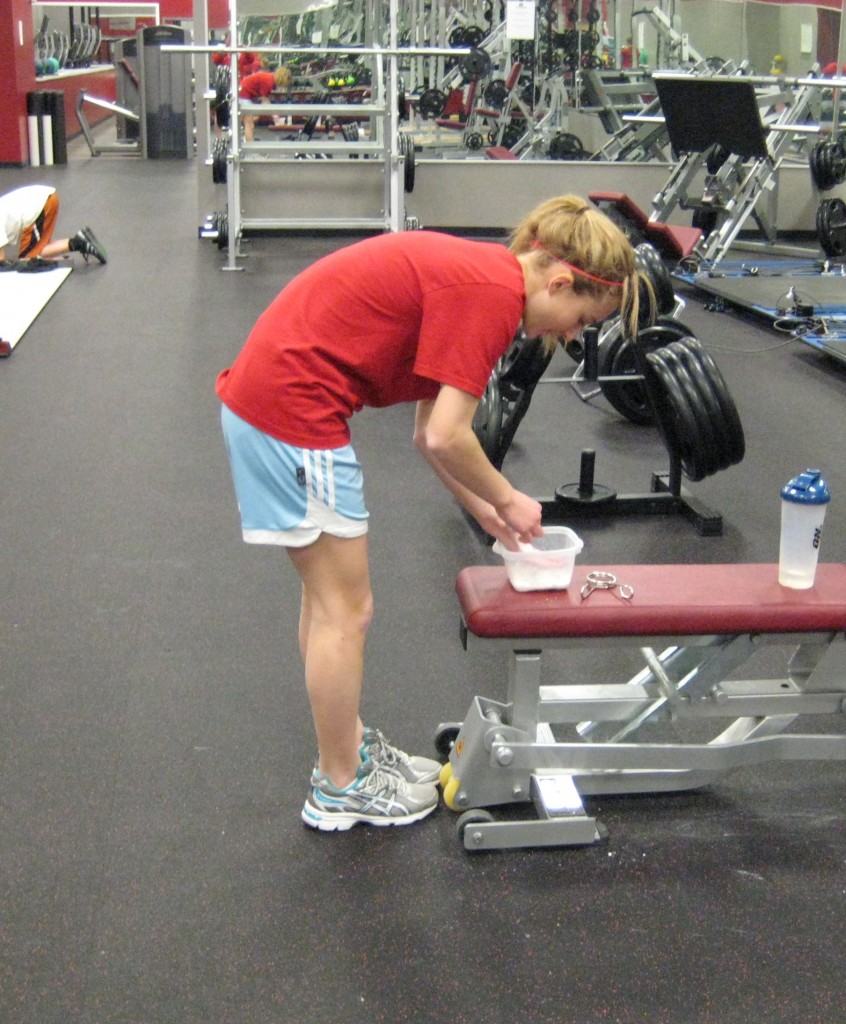
3. When anyone uses chalk. Lifting without chalk is insane. I recognize it’s messy, but it’s worth it. As with the above, when a younger or female athlete goes for the chalk, I think it’s awesome.
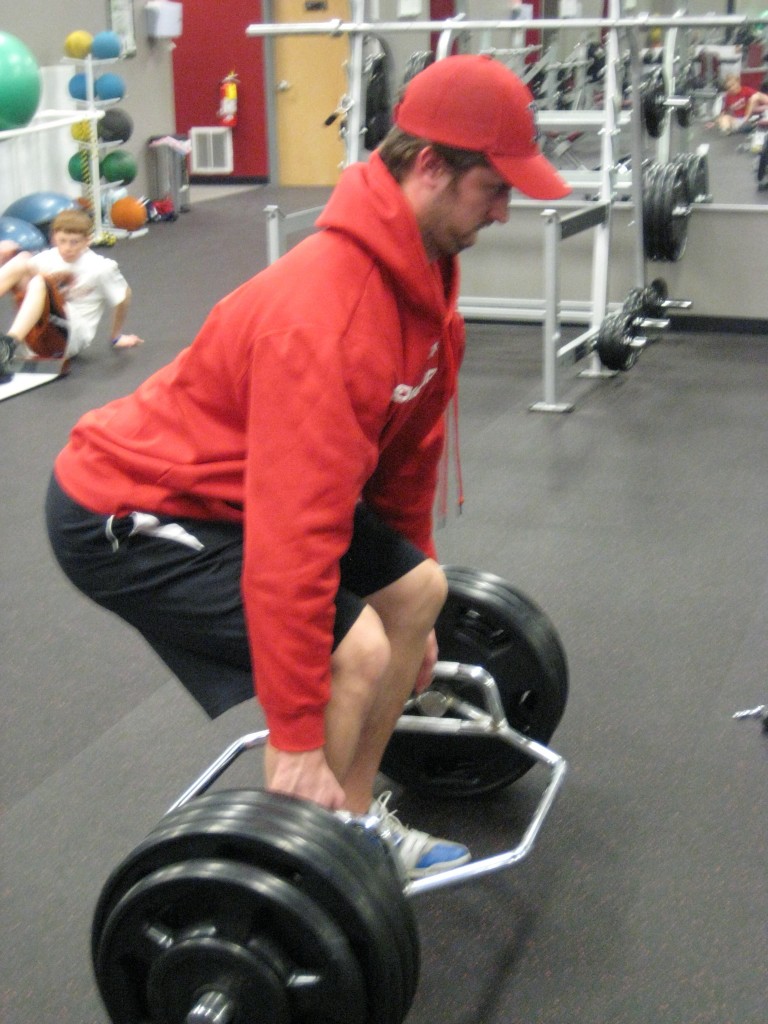
Chalking up before a heavy set of lunges!
4. When a parent tells me that their kid leaves our facility looking like a new person. This can be on either an individual session basis or at the conclusion of a few months of training. Sometimes I think the biggest benefit we offer our clients is a huge confidence boost by expanding their conception of their abilities and reinforcing the value of working hard and overcoming adversity.
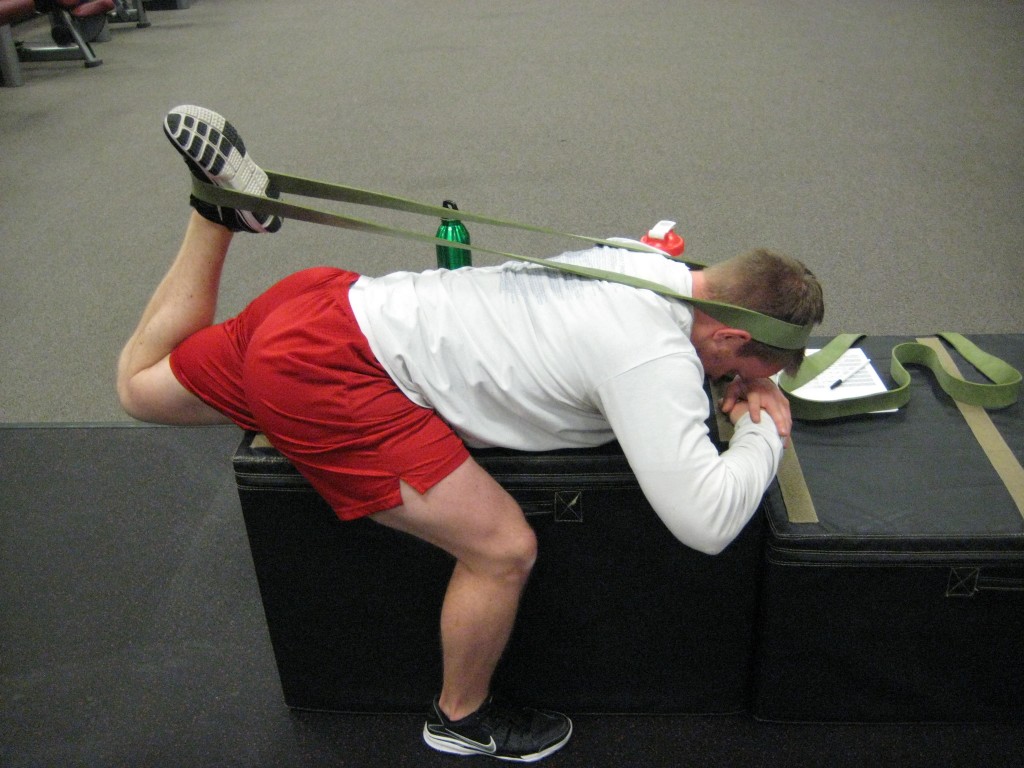
1) Creativity When fatigue (read: laziness) reaches a whole new level:
Rambo Rectus Femoris Stretch
No Valentine’s Day post would be complete without a shout-out to Emily. My work at Endeavor frequently requires me to be there early in the morning and/or late at nights. It’s not uncommon for me to be there for 12 hours a day, which means I’m not around at home as much as I should be. She’s been incredibly supportive and understanding throughout my time here.
Nice.
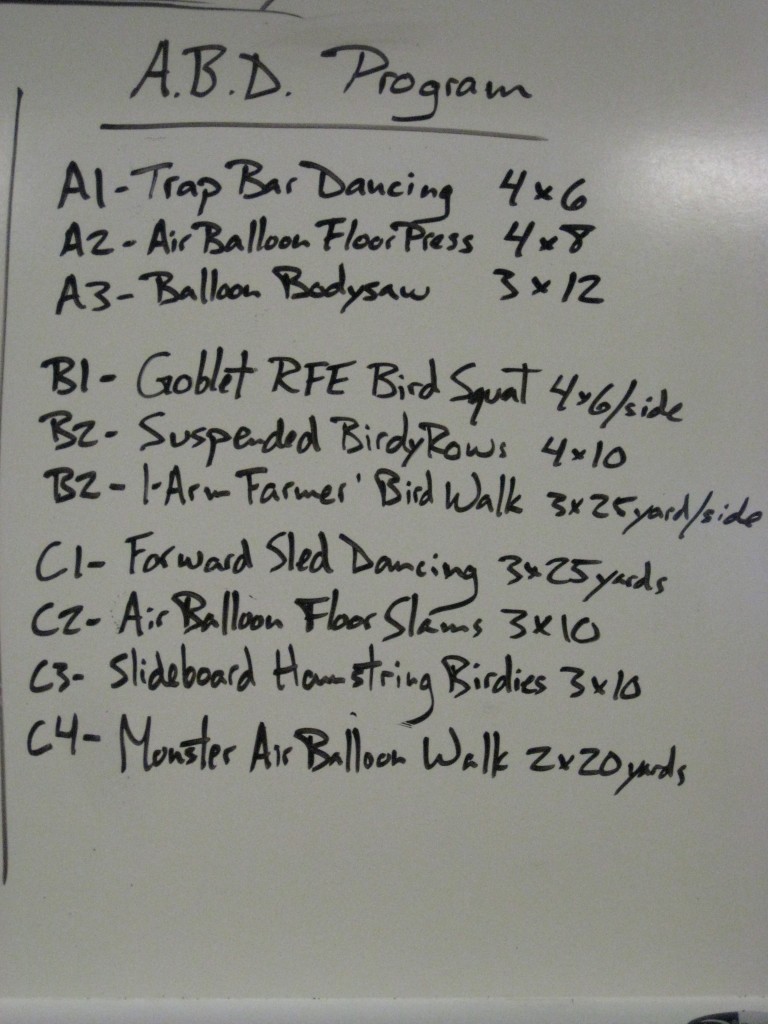
She’s also been an inspiration of sorts, as she was the original founder of the “bird neck syndrome” diagnosis I mentioned here: Shoulder Pain with Pressing Exercises. She’s even been receptive to altering her pre-Kevin workouts to something more in-line with our Endeavor approach, which I know can be a point of contention between people that are passionate about training and significant others that don’t share that passion. Check out her program, recently written by David Lasnier:
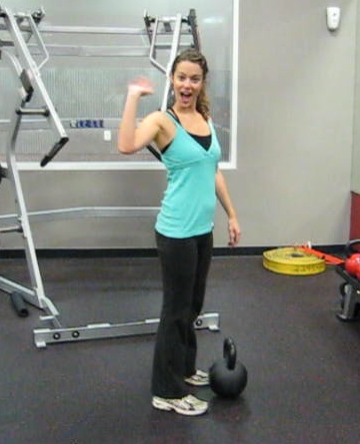
I guess it’s necessary to mention that Emily earned the nickname of “Air Balloon Dancer” (ABD) amongst friends….A hint as to why:
Happy Valentine’s Day and check back on Wednesday as I have something important to tell you!
To your success,
Kevin Neeld
Please enter your first name and email below to sign up for my FREE Athletic Development and Hockey Training Newsletter!




 Use CODE: "Neeld15" to save 15%