Today’s Thursday Throwback takes us back to 2011 and provides an inside look at what used to be a very popular supplement. Aside from the specific supplement referenced here, there are two big takeaways from this post that you should apply to ALL supplement choices:

1) It’s important to familiarize yourself with the brand. Because the supplement is completely unregulated by the FDA, companies can put whatever they want into their bottles. Simply, there’s no guarantee that what they claim the supplement contains (e.g. creatine) actually has that ingredient in the quantities they’re advertising. Some brands have gone through the process of becoming “NSF Certified for Sport” or have been certified by “Informed Choice”, which should give you a higher level of confidence that the supplement contains what it’s supposed to. I strongly discourage our athletes from going to supplement/grocery stores to by supplements. It’s unlikely a high quality brand is even carried at the store and a lot of the sales people at the more popular stores are dangerously under-informed.

2) A lot of times less is more. There are TONS of supplements, and supplement ingredients, out there, but the overwhelming majority have no scientific support that they actually work. A lot of times popular supplements contain a few inexpensive ingredients that do work, and a ton of “extra stuff” that doesn’t, and you end up paying a premium for inflated marketing campaigns and colorful wrappers instead of a higher quality ingredient. Knowing which supplements actually work can be tough to stay on top of, which is why I frequently refer back to this: Examine.com Supplement Goals Reference Guide. It’s nice to have an unbiased, comprehensive look at every supplement so you can quickly see if there’s research supporting it’s effectiveness.

Supplement Goals Reference Guide

The most informative, honest, unbiased look at supplementation, ever.

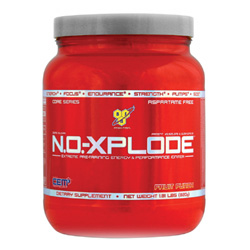
NO XPLODE Exposed

A couple years ago I wrote a supplement review that we never took to print. There was a considerable conflict of interest because the nature of the article could negatively impact sales of one of the site’s top sellers. To be honest, they handled it really well, apologizing to me and noting that it wouldn’t be good for their reputation with the company. I understood and still do; relationships are everything in business. With that said, I think the wide-spread use of this supplement is ludicrous and potentially dangerous. A deeper look inside:

NO XPLODE-A Look Inside

Assuming you don’t have an NO2 label in front of you (hopefully you don’t), let’s take a look at the nutrition facts and some of the other ingredients to see if we can pick out the ingredients out that are driving their marketing claims.

Calories: 25
Fat: 0 g
Carbohydrate: 6 g
Sugar: 0 g
Protein: 0 g
Vitamin B6: 25 mg
Vitamin B9: 400 mcg
Vitamin B12: 120 mcg
Calcium: 75 mg
Phosphorous: 535 mg
Magnesium: 360 mg
Sodium: 235 mg
Potassium: 75mg
Ingredients (get ready!):

In addition to the components listed above, N.O.-XPLODE contains N.O.-Xplode™’s Proprietary Blend, which consists of: L-Arginine AKG, L-Citrulline Malate, RC-NOS™ (Rutacarpine 95%), L-Citrulline AKG, L-Histidine AKG, NAD (Nicotinamide Adenine Dinucleotide), Gynostemma Pentaphyllum (Leaves & Stem) (Gypenosides 95%), Modified Glucose Polymers (Maltodextrin), Di-Creatine Malate, Trimethylglycine, Creatine Ethyl Ester -Beta-Alanine Dual Action Composite (CarnoSyn®), Sodium Bicarbonate, Sodium Creatine Phosphate Matrix, Creatinol-O-Phosphate-Malic Acid Interfusion, Glycocyamine, Guanidino Proplonic Acid, Cinnulin PF® (Aqueous Cinnamon Extract) (Bark), Ketoisocaproate Potassium, Creatine ABB (Creatine Alpha-Amino-N-Butyrate), L-Tyrosine, Taurine, Glucuronolactone, Methylxanthine (Caffeine), L-Tyrosine AKG, MCT’s (Medium Chain Triglycerides)[Coconut], Common Periwinkle Vinpocetine 99%, Vincamine 99%, Vinburnine 99% (Whole Plant), Di-Calcium Phosphate, Di-Potassium Phosphate, Di-Sodium Phosphate, Potassium Glycerophosphate, Magnesium Glycerophosphate, Glycerol Stearate.

Other ingredients include: Citric Acid, Natural & Artificial Flavors, Calcium Silicate, Potassium Citrate, Sucralose(Splenda®), Acesulfame-K, FD&C Red #40, And FD&C Blue #1 (These are mostly just preservatives, sweeteners, and colors).

I’ll be honest. I’m far from a nutrition and supplement scientist. There are some people that could quote strengths and weaknesses of research on most of the above ingredients-I’m not one of them. I do, however,  stay current on research demonstrating consistent effectiveness of specific supplements. In that light, there are a few things that really stand out to me when looking at the excessive laundry list of ingredients in NO XPLODE.

If you scan through the ingredients you’ll see creatine, beta-alanine, and caffeine. All of these have been shown to be safe and effective compared to a placebo in eliciting greater increases in muscular size and strength (creatine), and work capacity and endurance (beta-alanine and caffeine), and there is some more recent work suggesting that caffeine taken in pretty high doses may be effective in increasing maximal strength via an increased neural drive mechanism.

The “get a big pump” claim of NO supplements insinuates greater increases in muscle mass and strength as a result of the NO2 precursor l-arginine (an amino acid), which is largely unsupported. Arginine MAY have some benefits in patients with heart problems, but only in higher doses (in the realm of 10-15 g) known to cause almost inevitable gastrointestinal distress. In short, there is no research-supported reason to think that NO2 will increase the size and strength of your muscles. Furthermore, it’d be fair to say that the overwhelming majority of the long list of ingredients in these supplements are worthless for the purposes of improving training outcomes in athletes.

Why All The Hype?

So why all the positive reports and borderline evangelical support for NO2 supplements?  There are a couple reasons.  For starters, this supplement has received a ton of attention from teenagers.  Because it increases your heart rate as a result of the caffeine, those new to training love it.  They feel more energized.  They also get significantly bigger and stronger.  Being logical thinkers, the conclusion is that N.O.-XPLODE gives you the energy you need to train harder to get bigger and stronger.  Makes sense, but isn’t necessarily accurate.  As I’ve written about before, EVERYTHING works for inexperienced lifters.  In fact, I’m fully confident that front planks would increase maximum squat and bench press strength in inexperienced lifters.  No matter what teenagers do, they’ll get bigger and stronger.  The added rush from a supplement isn’t the cause of these improvements!
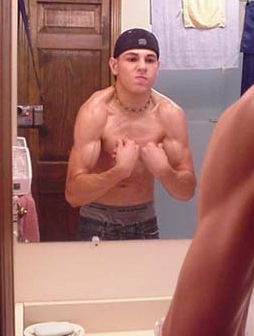

“Take NO-XPLODE! I started taking it two weeks ago when I started lifting for the first time ever and it totally worked!” – Typical Well-Intentioned, But Completely Ignorant Teenager

As I’ve mentioned in the past, my stance on supplements is simple. It needs to work (research-supported). It needs to be safe. And, ideally, it should be pretty cheap. NO2 supplements miss the mark on at least the first of my qualifiers, and probably the second. For those that swear by its effectiveness, I won’t disagree that you may get results from it, but it’s not from the nitric oxide components or precursors.  Short of duct tape and a soldering iron, they’ve put just about every ingredient known to man inside N.O.-XPLODE.  This includes creatine and beta-alanine, which do receive scientific support with regards to increasing muscular size and strength, especially if taken together, and caffeine, which is known to increase energy and focus. With supplements, like food, the less ingredients, the better. Stick with stuff that’s been shown to work and be safe. If there’s a long list of ingredients you don’t understand, don’t take it, regardless of what the high school kid working at GNC tells you.

I think we all need to be more cautious about what we’re allowing teenagers to put into their bodies. It seems that real food has become a minority component of today’s young athlete’s diet. Further, I think we need to take a step back and reanalyze other aspects of their lives if they can’t get a good workout in without loading up on artificial stimulants!

To your success,

Kevin Neeld
HockeyTransformation.com
OptimizingMovement.com
UltimateHockeyTraining.com

P.S. Never waste money on ineffective supplements again >> Examine.com Supplement Goals Reference Guide

Please enter your first name and email below to sign up for my FREE Athletic Development and Hockey Training Newsletter!

Get Ultimate Hockey Transformation Now!

Year-round age-specific hockey training programs complete with a comprehensive instructional video database!

Ultimate Hockey Transformation Pro Package-small

Get access to your game-changing program now >> Ultimate Hockey Transformation

“Kevin Neeld is one of the top 5-6 strength and conditioning coaches in the ice hockey world.”
– Mike Boyle, Head S&C Coach, US Women’s Olympic Team

“…if you want to be the best, Kevin is the one you have to train with”
– Brijesh Patel, Head S&C Coach, Quinnipiac University

Today I wanted to share a pretty cool story with you.

Over the Summer, Emily and I bought our first house together. It was something we’d talked about doing at some point in the future, but the process from starting to look to closing happened FAST. Like 6 weeks fast.

We bought a house!

Holding each other up after a long move in day.

Because we moved in July, the middle of the hockey off-season (e.g. my busiest time of year at work), we didn’t move in as much as just drop boxes inside of our new house and then carry on with our lives.

When the dust finally settled on processing all the testing data from our off-season hockey group, the pre-season testing/programs from the Flyers Junior Team, and the two camps I had with the US Women’s National Team, I was finally able to spend some time working on the house and digging through some of my boxes.

In doing so, I came across something awesome that I forgot I had.

When I was a kid, my older brother (Jim) and I used to write letters to our favorite professional hockey players. In the letters, we’d always ask for advice about becoming better players, and what they thought really helped them along their career. Of course, we also politely suggested that getting an autograph would be cool too.

As you can imagine, we didn’t get any letters back, as those guys are inundated with fan mail and don’t have the time (and probably the desire) to personally respond.

What Jim and I were both pretty surprised about, though, was that we almost always got an autographed picture back. Over the years, we built an awesome collection that included guys like Wayne Gretzkey, Mario Lemieux, Eric Lindros, Paul Kariya (my favorite player growing up), Joe Sakic (my brother’s favorite player), Mats Sundin, Teemu Selanne, John LeClair, Pavel Bure, Valeri Kamensky, Patrick Roy, and many, many more.

It was sweet. Those were always the best days. We’d run home from school and check the mailbox everyday for weeks after we sent out our letters.

Growing up, I always wanted to go to the University of Michigan. I don’t know why (it as the helmets), but I just thought that the team and school were awesome. In fact, my first plane trip ever was when my mom took me to Ann Arbor to visit for my 10th birthday. Somewhere I think I still have the silky yellow jersey I got that year too (the best present ever)!

One day, I looked up the University of Michigan hockey roster and wrote every player on the team an individual letter letting them know I was a huge fan, wishing them luck, asking for advice on how to become a Division 1 hockey player, and, of course, requesting an autograph.

As a quick aside, the practice of writing to people that have attained what I aspired to attain, which my brother taught me, has stuck with me to this day. While I don’t write asking for autographs anymore, since entering the field I’ve reached out to a TON of strength coaches, physical therapists, researchers, coaches, and agents to introduce myself, ask for advice, and/or thank them for the help their writing/products have provided me. This was ultimately how I connected with guys like Mike Boyle, Mike Potenza, Eric Cressey, Sean Skahan, Charlie Weingroff, and a number of other guys that have had a huge impact on my career.

…getting back to Michigan.

The cool thing about the experience with Michigan is that a number of the players actually wrote back, including players like Brendan Morrison and Mike Knuble that went on to have great NHL careers.

First, I think it’s a great gesture and testament to the character of those players. I was 9.  It would have been easy for them to just laugh at the letter and throw it out. But they didn’t. They took the time out of a schedule packed with schoolwork, training, practicing, travel, and games to write back.

Second, I got great advice that had a huge impact on my motivation and work ethic at a young, impressionable age. And frankly, I think a lot of those characteristics have stuck with me to this day.

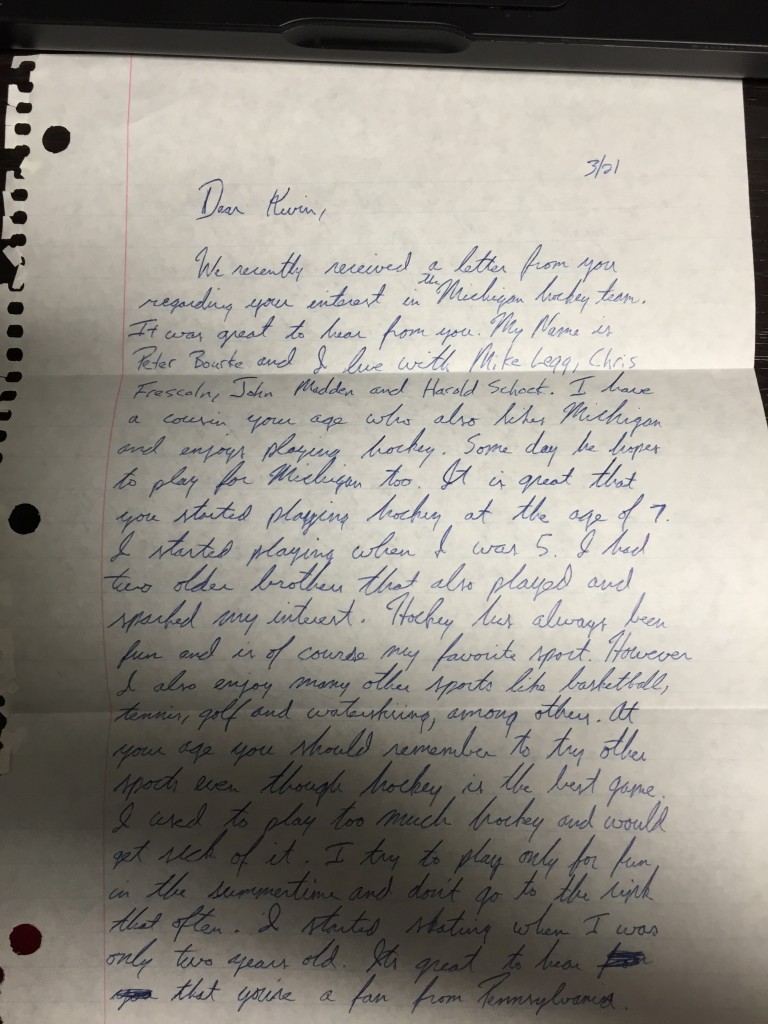
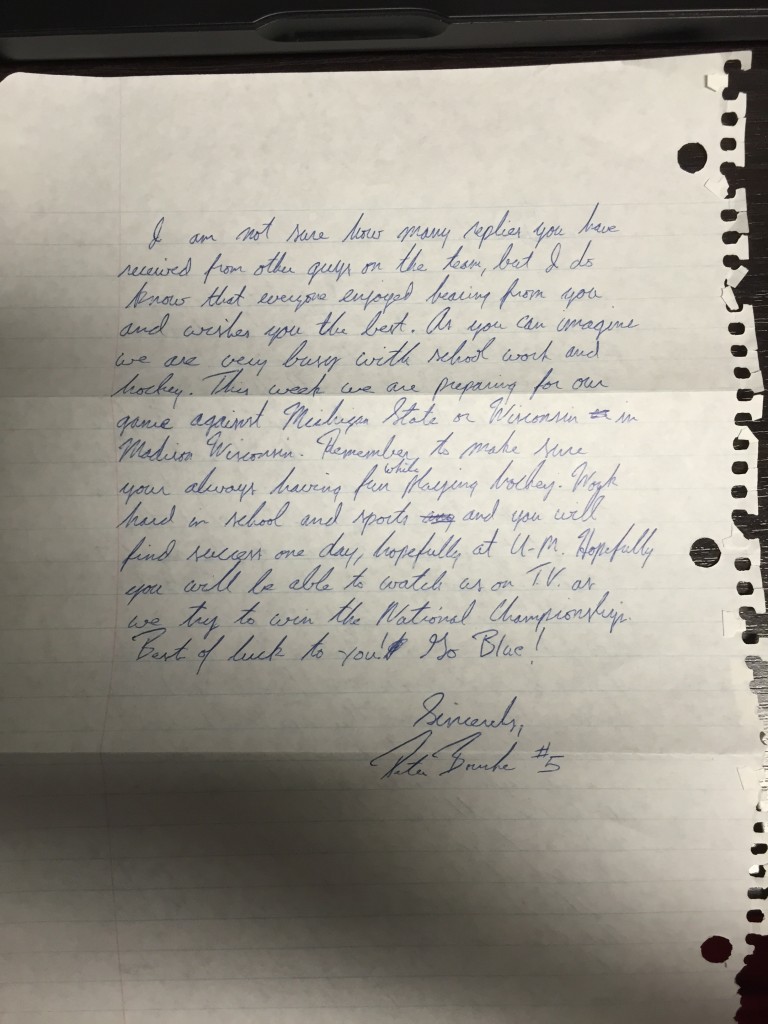
In digging through one of the boxes, I found a letter from Peter Bourke, a defensemen on the team.

 IMG_2385 IMG_2386

The Best Advice I’ve Ever Gotten

I reread the letter when I found it and it’s amazing how much good advice there is that is extremely relevant to youth athletes today.

With that in mind, I wanted to share a few things that Peter told me when I was 9, that I think will really help the youth athletes you know:

  1. “Hockey has always been fun and is of course my favorite sport. However I also enjoy many other sports like basketball, tennis, golf and water skiing, among others. At your age you should remember to try other sports even though hockey is the best game.”
  2. “I used to play too much hockey and would get sick of it. I try to play only for fun in the Summer time and don’t go to the rink that often.”
  3. “Work hard in school and sports and you will find success one day.”

What This Means To You

  1. Playing multiple sports is essential at young ages, not only to avoid burnout, but also to maximize the athleticism necessary to become an elite hockey player at older ages.
  2. Athletes need an OFF-season. This is an especially important note today as the trend is continuing to move toward year-round competition and an increase in competition at the expense of preparation and restoration.
  3. Hard work is inherently valuable. If you work hard and don’t accomplish your goals, you’ll never have to live with the regret of knowing that you may have achieved your goal if you just put forth a little more effort. Sports provide a great opportunity for kids to see how their hard work translates to accomplishments (even small ones like scoring a good goal in practice), which will ultimately help cultivate the character needed to be successful when they make the transition to the “real world”. Bottom line, developing the habit of working hard toward your goals will pay dividends in every component of your life.

Hearing these things from an athlete I looked up had a profound impact on my life.  Hopefully these words can do the same for you.

To Peter and the rest of the University of Michigan team, THANK YOU for taking the time to write back to me, and any other young kids that reached out to you. You truly made an impact on my life.

To your success,

Kevin Neeld
HockeyTransformation.com
OptimizingMovement.com
UltimateHockeyTraining.com

Please enter your first name and email below to sign up for my FREE Athletic Development and Hockey Training Newsletter!

Get Ultimate Hockey Transformation Now!

Year-round age-specific hockey training programs complete with a comprehensive instructional video database!

Ultimate Hockey Transformation Pro Package-small

Get access to your game-changing program now >> Ultimate Hockey Transformation

“Kevin Neeld is one of the top 5-6 strength and conditioning coaches in the ice hockey world.”
– Mike Boyle, Head S&C Coach, US Women’s Olympic Team

“…if you want to be the best, Kevin is the one you have to train with”
– Brijesh Patel, Head S&C Coach, Quinnipiac University
Today’s Thursday Throwback is one of my most popular posts ever. This post gained traction quickly as it discusses the largest underlying factor in why so many athletes and lifters alike get shoulder pain while benching and doing other pressing exercises.

Since this post was first published over 3 years ago, I’ve continued to emphasize the importance of having some sort of screen to pre-qualify yourself (or your athletes) for specific exercises, and the necessity of having a system to make program changes if a specific exercise is not a good fit for an athlete. This is the system I use at Endeavor: Optimizing Movement

Enjoy the post and if you know anyone that has experienced shoulder pain while benching or doing push-ups, please share this with them!

Shoulder Pain with Pressing Exercises

Last week I got an email from my step sister saying that she’s been getting shoulder pain during bench pressing and dumbbell raising exercises. I had a similar conversation with a hockey parent a week before about one of his son’s teammates. In both cases, it’d be impossible for me to say with 100% confidence that I know exactly why they’re in pain and what they can do to fix it. As you know, non-traumatic pain tends to be multi-factorial and necessitates considerations to static and dynamic postures. In other words, how we hold ourselves throughout the day and how we move plays a large role in soft-tissue overload.

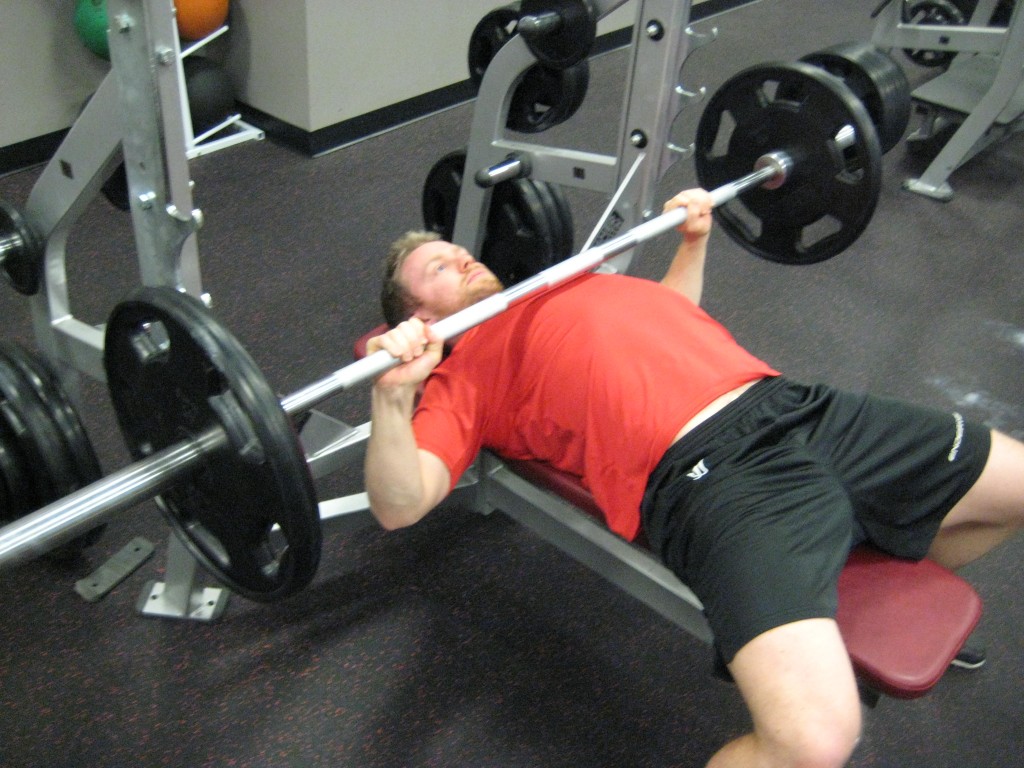
With that said, I’d bet my car (an estimated value of $137), that in both of these cases, the bench press is performed with a similar fault – the elbows are out too wide. Let’s walk through this:

It’s somewhat hard to tell from this picture, but my elbows are approaching 90 degrees off my side. In other words, my upper arm and the side of my rib cage form about a 90 degree angle. This puts a tremendous amount of stress on the anterior shoulder capsule at the bottom of the lift. It also increases the risk of having the glenohumeral head impinging on the structures superior to it.

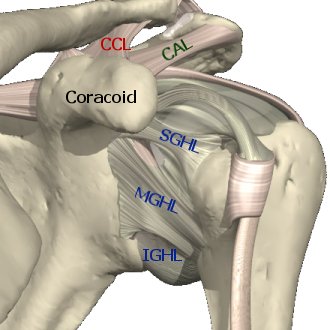
Ligaments of the shoulder

The picture above illustrates the ligaments of the shoulder. As you approach the bottom of a bench press with your elbows flared out, it tends to put excessive stretch on the IGHL and MGHL ligaments displayed above and increases the chances of impinging the ligaments and tendons between the acromion and glenohumeral head (long head of biceps brachii tendon and subacromial bursa are two notables).

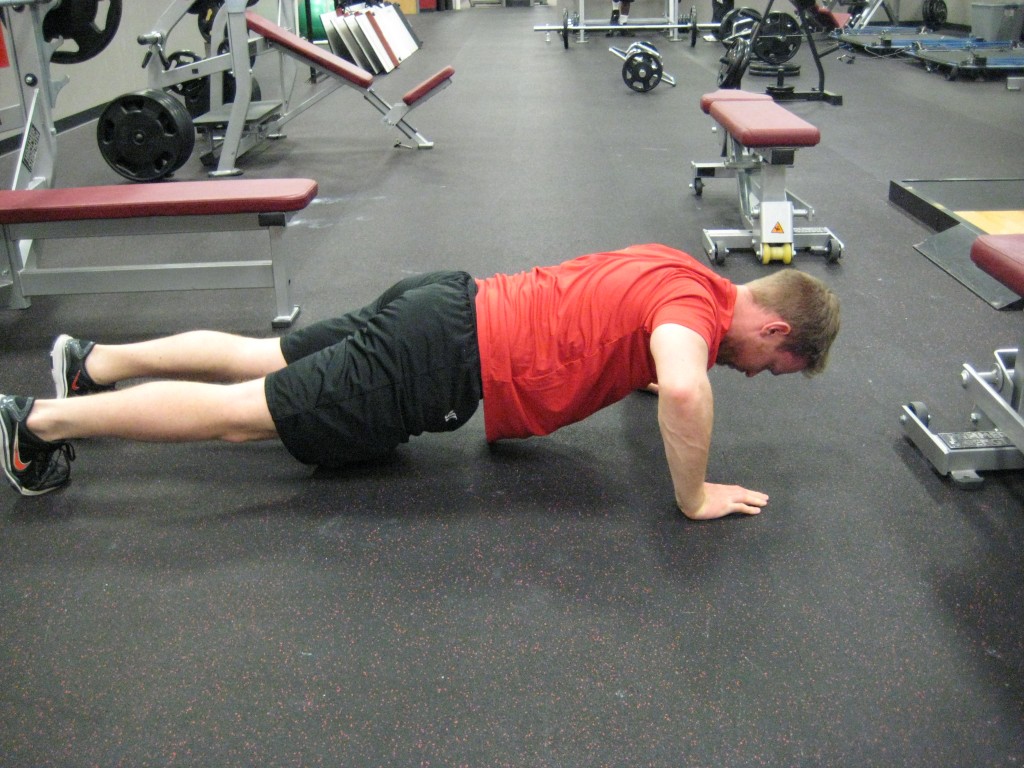
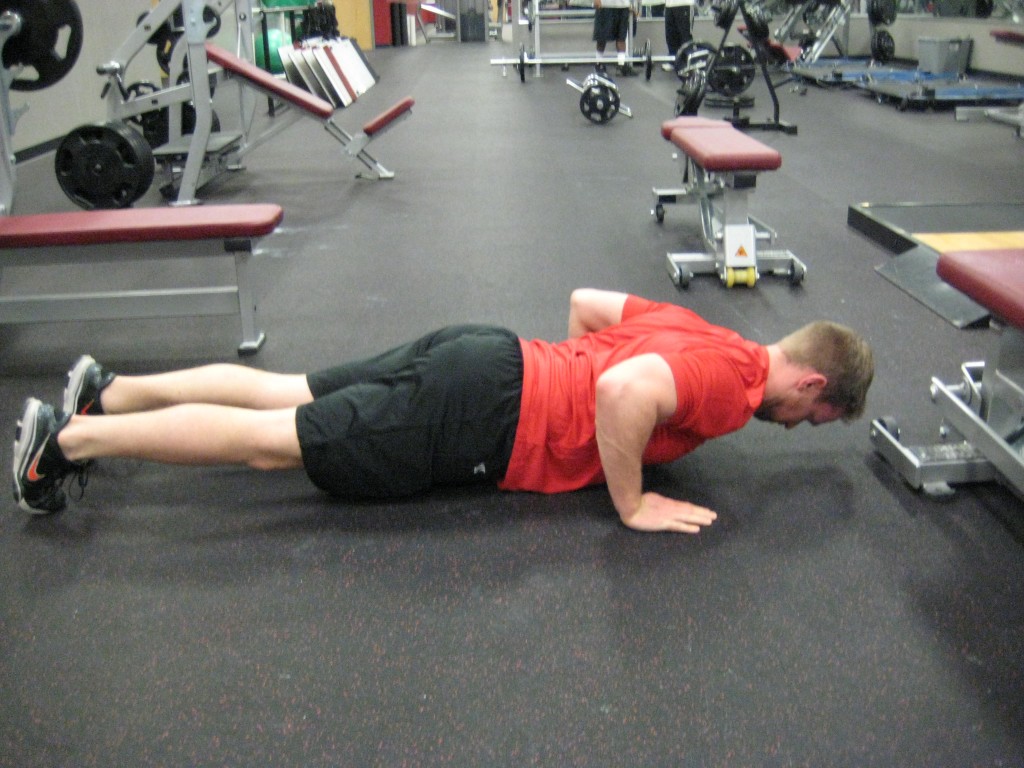
The same is true for push-ups, although there tend to be some other differences between bench pressing and doing push-ups. For instance, push-ups allow free movement of the scapulae, allowing the shoulder a bit more freedom than during bench pressing, which may delay the onset of pain from resulting from the elbows being out too wide. Of course, because your body isn’t supported by a bench during a push-up, it also means more freedom of movement for other joints; as a result, it’s common to see people with sagging hips, excessively arching backs and protruding chins (or what I call “bird neck syndrome” or BNS).

Brutal Push-Up…but decent display of BNS

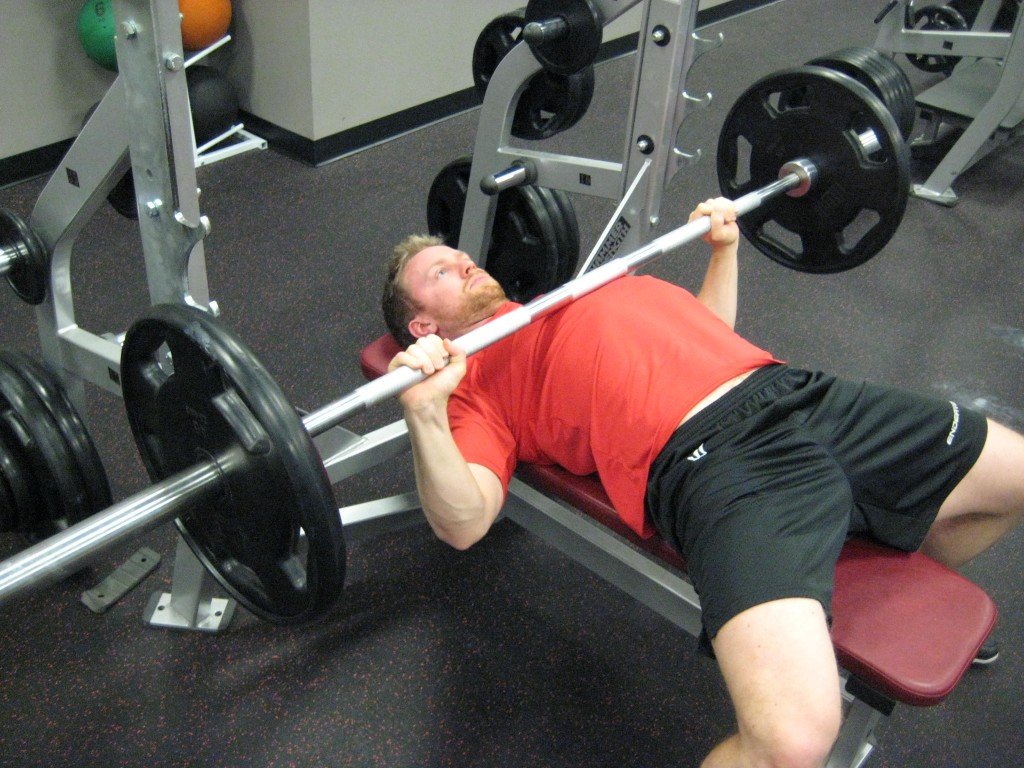
In both exercises, the goal is to keep the elbows within 45 degrees off the side of the body and to retract the scapulae (squeeze the shoulder blades back and down) as you go down. Because the scapulae aren’t free to move during a bench press, it’s important to set up on the bench with your scapulae in the correct position, packed back and down, and to keep them there throughout the movement.

Bench Press with correct positioning

With push-ups, the shoulder blades aren’t wedged between your rib cage and the bench so they can move freely. When going down in a push-up, think of pulling your chest down to the floor and pulling your shoulder blades back and down along the way.

Push-Up with proper technique. Notice how the hands are beneath the shoulders, the elbows are within 45 degrees of the sides of the body and the chin is tucked back.

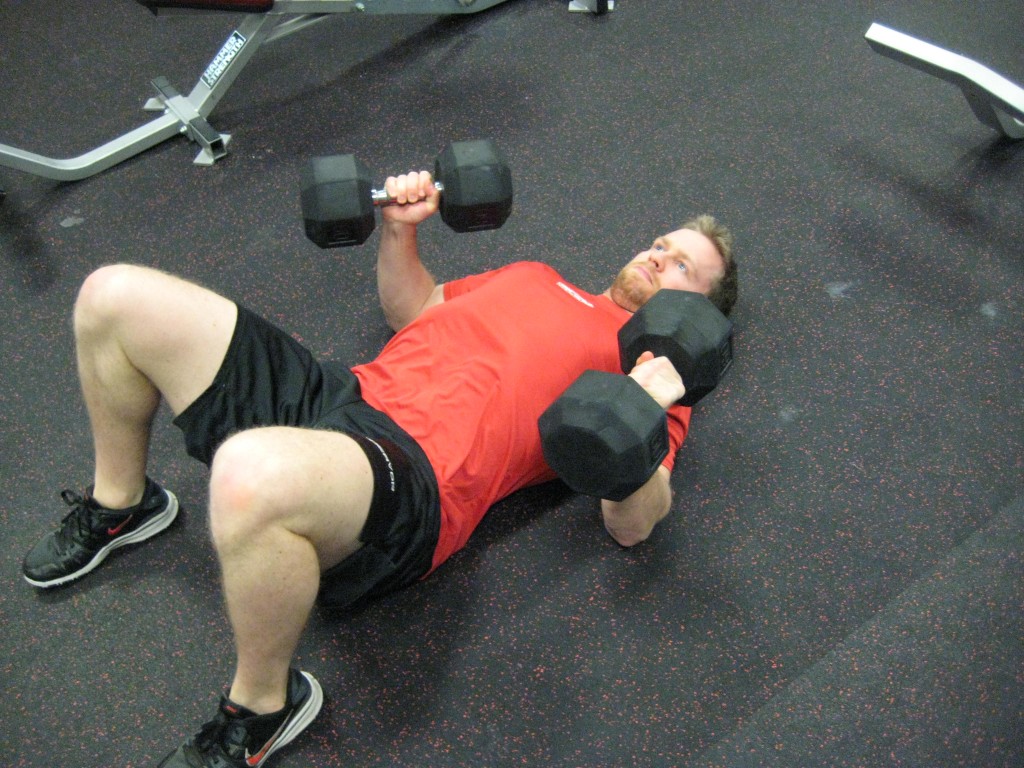
If you already have shoulder pain, it may be best to back off the pressing exercises for a week or two and focus more on rowing exercises, emphasizing pulling the shoulder blades back and down as you pull the weight toward your chest. If it’s not that bad, the floor press is a great exercise to reteach a proper pressing pattern while limiting the stress on the shoulder because of the decrease in range of motion.

Dumbbell Floor Press

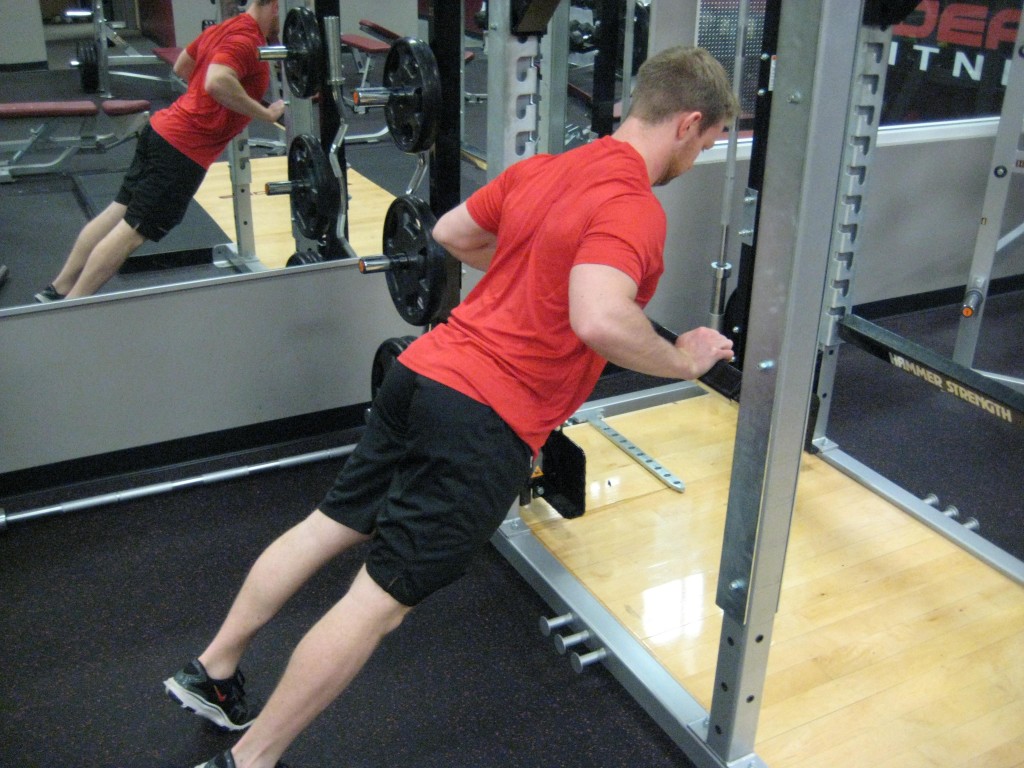
With regards to push-ups, I think most of the problem comes from people assuming they can do push-ups on the ground right away. This stems back to an interesting paradox in youth training, where there is still the perception that lifting weights is dangerous but people are free to do as many push-ups as they want. In reality, I’ve come across very few athletes 14 and under that can do a single push-up the correct way on the floor. As with any exercise, it’s important to progress the loading as the individual develops the strength to perform it correctly. In this case, the overwhelming majority of people need to start performing push-ups on an inclined surface and focus on proper body positioning and proper movement (e.g. moving as a unit connected from ears to ankles, descending so that the lower chest is the first region to touch the ground or raised implement and keeping the elbows within 45 degrees of the side). As people progress in strength, you simply lower the implement closer and closer to the ground.

At Endeavor, we use the safety bars in our squat racks to accomplish this. This way it’s easy for us to objectively assess progress as each level is numbered. As the athlete gets stronger, they approach higher and higher numbers as the bar lowers closer to the ground.


Incline Push-Up


In a team off-ice training setting (especially with younger teams), this can be tough. In these situations, I’m more apt to use our jump boxes, which are set at heights of 24, 18, and 12 inches. Using these, I can start everyone at the top box and progress them lower on an individual basis as they demonstrate sufficient strength. If someone mastered the 18″ box, but isn’t quite ready for the 12″, you can just lengthen the negative or “going down” phase of every rep to make it a bit tougher.

Pressing movements are an essential part of any person’s training program. Unfortunately, they’re also one of the most common causes of upper body pain. Making the simple corrections discussed above will help make you stronger than ever, while keeping you pain free!

To your success,

Kevin Neeld
OptimizingMovement.com
UltimateHockeyTraining.com
HockeyTransformation.com

Please enter your first name and email below to sign up for my FREE Performance Training Newsletter!

Get Optimizing Movement Now!

“…one of the best DVDs I’ve ever watched”
“A must for anyone interested in coaching and performance!”

Optimizing Movement DVD Package

Click here for more information >> Optimizing Movement

Today’s Thursday Throwback is an appropriate follow-up to last week’s post on the relationship between flexibility and muscle injury risk. If you missed that, you can check it out here: Does Flexibility INCREASE your risk of injury?

This is another short, but important read, as it touches on an idea that I think every youth athlete I’ve ever worked with has been taught incorrectly. Enjoy the post, and please pass it along to any friends or family you think would benefit from reading it!

Should You Stretch After You Pull A Muscle?

Think about the times in your life that you’ve “tweaked” a muscle or slightly strained/pulled it.

What was the FIRST thing you did on your own or were told to do?

If you’re like most people, you immediately stretched the muscle.

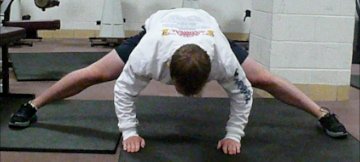
straight-leg-adductor-stretch-bilateral

This isn’t always the answer

The very first thing I tell my athletes if they tweak a muscle is NOT to stretch it!

A muscle strain can range from a slight over-stretch to a complete tear. Assuming the muscle isn’t COMPLETELY torn, it’s likely that there is some micro-damage to the muscle and that the muscle feels tight because it’s guarding against further injury.

This means that most people are attempting to stretch an over-stretched muscle AGAINST the muscles’ contraction.

Not only is this not an effective way to speed up your healing, but it’s probably making your injury worse!

Think about your muscle as a rubber band. Now imagine cutting a small slit in the rubber band with a razorblade.

If you stretch that rubber band now, what’s going to happen?

The small slit is going to expand, getting longer and wider.

Does making a slight tear in your muscle longer and wider seem like a smart recovery strategy?

If you tweak a muscle, DO NOT stretch it. You can ice it if you want (although I’m not convinced that ice does anything either). If you’re going to stretch anything, stretch the muscles that OPPOSE the injured muscle.

Many muscles are overworked or strained because of a relative stiffness imbalance with their antagonists, so stretching the opposing muscle can help bring you back into balance.

To your success,

Kevin Neeld
OptimizingMovement.com
UltimateHockeyTraining.com

Please enter your first name and email below to sign up for my FREE Performance Training Newsletter!

Get Optimizing Movement Now!

“…one of the best DVDs I’ve ever watched”
“A must for anyone interested in coaching and performance!”

Optimizing Movement DVD Package

Click here for more information >> Optimizing Movement

Today’s “Thursday Throwback” is a quick one from 2009. This continues to be a trend we see in our assessments today and I think, while basic, highlights that you can go wrong on both ends of the flexibility continuum. Those that are too immobile at one joint are likely to move excessively at another. Those that are too mobile at one joint may be more likely to suffer from injuries as a result of a lack of stability and/or constant attempt to manage the instability (e.g. muscle injuries). This is why optimizing movement is such an important concept!

Optimizing Movement DVD Package


Enjoy the post below:

Does Flexibility INCREASE your risk of injury?

A couple weeks ago I did an audio interview with Joe Heiler for SportsRehabExpert.com, one of the most underrated membership sites on the web. I’m really humbled that he asked me to contribute.

If you’ve never been there, check it out. Joe’s a really bright guy and has compiled a lot of great information from other smart, successful coaches and therapists.

SportsRehabExpert.com

One of the things that came up during the interview was what we can do to prevent “groin” (adductor) strains. We’ve been fortunate in that we haven’t had too many adductor injuries in our athletes. This is probably, at least in part, due to the hip mobility and hip muscle activation exercises we use.

We did have a couple athletes complain of adductor pain though, and they all had ONE thing in common:

OUTSTANDING ADDUCTOR FLEXIBILITY!

This trend flies in the face of the “you got hurt because you didn’t stretch or aren’t flexible enough” way of thinking.

In these athletes, we were able to resolve their pain relatively quickly, by having them STOP STRETCHING their adductors, start stretching their glutes a few times a day, and by doing isometric adductor strengthening exercises by crushing a medicine ball between their knees for time.

The rationale was simply that their adductors were weak relative to their abductors (to be overly simplistic: weak groin, strong glutes).

By stretching their glutes and strengthening their adductors, we were able to shift the strength and stiffness relationship between those muscles into more balance and get rid of their pain within a week or two.

To your success,

Kevin Neeld
OptimizingMovement.com
UltimateHockeyTraining.com

Please enter your first name and email below to sign up for my FREE Performance Training Newsletter!

Get Optimizing Movement Now!

“…one of the best DVDs I’ve ever watched”
“A must for anyone interested in coaching and performance!”

Optimizing Movement DVD Package

Click here for more information >> Optimizing Movement

Use CODE: "Neeld15" to save 15%