Last Friday David and I made a trip up to Ramsey, NJ and White Plains, NY to hang out with Perry Nickelston and Anthony Renna. Hanging out with those guys was awesome. I really click well with entrepreneurs and people that are passionate about what they do. This is true of people in any field/industry, but especially when it comes to sports medicine and athletic development.
And nothing lights my lamp more than getting free t-shirts

One of the things that came out of talking with both Perry and Anthony was the value of actual training experience. The internet has completely revolutionized the education process. Because of the ease of starting a blog, everyone can share current information about how they’re training their athletes/clients. I remember Mike Boyle saying several years ago that most books were outdated by the time you get them. This may be less true with anatomy texts, but with books on training philosophies and methods, the time necessary to finish writing, editing, and publishing a book will make at least a portion of the material obsolete by the time it hits the presses. In other words, many book authors won’t agree with what they wrote in the book by the time we read it. It’s interesting because books are, or were, thought of as the “holy grail” of educational resources. The internet has gone a long way in cutting down on the deleterious effects of long publishing processes and in providing the most current information possible. This is good.

Unfortunately, the internet also spawned a population of unscrupulous “marketers.” The good thing about the long book publishing process is that it filtered the content. It’s a lot harder to get a book on any topic published than it is to start a website about it. Over the last couple years, the amount of hockey training information online has exploded. Some of it is outstanding; some of it is downright dangerous. What most casual readers don’t realize is that some of the information they’re reading comes from:

  1. People that don’t train anyone
  2. People who built a website for the sole purpose of making money (note that these people also don’t train anyone)

A lot of people in the strength and conditioning industry get really bent out of shape at the idea of people writing about training if they don’t train. To be honest, if people are reading and summarizing current research, it doesn’t bother me that they don’t work with a large athlete base because they’re writing can often introduce studies that I’m not familiar with, which leads me to seeking them out to read them myself.

There are “theorists” in every field. I remember reading Stephen Hawking’s book “Black Holes and Baby Universes and Other Essays” several years ago and being amazed that he essentially outlined a mechanism for time travel. Of course, Hawking is known for being a profoundly intelligent mind in the field of THEORETICAL physics. Nobody actually thinks he’s traveling through time, nor would he ever represent himself as doing so.
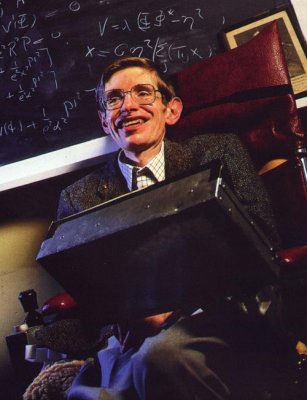
One of the greatest minds in the history of the world

In contrast, many online crowds misrepresent themselves as working with vague, but insinuatingly large numbers of athletes. This misrepresentation is what I have a problem with. If you don’t train anyone, call yourself a theorist. If you only train one team, that you also coach, say that. If you’re training a few people, but helping out as an intern with other more advanced programs, say that. There’s no shame in developing as a professional and ramping up your business. I think most people avoid this because they’re either:

  1. Young and want to people to acknowledge their information as legitimate
  2. Selling something and want to be perceived as an expert

Obviously there are some similarities between these two, but in my view the latter is more repugnant than the former. Maybe I’m sympathetic because I started my website while I was still in grad school, but I look at writing online similar to anything else-it’s going to take time and practice to get good at it. Students that know they’re going to make a living training people wanting to start a site early in their careers just doesn’t bother me as much because their intentions are pure.

That said, I’d be interested to buy every hockey product online and then travel around the world to all of the author’s locations and see what they do on a day-to-day basis. I’d guess that many train people for less than 5 hours per week and that many have a background in playing hockey, but not in training players. This is BY FAR the biggest myth in all of hockey development:

Playing high level hockey does not qualify someone as a training expert!

Hell, playing high level hockey doesn’t even mean a player can TEACH the basics of hockey. All it means is that they were a good player. Not every good player is a good hockey coach; coaching takes special skill sets. Training is in a different universe altogether. There are BRILLIANT hockey strength and conditioning coaches that have never played a competitive game of hockey in their lives. This isn’t a knock on them at all. Having a profound knowledge of how the body functions doesn’t require playing the game, just understanding it.

Think of it like this-would you not trust a physical therapist because they’ve never played hockey? Would you not trust a hip surgeon JUST because they didn’t play?

WAIT! Before you saw off part of my femoral head…did you even play hockey??

Obviously not! These professionals make a living on their understanding of the body and perfecting their trade. Playing hockey will help strength and conditioning coaches understand the language and a bit more about the mentality of the players, but that’s it. It doesn’t in any way qualify someone without an educational background or coaching experience as an expert.

Hockey Playing Expert
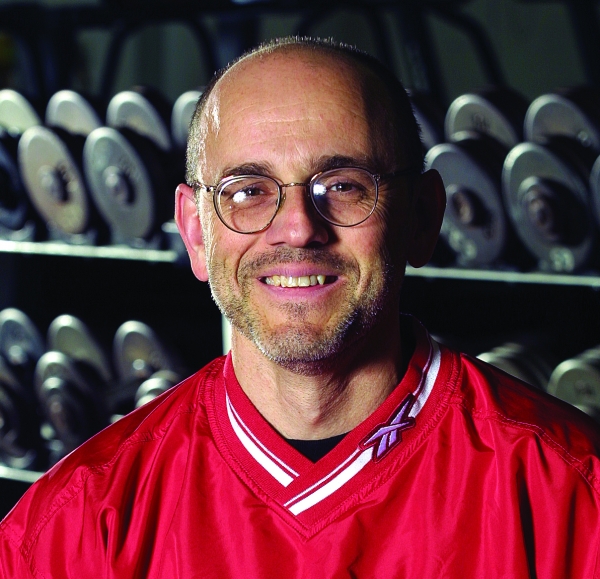
Hockey Training Expert

When I see a new training product and the author’s biggest claim is that they played good hockey themselves, a red flag goes up.

Where you can find REAL hockey training experts

This is one of the reasons I have so much respect for my partners at HockeySC.com (Sean Skahan, Mike Potenza, and Darryl Nelson) and for my friend Maria Mountain; they ACTUALLY train real, live hockey players as their full time job, and the things they write about online, they actually do in real life! THESE are the people you should be getting your information from!

On a related note, I’ll conclude this long-winded rant by saying if you’re ever in the Philadelphia area and want to swing by Endeavor Sports Performance to see our facility and how we train our athletes, you’re more than welcome. I’ve always had an open door policy, and I think it’s good for people that have encountered some of my stuff on the internet to see that we’re actually implementing the same strategies I write about into our training systems, on a daily basis.

To your success,

Kevin Neeld

Please enter your first name and email below to sign up for my FREE Athletic Development and Hockey Training Newsletter!

After my post last week on Weight Gain for Hockey Players, I got an email from a parent with a great question/situation that I think you’ll be interested in. This is a classic example of a parent really wanting to do the right thing, but not necessarily knowing the best direction to go.

Question:

Hi Kevin,

I found all this information very useful, thank you. We will try the smoothies. My son is 11 years old 4’6 and weighs 63 lbs so he is on the small side with height & weight. Right now he plays roller hockey and will be moving up to the 14 & under league next year, where some of the kids are like 120lbs, which made us consider not letting him play unless he gained a certain amount of weight. Do you know what a safe weight for him to play with those kids would be? This summer he will play for an ice hockey team which is 12 & under with light checking. He also is going to be competing in the State Wars Roller hockey, so he really does not have an off season this year.  Due to the high level of activity it has been very hard for him to gain any weight.

He has started consistently drinking a 8oz muscle milk drink on a daily basis & eating a carb supreme bar along with meals.  This has been a struggle because he is a very picky eater. He is going to start a work out program to help build muscle but we are still trying to figure out the best work out plan for him.  He wants to start working out with weights, how much should he lift (weight wise)? We do not want injury to be caused during this process. Thanks Again

Response:

Thanks for the email. To start, I don’t think it’s possible to really give a “safe weight” recommendation. At every level there are exceptions to this. As I mentioned before, We had a player dominate at the U-18 Tier I level at around 117 lbs, and he’s not that exceptional of a case (meaning other extremely light players also do quite well at that level). I consider this an unsafe weight at this level, but he didn’t have any problems. Similarly, you’ll get 200 lb players at this level that suffer contact related injuries. It really depends on the type of player your son is. If he has outstanding vision and is abnormally good at anticipating and avoiding contact, he can get away with playing at lower body weights. If his vision and/or speed are more average than he may be at a greater risk. At 11, light contact shouldn’t cause too much of a problem, but it’s a good time to start taking steps to help him put on weight so that he doesn’t have problems when he’s 16.

Most kids are picky eaters, but they’re picky eaters for different reasons. I think in many cases kids are picky eaters because we allow them to be. As parents/coaches, it’s our job to understand the importance of nutrition and eating certain foods and to explain it to kids in a way that makes them want to eat better. Nothing turns kids off more than being told to eat foods that don’t taste good “because I said so.”

Because if you don’t eat this, I’m going to murder the Easter Bunny.


I understand this can be a frustrating process, but it’s important. Find ways to explain the importance of certain foods to your kids in a way that will make them WANT to eat foods that may not be the best tasting. A couple examples:

  • Drinking water can help make you faster, stronger, and better conditioned than you are now. It can even help you make you smarter, which will help in school and in making better decisions on the ice. (Because just about everyone is dehydrated chronically, becoming adequately hydrated with water will remove the performance decrements related to dehydration).
  • Eating salmon will help you build muscle, get stronger, and stay lean. It’s the perfect hockey protein. (High quality protein and omega-3 source-provides a number of benefits that more serious athletes will be interested in).

These are just two examples, but you can put a positive spin on anything-spinach, broccoli, meatloaf, etc. All of these foods have some benefit that will help make your kids healthier and better players. Find out what motivates your kids and put a spin on foods that appeals to their motivation.

The other side of this is that, and I hate to say it, some people are just BAD cooks. The best thing any parent (and kid for that matter!) can learn to do is cook. Use a lots of spices; learn different ingredient combinations. When I was younger, I hated raw broccoli, but I looked forward to it when it was lightly steamed and accented with melted cheddar cheese. Spices can do wonders for masking the sharp taste of vegetables, and therefore in making them more appealing to “picky eaters.”

Lastly, you’re the parent, MAKE them eat the right way. It’s important to do everything you can to educate your kids on the benefits and importance of healthy eating and to try to find ways to make doing so an pleasant experience. Ultimately though, you’re the parent and you decide what they eat, not the kid. If you’ve tried a lot of options and they just don’t “like” anything, then too bad-make them eat it. You’re in charge and it’s your responsibility to do what’s best for your kids.

No parent in their right mind would say, “I know Billy has been smoking more crack than usual recently, but he REALLY likes it!” Yet with aspects of nutrition, parents are little more lax in enforcing what their kids should be doing. This may seem like a lopsided analogy, but foods, like drugs, elicit profound physiological reactions that affect EVERY aspect of how we develop and perform, including hormone production, energy levels, hunger, and body composition. Kids will thank you in the long run for doing what’s right over doing what’s popular.

As a finale for this long-winded response, I don’t encourage most kids below around 14 to take supplements like protein bars and weight gain shakes. I don’t think there’s any evidence to really suggest these things are bad at this age, I just think it sends an incomplete message. The goal should be to develop proper eating habits first, then SUPPLEMENT those second.

Every GNC Employee Ever: “Everyone should be taking NO2. I read in a magazine that it’s patented super-anabolic-testosterone-blasting blend will give you 60 lbs of muscle in 2 days or less. It’s gotta be true. You’ll be the strongest kid on your playground!”

I wish GNC would just go away…

I didn’t forget about the “how much weight should he lift” question. There isn’t an absolute weight that could be deemed safe or dangerous. I know doctors will throw numbers out sometimes, but they’re really quite arbitrary. The internal effect to the body of external loading will differ depending on the exercise. Your best bet is to teach him basic movement patterns like squats, lunges, push-ups, inverted rows, front and side planks, and glute bridges, and progress him in resistance as he demonstrates that he can perform the movement perfectly without any external load. In other words, groove the pattern, then load it slowly.

I hope this all makes sense. I know there’s a lot here, but the big take home messages are:

  1. Teach kids how and why to eat healthy
  2. Find cooking methods that make this a reasonably enjoyable process
  3. Make them eat the right foods, even if they don’t want to

To your success,

Kevin Neeld

Please enter your first name and email below to sign up for my FREE Athletic Development and Hockey Training Newsletter!

Thank you to all of you that reached out to say happy birthday on Wednesday. Thanks to you, I beat Emily in the “how much does the world care about your birthday facebook challenge” for the third consecutive year!

It means a lot to hear from you…and some of my old friends that I haven’t heard from in over a decade (the power of facebook I guess). That’s probably the first sign of getting old, when I can say things like “I haven’t done that in over 10 years.” Every year a few people will joke about doing a deadlift in my honor or having a protein shake for me. As if my entire personality can be summed up by hockey, lifting, and protein shakes.

Is this all I am to you!

…Actually I guess that’s pretty dead on!

On top of Wednesday being an international holiday, this has been a good week. As you read this, David and I are on our way up to North Jersey to spend some time learning from Perry Nickelston, then are heading over to White Plains, NY to hang out with Anthony Renna. I’m really looking forward to catching up with these guys, and just getting out of Philadelphia/South Jersey for a few hours.

It’s been a great week in Hockey Strength and Conditioning too.

Sean Skahan posted a series of videos of players of his at different levels performing hang cleans. If you’re familiar with the exercise, which I suspect many of you are, you may not think this is as interesting as I did. The thing I really liked about these videos is they show that every player is a little different. I haven’t talked to Sean about these guys, but I suspect that they have different training ages and range of motion limitations (as all players do). Not every one of these videos was “text book” (although none were bad by any means), but it doesn’t matter. The goal of hang cleans is to generate explosive vertical power, safely. For non-Olympic lifters, it’s only important that the “catch” part of the lift be sufficient to not cause injury. I think strength coaches can “throw out the baby with the bath water” and over-emphasize technical aspects at the expense of the physical quality being trained, especially in these complex lifts.

Check it out here >> Hang Cleans from Sean Skahan

I really liked the new article from Darryl Nelson. He did a great job of outlining why the strategy that the OVERWHELMING majority of youth players take is GROSSLY misguided and uses a really great analogy to do so. I’d file this in the “must-read” category. Darryl has been very successful in helping move players from the high school to Division I and professional ranks. There’s a reason why!

Check it out here >> Strength Training Fundamentals from Darryl Nelson

Lastly, I added a 2x/week Early Off-Season Training Program. This is a program I wrote for our players at Endeavor that started training with us again immediately upon the conclusion of the season (in some cases, the very next day).

Check it out here >> Early Off-Season Training Program (2x/week)

That’s a wrap for this week. I’ll be back in a few days with some more great hockey training content for you. Remember, today is THE LAST DAY to save $70 on my Premier Hockey Training Program! This weekend I’m going to be going through all of the applications and contacting people about whether or not they’re the right fit for the program. A few spots have already been taken, so this is your final opportunity to reserve a spot!

Click Here for the best in Hockey Strength and Conditioning

To your continued success,

Kevin Neeld

P.S. Try HockeyStrengthandConditioning.com for 7 days for only $1! It’ll be the best dollar you’ve ever spent.

Please enter your first name and email below to sign up for my FREE Athletic Development and Hockey Training Newsletter!

The other day I outlined the approach I take in designing off-season training programs at this time of year (Early Off-Season Hockey Training). To reiterate, this is the time of year to focus on restoration and re-integration, NOT on “performance”. The other thing that most players need a refresher on is nutrition. It seems that “normal” nutrition habits for hockey players has gotten exponentially more abysmal since I played (and it was bad then!).

I got an email a while back from the mom of a player I used to give on-ice lessons to years ago saying that many of the other parents on her son’s team would stop to get their kids donuts and Red Bulls before games! Yes, Red Bull gives you wings. Unless you’re 10, then Red Bull gives you heart palpitations and anxiety attacks. Nothing says teaching proper eating habits like 100% simple sugar and heavy-dose stimulants. What the hell. Give them a Spike. “You know-I just don’t understand why Attention Deficit Disorder has been on the rise in the last 10 years. What about pumping my children full of sugar and stimulants, letting them play technologically advanced video games, and sufficiently ignoring them so they can spend their remaining time listening to music while playing with their iPhones would impair a young developing adolescent’s ability to focus single-mindedly on one task?”

Idiots.

…deep breath…

Anyway, a few minutes ago I was saying something about nutrition. Most youth players have the intention of putting on weight during the off-season. For some, this will come quite naturally. Once they start training hard, they’ll naturally start eating more and the weight piles on. For others, it can be more difficult. Having dealt with dozens of these players over the last couple years, most claim they “eat all the time” and most…well…don’t eat all the time. As I’ve said in the past, if you have the frame of Gumby, you don’t eat enough. It’s that simple.

I don’t know why I can’t put on weight. I eat ALL the time!

What’s less simple is finding a middle ground to help get these players eating more. Many are picky eaters and have a hard time getting in enough calories because of that. The typical recommendations I’d make to someone curious about how to eat better (and more) don’t work in these cases. Almost without exception, though, these players will suck down smoothies once I give them the recipe. There are infinite variations to this, but the idea is still always the same:

  1. Find a flavor combination that the player will like (dare I say…look forward to?)
  2. Mix in healthy ingredients that they can’t taste
  3. Double, triple, or quadruple the recipe based on how emaciated the players frame is (the more dire the weight gain need, the more calories per smoothie and the more smoothies they should drink)

The Recipe
If you know me personally, you know that I don’t count calories and I don’t measure anything. My morning and post-workout smoothies are thrown together haphazardly based on how hungry and/or distracted I am at the time. My friend Brian St. Pierre, however, is much better about giving more “defined” recipes. This is a smoothie recipe that I’ve never gotten any “guff” about. It seems that Brian developed a universally appreciated smoothie recipe.

Brian’s Chocolate Peanut Butter & Banana Smoothie

  • 8 oz unsweetened chocolate almond milk
  • 1 scoop chocolate protein
  • 1 banana
  • 1 tbsp milled flax seeds
  • 1 tbsp cacao nibs
  • 1 tbsp natural peanut butter
  • ice cubes

Nutrition Information: 435 calories, 29 g protein, 18 g fat, 42.5 g carbs, 10 g fiber

This is pretty similar to what my smoothies look like, but I at least double all the ingredients and use whole milk instead of almond milk, and add in what I’d estimate is about 1 cup of frozen mixed berries.

Kevin’s Frankstein Version of Brian’s Chocolate Peanut Butter and Banana Smoothie

  • 16 oz organic whole milk
  • 2 scoops chocolate protein
  • 2 bananas
  • 2 tbsp milled flax seeds
  • 2 tbsp cacao nibs
  • 3 tbsp natural peanut butter
  • 1 cup frozen mixed berries

Nutrition Information: >1200 calories, >60 g protein, >36 g fat, > 90 g carbs, > 20 g fiber

Obviously all nutrition facts are just very loose estimations, BUT the point is that most hockey players fail to put on sufficient weight in the off-season because they can’t stomach eating as much food as they need to. If you take my smoothie recipe from above and drink two of them per day on training days and 1 per day on non-training days, on top of eating all the other foods you normally would, that’s another 1,200-2,500 calories per day, packed full of other quality nutrients. so if you want to look less like Gumby and more like this guy, start taking down smoothies for breakfast and after your training sessions.

Good acceleration angle

To your success,

Kevin Neeld

P.S. Tonight is your last chance to save $70 on my Premier Hockey Training Program!

Please enter y

Kevin Neeld

Please enter your first name and email below to sign up for my FREE Athletic Development and Hockey Training Newsletter!

This is my favorite time of year. With almost all youth hockey seasons wrapped up here, we’re getting a big influx of hockey players coming into Endeavor to start their off-season training.

This is what I think of as the “early” off-season because the players that are here now will have about a 5-month off-season before they start next year’s pre-season. When designing the early off-season program, it’s important to keep this time-line in mind. Prep players aside, almost all of the youth, junior, and pro players we’ll get this off-season have played 60+ games and practiced 100+ times. College players don’t play quite that many games, but they’re on the ice most days of the week and still have a very long season.

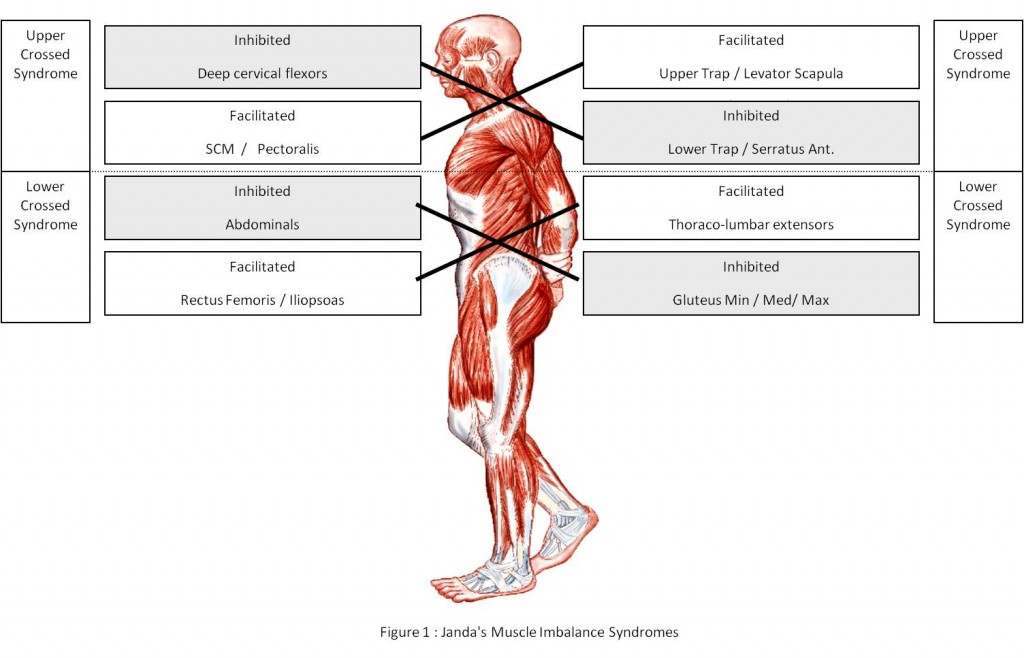
This volume of skating and playing leads to some structural imbalances across the body that need to be addressed. To be overly simplistic, the season results in an exacerbation of Janda’s Upper and Lower Crossed Syndromes.

If you aren’t familiar with these names, you’re probably still familiar with the symptoms. Basically this leads to hockey players being tight through the front of their hips and shoulders, and weak on the opposing side of the body. Hockey players also tend to suffer from tight hip rotators.

These structural adaptations need to be accounted for in early off-season programs in a number of ways.

Early Off-Season Restoration

First, this is the time of year when our static stretching volume is the highest. We need to restore length to shortened structures to restore balance to the relevant joints. We accomplish this by having our players go through two stretching circuits, one before they train and one immediately after. We also encourage certain players to perform the stretches at home if they need the extra work. . With players that train four times per week, we build more mobility and stretching work into their training program in a way that doesn’t interfere/compete with their strength training (e.g. lower body mobility and stretching exercises paired with upper body exercises). We also conclude the training session with 5-minute stretches. Longer-duration stretches have been shown to be effective in adding length to muscles (e.g. adding sarcomeres in series to the muscle). While 5-minutes is lower than the typically recommended stretch duration for this purpose, using it to compliment more frequent short duration stretches has paid dividends with our players.


Our players spend lots of time on these at this time of year.

Early Off-Season Speed Work

Secondly, all of our sprint work is very low volume (6 reps), short distance (10 yards), linear in nature (no lateral starts or transitional movements), and emphasizes deceleration. This comes back to Jim Reeve’s excellent forum posts at HockeyStrengthandConditioning.com a couple weeks back (read them here: Training Programs and Off-Season Conditioning). Because of the players’ shortened hip flexors, longer distance sprinting puts them at a pretty high risk of sustaining a hip flexor strain. Similarly, lateral starting positions emphasize the lateral movement patterns they use on the ice all the time. This is a good thing later in the off-season, but right now we want to DE-emphasize movement patterns similar to skating. Equally as importantly, players don’t need to maximize their speed 5 months out from the season. Again, this is the time for restoration, re-balancing, and reintegration. Sprint complexity and volume will pick up as the off-season progresses.

Where I go for the most current hockey training information

Early Off-Season Conditioning

For this same reasoning, we don’t use slideboards OR shuttle runs for conditioning in the early off-season phase. All of our conditioning is in the form of sled drags. This serves the dual purpose of creating a safe, low speed full hip extension (active hip flexor lengthening) and increases the time under tension for the lower body and hip musculature, which has benefits for muscular hypertrophy, but still also has a considerable metabolic effect as player’s heart rates sky rocket when doing heavy drags.

Early Off-Season Training Volume

Lastly, our overall training volume is quite low. These players just went through an incredibly long and strenuous season, the last thing they need is to jump right into a maximal effort training program. Early off-season programs need to balance active recovery, restoration, and re-integration into more complex training program. With tryouts for youth programs right around the corner, some players are concerned about de-training, which is a somewhat legitimate concern. Given that the players have been on the ice for the last 8 months, it’s unlikely that their skating or on-ice conditioning will suffer to any noticeable amount. In fact, getting out of some of the skating patterns and starting to work on lower body strength again will likely have a positive impact.

The other side of this is the sometimes harsh reality that most coaches have their teams picked before tryouts. Or they at least have an internal ranking of all the potential players that could come to their tryouts with some wiggle room in final roster selections based on who comes to tryouts and who doesn’t. Hockey has changed in this regard over the last 15 years. Having a good tryout is helpful, but most good youth coaches (and especially those at more “elite” levels of youth hockey) take notice of a player’s abilities during the preceding season and make selections that way. In the past, there would be a substantial gap between the end of the season and tryouts so players could re-invent themselves through training and practice and surprise the coach at tryouts. Less than a month between the end of the season and tryouts leaves little time for that now. This isn’t to put a negative spin on the tryout process. In fact, it’s quite the opposite. Players should take comfort in knowing that it’s how they play consistently throughout the season that matters most. The situation is a bit different from prep and junior players, but their tryouts are much later so they have a lot more training time to get ready.

Take Home Message

The big take home from this is that off-season training should be a progressive process. Players should not jump immediately into the most intense off-season training possible because their bodies are under-prepared for it. Use the first 4 weeks of the off-season to restore proper posture and balance across the hips and shoulders, and to re-integrate back into a comprehensive, higher volume off-season training program.

To your success,

Kevin Neeld

P.S. Time is running out on your opportunity to save $70 on my Premier Hockey Training Program. Go watch the video and fill out the application today!

Please enter your first name and email below to sign up for my FREE Athletic Development and Hockey Training Newsletter!

Use CODE: "Neeld15" to save 15%