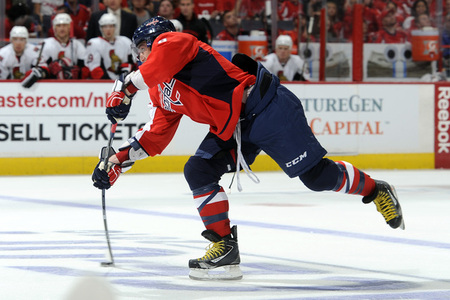
Through my combined 20 years of experience in the hockey and training sectors, I’ve come across a few great, several good, and several pretty bad coaches. Now that I’ve made a career out of a “coaching” position, I find that I rely back on my experiences with previous coaches to shape my current behavior. Moreover, I’m in a position to see how much poor coaching decisions affect the development (especially psychologically) of young athletes and think it’s instructive for athletes to be more proactive in seeking out good coaches, not just good programs. The below list is far from an exhaustive collection of all positive coaching qualities, only examples of those qualities that I feel are most representative of good coaches.

1) Their Athletes Experience Success
Success means different things to different people, and can include both individual (making a team, earning a spot on a top line/powerplay, achieving a certain body fat percentage, increasing broad jump distance, etc.) and team (beating a top team at any given level, making the playoffs, winning a championship, etc.) achievements. Inherent in this is the idea that “success” is HIGHLY specific to the individual or team. Sidney Crosby achieving success in his mind will certainly be different from the AHL player that is simply fighting for an NHL roster spot. On a more common scale, every team has goal scorers and role players; a single goal may be a huge success for a role player, whereas it would be an expected achievement for a player deemed a scorer. Similar things can be said regarding success in an off-ice training setting in terms of both relative and absolute improvements/achievements. I’ve had players come to Endeavor Sports Performance with lofty performance improvement aspirations; I’ve had others walk in (rather, limp in) with an exhausting list of past injuries that say they simply want to be able to enter the next season feeling healthy again. In all situations, coaches can have a significant impact on the successes of the player and quality coaches tend to generate a long list of successful athletes. In a nutshell, this just means that the coach gets results.
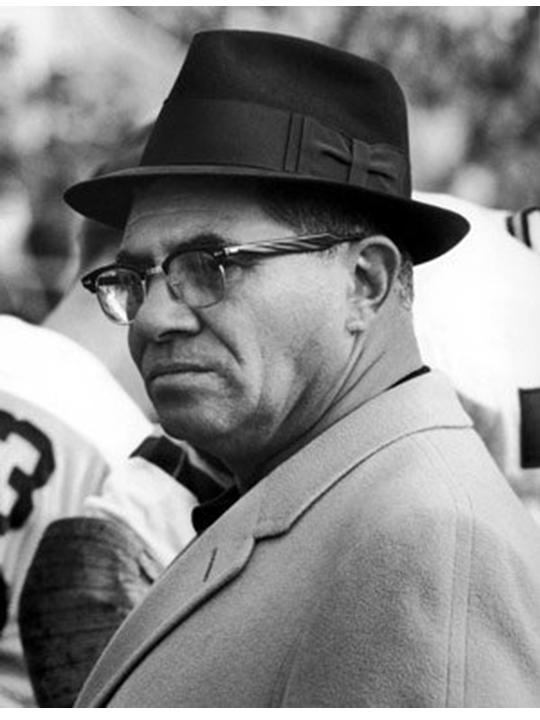
“If you believe in yourself and have the courage, the determination, the dedication, the competitive drive and if you are willing to sacrifice the little things in life and pay the price for the things that are worthwhile, it can be done.” – Vince Lombardi

2) They Give their Athletes Credit for Athletic Successes
When an athlete reaches a goal or otherwise experiences some personal or team success, that is for the athlete to own. It was their ability, hard work, and resolve that got them there. Nothing gets my goat more than coaches taking credit for an athlete’s accomplishments. You see this all the time in both hockey and training settings. Undoubtedly, coaches play a vital role in the athlete’s development and in guiding the athlete toward success, but if the athlete doesn’t exert the physical and mental effort to do their jobs (and to practice doing their jobs), then success will never be found. Most of the “credit stealing” is done in the name of marketing. I don’t think there is anything wrong with having an alumni list on a website, but when a coach says “I got them there” or “they would never be there without me”, I think it’s complete bullshit. Let the athlete give the coach credit if it’s that deserved. Even worse, many coaches get these absurdly talented athletes that come into the program successful, leave the program and continue to be successful, and the coach will take credit for that. It’s complete bullshit. Bottom line is that coaches can have career-overhaul influence on some players, but it’s far from the norm. If a player is on an NHL route, and then reaches the NHL level, that is what they were supposed to do. It wasn’t the coaches accomplishment to take credit for.

3) Different Language for Different Players
Every coach needs to know their athletes. Different athletes will have varying degrees of internal and external motivation, will respond to different forms of feedback, and generally rely on different past experiences to drive future behavior. Coaches that take a “one-size-fits-all” approach will inevitably lose some athletes. Great coaches find ways to relate to the athlete and convey constructive information in a way that suits the athlete’s learning style and overall personality.
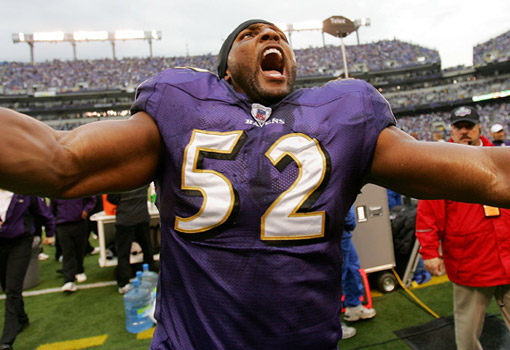
Would you motivate this guy the same way as an 11-year-old?

4) Place Development as the #1 Priority
This doesn’t always apply at the professional level, as sport coaches are hired and fired based on their ability to win. However, at the youth levels, the goal is always to help the player develop. Sometimes this involves hard decisions. It could mean putting a less skilled player in the game in an important situation just to give them the experience. It may mean cutting a player that won’t thrive at a certain level or within a certain program, even if they’re talented enough. In fact, I’ve actually recommended that players train LESS with us at Endeavor (read: turned away business) if I thought it was in their best interest. Simply, it’s important not to lose sight of the big picture in the interest of short-term success (or what may be perceived as success).

5) Continuous Education
Over time new information in every field becomes available. When coaches get stuck in their system, they often get passed by those that can be considered more “innovative”. From a training standpoint, I think it’s comical when I get off-season hockey training programs for a team and I can pull the book published in the late ’80s from my bookshelf that the program was photocopied from. Being less cynical, I suppose I should just be happy that teams are starting to make an effort to provide their player’s with some sort of training structure, but as a professional in the field, it’s almost insulting that players get such a low quality manual to work from. From an on-ice perspective, do you remember when the Devils built a system around “The Trap”? This was a coaching change that completely changed the game (which made it SOOOO boring to watch). It forced every team to adapt. Keeping up with new information and maintaining a malleable mind will help ensure coaching success now and in the future.

See. Learning’s not so bad.

To your success,

Kevin Neeld

Please enter your first name and email below to sign up for my FREE Athletic Development and Hockey Training Newsletter!

My head was spinning all week getting ready for this weekend, but I’m glad to finally be up in Boston getting ready for the Boston Hockey Symposium. Hopefully I’ll see you all here!

Here’s what you’ve missed over the last week at Hockey Strength and Conditioning:

Using the Turkish Get-Up in Team Sports from Sean Skahan
In this article, Sean breaks down the Turkish Get-Up into a progression of four steps that he used to integrate it into the Ducks’ program. If you aren’t familiar with the Get-Up, this will be a great introduction to it. As Sean mentions, it’s certainly a humbling exercise and one that is exceptionally integrative regarding functional pathways throughout the body, but also provides some benefits as a screen to expose side-to-side imbalances and ROM restrictions. I think the biggest barriers to implementing this exercise into a program are understanding where it fits from a stress standpoint (e.g. where do you put a total body “core” exercise into your program so that it won’t interfere with other exercises) and teaching it to a larger group proficiently. Sean’s breakdown will certainly help with the latter. He wraps the article by mentioning that his players responded well to his teaching progression and that complaints of back and shoulder pain were non-existent (I assume this is in reference to this exercise specifically and not a claim that one exercise has completely negated all back and shoulder pain). Great stuff as always from Sean.

Lateral Core Variations from Darryl Nelson
Darryl posted a video montage of lateral and rotational core exercises. He had a few “easier” variations to the exercises I posted the other day (Core Training Variations for Hockey Players), which is great as it adds for more potential variety in progressing up to the advanced exercises. With the exercise at the :50 mark, I’ll have our players have their outside leg forward, as I think it prevents them from using their leg as a kickstand and also more closely mimics the rotation pattern seem most prevalently on the ice. The thing I really like about Darryl’s video is that he’s coaching his players as he films, which allows the viewer to see common execution faults and how he coaches to correct them.

Youth Off-Ice Training Program from me
This is the next installment of our monthly youth off-ice hockey training program. As I’ve said in the past, the goal of adding these to the site was to provide the youth players, parents, and coaches out there that don’t have equipment or resources to pursue professional instruction a cost-effective training option. We’re several months in now and the programs have included a good amount of variety, quality balance and program structure, and minimal equipment use. Hopefully the target audience is reaping the benefits of this and not falling victim to all the gimmicky hockey training bullshit that is out there right now.

If you aren’t a member yet, fork out the $1 to test drive Hockey Strength and Conditioning for a week. If it’s not the best buck you’ve ever spent, I’ll personally refund you!


To your continued success,

Kevin Neeld

Please enter your first name and email below to sign up for my FREE Athletic Development and Hockey Training Newsletter!

About a year ago, I posted a couple core training videos (Hockey Core Training Exercises) based on a protocol referred to as the “Bunkie Test”. The Bunkie Tests are used to test the integrity of various functional pathways within the body. Because the various testing positions are founded upon fundamental structural links within the body, they all have some application to hockey performance, and to movement in general. That said, there were two positions specifically that I thought had a more direct application to hockey-specific movements.

Bunkie Side Plank (Top Leg)

This variation emphasizes the connection between the adductor complex and the lateral/rotational core musculature on the opposite side. This connection is present in everyone, but it’s integrity is paramount to hockey performance. Anytime a player shoots, this connection is emphasized concentrically in one group (e.g. left adductors and right core musculature for right-handed shots) and eccentrically in the other (e.g. right adductors and left core musculature for left-handed shots).

Bunkie Side Plank (Bottom Leg)

This variation emphasizes the lateral core system, linking the lateral hip musculature and lateral core musculature, both of which are influential in single-leg stability. This plays an important role in a lot of athletic movements. Relevant to hockey, this is what allows the driving force from the stride leg to be effectively transferred to the stance leg. If there is accessory motion due to lateral hip.core instability, some of the stride power is lost/wasted.

I still believe these exercises, as demonstrated in the videos above, have a lot of merit. However, recently I’ve made slight modifications to their execution to help improve the totality of the exercise by driving other important qualities.

The variations/progressions in the video below will ensure that the exercises are performed without compensations, and will improve the player’s ability to dissociate femoreacetabular movement (the femur moving within the hip) with acetabulofemoral movement (the hip moving on the femur). The internal perturbations increase the difficulty of the exercise while also adding in some extra work for the hip rotators (internal rotators in the first case; external rotators in the second). Enjoy!

Advanced Core Training Progressions

To your success,

Kevin Neeld

Please enter your first name and email below to sign up for my FREE Athletic Development and Hockey Training Newsletter!

I hope you had a great week. We’re wrapping up another busy week at Endeavor. The hip assessments have spawned some interesting results that you’ll be interested to hear about in the future. Of the 20 guys I’ve tested, 1/4 have a structural abnormality that will absolutely need to be accounted for in their training, and the test is really easy to perform.

If you’re looking for an informative way to spend a few hours this weekend, we’ve posted a ton of stuff at Hockey Strength and Conditioning over the last few days. Check out what you’ve been missing!

Sean Skahan posted Phase 3 of his ACL rehab program. As Sean continues to post these progressions, it’s interesting to note that these don’t look like rehab prescriptions for a broken player. They look like a quality training program with some small pieces missing to account for the player’s injury. Hopefully this will continue to shed some light on the physical and mental efficacy of training around a player’s injury, and not just shutting the player down completely for the skeptics out there. Check out the program at the link below:

Click Here to Read >> ACL Rehab Phase 3 from Sean Skahan

My favorite Canadian David Lasnier had another terrific article posted on off-season hockey training. David has been on fire over the last month, as he’s had articles featured at StrengthCoach.com, SportsRehabExpert.com, and HockeyStrengthandConditioning.com (not bad for a guy who speaks English as a second language). All he needs now is to do a webinar for Anthony Renna’s LesWebinarsDeStrengthandConditioning.com and he’ll have officially “made it”! This article breaks down the complexities of off-season periodization into an easy to understand format that can be applied easily. This is the exact model we use to train our hockey players in the off-season at Endeavor Sports Performance.

Click Here for David’s Autograph>> Hockey Off-Season Periodization from David Lasnier

Mike Potenza posted an article outlining his philosophy on training throughout the playoffs. Whether you’re inclined to agree to disagree with his philosophy, I think he does a great job of pointing out that the NHL playoffs are far from short-lived. Those preaching to pack-in the training and basically do nothing at all may lose sight of the fact that, ideally, the team would be in the playoffs for about 3 months. Three-months of no training is sure to exacerbate hockey-related imbalances and detrain important physical capacities. Certain qualities (e.g. speed, conditioning) can be maintained well through on-ice work if it’s of sufficient intensity and duration. Other qualities will surely degrade (e.g. strength, power, structural balance). For some players, their confidence and overall durability are tied to certain physical qualities (e.g. strength), so it’s important not to overlook this when making decisions about late season and playoff training strategies.

Click Here to Read >> Playoff Training Model from Mike Potenza

Mike also added two videos on foam rolling and static stretching pairs, one for the upper body and one for the lower body (4 each). If you only have 5-10 minutes to get this work in, these series are good ones to follow.

Click Here to Watch >> Roller/Static Stretch Combos from Mike Potenza

Lastly, that Neeld guy slipped one past the guards and added an article on rotator cuff training for hockey players. This article highlights the most overlooked function of the rotator cuff and presents a few exercises to train it that you may not be expecting. In the interest of “prehab”, these exercises have extra value in that they aren’t isolative in training focus. In other words, they aren’t just “rotator cuff” exercises; they create a training effect for multi-directional core strength and stability, posture/movement pattern reinforcement and lower body strength (one of them).

Click Here to Read >> A New Look at Rotator Cuff Training

As always, the forums has been packed with some great discussions over the last couple days. When you sign into the site, be sure to check that out. Even in short threads, guys are posting videos and links to other resources that you won’t want to miss.  If you aren’t a member yet, shell out the $1 to test drive Hockey Strength and Conditioning for a week. If it’s not the best buck you’ve ever spent, I’ll personally refund you!

To your continued success,

Kevin Neeld

Please enter your first name and email below to sign up for my FREE Athletic Development and Hockey Training Newsletter!

Monday’s post presented research that represents what I believe is the first attempt to analyze a connection between various testing measures and actual in-game performance. If you missed it, check it out here: Breakthrough Hockey Training Research

Sticking with the research theme, I came across a few other studies that may interest you.

Whole-body predictors of wrist shot accuracy in ice hockey: a kinematic analysis

Of the three studies I’ll mention today, this is probably the most interesting to those with a primarily hockey background. This study sought to objectify which kinematics (movement patterns) lead to more accurate shooting. They found that shooting accuracy was predicted by coordinated strategies of the lower limbs, torso, and upper limbs. A more generic statement couldn’t be made. That said, they point out that a more in-depth analysis of their data suggests that a more stable base of support, improved ability to decelerate generated momentum, and proper positioning will all improve shot accuracy. For those of us on the performance training side of things, this reinforces the notion that hip stability, core linkage between the lower and upper halves, and proper movement patterns will transfer to improved performance on the ice in both general athleticism (speed, power, etc.) AND more skill-driven abilities.

Significant accuracy predictors were identified in the lower limbs, torso and upper limbs. Interpretation of the kinematics suggests that characteristics such as a better stability of the base of support, momentum cancellation, proper trunk orientation and a more dynamic control of the lead arm throughout the wrist shot movement are presented as predictors for the accuracy outcome.

Single leg stability. Proper hip hinge. Lethal shot.

Prevalence of joint-related pain in the extremities and spine in five groups of top athletes

This study looked at self-reported site-specific pain frequency in 75 male college athletes in a number of different sports compared to “non-athlete” controls. Pain location was identified as cervical, thoracic or lumbar spine, and other major joints such as shoulders, elbows, wrists, hips, knees and ankles. The results from this study were pretty “vanilla”, but I thought it was interesting that hockey players were amongst the most frequent complainers of pain in the cervical region. The neck is a bit of a taboo region from a training standpoint and pain in this area is a red flag to refer out to someone with higher qualifications, but i think many of the non-contact cervical issues hockey players face could be eliminated by restoring extension and acceptably symmetrical rotation range of motion in the thoracic region, and cuing a neutral cervical position in all exercises (and in life in general for that matter). A little bit of education on proper spinal alignment can go a long way for more intuitive and dedicated players. In support of this, the authors noted that pain in one area of the spine was correlated with pain in other spinal regions. This is just more evidence of how the body functions as an integrated unit, and why isolated training approaches simply won’t cut it.

A good set of hands can of hands can go a long way in relieving tension in the cervical spine

Changes in Homocysteine and 8-iso-PGF(2a) Levels in Football and Hockey Players After a Match

This study was designed to assess levels of serum homocysteine and 8-iso-PGF(2a), two markers of atheromatosis (a deposition of lipids on the arterial wall), following football and hockey games. Interestingly, they found that these markers were significantly increased following a game in both sports in college-aged athletes. This is unchartered waters for me so my interpretation of these results can only be so analytical, but the authors suggest paying attention to folate, vitamin B6, and vitamin B12 balance during the 24-hours following the event. To me, this further highlights the importance of hockey players putting a little more effort into purposeful eating. It’s hard to truly assess whether any athlete is experiencing an activity-related deficiency if their starting point is sub-optimal.

This is broccoli. It’s what scientists call a “vegetable”

Let me know what you think of these studies. Post your comments below!

To your success,

Kevin Neeld

Please enter your first name and email below to sign up for my FREE Athletic Development and Hockey Training Newsletter!

Use CODE: "Neeld15" to save 15%