
Over the last few years, we’ve trained, and (more importantly) developed some RIDICULOUSLY fast skaters at Endeavor Sports Performance. Hockey has always been dominated by fast, or maybe more appropriately, explosive skaters, but this is especially true in today’s game. Not lost on the majority of players, parents, and coaches, by far the most common training goal we here is “my coach told me I need to get faster”, or “I need to improve my first few steps”.


Hearing this over and over has almost become a joke, as if the reaction would be:

“David. Throw out all the programs we wrote to make our players slower. This one needs to IMPROVE his speed!”

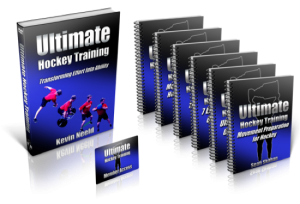
The reality is that almost every player (with the exception being SOME at the pro level) has a window to make speed improvements, and the younger the player (or the less training experience) the larger that window is. Further, every player that is really serious about competing at the next level should train to improve their speed, regardless of whether that is a strong point of theirs at the current level. Recognizing the importance of speed training in the short- and long-term success of hockey players was what provoked me to write Breakaway Hockey Speed (which you can get for free by clicking on that link), and why speed training was such a large component of my new book Ultimate Hockey Training.

First step quickness, or acceleration, is highly dependent upon the player’s ability to generate high levels of force and build momentum. While speed in this sense can ultimately be thought of as power or rate of force development, the expression of these qualities on the ice will have foundations in a number of other areas. First step quickness is developed through:

  1. Proper body and skate positions
  2. Optimal skating technique, including full follow through in the ankle (“toe flick” should be present in forward, crossover, and backward strides)
  3. Strong lower body and hips
  4. Powerful lower body and hips
  5. Stable core for optimal platform for lower body force development and force transfer between the upper and lower body

Off-Ice Explosiveness (This is an advanced exercise and not appropriate…at all…for beginners)

On-Ice Explosiveness (This is an advanced 1-on-1 move and highly appropriate for everyone)

In other words, training for speed involves more than speed training. It takes a comprehensive training approach to really maximize a player’s speed potential. Conveniently, training these other physical qualities (speed, power, strength, core stability, conditioning, etc.) also improves every other aspect of on-ice performance. It’s a win-win, and why it drives me crazy to see so many players entering “speed and conditioning programs” that completely neglect the very direct transfer that strength training has to on-ice speed improvements.

That said, all of these things improve first step quickness CAPACITY, which coincides with, but is not exactly the same as first step quickness EXPRESSION. Simply, capacity is what a player COULD do; expression is what a player does. For any given level of capacity, there is a range of expression. Ultimately, a player would want to maximize their capacity AND their expression. This difference helps explain why some players may train hard, but not see much in the way of on-ice gains (they could also be training with a terrible program), and why some players may be quick in practices, but not in games. At a minimum, understanding other areas to improve first step quickness EXPRESSION expands the areas players have to grow, which ultimately expands their potential.

With that in mind, the Top 5 things players can do to improve the expression of first step quickness on the ice are:

1) Know where your teammates AND opponents are at all times.
First step quickness, technically, isn’t always starting from a stand still. Often times players are gliding in one direction and need to accelerate quickly to create space between them and an opponent. Players at all levels get into trouble when they hold on to the puck too long, which is often used as a strategy to buy time to find an open teammate. If you scan the ice constantly to get an idea of where the other players are, and where they’re gravitating to, you’ll be able to find open ice AND open teammates much faster. In other words, you’ll learn where players on both teams are, and just as importantly, where they aren’t. The ability to find and/or create time and space is incredibly valuable as players advance to higher levels. It will slow the game down and allow you to make better decisions with and without the puck.

2) Accelerate when receiving the puck in open ice
It’s not always appropriate to skate at full speed when you get the puck, but many players receive a pass and their feet stop completely for a couple seconds. Remember, there are players on the other team that want the puck you have, and they’re likely closing in on you from multiple directions. Closely related to the first point, if you’ve scanned the ice before you receive the puck, you have an idea of where some open ice may be. Receive the puck in stride and immediately take a couple strides to help create separation between you and the opponent. This will help you create time and space, and because you also know where other opponents and teammates are, ultimately allow you to make a better decision with the puck.

3) Consciously focus on accelerating quickly
Many players can make a pretty significant jump in their ability to express their first step quickness capacity by consciously focusing on accelerating quickly through their first few steps. As players spend more time on the ice, the expression of many skills becomes automatic. This is, in fact, a desirable adaptation. However, in the case of first step quickness, many players aren’t quick in certain situations because they’ve made a poor habit automatic. By spending some time in practices and games consciously focusing on being explosive with starts and speed changes (this applies to #2 above), players can re-groove a more optimal habit. This can often be achieved over the course of a few weeks, at which point players can merge this behavior back to a more subconscious level, allowing them to be more responsive to other external stimuli.

4) Learn to under handle the puck
We recently got a question on the Hockey Strength and Conditioning forums about how to become faster WITH the puck. The truth is that handling a puck will absolutely slow a player down because it disrupts the synchrony of upper and lower body movement necessary to maximize speed. That said, if a player is fast without the puck, they shouldn’t be slow with the puck. The puck doesn’t need to be glued to your stick. Learn to under handle it. Push it in open ice. Place it in areas of the ice where you know you can beat your opponent to it. If you’re taking a defenseman wide, you can put it under their stick, then lift their stick with yours, and cut them off with your body. There are dozens of examples of how to under handle the puck, but it’s an important skill to have. For every toe drag, where a player makes a move with relatively consistent contact with the puck, there are dozens and dozens examples of moves or situations where players break contact to put the puck in a safe area to make a play. It happens fast, but Gaudreau does this a few different times in the video above.

5) Study the habits of your opponents
This is a huge idea that many players do subconsciously, but most don’t do at all. Do players on the other team tend to hold their stick to the side of their body or in front? Does the fast forward on the other team stop when he forechecks or circle around? Does the goalie have a tendency to cheat toward playing the puck behind the net with dump-ins? Does the defenseman on the other team crossover a lot while skating backwards? Picking up on these tendencies can help you exploit what may be a suboptimal habit of an opponent to create more time and space with the puck. Using the last point as an example, if a defenseman has a tendency to crossover a lot while skating backwards, it’s likely that a shoulder/head fake toward the inside will cause them to crossover in this direction, which provides a nice window to push the puck to the outside (under handling it), and beat them wide. Coming back to the original idea of differentiating between speed capacity and expression, in this scenario your speed capacity hasn’t changed at all, but your speed expression, dictated by your ability to create time and space, and in this case beat the defenseman, has change significantly.

Conclusion
The best advice I can give any player is to become a student of the game. Off-ice training can have a huge impact on a player’s career by improving the player’s physical capacity and therefore capacity to perform various skills on the ice. However, there is still additional room for growth by learning to anticipate the movement of all players on the ice, create time and space, and exploit the tendencies of your opponents. Improving these abilities will essentially improve the expression of playing ability, for any level of capacity.

To your success,

Kevin Neeld

P.S. If you want an off-ice system to help improve on-ice speed, check this out: Ultimate Hockey Training

Please enter your first name and email below to sign up for my FREE Athletic Development and Hockey Training Newsletter!
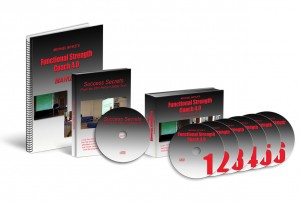
Over the last week, I’ve mentioned that the release of Mike Boyle’s Functional Strength Coach 4 was in our near future. Well, today is the day. The first three DVD sets in Boyle’s “Functional Strength Coach” series have been outstanding, and present complimentary pieces to the foundation of a successful training program and strength and conditioning business. In this DVD series, Mike presents his current training systems, including updates he’s made since the last DVD set, and discusses much more about what it takes to be successful in the strength and conditioning industry that he has in the past.

Functional Strength Coach 4 is broken into two parts:
Part 1: Training Clients and Athletes
  1. Why a facility without a program is doomed to fail (programs beat systems!)
  2. The only 3 goals of any strength and conditioning program
  3. How to divide your time within each training session (for athletes vs clients)
  4. The last 3 things you should do with your clients
  5. Specific effects of Joint Dysfunction you’re probably overlooking
  6. Mobility versus flexibility and why it matters
  7. Why you should foam roll before every session and exactly how we do it.
  8. 7 Patterns of Strength Programming
  9. The Key to Program Design…regardless of population
  10. How we approach Basic and Advanced Periodization
  11. Specific linear speed and multidirectional speed day warm up progressions
  12. The Truth about Functional Training
  13. Why squatting starts on the ground
  14. Why Everything Changes When You Stand on One Leg
  15. Understanding Hip Flexion and the 7 factors affecting performance
  16. Advanced Load and Strength Progressions
  17. Two Things To Avoid with ‘Core Training’ (and why I don’t like that term)
  18. Rotary Training progressions and regressions
  19. Complex Training progressions and regressions
  20. Dealing with Injury – Boyle’s Theory
  21. Single Leg Versus Double Leg…when, where and why
  22. Keys to Conditioning
  23. 3 Simple Rules for  Designing Interval Programs
  24. Off Season Conditioning Protocols
  25. Tips for Hockey, Football, Basketball ‘specific’ conditioning
  26. And much more. Including:
    –  Sample 2 Day In-Season Program
    –  Sample 3 Day Off-Season Program
    –  Full Summer 4 Phase Program
Part 2: Owning your own facility
  1. Why the 10,000 hour rule will make or break your business
  2. The truth about the ‘4 Hour Work Week’
  3. How to run a successful facility
  4. How big your first facility should be
  5. 3 Rules for purchasing equipment
  6. Why you should…or shouldn’t…buy a franchise
  7. Financials and knowing your numbers
  8. How to approach Sponsors…literally and figuratively
  9. The simple truth about managing and developing staff
  10. Why getting clients comes down to the ‘crazies’
  11. 21 suggestions guaranteed to lead to success…in business and life

I’ve learned more from Mike Boyle than anyone else in the industry, about training, coaching, business, and life in general. Interestingly, I’ve met dozens of highly successful strength and conditioning coaches that feel the same way. If you’re serious about becoming the best at what you do, you owe it to yourself to pick up a copy of Functional Strength Coach 4!

To your success,

Kevin Neeld

P.S. Boyle is throwing in a 60-minute presentation on his “Success Secrets” for those that pick up a copy FSC4 today. I had an opportunity to watch this lecture in person, and it’s worth the price of admission by itself. Check out the whole package here: Functional Strength Coach 4

Please enter your first name and email below to sign up for my FREE Athletic Development and Hockey Training Newsletter!
If you missed the previous five articles in this series, check them out here:

  1. 25 Years, 25 Mistakes by Mike Boyle
  2. The Tao of Mike Boyle by Nate Green
  3. Assessing Credibility in the Internet Age by Mike Boyle
  4. Evolution of a Strength Coach by Mike Boyle
  5. A Day in the Life by Mike Boyle

Tomorrow marks the release of Mike Boyle’s new Functional Strength Coach 4 DVD series. I’ve learned a ton of information from the first three Functional Strength Coach DVD sets, so I’m really looking forward to picking up a copy!

Functional Strength Coach 4
Click here for more information on the release of Mike Boyle’s new Functional Strength Coach 4!
 Today, I wanted to give your eyes a bit of a break and share three videos from staff meetings that Coach Boyle has run at his facility Michael Boyle Strength and Conditioning. Whether you train people for a living or are just looking for some helpful training tips for yourself, these videos have a lot of great information for you. Check out the videos and post your comments below!

Plyometrics with Mike Boyle

Mike Boyle on Hang Cleans

Rear Foot Elevated Split Squats with Mike Boyle

To your success,

Kevin Neeld

P.S. – This is your last chance! Click here to be the first to know about the all new Functional Strength Coach 4!

P.S.2. As always, I appreciate you forwarding this along to anyone you think will benefit from the info! You can use the social media dropdown menu at the top right hand corner to share it via Twitter and Facebook!

Please enter your first name and email below to sign up for my FREE Athletic Development and Hockey Training Newsletter!

If you missed the previous four articles in this series, check them out here:

  1. 25 Years, 25 Mistakes by Mike Boyle
  2. The Tao of Mike Boyle by Nate Green
  3. Assessing Credibility in the Internet Age by Mike Boyle
  4. Evolution of a Strength Coach by Mike Boyle

Today’s article gives an inside look at a “Day in the Life” of Mike Boyle. I really these articles because it gives an inside look at the day-to-day workings of highly successful professionals. Check out the article and post your comments below!

Functional Strength Coach 4
Click here for more information on the release of Mike Boyle’s new Functional Strength Coach 4!
 

A Day in the Life by Mike Boyle
Functional Strength Coach 4

I often get asked, “How do you get so much done with your business, coaching, writing, speaking etc”.

I usually try to give a humble answer and mumble something about hard work etc.

The truth is there is a method to the madness and I’d like to share some of the things that have increased my productivity:

1- Get up early. Successful people don’t hit the snooze button. I remember one great tip about waking up. “When the alarm goes off, get your feet on the ground” I have lived by this for at least twenty years and now rarely need an alarm.

Years ago I also read somewhere that you should get out of bed when you wake up instead of rolling over. The concept is related to sleep quality and I have found it to be true.

Fifteen minutes of “extra” sleep usually leaves you more tired. If I wake up within 30 minutes of when I am supposed to wake up I “get my feet on the ground”.

2- Many people remark that they get emails from me at 4:45. That is because I get up, go to my computer, and check my email.

I read another hint once that said “if you can respond in under a minute, do it now”. I have adopted that policy as best I can and it has really helped. I can interact with 100 people a day and do most of it before my family gets out of bed. The nice thing is that getting up early also allows me to help my wife by throwing in a load of laundry and allows me to spend time with my children in the morning
when they get up.

3- Write everything down. I have a notebook with me at all times for article ideas, program ideas, notes and To Do Lists.

It’s much too easy to forget. Never trust your memory. I also have an I-Phone for day-to-day stuff.

4- Don’t try to do paperwork at work. I know this sounds silly but I get no paperwork done at work. I try to coach at work. I work at home in the morning. Work before the rest of the world rises and you will get more done.

5- Don’t go out to eat lunch. What a waste of time. Lunch hour is for “normal” people who don’t like their job and need an hour away. Those that want to succeed will never waste even a half hour sitting and eating. Lunch takes all of 5 minutes. Dinner is a different story. Dinner is family time. I bank my “lunch time” so I can use it at dinner when I have my family.

Another benefit of this is that it helps with weight control. I can’t seem to go into a sandwich shop and not walk out without a bag of chips. Often I have eaten them before I get my sandwich. Keep shakes on hand and eat every three hours while you work.

6- Use commuting time. I often spend two hours a day in the car. I will make all my phone calls for the day in the car and, record my podcast interviews with Anthony Renna from my car.

The police may not like this but it is a great way to save time. Just promise me that you won’t text from the car. I also use the time to listen to podcasts or books.

7- Do brief workouts. Again, if you are busy you don’t have time to lift for two hours.

I try to do 4-5 High Intensity Cardiovascular Workouts a week. These are either 12-14 minute threshold rides (usually a five mile AirDyne for time) or a series of distances for time.

My favorites are timed miles or half miles with a heartrate recovery. These workouts take a maximum of 20 minutes. In addition, I’ve modified Craig Ballantynes Bodyweight 100. Most days I just try to get 100 reps in broken up into push, pull, legs, and core. It currently takes me less than 4 minutes to get a full body lift. I try to lift twice a week but, probably average one workout every five days.

As I always say, the secret is there is no secret. Read about how to save time and to be more productive. Read The One Minute Manager. It’s a great start. Pick up little tricks.

Success is really is about getting up and being organized. I personal train 10-15 hours a week, work as a college strength and conditioning coach, coach Pro and Olympic athletes all the while keeping up with writing, emails.

I love the idea of “ready-fire-aim” approach. I would rather have done one thing than thought about three. I read another great tip but, can’t remember where. The tip was to be a 90% person.

If a success oriented person strives to do 100% they rarely complete anything. The advice was the last ten percent kills you and stalls you. I don’t worry any more if every article or DVD is perfect. I want to always deliver a quality product but, I don’t obsess over it any more.

Don’t over –plan or over-think, just strive to get a lot done. Make a list and start checking stuff off.

– Mike Boyle
Functional Strength Coach 4

To your success,

Kevin Neeld

P.S. – Mike Boyle is releasing his new program, Functional Strength Coach 4 on Tuesday, April 24th. Functional Strength Coach 4 is Coach Boyle’s most up to date system cultivated from over 30 years of coaching everyone from general fitness clients to athletes ranging from junior high to All Stars in almost every major sport, that will guide you to better results with your athletes and clients. Click here to be the first to know about the all new Functional Strength Coach 4!

P.S.2. As always, I appreciate you forwarding this along to anyone you think will benefit from the info! You can use the social media dropdown menu at the top right hand corner to share it via Twitter and Facebook!

Please enter your first name and email below to sign up for my FREE Athletic Development and Hockey Training Newsletter!

If you missed the previous three articles in this series, check them out here:

  1. 25 Years, 25 Mistakes by Mike Boyle
  2. The Tao of Mike Boyle by Nate Green
  3. Assessing Credibility in the Internet Age

Today’s article presents an interesting view on the evolution that most “functional training” specialists undergo as they develop as professionals in the field. It’s interesting how accurate this progression often is. Check out the article and post your comments below!

Functional Strength Coach 4
Click here for more information on the release of Mike Boyle’s new Functional Strength Coach 4!
 

The Evolution of a Strength Coach by Mike Boyle
Functional Strength Coach 4

A few recent events have made me realize that all strength coaches will eventually evolve to the same place. Like many of us, I listen to and read a great deal from the internet. One trend that I have seen is that some of the previously “hard core” guys are gradually embracing the corrective exercise/ functional training side of the coin. This made me realize two things:

1. Why I think the way I do

2. Why others make fun of me

The reason I think the way I do and the reason lots of the “hardcore” guys make fun of me is because I am old. I am further along the evolutionary trail of the strength coach. You see, we all start at about the same place and we probably all end up at the same place. I just started my journey sooner. In fact I am in year 32 of my evolution. For me phase 1 of the Evolution of the Strength and Conditioning Coach, The Bodybuilder, was actually in the 1970’s. I saw Boyer Coe guest pose at a show in Connecticut and wanted to be the next Frank Zane. If you don’t know who those guys are, it’s OK. You are just too young.

The truth is almost all male strength coaches and personal trainers go through the evolutionary process listed below.

Stage 1- The Bodybuilder

Face it, we all started here. Maybe we wanted to get better at sports but what we really wanted in our teens was to look better for girls. To do this we picked up a muscle magazine, joined the local gym , copied the routines and began bodybuilding. The beauty of this stage is that we knew it all. We bombed and blitzed our way to success as Joe Weider looked on from the pages of Muscle and Fiction.

Stage 2- The Powerlifter

At the onset of stage two the bodybuilder realizes that the really strong guys in the gym don’t give him the time of day. In fact, the truly strong guys laugh at him in his tanktop as he admires his arms in the mirror. The young bodybuilder and future strength coach is determined to get some respect so he really works on his bench press to gain that respect. What he then realizes is that these strong guys don’t respect anyone with no legs and a big bench. The bodybuilder soon evolves to the powerlifter. As in stage one we still know it all but what we know is different. We realize that what we thought we knew in stage 1 was not quite as true as we thought. At this stage we never admit any mistakes though. Stage two last for 2-3 years or until the first major injury. In this time period you really fall in love with the weightroom. You become diligent about diet and not missing training days and you get stronger almost every week. Your training partners cheer you on. Your technique is not perfect but you are moving big weight. Usually in stage 2 you also decide to enter a meet. A meet is great reality therapy. Your 315 bench done in “all you” form with just a bit of an arch and bounce becomes a 275 pause bench. Your “parallel” squats suddenly expose your lack of knowledge of geometry. Usually you bomb in the squat in your first meet and resolve to return a much better lifter. In stage two you are at your most macho. You laugh at anyone doesn’t do back squats and deadlifts and you post frequently to internet forums. All posts mention how strong you are and usually some line that belittles those who don’t lift heavy iron.

Stage 3- The Injured Powerlifter

This stage begins with a bad back or a sore shoulder and usually lasts through one or two surgeries. Stage three is like denial in the substance abuse world. You realize that your days of lifting huge weights are coming to an end but you refuse to say it out loud. Your searches of the internet now focus on healing your wounds. You vow to make a comeback. Often, you have surgery and attempt to lift in a meet again. Like a guy repeatedly slamming his fingers in the car door, you can’t wait to get back under the bar.

You learn about ART, MAT and a bunch of other therapies that seem to have guys names. You also begin to sneak a few looks at books on injury prevention and heaven forbid, you begin to explore things like warm-up and mobility. At the end of the injured powerlifter stage you begin to apologize to those older and wiser that you made fun of and called names. You realize that much like your parents the guys you taunted on internet forums were just older and wiser.

Stage 4- The Functional Training Guy

Most of us end in stage four. Usually we have a few scars from our time in stage three putting off the inevitable. In stage four we realize that we can still train however, the days of trying to pick up the heaviest thing you can lift goes by. You become an innocent bystander watching car wrecks as you see the young guys move from stage 1 to stage 2. You try to warn them but they laugh at you and go into their chat rooms and make fun of you. All you can think of is “call me when you are fifty and we can talk”.

The truth is evolution and development are both inevitable. Young men will always want to impress young women. They will also, in a very primal way, want to impress other young men. We can only hope to speed the evolution and save people some pain. As you read this hopefully you will see yourself in one of these stages and intervene. Next time you get ready to “lay it on the line” ask yourself why.

– Mike Boyle
Functional Strength Coach 4

To your success,

Kevin Neeld

P.S. – Mike Boyle is releasing his new program, Functional Strength Coach 4 on Tuesday, April 24th. Functional Strength Coach 4 is Coach Boyle’s most up to date system cultivated from over 30 years of coaching everyone from general fitness clients to athletes ranging from junior high to All Stars in almost every major sport, that will guide you to better results with your athletes and clients. Click here to be the first to know about the all new Functional Strength Coach 4!

P.S.2. As always, I appreciate you forwarding this along to anyone you think will benefit from the info! You can use the social media dropdown menu at the top right hand corner to share it via Twitter and Facebook!

Please enter your first name and email below to sign up for my FREE Athletic Development and Hockey Training Newsletter!

Use CODE: "Neeld15" to save 15%