The “Best of 2012” series continues today with the Top Hockey Nutrition Posts of 2012. Short and sweet today, which should give you a chance to catch up on some of the articles from the previous two days!

Check out what you’ve missed:

  1. Top Hockey Training and Development Posts of 2012
  2. Top Performance Training and Injury Prevention Posts of 2012

On to the Top 3 Hockey Nutrition Posts of 2012! These posts have sparked a lot of questions through email and cover some of the hot topics in the world of hockey nutrition. If you’re interested in learning more, I highly recommend you check out Brian St. Pierre’s Ultimate Hockey Nutrition. It’s PACKED with practical information and is the single-best hockey nutrition resource I’ve ever come across!


Ultimate Hockey Nutrition


  1. A 4-Step Plan for Off-Season Weight Gain
  2. Hockey Nutrition: Grocery Shopping
  3. Pre- and Post-Game Meals for Hockey Players

Tomorrow I’ll be back with the top videos of 2012, so check back then!

To your success,

Kevin Neeld
UltimateHockeyTraining.com

Please enter your first name and email below to sign up for my FREE Athletic Development and Hockey Training Newsletter!

The “Best of 2012” series continues today with the Top Performance Training and Injury Prevention Posts of 2012. These are posts that have a profound affect on athletic development and injury prevention, but aren’t necessarily written JUST for hockey players. As you know, most training and injury prevention concepts are applicable to most sports; this is especially true of the articles below. Enjoy!

  1. Dissecting Muscle Function: Force Production
  2. Dissecting Muscle Function: Influence
  3. Performance Training: Adaptations for Femoroacetabular Impingement
  4. Managing Structural and Functional Asymmetries in Ice Hockey: Part 1
  5. Managing Structural and Functional Asymmetries in Ice Hockey: Part 2
  6. Improving Athletic Performance Beyond Peak Strength: Part 1
  7. Improving Athletic Performance Beyond Peak Strength: Part 2
  8. Reactive Plyometric Progression
  9. What it Means to be a “Boyle Guy”

If you haven’t already, don’t forget to check out the Top Hockey Training and Development Posts of 2012!

To your success,

Kevin Neeld
UltimateHockeyTraining.com

Please enter your first name and email below to sign up for my FREE Athletic Development and Hockey Training Newsletter!

With 2013 officially upon us, I thought it would be a good time to recap some of the highlights of 2012. On a personal note, 2012 has been an incredible year. Some of the highlights, in no particular order:

1) Starting and finishing a massage program at Lourdes Institute of Wholistic Studies
2) Becoming Lower Extremity and Spine ART certified
3) Completing my first full year with the US Women’s National Hockey Team, including working at the IIHF World Championships in Burlington, VT and at the USOC in Colorado Springs
4) Releasing my book Ultimate Hockey Training
5) Writing a chapter for the recently released Men’s Health Big Book of Abs
6) Being featured twice in Men’s Fitness
7) Endeavor Sports Performance moving into our new facility (which I was able to design from scratch) within Total Turf Experience in Pitman, NJ
8) Making the move to Collingswood, NJ so I don’t have to pay that absurd $5 toll to get back to Philly every night!
9) Having an opportunity to speak to both 198 ’98 birth year hockey players through a USA Hockey Festival Camp in Colorado Springs, and to ~200 attendees at the USA Hockey Level 4 Coaching Clinic in New Jersey.
10) Training a few of the Flyers during the lockout
11) Last, but certainly not least, winning my first ever Ugly Christmas Sweater award!

Ugly Christmas Sweater

Special shout out to Emily and her siblings, who apparently bought what could very well be the most ridiculous sweater I’ve ever seen for their mom when they were little kids!

I’ve had a lot of fun over the last year and have been fortunate to have gotten to know and spend some time learning from a lot of new people. This site also experienced an incredible growth over the last year, reaching 304,065 page views, up from 188,160 in 2011. This is ALL thanks to your continued support and help in spreading the word about articles that you’ve found some value in. I truly appreciate your support and can’t thank you enough. I’m hoping to make 2013 the best year yet, so please feel free to speak up if there are specific topics you want me to write about.

With all of that said, let’s move on to some of the top hockey training and hockey development posts of 2012. The series will continue throughout the week with some of the other top features of the year, so stay tuned!

  1. Off-Season Hockey Training Program
  2. A Letter to Parents of Undersized Players (My favorite post of the year!)
  3. Understanding USA Hockey’s American Development Model
  4. What Muscles Do You Use To Shoot?
  5. The Myth of Wrist Strength in Hockey
  6. 3 Keys to Developing Optimal Skating Technique
  7. Unconventional Approaches to First Step Quickness
  8. Improving Shot Power Through Rotational Core Training
  9. Hip Active Isolated Stretching for Hockey Players

To your success,

Kevin Neeld
UltimateHockeyTraining.com

Please enter your first name and email below to sign up for my FREE Athletic Development and Hockey Training Newsletter!

I just wanted to take a quick moment to wish you and your families a Happy Holiday! I appreciate your continued support and feedback. It’s because of your efforts that this site exists and has grown the way it has, and I’m eternally grateful to have such dedicated, caring, and open-minded readers! I’m looking forward to another great year of exchanging hockey training ideas in 2013!

Happy Holidays

…This gave me a great idea for next year’s Endeavor staff photo

To your success,

Kevin Neeld
UltimateHockeyTraining.com

Please enter your first name and email below to sign up for my FREE Athletic Development and Hockey Training Newsletter!

Let’s face it, every youth hockey team has a few (or…more than a few) knuckleheads that have their own agenda. Some just don’t buy into off-ice (yet); some don’t respect authority; some may suspect blood sugar fluctuations due to their even more suspect food choices; and some may have just had a bad day/week.
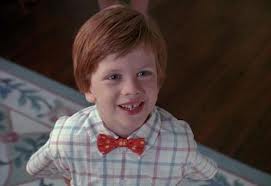
Problem Child

What do you mean you don’t want to do a spiderman lunge?

In the years that I’ve been around hockey, I’ve seen these cases handled in a variety of ways. In most cases, the coach will either verbally coerce the player into submission, attempt to ignore the player, or simply kick him/her out. While I think all of these methods may have some merit depending on the player and the situation, I’ve had pretty good success over the years taking a different approach, especially with “chronic offenders”.

A few years ago I made the realization that many coaches, including myself at the time (despite my unconditional optimism), spend more time reprimanding negatives than acknowledging or rewarding positives. In a youth team off-ice setting, this can be disruptive to the overall success of the team, and, frankly, gets old very quick. It makes coaching exhausting! I realized that some of the kids that are chronically misbehaving aren’t necessarily “bad kids”, they just thrive on the attention. They may have a tough home life, one parent, abusive sibling, or generally be under-confidant. Regardless, the key here is that they just want attention. In these cases, I’ll often pull the kid aside before or after off-ice (depending on what’s most appropriate for that given day) and let them know that I view them as a natural leader, and acknowledge that for better or worse, teammates follow his/her actions. The next off-ice, I’ll pull them from the back of the line and put them up front to lead the dynamic warm-up. I’ll also use them to demo exercises and commend them in front of everyone when they do something well. This has had a SIGNIFICANT impact on curtailing undesirable behavior, and can ultimately change the player’s course.

All of this comes back to an idea I read…in a book.

Give them a reputation to live up to.

In other words, if you want to influence behavior, sometimes it’s ideal to commend the individual for the behaviors you WANT to see, even if it doesn’t exactly fit their current profile. In this case, describing the player as a “leader” instead of a misfit may change the player’s view of themselves and the role they play on the team. This isn’t lying; it’s outlining expectations in a different manner. In my opinion, if we keep reminding kids of how bad they are, they’ll keep reminding us of how right we are!

Next time you have a problem child in your group, give this strategy a shot!

To your success,

Kevin Neeld
UltimateHockeyTraining.com

Please enter your first name and email below to sign up for my FREE Athletic Development and Hockey Training Newsletter!

Use CODE: "Neeld15" to save 15%