In a way, Mike Boyle has become the Howard Stern of Strength and Conditioning. Whether people love him or hate him, people listen when he speaks.
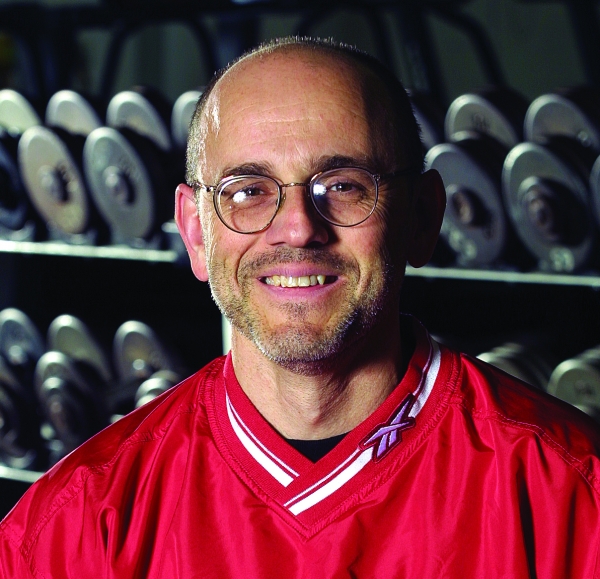
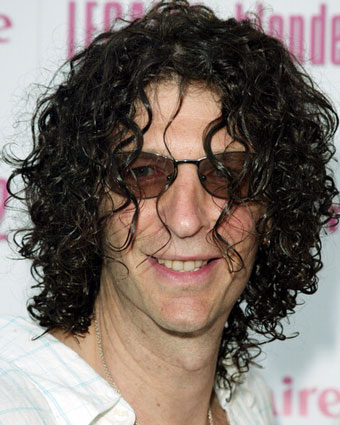
Okay. Maybe there are some slight differences.

And for good reason. He’s been one of the leaders in the fitness industry for the last 30 years!

What really sets Boyle apart from the thousands of other so-called experts is that he:

  1. Is always learning and implementing new techniques with his athletes.
  2. Consistently gets fantastic results with his athletes and clients.

Boyle threw the industry for a loop last year when he gave a presentation stating that athletes should not squat. In fact, the “hate” response to that concept has been startling. I even take some flack for supporting Boyle’s single-leg arguments. As I mentioned previously, I think most of this comes from a lack of understanding more than true distaste.

It has been almost a year since that video hit the mainstream. Now Mike is back, in a special video, to talk about what he’s changed since then and how he’s starting to use some squat variations with his athletes.

In this video, Coach Boyle discusses:

1. The importance of teaching the squat pattern
2. Why athletes should be front squatting if they Olympic lift
3. Why you will see athletes squatting at Mike Boyle Strength and
Conditioning

You can check out the video for FREE here:

>> Death of the Squat Revisited! <<

You may not be aware of this, but Mike Boyle Strength and Conditioning was recently voted the #1 Gym in America by Men’s Health. His results speak for themselves. If you do consider yourself a serious athlete, lifter, strength coach, or trainer, you owe it to yourself to hear what he has to say on one of the most controversial subjects in the industry.

There will be one more video coming later in the week on how and why Mike has completely restructured how he programs conditioning at Mike Boyle Strength and Conditioning.

Step 1: Check out this video now!
Step 2: Keep your eyes open for the next one.

>> Death of the Squat Revisited! <<

To your success,

Kevin Neeld
Please enter your first name and email below to sign up for my FREE Athletic Development and Hockey Training Newsletter!

One of the questions I get the most from hockey players (and parents) is whether or not they should continue to train in-season. The answer, of course, is a resounding “YES!”…or for my friends in Quebec “OUI!”.

Naturally the volume and intensity need to be altered to accommodate the increased on-ice demands of the season, but players should continue to follow a training program to ensure that their now improved speed, power, and strength capacities do not decrease. In other words, in-season training is geared toward, at a minimum, avoiding detraining (some may call this “maintenance”).

I generally recommend that players train two times per week. Because most of our youth players have games on the weekends, they’ll train Monday and Wednesday. One of the difficulties associated with in-season training is how to design the program to maximize improvements AND recovery. That is why I’ve decided to share the program our players are working off with you. Take a look, and feel free to post any questions you may have!

Day 1

A1a) 15-Yard Sprint (2-Point Start)
Week 1: 3x/side
Week 2: NA
Week 3: 3x/side
Week 4: NA

A1b) Box Jump
Week 1: NA
Week 2: 3 x 5
Week 3: NA
Week 4: 3 x 5

A2) 2-Way Med Ball Crush
Week 1: 2 x (2x20s)
Week 2: 2 x (2x20s)
Week 3: 2 x (2x20s)
Week 4: 2 x (2x20s)

B1) DB Reverse Lunge
Week 1: 3 x 6/side
Week 2: 3 x 8/side
Week 3: 3 x 4/side
Week 4: 3 x 6/side

B2) DB Chest Press
Week 1: 3 x 6
Week 2: 3 x 8
Week 3: 3 x 4
Week 4: 3 x 6

B3) Feet Elevated Front Plank
Week 1: 2 x 20s
Week 2: 2 x 25s
Week 3: 2 x 30s
Week 4: 2 x 20s

C1) Slideboard Hamstring Curl (3s negative)
Week 1: 3 x 10
Week 2: 3 x 12
Week 3: 3 x 8
Week 4: 3 x 10

C2) Low Pulley Row
Week 1: 3 x 8
Week 2: 3 x 10
Week 3: 3 x 6
Week 4: 3 x 8

C3) Feet Elevated Side Plank
Week 1: 2 x 20s/side
Week 2: 2 x 25s/side
Week 3: 2 x 30s/side
Week 4: 2 x 20s/side

CON) Bike
Week 1: 8 x :30/1:00
Week 2: 6 x :30/1:00
Week 3: 10 x :30/1:00
Week 4: 5 x :30/1:00

Static Stretching: 30s each
2-Way Rectus Femoris
2-Way Lying Glute
Lying Knee-to-Knee
2-Way Pec
Cross-Body Lat

Day 2

A1) 1-Arm DB Push Press
Week 1: 3 x 3/side
Week 2: 3 x 4/side
Week 3: 3 x 2/side
Week 4: 3 x 3/side

A2) Alternate Arm Scap Wall Slide
Week 1: 2 x 8/side
Week 2: 2 x 8/side
Week 3: 2 x 8/side
Week 4: 2 x 8/side

A3) Stability Ball Front Plank w/ Mini Rollout
Week 1: 2 x 10
Week 2: 2 x 10
Week 3: 2 x 10
Week 4: 2 x 10

B1) 1-Leg DB SLDL
Week 1: 3 x 6/side
Week 2: 3 x 8/side
Week 3: 3x 4/side
Week 4: 2 x 6/side

B2) Weighted BOSU Push-Up
Week 1: 3 x 10
Week 2: 3 x 12
Week 3: 3 x 8
Week 4: 2 x 10

B3) Inverted Row
Week 1: 2 x 10
Week 2: 2 x 12
Week 3: 2 x 8
Week 4: 2 x 10

C1) Chin-Up
Week 1: 3 x 8
Week 2: 3 x 10
Week 3: 3 x 6
Week 4: 2 x 8

C2) Dynamic Y->W
Week 1: 2 x 10
Week 2: 2 x 10
Week 3: 2 x 10
Week 4: 2 x 10

C3) 1-Arm DB Farmer’s Walk
Week 1: 2 x 50 yards/side
Week 2: 2 x 50 yards/side
Week 3: 2 x 50 yards/side
Week 4: 2 x 50 yards/side

Static Stretching: 30s each
2-Way Rectus Femoris
2-Way Lying Glute
Lying Knee-to-Knee
2-Way Pec
Cross-Body Lat

To your success,

Kevin Neeld

Please enter your first name and email below to sign up for my FREE Athletic Development and Hockey Training Newsletter!

It’s an exciting time. With the opening of the NHL pre-season last week (and football season starting), we know that our days of watching the same diving catch and double play ball on Sports Center’s Top 10 everyday are FINALLY coming to a close. This is also an exciting time of year because a lot of our Endeavor players are fighting for roster spots and commitments for various programs. In the last couple months, a few Endeavor hockey players received great offers:

John Gaudreau (’93): Full ride to Northeastern (NCAA D1)
Matt Gaudreau (’94): Full ride to Northeastern (NCAA D1)
Gabe Antoni (’92): Full ride to Clarkson (NCAA D1)
Charlie Vasaturo (’90): Union (NCAA D1)

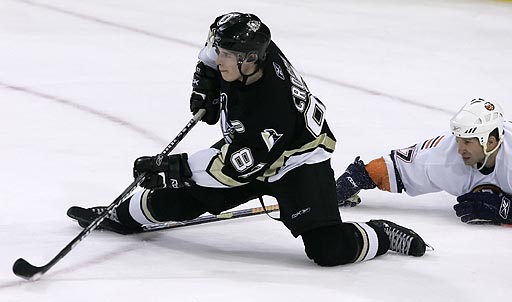
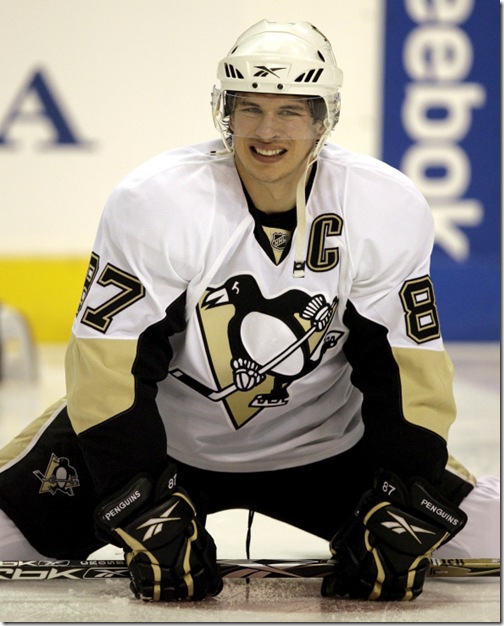
Because Colby Cohen and Eric Tangradi are fighting for roster spots on the Avalanche and Penguins, respectively, I find myself following those teams a bit more closely than I usually would. During the Penguin’s pre-season opener against the Red Wings last Wednesday, Crosby left during the second period with a hip flexor strain.

If a hockey player told me they strained their hip flexor in the first game of the season, I’d usually chalk it up to a lack of off-season preparation. However, I’ve been told Crosby has an admirable work ethic, so I imagine that was not the case with him. Interestingly, reports have said that it was poor ice quality that may have contributed to the injury (which is very minor). I’m surprised that ice quality is a problem at the NHL level, but I can understand that heat and enormous buildings are a hard combination to counteract at this time of year.

Unfortunately, not every hockey player has the work ethic of Sidney Crosby…and not every pre-season hip flexor or groin strain can be chalked up to poor ice quality. In fact, many of these injuries are preventable if a few precautions are taken.  A while back I wrote a detailed outline of how to assess for hip injury risk. These posts were written in the context of adductor or “groin” strains, but the process is similar for hip flexor strains. I highly encourage you to read (or re-read) the posts below. Remember, it doesn’t matter if you have Crosby’s skill if you’re injured!

Groin Pain 101
Groin Pain 101: Posture Analysis
Groin Pain 101: How’s Your Range of Motion
Groin Pain 101: Testing Muscle Function
Groin Pain 101: Movement Analysis
Groin Pain 101: Screen/Assessment Review

To your success,

Kevin Neeld

Please enter your first name and email below to sign up for my FREE Athletic Development and Hockey Training Newsletter!

Check out what you missed this week at Hockey Strength and Conditioning!

Program/Article: Late Off-Season Workout from Maria Mountain
Maria’s program was from early August when her players weren’t skating on a daily basis yet. As such, the goals of the problem were improving max strength and metabolic conditioning through circuit training.

Program: Lower Back Re-Conditioning-Phase 2 from Sean Skahan
This program demonstrates how Sean reintegrates a player with a recent history of low back problems back to health. It’s always interesting to see how the best of the best put together their programs. Seeing programs from Coach Skahan, Coach Potenza and Coach Boyle is one of the coolest parts about the site.

Video: Multi-Planar Hip Mobility and Activation Exercises from me
These are three videos a few of my favorite hip mobility and activation exercises. The intro to this article also briefly describes how a single conversation with Nick Tumminello led me to rewriting all of my warm-ups!

Click the link below for more information about Hockey Strength and Conditioning!

To your continued success,

Kevin Neeld

P.S. This is the last day to get Eric Cressey’s Show and Go training program for $50 off! The discount ends at midnight. Head over to the site and check out what he has to offer. You’ll be glad you did! Show and Go: High Performance Training to Look, Feel, and Move Better

Please enter your first name and email below to sign up for my FREE hockey training newsletter!

As I mentioned on Monday, I was recently invited by Carolina Hurricanes long-time Strength and Conditioning Coach Pete Friesen to attend the Friesen Physio-Fitness Summit. While I thought all the presentations were informative, one that really stuck out to me was from Dr. Michael Peters, OD. Dr. Peters spoke about the importance of vision in elite level athletics. Intuitively, it makes sense that vision is important to high level performance. After all, if you can’t see, it’s going to be nearly impossible for you to react to the play around you (this is what makes blind individuals playing sports so remarkable!).

Chicks dig blind athletes.

Performance Implications
With that said, vision plays a more profound role in our performance and more people suffer from vision impairments than we may realize. For starters, Dr. Peters pointed out that “ideal” vision is not 20/20 like most people believe, but 20/8. For people with uncorrected vision less than 20/20 (more on this in a second), this discrepancy becomes increasingly relevant. This is especially true in light of the fact that roughly 25% of your vision feeds into other systems, such as the vestibular system. In other words, the clarity at which we view the world drives performance through other mechanisms that affect our perception of balance, internal and external movement, and overall awareness of our surroundings.

Somewhat astoundingly, Dr. Peters noted that over 60% of the US population ages 18-25 needs correction. The take home message here was that, as a population, we need to start taking a more proactive role in protecting our vision. This starts with getting it checked regularly, starting at a young age.

See. Glasses aren’t so bad.

Vision Training for Hockey
From a training standpoint, Dr. Peters alluded to a couple different ways of improving vision for sports. The first was “to point your eyes where you’re aiming.” At Endeavor, we started encouraging our athletes to do this with our medicine ball throws. We cue them to pick a spot on the wall and throw the ball as hard as you can at that spot (using specific techniques that we teach). This reinforces great habits that will positively impact passing and shooting accuracy.

For all athletes, we also cue “eyes first” on all transitional speed work. This helps get the athlete in the habit of looking at where they want to go before they start in that direction. This is a simple, but extremely important habit. Unexpected obstacles in sports are a common factor in injuries. As an example, think of a player cutting back with the puck (without looking) directly into an oncoming opponent’s shoulder (concussion!).

Dr. Peters also discussed the importance of visualization in athletics. For those of you that are unfamiliar, visualization refers to mentally playing a movie of yourself performing a certain skill, set of skills, or living through a competition. The idea is to visualize yourself being successful, which will help reinforce your ability to be successful in real life. Many high level athletes have been doing this for decades, but Dr. Peters pointed out a pretty unique idea. He mentioned that it may be more effective to visualize yourself being successful from both a 1st and 3rd person vantage point. In other words, picture yourself being successful through your eyes and through the eyes of someone watching from the stands/sidelines.

Take Home Message
In the pursuit of on-ice excellence, every helpful piece of information counts. To this extent, vision training is drastically overlooked by most athletes. Getting your vision checked on a regular basis, and following the training techniques discussed above will undoubtedly help improve your performance.

To your success,

Kevin Neeld

Please enter your first name and email below to sign up for my FREE Athletic Development and Hockey Training Newsletter!

Use CODE: "Neeld15" to save 15%