After hearing the same questions from hockey parents and coaches over the last couple years, it occurred to me that I should just do a quick write-up.
Endeavor Sports Performance is like a playground for strength and conditioning coaches. We have a lot of equipment that people have never seen or used before. Over the last couple years, I’ve gotten the same question from coaches and parents, that usually goes something like:
“Where can I get one of those…?”
While quality training and facilitating recovery doesn’t always necessitate lots of fancy equipment, there are a few cost-effective pieces of equipment that I think every player should own. We get all of our stuff from Perform Better, so if you’re outfitting a facility or just want to pick up a few things, I’d look to them first.
Hockey Training Equipment that Every Player Should Own
In no particular order:
MiniBands I’ve probably bought over 30 of these in the last few years (they snap with the volume of use they get at Endeavor). They’re so cheap and allow us to do a variety of exercises that I feel are absolutely essential, such as lateral miniband walks and backward monster walks. When they snap, we use them for band-resisted no money drills. When they snap again…we throw them out. They can also be thrown around a beginner’s knees during squatting and deadlifting movements if they have a difficult time controlling hip internal rotation to utilize Gray Cook’s “Reactive Neuromuscular Training” concept. Not bad for $2!
Val Slides To be honest, I didn’t have a lot of experience with these until I spent the week last Summer with Mike Potenza at the Sharks prospect camp. At Endeavor, we don’t use them because we have slideboards to do all the exercises we’d use Val Slides for, but slideboards are extremely expensive (for most players). While I wouldn’t recommend duct taping Val Slides to your feet and trying to slide between two walls in the house, Val Slides do allow you to do a number of other slideboard-based exercises like, reverse, lateral, and diagonal lunges (great for lower body strength, hip stabillity/control, and adductor strength), bodysaws, alternate arm jigsaws, 1-arm push-up with reaches, and army crawls. In a nutshell, they allow you to do about a dozen great core exercises that aren’t possible without them.
Foam Roller In my mind, this is the most important piece of equipment on this list. EVERY player should have one of these and should bring it with them on all road trips. Most of the parents I interact with at Endeavor end up asking where to buy one because their kids can appreciate how much better they feel after they use it. I think stretching is important, but nothing will help stretching be more effective than using one of these beforehand. They come in a bunch of different sizes, but I really only recommend buying the 3 foot long 6 inch circular ones. If you don’t know how to use these yet, buy one and learn. It’ll be the best thing you do for yourself.
Please enter your first name and email below to sign up for my FREE Athletic Development and Hockey Training Newsletter!
Three Things I Wish I Told You Months Ago!
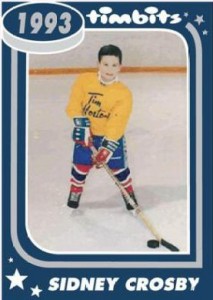
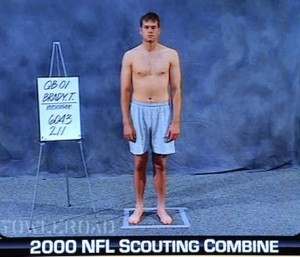
Monday’s post dove into some of the common misconceptions about elite hockey development (and athletic development in general for that matter), with cameo appearances from a young Tom Brady and Sidney Crosby. In case you missed it, you can check it out here: Random Hockey Development Thoughts
Writing that post made me think about a couple other things that I probably should have told you a long time ago.
Endeavor Internships
First, and probably most time-relevant, we’re currently accepting applications for interns at Endeavor Sports Performance this summer. A few people have hopped on the forums at Hockey Strength and Conditioning (which is an awesome use of the very talented/experience audience on the site) and inquired about good hockey training internships. We have 3-4 spots available. Last year we drew interest from people ranging from local universities to Canada to Australia.
Our past interns have gotten a lot out of their experience with us. On top of being surrounded by passionate people that continually want to learn and get better (both coaches and athletes), our off-season hockey group includes a wide variety of skill (on- and off the ice). I know it’s a lot “sexier” to work with NCAA D1 and professional athletes and that’s what most interns are looking for. In truth, these experiences are great for networking (and general exposure), but probably not as good for coaching. Athletes at these levels tend to move extremely well and don’t require a lot of coaching, just some simple cuing.
In contrast, younger athletes need A LOT of help (turns out sitting on your ass for 22 hours a day isn’t great for building athleticism), and it’s the practice you get coaching these athletes that really helps you understand how to use efficient coaching techniques, change your language based on the athlete, and ultimately to become a better coach. Because we have players ranging from Tier II youth PeeWee programs to those in pursuit of permanent NHL roster-spots, you get the best of both worlds.
In addition to experience, the other two main reasons to pursue internships are to network and potentially pursue employment. Since I’ve joined Endeavor, we’ve had 6 interns. We hired 4, one went on to pursue a different career path, and another had a job lined up for immediately after his internship and is now going back to school in pursuit of his DPT. If you’re interested, go to the link below to read more information and to download the application. You can email the finished ones to me or fax them to Endeavor at (856) 269-4153.
I’ve alluded to this in the past, but I do a lot of writing for the Endeavor site. Because we work with athletes in all sports, the writing tends to discuss sports other than hockey (although I do write about hockey too), general athleticism, and research related to performance enhancement. If you don’t work with hockey players and/or just want more of the good stuff, I highly encourage you to go over to Endeavor’s site and check out the blog:
The more I learn about what USA Hockey is doing with their new ADM the more I support it. Since I started playing, it seems like the American development model has simply been wrong. We play way too many games, we practice too little, and most practices don’t make good use of the ice to enhance skills. There is a reason why, in general, the NHL’s most skilled players are consistently from overseas. From what I understand, Canada is similarly “backwards” in their systems, but hockey is so much more popular there that more talent seems to rise through the ranks, possibly despite the overall development structure.
This certainly isn’t to undermine the jobs that the thousands of coaches in both countries are doing, only to say that we need a better development framework so that new coaches have better plans and philosophies to draw from and so we can be more consistent in our teachings across the country. Naturally, I’m also of the opinion that off-ice training is a necessity, not a luxury, at least not for players that are serious about pursuing elite levels. USA Hockey has done an outstanding job of “righting the ship” so to speak. If you aren’t familiar with the ADM, you can read up on it here:
If you’re coaching, I urge you to look into this and do your best to begin implementing these concepts immediately. On an international level, it seems that the US has found some success because of their heart, not because they have comparable talent to their Canadia, Russian, Finnish, and Swedish competitors. I think, if coaches and parents buy into what USA Hockey is providing in the ADM, we’ll start to see the U.S. dominate internationally because of improved skill sets. Of course, if everyone takes the “what we’re doing now is fine” approach, we’ll simply continue to tread water.
It’s up to us to make a change! I’m in. Are you?
To your success,
Kevin Neeld
Please enter your first name and email below to sign up for my FREE Athletic Development and Hockey Training Newsletter!
Random Hockey Development Thoughts
First things first. I want to personally thank you for continuing to come here to read up on various aspects of hockey development and for your help in spreading the word about this site. Last week, the site hit a milestone that a year ago I would have thought was impossible: over 10,000 visits in the previous 30 days.
If you’re involved in some aspects of fitness or business, this number is probably staggeringly low. However, for a hockey-specific training and development site with an array of content ranging from basic exercises to advanced scientific theory, I’m psyched! A year ago it was less than half that and growing extremely slowly. As I’ve said in the past, this site exists because of you. As you continue to help spread the word and communicate with me about what you want to me to write about, the site will continue to evolve into a better resource for you.
Random Thought 1: After my post last week on my Soft-Tissue Stress Overflow Theory, I got an email from a parent with a few kids that we’ve trained at Endeavor that read:
Her coach is so old school and is demanding at 12 years old that they only play soccer. Otherwise they aren’t committed to the team. Yeah we’ll, we’re on our third kid. Nice try but we aren’t buying it. Hopefully your article will help the parents of the first borns not to believe that stuff and feel like their kid is going to be behind other kids or not “make it” because they haven’t given up their life to a travel team.
This example doesn’t pertain to hockey, but I think we all know there are hockey coaches out there like this. With every year that passes I gain an increasing appreciation for the importance of active recovery. Playing sports certainly plays a large part in developing the personality and characteristics of our youth. Things like courage, confidence, leadership, and teamwork are all life-skills that people develop through sports that will benefit them in other aspects of life. That said, sports should be a piece of a kid’s life, not all of it. Coaches, in all sports, need to remember that there’s more to life than playing sports.
Son. It’s time you stopped messing around with those “other sports” and really started focusing on hockey.
Random Thought 2: Last week I had a meeting with the president of a local youth hockey organization about a year-round development plan I had worked on. We had a great meeting. Luckily he and the coaches within that organization recognize and appreciate the importance of training as it pertains to developing elite level hockey players. They also know that it’s not a quick fix solution, but a long-term process. Because Endeavor is a private training facility, we get a lot of the “make my kid faster yesterday” parents. I wish more understood that short-term improvements in performance can be expected, but that shouldn’t be the goal. Especially with younger athletes, performance doesn’t matter nearly as much as instilling proper training habits and reinforcing proper movement patterns.
Random Thought 3: At this meeting, the idea of testing was brought up. I still whole-heartedly believe that doing performance testing with middle school and most high school athletes is completely senseless and it amazes me that so many people disagree. It is UNARGUABLE that athletes at this age are maturing, and at different rates. We’ve all seen PeeWee, Bantam, and Midget teams with players that look like giants AND players that look like they’re too small to be on the same ice. What do you think is going to happen if you compare the test results of someone that develops early and somewhat that develops late? The early maturer wins, every time. What is this system rewarding-rapid maturation? Even if you’re only comparing testing results within an athlete to monitor individual progress, which is a much more valid and desirable approach, it’s still impossible to rule out what proportion of gains are related to training and what is the result of natural maturation. Athletes naturally get stronger and faster as they get older. We need to remove the emphasis on testing and improve the emphasis on training.
“I don’t care how good you say this Crosby kid is. His 40 time was below our team average; I can’t take him.”
Random Thought 4: Over the last year I’ve gotten some hate email about some old posts I had on the NHL combine (NHL Combine Testing Results and NHL Combine Test Results Revisited). I should probably write an article about this, but I haven’t made the time to do it. It’s not just the NHL combine that doesn’t make sense to me; the NFL one is just as bad. Last week Stephen Paea broke the NFL combine bench press test record by pressing 225 lbs 49 times. This is an amazing feat, but what does this test even tell us? Is it a strength test? Not if he’s doing over 8 reps. Is it an endurance test? Maybe in this case. Do any of these things even matter as it pertains to on-field performance? Not likely. Check out the top performers in NFL combine tests from the last 10 years. How many of those guys are NFL stars right now? A few, but certainly not enough to justify the “if you do well on this test than we’ll pay you lots of money” approach that the NFL has taken, a direction that youth sports is mimicking. The most important test is how players perform on the ice, NOT how strong, fast, or well-conditioned they may look off the ice.
This guy doesn’t look like he’d finish near the top of the pack for waterboys in combine testing. Yet, he’s an inevitable hall of fame quarterback. Maybe there’s more to success than just strength and speed for Mr. Brady?
That’s all for today!
To your success,
Kevin Neeld
Please enter your first name and email below to sign up for my FREE Athletic Development and Hockey Training Newsletter!
Hockey Strength and Conditioning Review
Hopefully you’ve enjoyed “Theory Week” here at KevinNeeld.com. In case you missed them, I put up two posts discussing a new way to view an athlete’s muscle fiber make-up (Neeld Muscle Fiber Continuum Theory) and long-term soft-tissue stress accumulation as it pertains to common injuries and performance limitations (Soft-Tissue Stress Overflow Theory).
Sean Skahan added Phase 1 of his ACL Rehab training program. I’ve been reading up on ACL research this week because Endeavor has partnered with a local youth Soccer organization. As you know, ACLs plague soccer players and are often career-limiting injuries. Anything we can do from a strength and conditioning standpoint to improve the athlete’s likelihood of competing at their pre-injury level after surgery is a life changing opportunity. Timely program from Sean.
We also added a couple videos. Darryl Nelson added videos of two Olympic Lift variations that he uses with the NTDP. He also points out that the players in one of the videos are goalies…Yes…goalies need to lift too.
Mike Potenza added a few exercises to help restore function and balance across the hip joint. In my opinion, having multiple exercises in your “toolbox” that serve a similar function is a great way to add variation in your programs (at least in the athlete’s mind) without neglecting the necessary creation of stress to certain structures/patterns. Mike shows a couple exercises using a somewhat specialized piece of equipment, but these could also be done with a slideboard and some resistance bands.
There are also some great forum discussions that you should check out. If you’re in charge of making equipment purchases for a training facility, you’ll want to read up on the thread that’s shedding some light on the differences between the Woodway Curve and Woodyway Force.
Jim Reeves has posted some enlightening comments in response to a question from a member asking what he should do for his players to stay in good shape for a tournament they have 3 or 4 weeks after the season ends. I face a pretty similar situation in that a lot of our athletes finish the season and immediately want to prepare for tryouts. It’s a difficult thing to balance actively reversing some of the negative adaptations of the season while also continuing to prepare them for a hockey-related assessment.
Lastly, Mike Potenza started a thread on an interesting assessment designed to assess neural fatigue in athletes. This piqued my interest because of my background in exercise neuroscience and because I had no idea such a concept existed. I’ll be interested to read more about this in the future and look into it for our guys here.
P.S. Try HockeyStrengthandConditioning.com for 7 days for only $1! It’ll be the best dollar you’ve ever spent.
Please enter your first name and email below to sign up for my FREE Athletic Development and Hockey Training Newsletter!
Soft-Tissue Stress Overflow Theory
On Monday, I ranted about introduced the “Neeld Muscle Fiber Continuum Theory“, which identified what I believe are pretty significant limitations in how the exercise science/kinesiology and performance enhancement communities views the organization of the neuromuscular system. Today I have another “theory” of mine, but one that is much more simplistic to visualize and one that has more practical applications for athletes in all sports, but ESPECIALLY hockey players, which tend to emphasize “doing more” and fighting through injuries as cultural norms.
Pattern Overload
It’s quite evident that any and every movement, or lack thereof, initiates some sort of adaptation response. These adaptations may be desirable, or in the case of the all-too-prevalent sitting- and hockey-related adaptations of shortened hip flexors and anterior shoulder musculature, not-so-desirable.
In the past, it was typical to see soft-tissue injuries like adductor and hip flexor strains (amongst others) start to pop up when players reached late high school years and beyond. More recently, we’re seeing a more severe injury, the “sports hernia” increasingly at collegiate and professional levels. Unfortunately, because of the trend toward year-round competition and single-sport participation, we’re beginning to see these injuries trickle down to younger ages.
The thing that all of these injuries have in common is that they’re ALMOST never traumatic in nature. In other words, they’re the result of an accumulation of soft-tissue damage. Damage accumulation results from what I think of as “pattern overload” and any associated compensatory movement patterns or force transfer strategies that result when muscles become overworked and/or under-recovered. This is the one of the major factors in a number of injuries, including:
Hamstring strains
Hip flexor strains
Adductor or “groin” strains
Sports Hernias
Hip labral tears
Internal shoulder impingement
External shoulder impingement
Rotator cuff tendinopathy
Shoulder labral tears
Lumbar disc herniations
This is far from a comprehensive list, but paints the picture of some very common sports-related injuries that could be prevented. For hockey players, simply consider the number of strides a player takes any given year. Then consider that players are starting to focus ONLY on hockey at younger ages, and playing year-round. The emphasis is usually on competition and not on skill development. The result is a DRASTIC increase in the number of times a player performs a skating stride in any given year, and therefore an equally drastic increase in the number of strides in any 3-5 year chunk of time. The same can be said for goalies; although, naturally, the pattern is different. With this in mind, it’s no mystery why we’re seeing accumulation or pattern overload injuries enter the realms of youth hockey.
Enter…The Bucket
Stuart McGill’s research has described repeated lumbar flexion as a mechanism for disc herniations. One of the take homes from this research is that it’s rarely a single incident that results in the injury, but rather the spine has a limited number of flexion/extension cycles before an injury occurs. I’m currently reading Hans Selye’s book “The Stress of Life”, where he describes a similar phenomenon, alluding to the fact that the body has a certain adaptation capacity that, when exceeded, results in injury or, depending on the system, death.
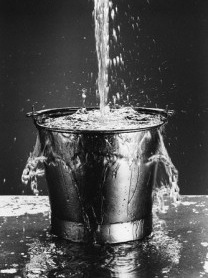
To be clear, I’m not suggesting that either Selye or I would be concerned with a hockey player playing himself to death. I do, however, think that as coaches and athletic development professionals, we often lose sight of the long-term accumulation associated with playing AND training for the game. I like to use the analogy that our bodies are buckets (stay with me).
This is your body on hockey.
Think of every movement as a drop of water in the bucket (indicative of a “unit” of soft-tissue stress). The more movements, the more water. Naturally, if the bucket is left alone or allowed to “rest”, water will evaporate out of the bucket, thereby lowering the level. If however, more and more water is dumped into the bucket, it will inevitably overflow, which is indicative of an injury due to excessive soft-tissue stress accumulation. This is the “overuse” injury we hear so much about it, which is almost always more accurately an “under-preparation” or “under-recovery” injury.
The analogy can be further broken down to describe a situation where every structure has it’s own bucket. In this way, a skating stride may put drops in multiple buckets of different muscle groups and structures (e.g. hip labrum, knee menisci, each adductor, hip flexor, hip rotator, spinal erector, etc.). Because every movement is unlikely to stress every involved structure to the same degree, some structures will receives more “drops in their bucket” than others.
Empty the Bucket
Passive rest is not the only means by soft-tissue stress accumulation can be slowed. I’ve been borderline evangelical in my support of regular manual therapy work from an experienced Active Release practitioner. A lower budget (although less targeted) option is to regularly use a foam roller to improve soft-tissue quality. Either way, these are strategies that remove drops from the bucket.
These guys get it
Another simple way is to limit pattern overload. This is why playing multiple sports, and having a true “off-season” is so important for athletes; it gives the highly worked/stressed muscles (and surrounding structures) a time to rest and regenerate. It also provides time for training (think strength and conditioning), which improves the body’s capacity to work and withstand these stresses, and to do so at higher performance levels. Think of it like this:
Passive rest and/or playing other sports will result in the slow evaporation of water from certain buckets, or a stopping or slowed rate of soft-tissue stress accumulation in certain structures
Getting soft-tissue work done will result in large cups of water being removed from certain buckets, or a reversal in soft-tissue stress accumulation
Continually training will increase the size of the bucket, or improve the relevant structures’ capacity to withstand stress
Ultimately, everything in this model is relative to the intensity, frequency, and location of the stress (for example, playing multiple sports in the form of ice hockey and roller hockey won’t likely result in much of a stress “deload”), but this analogy has been helpful in teaching players and parents how the body works.
The Big Picture
EVERYTHING we do leads to an adaptation, as a result of a stimulus or “stress” to the body. Stress accumulates, and if steps aren’t taken to slow and/or reduce the accumulation, injury will result. If athletes are serious about pursuing elite levels, they need to be proactive in their practice, their training, AND their recovery. In other words, they need to empty their buckets.
To your success,
Kevin Neeld
Please enter your first name and email below to sign up for my FREE Athletic Development and Hockey Training Newsletter!



 Click here for more information on Val Slides



 Use CODE: "Neeld15" to save 15%