We’re wrapping up another great week at Endeavor. On a personal note, I’ve restored my eternal sense of optimism that tends to dwindle when I don’t eat, lift, or sleep as much as I’d like. It might also have something to do with the fact that I’ve watched this video at least once every day this week.

Turns out when you surround yourself with inspirational, unconditionally positive messages, you tend to be more positive! Although, I never thought Fresh Prince would be that source of inspiration. I’m also nearing the final stages (within 7 days) of completing a HUGE project, so stay tuned for announcements on that (you won’t want to miss it)!

There has been some exceptional content additions to Hockey Strength and Conditioning over the last couple weeks. In no particular order:

Video: International Hockey Panel with Igor Larionov
This is another USA Hockey American Development Model video that has leaked into our hands. Igor Larionov has about as impressive of a hockey success record as anyone, so it was great to get his perspective on an assortment of hockey development topics. If you’re a true student of the game, you’ll really enjoy this!

Click here to watch >> International Hockey Panel with Igor Larionov

Program: Beginner Phase 2 Off-Season Training Program from Darryl Nelson
Darryl Nelson added Phase 2 of his beginner off-season hockey training program. I recently read an article on this year’s NHL combine (someone posted this in a HockeySC.com forum thread) commending two players from Darryl’s USA NTDP on their performance in the off-ice tests. It’s great to see Darryl’s work being rewarded (indirectly). For the millions of hockey players out there aimlessly following unguided programs that lack organization and progressions (or any semblance of an intelligent thought in general), you’d be much better off just downloading Darryl’s program and following that.

Click here to get the program >> Beginner Phase 2 Off-Season Training Program

Video: Bar Complex from Sean Skahan
Sean added a video of a bar complex that he uses late in the off-season. This is typically the time of year where the off-ice training focus changes from hypertrophy or strength development to more of a work capacity orientation. This is in conjunction with an increase in on-ice work. Barbell complexes are certainly a means of developing this quality, assuming the athletes know how to perform all the involved exercises with perfect technique. This is especially important as fatigue tends to negatively affect exercise execution in general, Mediocre form in the beginning will quickly turn to garbage form. Whether you use the exact exercises Sean does in your barbell circuits or not, exercise proficiency should be foundational.

Click here to watch >> Bar Complex

Article: Hockey Strength and Conditioning Roundtable: Facility Design Edition

Last, and most awesomely, Mike Potenza, Darryl, Sean and I posted a roundtable discussion on facility design. The roundtable is a new feature we’re adding to Hockey Strength and Conditioning, and because well all have different backgrounds and work in relatively different settings, the diverse perspective should be insightful for our readers. Facility design was a great topic to kick off the roundtables because it will ultimately drive the design of your programs and provide guidelines (for better or worse) on what you’re able to do with your players. Facility design will determine maximum athlete volume, exercise selection, how to pair exercises, and the overall flow of the program. If you’re a hockey training professional this is a must-read. We’ve made a lot of mistakes at Endeavor that you can avoid my checking out the article.

Click here to read >> Hockey Strength and Conditioning Roundtable: Facility Design Edition

After you’re done reading the articles and watching the videos, hop on the forums and check out the two posts on the NHL Combine and the BU Psychology Professor and post your comments about those.

If you aren’t a member yet, fork out the $1 to test drive Hockey Strength and Conditioning for a week. If it’s not the best buck you’ve ever spent, I’ll personally refund you!


To your continued success,

Kevin Neeld

Please enter your first name and email below to sign up for my FREE Athletic Development and Hockey Training Newsletter!

Welcome back for Part 2 of “Become a Hockey Training Rockstar.” If you missed Part 1, you can check it out here: Become a Hockey Training Rockstar-Part 1

Before I jump into the final three tips, I want to let you know that I started a new group on LinkedIn called “Hockey Training“. If you don’t have an account on LinkedIn, I encourage you to create one. It’s great for networking and job searching purposes. After you do, come join my group here: Hockey Training. The goal is to use the group as a way to help players find quality training centers, students to find internships, coaches to find jobs, and for everyone to share information.

On to today’s post…

3) Lead with Intensity
Whether players realize it or not, EVERYTHING they do is observed by those around them and causes a reaction of some sort. Players look to their surroundings for cues on how to conduct themselves, and attitude, for better or worse, is highly contagious. In a training setting, the players that get that sick look in their eyes and fight through tough parts of the training program such as sets to failure, isoholds, and conditioning, inspire others to do the same. Having a single person in every group that operates with a high level of intensity can completely change the group/team dynamic.

Intensity

4) Be Coachable
Every player takes a different path to excellence. The rate of progress and ultimate end point is different for everyone. That said, nothing facilitates a more direct, expedited route than quality coaching. Sometimes players find some success, and then think they have it all figured out. This is especially true with skilled players that have achieved on-ice success without, up to that point, putting in any significant time or effort in an off-ice training setting. It always catches up with them. The players that neglect the off-ice training side of things tend to have careers limited by constant and nagging injuries. For many players, this is dream-limiting; for players that make it to the most elite levels, this separates them from more playing time (and consequently an absolutely sick amount of compensation!). Players need to stay coachable throughout their development process. If a coach tells you to do something, do it. Their job exists to help you.

Step 1: Show up. Step 2: Be coachable.

With age comes wisdom.


5) Think of the Team
Success in hockey, as with all team sports, relies on the collective effort of an entire group. Whether you’re the best or worst player on the team, you still have a role. When I worked with a couple younger teams last season, I constantly encourage the kids to ask themselves “is what I’m doing right now going to help or hurt the team?” Put in this light, kids were more hesitant to make smart-ass comments to their teammates, and were more likely to help provide quality (read: mature) feedback to their teammates on how to perform exercises better. In small group training settings, I try to send the same message. Even if we have a group of kids that play on competing junior teams, when they’re training together, they’re on the same team. Players should be willing (dare I say, eager?!) to help out their group/teammates. This facilitates camaraderie, a more enjoyable training experience, and ultimately better results.

That’s a wrap for this two part series on “How to Become a Hockey Training Rockstar.” These principles don’t just apply to hockey training scenarios, but to on-ice work as well. While some of these concepts are a few steps removed from the direct message sent by Ryan Lee and a few of his other presenters, all of these ideas were inspired by the idea that success in business, in hockey training, or in anything else should be built upon passion, integrity, focused intense work, mental flexibility, and a willingness and desire to help others.

To your success,

Kevin Neeld

Please enter your first name and email below to sign up for my FREE Athletic Development and Hockey Training Newsletter!

Over the weekend I made a trip up to Stamford, CT to attend Ryan Lee’s Continuity Summit 3. For those of you that don’t know Ryan, he’s successful marketing coach with roots in the fitness industry.

It’s funny that some people in the fitness industry genuinely blame Ryan for the unscrupulous use of his information. Undoubtedly, this is a serious problem. As I mentioned in Internet Hockey Training Experts, there are lots of people claiming to be experts in the area of hockey training that are happy to take your money for low-quality products and services. In fact, I’ve received “networking” emails from a few of them. My responses generally go:

“I get a lot of emails from guys that sell products online, but don’t actually train people for a living. I’m not interested in pursuing joint ventures with people that are deceptive about their expertise.”

Sometimes I get a response; often times I don’t. That said, blaming Ryan for people using his information the wrong way is completely insane. It’s like a player coming to train at Endeavor Sports Performance, getting ridiculously fast, and then boarding someone from behind their first game back on the ice and a parent saying, “Kevin should really be more selective about who he trains.” C’mon.

Ryan has been a huge help to me over the years, and I was really looking forward to this weekend. I feel at home being surrounded by entrepreneurs; it’s energizing to be in a room full of people relentlessly pursuing their dreams. That said, I almost didn’t make the trip. I woke up Thursday morning after my 7th consecutive night of less than 6 hours of sleep (<8 hours results in a statistically significant decrease in my pleasantness), went into Endeavor and coached hockey groups at 8:30, 10:00, 11:30, 1:00, 3:00, and 4:30 and was completely floored at 6 when it was time for me to start heading North. I’m glad I sucked it up and made the trip because I feel completely rejuvenated now.

While the main focus of the Summit was on finding ways for business owners to add value to their products and services to better serve their clientele, there were a few take homes from the seminar that I think apply directly to hockey training and player development. Stealing the analogy of becoming a rockstar from Ryan’s presentation…

5 Tips for Becoming a Hockey Training Rockstar

1) Be Passionate
Passionate people have a better vision of how short-term sacrifices lead to greater long-term gains and generally accomplish more than their peers. In terms of hockey training, there are no quick fixes. The only way to succeed is to have a clear vision of where you want to go and consistently take steps toward getting there. This isn’t always easy, but is ALWAYS worth it. On a personal note, I’ve never really been good at anything (insert sad face here). The whole idea of “natural” ability alludes me. In the areas of my life where I’ve found success, it’s been because I knew exactly what I wanted and I’ve pursued it with an absolutely insatiable drive and a failure to recognize failure as an option. This is one of the reasons why I vibe so well with other passionate, driven people in any field, and why I pursued a career in helping like-minded players fulfill their goals and achieve their dreams. While the 4 tips to come hold merit, everything stems back to being passionate. Passion is the fuel that feeds the fire of success.

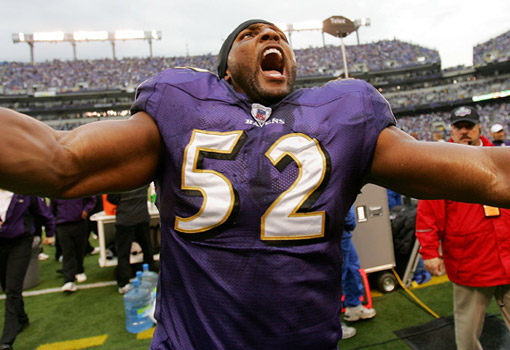
I get chills every time I watch this


2) Have Integrity
Integrity is simply doing the right thing, even when no one is watching. The most sorry kids on every hockey team are the ones that jump in the front of the line and work hard when the coach is watching and then screw around and loaf when the coach isn’t. These players have no respect for themselves, their coach, their teammates, or the game, and will inevitably fail to develop (or adjust their attitude). Doing the little things right is important. In a hockey training setting, things like foam rolling, static stretching, diaphragmatic breathing exercises, etc. aren’t the “sexiest” training strategies, but they’re just as important as everything else. As a coach, I can’t babysit every player throughout every part of their training. They need to take ownership of their program and do what’s expected of them. In reality, it’s their development that’s at stake. The players that do the little things right ALL the time, will find more success over the long run.

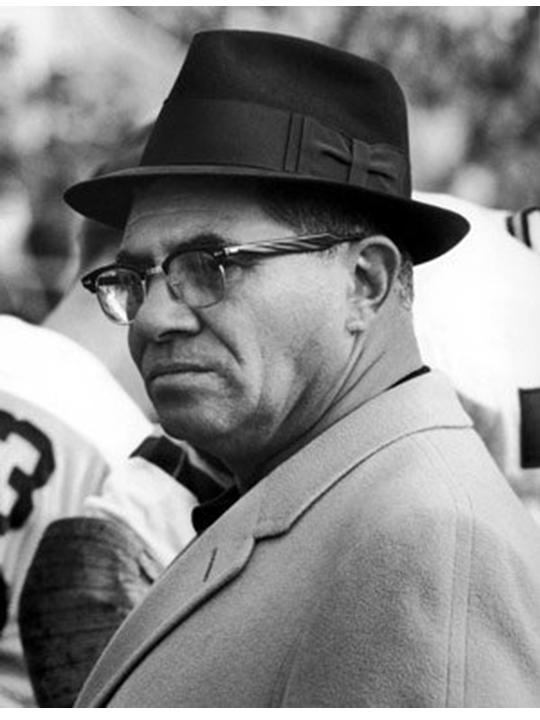
“Winning is not a sometime thing: it’s an all the time thing. You don’t win once in a while; you don’t do the right thing once in a while; you do them right all the time. Winning is a habit. Unfortunately, so is losing.” – Vince Lombardi

Check back in a couple days for part 2!

To your success,

Kevin Neeld

Please enter your first name and email below to sign up for my FREE Athletic Development and Hockey Training Newsletter!

Through my combined 20 years of experience in the hockey and training sectors, I’ve come across a few great, several good, and several pretty bad coaches. Now that I’ve made a career out of a “coaching” position, I find that I rely back on my experiences with previous coaches to shape my current behavior. Moreover, I’m in a position to see how much poor coaching decisions affect the development (especially psychologically) of young athletes and think it’s instructive for athletes to be more proactive in seeking out good coaches, not just good programs. The below list is far from an exhaustive collection of all positive coaching qualities, only examples of those qualities that I feel are most representative of good coaches.

1) Their Athletes Experience Success
Success means different things to different people, and can include both individual (making a team, earning a spot on a top line/powerplay, achieving a certain body fat percentage, increasing broad jump distance, etc.) and team (beating a top team at any given level, making the playoffs, winning a championship, etc.) achievements. Inherent in this is the idea that “success” is HIGHLY specific to the individual or team. Sidney Crosby achieving success in his mind will certainly be different from the AHL player that is simply fighting for an NHL roster spot. On a more common scale, every team has goal scorers and role players; a single goal may be a huge success for a role player, whereas it would be an expected achievement for a player deemed a scorer. Similar things can be said regarding success in an off-ice training setting in terms of both relative and absolute improvements/achievements. I’ve had players come to Endeavor Sports Performance with lofty performance improvement aspirations; I’ve had others walk in (rather, limp in) with an exhausting list of past injuries that say they simply want to be able to enter the next season feeling healthy again. In all situations, coaches can have a significant impact on the successes of the player and quality coaches tend to generate a long list of successful athletes. In a nutshell, this just means that the coach gets results.

“If you believe in yourself and have the courage, the determination, the dedication, the competitive drive and if you are willing to sacrifice the little things in life and pay the price for the things that are worthwhile, it can be done.” – Vince Lombardi

2) They Give their Athletes Credit for Athletic Successes
When an athlete reaches a goal or otherwise experiences some personal or team success, that is for the athlete to own. It was their ability, hard work, and resolve that got them there. Nothing gets my goat more than coaches taking credit for an athlete’s accomplishments. You see this all the time in both hockey and training settings. Undoubtedly, coaches play a vital role in the athlete’s development and in guiding the athlete toward success, but if the athlete doesn’t exert the physical and mental effort to do their jobs (and to practice doing their jobs), then success will never be found. Most of the “credit stealing” is done in the name of marketing. I don’t think there is anything wrong with having an alumni list on a website, but when a coach says “I got them there” or “they would never be there without me”, I think it’s complete bullshit. Let the athlete give the coach credit if it’s that deserved. Even worse, many coaches get these absurdly talented athletes that come into the program successful, leave the program and continue to be successful, and the coach will take credit for that. It’s complete bullshit. Bottom line is that coaches can have career-overhaul influence on some players, but it’s far from the norm. If a player is on an NHL route, and then reaches the NHL level, that is what they were supposed to do. It wasn’t the coaches accomplishment to take credit for.

3) Different Language for Different Players
Every coach needs to know their athletes. Different athletes will have varying degrees of internal and external motivation, will respond to different forms of feedback, and generally rely on different past experiences to drive future behavior. Coaches that take a “one-size-fits-all” approach will inevitably lose some athletes. Great coaches find ways to relate to the athlete and convey constructive information in a way that suits the athlete’s learning style and overall personality.

Would you motivate this guy the same way as an 11-year-old?

4) Place Development as the #1 Priority
This doesn’t always apply at the professional level, as sport coaches are hired and fired based on their ability to win. However, at the youth levels, the goal is always to help the player develop. Sometimes this involves hard decisions. It could mean putting a less skilled player in the game in an important situation just to give them the experience. It may mean cutting a player that won’t thrive at a certain level or within a certain program, even if they’re talented enough. In fact, I’ve actually recommended that players train LESS with us at Endeavor (read: turned away business) if I thought it was in their best interest. Simply, it’s important not to lose sight of the big picture in the interest of short-term success (or what may be perceived as success).

5) Continuous Education
Over time new information in every field becomes available. When coaches get stuck in their system, they often get passed by those that can be considered more “innovative”. From a training standpoint, I think it’s comical when I get off-season hockey training programs for a team and I can pull the book published in the late ’80s from my bookshelf that the program was photocopied from. Being less cynical, I suppose I should just be happy that teams are starting to make an effort to provide their player’s with some sort of training structure, but as a professional in the field, it’s almost insulting that players get such a low quality manual to work from. From an on-ice perspective, do you remember when the Devils built a system around “The Trap”? This was a coaching change that completely changed the game (which made it SOOOO boring to watch). It forced every team to adapt. Keeping up with new information and maintaining a malleable mind will help ensure coaching success now and in the future.

See. Learning’s not so bad.

To your success,

Kevin Neeld

Please enter your first name and email below to sign up for my FREE Athletic Development and Hockey Training Newsletter!

My head was spinning all week getting ready for this weekend, but I’m glad to finally be up in Boston getting ready for the Boston Hockey Symposium. Hopefully I’ll see you all here!

Here’s what you’ve missed over the last week at Hockey Strength and Conditioning:

Using the Turkish Get-Up in Team Sports from Sean Skahan
In this article, Sean breaks down the Turkish Get-Up into a progression of four steps that he used to integrate it into the Ducks’ program. If you aren’t familiar with the Get-Up, this will be a great introduction to it. As Sean mentions, it’s certainly a humbling exercise and one that is exceptionally integrative regarding functional pathways throughout the body, but also provides some benefits as a screen to expose side-to-side imbalances and ROM restrictions. I think the biggest barriers to implementing this exercise into a program are understanding where it fits from a stress standpoint (e.g. where do you put a total body “core” exercise into your program so that it won’t interfere with other exercises) and teaching it to a larger group proficiently. Sean’s breakdown will certainly help with the latter. He wraps the article by mentioning that his players responded well to his teaching progression and that complaints of back and shoulder pain were non-existent (I assume this is in reference to this exercise specifically and not a claim that one exercise has completely negated all back and shoulder pain). Great stuff as always from Sean.

Lateral Core Variations from Darryl Nelson
Darryl posted a video montage of lateral and rotational core exercises. He had a few “easier” variations to the exercises I posted the other day (Core Training Variations for Hockey Players), which is great as it adds for more potential variety in progressing up to the advanced exercises. With the exercise at the :50 mark, I’ll have our players have their outside leg forward, as I think it prevents them from using their leg as a kickstand and also more closely mimics the rotation pattern seem most prevalently on the ice. The thing I really like about Darryl’s video is that he’s coaching his players as he films, which allows the viewer to see common execution faults and how he coaches to correct them.

Youth Off-Ice Training Program from me
This is the next installment of our monthly youth off-ice hockey training program. As I’ve said in the past, the goal of adding these to the site was to provide the youth players, parents, and coaches out there that don’t have equipment or resources to pursue professional instruction a cost-effective training option. We’re several months in now and the programs have included a good amount of variety, quality balance and program structure, and minimal equipment use. Hopefully the target audience is reaping the benefits of this and not falling victim to all the gimmicky hockey training bullshit that is out there right now.

If you aren’t a member yet, fork out the $1 to test drive Hockey Strength and Conditioning for a week. If it’s not the best buck you’ve ever spent, I’ll personally refund you!


To your continued success,

Kevin Neeld
Please enter your first name and email below to sign up for my FREE Athletic Development and Hockey Training Newsletter!

Use CODE: "Neeld15" to save 15%