
When I was growing up, the captains on my teams were always the best players. Having trained several dozen youth players over the last couple years, it doesn’t seem much has changed in that regard. The most skilled/talented players are awarded “letters” and the rest of the team tends to look to those players for answers.

I never questioned this growing up, but I do now. Unfortunately many of the more skilled players completely lack any semblance of leadership ability. In a team setting, leadership means:

  • Attentively paying attention to the coach when he/she is speaking
  • Being in the front of the line to start drills
  • Encouraging teammates when they need it
  • Saying and doing the things that will make the TEAM better
  • Having INTEGRITY

I can’t tell you how many times I’ve heard so-called leaders say things like “we lost 7-2, but I had our two goals!” To be clear, I never under-recognize individual achievement. It’s these small “wins” that build confidence in a player. I also understand that youth players are, well, just kids, and that they haven’t always learned the importance of self-sacrifice for the greater good of a larger group.

Instilling Leadership Values in Players
That said, I think leadership qualities can and should be taught and reinforced. As coaches, it would be helpful to place a greater focus on habits than outcomes. For example, if a slow player is working extremely hard, commend the work ethic instead of the outcome (mediocre speed). Giving the players responsibility and holding them accountable also goes a long way. In an off-ice training setting, I had the captains on one of the peewee teams I trained run the warm-up for the second half of the year. I made it clear that they were expected to know it inside and out and to run the team through it, smoothly. And they did.

If you’re a coach, try to find ways to encourage your players to take responsibility for their own success and to reward habits, instead of outcomes. Reinforcing these things will not only make your players better at hockey, it will likely make them better citizens and functioning members of society in the future.

Becoming a Leader as a Player
If you’re a player, know that integrity is the number one requisite to being a leader of any group. Integrity, simply, is doing the right thing whether someone is watching or not. Players that joke around, but then work hard when the coach is watching are usually hated by their teammates, regardless of how talented they are. Be the player that is recognized for always doing the right things, constantly working hard, and making those around you better, and you’ll always be regarded as a leader.

It’s also important to know that not every leader will have a letter on his/her jersey, and that different teammates will look for different things in leaders. On a personal note, my final year at Delaware, I was the captain of our team (quite an honor). We had one assistant. Realistically, we could have had 3 “C’s” and 3 or 4 “A’s”. There was a lot of character on that team. After talking it over with the assistant captain, we agreed to not put letters on our jerseys at all. The thought was that we were a TEAM of leaders. While we had some responsibilities and expectations that other players didn’t, I frequently looked to other players for leadership or motivation.
Manliest mascot ever…

A few players in particular really stood out to me:

Every practice ended with “over backs”, which is just a brief conditioning drill skating between boards width-wise. Every practice, regardless of how terrible I felt, I lined up next to my friend Joe, because I knew that, regardless of how terrible he felt, he was going to go 100% every time. To me, THAT is leadership (not surprisingly, he was the captain the following year).

We had another player, Ben, that was probably the best penalty killer I’ve ever played with. I’ll never forget one game, where he went down to block a shot and took it in an unprotected area. He was hurt. He was slowly getting back up to his feet, when he picked his head up to realize that, oddly, the puck had bounced off him right back to the defenseman who took the original shot. The defenseman immediately wound up to take another shot, which Ben immediately dropped back down to block, again, taking it in an unprotected area (a different one). It’s not a glorious job, but it helps a team win. That behavior is contagious. Nothing makes other players want to sacrifice to help the team succeed more than watching a teammate sacrifice to help the team win. THAT is leadership.
Players need to recognize that leaders come in multiple forms and play multiple roles on a team. EVERY  player can be a leader, and not every leader needs to wear a letter. In fact, I’d recommend that no leaders do. You may find the team is more cohesive that way.

To your success,

Kevin Neeld

Please enter your first name and email below to sign up for my FREE Athletic Development and Hockey Training Newsletter!

If you’ve been reading my posts and newsletters or talked to me at all in the last month, you know I’m VERY excited about the launch of my new site: Hockey Training Expert

Hockey Training Expert

If you’re new to the site, you probably have some questions about what’s included and why you should join. To save you time, I’ve put together a list of posts that you should check out. If you still have questions about the site, post them as a comment below and I’ll get back to you as soon as possible.

HockeyTrainingExpert.com is Live!

Hockey Training Expert Team

Top 3 Reasons to Join Hockey Training Expert

Three Keys to Ice Hockey Success

Is Hockey Training Expert for Me?

150+ Elite Hockey Commitments in 5 Years

-Kevin Neeld

Please enter your first name and email below to sign up for my FREE Athletic Development and Hockey Training Newsletter!
Congrats to the U.S. Women’s Ice Hockey Team for getting off to a great Olympic start!

In an effort to get more incredible contributors to Hockey Training Expert, I’ve been talking a lot with hockey coaches and instructors with hundreds of years of combined experience.

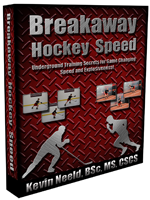
Hockey players and coaches recognize the benefits of having a fast team. When it comes to individual skill, nothing is more important than speed. This is EXACTLY why I put together “Breakaway Hockey Speed”, so players and coaches could learn to how develop game changing speed, and get access to the exact drills that I use with my players.

Breakaway Hockey Speed

Breakaway Hockey Speed

Breakaway Hockey Speed is a 25-page manual that outlines how to change your body position to maximize the power of your stride and reveals the truth about which stride pattern is better: short choppy strides vs long powerful strides (this will surprise you!). Breakaway Hockey Speed includes 6 Linear Speed Drills, 15 Transitional Speed Drills, and the information you need to integrate a comprehensive speed training program into your current training program.  This manual is exactly what you need to become faster and more explosive on the ice! Speed is your 1st key to ice hockey success.

This is a FREE gift for everyone that signs up for Hockey Training Expert before Friday!

Click here to sign up now!

Hockey Nutrition 101

Hockey Nutrition 101-2

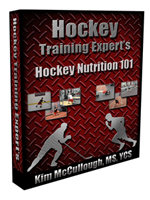
All the speed in the world won’t matter if you don’t give yourself the fuel to use it. Proper nutrition is the most commonly recognized, but least practiced aspect of high level athletic performance. My colleague and friend Kim McCullough wrote Hockey Nutrition 101 to give you practical information on how to improve your diet to improve your performance. Kim brilliantly discusses how proper eating and hydration can have a huge impact on your performance, recovery, and overall development. Hockey Nutrition 101 gives you all the tools you need to figure out what you should be eating/drinking, how to make simple changes in your current diet, and how to track your intake so you can monitor your new high-performance diet! Proper diet and hydration habits are your 2nd key to ice hockey success.

This is a ANOTHER FREE gift for everyone that signs up for Hockey Training Expert before Friday!

Click here to sign up now!

Mental Performance Package

Mental Performance Package-2

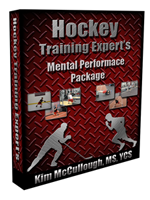
Now you have the tools to develop incredible speed and give yourself the fuel you need to dominate. You’re one step away. Most players recognize that between 50-90% of their performance is mental. Most players admit that 0-10% of their training time is spent on mental preparation. Kim McCullough developed ANOTHER incredible resource for you, the Mental Performance Package, that gives you step-by-step instructions on how to develop the focus and confidence of a champion. This is your 3rd and final key to ice hockey success!

Guess how much this incredible resource will cost you? NOTHING! This is a ANOTHER FREE gift for everyone that signs up for Hockey Training Expert before Friday!

Click here to sign up now!


P.S. For only $9.95/month you get these THREE incredible bonuses IN ADDITION to the customized hockey training programs, hundreds of innovative hockey training exercises, incredible articles and access to some of the greatest minds in ice hockey player development. Joining Hockey Training Expert is a NO BRAINER and you know it. Stop dragging your feet and join our dedicated community today!

Click here to sign up now!

Please enter your first name and email below to sign up for my FREE Athletic Development and Hockey Training Newsletter!
Yesterday Karl (our first intern at Endeavor Fitness) and I went through the Functional Movement Screen together.

I’m proud to say, as the mentor, that I came out victorious with a score of 18 (over his measly 17!).

He “lost” because his hamstring extensibility (or flexibility) was terrible. While most of our athletes have decent hamstring extensibility we do have a few that are pretty locked up.

With Karl, and some of our athletes, I’ll have them do this quick stretching activity to improve hamstring extensibility.  When someone is available, we’ll usually do this with a partner, which allows “on the fly” adjustments to leg positioning, but often times I want our athletes to do this at home, using a wall as their partner.

Please ignore the music in the background!

The protocol is:

1) Set up with one leg raised in a “hamstring stretch” position with your knees of both legs fully extended and the toes of both legs pulled toward your shins. In this position, your lower back should be flat (or with a slight curve), and you should feel a good stretch in your hamstrings on the raised leg. Hold this position for 10 seconds.

2) If you feel like you can, shift your body a little closer to the wall to increase the stretch on your hamstrings.

3) Actively raise your heel off the wall and hold for a few seconds. Return to the wall and rest a few seconds. Repeat 2-3 times.

4) If you feel like you can, shift your body a little closer to the wall to increase the stretch on your hamstrings.

5) Actively press your heel into the wall as hard as you can without it lifting your hips or moving your body at all (or breaking your heel through the wall!). Keep pressing for 3-5 seconds, then rest a few seconds and repeat 2-3 times.

6) If you feel like you can, shift your body a little closer to the wall to increase the stretch on your hamstrings and hold this final position for 10 seconds.

Most people notice a substantial improvement in their hamstring extensibility after performing this circuit. If you’re really locked up, try doing this twice a day for a couple weeks and see how much you improve.

Please enter your first name and email below to sign up for my FREE Athletic Development and Hockey Training Newsletter!
A few weeks ago I started working with a Division 1 bound high school baseball player.

During his first session, he was able to do a set of Dumbbell Reverse Lunges with 40s for 6 reps/side.

2 weeks later he did a set of 4 reps/side with 75s, and he did 70s for 6/side the following week.

There are multiple possibilities to explain this drastic strength increase:

1) Becoming more comfortable with the movement pattern

2) Increased neural drive to the involve musculature

3) Better night of sleep before the training sessions later in the program

While I won’t rule any of these things out, I’ll say that these strength increases aren’t abnormal here.

With all of our athletes, there seems to be one common theme:

When our athletes learn to brace/stabilize their core during the lifts, their weights go through the roof!

Simply coaching athletes to “get up tall” and/or (depending on the lift) “keep their core tight” while they lift has an incredible impact on their ability to transfer force through their core, and therefore the weight they can lift.

Many athletes pick this up from simple coaching cues. For the athletes that need a little more help, I teach them how to brace their core with these instructions:

1) Put their hands on their stomach

2) Tighten up their core, which contracts the stomach musculature

3) Take a deep breath “in through their belly”, without releasing the core tightness

4) Practice taking mini-breaths in and out without losing their core tightness

After teaching them this skill in a static environment, most are able to transfer that to their lifts.

Please enter your first name and email below to sign up for my FREE Athletic Development and Hockey Training Newsletter!

Use CODE: "Neeld15" to save 15%