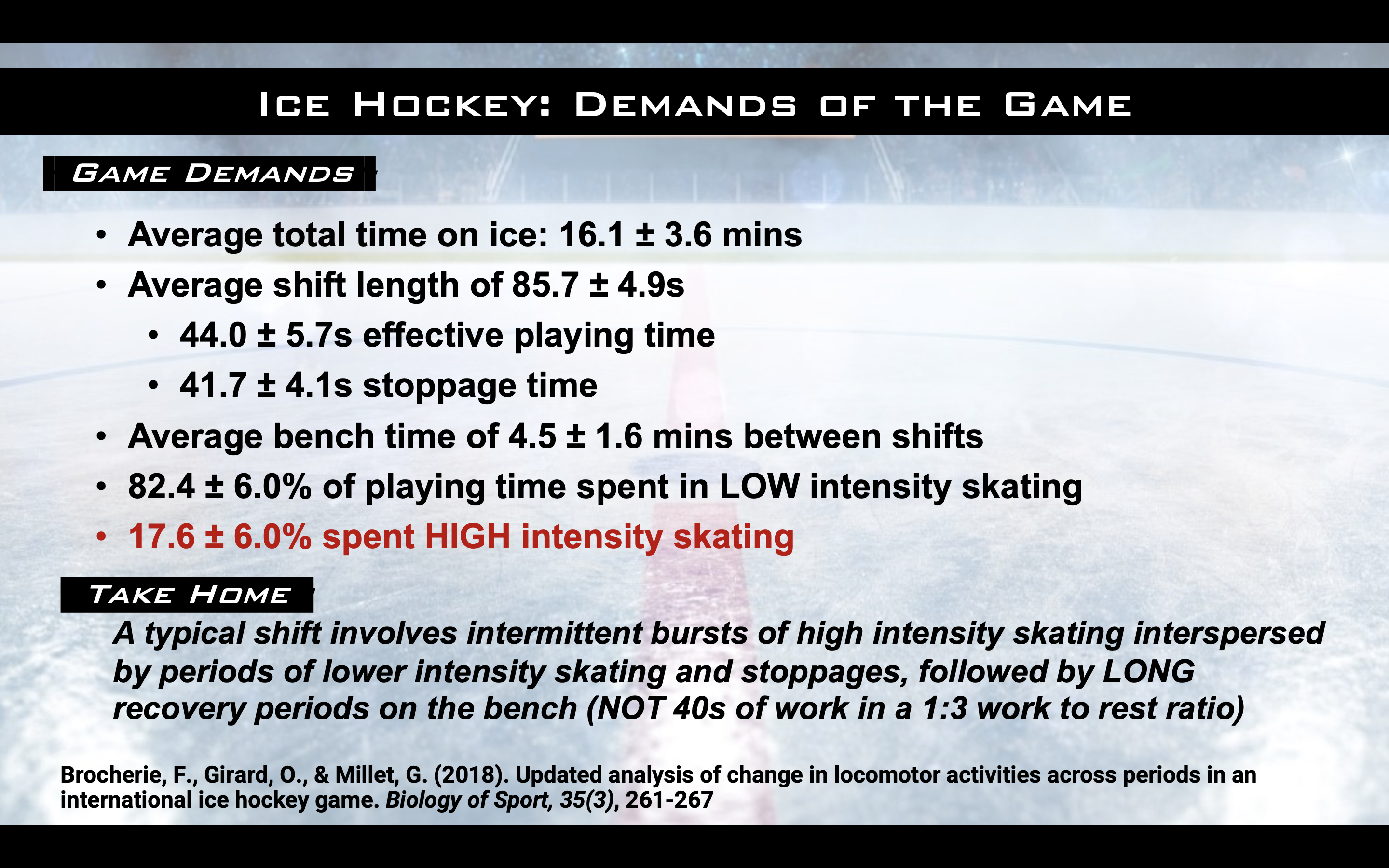
In an international hockey game, the average shift length was ~86s, which was split in half between playing and stoppage time. Players spent ~18% of their playing time in high intensity skating.
The big take home here is that the ice hockey requires bursts of high intensity skating interspersed by periods of lower intensity skating and stoppages.
Shifts are followed by LONG recovery periods on the bench.
This is significantly different from the 40s of work, 1:3 work to rest ratio commonly used to describe game demands.
The longer you go, the slower you go.
So recognizing that the game is comprised of peaks and valleys in movement speed/intensity (higher highs and lower lows), opposed to 40s of continuous work, should have a significant impact on how players condition.
Enter your first name and email below to sign up for my FREE Sports Performance and Hockey Training Newsletter!
29 Lessons on Hockey Development
Last week I had an opportunity to speak at a youth hockey camp in Toms River, NJ that Jack Walchessen was running.
Jack has been a long-time training client who, after a successful OHL career (Captain of the Peterborough Petes and recipient of the Dan Snyder Memorial Trophy for Humanitarian of the Year), decided to transition his training from preparing for another hockey season to preparing for PSTs and BUDs in pursuit of becoming a Navy Seal, which was an interesting challenge for both of us.
When Jack first asked me to come speak, I agreed immediately. Then he dropped this on me (I’m paraphrasing): “I’d like you to cover training, nutrition, and recovery…I’ll have players under 10 up through the U-18 level, and their parents. You’ll have one hour.”
Pretty straight forward, right?
As usual, I got fired up on Starbucks and talked fast, so we were able to cover a lot. With that in mind, I wanted to share 29 of the messages that I discussed in the presentation with you. This a quick read, but should leave you with a few tips on areas you can improve upon.
29 Lessons on Hockey Development
1) Being an athlete is a 24-hour/day commitment. The older you get, the more important it is to view everything you do away from the rink as part of your preparation. You can’t just show up and expect to be great.
2) Physical preparation, nutrition, and recovery will ALL have a significant effect on your performance. If you’re doing really well in one or two of these areas, focus your energy on making improvements in the other(s).
3) Training allows players to execute their skill sets at the highest level, and can often make up for mediocre abilities. It doesn’t matter if you have the best shot in the world if you don’t have the speed/quickness (and hockey sense) to create the time and space you need to release it.
4) Eating real food, consistently, will not only make sure you’re properly fueled for games, you’ll also be able to train harder, recover faster, and generally adapt better, so EVERYTHING you do will lead to you making faster progress.
5) Sleep is arguably the most important part of recovery that every player at every age and level can make significant improvements on. Mild sleep deprivation (e.g. think 6 hours per night), consistently, can have the same detrimental effect on performance as not sleeping at all for an entire night. Think about that.
6) Simply, you can’t develop as a player if you’re hurt. Improving your durability should be a goal of every hockey training program.
7) The injury risk associated with the training process should be as close to zero as possible. Any training method, or coach, that has a reputation for injuring people should be avoided at all costs.
8) Weightlifting has a lower incidence of injury than playing soccer. As adults, we need to stop perpetuating this myth that lifting weights is not safe for kids. No parent in their right mind would not allow their kid to play youth soccer because of fear of injury.
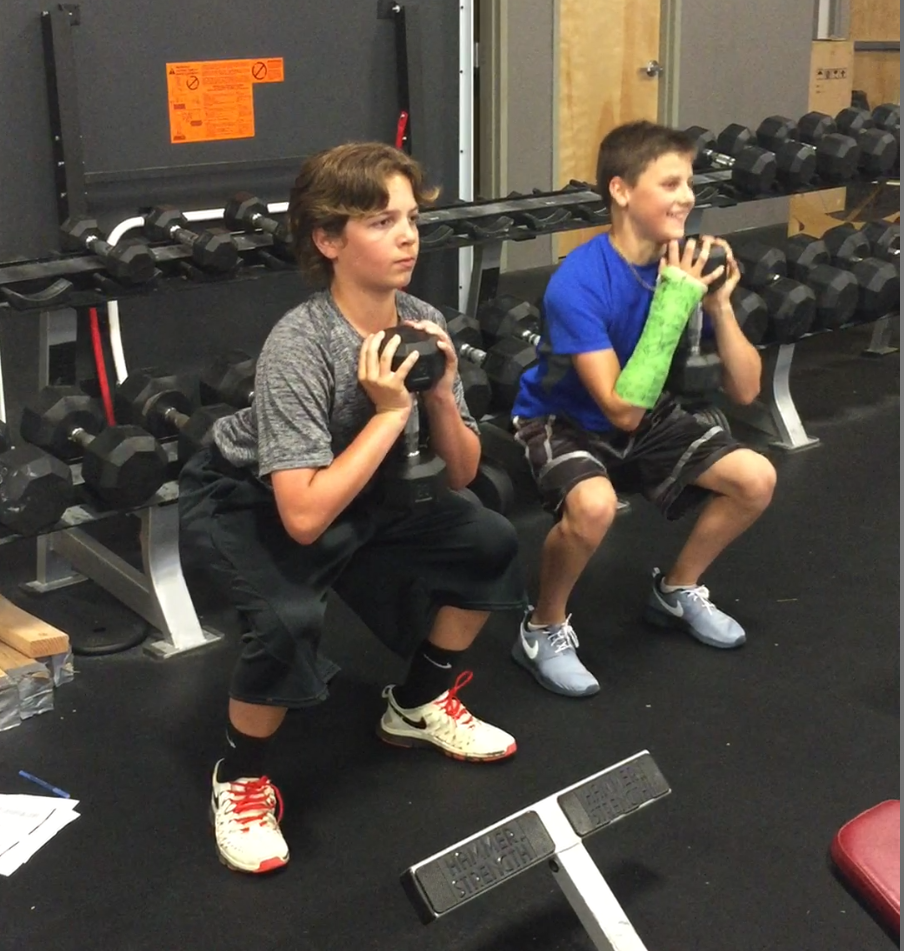
Tempo Goblet Squats are a great way to teach kids proper technique, while also improving lower body strength and low position endurance. And…they’re incredibly safe.
9) I’ve said this a million times…maybe not a million…but at least 12, quick feet training is NOT speed training.
Just a few more seconds…THEN you’ll be faster
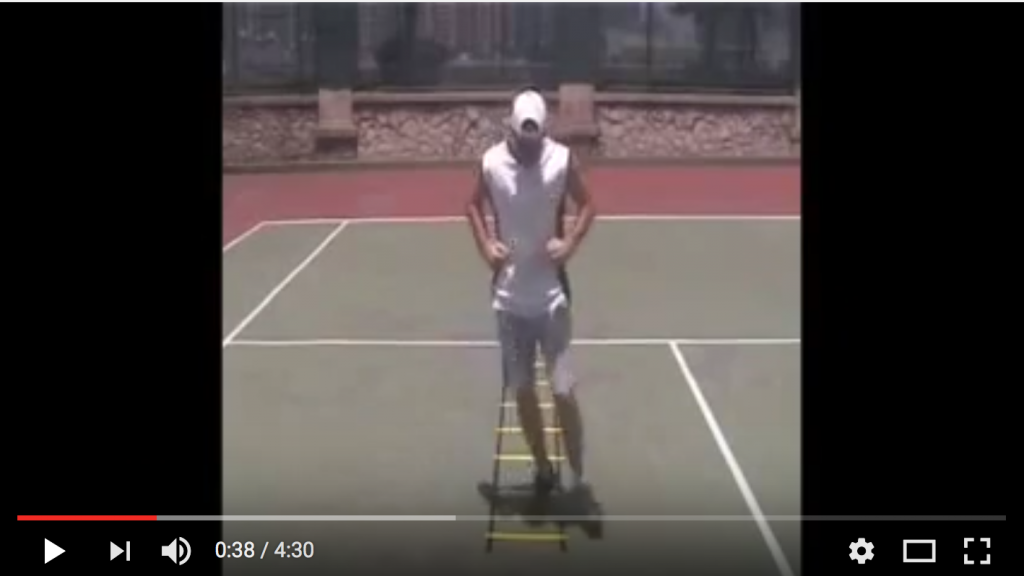
10) Ladder drills are more specific to tap dancing than they are to skating.
Step 1: Watch this. And when you finish laughing at the Knight Rider, Elevator Music and Missy Elliot mash-up they decided was most appropriate for this video, look at his body position (he goes no where), hand movement (short choppy arcs coming only from moving at the elbow, not the shoulder), and eye position (buried into the ground).
Step 2: Watch this. Enjoy the impressive rhythmicity as you note the similarities in speed of foot movement, but completely absence of the body going anywhere.
Step 3: Watch this, read the next section below, and then consider which two of these videos look the most similar?
11) Look at the cadence of his foot turnover during the starts, turns and when he opens up in the straight away. Even when his feet are moving fast, it’s still a much slower cadence than “quick feet drills”. This is a crucial distinction between speed training drills that transfer to skating and those that transfer to running. The longer the skate blade is in contact with the ice, the larger the propulsive force that can be produced with each stride.
12) Even tap dancers can keep their eyes straight ahead while they move their feet. Among the many negatives of using ladders for speed development, the athletes bury their eyes into the ground to make sure they don’t step on the ladder. There is no ladder on the ice. The ladder doesn’t matter.
Note the eye position.
13) Speed training doesn’t need to look like speed training to improve speed. In other words, just running more sprints is rarely the best solution. Most kids can’t go faster because of strength and technique limitations. Overlooking these is like optimizing the fuel injection into a 2-cylinder engine with crooked alignment. In other words, it’s like my car. Don’t be like my car.
For most youth players, THIS is speed training.
14) This is one of my favorite videos from my 7 years at Endeavor. A lot of lessons to be learned here. A cast over his wrist didn’t cause him to miss a single week of training. “Big legs” and “strong legs” aren’t always the same thing. Most hockey players I hear say “I don’t lift lower body because my legs are big enough” are really saying “my legs are fat, and I’m lazy.” Despite being considered small, Kyle’s incredibly strong. There’s a reason he was the first two-time Captain at Harvard since 1923. World-class work ethic.
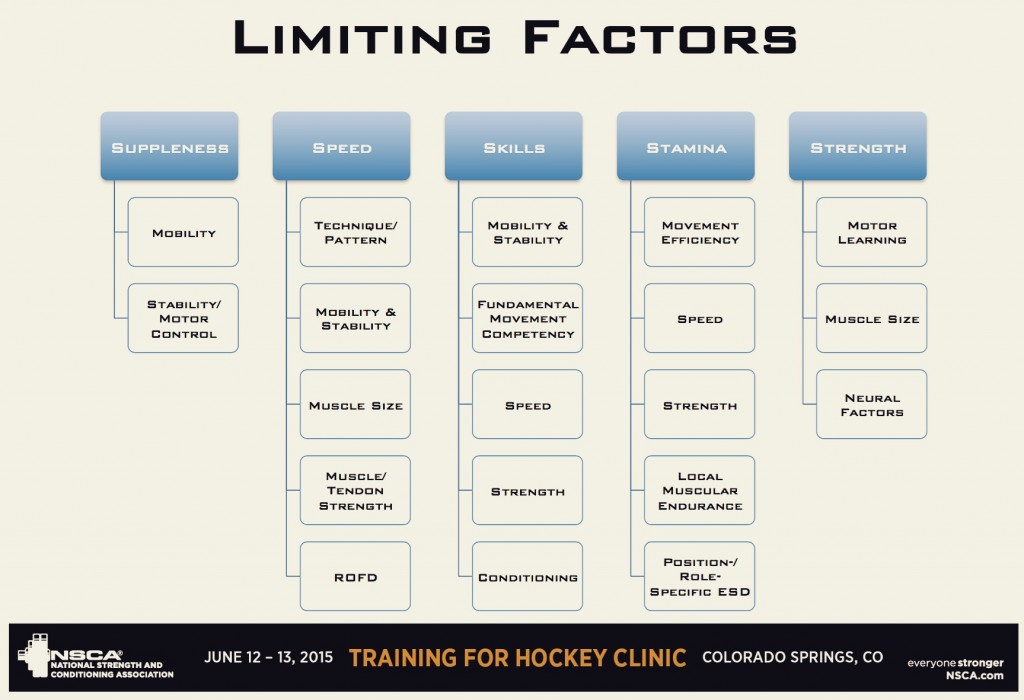
15) Understanding what is limiting you from achieving your goal is arguably the most important part of the development process. Most people skip the “diagnostic” step, and just throw a bunch of training at someone and hope it works. Would you be comfortable doing this with your car? “Yea, we uh, went ahead and changed your oil, put in new windshield wipers, and rotated your tires.” “Is that what was wrong with my AC?” “We didn’t check, but most cars need those things so we just did that. Good luck.”
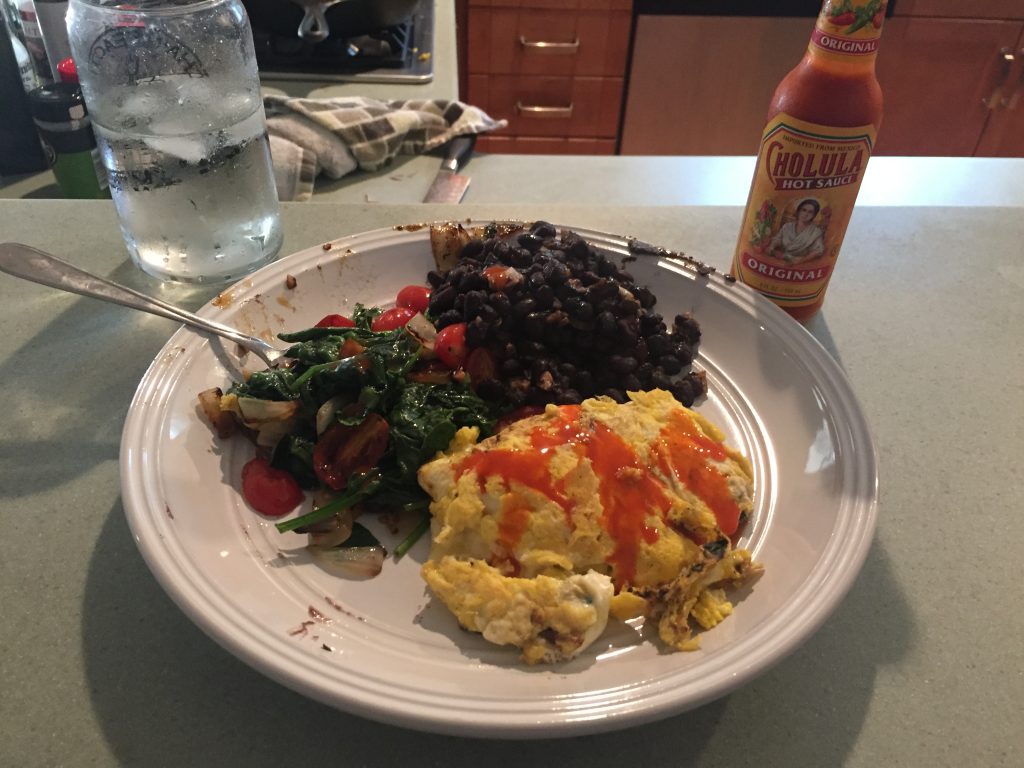
16) We drastically over-complicate nutrition. Eat REAL food as often as you can. If you do this, most other problems take care of themselves. There are a few real food rules I recommend using as guidelines: 1) Real food can be hunted or grown; 2) Real food was real food 10,000 years ago; 3) Real food has one ingredient. I asked a young girl at the talk to list all of the ingredients in broccoli. She covered her face with her hands, got super red, peeked out from behind her hands, and said, broccoli? NAILED IT! You don’t need to be a dietician to get this part right.
17) When you eat real food, food shopping is a breeze. Work the perimeter of the store (produce, meat, eggs), duck into an aisle to pick up some spices, and if you’re eating beans with every meal like I’ve been for the last 3 weeks…toilet paper, and you’re done.
Real Food: Eggs, black beans, spinach, cherry tomatoes, onions and roasted garlic.
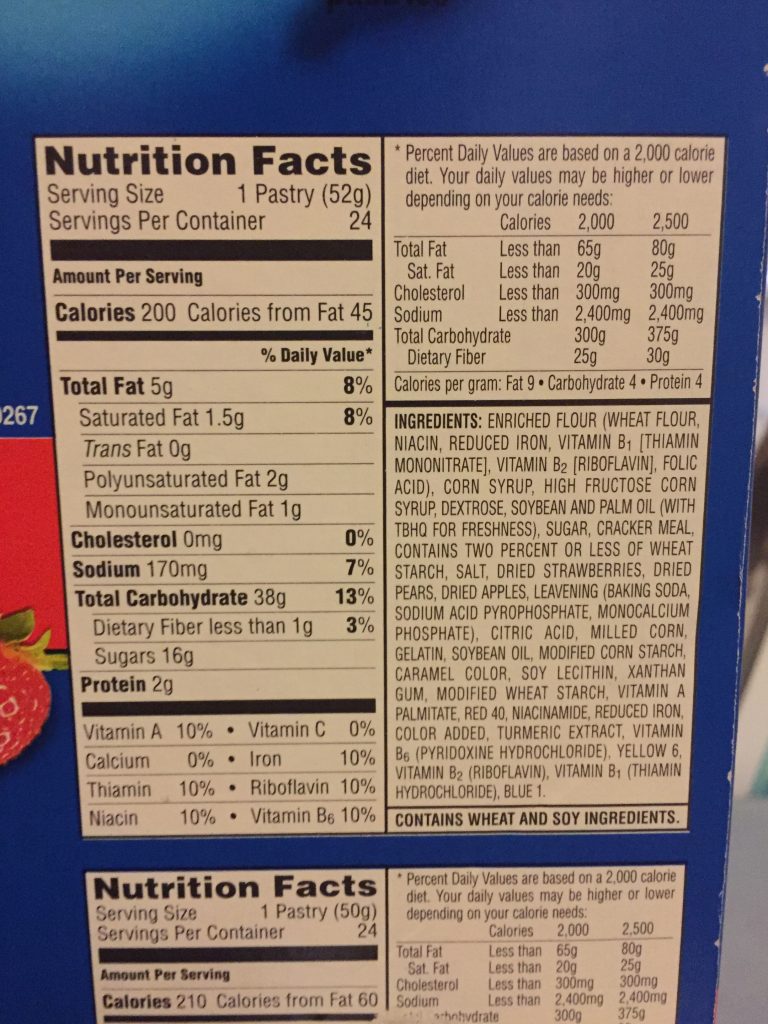
18) If you’ve struggled to master reading food labels, I have a solution: If it has a food label, don’t buy it. Problem solved.
Real Pop Tart Label. Don’t you just love how the sodium acid pyrophosphate compliments the thiamin hydrochloride?
19) Most kids skip breakfast or eat cereal, eat a sandwich and chips for lunch, and eat whatever their parents make them for dinner. This means for the overwhelming majority of the day, they don’t consume any actual REAL nutrition.
20) It doesn’t matter how old you are, if you are capable of picking something up, putting it in a bag, and then putting that bag into another bag, you have all of the requisite skill sets to pack your own lunch. Don’t rely on your parents to do this for you; take responsibility for your own eating.
21) Mild dehydration can significantly impair mental and physical performance. Don’t worry about counting how much water you drink every day. Your pee should be clear ALL day long. If it’s not, you’re not drinking enough water.
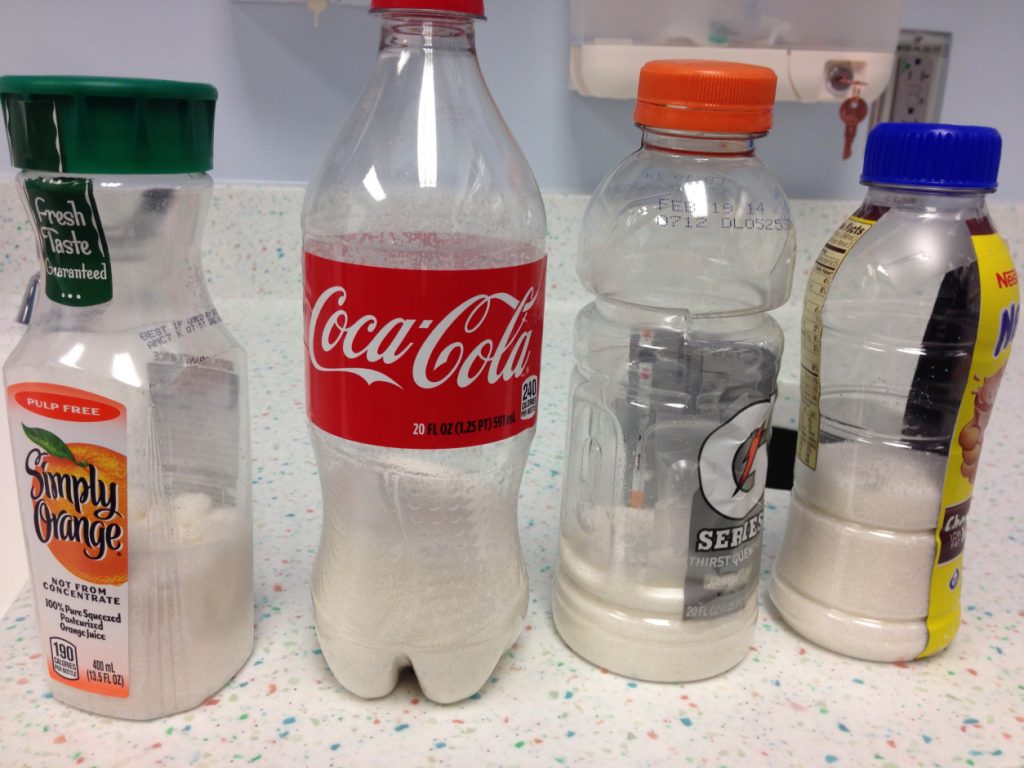
22) Juice is not good for you. We need to stop hiding behind the “vitamin” content in juice as a justification for it being good. EVERYONE reading this knows someone affected by Type II Diabetes and/or obesity. NO ONE reading this knows a single person affected by scurvy. We have a bigger problem with sugar intake than we do with vitamin C deficiency.
Sugar content in common drinks (Image from: littlebitsweet.wordpress.com)
23) “Sitting is the new smoking.” The body adapts to the positions it spends the most time in. We need to make a conscious effort to get up regularly to interrupt the body literally molding itself to better fit in your couch.
24) One of the primary strategies your body uses to stabilize itself is vision. This is why you can stand on one leg so much easier with your eyes open than with your eyes closed. Components of vision are trainable. If you stare at a cell phone for hours each day, you’re training your vision to fixate on something a few inches in front of your face. This impairs your ability to use your vision more dynamically (e.g. to absorb and process all of the movement around you while you’re on the ice) and teaches your body to over-rely on visually fixating on a single point for stability. Usually these people stare at the floor while they walk to feel “grounded” and fall apart on a single-leg stance test when they close their eyes.
25) Being “ready” to perform is a balancing act between stress and recovery resources. If you aren’t making the progress you want or feel like you’re constantly worn down, try to tease out if it’s because you’re doing too much (e.g. playing on 2 teams, practicing 5 times per week than playing 4+ games on weekends) or not providing enough recovery resources (e.g. CONSISTENT real food, hydration, quality sleep, etc.).
26) One of the most powerful ways to improve sleep is to keep your room cold, dark, and quiet. Make sure your cell phone is on “do not disturb” mode and face down, as this will allow all of your messages/calls to come in, but the sound and light from the phone won’t impair your sleep.
When all else fails, take a cue from my wife and sneak a quick nap in during the day. If you nap for a full 90 minutes, you’ll actually get some “deep sleep” in, which is the type characterized by hormone release associated with tissue growth and repair, and such a deep state of unconsciousness that you won’t notice if your dog climbs on top of you and wedges into the awkward spoon position.
27) Three things every player can start doing TODAY to improve their development are to: 1) Find a quality hockey training program; 2) Start eating a vegetable with every meal; and 3) Carry a water bottle with you all day long.
28) Commit to excellence in everything you do. Be the best athlete you can. Be the best student you can. Be the best friend you can. Be the best son/daughter/brother/sister you can. Take pride in who you are as a person.
29) Everyone that told Johnny Gaudreau he was too small to succeed at the Midget, Junior, College, and Pro levels was right. He was. He is. But he succeeds anyway. Don’t let other people tell you what you can and can’t achieve. No one knows what you’re capable of.
“Kevin Neeld is one of the top 5-6 strength and conditioning coaches in the ice hockey world.” – Mike Boyle, Head S&C Coach, US Women’s Olympic Team
“…if you want to be the best, Kevin is the one you have to train with” – Brijesh Patel, Head S&C Coach, Quinnipiac University
Should You Stretch After You Pull A Muscle?
Today’s Thursday Throwback is an appropriate follow-up to last week’s post on the relationship between flexibility and muscle injury risk. If you missed that, you can check it out here: Does Flexibility INCREASE your risk of injury?
This is another short, but important read, as it touches on an idea that I think every youth athlete I’ve ever worked with has been taught incorrectly. Enjoy the post, and please pass it along to any friends or family you think would benefit from reading it!
Should You Stretch After You Pull A Muscle?
Think about the times in your life that you’ve “tweaked” a muscle or slightly strained/pulled it.
What was the FIRST thing you did on your own or were told to do?
If you’re like most people, you immediately stretched the muscle.
This isn’t always the answer
The very first thing I tell my athletes if they tweak a muscle is NOT to stretch it!
A muscle strain can range from a slight over-stretch to a complete tear. Assuming the muscle isn’t COMPLETELY torn, it’s likely that there is some micro-damage to the muscle and that the muscle feels tight because it’s guarding against further injury.
This means that most people are attempting to stretch an over-stretched muscle AGAINST the muscles’ contraction.
Not only is this not an effective way to speed up your healing, but it’s probably making your injury worse!
Think about your muscle as a rubber band. Now imagine cutting a small slit in the rubber band with a razorblade.
If you stretch that rubber band now, what’s going to happen?
The small slit is going to expand, getting longer and wider.
Does making a slight tear in your muscle longer and wider seem like a smart recovery strategy?
If you tweak a muscle, DO NOT stretch it. You can ice it if you want (although I’m not convinced that ice does anything either). If you’re going to stretch anything, stretch the muscles that OPPOSE the injured muscle.
Many muscles are overworked or strained because of a relative stiffness imbalance with their antagonists, so stretching the opposing muscle can help bring you back into balance.
Today’s “Thursday Throwback” is a quick one from 2009. This continues to be a trend we see in our assessments today and I think, while basic, highlights that you can go wrong on both ends of the flexibility continuum. Those that are too immobile at one joint are likely to move excessively at another. Those that are too mobile at one joint may be more likely to suffer from injuries as a result of a lack of stability and/or constant attempt to manage the instability (e.g. muscle injuries). This is why optimizing movement is such an important concept!
Enjoy the post below:
Does Flexibility INCREASE your risk of injury?
A couple weeks ago I did an audio interview with Joe Heiler for SportsRehabExpert.com, one of the most underrated membership sites on the web. I’m really humbled that he asked me to contribute.
If you’ve never been there, check it out. Joe’s a really bright guy and has compiled a lot of great information from other smart, successful coaches and therapists.
One of the things that came up during the interview was what we can do to prevent “groin” (adductor) strains. We’ve been fortunate in that we haven’t had too many adductor injuries in our athletes. This is probably, at least in part, due to the hip mobility and hip muscle activation exercises we use.
We did have a couple athletes complain of adductor pain though, and they all had ONE thing in common:
OUTSTANDING ADDUCTOR FLEXIBILITY!
This trend flies in the face of the “you got hurt because you didn’t stretch or aren’t flexible enough” way of thinking.
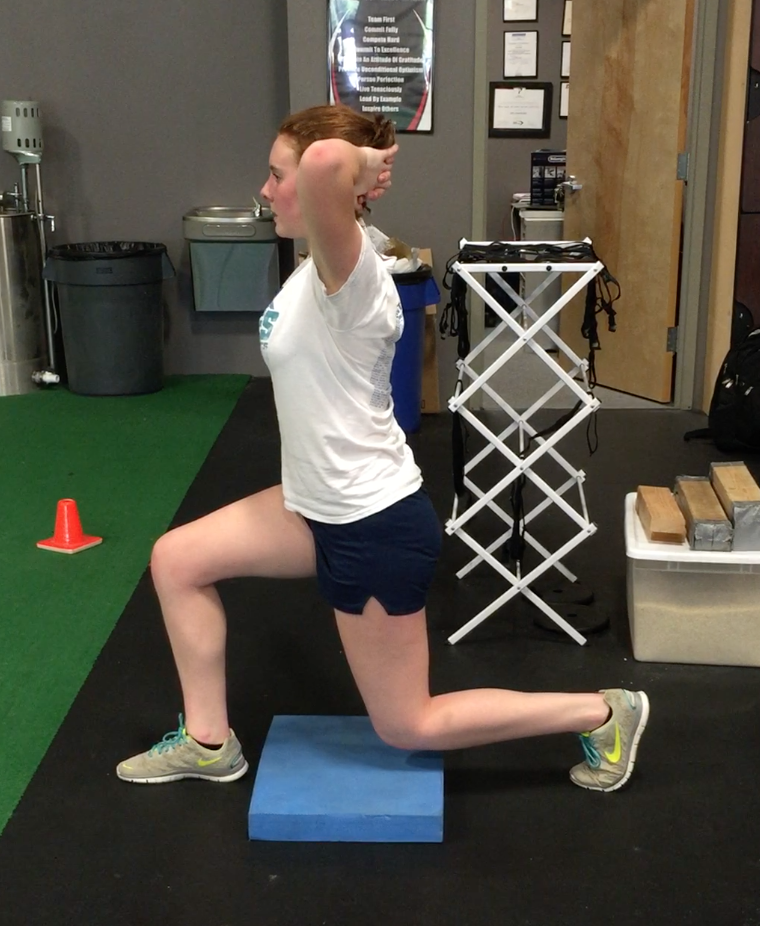
In these athletes, we were able to resolve their pain relatively quickly, by having them STOP STRETCHING their adductors, start stretching their glutes a few times a day, and by doing isometric adductor strengthening exercises by crushing a medicine ball between their knees for time.
The rationale was simply that their adductors were weak relative to their abductors (to be overly simplistic: weak groin, strong glutes).
By stretching their glutes and strengthening their adductors, we were able to shift the strength and stiffness relationship between those muscles into more balance and get rid of their pain within a week or two.
Today’s Thursday Throwback features 6 videos from Dr. John Berardi, the founder of Precision Nutrition. Dr. Berardi has been one of my go-to resources for nutrition information for the last 8 years. Not only does he stay on top of current research, but he’s the best in the industry at delivering nutrition information in a way that people will actually do it. I believe that most people have a general understanding of better and worse food choices, but few actually do. This seems to be a psychology/behavior change issue more than purely an information issue. This is really where Dr. Berardi excels. If you’re interested in learning more about Dr. Berardi’s system, check out this link >> Precision Nutrition
If you’re looking for something more hockey-specific, be sure to check out Brian St. Pierre’s Ultimate Hockey Nutrition. Brian currently works for Precision Nutrition and delivers high quality nutrition information in ways that are easy for players at all ages to implement.
6 AWESOME Nutrition Tips from Dr. Berardi
John Berardi is a brilliant nutritionist that has had a ton of success with a wide variety of people from elite athletes to non-athletes. His Precision Nutrition system is still the best nutrition product ever created. I think everyone should own a copy. For more information on Precision Nutrition, click here.
Below are 6 awesome videos of a TV interview that Dr. Berardi did with Christine Williams on the show “On The Line”. Take the time to watch these. Dr. Berardi goes through a lot of awesome nutrition strategies that will help you lose fat, and get lean and strong.
Part 1 – On The Line with Christine Williams
About me, my work, about the differences between athletes and recreational exercisers, and more…
Part 2 – On The Line With Christine Williams
How much protein should we eat, the body mass index, how to gauge progress, and more…
Part 3 – On The Line With Christine Williams
Advanced nutrition, healthy food/supplements, metabolism boosting foods, cravings, and more…
To learn more about how Precision Nutrition can help you get in the best shape of your life, click here.
Part 4 – On The Line With Christine Williams
Cutting cravings, metabolic slowdown with age, healthy recipes, fruits and veggies, and more…
Part 5 – On The Line With Christine Williams
Metabolism preservation, ideal rate of progress, crash dieting, loose skin, and we take some calls…
Part 6 – On The Line With Christine Williams
How to exercise, exercise for seniors, day 1 of your program, and more…
To learn more about how Precision Nutrition can help you get in the best shape of your life, click here.
Please enter your first name and email below to sign up for my FREE Athletic Development and Hockey Training Newsletter!
Get Ultimate Hockey Training Now!
“…an extremely rare comprehensive look at the present state of ice hockey training.”
“…a must-have for coaches and strength professionals at all levels of hockey.”







 Use CODE: "Neeld15" to save 15%