Monday’s post presented research that represents what I believe is the first attempt to analyze a connection between various testing measures and actual in-game performance. If you missed it, check it out here: Breakthrough Hockey Training Research

Sticking with the research theme, I came across a few other studies that may interest you.

Whole-body predictors of wrist shot accuracy in ice hockey: a kinematic analysis

Of the three studies I’ll mention today, this is probably the most interesting to those with a primarily hockey background. This study sought to objectify which kinematics (movement patterns) lead to more accurate shooting. They found that shooting accuracy was predicted by coordinated strategies of the lower limbs, torso, and upper limbs. A more generic statement couldn’t be made. That said, they point out that a more in-depth analysis of their data suggests that a more stable base of support, improved ability to decelerate generated momentum, and proper positioning will all improve shot accuracy. For those of us on the performance training side of things, this reinforces the notion that hip stability, core linkage between the lower and upper halves, and proper movement patterns will transfer to improved performance on the ice in both general athleticism (speed, power, etc.) AND more skill-driven abilities.

Significant accuracy predictors were identified in the lower limbs, torso and upper limbs. Interpretation of the kinematics suggests that characteristics such as a better stability of the base of support, momentum cancellation, proper trunk orientation and a more dynamic control of the lead arm throughout the wrist shot movement are presented as predictors for the accuracy outcome.

Single leg stability. Proper hip hinge. Lethal shot.

Prevalence of joint-related pain in the extremities and spine in five groups of top athletes

This study looked at self-reported site-specific pain frequency in 75 male college athletes in a number of different sports compared to “non-athlete” controls. Pain location was identified as cervical, thoracic or lumbar spine, and other major joints such as shoulders, elbows, wrists, hips, knees and ankles. The results from this study were pretty “vanilla”, but I thought it was interesting that hockey players were amongst the most frequent complainers of pain in the cervical region. The neck is a bit of a taboo region from a training standpoint and pain in this area is a red flag to refer out to someone with higher qualifications, but i think many of the non-contact cervical issues hockey players face could be eliminated by restoring extension and acceptably symmetrical rotation range of motion in the thoracic region, and cuing a neutral cervical position in all exercises (and in life in general for that matter). A little bit of education on proper spinal alignment can go a long way for more intuitive and dedicated players. In support of this, the authors noted that pain in one area of the spine was correlated with pain in other spinal regions. This is just more evidence of how the body functions as an integrated unit, and why isolated training approaches simply won’t cut it.

A good set of hands can of hands can go a long way in relieving tension in the cervical spine

Changes in Homocysteine and 8-iso-PGF(2a) Levels in Football and Hockey Players After a Match

This study was designed to assess levels of serum homocysteine and 8-iso-PGF(2a), two markers of atheromatosis (a deposition of lipids on the arterial wall), following football and hockey games. Interestingly, they found that these markers were significantly increased following a game in both sports in college-aged athletes. This is unchartered waters for me so my interpretation of these results can only be so analytical, but the authors suggest paying attention to folate, vitamin B6, and vitamin B12 balance during the 24-hours following the event. To me, this further highlights the importance of hockey players putting a little more effort into purposeful eating. It’s hard to truly assess whether any athlete is experiencing an activity-related deficiency if their starting point is sub-optimal.

This is broccoli. It’s what scientists call a “vegetable”

Let me know what you think of these studies. Post your comments below!

To your success,

Kevin Neeld

Please enter your first name and email below to sign up for my FREE Athletic Development and Hockey Training Newsletter!

Before I jump into today’s post, I have a couple announcements:

  • You can now download my hockey speed training manual “Breakaway Hockey Speed” for free if you sign up for my newsletter (look left).
  • I removed the membership requirement for checking out the videos at Ice Hockey Training so you can now watch them all for free. I did this because I’m not happy with how long it takes the videos to load on each page and I’ll probably be deleting those pages altogether in the next few weeks as we continue to build our video library over at Hockey Strength and Conditioning
  • Lastly, I have an exciting announcement coming early next week. If you’re a player (or parent) and really want to take your off-season training up a notch, you won’t want to miss it.

On to the good stuff…

It’s been a busy couple weeks at Hockey Strength and Conditioning

To start, congratulations to my friend Jeff Cubos who was recently added to a very prestigious “expert panel” at our site (one that I managed to sneak onto!). I’ve learned a lot from him over the last year and look forward to more great stuff from him in the future.

Sean Skahan, Mike Potenza, and Darryl Nelson have all added really great articles and programs. I especially like Potenza’s contribution to our new “Youth Off-Ice Training Program” section, which caters directly to coaches and parents that are running off-ice training for their kids with little-to-no equipment. You can check them all out at the links below:

Improving Shoulder Mobility from Sean Skahan (Article)

Teaching Circuit Phase 1 from Mike Potenza (Youth Off-Ice Training Program)

Training Around an Injured Arm from Mike Potenza (Training Program for Injured Player)

Beginner Off-Season Strength Training from Darryl Nelson (Training Program)

The reason I’m keeping the article descriptions so short today is because I want to highlight a recent forum “conversation” on off-season conditioning for hockey players. You hear me boast about how good forum conversations can be, but if you never see it for yourself, you may be skeptical. Due to length restrictions, I’ve included the posts from only one member. Fortunately, that member is Jim Reeves, who has an OUTSTANDING reputation for training and developing elite level players.

Jim drops some wisdom on us…

Round 1
I’m not sure I agree with the recommendations given. I look at physical principles as unique qualities to develop in specific ways. Strength coaches are mistaken if they feel they can blend one exercise into the goals of another. Power development is a unique quality, move body weight or weighted implements for speed in finite quantities. Conditioning is workload tolerance. Move your body weight in specific movements within time specific or performance specific guidelines.

The error occurs when your begin to blend power exercises into a conditioning routine. A recipe for disaster. Power is power, conditioning is conditioning. Don’t blend the two, you will get sub-par results in both aspects.

My suggestions would be two fold. On the one hand, you have three weeks to begin a more aggressive off-ice workout workload, but choose basic exercise planes and do not introduce lifts you would not do in-season. ie RFE Split Squats would be out, hip flexors too sensitive to loading in-season. Sounds boring, but it works and no-one gets injured/irritated.

Conditioning is the other element. Target two high intensity sessions per week off-ice in addition to the on-ice sessions they get in the next three weeks. If ice-time is limited, then their on-ice sessions are critical, something you may not have any control over. Bikes are probably best, slide board good in the first two weeks but may not be the best choice in the week before on-ice competition.

JR

Round 2
I always throw up a red flag when someone suggests an Olympic lift as a means of conditioning. The tendency for it to go wrong is too easy and happens too fast to closely monitor as a coach in most situations. These lifts are not meant for conditioning purposes, save them for training an athletes power. Square peg, round hole analogy applies here.

To add to my thoughts, I think that introducing treadmill sprints and hang cleans after a player has just finished their season may be too aggressive for this time of the year.

First, running I find is not very well received in the first couple of weeks of an off-season program, never mind with players who just stepped of the ice the day before. If they were on the ice 6-7 times per week as indicated, then I doubt they have had much in-season running work performed up till this point. Last thing you want to do is run the risk of irritating the hip flexors with only three weeks before the next major on-ice event.

Second, the one area of the body which is almost across the board restricted at the end of a season is a players wrist extension. To catch a clean repetition at high speeds with moderate loads will push this area of their body beyond what it will comfortably be able to handle, again introducing risk where it is not necessary.

Also, if I put a stop watch to any of my athlete’s clean reps, I doubt they will get more than two reps in the interval times suggested. I can think of many other safer “power” exercises which would allow for more repetitions in the given interval time, thus increasing the metabolic demand on the body, which is the intended goal of the session. Or, the athlete will load heavy in order to get some level of fatigue with so few repetitions. Again, introducing risk if they have not been performing hang cleans throughout the season right up till the beginning of this short time off the ice.

I would move toward conditioning modes which achieve the goals of the metabolic and energy demands you are looking for but in safer exercises for this time of the year. In late July after 8 to 10 weeks of an off-season program, substitute weighted jump squats or squat jumps into the suggested protocol and the players will find it is a good conditioning session. 10/10 on the treadmill may be a little slow for only 10 second intervals, maybe closer to 11.5-12mph for most 16+ athletes.

JR

Round 3
As I said above, I would stay away from running right now. Bike or condition on the ice. If twice a week is off-ice for you right now, then add one or two on-ice sessions as well. If you are looking to keep their strength, then strength train. TB Deadlift, Front squat, single leg squats all good options, add in 2-3 hip isolation ex’s and upper body lifts and you have a pretty good day right there. Add power exercises before strength work as you see fit, 2-3 per workout, basic movements like hurdle jumps, Single leg box hops, Med ball rotation and chop throws.

In all honesty I would look hard at mobility and flexibility issues at this point over focusing on power development. You will get more bang for the buck and players will perform better during this short term focus.

JR

Round 4
No, primarily the wrist. Maybe a little bit of pronation/supination loss observed but not much of anything lost at the elbow in my experience. Any loss of elbow range is in guys who focus on the “hunting workout”; all guns and traps!! (editors note: this is hilarious) We don’t get many of those around here.

As for running, I implement a progressive increase in the distances and the length of the shuttles as the initial weeks of our off-season program begins. More stops and starts initially to work on deceleration skills, but I think more importantly the short distances limit the ability to get into a full running stride. The length of the stride increases as the shuttle length increases. We bike a little at the beginning, then progress off the bike and into the slideboard and short shuttles, then lengthen out the shuttles before beginning any acceleration work.

Sled drags are started as a walking/marching speed for the first 8 to 10 weeks, and we do a lot of unloaded acceleration work after the 6th week of the program before looking at implementing resisted sprint work with any resistance.

JR

Round 5
No direct acceleration work for the first six weeks of the off-season. Deceleration is the focus. The distances are increased for both conditioning in the early part of the off-season and for when acceleration work is introduced after the 6 week mark.

JR

Round 6
Yes, we get some players starting at the end of March, I stretch that period out to 8 weeks, versus 6 weeks if they start mid-May. If they start with us at the beginning of July and haven’t been on the ice for quite some time, then they get a fast forward version of 2-3 weeks of deceleration then we start the acceleration work.

But there are always exceptions, for example last year I had one player still playing in the Stanley cup finals, so by the first week of July he was still only three weeks removed from being on the ice. The most important aspect I am trying to respect here is the inability of a player to perform high speed hip extension through a full ROM. I feel the need to eliminate muscular guarding, specific tissue restrictions and re-educate/re-train the muscular recruitment patterns around the hip joint. Shorter shuttles and reduced acceleration work accomplish that goal for me and give the athlete’s body the opportunity to adapt to the workouts before we ask them to move in that manner.

JR

I still strongly belief that the best way to become better at anything is to have good mentors. With this in mind, I look at a Hockey Strength and Conditioning membership (which is only $1!) as an investment in a mentorship with multiple coaches that work with and develop NHL players more so than a traditional “information site.” This situation would not have been possible 10 years ago, and it’s an incredible opportunity for people that train hockey players at any level to learn form the guys that have been doing it the longest, and the best.

Click Here for the best in Hockey Strength and Conditioning

To your continued success,

Kevin Neeld

P.S. Try HockeyStrengthandConditioning.com for 7 days for only $1! It’ll be the best dollar you’ve ever spent.

Please enter your first name and email below to sign up for my FREE Athletic Development and Hockey Training Newsletter!

2011 is going to be a big year, not just for me personally, but also for the entire hockey community. As hockey continues to rapidly increase in popularity around the world, so too will the attention paid to QUALITY development systems. With that in mind, here are my top 3 hockey development predictions for the new year.

3) The rapid death of “select camps”
Select tournaments and camps have undergone an incredible growth over the last 10 years. From a business standpoint, the people that run these camps can make a killing by having hundreds of kids attending their tryouts, selecting the team they knew they’d take anyway, and overcharging those players. It works the same way for hosting select tournaments (hence why so many of these “elite only” tournaments have more than doubled their team base over the last several years).

In reality, these camps IMPAIR development more than they expose talent. Because most of these camps take place in the off-season, players put too much focus on on-ice work in the forms of games and practices, and not nearly enough focus on off-ice training and on-ice SKILL work (e.g. skating technique and specific puck handling skills).

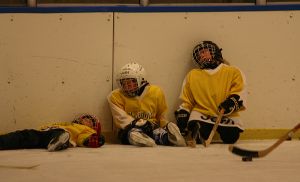
Fresh off their 14th hockey camp and 11th hockey showcase, these players are energized for the start of the new season…

The truth is that most players get more than enough exposure during their season. Instead of attending these camps, a player could make drastically more progress by training hard to make a better team the following year. Ultimately, the better the team you’re on, the more exposure you’ll get. There are a few exceptions to this rule (exceptional players in remote areas such as the southeastern United States may need to play in ONE or TWO of these camps/tournaments to get enough exposure to move away from their home and play for a better organization, once they reach an appropriate age to do so), but this likely doesn’t apply to over 75% of the players that attend the camps in the first place.

2) Greater focus on skill work
Skill works seems to have found it’s way out of most youth organizations. This is the result of both an overemphasis on winning AND a rapid increase in the number of youth programs without a parallel increase in the number of qualified coaches. Regarding the former, winning is an important part of the game, but unless a coach’s job depends on it (and even then, alternative means should be considered), winning should not be pursued at the expense of skill work and individual development. Regarding the latter point, this is certainly not to bad mouth the hundreds of fathers and former players that have stepped up to fill the coaching void. It’s only to point out that it takes a special ability to be able to recognize, teach, and reinforce proper skill development progressions, and the number of people that can do that are quite limited. This is why, much to the surprise of hockey parents, I’ve recommended that some of the players I interact with take skating lessons with skating coaches with a primarily figure skating background. The truth is that these coaches tend to have a better understanding of the importance of edge work and single-leg stability. This isn’t to say that all figure skating coaches fit this description, but those with a history of working with hockey players tend to be excellent.

With the rule changes made several years back, hockey is more of a speed and skill game than ever before. Hockey development programs and organizations need to adapt if they want to produce elite level players. In the states, USA Hockey is on the right track with their new ADM initiative; it’s up to us now to learn about it and constantly reinforce it with the players we have access to.

Skill demonstration for Flyer’s fans (the last one is amazing)


1) Increased emphasis on training using a program
As more players train, the improved results of players that follow a well-written program will become increasingly apparent. As it is, we’ve had players at Endeavor that tell us they’ve made more progress in as little as a couple weeks training with us than they have in several months training on their own. In somewhat less extreme cases, most of the players we train in the off-season hit the ice in September and say they’ve never felt better in their lives. Think about that.

Our training certainly isn’t EASY, but the idea that a player can revolutionize his performance by following a well-written training program is quite SIMPLE. Get the program, get the results; it doesn’t get any more simple than that. The largest barrier to this, naturally, is that not everyone can get access to quality training programs. Well, I should say the largest PERCEIVED barrier is that everyone doesn’t know they can get access to quality training programs. For this reason, I think membership sites that provide this information will really take off in the new year. For strength and conditioning coaches that work with hockey players (in a high school, college, junior, professional, or private setting), you’d have to be crazy not to have a membership to HockeyStrengthandConditioning.com at this point. Not only are several programs from different coaches provided on a monthly basis, but you have access to many of the top coaches in the world to ask them questions about your own programs and situations. It’s the single best resource for you.

Click here to get access now >> Hockey Strength and Conditioning

For those involved in hockey training, but that don’t have the expertise or desire to write their own programs, Body By Boyle Online is an extraordinary option for you. There is a ton of content on there, which is nice for the intellectually curious, but more suited to your needs, there are constantly updated done-for-you training programs with videos of all the exercises. All of the content at both sites is available for an incredibly nominal monthly investment, considering the overwhelming impact this information can have on a player’s development!

Click here to get access now >> Body By Boyle Online

That’s a wrap for today. If you think I missed something, please comment below!

To your success,

Kevin Neeld

P.S. If you haven’t yet, go sign up for the 2011 Sports Rehab to Sports Performance Teleseminar. It’s ABSOLUTELY free, and the speakers are world-class. Sign-up now so you don’t miss any of the presentations; they start next week!

Please enter your first name and email below to sign up for my FREE Athletic Development and Hockey Training Newsletter!
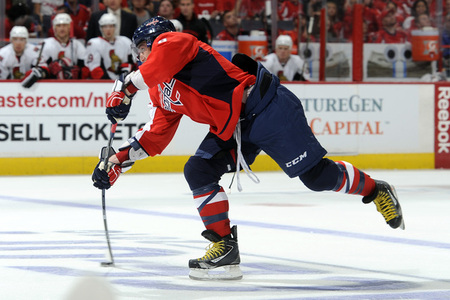
Every now and then I’ll walk through Endeavor and see one of our players doing extra core work on their own. At first, this really intrigued me. We do SO much core work during the off-season I was flabbergasted that they’d want to do more.

The more I thought about it, the less surprised I was. Just about everyone that steps foot in a gym, hockey player or hockey parent (or, dare I say, someone NOT involved in hockey?), wants to have a more aesthetically appealing midsection. Despite the reality that having an appealing midsection is almost strictly a function of maintaining low levels of body fat (hence the guys with the muscle mass of Gumby with shredded “abs”), and decades of researching demonstrating that training a muscle group will not magically remove the fat above that muscle, the default practice is to lay down on the floor and do “abs” for 15 minutes at the end of every workout.


The resemblance is uncanny. (I apologize to any teenage girls that may be offended by this comparison)

Unfortunately, this will never, ever get them closer to having a six pack…ever. Eating better and learning lifelong nutritional strategies to optimize your health, performance, and body composition will (check out Brian St. Pierre’s site for more information on this stuff), but doing some extra ab work will not.

The bottom line though is that hockey players, like most people, feel better about themselves when they’re a little sore. Despite me pointing out that playing in traffic will also make you sore, most players opt for the extra core work. With that in mind, I thought it would be appropriate to put together a few quick “core” routines to help players in this regard, so they don’t just default to crunches, sit-ups, leg throw downs, Russian twists and other moronic core exercises.

Core Routine 1

A1) Slideboard Bodysaw: 2-3 x 8
A2) Bird Dog: 2-3 x (6x2s holds)/side
A3) Standing Cable Rotation: 2-3 x 8/side
A4) Stability Ball Knee Tucks: 2-3 x 8

Core Routine 2

A1) Rollouts (Stability Ball, Bar, or Ab Wheel): 2-3 x 8
A2) Standing Hip Flexed Dynamic Y->W’s: 2-3 x 10

A3) Tall Kneeling Belly Press: 2-3 x 10/side
A4) 1-Arm DB Farmers Walk: 2-3 x 50 yards/side

Core Routine 3

A1) Overhead Rotational Med Ball Floor Slam: 2-3 x 6/side
A2) 1-Leg Glute Bridge w/ Active Hip Flexion/Extension: 2-3 x 6-8/side
A3) 1/2 Kneeling Cable Chop: 2-3 x 10/side
A4) Slideboard Push-Up w/ 1-Arm Reach: 2-3 x 5/side


Hopefully this will give enthusiastic hockey players a framework from which to do their “extra” core work that still fits within the confines of my core training philosophy.

To your success,

Kevin Neeld

Please enter your first name and email below to sign up for my FREE Athletic Development and Hockey Training Newsletter!
At Endeavor, we really pride ourselves on constantly looking for better ways to develop our athletes. All of our coaches continuously look for cutting edge information on program design, more effective exercises, nutrition, recovery strategies, and injury prevention (amongst others). Working alongside such passionate people is what makes my job so much fun to do.

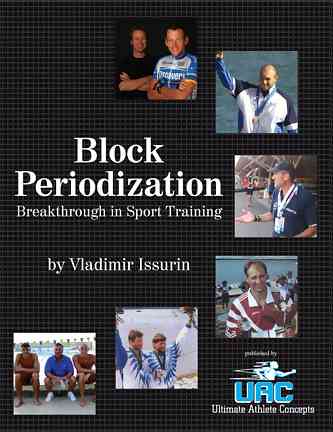
Over the weekend I spent some time watching DVDs of a 3-hour presentation from Dr. Vladimir Issurin on Block Periodization. Dr. Issurin is a scientific advisor to the Soviet and Israeli Olympic teams. His presentation delved into how to alter the emphasis of various training aspects to best peak for competition. Eastern European training methods have always intrigued me, so I was psyched I got an opportunity to hear from one of their secret weapons.

The Death of Development

One of the things he said that really caught my attention was (to paraphrase) that in today’s athletic development systems, competitive workloads have replaced training workloads. Think about it. Add up the total time athletes spend practicing and training in a given month. Add up the total time hockey players spend playing games. In previous hockey development models, a ratio of preparation: competition would likely be AT LEAST 5:1, meaning players would spend 5 hours of preparation (practice and training) for every 1 hour of competition. Now this ratio is significantly closer to 1:1, if not 1:2.

Concomitant with this shift in competition emphasis, we’ve seen a drastic increase in the amount of burnout amongst high school players and an UNACCEPTABLE increase in the number of non-contact and overuse injuries. To address the former, this means that when hockey players should be entering their best years, they’re so burnt out from 70+ game youth seasons, spring league, summer league,a nd select teams that they give it up. This is tragic.

Tissue Stress Accumulation

The increase in overuse injuries is related to what I think of as “tissue stress accumulation”. Simply, this means that the stresses placed across tissues within your body (muscle, tendon, ligament, etc.) accumulate over time, ESPECIALLY if special attention isn’t paid to recovery. When I was in San Jose, John Pallof (a brilliant physical therapist) said he thought one of the reasons groin strains, hip flexor strains and sports hernias were so much more prevalent now is because hockey players are training more than ever before. John noted that the training is absolutely necessary for the prevention of a host of other injuries, but he alluded to a great point: With the increase in competitions both within a season and across multiple seasons (Issurin) and the necessary increase in training (Pallof), our body’s just aren’t given the time to recover that they need. This reality is exemplified by the fact that almost ZERO attention is paid to recovery and improving soft-tissue quality.

Take Home Messages

There are three things you should take from this (and pass along to everyone you know and love):

1) As a hockey community, we need to ease up on the number of games (and number of seasons for that matter) and put a greater emphasis on practices with components of skill development.
It’s okay to slow down practice and focus on individual skills. In fact, it’s paramount for development.

2) From a training standpoint, the goal is to get the maximum benefit from the minimum amount of training. This comes back to minimizing tissue stress accumulation and highlights the fatal flaw in the “more is better” idea. This focus underlies the design of all our athletic development programs at Endeavor. It’s why we sometimes use 2 sets instead of 3, why we tell athletes to lift lighter weights on certain sets, and why we dial back our strength work significantly when it’s time to really hammer home conditioning. Maximum results, minimum stress. That’s the goal.

3) Lastly, EVERY hockey player should be actively pursuing improved soft-tissue quality. I recently heard someone say that athletes ignoring performance-limiting factors (such as poor soft-tissue quality) are essentially driving with the brakes on. At Endeavor, we address soft-tissue quality by having our athletes go through a self-myofascial release circuit before they do their dynamic warm-up, which uses foam rollers, tennis balls, and medicine balls to break up knots and adhesions within the muscle (taking the breaks off). These implements can help restore normal muscle extensibility and fluid motion in young athletes and help maintain tissue quality in older athletes.

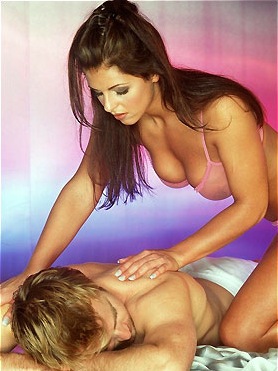
As athletes get older, it is ABSOLUTELY IMPERATIVE that they go see a manual therapist on a regular basis to do some soft-tissue work done on their hip musculature. In this case, manual therapists include professionals that can do massage, A.R.T. (Active Release Technique), and Graston. This is truly the secret behind long-term injury-free athletic excellence. I’ve found that most massage therapists avoid the hip musculature for liability reasons, and therefore aren’t of much use for our purposes (although the relaxation is still awesome and I’d never tell anyone not to get a massage).

Me on my walk home after a great massage.

Because not all manual therapists are created equally, I made it a mission to seek out the top professionals in our area to refer our athletes to. I generally tell our older athletes to go see one of these therapists once per month to get work done, sometimes more or less depending on the therapists recommendation. I highly recommend you find someone in your area too. It’ll be worth it in the long run.

To your success,

Kevin Neeld

Please enter your first name and email below to sign up for my FREE Athletic Development and Hockey Training Newsletter!

Use CODE: "Neeld15" to save 15%