The Valslide Skate Position Circle and 2-Way Skater are two exercises we’ll integrate into our prep work or pair with main exercises to help reinforce low position stability of the stance leg.


View this post on Instagram


A post shared by Kevin Neeld, PhD (@kevinneeld)

In both variations, we’re looking to keep the hip, knee and toes in a straight line throughout the movement.

In the Valslide Skate Position Circle, the emphasis is on locking out the long leg, and keeping the hips stable as the leg “sweeps” around to the back position and then back through to the start.

In the 2-Way Skater, the goal is to reach as far laterally and as far under, finishing through the toes in both, while keeping the hips facing forward.

Typically performed for 2-3 sets of 6 reps each.

Feel free to post any comments/questions below. If you found this helpful, please share/re-post it so others can benefit.

To your success,

Kevin Neeld
SpeedTrainingforHockey.com
HockeyTransformation.com
OptimizingAdaptation.com

P.S. If you’re interested in year-round comprehensive hockey-specific training programs for players at different ages, check out Ultimate Hockey Transformation.

Enter your first name and email below to sign up for my FREE Sports Performance and Hockey Training Newsletter!
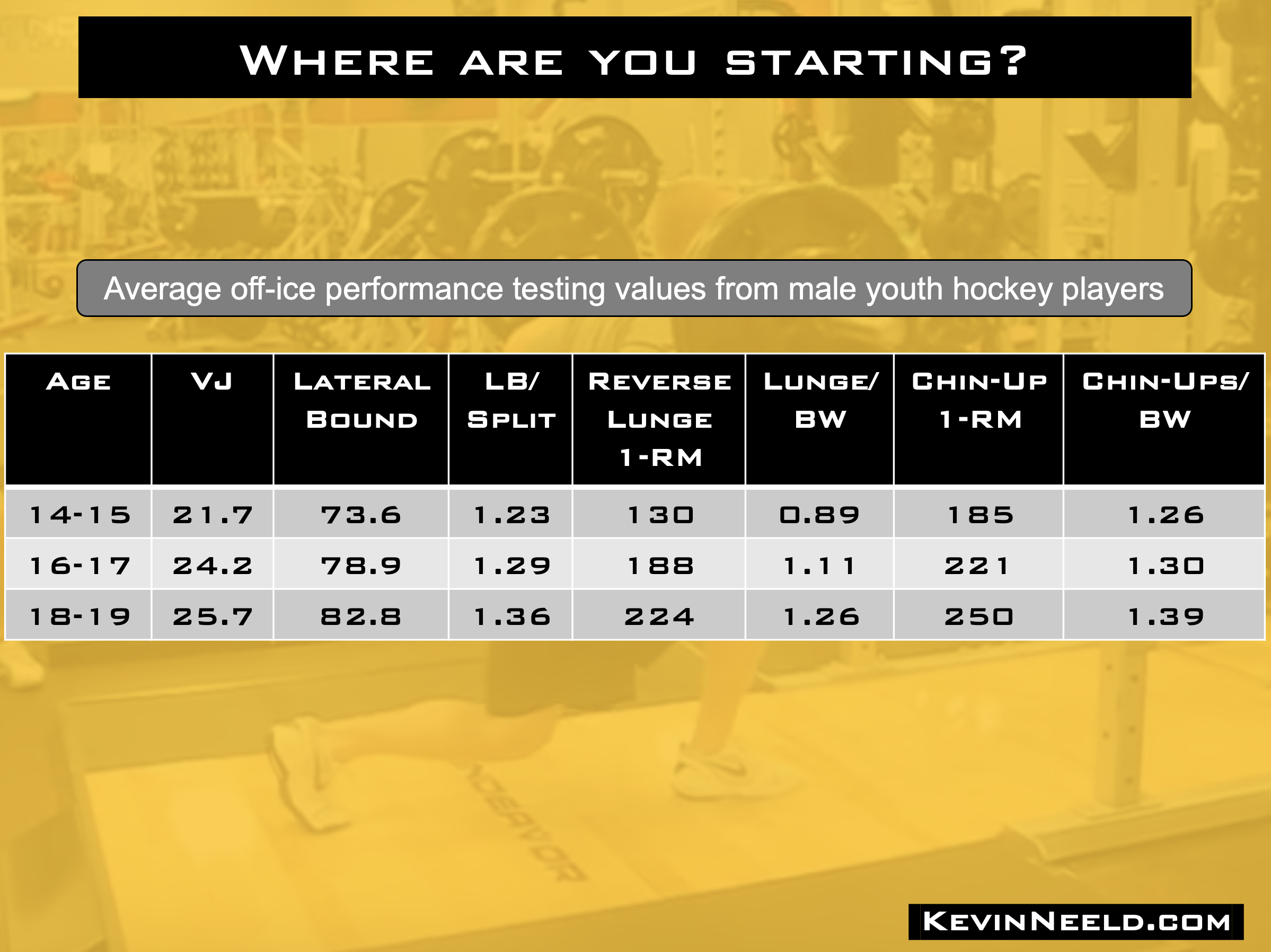


    The first question players ask after going through any form of performance testing is either “How’d I do?” or “Is that good?”

    Every player presents with unique physical characteristics that either help them perform at a desired level or prevent them from doing so.

    While there are a lot of individual considerations in interpreting testing data, it’s helpful to have an understanding of where you stack up relative to other players at your age and playing level.

    This table has normative values for off-ice testing (power and strength testing) performed on male youth hockey players. The players were primarily from Tier I organizations.

    This should help players to quickly identify areas of strength, and areas where they may be lagging behind the pack, which can then be used to influence their training programs.

    Feel free to post any comments/questions below. If you found this helpful, please tag a friend in the comments below or share/re-post it so others can benefit.

    To your success,

    Kevin Neeld
    SpeedTrainingforHockey.com
    HockeyTransformation.com
    OptimizingAdaptation.com

    P.S. If you’re interested in year-round comprehensive hockey-specific training programs for players at different ages, check out Ultimate Hockey Transformation.

    Enter your first name and email below to sign up for my FREE Sports Performance and Hockey Training Newsletter!
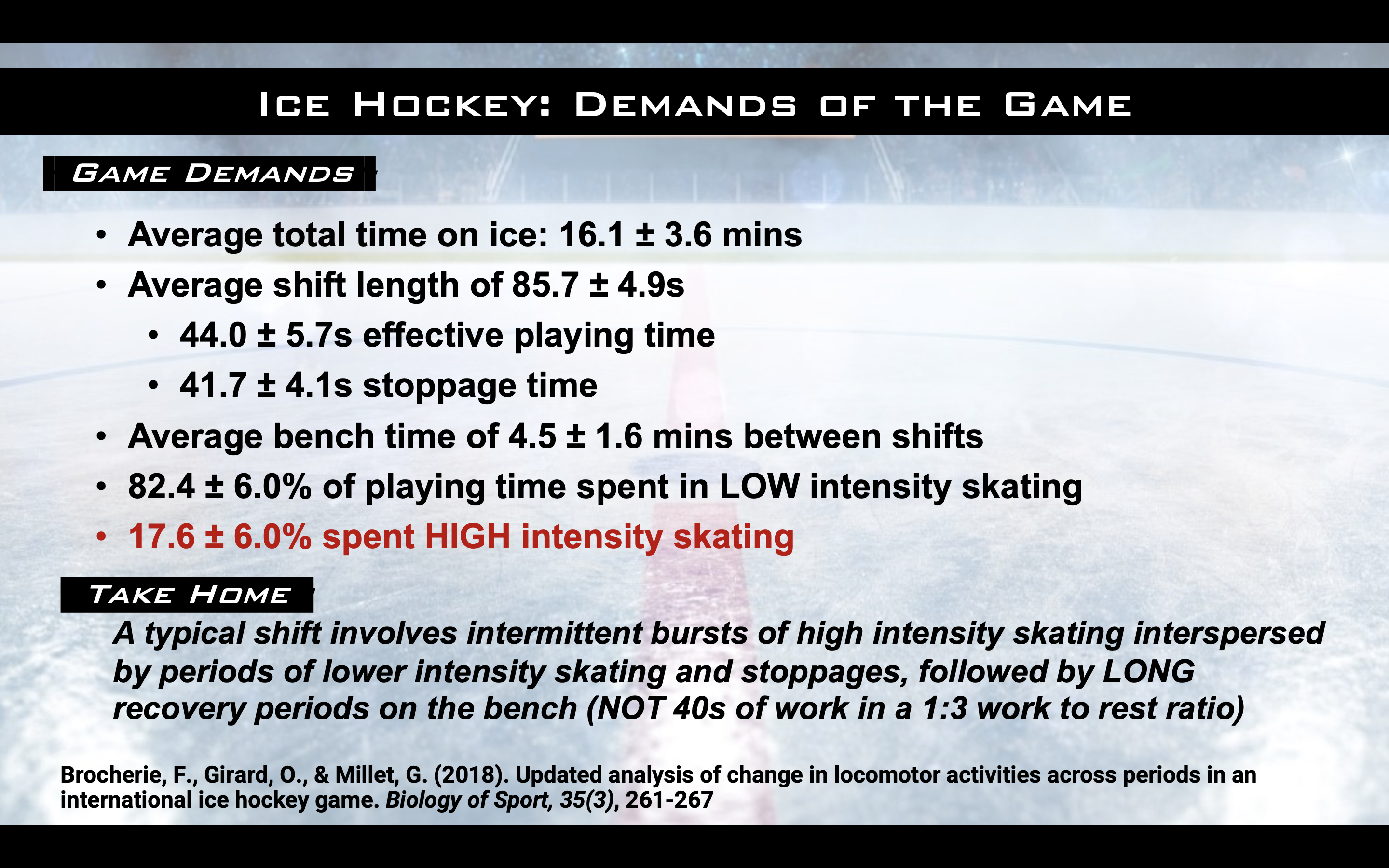
    In an international hockey game, the average shift length was ~86s, which was split in half between playing and stoppage time. Players spent ~18% of their playing time in high intensity skating.

    The big take home here is that the ice hockey requires bursts of high intensity skating interspersed by periods of lower intensity skating and stoppages.

    Shifts are followed by LONG recovery periods on the bench.

    This is significantly different from the 40s of work, 1:3 work to rest ratio commonly used to describe game demands.

    The longer you go, the slower you go.

    So recognizing that the game is comprised of peaks and valleys in movement speed/intensity (higher highs and lower lows), opposed to 40s of continuous work, should have a significant impact on how players condition.

    To your success,

    Kevin Neeld
    SpeedTrainingforHockey.com
    HockeyTransformation.com
    OptimizingAdaptation.com

    P.S. For in-season and off-season hockey conditioning programs, click here >> Ultimate Hockey Transformation

    Enter your first name and email below to sign up for my FREE Sports Performance and Hockey Training Newsletter!
    Today’s Thursday Throwback is an appropriate follow-up to last week’s post on the relationship between flexibility and muscle injury risk. If you missed that, you can check it out here: Does Flexibility INCREASE your risk of injury?

    This is another short, but important read, as it touches on an idea that I think every youth athlete I’ve ever worked with has been taught incorrectly. Enjoy the post, and please pass it along to any friends or family you think would benefit from reading it!

    Should You Stretch After You Pull A Muscle?

    Think about the times in your life that you’ve “tweaked” a muscle or slightly strained/pulled it.

    What was the FIRST thing you did on your own or were told to do?

    If you’re like most people, you immediately stretched the muscle.

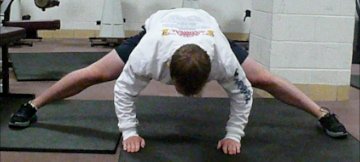
    straight-leg-adductor-stretch-bilateral

    This isn’t always the answer

    The very first thing I tell my athletes if they tweak a muscle is NOT to stretch it!

    A muscle strain can range from a slight over-stretch to a complete tear. Assuming the muscle isn’t COMPLETELY torn, it’s likely that there is some micro-damage to the muscle and that the muscle feels tight because it’s guarding against further injury.

    This means that most people are attempting to stretch an over-stretched muscle AGAINST the muscles’ contraction.

    Not only is this not an effective way to speed up your healing, but it’s probably making your injury worse!

    Think about your muscle as a rubber band. Now imagine cutting a small slit in the rubber band with a razorblade.

    If you stretch that rubber band now, what’s going to happen?

    The small slit is going to expand, getting longer and wider.

    Does making a slight tear in your muscle longer and wider seem like a smart recovery strategy?

    If you tweak a muscle, DO NOT stretch it. You can ice it if you want (although I’m not convinced that ice does anything either). If you’re going to stretch anything, stretch the muscles that OPPOSE the injured muscle.

    Many muscles are overworked or strained because of a relative stiffness imbalance with their antagonists, so stretching the opposing muscle can help bring you back into balance.

    To your success,

    Kevin Neeld
    OptimizingMovement.com
    UltimateHockeyTraining.com

    Please enter your first name and email below to sign up for my FREE Performance Training Newsletter!

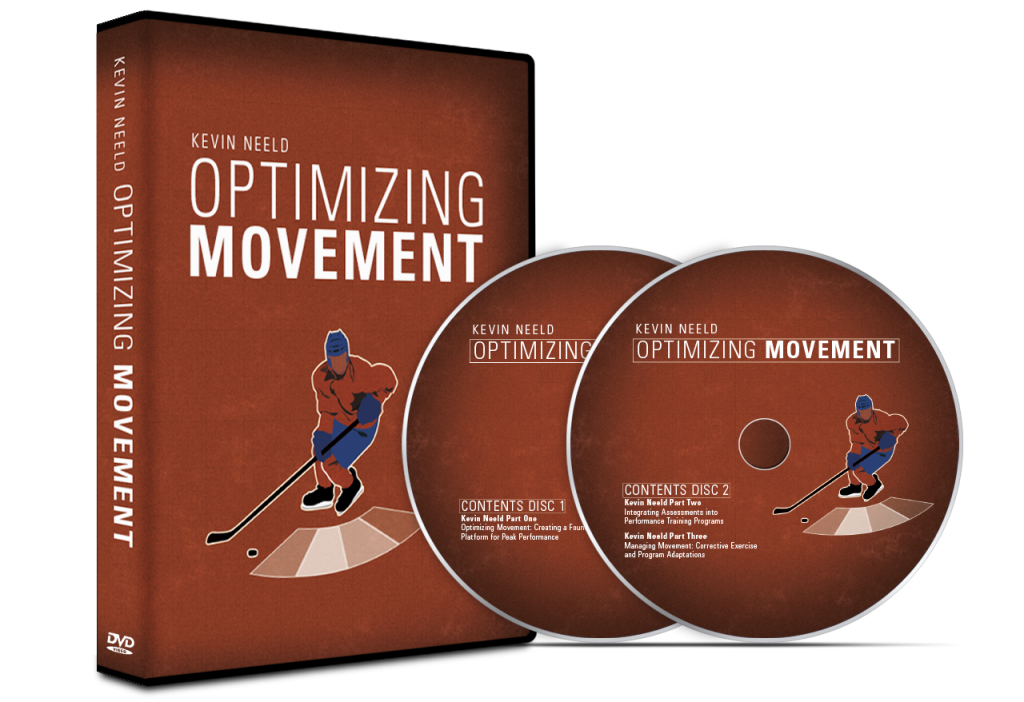
    Get Optimizing Movement Now!

    “…one of the best DVDs I’ve ever watched”
    “A must for anyone interested in coaching and performance!”

    Optimizing Movement DVD Package

    Click here for more information >> Optimizing Movement

    Today’s “Thursday Throwback” is a quick one from 2009. This continues to be a trend we see in our assessments today and I think, while basic, highlights that you can go wrong on both ends of the flexibility continuum. Those that are too immobile at one joint are likely to move excessively at another. Those that are too mobile at one joint may be more likely to suffer from injuries as a result of a lack of stability and/or constant attempt to manage the instability (e.g. muscle injuries). This is why optimizing movement is such an important concept!

    Optimizing Movement DVD Package


    Enjoy the post below:

    Does Flexibility INCREASE your risk of injury?

    A couple weeks ago I did an audio interview with Joe Heiler for SportsRehabExpert.com, one of the most underrated membership sites on the web. I’m really humbled that he asked me to contribute.

    If you’ve never been there, check it out. Joe’s a really bright guy and has compiled a lot of great information from other smart, successful coaches and therapists.

    SportsRehabExpert.com

    One of the things that came up during the interview was what we can do to prevent “groin” (adductor) strains. We’ve been fortunate in that we haven’t had too many adductor injuries in our athletes. This is probably, at least in part, due to the hip mobility and hip muscle activation exercises we use.

    We did have a couple athletes complain of adductor pain though, and they all had ONE thing in common:

    OUTSTANDING ADDUCTOR FLEXIBILITY!

    This trend flies in the face of the “you got hurt because you didn’t stretch or aren’t flexible enough” way of thinking.

    In these athletes, we were able to resolve their pain relatively quickly, by having them STOP STRETCHING their adductors, start stretching their glutes a few times a day, and by doing isometric adductor strengthening exercises by crushing a medicine ball between their knees for time.

    The rationale was simply that their adductors were weak relative to their abductors (to be overly simplistic: weak groin, strong glutes).

    By stretching their glutes and strengthening their adductors, we were able to shift the strength and stiffness relationship between those muscles into more balance and get rid of their pain within a week or two.

    To your success,

    Kevin Neeld
    OptimizingMovement.com
    UltimateHockeyTraining.com

    Please enter your first name and email below to sign up for my FREE Performance Training Newsletter!

    Get Optimizing Movement Now!

    “…one of the best DVDs I’ve ever watched”
    “A must for anyone interested in coaching and performance!”

    Optimizing Movement DVD Package

    Click here for more information >> Optimizing Movement

    Use CODE: "Neeld15" to save 15%